
L.C. Hanna: Professional Baseball Player, Industrial Magnate, and Gatling Gun Battery Captain

Leonard Colton Hanna was a summer resident of the Edgewater neighborhood from 1890 until shortly before he sold the property in 1911.

We mentioned him briefly in discussing his more famous brother, Senator Marcus Alonzo Hanna, and Senator Hanna’s Glenmere estate, in several previously published Beacon articles. In this brief article, we will give L.C. Hanna and his estate, Urncliff, their due.

L.C. Hanna was born in New Lisbon, Ohio on November 30, 1850, the son of Dr. Leonard Hanna (1806-1862) and Samantha Maria (nee Converse) Hanna (1813-1897). His siblings included Helen G. Hubbell (1836-1891); Marcus A. Hanna (1837-1904); Howard M. Hanna (1840-1921); Salome M. Chapin (1844-1907); Seville S. Morse (1846-1927); and Lilian C. Baldwin (1852-1948). The family moved to Cleveland in 1851.

Once in Cleveland, L.C. Hanna attended the public schools. His family then sent him to Doctor Holbrook’s Military School, a military academy and boarding school for boys located in the town of Ossining, New York. He reportedly attended Doctor Holbrook’s Military School until June 1867.

When he returned to Cleveland, he was briefly associated with Hanna, Doherty & Company, a firm established by his brother, Marcus A. Hanna, for the purpose of refining petroleum. His brother Howard later purchased Marcus’ interest in the firm.
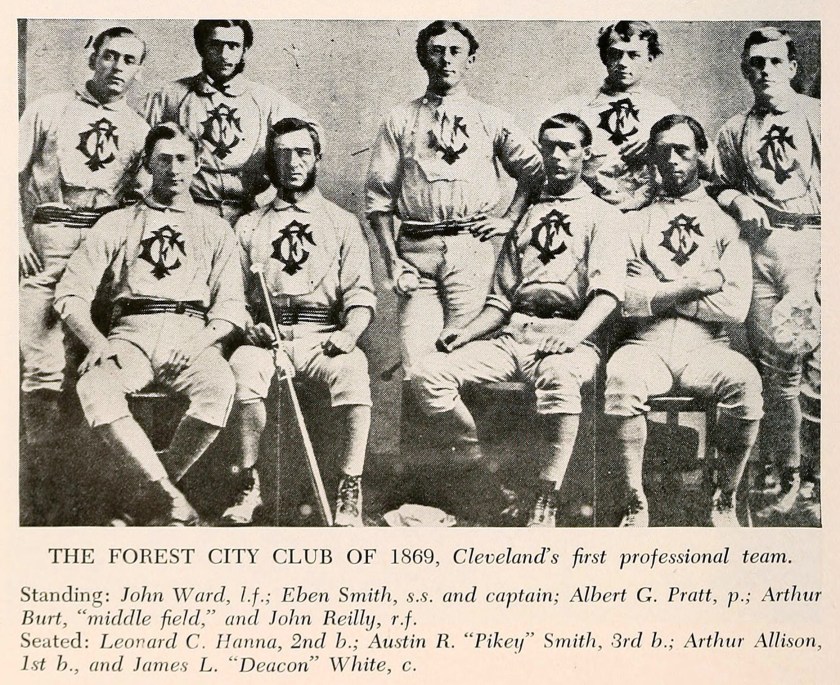
In 1869, L.C. Hanna became associated with Cleveland’s first professional baseball team, the Forest City Club, as its second baseman. The team included pros who were paid, such as Arthur Allison, outfielder and first baseman, Albert G. “Uncle Al” Pratt, pitcher, and James L. “Deacon” White, each of whom remained with the team until its demise in 1872, and amateurs such as L.C. Hanna, who remained “pure” and refused payment. On June 2, 1869, the Forest City Club played, and lost, 25-6, the first pro baseball game in Cleveland against the professional Cincinnati Red Stockings. The game was played in front of 2,000 spectators at Case Commons at Putnam Ave. (E. 38th St.) between Scovill Avenue and Central Avenue. On March 17, 1871, the Forest City Club became a charter member of the National Association of Professional Baseball Players.

By 1871, L.C. Hanna left behind his baseball career and sailed on the steamer Northern Light for one season. In January 1872, he left for St. Paul, Minnesota, where he resided until November 1874. In 1874 he returned to Cleveland to begin his lengthy career with the firm of M. A. Hanna & Company, which at the time was one of the largest and most important firms in the country handling coal, coke, iron ore and pig iron. M. A. Hanna survived into the modern era, merging in 2000 with The Geon Company, to become The PolyOne Corporation, a company whose 2016 revenues exceeded $3.3 billion dollars. L.C. Hanna was also affiliated with the Superior Savings & Trust Company, the Guardian Savings & Trust Company and the Union National Bank of Cleveland. His memberships included the Tavern Club, the Union Club, the Roadside Club, the Country Club of Cleveland, and the Chagrin Valley Hunt Club at Gates Mill, Ohio.
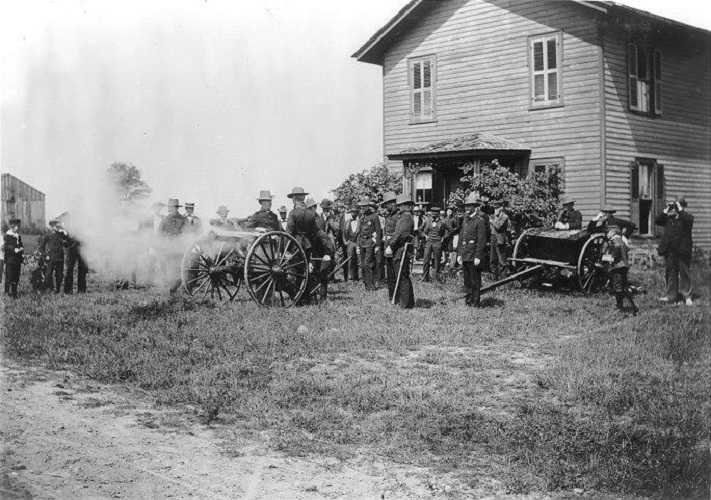
L.C. Hanna also “commanded” the Cleveland Gatling Gun Battery as “captain” from 1892-1893. This para-military organization was formed in June 1878 by reactionary Clevelanders concerned about “the maintenance of law and order” after the Great Railroad Strike of 1877, which was discussed in a Beacon article that sketched the life of Edgewater resident Daniel W. Caldwell, who was President of the Lake Shore and Michigan Southern Railway Company and who obtained the title “General” from the governor of Ohio during the “Great Railroad Strike.”

The Encyclopedia of Cleveland History states the following regarding the Cleveland Gatling Gun Battery:

“Using contributions, the committee purchased 2 Gatling guns and then issued a call for volunteers. At a meeting in the mayor’s office, the Cleveland Gatling Gun Battery was established with 25 charter members, including Major Wilbur F. Goodspeed, elected captain; 1st Sgt. Thomas Goodwillie; 2d Sgt. Leonard C. Hanna (captain, 1882-93); 3d Sgt. John R. Ranney; and Quartermaster J. Ford Evans. On 6 Mar. 1880 the Ohio legislature enacted a bill authorizing Cleveland citizens to establish a Gatling gun battery, placed it under control of the mayor in emergencies, and made it subject to the regulations governing Ohio National Guard units. The unit was incorporated on 17 May 1880. An armory was constructed at E. Prospect and Sibley (3433 Carnegie). In 1885 the battery had 2 guns, 80 sabers, and 1 revolver. It billed the city $242 for the services of its members on guard during the iron workers’ strike at Newburgh, 8-13 and 17-21 July 1885. The majority of the unit’s activities were social events; its annual target practice, for example, included dances and was held at such resorts as St. Clair Springs, MI, and Chautauqua Lake, NY.”

L.C. Hanna was married twice. He married his first wife, Fannie Wilson Mann (1852-1885) in Buffalo, New York. He married his second wife, Coralie Walker (1852-1936) on October 17, 1888, in Richmond, Kentucky.
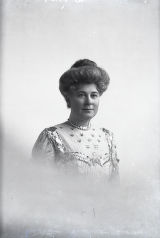
He had three children: Jean Claire Hanna (1880-1930), Fanny Hanna Moore (1884-1980) and Leonard C. Hanna, Jr. (1889-1957). He died on March 23, 1919, and is buried in Lake View Cemetery.

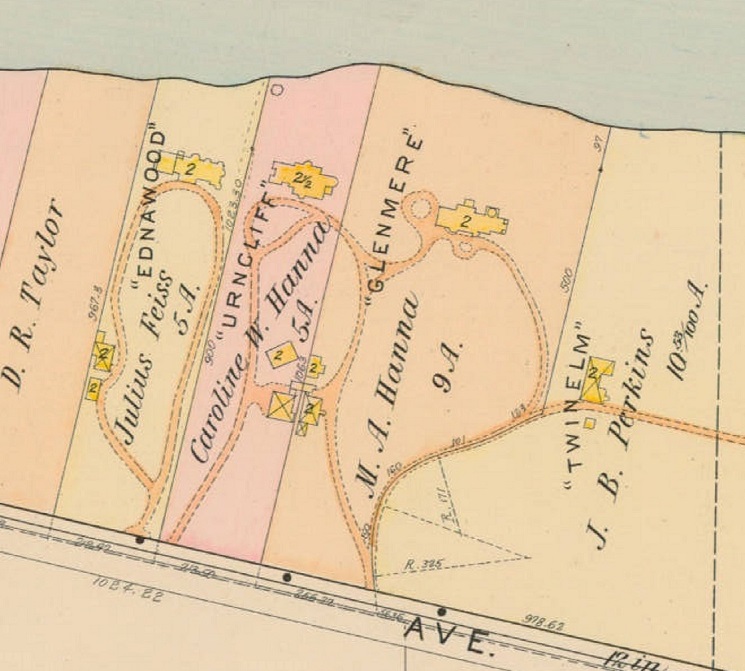
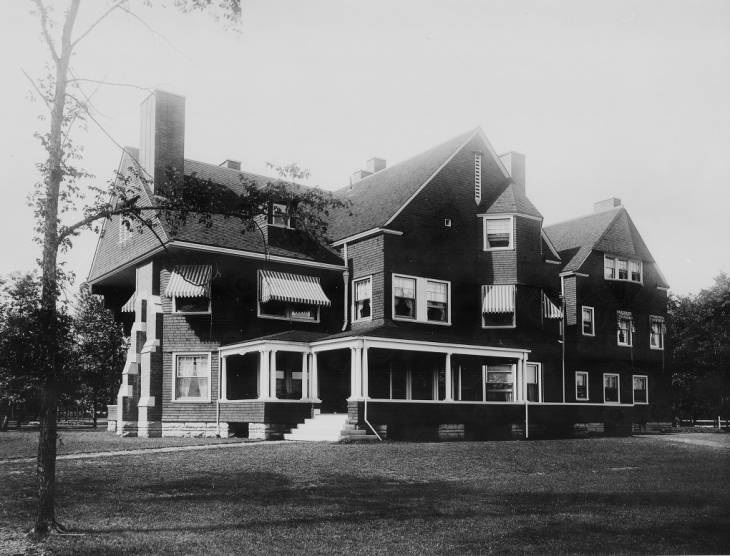
L.C. Hanna’s Edgewater estate was named Urncliff, Erncliff, or Erncliffe (depending on the written source) and was located on the northside of Lake Avenue at roughly West 104th Street. The home and barn located on the estate were designed by the famed architect Charles Frederick Schweinfurth. It is likely that L.C. Hanna commissioned Schweinfurth to build his summer residence and barn in the Edgewater neighborhood shortly after his brother Marcus did and that residence and barn were complete by 1890.
In The Life and Work of Charles Frederick Schweinfurth, Cleveland Architect, (1967), author R.A. Perry stated the following regarding the Urncliff residence of L.C. Hanna:

“The residence built for Captain Leonard C. Hanna was contemporary with “Glenmere.” The L.C. Hanna design was a simpler conception than the adjacent “Glenmere.” The carriage porch of the long, low design was a wider and simplified version of the one at “Glenmere.” The lake or north façade of the L.C. Hanna residence displayed a dramatic chimney-gable interpenetration on the northeast corner of the house. Pseudo-buttresses constructed of brick with limestone ashlar trim were located on the east side of a wide brick chimney which pierced a boldly projecting gabled area which cantilevered into space. The cantilevered effect and the piling up of buttresses which sloped offsets at the base of the chimney in the L.C. Hanna design represented the most striking of all Schweinfurth’s gabled interpenetrations and appears to have been an original feature of that design.”

The interior of the L.C. Hanna residence was also simpler than that of “Glenmere” as is revealed in a comparison of the reception halls in the two residences. The L.C. Hanna barn which faced the north façade closely related to the main dwelling in the exterior sheathing and in its bold geometric arrangements. Schweinfurth’s skillful massing of bold, unadorned projecting surfaces created a feeling of movement and an interesting play of light and shade in the low, sprawling design. The L.C. Hanna house and barn were a handsome compliment to each other, and the two houses were remarkable examples of Schweinfurth’s most original productions in the “Shingle Style.” [pp. 100-101]

We are fortunate that several striking pictures of the residence and barn survive to illustrate Schweinfurth’s mastery of the Shingle Style.
The Cleveland Blue Book 1891 indicates that Mr. and Mrs. L.C. Hanna considered “Erncliff” their summer residence, while their permanent residence was at 736 Prospect. The Cleveland Blue Book 1900 again indicated that “Erncliffe” was their summer residence while changing their permanent residence to 667 Euclid Avenue. In The Cleveland Blue Book 1904, Mr. and Mrs. L.C. Hanna only list 737 Euclid as their residence and no longer list Urncliff as a summer residence.

Sadly, like Senator Hanna’s Glenmere residence, the Urncliff residence was also demolished shortly after the turn of the 20th century.

Julius Feiss & Ednawood

Few physical remains of the Gilded Age mansions that once defined the Edgewater neighborhood remain. However, for the observant, there are remains to be seen and which, when researched, reveal a story. On the northern side of Lake Avenue, between West 104th and 110th Streets, may be found the remains of a stone entrance way standing silent sentinel to what was once known as Ednawood, the mansion and estate of Julius Feiss (1848-1931).

Feiss was a partner in The Joseph & Feiss Company, an organizing member of the Cleveland Parks Commission, and, at his death, president of the Cleveland Federation of Jewish Charities. Ednawood’s original address was 10520 Lake Avenue, and extended from Lake Avenue to the shores of Lake Erie. The address was later changed to 10530 Edgewater Drive.

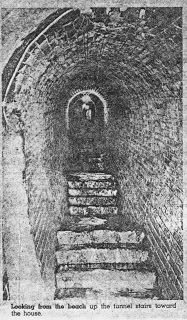
Ednawood once was erroneously associated with the Underground Railroad because it had a tunnel connecting the basement of the home to the shores of Lake Erie. Mazie Adams, in an article entitled, “Lakewood in the Civil War: More Underground Railroad Tunnels in Lakewood?”explains the error thusly: “[S]ome of this confusion stems from the work of Wilbur Weibert, noted 1890s historian of the underground railroad in Ohio, [who] suggested that Lakewood was part of a route for the underground railroad. Unfortunately, it appears he based his theory partially on the existence of a tunnel emptying into Lake Erie just east of Lakewood.

Interestingly, this tunnel was also featured in a Plain Dealer article, dated February 12, 1950, and focused on Dr. Siebert’s work on the underground railroad in Ohio. Included in the article was an image of a ‘slave-escape tunnel, somewhere in Cleveland…photo from Dr. Siebert’s collection, but the exact location is not known.’ Sharp-eyed readers quickly inundated the paper with calls and letters correctly identifying the tunnel as belonging to ‘Ednawood.’

As Ednawood was built in 1895, it and its tunnel obviously post-dated the Underground Railroad. Ms. Adams continues the article to note that one of Julius Feiss’ sons described the tunnel as “leading from a basement recreation room with a big fireplace and small rooms where bathers could change before and after swims in the lake. The tunnel is said to have cost about $11,000 when built.” She notes that the Plain Dealer reported that the tunnel, “attracted dozens of boys who swam or rowed along this section, for many have written or phoned about the fun they used to have around it. But they couldn’t get beyond the great iron entrance door in the cliff.”

In fact, an entry from the June 16, 1899, About the Town column in the Plain Dealer, heralds the construction of the tunnel as part of the newly built Ednawood estate for Julius Feiss: “Mr. Julius Feiss, of Goldsmith, Joseph, Feiss & Co., has been connected with that firm for exactly thirty-five years, working his way up from the bottom of the ladder. While he is still very active in the business, he is a man of domestic tastes and his house, adjoining Senator Hanna’s on the lake shore, is a veritable model of comfort. Among the features of the place is a tunnel, cut out of the solid rock under the bak, leading from the house to a point close to the shore, where it ends in a spacious den, a smoking room some twenty feet in diameter, tiled in Dutch blue, and provided with all manner of appurtenances for the inner comfort. From this den it is but a step to the bath houses so that all the advantages of the location may be enjoyed with the least inconvenience” (p. 5). 

Notice of Ednawood’s pending construction was published in The Inland Architect and News, Vol. XXI, No. 3, p. 42 (April 1893), which noted that that the architects Lehman and Schmitt were designing and constructing “a country residence for Julius Feiss on Lake Avenue; frame, 60 by 125 feet in size; cost $40,000; all modern improvements including steam heat and electricity. For same party a gardener’s cottage and stable, costing $5,500; both frame buildings, respectively 26 by 40 and 30 by 45 feet in size.”

The Cleveland Landmark Commission records the following information about Lehman and Schmitt in its architect database:

Lehman and Schmitt were in business from 1885 to 1935. Both Israel Lehman and Theodore Schmitt had worked in the office of George H. Smith. The firm did a substantial amount of work for local government. They designed the Cuyahoga County Courthouse, and courthouses in Lexington, Kentucky; Peru, Indiana; and Franklin and Towanda, Pennsylvania. They also designed the Central Police Station on Champlain Street; an 1894 addition to the second Cuyahoga County Courthouse; the Central Armory for the Ohio National Guard; the National Guard Armory in Geneva; the Erie County Children’s Home in Sandusky; and the Lorain County Children’s Home. The firm also designed several significant synagogues, including the Anshe Chesed Synagogue built in 1886 on Scovill Avenue, Temple Tifereth Israel at Central and East 55th Street, built in 1894, and the later Anshe Chesed Synagogue at 8302 Euclid Avenue, built in 1912. The name of Lehman and Schmitt was retained after Israel e death  din 1914. The firm’s offices moved to the Electric Building in 1914. Buildings designed by the firm after 1914 included the Cook (now the Prospect Park) Building, the Pierce Arrow Dealership, and the Bing Building. The early history of the firm shows that they designed numerous residences. Frederick Baird worked as a draftsman and designer with the firm for several years. See http://planning.city.cleveland.oh.us/landmark/arch/archDetail.php?afil=&archID=160&pageNum_rsArchitects=1&totalRows_rsArchitects=335&sk=fName&sd=ASC

The Cleveland Plain Dealer noted that construction was underway on Ednawood in 1895, but was not yet completed, in its article, Lake Avenue Residences, published May 10, 1895.

U.S. Census records reveal that the massive house with its intriguing tunnel was home to Julius, his wife Carrie (nee Dryfoos), and their children Paul, Henry Otto, Richard, Jessy, George, and Edna, his niece Emma Seligmann, as well as three servants, Catherine Lazzro, Emma Boyer, and Johanna Miller, in 1900. It was apparently named after Julius’ daughter Edna, who was born in 1886.

Julius Feiss himself was born in Mussbach, Bavaria and emigrated to the United States in 1866. His story, like that of several other residents already profiled, is an immigrant’s rags to riches story. An October 1920 article in the American Magazine by Frank Copley relates Feiss’ Horatio Alger story:

When Julius Feiss came to this country as a boy, his assets were just about limited to his character, which included a full capacity for hard, grinding toil. If he had a decided bent for mechanics, this at the beginning was more of a liability than an asset. As Richard Feiss puts it, “Father began life starving to death as an inventor.” To save himself from literally starving, Julius Feiss went to work in the clothing shop of the firm that was destined to bear his name. This was in 1866. The twelve-hour day was then the standard, but Feiss, as the newest arrival, was required to devote practically the whole twenty four hours to the firm’s service. He had to clean up the shop after the regular day’s work, sleep there in a packing box among the rats, and be ready to open the door for the other employees at six-thirty in the morning. After four years, through sheer force of character, he rose to be a member of the firm. The business prospered.

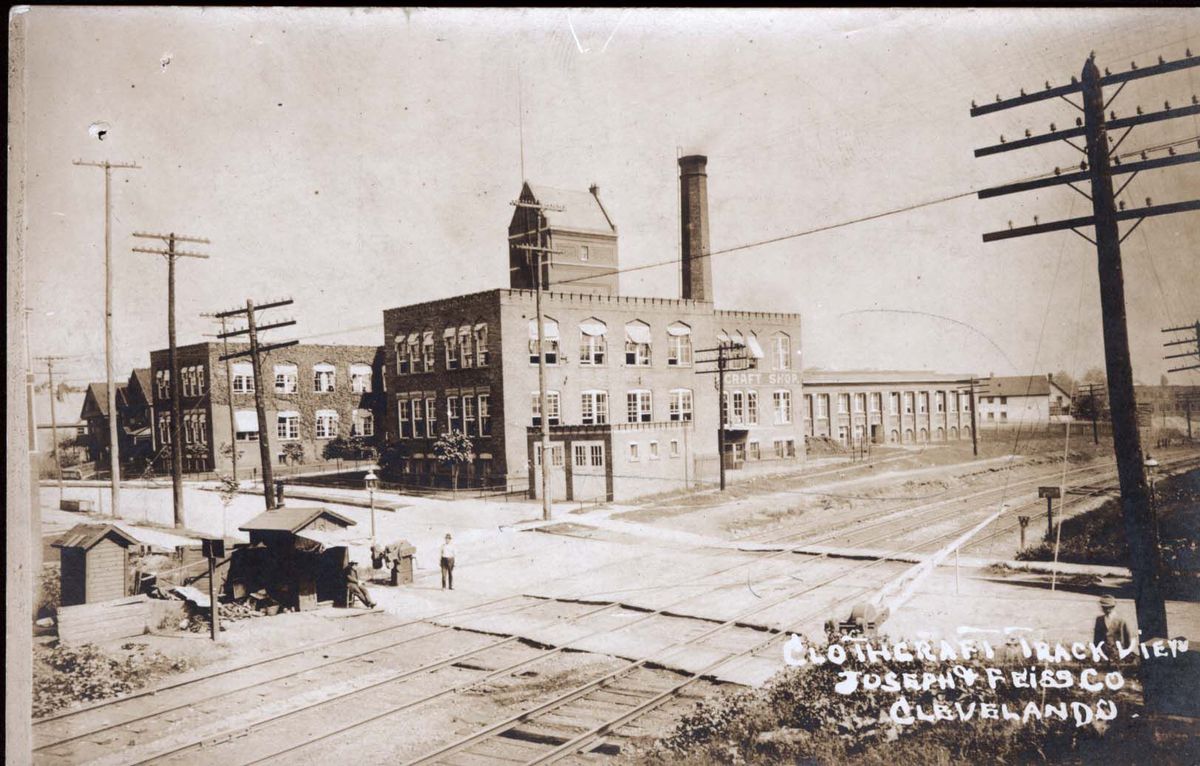
A few words about “the business” are in order as the company had an impact and longevity that are worthy of especial appreciation. The Joseph & Feiss Company was founded in 1841 as the Koch, Kauffman & Loeb general store in Meadville, Pennsylvania. In 1845, proprietors Kaufman Koch and Samuel Loeb relocated to Cleveland where they opened a store at 82 Superior Street, specializing in tailored men’s clothing and piece goods to local tailors. The company changed hands as it grew larger: Koch & Levi in 1853, Koch, Levi & Mayer in 1855, Koch, Mayer & Goldsmith in 1867, Koch, Goldsmith & Company in 1871 and Goldsmith, Joseph, Feiss & Company in 1892. Moritz Joseph and Julius Feiss both joined the clothing company in the 1870s. When Jacob Goldsmith retired in 1907, the firm adopted the name The Joseph & Feiss Company.

In Jim Debelko’s article, “The Joseph and Feiss Company: A Pioneer in Progressive Capitalism,” we learn what an extraordinary company it was. He reports the following: “Prior to 1909, the company was a typical garment manufacturer of that era, paying its employees as little as possible and working them for as many hours as hard it reasonably could. But in that year, Richard Feiss became factory manager. While living in Boston from 1897-1904 and obtaining his undergraduate and law degrees from Harvard University, Feiss had become a disciple of Frederick Taylor, the well-known industrial efficiency engineer of the late nineteenth century. When Feiss returned to Cleveland, he set out to manage the company’s work force in a manner that would maximize productivity but at the same time create a humane work environment that would keep workers healthy and happy. 

Feiss, with the assistance of Progressive era reformer Mary Barnett Gilson whom Feiss made head of the company’s employment and services department, redesigned the chairs employees sat on and the tables they worked upon to reduce injury and fatigue; provided employees with well-lit and well-ventilated work areas; sponsored employee dances, picnics, choral societies, clubs, orchestras, and athletic programs; provided medical and counseling services; established employee savings programs; awarded promotions based on performance; and increased wages. In addition, in 1917, Feiss introduced the five-day work week for employees at the company’s plant, several years before Henry Ford, often cited as the first industrial employer in the United States to do so.

“Perhaps it was progressive policies like the above that kept Joseph & Feiss a non-union shop in the decades of the 1910s and 1920s–a time when garment manufacturers in New York, Chicago, and elsewhere were fast becoming union shops. It wasn’t until 1934, during the Great Depression and almost a decade after Richard Feiss was forced out of the company in 1925 by his father and older brother, that the American Clothing Workers of America, finally won the right to bargain for and represent the garment workers of Joseph & Feiss.

In 1989, Joseph & Feiss was acquired by Hugo Boss AG, a West German clothing firm, for $150 million and was made a division of its subsidiary, International Fashions Apparel Corporation. Men’s Warehouse acquired the Joseph & Feiss trademark in December 1996.

So, when you spy the remnants of Ednawood when you walk along Lake Avenue, you should reflect on its stories: the rags to riches story of an immigrant, the myth of an Underground Railroad station, the powerhouse clothing manufacturer that lasted nearly 150 years, and the progressive and scientific methods that manufacturer introduced to industry before they were commonplace.

Herman N. Matzen’s Edgewater Connection

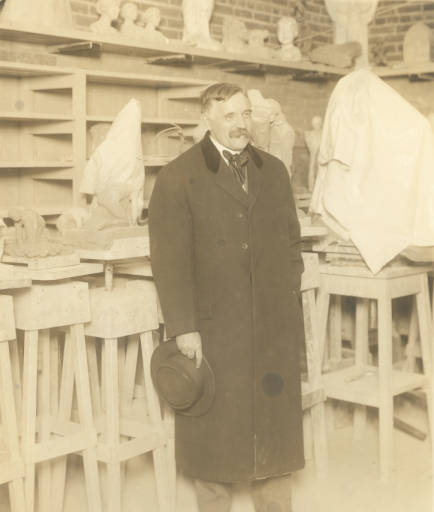
One of the well-known gems of the neighborhood is the Richard Wagner statue located in Edgewater Park. It was commissioned in 1911 by the Goethe-Schiller Society, which selected the accomplished sculptor Herman N. Matzen to create the monument.

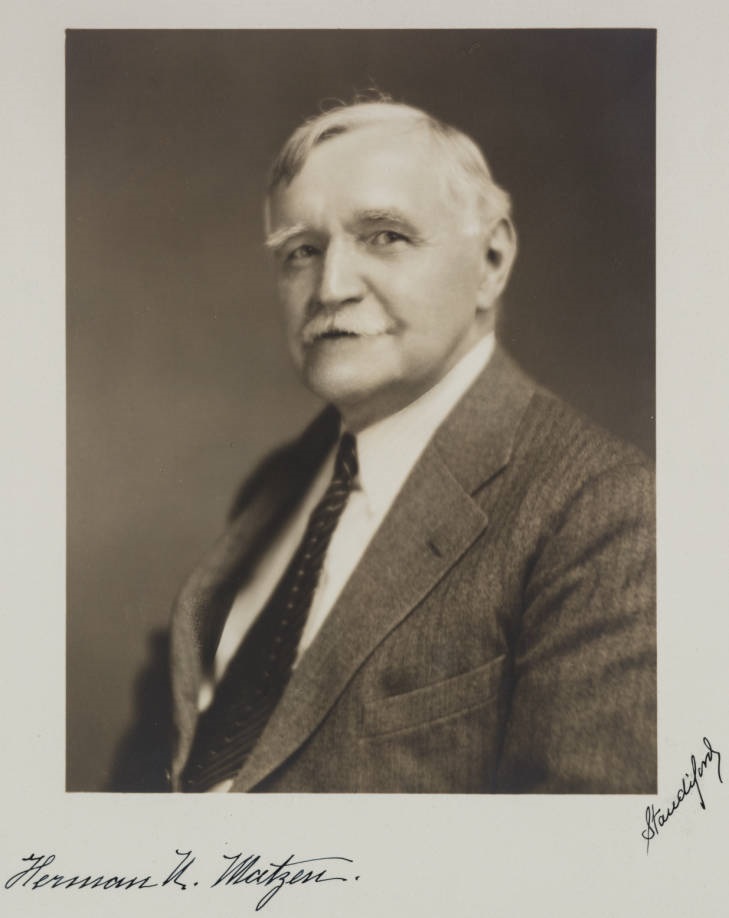
Mr. Matzen was born in Denmark on July 15, 1861. He studied at the Academy of Fine Arts in Munich and the Academy of Fine Arts in Berlin before permanently immigrating to the United States where, in 1884, he married Emma Hale.

In 1885, he began teaching design and sculpture at the Cleveland School of Art. After his wife Emma died, he married Blanche Dissette in 1908. He was a teacher at the Cleveland School of Art and head of the Department of Sculpture for decades, retiring in 1926. His students included such prominent figures as Max Kalish, Frank Wilcox, and Norman Bel Geddes. He died on April 22, 1938, and was buried in Lakeview Cemetery. The Edgewater community is fortunate to have one of his works in our midst.

Donald Rosenberg, writing for The Plain Dealer on August 19, 2012, in an article entitled, “Wagner statue in Edgewater Park Shows Cleveland’s devotion to titanic German composer,” described the statue as depicting the composer standing in long coat and beret, his left hand holding gloves and a document, which could be a score or one of his polemical writings.

In the article, Rosenberg shared that “[a]mong the prominent figures who have visited the statue is Siegfried Wagner, the composer’s son, who was in town with his wife, Winifred, in February 1924 to conduct a touring orchestra in a program titled ‘Music of Three Generations.’ Siegfried made the short pilgrimage to Edgewater Park, traipsing through snow to stand in front of his father’s monument and have his photo taken.”

Aside from the Wagner monument, some of the best known of Mr. Matzen’s works are the statue of Mayor Tom Johnson in Public Square (1916), the Thomas White memorial, the Moses and Pope Gregory IX statues on the exterior of the Cuyahoga County Courthouse, the Cain and Abel statues on the Painesville County Courthouse, and the Haserot memorial in Lake View Cemetery.