

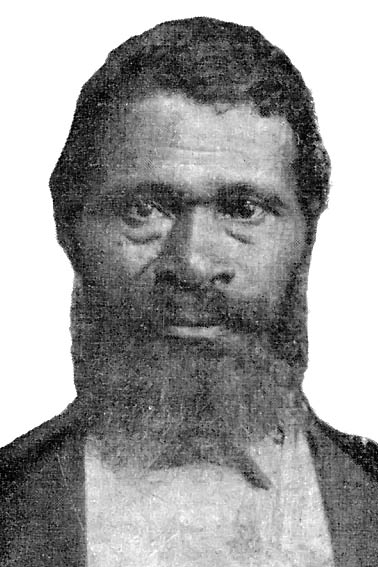
It is a historical nugget which has been oft-told in newspapers, blogs, and classrooms over the years. I reposted a telling of the story on Facebook several years ago and, having come across the recently again, am inclined to tell the story again. It simply deserves to be told, again and again.
Jordan (or Jourdan) Anderson was born somewhere in Tennessee around 1825 and by age 7 or 8 had been sold to a plantation owned by Gen. Paulding Anderson in Big Spring, Tennessee. Patrick Henry Anderson was one of the general’s sons and, by the mid-1840s owned Jordan and other slaves. Jordan Anderson married Amanda McGregor in 1848 and they had 11 children. During the Civil War, Union troops camped on the plantation. The Provost-Marshall-General of the Department of Nashville freed Jordan in 1864. After being freed, Jordan Anderson made his way to Dayton, Ohio, where he spent the remaining 40 years of his life.
In July 1865, shortly after the conclusion of the Civil War, Jordan Anderson’s former master, Confederate Col. Patrick Henry Anderson, wrote to him asking him to return to the plantation to help him to restore it. Anderson’s letter in response, dictated from his home in Ohio in August 1865, was also published in many newspapers at the time, including the Cincinnati Commercial. It is thought that he was assisted in the endeavor by his abolitionist employer, Valentine Winters. The response is viewed by some as an example of “slave humor” or satire one a level with that written by Mark Twain, whereas I view it as a simply elegant, human, and moving response that encapsulates in remarkably civil tones the day-to-day violence and injustice of the South’s so-called “peculiar institution” and a profound assertion of dignity.
The complete text of Anderson’s response to his former master is as follows:
“Dayton, Ohio, August 7, 1865.
To my old Master, Colonel P. H. Anderson, Big Spring, Tennessee.
Sir:
I got your letter, and was glad to find that you had not forgotten Jourdon, and that you wanted me to come back and live with you again, promising to do better for me than anybody else can. I have often felt uneasy about you. I thought the Yankees would have hung you long before this, for harboring Rebs they found at your house. I suppose they never heard about your going to Colonel Martin’s to kill the Union soldier that was left by his company in their stable. Although you shot at me twice before I left you, I did not want to hear of your being hurt, and am glad you are still living. It would do me good to go back to the dear old home again, and see Miss Mary and Miss Martha and Allen, Esther, Green, and Lee. Give my love to them all, and tell them I hope we will meet in the better world, if not in this. I would have gone back to see you all when I was working in the Nashville Hospital, but one of the neighbors told me that Henry intended to shoot me if he ever got a chance.
I want to know particularly what the good chance is you propose to give me. I am doing tolerably well here. I get $25 a month, with victuals and clothing; have a comfortable home for Mandy (the folks call her Mrs. Anderson), and the children, Milly, Jane, and Grundy, go to school and are learning well. The teacher says Grundy has a head for a preacher. They go to Sunday school, and Mandy and me attend church regularly. We are kindly treated. Sometimes we overhear others saying, “Them colored people were slaves” down in Tennessee. The children feel hurt when they hear such remarks; but I tell them it was no disgrace in Tennessee to belong to Colonel Anderson. Many darkeys would have been proud, as I used to be, to call you master. Now if you will write and say what wages you will give me, I will be better able to decide whether it would be to my advantage to move back again.
As to my freedom, which you say I can have, there is nothing to be gained on that score, as I got my free papers in 1864 from the Provost-Marshal-General of the Department of Nashville. Mandy says she would be afraid to go back without some proof that you were disposed to treat us justly and kindly; and we have concluded to test your sincerity by asking you to send us our wages for the time we served you. This will make us forget and forgive old scores, and rely on your justice and friendship in the future. I served you faithfully for thirty-two years, and Mandy twenty years. At $25 a month for me, and $2 a week for Mandy, our earnings would amount to $11,680. Add to this the interest for the time our wages have been kept back, and deduct what you paid for our clothing, and three doctor’s visits to me, and pulling a tooth for Mandy, and the balance will show what we are in justice entitled to. Please send the money by Adams Express, in care of V. Winters, Esq., Dayton, Ohio. If you fail to pay us for faithful labors in the past, we can have little faith in your promises in the future. We trust the good Maker has opened your eyes to the wrongs which you and your fathers have done to me and my fathers, in making us toil for you for generations without recompense. Here I draw my wages every Saturday night; but in Tennessee there was never any pay-day for the negroes any more than for the horses and cows. Surely there will be a day of reckoning for those who defraud the laborer of his hire.
In answering this letter, please state if there would be any safety for my Milly and Jane, who are now grown up, and both good-looking girls. You know how it was with poor Matilda and Catherine. I would rather stay here and starve and die, if it come to that, than have my girls brought to shame by the violence and wickedness of their young masters. You will also please state if there has been any schools opened for the colored children in your neighborhood. The great desire of my life now is to give my children an education, and have them form virtuous habits.
From your old servant,
Jourdon Anderson
P.S.— Say howdy to George Carter, and thank him for taking the pistol from you when you were shooting at me.”
Discover more from Northcoast Antiquarian
Subscribe to get the latest posts sent to your email.

 Northcoast Antiquarian
.jpg)