

Daniel W. Caldwell & Shoreland

“We knew we were traveling as man had never traveled before.” – H.P. Robinson, describing the speed of the train on the record-breaking long distance railroad run of October 1895, as quoted in Railway Age, February 1896.

On October 25, 1895, the Cleveland Plain Dealer, in an article entitled “The Fastest Time Yet,” reported that the Lake Shore and Michigan Southern Railway Company, whose tracks lie in close proximity to the Edgewater neighborhood, broke the then world record for fastest long distance railroad run on October 24, 1895. According to the official record keepers, the record-breaking run from Chicago to Buffalo covered a distance of 510.1 miles and was completed in an actual running time of 470 minutes and 20 seconds, or an average of 65.07 miles per hour.

In the February 1896 issue of Railway Age magazine, H.P. Robinson, who served as one of the official time-keepers for the record-breaking run, enthusiastically noted that, at one point during the trip from Chicago to Buffalo, the train was traveling at 92.32 miles per hour. He observed that the extraordinary velocity of the train caused some passengers moments of anxiety as the cars swung round a curve or dashed through the streets of a town and wryly noted that, “[a]t such times there were those among the passengers who would perhaps gladly have sacrificed a few seconds of the record.”

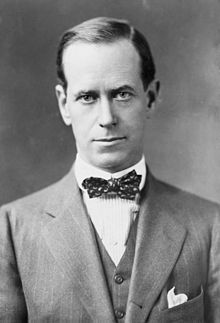
When the Lake Shore and Michigan Southern Railway Company’s Engine 160 roared by the Edgewater neighborhood under the masterful direction of Engineer James A. Lathrop on that extraordinary day, at least one resident of the Edgewater neighborhood, Daniel W. Caldwell, was especially mindful of its presence and its arrival at 8:50:13 am at the Cleveland station minutes later. Caldwell’s interest in the record-breaking run of the Lake Shore train was intensely intimate for, as William H. Vanderbilt’s man, he was none other than the president of the Lake Shore railway company from 1894 until his death in 1897.

Daniel W. Caldwell was born in Salem, Massachusetts in 1830 and died at his home on Lake Avenue on July 21, 1897. Caldwell died a bachelor, having never married. The Atlas of Cuyahoga County and the City of Cleveland, Ohio (1892) records that Caldwell’s residence was built on an estate which he called Shoreland, and was located on the north side of Lake Avenue, equidistant between Highland Avenue (West 117th) and Dartmouth Street (West 110th). The Cleveland Plain Dealer provided the following description of Shoreland: “The residence … sets back from the road several hundred feet and is hidden from view by a large park. The house not only faces Lake avenue, but also the lake, which beats against the rocky cliff not more than 150 feet from the house” (July 24, 1897, p. 5).

The Cleveland City Directory 1889-1890 records that, before Caldwell moved to the Edgewater neighborhood, he resided in The Stillman, a luxury residential hotel built in 1884 and located at Euclid Avenue and Erie Street.

Caldwell’s immediate Edgewater neighbors to the west were his close personal friend Ralph W. Hickox, First Vice President of the Hocking Valley Railroad, and Hickox’s wife, Anne Stager Hickox. Caldwell’s immediate neighbors to the east were Lewis Aspinwell Murfey, Vice President of State Banking and Trust Company, and his wife Nina Armstrong Murfey.
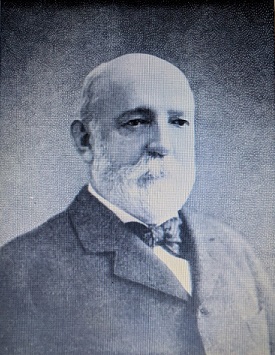
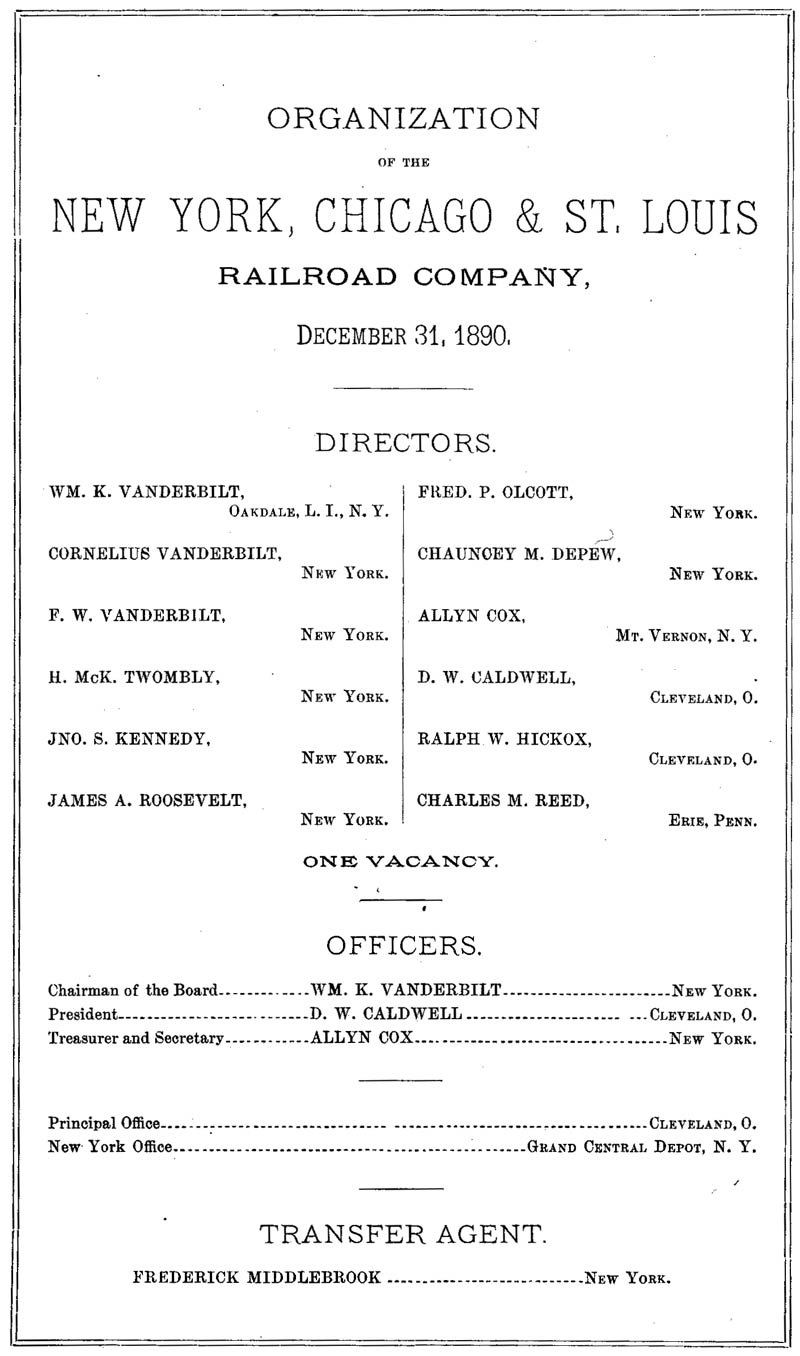
Caldwell, like Ralph W. Hickox, was one of several Edgewater residents intimately association with the railroad industry during America’s Gilded Age and, as will be seen, had close association with both of the rail lines that traversed the edge of the Edgewater neighborhood: the New York, Chicago & St. Louis Railroad Company (known as the “Nickel Plate Road”) and the Lake Shore & Michigan Southern Railway Company (known as “the Lake Shore”).

Caldwell’s association with railway service began in 1852 when he joined the Pennsylvania Railroad as a clerk at twenty-two years of age. In 1853, he joined the Pittsburg & Connellsville Railway, first as a civil engineer and then as its superintendent. In 1859, Caldwell became the superintendent of the Central Ohio Railroad. In 1869, he became general manager of the Pittsburg, Cincinnati & Muskingum Valley, the Jefferson, Madison & Indianapolis, and the Vandalia railroads. From 1881 to 1882, he was general manager of all the Pennsylvania lines west of Pittsburg. In 1882, Caldwell became vice president of the Nickle Plate Road at the behest of William H. Vanderbilt.

Vanderbilt had acquired the Nickle Plate Road so that it would not threaten the monopoly that the Lake Shore had previously enjoyed for rail traffic between Buffalo and Chicago and charged Caldwell with ensuring that it would not be a serious competitor to the Lake Shore. In 1885, after the Nickle Plate Road went into receivership, Caldwell was appointed receiver, a position he held until October 1, 1887, when he was elected president of the Nickle Plate Road. Caldwell relinquished the presidency of the Nickel Plate Road on October 30, 1894, to become president of the Lake Shore, a position he held until his death on July 21, 1897.
On July 22, 1897, The Cleveland Plain Dealer published a front page, above the fold, article entitled, “FATAL RESULT, President Caldwell Dies at His Home on Lake Avenue After an Illness of Only a Few Days: Great Surprised Caused.” The first line of the article read: “Gen. D.W. Caldwell, president of the Lake Shore & Michigan Southern railway system, is dead.” This succinct statement was curious as it provided Caldwell the appellation general when nothing in his biography recited above suggested military service. The article attempted, when it continued on the second page, to provide an explanation for the titulature. It quoted Caldwell’s close friend Robert Blee, former mayor of Cleveland (1893-1894), as stating the following: “During the [Civil] war [Caldwell] had charge of the transportation of many troops and if I am not mistaken he was at that time given a general’s commission by the then governor of Pennsylvania as a recognition of some important service performed.” Subsequent investigation by The Cleveland Plain Dealer would prove Mayor Blee’s explanation incorrect while providing its readers with a much more interesting genesis of the title.

On July 24, 1897, The Cleveland Plain Dealer reported the following: “It was learned last evening that during the strike of 1877 Gov. Thomas L. Young, then chief executive of [Ohio], appointed [Caldwell] aid on his general staff with the rank of brigadier general. His commission to this office is still retained in the archives of Shoreland.”

The Great Railroad Strike of 1877, also known as the Great Upheaval, is the strike referenced in the article. It was the first major general strike in American history and was sparked after railroads began steeply and repetitively cutting the wages of employees while generally maintaining the salaries of managers and the dividends of stock owners.

The strike paralyzed American commerce, resulted in scores of deaths, and substantial loss of property. Governors in ten states, including Ohio, mobilize state militia to break the strike. And, as intimated above, Caldwell the railroad executive was tapped by Young the state executive to assist in breaking the railroad strike. Comment upon the inappropriately incestuous relationship between politics and big capital that this appointment represented is unnecessary though acknowledgement of the comparatively little bloodshed and property loss that occurred in Ohio during the strike must be made. Several commentators of the time noted that Caldwell was so well-respected by the rail workers that he was able to travel in his private car unmolested during the strike as he attempted to monitor and defuse the situation.

Many articles eulogizing Caldwell also lauded his extraordinary relationship with Walter Benjamin Wright, “an intelligent colored man,” who served as his personal secretary while president of the Lake Shore. In this regard, The Cleveland Plain Dealer reported the following: “Mr. Wright entered Gen. Caldwell’s personal service in the capacity of porter on his private car. By an exhibition of faithfulness his services have been handsomely rewarded. Mr. Wright was given a business education and studied stenography. Six years ago, when Gen. Caldwell held the commission of vice president on the Nickel Plate, Mr. Wright was made private and railroad secretary. When the general became president of the Lake Shore system Mr. Wright became personal secretary. He was constantly with his chief in the office and on the road. Gen. Caldwell presented Mr. Wright with a $5,000 sixteen year endowment life policy twelve years ago. He also made him Christmas presents of $500 cash for many years” (July 24, 1897, p. 4). After Caldwell’s death, Wright assisted in settling Caldwell’s estate and was prominent at his funeral. Wright served as personal secretary to Caldwell’s Lake Shore successors, Samuel R. Calaway and W.H. Caniffin, before retiring in 1922. Wright’s life is more fully outlined in A Ghetto Takes Shape: Black Cleveland, 1870-1930 (pp. 117-118).

Readers interested in learning more about the history of the railroads that border the Edgewater neighborhood and in which Edgewater residents played such an important role may wish to consult works such as The Nickel Plate Road: The History of a Great Railroad (2001) and the Lake Shore and Michigan Southern Railway System and Representative Employees (1900). Both are in the holdings of the Cleveland Public Library and, happily, the latter can be accessed through the library’s digital collection at http://cplorg.cdmhost.com/cdm/ref/collection/p128201coll0/id/3469

Jacob Bishop Perkins: Twin Elms & Edgewater Park

On June 14, 1883, The New York Times published an article entitled, “WEALTHY CLEVELAND MEN: A CITY THAT HAS GROWN A CROP OF MILLIONAIRES” (p.5). In the article, The Gray Lady discussed such well-known Clevelanders as J.H. Wade, Henry B. Payne, George F. Brush, and John D. Rockefeller. The article did not neglect to mention, however, the lesser known Clevelander who is the object of this brief essay, Jacob Bishop Perkins. Indeed, the article concluding words were dedicated to him, and stated in their entirety the following: “Jacob B. Perkins, while the youngest millionaire in Cleveland, is one of the most public spirited, having just completed the erection of a half-dozen of the finest business blocks in the city and set an example which others are beginning to follow. His money came through inherited real estate that doubled in value with almost every year of his minority.”

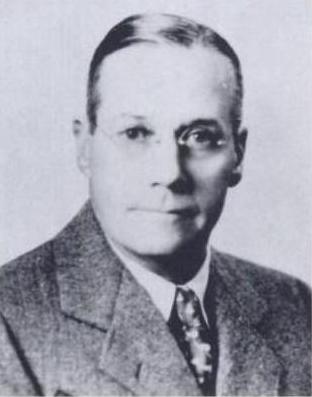
J. B. Perkins was born in Warren, Ohio, on December 20, 1854, the son of Jacob and Elizabeth Tod Perkins. His mother died when he was two years old and his father when he was four years old. After his father’s death, he lived with his grandmother, Nancy Bishop Perkins, widower of General Simon Perkins, in Warren until the age of seven. J.B. described his time with his grandmother as “lonesome and dreary.”

In J.B.’s Final Bulletin (1937), a collection of reminiscences that he wrote shortly before he died on December 26, 1936, he wrote matter-of-factly that “I had no playmates” and that “Grandmother specialized on Temperance education and used to stand me on a stool and have me spell ‘Gin,’ ‘Whiskey,’ ‘Brandy,’ and ‘Rum,’ then declaim ‘Touch not, taste not, handle not.’ Such things as toys, pictures, storybooks, games and music were taboo.”

It is doubtful many of us were so attentive in grade school as to remember from our Ohio History lessons that Simon Perkins (1771-1844), J.B.’s grandfather, was one of the founding fathers of the Western Reserve and Ohio.

He was a surveyor for the Western Reserve of Connecticut, a farmer, a cofounder of Akron, Ohio, a brigadier-general during the War of 1812, the first postmaster of the Connecticut Western Reserve, a founder of the Western Reserve Bank, a cofounder of the Brier Hill Iron & Coal Company, a trustee of the Warren Academy, an agent for the Aetna Insurance Company, a stockholder and president of the Trumbull and Ashtabula Turnpike Company, a state canal commissioner from 1826 to 1838, being one of the main planners for the route of the Ohio and Erie Canal, and auditor of Trumbull County from 1810-1812. However, most importantly for our story, he was the ultimate source of much of J.B.’s inherited real estate wealth, which was referenced in The New York Time’s article above. J.B. himself noted that his grandfather’s real estate holdings were so vast that he had, as principal or agent, paid one-seventh of all taxes on real estate in the state of Ohio at one point in his career.

A year before his grandmother died in 1862, J.B. moved to Cleveland to live with his father’s brother, Joseph Perkins, to take advantage of the fine private schools with which Cleveland was blessed. After J.B. completed his schooling in Cleveland, he went to Williams College in Williamstown, Massachusetts (Class of 1877). He returned to Cleveland, where he married Sallie Moore Wilshire in 1878. Shortly thereafter, J.B.’s story and the Edgewater neighborhood’s story find their beginning.

In his bulletin, J.B. records that he was an avid breeder of horses and it is related to his love of horses that the earliest reference to Twin Elms, the Perkin’s Edgewater estate that has been referenced in several other essays appearing in the EHA Bulletin, can be found.

Of Twin Elms, J.B. wrote of a race track for horses which he had built and which appears on early maps of the area:

“Very early in my career I graded a half mile tack on the land which we called Twin Elms, after a noticeable tree near the lake. This work cost me $500.00 and gained me more notoriety than about anything I ever did. I was “the man that own the race track” to all the kids on the west side and it was convenient for all sorts of meetings. Harvey Brown shot live pigeons there and the Gun Club used it for the annual meet, where they had a real bar that shocked me terribly and nearly broke my Uncle’s heart, so I followed it up with the games of the Y.M.C.A., of which I was president. Nine people out of ten had a horse they thought was fast and they’d come to my track to time him or settle a bet. We had everything but dog fights and cock fights. Still there was plenty of time for me to train my colts, whether they were trotters, saddle horses, or carriage horses. I built a house for my farmer, with a couple rooms for myself, but before I ever used them, I decided to go in double harness and there was no provision for that. (J.B.’s Final Bulletin, p. 51).”

J.B. then goes on to record that, in 1882, after his wife Sallie gave birth to their daughter Francis, his wife’s doctor ordered his wife to “get out of the City for the summer” and that, as a result, the farmer moved out of the Twin Elms farm house and he and his family moved in.

George E. Condon, in West of the Cuyahoga, described the Twin Elms Farm of Jacob Perkins as “a civic anomaly as the nineteenth century neared its end. The glorious eighty-nine acre spread constituted the most important lakefront estate on either side of the growing city that was closing in on such elegant manifestations of private wealth. It could not survive in a city. It’s sandy beach, deemed the finest on the entire Cleveland lakefront, enhance its attractiveness” (p. 155). Earlier essays discussed J.B.’s recruitment of Senator Hanna and his brother as neighbors, and how Senator Hanna ran the presidential campaign for William McKinley from his Edgewater estate.

J.B. and Sallie’s son Ralph was born in 1886. In his book, Perkinsiana (1963), he wrote fondly of Twin Elms. “My family spent the winter months of the year in rented houses on Euclid Avenue …. The large farm was a wonderful playground with a fine beach, ponies, dogs, etc.

I lived in a kid’s heaven.” The 1900 US census records that the J.B., Sallie, Francis, and Ralph, lived at Twin Elms with four servants and Sallie’s widowed mother. The family had left by the 1910 census.

J.B.’s public spiritedness, noted so admirably by The New York Times when he was still a very young man, is still quite manifest to the residents of the Edgewater neighborhood and the city of Cleveland even today – we need only contemplate the emerald gem at our doorstep which was the core of Twin Elms, Edgewater Park.

On August 21, 1889, J.B. proposed in a speech that the city consider the purchase of Twin Elms for use as a city park, hoping that the beach, woods, and acreage would be stitched together for civic recreation. He offered the land to the city at well below market. The city fathers reacted coolly, as they always seem to do when parks are suggested by the citizenry. But J.B. persisted and, in 1894, the city acquired much of Twin Elms lakefront acreage and its beach for public recreation.

Although some initially sought to name the park after Perkins, J.B. discouraged such, and the land was ultimately named Edgewater Park.

J.B.’s civic and charitable activities continued throughout the remainder of his life, as did his great fondness for breeding and riding horses;

however, as those relate to other than the Edgewater neighborhood, they shall be passed over in silence at the conclusion of this essay. Upon his death in 1936, J.B. was buried in the family plot in Lake View Cemetery. It needs scarcely be observed that J.B., more than any other current or former resident of the Edgewater neighborhood, has left an indelible, beautiful, and too oft underappreciated mark in the neighborhood, for his legacy is none other than Edgewater Park itself.

Ruth Hanna McCormick Simpson

At least three former residents of the Edgewater neighborhood make an appearance in The Biographical Dictionary of the United States Congress, which may be accessed online at http://bioguide.congress.gov/biosearch/biosearch.asp.

The first to make an appearance is U.S. Representative William John White. Congressman White –perhaps one of the most colorful characters to have lived in the Edgewater neighborhood — served in the U.S. House of Representatives from 1893-1895. While not in Washington, he resided at his Thornwood Estate on Lake Avenue (near West 110th) in a 52 room mansion. His story – and what a story it is! – will be explored at a later date.

The second to make an appearance in The Biographical Dictionary is U.S. Senator Marcus Alonzo Hanna. Senator Hanna, whose political career and significance have been explored in previous issues of the EHA Bulletin, served in the U.S. Senate from 1897 until his death in 1904. Sadly, Senator Hanna died in Washington, far from the comfort of his Glenmere Estate on Lake Avenue (between West Boulevard and West 104th).

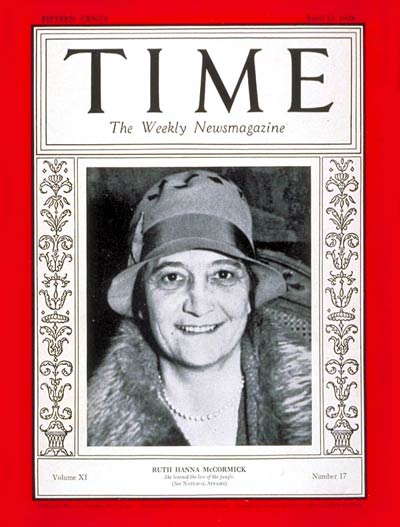
The third to make an appearance, and the subject of this brief portrait, was Senator Hanna’s daughter, Ruth Hanna McCormick Simpson (1880-1944), a woman whose life and career were so remarkable that she appeared on the cover of Time Magazine in 1928.

The Biographical Dictionary entry for Ruth Hanna states the following:

“McCORMICK, Ruth Hanna, (daughter of Marcus Alonzo Hanna, wife of Joseph Medill McCormick and of Albert Gallatin Simms), a Representative from Illinois; born in Cleveland, Ohio, March 27, 1880; attended Hathaway Brown School in Cleveland, Dobbs Ferry (N.Y.) School, and Miss Porter’s School in Farmington, Conn.; owned and operated a dairy and breeding farm near Byron, Ill.; publisher and president of the Rockford Consolidated Newspapers (Inc.), Rockford, Ill.; chairman of the first woman’s executive committee of the Republican National Committee, and an associate member of the national committee 1919-1924, in the latter year becoming the first elected national committeewoman from Illinois and served until 1928; active worker for the suffrage amendment from 1913 until the Constitution was amended; elected as a Republican to the Seventy-first Congress (March 4, 1929-March 3, 1931); was not a candidate for renomination in 1930, having received the Republican nomination for United States Senator, in which election she was unsuccessful; resumed her newspaper interests; married Albert Gallatin Simms, of New Mexico, who was also a Member of the Seventy-first Congress; and resided in Albuquerque, N.Mex.; died in Chicago, Ill., on December 31, 1944; interment in Fairview Cemetery, Albuquerque, N.Mex.”

What this entry does not record is that Ruth Hanna was one of the first children to be raised in the Edgewater neighborhood – living at the Glenmere Estate from its construction in 1889 until June 10, 1903 – the day when her wedding shone a national spotlight on Glenmere and President Theodore Roosevelt came to the neighborhood to partake in the festivities.

In West of the Cuyahoga, George E. Condon devotes an entire chapter, entitled “The Wedding of the Century,” to the June 10, 1903, wedding of Ruth Hanna to Joseph Medill McCormick, Mr. McCormick was a newspaper executive and heir to the family-owned Chicago Tribune.

He also had interests in the Cleveland Leader and the Cleveland News. He was the son of Robert Sanderson McCormick, who was Ambassador to Russia and heir to the McCormick Reaper fortune.

Mr. Condon sets the scene for the wedding: “The guest list of the wedding, attended by the top crust of American society, reflected the political and journalistic backgrounds of the families. The principals, with all their political ties, made the wedding more than a society event. There were strong political implications.” The “political implications,” not expounded upon by Mr. Condon, were the strong desire of many businessmen and politicians to have Senator Hanna run against President Roosevelt for the presidency in 1904, a desire which greatly strained the relationship between the President and the Senator in the weeks immediately before the wedding. Thomas Beer, author of Hanna, details the high political drama and tensions between Roosevelt and Hanna in May 1903 and the interested reader is directed to Beer’s biography of the Senator for a riveting story which, surprisingly, leaves Roosevelt looking less the gentleman. In any event, President Roosevelt solicited and received an invitation to the wedding in spite of, or perhaps because of, the political implications.

President Roosevelt and his daughter Alice arrived by special train in Cleveland on the morning of the wedding and were immediately escorted to Glenmere to pay their respects to Senator Hanna and his daughter Ruth. Mr. Condon records that the President’s first words on being welcomed to Glenmere were “Hello, Uncle Mark!” and that the “friendly, affectionate greeting set the tone of their meetings during the day and put everyone at ease.”

In contrast, Thomas Beer’s biography only records the following: “The President’s teeth shimmered on the veranda of the big mansion by the Lake and he said, ‘Damn!’ audibly, catching his cuff in a twisted ornamentation of the newel post in the hall. Out under a tent on the lawn old Charles Foster lifted champagne to his lips, whispering, ‘To the next President … whichever one it is!’”

Regardless of the political circumstances, President Roosevelt was accorded every honor by Senator Hanna. After the President arrived at Glenmere, the wedding party traveled across town by carriages from Glenmere to St. Paul’s Episcopal Church (East 40th and Euclid), selected for its capacity rather than any affinity to the wedding couple. The lead carriage carried the President and his daughter and the mother of the bride, Mrs. Charlotte Rhodes Hanna. The second carriage carried secret service agents – yes, even in 1903 these gentlemen had a ubiquitous presence as a shadow to the President. The third carriage carried Senator Hanna and the bride. Other carriages carried the groom’s party as well as distinguished guests like John D. Rockefeller. After the wedding ceremony, the wedding party returned to Glenmere for a reception that last well into the evening. The newlyweds departed for Illinois before the festivities ended. The President and his daughter Alice were the last guests to leave Glenmere that evening.

Although Ruth left the neighborhood when she married Joseph Medill McCormick, she certainly did not leave the political milieu that she had known growing up at Glenmere with Senator Hanna as her father. Rather, as suggested by The Biographical Dictionary cited above, once Ruth settled into her new circumstances, she immersed herself in the suffrage movement, exercising a leadership role, until the Nineteenth Amendment to the U.S. Constitution was ratified in 1920.

While Ruth actively worked for the right women to vote, her husband was elected to the Illinois House of Representatives in 1912 and 1914, to the U.S. House of Representatives in 1916, and the U.S. Senate in 1918. Unfortunately, her husband was not successful when he sought re-election to the U.S. Senate in 1924 and, in a state of depression at his electoral loss, committed suicide in 1925, leaving Ruth the widowed mother of three children. Ruth, however, was a resilient woman and, rather than withdrawing in despair from life engaged it more fully, soon after being elected to the U.S. House of Representatives as an at-large representative from Illinois in 1928.

She did not seek re-election as she received the Republican nomination for the U.S. Senate in 1930. After she lost the general election for the U.S. Senate, she resumed her newspaper interests. In 1932, Ruth married U.S. Representative Albert Gallatin Simms (Rep-N.M.) and moved with him to New Mexico. Once in New Mexico, she founded several schools, ran a radio station, two newspapers, and a cattle and sheep ranch. She died in 1944 after falling from a horse.

Even from this temporal distance, it is clear that Ruth Hanna McCormick Simpson was a most extraordinary woman – and perhaps, just perhaps, no small part of her remarkable life was due to her formative years at Glenmere.

C.F. SCHWEINFURTH: BRIDGE 54

In previous articles published in The Beacon, we learned that famed architect Charles Frederick Schweinfurth (1856-1919) was responsible for the Edgewater mansions that graced the Glenmere and Urnwood estates of Senator Marcus Hanna and Mr. Leonard Hanna, respectively. We also learned that both of those magnificent residences were demolished early in the twentieth century to make way for the development of the Edgewater neighborhood we know today. What we did not learn in those articles, though, was that Mr. Schweinfurth still maintains a subtle but significant presence in the greater Edgewater neighborhood — a masonry presence that you have undoubtedly passed by innumerable times without any awareness of its origins or significance. The masonry presence of which I write is Bridge 54, the impressive stone railroad bridge that crosses over West Boulevard between Baltic Avenue and Detroit Avenue.

Bridge 54 was built in 1897 by the Mt. Vernon Bridge Works, of Mt. Vernon, Ohio.

It was built for the Lake Shore and Southern Michigan Rail Road which, as you may recall, was discussed in the article about the railroad company’s president, Daniel W. Caldwell.

In 1897, Mr. Caldwell was president of the railroad and lived in his Shoreland estate mansion on Lake Avenue. As such, the connections of that masonry bridge to the Greater Edgewater neighborhood are greater than its mere proximity to the neighborhood. It also has connections through Mr. Caldwell and Mr. Schweinfurth.