

As they say: to stand up, and to sit down,
To protect the king’s son,
And to hold back the donkeys,
Who has breath for that?
Gilgamesh and Akka, Lines 24-27 (trans. Dina Katz)
Gilgamesh and Akka, by Dina Katz (Library of Oriental Texts, Vol. 1, STYX Publications, 1993), explores the short narrative poem in standard literary Sumerian which tells the tale of Gilgamesh of Uruk’s war against Akka of Kish.
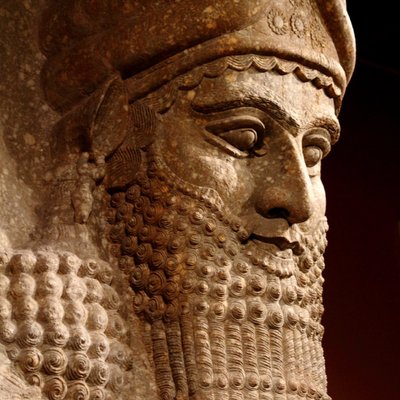
In the tale, Akka of Kish demanded physical labor from the people of Uruk “to finish the wells, to finish all the wells of the land.” Gilgamesh, in response, asked the elders of Uruk for permission to wage war against Kish. The elders denied Gilgamesh permission to wage war against Kish, at which point Gilgamesh took his case for war to the able-bodied men of Uruk directly:
Since Gilgamesh, the Lord of Kulaba
had placed his trust in Inanna,
He did not take to heart the words of his city’s elders.
Gilgamesh before the able-bodied men of his city again
Laid the matter, seeking for words:
‘To finish the wells, to finish all the wells of the land,
To finish all the shallow wells of the land,
To finish all the deep wells with hoisting ropes,
Let us not submit to the house of Kish,
Let us smite it with weapons.’
The convoked assembly of his city’s able-bodied men answered Gilgamesh:
‘As they say: To stand up, and to sit down,
To protect the king’s son,
And to hold back the donkeys,
Who has breath for that?
Let us not submit to the house of Kish, Let us smite it with weapons.’
Gilgamesh and Akka, Lines 15-29 (Trans. Dina Katz)
The tale records that Gilgamesh and his able-bodied men went on to wage successful war against Akka and Kish.
Katz identified the passage that I am so enamored of, and which I quoted at the beginning of this post, as “puzzling.” She noted that a previous scholar felt that the expression was likely a “common saw” [i.e., a common Sumerian saying] whose meaning was lost to us. She noted, however, that the verbs “to stand” and “to sit” were often associated with the participants of the public assembly. It would appear, from the context, that the expression suggests having no more need or patience for further discussion due to appropriate consideration having been given (as in an assembly), pressing exigent conditions (as in a security situation), or exasperating circumstances (as in corralling or guiding donkeys).
Herman L. J. Vanstiphout, in reviewing Katz’s work in “A New Edition of Gilgamesh and Akka” (Journal of the American Oriental Society, vol. 119, no. 2, American Oriental Society, 1999, pp. 293–96) generally approved of Katz’s scholarly contributions and, with respect to the translation of the particular passage, took exception only with the wording regarding holding back the donkeys. He conceded that translating the line as “to hold back” “might surely be all right in a general sense” but seemed to suggest that something along the lines of “to hold the reins” may have been (more?) appropriate. For my part, I find the translation endearing, and intend to invoke the phrase regarding the donkeys, as translated, however perplexing it may seem, whenever I seek to end a discussion and perhaps give exasperated approval to a request in which I am in agreement.


 Northcoast Antiquarian