


Of late, the insights and importance of Giambattista Vico, an eighteenth century Neapolitan, especially as they relate to historical imagination, have attracted my attention. To plumb the depths of the significance of his work, which are far deeper than I initially imagined, I obtained and read a translation of his opus Scienza Nuova seconda (or simply The New Science, the title under which the definitive version published in 1744 is known today). The translation I obtained was published by Yale University Press in 2020, translated by Jason Taylor and Robert C. Miner, with an introduction by Giuseppe Mazzotta. It is the third English translation of The New Science and is both well-notated and highly readable.

Giovanni Battista Vico was born in Naples on June 23, 1668. He received his education at local grammar schools, from Jesuit tutors, and at the University of Naples from which he graduated in 1694 as Doctor of Civil and Canon Law. Although he never succeeded in obtaining the chair of Jurisprudence at the University of Naples, which he long desired, he did obtain a professorship in Rhetoric at the University, which he held until 1741. Vico died in Naples in January 1744, at the age of 75.
In his lifetime Vico’s works were largely unremarked, however, by the nineteenth century his extraordinary insights began to make a significant impression on philosophers, historians, and other intellectuals. Vico’s ideas reached a wider audience with a German translation of The New Science by W.E. Weber which appeared in 1822, and, more significantly, through a French translation by Jules Michelet in 1824. Subsequently, Vico’s views influenced the work of Wilhelm Dilthey, Karl Marx, R.G. Collingwood, and James Joyce, who used The New Science to structure Finnegans Wake. The Stanford Encyclopedia of Philosophy notes that “ … an appreciation of Vico’s thought has spread far beyond philosophy, and his ideas have been taken up by scholars within a range of contemporary disciplines, including anthropology, cultural theory, education, hermeneutics, history, literary criticism, psychology, and sociology. Thus despite obscure beginnings, Vico is now widely regarded as a highly original thinker who anticipated central currents in later philosophy and the human sciences.”
When I was searching for guidance on understanding Vico, I quickly found that some of the greatest intellects of the twentieth century had both lectured and written on him. For instance, the political philosopher Leo Strauss had lectured on him in Autumn Quarter 1963 at the University of Chicago. Audio files of the lectures are available at the University’s Leo Strauss Center website; however, the quality of the audio files is uneven and, in many instances, poor. But not to fear, a comprehensive and helpful written summary of the lectures is available here. More helpful, and the immediate impetus for this posting, is the second guide I utilized for Vico: the writings by the intellectual historian Isaiah Berlin collected in the work entitled, Three Critics of the Enlightenment – Vico, Hamann, Herder (with a foreword by Jonathan Israel), Second Edition, edited by Henry Hardy, which was published by Princeton University Press in 2013.

From the latter work, Three Critics of the Enlightenment, Berlin wrote a masterful section summarizing Vico’s attitude towards an appropriate historical understanding of humanity’s use of metaphorical language that immediately gave me a greater understanding and appreciation of both Vico’s genius and insight as well as brought to my mind with particular force many different literary and artistic works which I had previously experienced, but in a new and more vivid light. First, the lengthy extract from Berlin’s essay:
“We normally distinguish between the literal and the metaphorical use of language. To be literal is to call things by their appropriate names, and describe them in plain, simple terms; to use metaphor is a sophisticated or poetical way of embellishing or heightening such plain usage for the sake of giving pleasure or of creating vivid imaginative effects, or of demonstrating verbal ingenuity; this is usually considered the product of conscious elaboration which could, with enough effort, always be translated back into the plain or literal sense of which it is merely an artificially heightened expression. Metaphor and simile, even allegory, are not for Vico, deliberate artifices. They are natural ways of expressing a vision of life different from ours. Men once thought, according to him, in images rather than concepts, and ‘attributed senses and passions […]to bodies as vast as sky sea and earth’. What for us a less or more conscious use of rhetorical devices was their sole means of ordering, connecting and conveying what they sensed, observed, remembered, imagined, hoped, feared, worshiped – in short their entire experience. This is what Vico calls ‘poetic logic’, the pattern of language and thought in the age of heroes. The metaphorical use precedes – and must precede – the ‘literal’ use of words, as poetry must come before prose, as song is earlier than spoken speech; ‘the source of all poetic locution are two: poverty of language and need to explain and be understood’. Early man, animist and anthropomorphist, thought in terms of what we now call metaphor as naturally and inevitably as we now think in ‘literal’ phrases. Hence a great deal of what now passes for literal speech incorporates dead metaphors, the origins of which are so little remembered that they are no longer felt – even faintly – as such. Since the changing structure of a language ‘tells us the histories of the institutions signified by the words’, we can glean from it something of how their world looked to our ancestors. Because primitive man cannot abstract, ‘metaphor makes up the great body of the language among all nations’ at that time. Vico supposed that such men used similes, images and metaphors much as people, to this day, use flags, or uniforms, or Fascist salutes – to convey something directly; this is a use of signs which it would today seem unnatural to call either metaphorical or literal. Vico maintains that when a primitive man said ‘the blood boils in my heart’, where we should say ‘I am angry’, his ‘metaphorical’ phrase is a uniquely valuable evidence of the way in which such a man though, perceived and felt. What he felt when he spoke of blood boiling seemed to him – and indeed was – more directly related to his perception of water in a heated cauldron than our sensation of anger would seem to us today. The marvellous images, the immortal phrases coined by early poets are, according to Vico, due not to conscious flights of fancy but to the fact that the imaginations of such men and their capacity for direct sensations were so much stronger than ours as to be different in kind, while their capacity for precise analogies and scientific observations was far less developed. Hence, if we are to understand their world, we must try to project ourselves into minds very remote from our own and endowed with these unfamiliar powers. A world in which men naturally talk of the lip of a cup, the teeth of a rake, the mouth of a river, a neck of land, handfuls of one thing, the heart of another, veins of minerals, bowels of the earth, murmuring waves, whistling winds, smiling skies, groaning tables and weeping willows – such a world must be deeply and systemically different from any in which such phrases are felt, even remotely, to be metaphorical, as contrasted with so-called literal speech. This is one of Vico’s most revolutionary discoveries.”
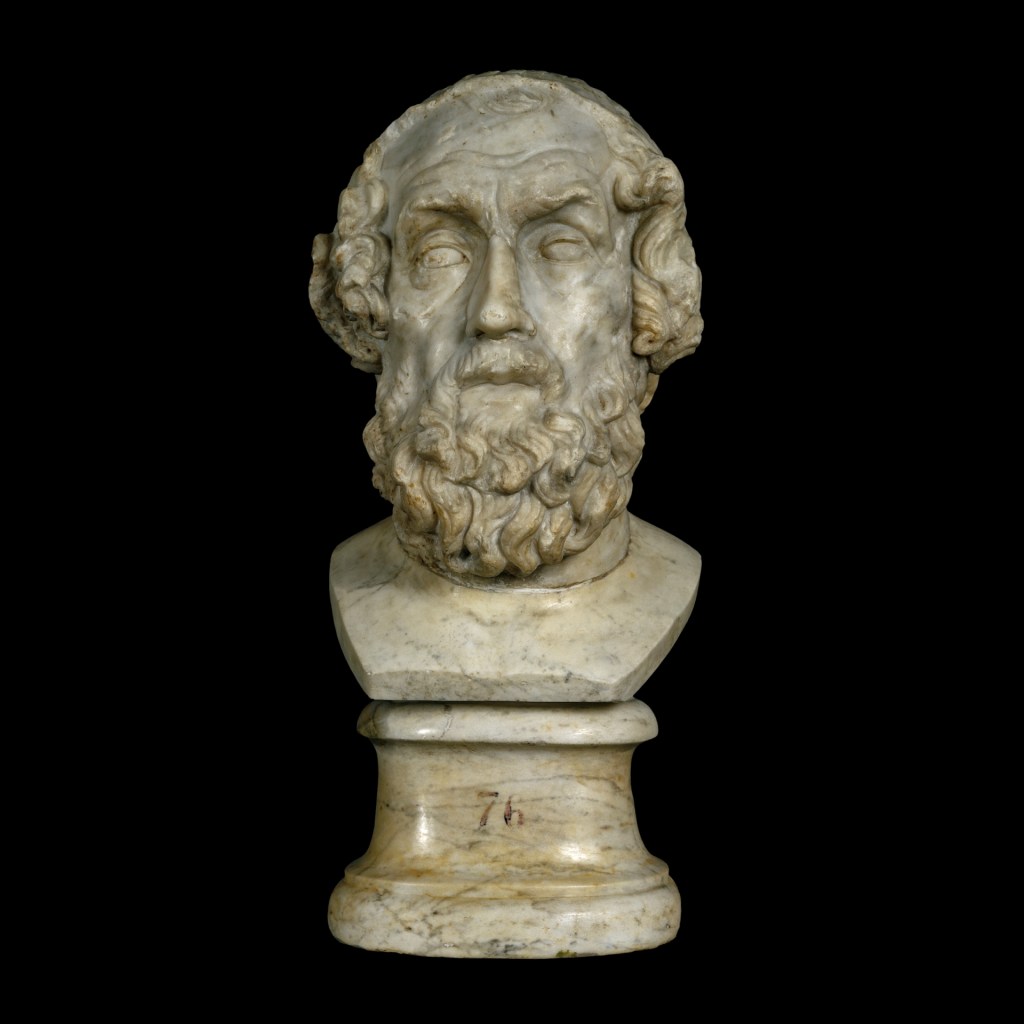
Revolutionary indeed! Who cannot but grasp even a scintilla of the foregoing and not know that reading the Iliad or Gilgamesh will be even more instinctually meaningful and powerful if read with this understanding of how those works struck the ears and core of our ancestors so many thousands of years ago? And this, finally, brings me to the Darmok episode, which came to mind quite readily as I read the above on metaphorical speech.
A Trekkie I am not. However, I do recall being struck by the brilliance of the Darmok episode when I first saw it decades ago. The episode summary: Starfleet, a species known as speaking a literal language, interacts with a species (Tamarians) that uses a metaphorical language. As a result of the language disconnect, the two species are initially unable to understand each other with tragic consequences as they engage in an ‘epic’ struggle with a hostile predator. Ultimately, Picard, using the metaphorical language of Gilgamesh, communicates his understanding, such as it is, with the other species, thereby extending a tenuous bridge between the species … with optimistic portents for future relations. Star Trek often had ‘primitive’ species zipping across the universe with advance technology. As such, it is not surprising that a species capable only of metaphorical language would be capable of interstellar flight in the Star Trek universe. In Vico’s universe, however, such a primitive state of humanity (for he could conceive only of humanity) would not be capable of such advanced technological achievements.
An Atlantic article published in 2014 noted that many Trekkies also argued that the Tamarians would be unable to be so advanced given the limitations imposed by their metaphorical language. However, the author of the article, Ian Bogost, countered that the Tamarian language was sufficient, if compared, not to metaphor, but perhaps to allegory or, better yet, was understood as an abstraction, that is, a form of logic, which could be best described as a strategy. His argument is, to my sensibilities, convoluted, complex, and unattractive, but worth reviewing.
Discover more from Northcoast Antiquarian
Subscribe to get the latest posts sent to your email.

 Northcoast Antiquarian