
U.S. Senator M.A. Hanna: Part I

“Senator Hanna bought part of Twin Elms and made it famous. The McKinley election was planned in the famous summer house which finally fell over into the lake. Leonard C. Hanna built next door and we all became intimate friends.” – Jacob Bishop Perkins

In the late nineteenth century, Jacob Bishop Perkins (1854-1936) owned most of the land that is now the Edgewater Neighborhood and Edgewater Park. His holdings in Edgewater were known prosaically as Perkins’ Farm even though farming was never undertaken on the land. More poetically, his estate in Edgewater was known as Twin Elms. However, this article is not about Mr. Perkins or Twin Elms, rather, it is about the most famous resident of Edgewater, Marcus Alonzo Hanna, and his then equally famous estate, Glenmere.

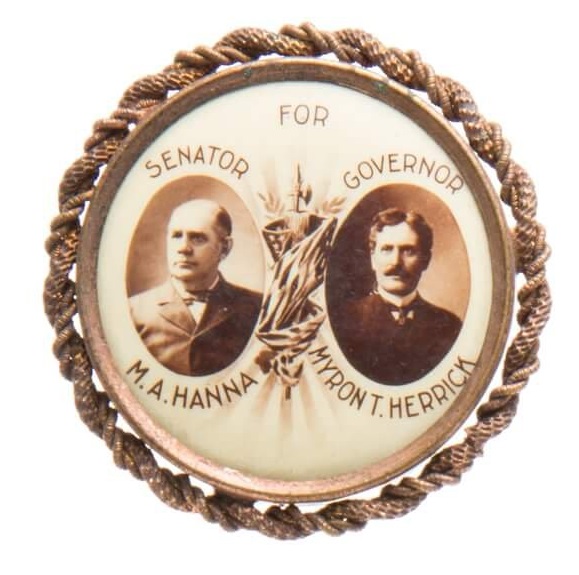
Marcus Alonzo Hanna (1837-1904) was an extraordinary man who features prominently in Cleveland, Ohio, and American history. His careers were multiple, and his successes far outshone his failures. He was an industrialist, owner of the Westside Railway and its successors, publisher of the Cleveland Herald, Republican Party eminence, President William McKinley’s campaign manager, and twice elected U.S. Senator. He even, for a time, owned and operated the Euclid Avenue Opera House. His legacy was broad as he had a major role in the economic prosperity of Cleveland as a businessman, the election of President McKinley as a “political boss,” and the building of the Panama Canal as a senator.

Mr. Hanna was born on September 24, 1837, in Lisbon, Ohio. He moved to Cleveland in 1852, where he attended high school with John D. Rockefeller. On September 27, 1864, he married Charlotte Augusta Rhodes, in spite of the spirited disapproval of her father, prominent west side community leader, Democrat, and businessman Daniel Rhodes.

Originally, the couple resided with Mr. Rhodes in his Franklin Boulevard mansion, later moving to a small home on Prospect Street. After a series of unfortunate business setbacks left Mr. Hanna financially exhausted, he and his wife returned to Mr. Rhodes’ Franklin mansion and Mr. Hanna was brought into Mr. Rhodes’ business as a principal. Once Mr. Hanna became a principal in Mr. Rhodes’ company, he and the company prospered.

Jacob Bishop Perkins sold Mark and Charlotte Hanna a portion of Twin Elms on which they built a residence in 1889. They called their estate “Glenmere.” It is at Glenmere that they raised their daughter Ruth Hanna, who married Joseph Medill McCormick, owner of the Chicago Tribune and later a U.S. Senator. After Senator McCormick’s death, Ruth went on to marry U.S. Representative Albert Gallatin Sims. But Ruth Hanna, not one to merely be associated with politicians, was an able politician in her own right, having served as a U.S. Representative in Congress and being the first woman to be the nominee of the Republic Party for a U.S. Senate seat.

The Glenmere Estate

Charles Frederick Schweinfurth was the leading residential architect in Cleveland during the last quarter of the nineteenth century, responsible for more homes on Cleveland Millionaire Row on Euclid Avenue than any other architect. Naturally,

Mark Hanna engaged Mr. Schweinfurth to design and build Glenmere when he came to the Edgewater neighborhood at the invitation of Mr. Perkins.

In The Life and Works of Charles Frederick Schweinfurth – Cleveland Architect, R.A. Perry records the following about Glenmere:

“The most original “Shingle Style” residences of Schweinfurth’s early period were two summer homes designed for United States Senator Marcus A. Hanna and his brother Leonard. Both of the Hanna houses were completed in or around 1889 and were located … near the shores of Lake Erie. The Hanna designs reflected a horizontal emphasis which was new in Schweinfurth’s work, and both designs had two facades.”

“Glenmere,” the summer residence of Marcus A. Hanna, was probably the earlier of the two designs and was the more elaborate. On the south façade of “Glenmere” was a projecting carriage porch below an enlarged version of the “Shingle Style” Siamese gable, but decorated with contrasting stripes in imitation of English half-timber construction. The hexagonal cupola which had been used earlier on the Dellenbaugh and Nye designs also could be seen on the roof at “Glenmere.” At the south west end of the façade was a double tower motif which penetrated a boldly projecting gable in an unusually dramatic manner. It has not been possible to locate any prototypes for that feature which was apparently original.

The lake façade of “Glenmere” reflected a different character from the entrance façade. The main features of the lake or north façade were a wide porch supported on Tuscan columns, a second story loggia, and a number of gables, circular towers, and clustered chimneys which projected from the steep pitched roof.
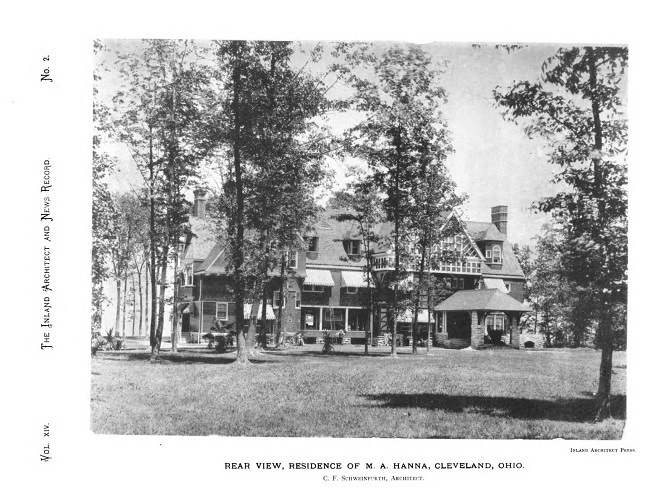
“Glenmere” was the scene of many splendid parties and other social events in Cleveland, and its owner was an important figure in American history. The plan for “Glenmere” included a spacious entrance hall with a baluster screen pierced by an oval opening located in front of the staircase.

The dining room contained an elaborate mantel with a veined marble fireplace and the dining room included a classical-inspired mantle finished in white and gold which links Schweinfurth with the Colonial Revival style.

The interior decorations at “Glenmere” were the most elaborate since the Everett mansion of 1883. The Marcus Hanna residence was Schweinfurth’s largest “Shingle Style “design. The decidedly horizontal emphasis of the design and the use of decorative half-timber framing were the closest Schweinfurth ever came to the design of a Shavian manor house.
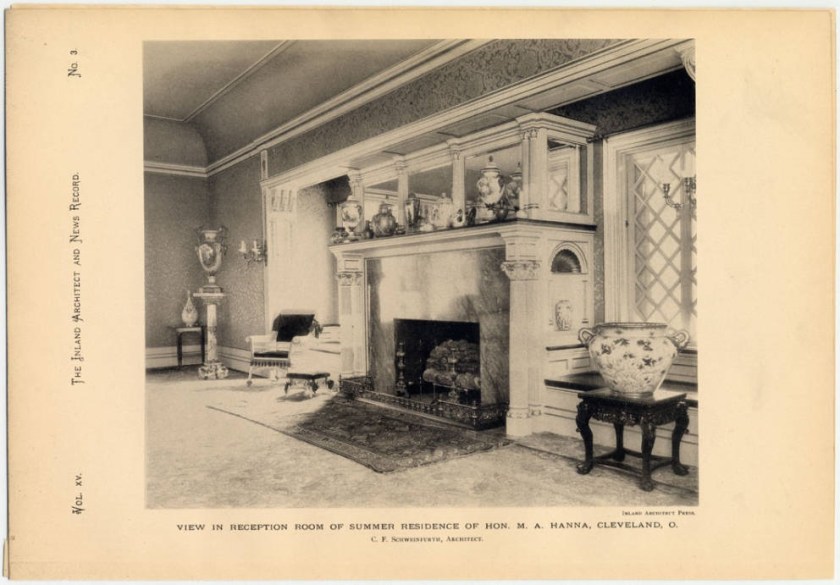
Sadly, Glenmere was demolished in the early 20th century. Fortunately, Glenmere was sufficiently famous that pictures of it appeared on contemporary postcards and it was featured in heavily photographed publications, including Inland Architect and News Record.

In the next article, we will talk about the campaign which won William McKinley the presidency of the United States, which was planned and largely executed at Glenmere, and Ruth Hanna’s “Wedding of the Century,” which was hosted at the Glenmere Estate and brought, among others, President Theodore Roosevelt to the Edgewater neighborhood on a sunny June day in 1903.

U.S. Senator M.A. Hanna: Part II

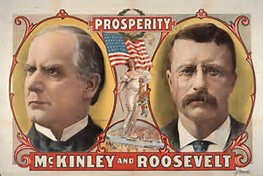
Previously, when discussing Edgewater’s most famous resident, U.S. Senator Marcus Alonzo Hanna (1837-1904), I briefly noted that the Senator was, among other things, a Republican Party eminence and President William McKinley’s campaign manager. These abbreviated characterizations do not adequately capture the extraordinary role he played in both shaping modern American political campaigns and the critical role he played in securing William McKinley the presidency, which roles he played, in large part, from his Lake Avenue estate, Glenmere, during the summers and from his rented home in Thomasville, Georgia, during the winters.

Hanna’s first foray into national Republican politics occurred in 1880, when he created a businessman’s club that successfully raised money to cover Ohioan James A. Garfield’s personal expenses during the presidential campaign of 1880. In the next two presidential elections, Hanna actively supported Ohio Senator John Sherman’s attempts to win the Republican Party presidential nomination.

Finally, by 1896, Hanna retired from his business interests to dedicate himself to the election of Ohio Governor William McKinley to the presidency. Hanna’s affection and support for McKinley was reportedly related to Hanna’s admiration for McKinley’s integrity, loyalty, and scruples although McKinley’s opponents, including the newspapers owned by William Randolph Hearst, fostered a narrative in which Hanna supported McKinley because McKinley was Hanna’s pliable puppet.

Hearst’s editorials often related a true story that hoped to firmly fix the narrative that Hanna had untoward influence over McKinley. The story ran thusly: “During the Panic of 1893, McKinley was presented with a bill for $100,000 to cover bad loans he had co-signed for a friend in Youngstown. Lacking anything near that kind of cash, McKinley planned to resign as governor and return to his law practice to pay the debt. When he informed Hanna, the Clevelander would have none of it. He quickly assembled a group of wealthy friends who retired the notes. McKinley and his wife put property in a trust to repay their benefactors, but no claims were ever filed.”

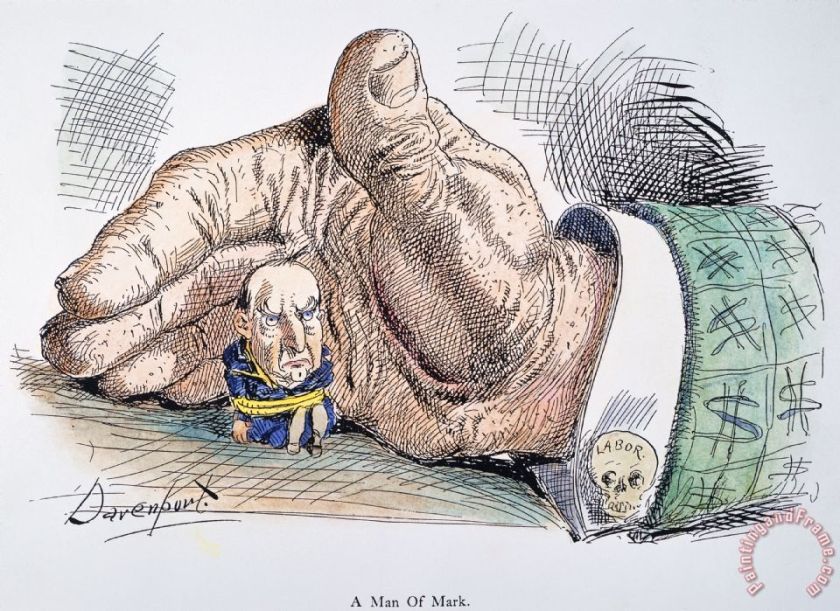
The image of Hanna as financier and McKinley as beholden beneficiary was driven home by in the Hearst newspapers by political cartoonist Homer Davenport, who depicted Hanna as “Dollar Mark,” a bloated character dressed in a suit covered with dollar signs. McKinley was usually drawn as a smaller child accompanying Dollar Mark. The attacks accusing McKinley of being a puppet of Hanna did not prevent McKinley from winning the White House in 1896.

Hanna, as noted earlier, often directed McKinley’s campaign from his “lake house” on Lake Avenue, a campaign which some have labeled the first modern American presidential campaign. Joseph Frolik, in writing about Hanna’s impact on American presidential campaigns, summarized the campaign thusly:

“Hanna worked his campaign magic without the aid of computers or the Internet or broadcast media, of course. Yet many of the practices that still define campaigning in the age of social media and micro-targeting were introduced or refined by Hanna during his political tour de force: the 1896 campaign to put William McKinley, his friend and fellow Ohioan, in the White House.”

He used polling techniques, albeit primitive ones, to monitor the pulse of the campaign, especially in states he thought could swing either way. He ordered the production of 200 million pamphlets, newspaper inserts and other pieces of literature – at a time when there were barely 14 million voters in the United States. Much of it was issue-oriented and targeted particular market segments such as German-Americans or “colored” voters. He dispatched 1,400 surrogate speakers to spread a unified GOP message, some of them toting newfangled devices to enthrall audiences with grainy moving pictures of McKinley. And, as Frolik further observed:

All of this innovation required boatloads of cash, and Hanna excelled at raising it. Before 1896, most presidential campaigns were run through the political parties and relied on tithes from patronage workers. Hanna had broken into politics in Cleveland by raising cash from his fellow businessmen to help elect President James Garfield in 1880, and 16 years later, he took the art of the ask national. He tapped not just the railroaders, but tycoons of every stripe, by stoking their fears of financial catastrophe if Bryan and his “free silver” platform prevailed. The result was a war chest that has been estimated at between $3.5 million and $10 million, in an era when newspapers sold for a penny. One of Hanna’s Cleveland Central High School classmates — a rather successful oilman named John D. Rockefeller – reportedly kicked in $250,000.

It was Hanna’s ability at raising, and agility at spending, campaign funds, in ways not heretofore seen, that caused Theodore Roosevelt to exclaim, in both astonishment and condemnation: “He has advertised McKinley as if he were a patent medicine!” Thomas Beer, in his analysis of the offense that Hanna had given to Roosevelt and many others, said the following: “He had made a President, and he had done it visibly. It is hard to forgive such realism.”

After McKinley was elected president, Hanna declined to seek a position in the President’s cabinet. Instead, consistent with Hanna’s wishes, the President appointed Senator John Sherman of Ohio as Secretary of State, which allowed Ohio’s governor to 

appoint Hanna as U.S. Senator for the remainder of Sherman’s Senate term. Hanna subsequently secured his election to a full-term in the U.S. Senate by the Ohio legislature in 1898. Hanna was re-elected to another term (1905-1911) in January 1904 by a legislative vote of 115–25. Unfortunately, Senator Hanna died on February 15, 1904 before that term commenced.

McKinley often visited Hanna in Cleveland and Cleveland has been characterized by some as the secondary center of McKinley’s presidency.

Those who want to know more about Hanna’s outsized impact on American political history can profitably consult any of a number of readily available sources. For instance, Joe Frolik, The Cleveland Plain Dealer’s former chief editorial writer, prepared a masterful account of the outsized role of Marcus Alonzo Hanna in both Republican party politics and the election campaigns of President William McKinley in his article, How Ohio made a president: Mark Hanna of Cleveland created modern politics in 1896 (October 16,2012). This article is online at http://www.cleveland.com/obituaries/index.ssf/2011/10/george_e_condon_chronicled_cle.html

Books which discuss Senator Hanna and his legacy, which are readily available and commended to your attention, include West of the Cuyahoga and Cleveland: the best kept secret. These works were written by George E. Condon (1916-2011), a reporter and columnist for the Cleveland Plain Dealer for over 40 years. Mr. Condon’s authorial style is highly engaging, reflecting both the depth of his knowledge of Cleveland’s history and his passion for that history. Another recommended work, perhaps less readily available, is Hanna, which was written by Thomas Beer (1889-1940), a highly reputed biographer, novelist, essayist, satirist, and author of short fiction.

A Brief History and Description of the Fifth Church of Christ, Scientist

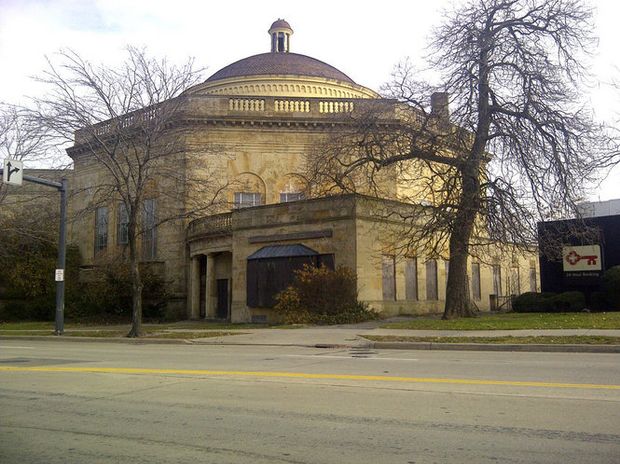
On November 11, 2013, The Cleveland Plain Dealer reported that a “key gateway site at Cleveland’s western edge could be redeveloped with a grocery store and other retailers, but that new investment requires the demolition of a long-vacant church that has eluded the wrecking ball since the early 1990s.” Of course, the referenced long-vacant church is the Edgewater community’s architecturally distinctive, historically landmarked Fifth Church of Christ, Scientist, which was constructed in 1926.

The Encyclopedia of Cleveland History records that General Erastus N. Bates began organizing the Christian Scientists in Cleveland. The Longyear Museum website, at https://www.longyear.org/exhibits-archives-media/historic-articles/the-front-rank/general-erastus-newton-bate s , records that General Bates “was introduced to it in 1886 when he attended a lecture by Hannah Larminie of Chicago. Bates began taking on healing cases that year, and in December he wrote his son:

“I am very busy now days and expect to open an office in the city soon. My success in all cases acute, or chronic, nervous or physical is remarkable so far. And I see no reason why it should not continue. When I say my success, I do not wish to imply that I am the healer, for I am only the instrument used by God in this work.”

General Bates began corresponding with Mrs. Eddy in 1887, took Primary class with her in 1888, then Normal class in 1889.

He was one of the few entrusted by Mrs. Eddy to teach at the Massachusetts Metaphysical College, and later he did much to establish the Cause in Kansas City and Cleveland. Looking back, he would with an overflowing heart tell the crowd at Pleasant View, “I owe all that I am and all that I have to Christian Science.” In praise of this steadfast soldier, Mrs. Eddy would later recall him with fondness as “one of God’s own noblemen.”

His efforts resulted in the founding of Cleveland’s First Church of Christ, Scientist, in 1891. Cleveland proved to be especially fertile ground for the message of the Christian Scientists as the “First Church” was quickly followed by the formation of congregations for the Second Church in 1901, the Third Church in 1903, the Fourth Church in 1914, and the Fifth Church in 1920.

The Fifth Church congregation held its first public services in a hall at West 65th and Detroit Avenue before moving into the Fifth Church building on Lake Avenue and West 117th Street in 1926. The Fifth Church congregation worshiped at the site until 1989. After the congregation moved, Rini-Rego Supermarkets acquired the property and, in turn, sold it to the City of Cleveland in 2002 for a token sum. The building has remained empty and unused since despite several development proposals over the years.

The building was designed by architect Frank W. Bail, who was born in Wellsville, Ohio in 1891. Mr. Bail received his Bachelor of Architecture from Columbia University in 1917. During World War I, he served as a lieutenant in the army. He was severely wounded during the war and spent two years in army hospitals. After the war, he came back to Cleveland where he was employed as assistant City architect. In 1922, he established the Frank W. Bail Company. He left Cleveland during the Great Depression, moving to Fort Myers, Florida. He died in April 1964.

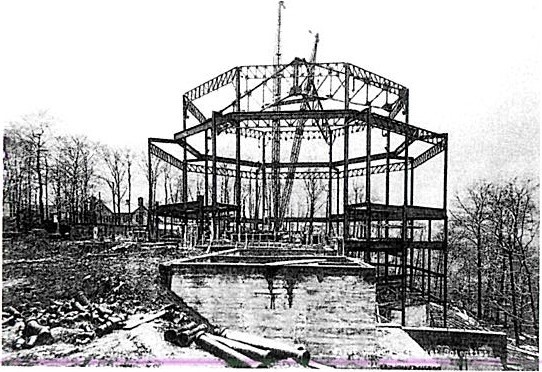
Mr. Bail designed the distinctive structure in a neoclassical style with the primary mass of the building shaped as an octagon, topped with a large central dome and cupola. The building has a basement and main floor, both totaling 22,300 square feet with the central auditorium designed to seat 900 persons. The main entrance portico to the northwest served as the formal entrance lobby to the building. Low wings along the south and southwest sides of the building provided a secondary entrance and reading room space as well as access to the social hall in the basement. A mechanical room to the south east was demolished in approximately 1998.

The exterior walls are clad in sandstone with a small area of the one-story wing clad in brick. The sandstone was quarried in Birmingham, Erie County, Ohio. The stone on the drum beneath the dome was painted over with a yellowish coating in 1991. The dome is clad in Luduwici clay roof tiles. The lobby has walls and pillars faced with Saint Genevieve Golden Vein marble (limestone from the Grand Tower Formation), quarried in Missouri, and flooring of pink Tennessee marble (limestone from the Holston Formation), quarried in eastern Tennessee. Floor trim, bases of pillars, and balusters are a black limestone with white streaks (veins and stylolites), possibly from Europe. The front (west) hallway had wainscoting of Saint Genevieve Golden Vein, with a border of black limestone along its base. The Saint Genevieve marble in both the lobby and the front hallway contains large corals, including horn corals several centimeters in diameter and colonial forms that are composed of groups of many smaller cylindrical individuals.

Because the City of Cleveland designated the Fifth Church of Christ, Scientist a landmark building in 1995, any demolition or development is subject to the approval of the Cleveland Landmarks Commission. In the meantime, it survives as the only remaining example of a classically domed structure on the west side of Cleveland.

Centenary of the Publication of The Beautiful Homes of Cleveland

Previous Beacon articles highlighted the Edgewater neighborhood in the Gilded Age, which ran from the 1870s to about 1900, when a small number of imposing mansions hugged the shore of Lake Erie along Lake Avenue. Without exception, those mansions were demolished shortly after the turn of the twentieth century and were gradually replaced with more modest, but still distinctly grand homes. The aesthetic appeal of this second generation of Edgewater residences was recognized early on, as illustrated, quite literally, in the publication Beautiful Homes of Cleveland, which was published by the Cleveland Topics Company in 1917.

Beautiful Homes of Cleveland was a photographic presentation of approximately one hundred “of the most beautiful homes” in the Cleveland area. The book grouped the homes into six areas: the Euclid Group, the Wade Park Group, the Bratenahl Group, the Heights Group, the West Side Group, and the Suburban Group. The West Side Group features a small, but readily familiar representation of homes from the Edgewater neighborhood. This article extracts the photographs of the featured Edgewater homes and provides supplemental information regarding the homes and their original owners.

The first home from the Edgewater neighborhood featured in the publication was built at 10324 Lake Avenue in 1914 for Henry T. Holmes (1863-1938) and his wife Gussie (1863-1959). Mr. Holmes had been the president of the Holmes-Shepherd Lumber Company, which was located at the junction of Pearl Road and Scranton Avenue.

The 1920 U.S Census recorded that Mr. and Mrs. Holmes lived in the home with their adult children Ruth E. and Erwin L., as well as a servant, John Slavens.

Interestingly, the 1930 U.S. Census shows that even after Mr. Holmes sold his Lake Avenue residence he stayed in the neighborhood as he and Mrs. Holmes are recorded as residing at 10418 Edgewater Drive with their maid, Celia Moran. The 1940 U.S. Census records that, after Mr. Holmes died, Mrs. Holmes continued to reside on Edgewater Drive along with her son, Erwin, his wife, their three children, and a servant. Eventually, Mrs. Holmes moved to Shaker Heights, where she died at the age of 95. She and her husband are buried in Lakeview Cemetery in Fort Atkinson, Wisconsin.

The Holmes home was designed by architect Gustave Bernard Bohm (1874-1934). It was also featured in a heavily photographed article showcasing Mr. Bohm’s residential works in The Ohio Architect, Engineer, and Builder (Mr. Bohm’s Work, December 1916, pp. 32-43). Mr. Bohm designed several other homes in the Edgewater neighborhood (such as the Christian Schuele residence, 10498 Lake Avenue, 1914), as well as the more famous Faerber-Morse mansion at 13405 Lake Avenue in Lakewood.

The Cleveland Landmark Commission’s Cleveland Architects Database provides the following information about Mr. Bohm:

Gustave B. Bohm attended West High School, and graduated from Columbia University. His brother Max Bohm was a well-known artist who lived in Paris. He was mostly noted as a residential architect with most commissions on the west side of Cleveland and Lakewood. He lived at 8912 Detroit Avenue, where his parents had lived, later moving to 19429 Frazier in Rocky River. He wrote the article “The American Adaption of A Swiss Chalet” for the September 1908 Ohio Architect and Builder, and “How the Architect Helps the Home Builder” in Material Facts, May 1915. He is buried in Lakeview Cemetery.

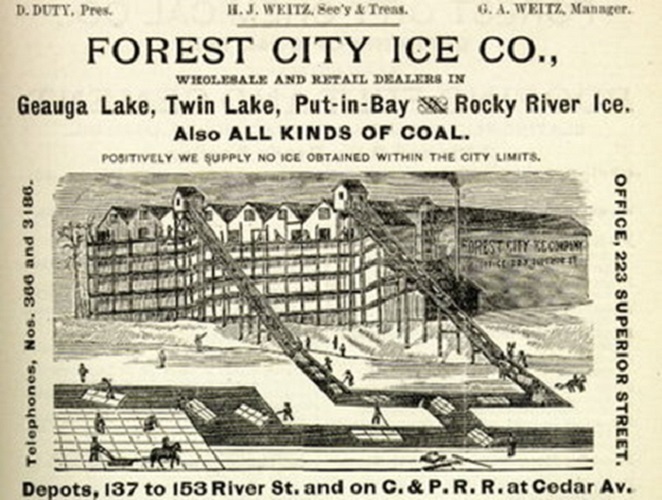
The next home from the Edgewater neighborhood included in Beautiful Homes of Cleveland was built for Gustav Adolph Weitz (1862-1911) at 10405 Lake Avenue in 1908.

Mr. Weitz had been president of Forest City Ice Company, which proudly advertised that the ice it sold was not obtained from within the city limits.

The 1910 U.S. Census recorded that Mr. Weitz lived in the home with his wife Mary K. (1857-1929); his adult children Albert, Josephine, Elsie, Elfreda, and Emma; and their servants, Amelia Nurnberg, Frederica Aberle, and Salmon Dile. By the time of the 1920 U.S. Census, the census records that only Mary Weitz and her daughter Elsie still loved at the house. Mrs. Weitz died in August 1929.

The Cleveland Landmark Commission’s Cleveland Architects Database records that the home was designed by William W. Hodges (1867-1923). The database records the following information regarding Mr. Hodges:

W.W. Hodges was born in Troy, Geauga County, Ohio and went to grammar and high school in Hart, Michigan. He came to Cleveland in 1888 and took up the study of architecture. In June 1894 he and brother Fred F. Hodges formed the firm of Hodges and Hodges, that was dissolved in 1900 when he went into business for himself. He designed several churches and schools for the Roman Catholic diocese. He lived at 2062 West Boulevard.

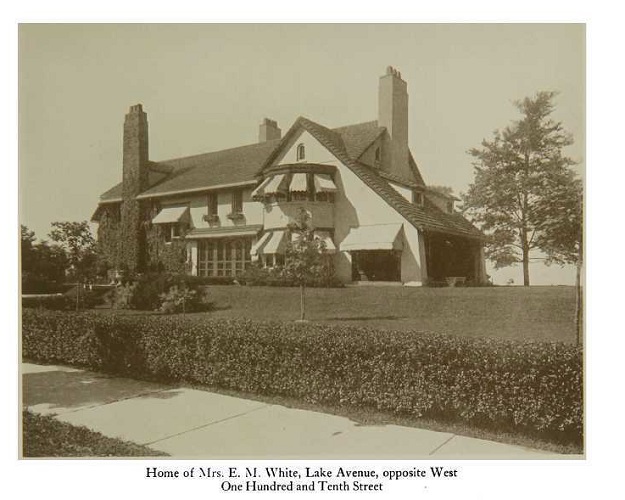
The next home featured was that of Ellen M. White (1850-1924), located at 11006 Edgewater Drive, which was built in 1910.

Readers may recall that Mrs. White was previously profiled in the spring 2015 Beacon along with her husband, William J. White, the “Chewing Gum King.” Mr. and Mrs. White divorced in October 1906 and, while Mr. White moved from the Thornwood estate they shared while married to New York, Mrs. White stayed in the Edgewater neighborhood, eventually moving from the 52 room Thornwood mansion to the more modest home she had built on Edgewater Drive.

The 1920 U.S. Census records that Mrs. White lived in the Edgewater residence with her adult son, William B., and a housekeeper, Mary Mastin. Mrs. White died at her residence in 1924 and is buried in Lake View Cemetery in Cleveland alongside her ex-husband, William, who had died in 1923.

The Cleveland Landmark Commission’s Cleveland Architects Database records that the home was designed by Frank B. Meade (1867-1947) and records the following information regarding Mr. Meade:

“Frank B. Meade was born in Norwalk, Ohio and educated in the Cleveland public schools, graduating from Central High School. He graduated from Wesleyan College and Boston Tech (later known as Massachusetts Institute of Technology) in 1888. He spent four years in Chicago working for the firm of Jenney and Mundie before returning to Cleveland in 1893 where he worked in the offices of Charles Schweinfurth and George H. Smith. He opened an office in 1895. From 1896-7 he was in partnership with Alfred Hoyt Granger; from 1898 to 1905 he was in partnership with Abram Garfield; and from 1911 to 1939 his was associated with James M. Hamilton. Throughout his career, no matter the makeup of the firm, he was known as the architect of some of the city’s finest residential projects built in the early 20th century, including numerous residences in the Euclid Heights development and Shaker Heights. He was known for the English domestic style of architecture. He designed houses for wealthy patrons throughout his career. He also designed several clubhouses and commercial buildings. He was appointed a member of the Cleveland Group Plan Commission after the death of Daniel Burnham.”

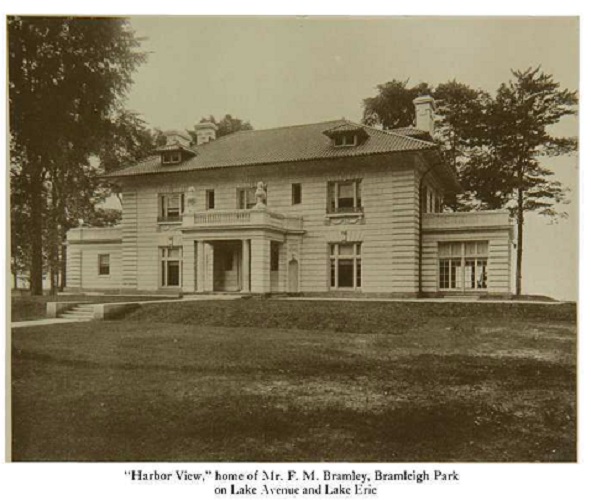
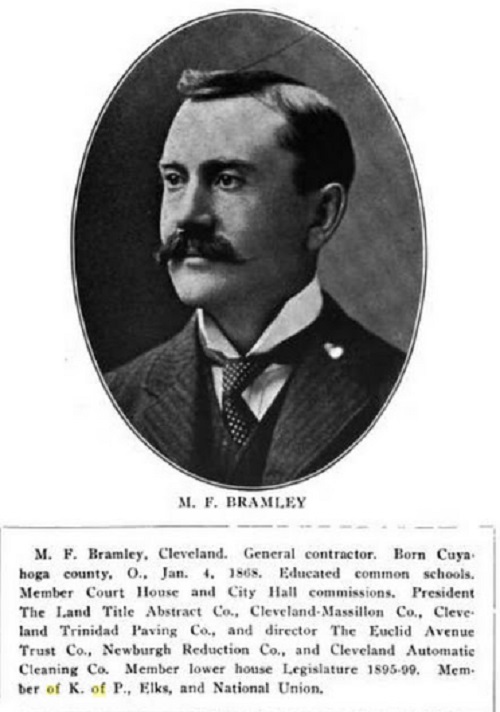
The final Edgewater home featured in the book was Bramleigh Park, located at 11420 Harborview Drive, which was built in 1915 for Matthew Frederick Bramley (1868-1941).

Mr. Bramley was president of the Land Title Abstract Company, the Cleveland-Massillon Company, the Cleveland Trinidad Paving Company, and Templar Motors. He also served in various elected public offices. Mr. Bramley and Bramleigh Park were subjects of an article in the fall 2015 Beacon written by David Buehler. Pertinent information from that article includes the following:

One owner, Mr. Matthew F. Bramley, owner of the Westwood Estate, which was minus the mansion from the fire, decided to develop his portion of the Lake Avenue land through his own Land Company, the ‘Land & Title Abstract Co.” (est. 1907), calling this new housing development by the name of “Bramleigh Park” and selling lots through the Real Estate Dept. of the Cleveland Trust Bank Co.

Mr. M.F. Bramley also built his new house on the shores of Lake Erie as part of the new land development project to replace the residence Westwood which had burnt down in 1908. On April 13, 1915, a city building permit was taken out for the new house with the new address of 11420 Harborview Drive. It was designed by noted local architect, William S. Lougee, with the building being described as a 85’ft. x 38’ft two story structure with clay tile roof.

The Cleveland Landmark Commission’s Cleveland Architects Database records the following information about William S. Lougee (1867-1935):

“William S. Lougee was born in Buckfield, Maine and received his education in Boston. In 1884, at the age of seventeen, he went to work for architect Tristam Griffin and remained in that office for six years before moving to Cleveland. He was associated with Adolphus Sprackling in 1892 as the Cleveland Architectural Company. He had his own office in Cleveland in 1893. In 1895 he was working with George Steffens. He was associated with architect John Eisenmann until 1900. From 1901 to 1905 he was assistant architect for the Board of Education. On April 4, 1905 during the Mayoral administration of Tom L. Johnson he was appointed deputy inspector of buildings and on March 4, 1907 he was made the chief building inspector. He resigned his City position at the end of 1909 when Johnson left office and resumed a private practice. During the administration of Newton D. Baker (1912-5) he supervised the construction of Cleveland City Hall. He later became City Architect and Building Commissioner under the administration of Mayor Ray T. Miller (1932-3).”

References:

For a wonderfully informative and well-researched Lakewood Historical Society monograph on the Faerber-Morse Mansion see

http://www.lakewoodhistory.org/pdf/Newsletters/Faerber-Morse%20House.pdf

For online access to Beautiful Homes of Cleveland at the Cleveland Public Library website, see http://cplorg.cdmhost.com/digital/collection/p128201coll0/id/2658

For online access to the article, Mr. Bohm’s Work, see

https://books.google.com/books?id=GHcoAAAAYAAJ&pg=RA5-PA32&dq=mr.+bohms+works&hl=en&sa=X&ved=0ahUKEwjNmJm67e_RAhUM74MKHb3KBhsQ6AEIJTAC#v=onepage&q=mr.%20bohms%20works&f=false

For online access to the valuable and searchable Cleveland Landmark Commission’s Architects Database, see

http://planning.city.cleveland.oh.us/landmark/arch/architects.php

William J. White: The Chewing Gum King

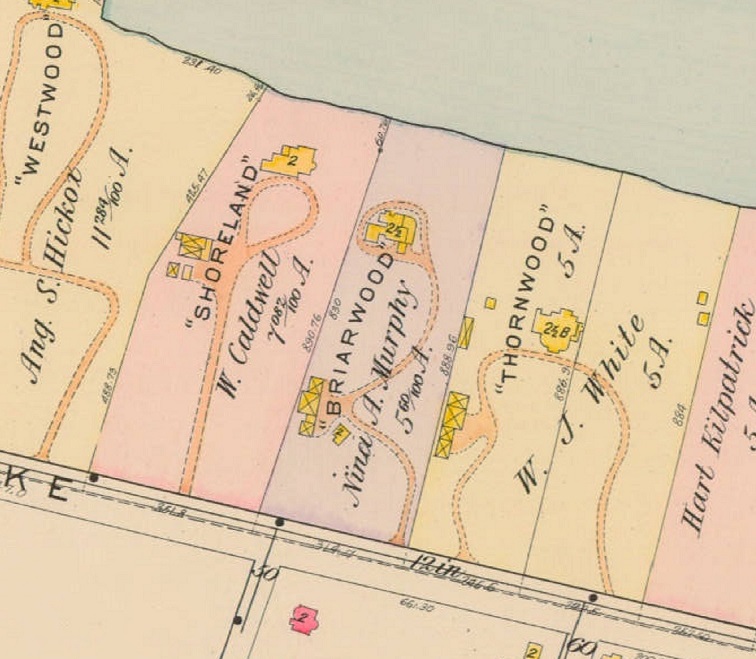
Back in the 1890s, the Edgewater neighborhood was home to royalty, of a sort, for William John White, who resided in an ornate and well-appointed 52-room mansion on a Lake Avenue estate known as Thornwood, was styled the “Chewing Gum King.” He was certainly one of the most colorful characters to have ever resided in the neighborhood, as his story will tell.

William J. White was born on October 7, 1850, in Rice Lake, Ontario, Canada. He came to Cleveland with his parents, John and Laura White, when he was six years old. After receiving the benefit of an education in district schools, he went to work for Orange Mansfield, the owner of a well-digging company. The advantages of working for Mr. Mansfield were singular: William met Mr. Mansfield’s daughter Ellen Marie, whom he married on April 23, 1873. William and Ellen Marie had seven children: William Benjamin, Harrie Walter, Gloria Marie, Pearl Marietta, Miles Arthur, Adah Melora, and Ralph Royden.

Shortly after his marriage in 1873, Mansfield’s well-digging business closed down and White sought employment in a confectionary store. At the confectionary store, White began experimenting with paraffin wax (a petroleum by-product), which had been used as a base for chewing gum since about 1850. It should be understood that chewing gum at this time was a rather tasteless affair as long-lasting flavored chewing gum had not yet been contrived.

Confectionary Alchemy

In 1876, White went into the confectionary business for himself after purchasing at auction the equipment of a little manufacturer of confectionary that had gone out of business. The equipment he obtained included a marble slab and a soot-covered pot – candy was boiled in the pot and cooled on the slab. White set the equipment up in the kitchen of his Lorain Avenue home and continued his confectionary experiments. He eventually began selling a paraffin wax chewing gum known as “The Diamond” in the streets from a one-horse wagon to grocers and small stores with the assistance of his wife and, as soon as they were able, his sons.

Though sales of “The Diamond” chewing gum were modestly successfully, White continued to practice confectionary alchemy in his kitchen, always seeking to turn his confectionary product into gold. In 1880, White happened upon a barrel of chicle (a natural gum tapped from certain Mesoamerican trees) – some reports state that a local grocer gave him the barrel after mistakenly receiving it in inventory – and found through his kitchen-based experimentation that mixing corn syrup and sugar with chicle latex allowed the chicle to absorb and hold flavors.

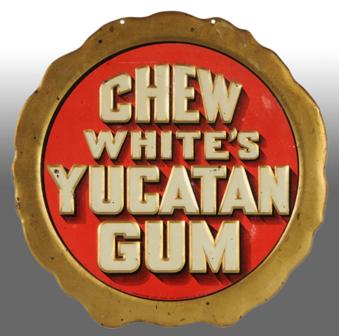
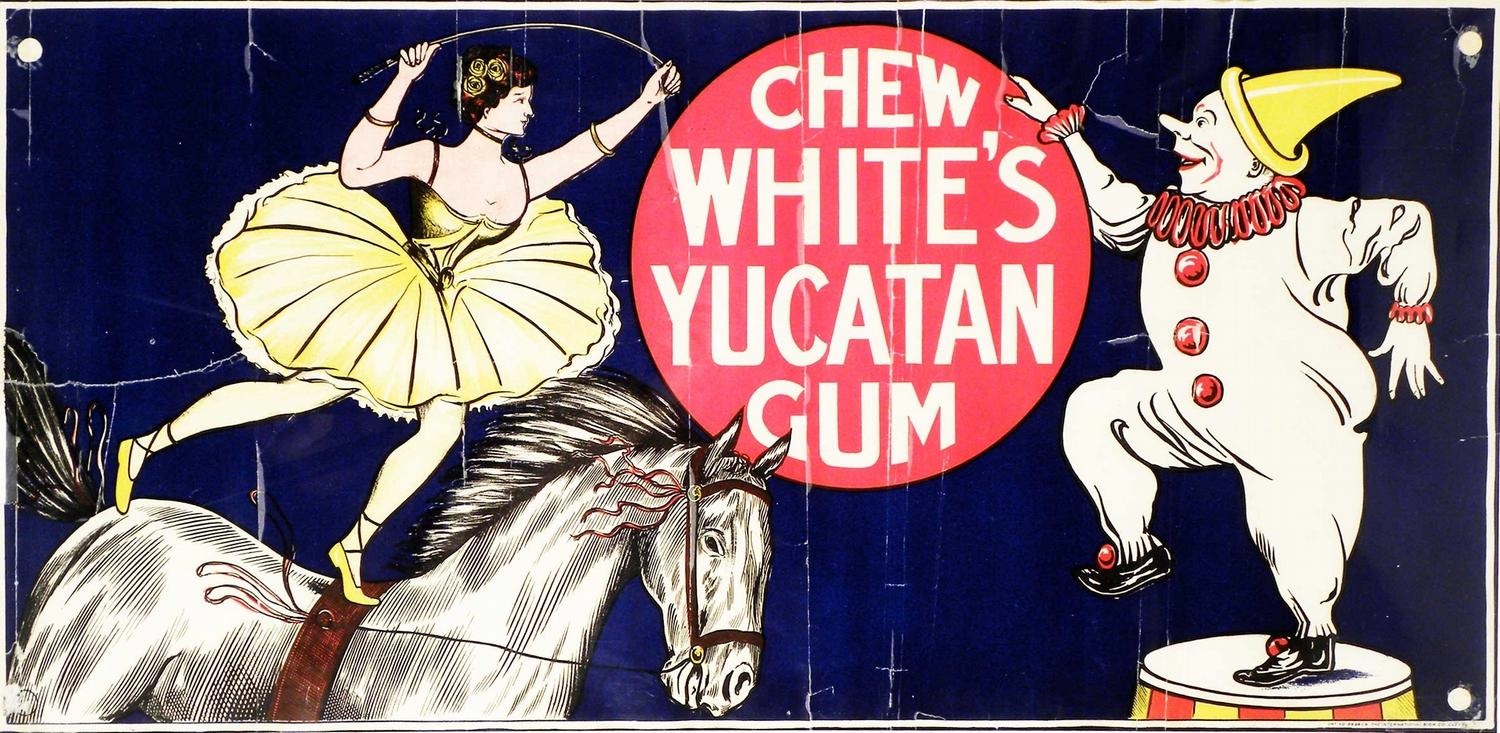
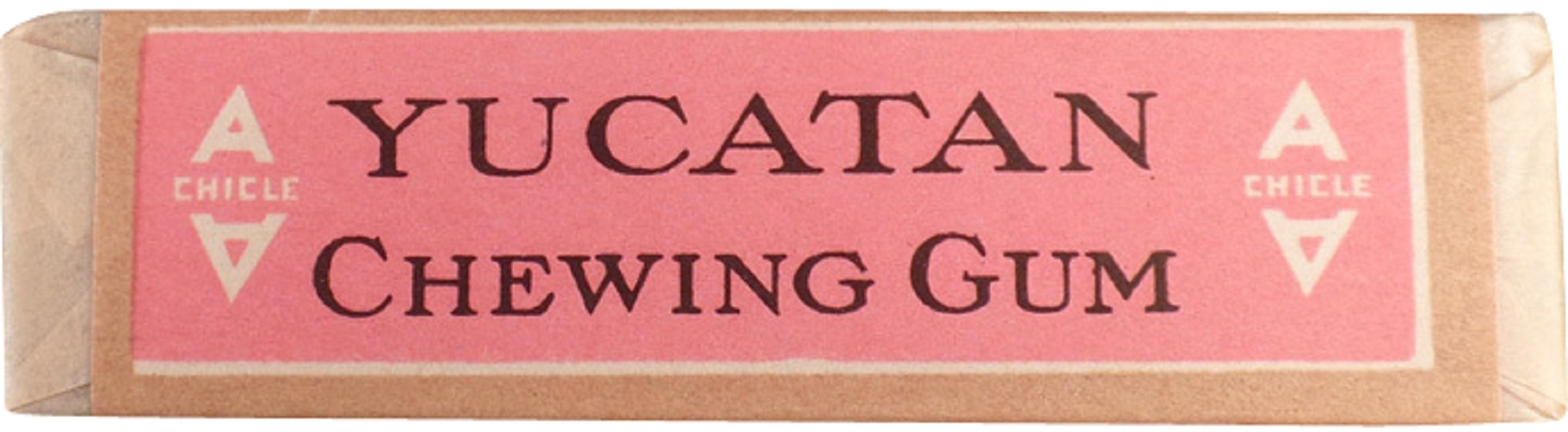
White experimented with various flavors and ultimately determined that peppermint extract was the longest lasting. He thereupon developed and marketed a peppermint flavored chewing gum called “Yucatan,” named after the Yucatan Peninsula of Mexico, from whence his chicle had originated.

He cut his gum into sticks, packaged them in pink paper, and soon found that he was a very wealthy man – for he was none other than the Chewing Gum King, the inventor of modern, flavored chewing gum.

White was also a marketing genius, for he knew how to target consumers, as evidenced by the introduction of another chewing gum he branded “Red Robin.” “Red Robin” was popular with young boys because White brilliantly affixed to every wrapper a “Boy’s Fortune,” not dissimilar to the fortune we encounter inside Chinese fortune cookies. One such wrapper which has survived records the following rather perplexing and unfortunate prognostication:

You are a very good boy, only when Jake Riger and Bob Spoots get you to go on with them to steal watermelons and peaches from old Daddy Boker. Then you always take the lead in deviltry. You will try to get his Bartlett pears and will get fast on a wire fence, and his dog Bose will tear the whole back part of your pants off before you get out, and when you go home your best girl will be there and you will be so afraid that she will see you, that you will sleep in the barn all night. But you finally become a minister and marry a widow with three very bad sons.

By 1884, no longer able to meet demand for his confectionary gold from his kitchen, White was manufacturing his chewing gum at a plant located at 57 South Water Street (West 9th St.). By 1888, demand was such that White was able to build a new factory at 1675 Detroit Avenue to manufacture both his Yucatan and Red Robin chewing gums.

The Detroit factory still stands, now converted into residential units and known as the Chicle Building (10307 Detroit Avenue), and is a listed National Historical Landmark.

In 1890, White founded the American Chicle Co., which operated two plants in Cleveland, employing hundreds. By this time, White was recognized as the largest chewing gum manufacturer in the world, having sold well over 150 million sticks of chewing gum. By 1906, White was reportedly earning over $500,000 a year from his confectionary interests alone. When White was asked by journalist James Morrow if he thought that the gum business might fade away, White responded, “The gum business will not play out. Americans are so nervous that they must bite on something. Farmers use hay, other men use tobacco.”

A Move to Edgewater

White had mastered confectionary alchemy and successfully turned base chicle into monetary gold. Having done so, he spent no time in spending that gold.

In 1889, White purchased a large estate on Lake Avenue, which he called Thornwood. On that estate, he built a fifty-two room mansion, which he generously bedecked with oriental carpets, antique furniture, fine paintings, and luxurious tapestries. He also purchased a 500 acre farm located about eight miles from Cleveland Public Square, called “Two Minute Stock Farm,” where he raised and bred 125 thoroughbred horses, several of which were world record holders at the time. For recreation, he indulged in yachting on Lake Erie. Of particular note, he purchased the steam yacht “Say When” in 1890, which he sailed from Chicago to Cleveland in forty-five hours and thirty-five minutes during the Columbian Exposition in 1893. He also sailed his yacht to England, where he purportedly presented his wife and his gum to King Edward VII.

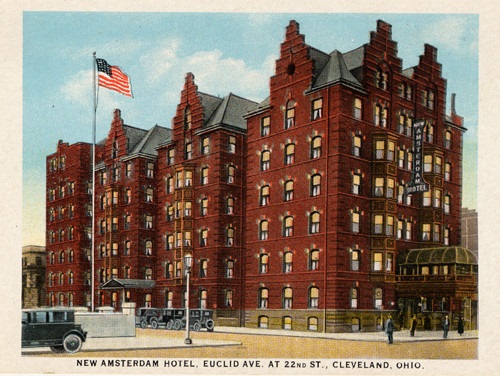
White also used his new found wealth to purchase substantial business and maritime interests. He was a substantial stockholder in the Cleveland and Buffalo Transit Company, the Owen Transportation Company, the First National Bank, the Columbia Savings and Loan Company, and the West Cleveland Banking Company (of which he was also president). He also owned real estate throughout the United States, including business blocks and apartment houses in Chicago, Cleveland, Lorain and other cities, as well as a large farm in Canada. His maritime interests included several steamers, including the Britannic and Ballentine. In 1901, he built the New Amsterdam Hotel, a seven-story brick and stone residential hotel, which stood on the southwest corner of Euclid Avenue and East 22nd Street until being razed in 1969.

Electoral Politics

For additional diversion, White engaged in electoral politics. In 1889, after moving to Lake Avenue, he was elected mayor of the Village of West Cleveland – scurrilous rumor claiming he secured his electoral victory, in part, by distributing free chewing gum to the electorate. White served one two-year term as mayor. As background, for those unfamiliar with the story of the Village of West Cleveland, the Village was created in 1871 and consisted of 1,500 acres of land. It was bounded on the north by Lake Erie, on the east by the Cleveland corporation line near Gordon Avenue (West 65th Street), on the west by Highland Avenue (West 117th Street), and on the south by Lorain Street. Prior to 1871, the area was part of Brooklyn Township. In 1893, the electorate of the Village of West Cleveland voted to annex to the City of Cleveland and, the following year, the Village and the City agreed upon the terms of the annexation.

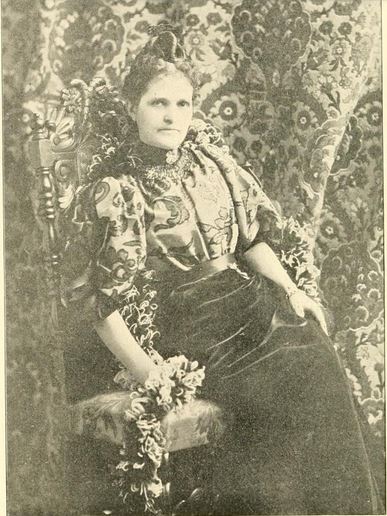
After his term as mayor, he decided to run for the U.S. House of Representatives. He was elected as a Republican to the Fifty-third Congress (March 4, 1893-March 3, 1895) but declined to be a candidate for re-nomination in 1894. During his term in Congress, he introduced and piloted to successful passage the law known as the “White Bill,” an Act which regulated navigation on the Great Lakes and their connecting and contributary waters. Ever the salesman, it is reported that White gave a box of his Yucatan chewing gum to every U.S. congressman while he served in Congress. The picture of Mrs. White with this article is from The Washington Sketch Book: A Society Souvenir (1895), which had the following to say of Mrs. White:

“Mrs. William J. White, wife of the Representative of the Twelfth District, is one of the interesting women that Ohio lent to adorn the official society of Washington for the Winter. Mrs. White is a lady of quiet dignity of manner, rare tact, intelligence and charming personality. She possesses a kind, generous nature and a warm affectionate heart, which attract even casual acquaintances to her and make her many warm friends. Mrs. White was born in Cleveland, Ohio, and is the daughter of Orange and Marletto Howard, of Mansfield. Mr. and Mrs. White are very hospitable and entertained in Washington, as at their beautiful Cleveland home, in a magnificent style and manner. One of the most elegant afternoon receptions of the season of 1895 was that given by them at the Shoreham. They have one lovely daughter, Miss Georgia, who is being carefully educated.”

Conclusion

Perhaps it is not surprising that a gentleman as frenetic as White appears to have been would find settled domestic life less than satisfying. Newspaper headlines reported that at one point the married White gave Anna Held, an internationally renown stage performer and singer, most often associated with impresario Florenze Ziegfeld, a $120,000 neckless.

They also record that White divorced his first wife, Ellen, in 1906 and married the very next day the wealthy divorcee Helen Sheldon. He and Helen moved to New York.

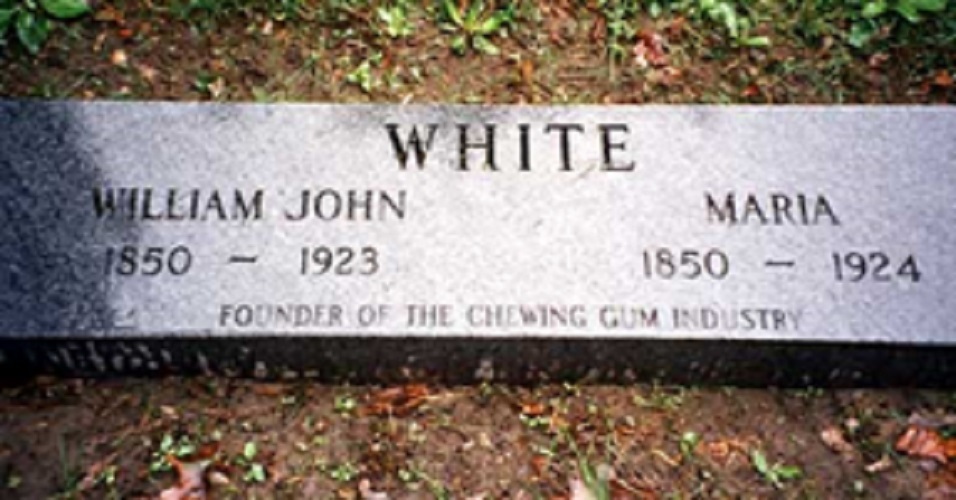
Probably in 1916, White became penniless after business difficulties and was removed as president of American Chicle Co. By 1920, White had founded Wm. J. White Chicle Co. in Niagara Falls, where he reportedly made and lost another fortune. He returned to Cleveland in 1922, penniless; however, always resourceful, he built a new factory determined to achieve success yet again. But, alas, before success came, in January 1923, White slipped on a sidewalk and died a few weeks later. He is buried in Lake View Cemetery.