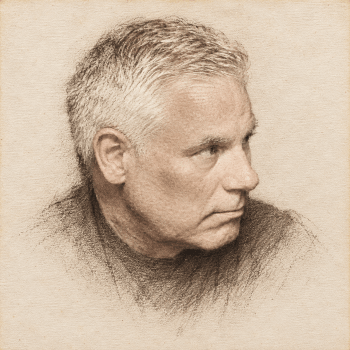

L.C. Hanna: Professional Baseball Player, Industrial Magnate, and Gatling Gun Battery Captain

Leonard Colton Hanna was a summer resident of the Edgewater neighborhood from 1890 until shortly before he sold the property in 1911.

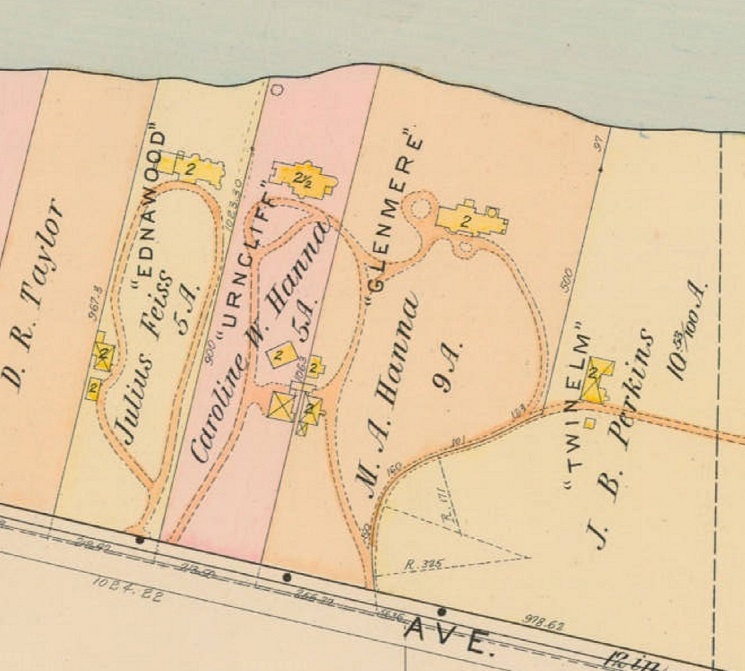
We mentioned him briefly in discussing his more famous brother, Senator Marcus Alonzo Hanna, and Senator Hanna’s Glenmere estate, in several previously published Beacon articles. In this brief article, we will give L.C. Hanna and his estate, Urncliff, their due.

L.C. Hanna was born in New Lisbon, Ohio on November 30, 1850, the son of Dr. Leonard Hanna (1806-1862) and Samantha Maria (nee Converse) Hanna (1813-1897). His siblings included Helen G. Hubbell (1836-1891); Marcus A. Hanna (1837-1904); Howard M. Hanna (1840-1921); Salome M. Chapin (1844-1907); Seville S. Morse (1846-1927); and Lilian C. Baldwin (1852-1948). The family moved to Cleveland in 1851.

Once in Cleveland, L.C. Hanna attended the public schools. His family then sent him to Doctor Holbrook’s Military School, a military academy and boarding school for boys located in the town of Ossining, New York. He reportedly attended Doctor Holbrook’s Military School until June 1867.

When he returned to Cleveland, he was briefly associated with Hanna, Doherty & Company, a firm established by his brother, Marcus A. Hanna, for the purpose of refining petroleum. His brother Howard later purchased Marcus’ interest in the firm.
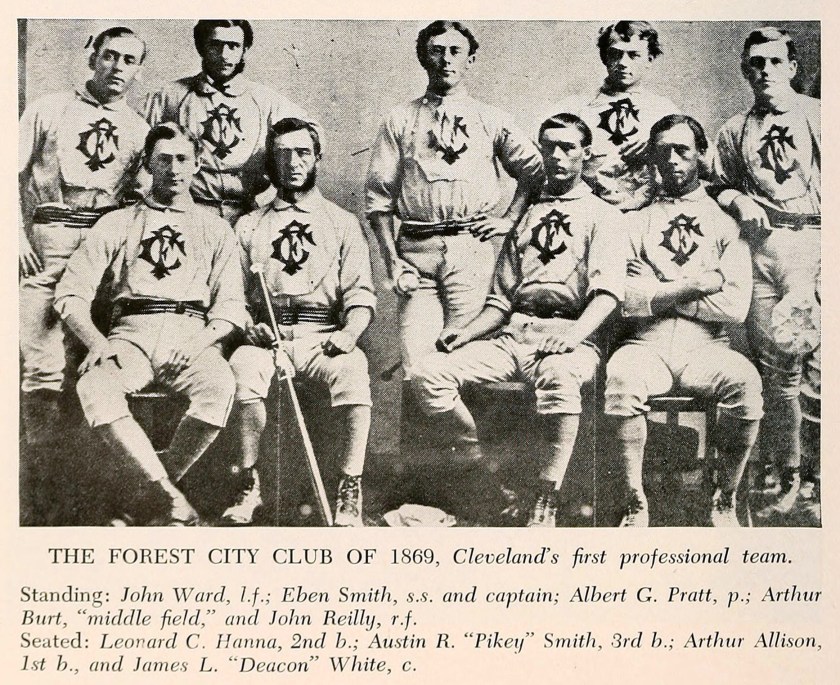
In 1869, L.C. Hanna became associated with Cleveland’s first professional baseball team, the Forest City Club, as its second baseman. The team included pros who were paid, such as Arthur Allison, outfielder and first baseman, Albert G. “Uncle Al” Pratt, pitcher, and James L. “Deacon” White, each of whom remained with the team until its demise in 1872, and amateurs such as L.C. Hanna, who remained “pure” and refused payment. On June 2, 1869, the Forest City Club played, and lost, 25-6, the first pro baseball game in Cleveland against the professional Cincinnati Red Stockings. The game was played in front of 2,000 spectators at Case Commons at Putnam Ave. (E. 38th St.) between Scovill Avenue and Central Avenue. On March 17, 1871, the Forest City Club became a charter member of the National Association of Professional Baseball Players.

By 1871, L.C. Hanna left behind his baseball career and sailed on the steamer Northern Light for one season. In January 1872, he left for St. Paul, Minnesota, where he resided until November 1874. In 1874 he returned to Cleveland to begin his lengthy career with the firm of M. A. Hanna & Company, which at the time was one of the largest and most important firms in the country handling coal, coke, iron ore and pig iron. M. A. Hanna survived into the modern era, merging in 2000 with The Geon Company, to become The PolyOne Corporation, a company whose 2016 revenues exceeded $3.3 billion dollars. L.C. Hanna was also affiliated with the Superior Savings & Trust Company, the Guardian Savings & Trust Company and the Union National Bank of Cleveland. His memberships included the Tavern Club, the Union Club, the Roadside Club, the Country Club of Cleveland, and the Chagrin Valley Hunt Club at Gates Mill, Ohio.
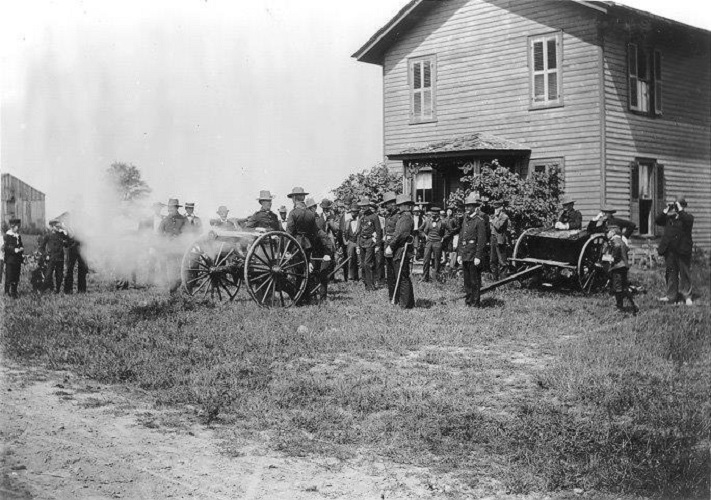
L.C. Hanna also “commanded” the Cleveland Gatling Gun Battery as “captain” from 1892-1893. This para-military organization was formed in June 1878 by reactionary Clevelanders concerned about “the maintenance of law and order” after the Great Railroad Strike of 1877, which was discussed in a Beacon article that sketched the life of Edgewater resident Daniel W. Caldwell, who was President of the Lake Shore and Michigan Southern Railway Company and who obtained the title “General” from the governor of Ohio during the “Great Railroad Strike.”

The Encyclopedia of Cleveland History states the following regarding the Cleveland Gatling Gun Battery:

“Using contributions, the committee purchased 2 Gatling guns and then issued a call for volunteers. At a meeting in the mayor’s office, the Cleveland Gatling Gun Battery was established with 25 charter members, including Major Wilbur F. Goodspeed, elected captain; 1st Sgt. Thomas Goodwillie; 2d Sgt. Leonard C. Hanna (captain, 1882-93); 3d Sgt. John R. Ranney; and Quartermaster J. Ford Evans. On 6 Mar. 1880 the Ohio legislature enacted a bill authorizing Cleveland citizens to establish a Gatling gun battery, placed it under control of the mayor in emergencies, and made it subject to the regulations governing Ohio National Guard units. The unit was incorporated on 17 May 1880. An armory was constructed at E. Prospect and Sibley (3433 Carnegie). In 1885 the battery had 2 guns, 80 sabers, and 1 revolver. It billed the city $242 for the services of its members on guard during the iron workers’ strike at Newburgh, 8-13 and 17-21 July 1885. The majority of the unit’s activities were social events; its annual target practice, for example, included dances and was held at such resorts as St. Clair Springs, MI, and Chautauqua Lake, NY.”

L.C. Hanna was married twice. He married his first wife, Fannie Wilson Mann (1852-1885) in Buffalo, New York. He married his second wife, Coralie Walker (1852-1936) on October 17, 1888, in Richmond, Kentucky.
He had three children: Jean Claire Hanna (1880-1930), Fanny Hanna Moore (1884-1980) and Leonard C. Hanna, Jr. (1889-1957). He died on March 23, 1919, and is buried in Lake View Cemetery.

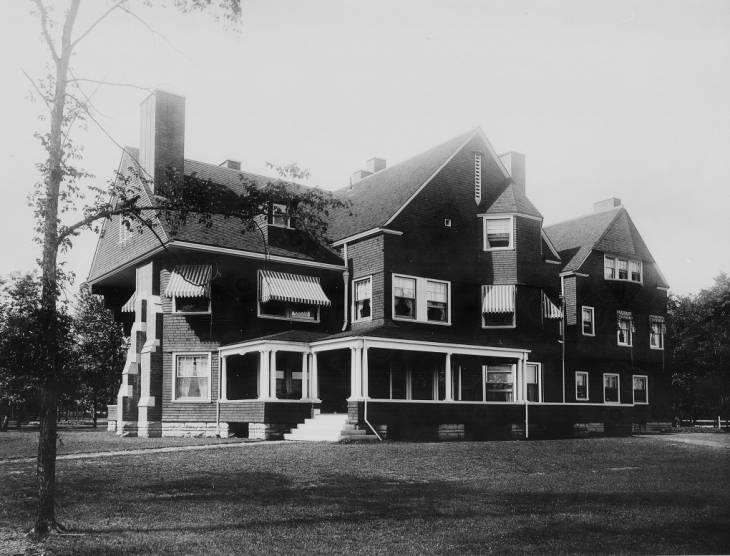
L.C. Hanna’s Edgewater estate was named Urncliff, Erncliff, or Erncliffe (depending on the written source) and was located on the northside of Lake Avenue at roughly West 104th Street. The home and barn located on the estate were designed by the famed architect Charles Frederick Schweinfurth. It is likely that L.C. Hanna commissioned Schweinfurth to build his summer residence and barn in the Edgewater neighborhood shortly after his brother Marcus did and that residence and barn were complete by 1890.
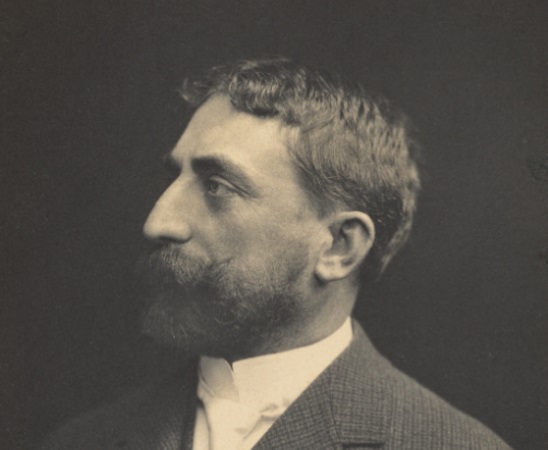
In The Life and Work of Charles Frederick Schweinfurth, Cleveland Architect, (1967), author R.A. Perry stated the following regarding the Urncliff residence of L.C. Hanna:

“The residence built for Captain Leonard C. Hanna was contemporary with “Glenmere.” The L.C. Hanna design was a simpler conception than the adjacent “Glenmere.” The carriage porch of the long, low design was a wider and simplified version of the one at “Glenmere.” The lake or north façade of the L.C. Hanna residence displayed a dramatic chimney-gable interpenetration on the northeast corner of the house. Pseudo-buttresses constructed of brick with limestone ashlar trim were located on the east side of a wide brick chimney which pierced a boldly projecting gabled area which cantilevered into space. The cantilevered effect and the piling up of buttresses which sloped offsets at the base of the chimney in the L.C. Hanna design represented the most striking of all Schweinfurth’s gabled interpenetrations and appears to have been an original feature of that design.”

The interior of the L.C. Hanna residence was also simpler than that of “Glenmere” as is revealed in a comparison of the reception halls in the two residences. The L.C. Hanna barn which faced the north façade closely related to the main dwelling in the exterior sheathing and in its bold geometric arrangements. Schweinfurth’s skillful massing of bold, unadorned projecting surfaces created a feeling of movement and an interesting play of light and shade in the low, sprawling design. The L.C. Hanna house and barn were a handsome compliment to each other, and the two houses were remarkable examples of Schweinfurth’s most original productions in the “Shingle Style.” [pp. 100-101]

We are fortunate that several striking pictures of the residence and barn survive to illustrate Schweinfurth’s mastery of the Shingle Style.
The Cleveland Blue Book 1891 indicates that Mr. and Mrs. L.C. Hanna considered “Erncliff” their summer residence, while their permanent residence was at 736 Prospect. The Cleveland Blue Book 1900 again indicated that “Erncliffe” was their summer residence while changing their permanent residence to 667 Euclid Avenue. In The Cleveland Blue Book 1904, Mr. and Mrs. L.C. Hanna only list 737 Euclid as their residence and no longer list Urncliff as a summer residence.

Sadly, like Senator Hanna’s Glenmere residence, the Urncliff residence was also demolished shortly after the turn of the 20th century.

Julius Feiss & Ednawood

Few physical remains of the Gilded Age mansions that once defined the Edgewater neighborhood remain. However, for the observant, there are remains to be seen and which, when researched, reveal a story. On the northern side of Lake Avenue, between West 104th and 110th Streets, may be found the remains of a stone entrance way standing silent sentinel to what was once known as Ednawood, the mansion and estate of Julius Feiss (1848-1931).

Feiss was a partner in The Joseph & Feiss Company, an organizing member of the Cleveland Parks Commission, and, at his death, president of the Cleveland Federation of Jewish Charities. Ednawood’s original address was 10520 Lake Avenue, and extended from Lake Avenue to the shores of Lake Erie. The address was later changed to 10530 Edgewater Drive.

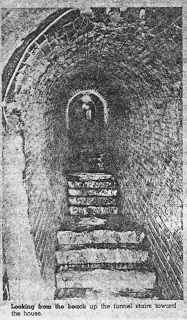
Ednawood once was erroneously associated with the Underground Railroad because it had a tunnel connecting the basement of the home to the shores of Lake Erie. Mazie Adams, in an article entitled, “Lakewood in the Civil War: More Underground Railroad Tunnels in Lakewood?”explains the error thusly: “[S]ome of this confusion stems from the work of Wilbur Weibert, noted 1890s historian of the underground railroad in Ohio, [who] suggested that Lakewood was part of a route for the underground railroad. Unfortunately, it appears he based his theory partially on the existence of a tunnel emptying into Lake Erie just east of Lakewood.

Interestingly, this tunnel was also featured in a Plain Dealer article, dated February 12, 1950, and focused on Dr. Siebert’s work on the underground railroad in Ohio. Included in the article was an image of a ‘slave-escape tunnel, somewhere in Cleveland…photo from Dr. Siebert’s collection, but the exact location is not known.’ Sharp-eyed readers quickly inundated the paper with calls and letters correctly identifying the tunnel as belonging to ‘Ednawood.’

As Ednawood was built in 1895, it and its tunnel obviously post-dated the Underground Railroad. Ms. Adams continues the article to note that one of Julius Feiss’ sons described the tunnel as “leading from a basement recreation room with a big fireplace and small rooms where bathers could change before and after swims in the lake. The tunnel is said to have cost about $11,000 when built.” She notes that the Plain Dealer reported that the tunnel, “attracted dozens of boys who swam or rowed along this section, for many have written or phoned about the fun they used to have around it. But they couldn’t get beyond the great iron entrance door in the cliff.”

In fact, an entry from the June 16, 1899, About the Town column in the Plain Dealer, heralds the construction of the tunnel as part of the newly built Ednawood estate for Julius Feiss: “Mr. Julius Feiss, of Goldsmith, Joseph, Feiss & Co., has been connected with that firm for exactly thirty-five years, working his way up from the bottom of the ladder. While he is still very active in the business, he is a man of domestic tastes and his house, adjoining Senator Hanna’s on the lake shore, is a veritable model of comfort. Among the features of the place is a tunnel, cut out of the solid rock under the bak, leading from the house to a point close to the shore, where it ends in a spacious den, a smoking room some twenty feet in diameter, tiled in Dutch blue, and provided with all manner of appurtenances for the inner comfort. From this den it is but a step to the bath houses so that all the advantages of the location may be enjoyed with the least inconvenience” (p. 5). 

Notice of Ednawood’s pending construction was published in The Inland Architect and News, Vol. XXI, No. 3, p. 42 (April 1893), which noted that that the architects Lehman and Schmitt were designing and constructing “a country residence for Julius Feiss on Lake Avenue; frame, 60 by 125 feet in size; cost $40,000; all modern improvements including steam heat and electricity. For same party a gardener’s cottage and stable, costing $5,500; both frame buildings, respectively 26 by 40 and 30 by 45 feet in size.”

The Cleveland Landmark Commission records the following information about Lehman and Schmitt in its architect database:

Lehman and Schmitt were in business from 1885 to 1935. Both Israel Lehman and Theodore Schmitt had worked in the office of George H. Smith. The firm did a substantial amount of work for local government. They designed the Cuyahoga County Courthouse, and courthouses in Lexington, Kentucky; Peru, Indiana; and Franklin and Towanda, Pennsylvania. They also designed the Central Police Station on Champlain Street; an 1894 addition to the second Cuyahoga County Courthouse; the Central Armory for the Ohio National Guard; the National Guard Armory in Geneva; the Erie County Children’s Home in Sandusky; and the Lorain County Children’s Home. The firm also designed several significant synagogues, including the Anshe Chesed Synagogue built in 1886 on Scovill Avenue, Temple Tifereth Israel at Central and East 55th Street, built in 1894, and the later Anshe Chesed Synagogue at 8302 Euclid Avenue, built in 1912. The name of Lehman and Schmitt was retained after Israel e death  din 1914. The firm’s offices moved to the Electric Building in 1914. Buildings designed by the firm after 1914 included the Cook (now the Prospect Park) Building, the Pierce Arrow Dealership, and the Bing Building. The early history of the firm shows that they designed numerous residences. Frederick Baird worked as a draftsman and designer with the firm for several years. See http://planning.city.cleveland.oh.us/landmark/arch/archDetail.php?afil=&archID=160&pageNum_rsArchitects=1&totalRows_rsArchitects=335&sk=fName&sd=ASC

The Cleveland Plain Dealer noted that construction was underway on Ednawood in 1895, but was not yet completed, in its article, Lake Avenue Residences, published May 10, 1895.

U.S. Census records reveal that the massive house with its intriguing tunnel was home to Julius, his wife Carrie (nee Dryfoos), and their children Paul, Henry Otto, Richard, Jessy, George, and Edna, his niece Emma Seligmann, as well as three servants, Catherine Lazzro, Emma Boyer, and Johanna Miller, in 1900. It was apparently named after Julius’ daughter Edna, who was born in 1886.

Julius Feiss himself was born in Mussbach, Bavaria and emigrated to the United States in 1866. His story, like that of several other residents already profiled, is an immigrant’s rags to riches story. An October 1920 article in the American Magazine by Frank Copley relates Feiss’ Horatio Alger story:

When Julius Feiss came to this country as a boy, his assets were just about limited to his character, which included a full capacity for hard, grinding toil. If he had a decided bent for mechanics, this at the beginning was more of a liability than an asset. As Richard Feiss puts it, “Father began life starving to death as an inventor.” To save himself from literally starving, Julius Feiss went to work in the clothing shop of the firm that was destined to bear his name. This was in 1866. The twelve-hour day was then the standard, but Feiss, as the newest arrival, was required to devote practically the whole twenty four hours to the firm’s service. He had to clean up the shop after the regular day’s work, sleep there in a packing box among the rats, and be ready to open the door for the other employees at six-thirty in the morning. After four years, through sheer force of character, he rose to be a member of the firm. The business prospered.

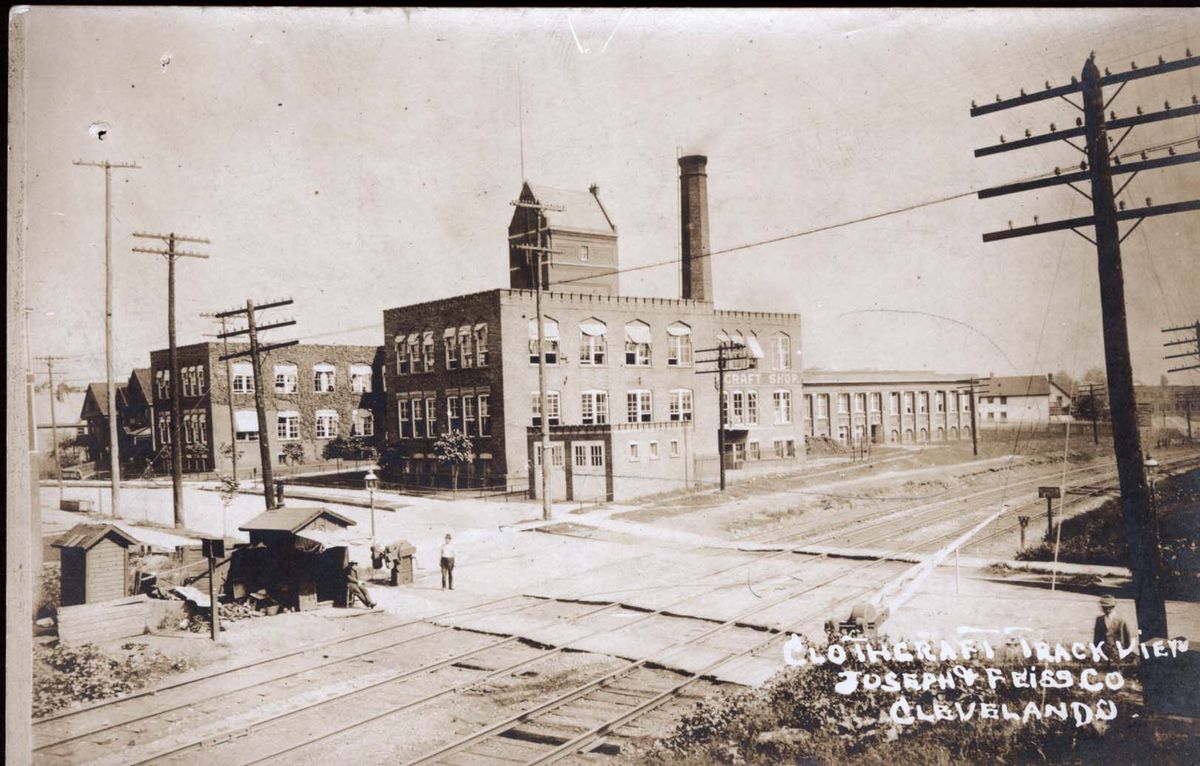
A few words about “the business” are in order as the company had an impact and longevity that are worthy of especial appreciation. The Joseph & Feiss Company was founded in 1841 as the Koch, Kauffman & Loeb general store in Meadville, Pennsylvania. In 1845, proprietors Kaufman Koch and Samuel Loeb relocated to Cleveland where they opened a store at 82 Superior Street, specializing in tailored men’s clothing and piece goods to local tailors. The company changed hands as it grew larger: Koch & Levi in 1853, Koch, Levi & Mayer in 1855, Koch, Mayer & Goldsmith in 1867, Koch, Goldsmith & Company in 1871 and Goldsmith, Joseph, Feiss & Company in 1892. Moritz Joseph and Julius Feiss both joined the clothing company in the 1870s. When Jacob Goldsmith retired in 1907, the firm adopted the name The Joseph & Feiss Company.

In Jim Debelko’s article, “The Joseph and Feiss Company: A Pioneer in Progressive Capitalism,” we learn what an extraordinary company it was. He reports the following: “Prior to 1909, the company was a typical garment manufacturer of that era, paying its employees as little as possible and working them for as many hours as hard it reasonably could. But in that year, Richard Feiss became factory manager. While living in Boston from 1897-1904 and obtaining his undergraduate and law degrees from Harvard University, Feiss had become a disciple of Frederick Taylor, the well-known industrial efficiency engineer of the late nineteenth century. When Feiss returned to Cleveland, he set out to manage the company’s work force in a manner that would maximize productivity but at the same time create a humane work environment that would keep workers healthy and happy. 

Feiss, with the assistance of Progressive era reformer Mary Barnett Gilson whom Feiss made head of the company’s employment and services department, redesigned the chairs employees sat on and the tables they worked upon to reduce injury and fatigue; provided employees with well-lit and well-ventilated work areas; sponsored employee dances, picnics, choral societies, clubs, orchestras, and athletic programs; provided medical and counseling services; established employee savings programs; awarded promotions based on performance; and increased wages. In addition, in 1917, Feiss introduced the five-day work week for employees at the company’s plant, several years before Henry Ford, often cited as the first industrial employer in the United States to do so.

“Perhaps it was progressive policies like the above that kept Joseph & Feiss a non-union shop in the decades of the 1910s and 1920s–a time when garment manufacturers in New York, Chicago, and elsewhere were fast becoming union shops. It wasn’t until 1934, during the Great Depression and almost a decade after Richard Feiss was forced out of the company in 1925 by his father and older brother, that the American Clothing Workers of America, finally won the right to bargain for and represent the garment workers of Joseph & Feiss.

In 1989, Joseph & Feiss was acquired by Hugo Boss AG, a West German clothing firm, for $150 million and was made a division of its subsidiary, International Fashions Apparel Corporation. Men’s Warehouse acquired the Joseph & Feiss trademark in December 1996.

So, when you spy the remnants of Ednawood when you walk along Lake Avenue, you should reflect on its stories: the rags to riches story of an immigrant, the myth of an Underground Railroad station, the powerhouse clothing manufacturer that lasted nearly 150 years, and the progressive and scientific methods that manufacturer introduced to industry before they were commonplace.

Centenary of the Publication of The Beautiful Homes of Cleveland

Previous Beacon articles highlighted the Edgewater neighborhood in the Gilded Age, which ran from the 1870s to about 1900, when a small number of imposing mansions hugged the shore of Lake Erie along Lake Avenue. Without exception, those mansions were demolished shortly after the turn of the twentieth century and were gradually replaced with more modest, but still distinctly grand homes. The aesthetic appeal of this second generation of Edgewater residences was recognized early on, as illustrated, quite literally, in the publication Beautiful Homes of Cleveland, which was published by the Cleveland Topics Company in 1917.

Beautiful Homes of Cleveland was a photographic presentation of approximately one hundred “of the most beautiful homes” in the Cleveland area. The book grouped the homes into six areas: the Euclid Group, the Wade Park Group, the Bratenahl Group, the Heights Group, the West Side Group, and the Suburban Group. The West Side Group features a small, but readily familiar representation of homes from the Edgewater neighborhood. This article extracts the photographs of the featured Edgewater homes and provides supplemental information regarding the homes and their original owners.

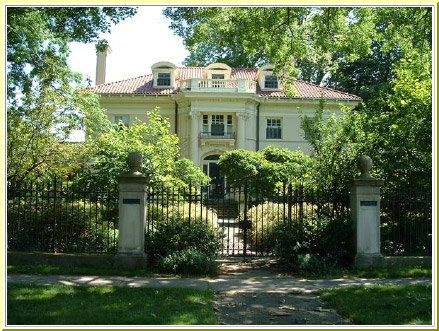
The first home from the Edgewater neighborhood featured in the publication was built at 10324 Lake Avenue in 1914 for Henry T. Holmes (1863-1938) and his wife Gussie (1863-1959). Mr. Holmes had been the president of the Holmes-Shepherd Lumber Company, which was located at the junction of Pearl Road and Scranton Avenue.

The 1920 U.S Census recorded that Mr. and Mrs. Holmes lived in the home with their adult children Ruth E. and Erwin L., as well as a servant, John Slavens.

Interestingly, the 1930 U.S. Census shows that even after Mr. Holmes sold his Lake Avenue residence he stayed in the neighborhood as he and Mrs. Holmes are recorded as residing at 10418 Edgewater Drive with their maid, Celia Moran. The 1940 U.S. Census records that, after Mr. Holmes died, Mrs. Holmes continued to reside on Edgewater Drive along with her son, Erwin, his wife, their three children, and a servant. Eventually, Mrs. Holmes moved to Shaker Heights, where she died at the age of 95. She and her husband are buried in Lakeview Cemetery in Fort Atkinson, Wisconsin.

The Holmes home was designed by architect Gustave Bernard Bohm (1874-1934). It was also featured in a heavily photographed article showcasing Mr. Bohm’s residential works in The Ohio Architect, Engineer, and Builder (Mr. Bohm’s Work, December 1916, pp. 32-43). Mr. Bohm designed several other homes in the Edgewater neighborhood (such as the Christian Schuele residence, 10498 Lake Avenue, 1914), as well as the more famous Faerber-Morse mansion at 13405 Lake Avenue in Lakewood.

The Cleveland Landmark Commission’s Cleveland Architects Database provides the following information about Mr. Bohm:

Gustave B. Bohm attended West High School, and graduated from Columbia University. His brother Max Bohm was a well-known artist who lived in Paris. He was mostly noted as a residential architect with most commissions on the west side of Cleveland and Lakewood. He lived at 8912 Detroit Avenue, where his parents had lived, later moving to 19429 Frazier in Rocky River. He wrote the article “The American Adaption of A Swiss Chalet” for the September 1908 Ohio Architect and Builder, and “How the Architect Helps the Home Builder” in Material Facts, May 1915. He is buried in Lakeview Cemetery.

The next home from the Edgewater neighborhood included in Beautiful Homes of Cleveland was built for Gustav Adolph Weitz (1862-1911) at 10405 Lake Avenue in 1908.

Mr. Weitz had been president of Forest City Ice Company, which proudly advertised that the ice it sold was not obtained from within the city limits.

The 1910 U.S. Census recorded that Mr. Weitz lived in the home with his wife Mary K. (1857-1929); his adult children Albert, Josephine, Elsie, Elfreda, and Emma; and their servants, Amelia Nurnberg, Frederica Aberle, and Salmon Dile. By the time of the 1920 U.S. Census, the census records that only Mary Weitz and her daughter Elsie still loved at the house. Mrs. Weitz died in August 1929.

The Cleveland Landmark Commission’s Cleveland Architects Database records that the home was designed by William W. Hodges (1867-1923). The database records the following information regarding Mr. Hodges:

W.W. Hodges was born in Troy, Geauga County, Ohio and went to grammar and high school in Hart, Michigan. He came to Cleveland in 1888 and took up the study of architecture. In June 1894 he and brother Fred F. Hodges formed the firm of Hodges and Hodges, that was dissolved in 1900 when he went into business for himself. He designed several churches and schools for the Roman Catholic diocese. He lived at 2062 West Boulevard.

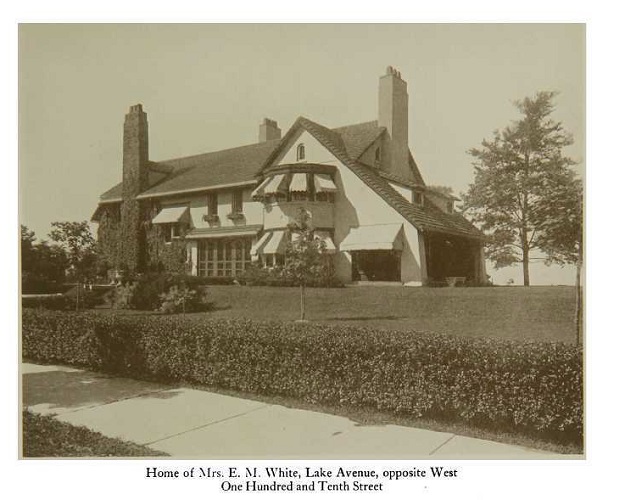
The next home featured was that of Ellen M. White (1850-1924), located at 11006 Edgewater Drive, which was built in 1910.

Readers may recall that Mrs. White was previously profiled in the spring 2015 Beacon along with her husband, William J. White, the “Chewing Gum King.” Mr. and Mrs. White divorced in October 1906 and, while Mr. White moved from the Thornwood estate they shared while married to New York, Mrs. White stayed in the Edgewater neighborhood, eventually moving from the 52 room Thornwood mansion to the more modest home she had built on Edgewater Drive.

The 1920 U.S. Census records that Mrs. White lived in the Edgewater residence with her adult son, William B., and a housekeeper, Mary Mastin. Mrs. White died at her residence in 1924 and is buried in Lake View Cemetery in Cleveland alongside her ex-husband, William, who had died in 1923.

The Cleveland Landmark Commission’s Cleveland Architects Database records that the home was designed by Frank B. Meade (1867-1947) and records the following information regarding Mr. Meade:

“Frank B. Meade was born in Norwalk, Ohio and educated in the Cleveland public schools, graduating from Central High School. He graduated from Wesleyan College and Boston Tech (later known as Massachusetts Institute of Technology) in 1888. He spent four years in Chicago working for the firm of Jenney and Mundie before returning to Cleveland in 1893 where he worked in the offices of Charles Schweinfurth and George H. Smith. He opened an office in 1895. From 1896-7 he was in partnership with Alfred Hoyt Granger; from 1898 to 1905 he was in partnership with Abram Garfield; and from 1911 to 1939 his was associated with James M. Hamilton. Throughout his career, no matter the makeup of the firm, he was known as the architect of some of the city’s finest residential projects built in the early 20th century, including numerous residences in the Euclid Heights development and Shaker Heights. He was known for the English domestic style of architecture. He designed houses for wealthy patrons throughout his career. He also designed several clubhouses and commercial buildings. He was appointed a member of the Cleveland Group Plan Commission after the death of Daniel Burnham.”

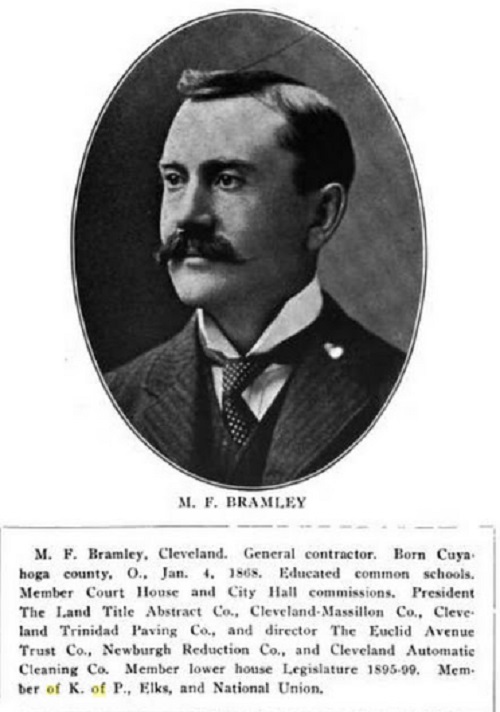
The final Edgewater home featured in the book was Bramleigh Park, located at 11420 Harborview Drive, which was built in 1915 for Matthew Frederick Bramley (1868-1941).

Mr. Bramley was president of the Land Title Abstract Company, the Cleveland-Massillon Company, the Cleveland Trinidad Paving Company, and Templar Motors. He also served in various elected public offices. Mr. Bramley and Bramleigh Park were subjects of an article in the fall 2015 Beacon written by David Buehler. Pertinent information from that article includes the following:

One owner, Mr. Matthew F. Bramley, owner of the Westwood Estate, which was minus the mansion from the fire, decided to develop his portion of the Lake Avenue land through his own Land Company, the ‘Land & Title Abstract Co.” (est. 1907), calling this new housing development by the name of “Bramleigh Park” and selling lots through the Real Estate Dept. of the Cleveland Trust Bank Co.

Mr. M.F. Bramley also built his new house on the shores of Lake Erie as part of the new land development project to replace the residence Westwood which had burnt down in 1908. On April 13, 1915, a city building permit was taken out for the new house with the new address of 11420 Harborview Drive. It was designed by noted local architect, William S. Lougee, with the building being described as a 85’ft. x 38’ft two story structure with clay tile roof.

The Cleveland Landmark Commission’s Cleveland Architects Database records the following information about William S. Lougee (1867-1935):

“William S. Lougee was born in Buckfield, Maine and received his education in Boston. In 1884, at the age of seventeen, he went to work for architect Tristam Griffin and remained in that office for six years before moving to Cleveland. He was associated with Adolphus Sprackling in 1892 as the Cleveland Architectural Company. He had his own office in Cleveland in 1893. In 1895 he was working with George Steffens. He was associated with architect John Eisenmann until 1900. From 1901 to 1905 he was assistant architect for the Board of Education. On April 4, 1905 during the Mayoral administration of Tom L. Johnson he was appointed deputy inspector of buildings and on March 4, 1907 he was made the chief building inspector. He resigned his City position at the end of 1909 when Johnson left office and resumed a private practice. During the administration of Newton D. Baker (1912-5) he supervised the construction of Cleveland City Hall. He later became City Architect and Building Commissioner under the administration of Mayor Ray T. Miller (1932-3).”

References:

For a wonderfully informative and well-researched Lakewood Historical Society monograph on the Faerber-Morse Mansion see

http://www.lakewoodhistory.org/pdf/Newsletters/Faerber-Morse%20House.pdf

For online access to Beautiful Homes of Cleveland at the Cleveland Public Library website, see http://cplorg.cdmhost.com/digital/collection/p128201coll0/id/2658

For online access to the article, Mr. Bohm’s Work, see

https://books.google.com/books?id=GHcoAAAAYAAJ&pg=RA5-PA32&dq=mr.+bohms+works&hl=en&sa=X&ved=0ahUKEwjNmJm67e_RAhUM74MKHb3KBhsQ6AEIJTAC#v=onepage&q=mr.%20bohms%20works&f=false

For online access to the valuable and searchable Cleveland Landmark Commission’s Architects Database, see

http://planning.city.cleveland.oh.us/landmark/arch/architects.php

William J. White: The Chewing Gum King

Back in the 1890s, the Edgewater neighborhood was home to royalty, of a sort, for William John White, who resided in an ornate and well-appointed 52-room mansion on a Lake Avenue estate known as Thornwood, was styled the “Chewing Gum King.” He was certainly one of the most colorful characters to have ever resided in the neighborhood, as his story will tell.

William J. White was born on October 7, 1850, in Rice Lake, Ontario, Canada. He came to Cleveland with his parents, John and Laura White, when he was six years old. After receiving the benefit of an education in district schools, he went to work for Orange Mansfield, the owner of a well-digging company. The advantages of working for Mr. Mansfield were singular: William met Mr. Mansfield’s daughter Ellen Marie, whom he married on April 23, 1873. William and Ellen Marie had seven children: William Benjamin, Harrie Walter, Gloria Marie, Pearl Marietta, Miles Arthur, Adah Melora, and Ralph Royden.

Shortly after his marriage in 1873, Mansfield’s well-digging business closed down and White sought employment in a confectionary store. At the confectionary store, White began experimenting with paraffin wax (a petroleum by-product), which had been used as a base for chewing gum since about 1850. It should be understood that chewing gum at this time was a rather tasteless affair as long-lasting flavored chewing gum had not yet been contrived.

Confectionary Alchemy

In 1876, White went into the confectionary business for himself after purchasing at auction the equipment of a little manufacturer of confectionary that had gone out of business. The equipment he obtained included a marble slab and a soot-covered pot – candy was boiled in the pot and cooled on the slab. White set the equipment up in the kitchen of his Lorain Avenue home and continued his confectionary experiments. He eventually began selling a paraffin wax chewing gum known as “The Diamond” in the streets from a one-horse wagon to grocers and small stores with the assistance of his wife and, as soon as they were able, his sons.

Though sales of “The Diamond” chewing gum were modestly successfully, White continued to practice confectionary alchemy in his kitchen, always seeking to turn his confectionary product into gold. In 1880, White happened upon a barrel of chicle (a natural gum tapped from certain Mesoamerican trees) – some reports state that a local grocer gave him the barrel after mistakenly receiving it in inventory – and found through his kitchen-based experimentation that mixing corn syrup and sugar with chicle latex allowed the chicle to absorb and hold flavors.

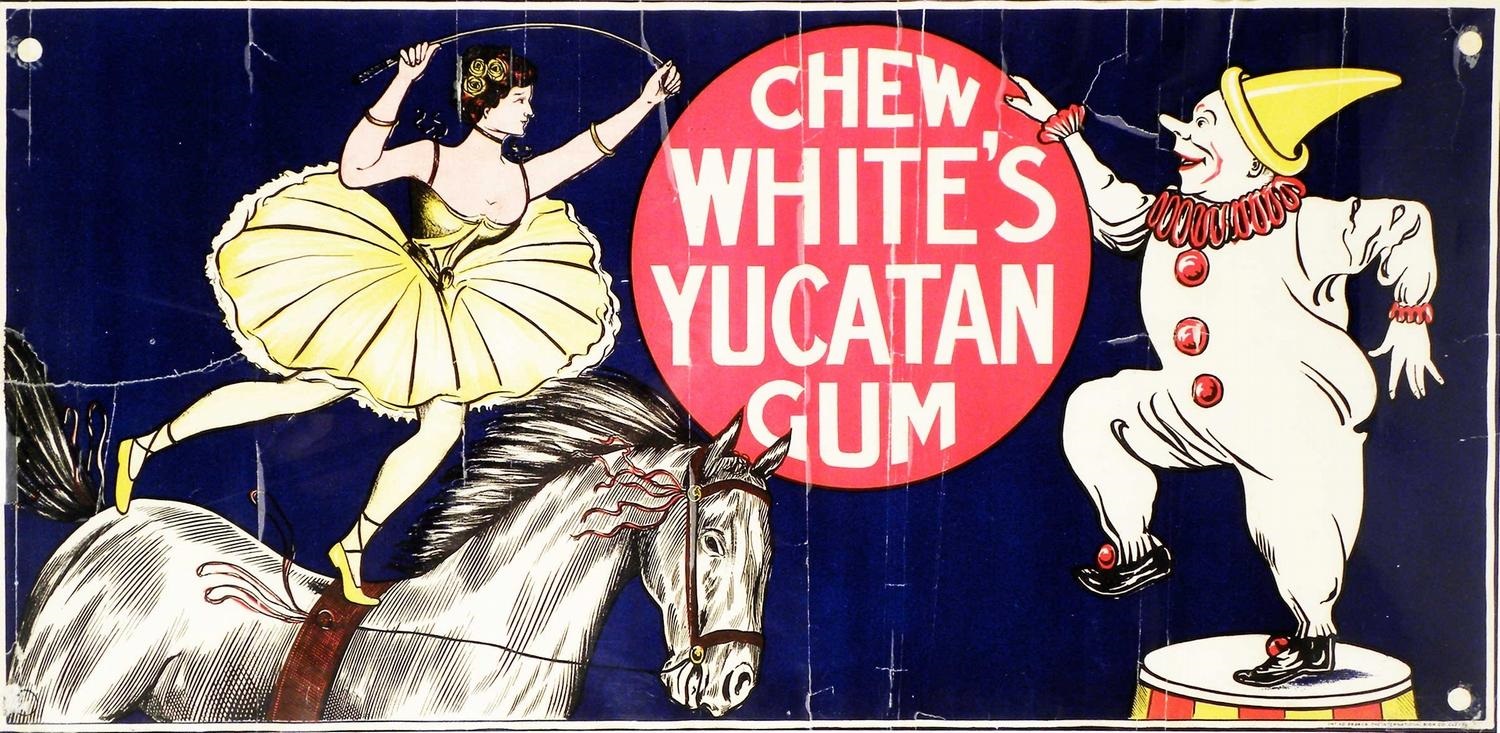
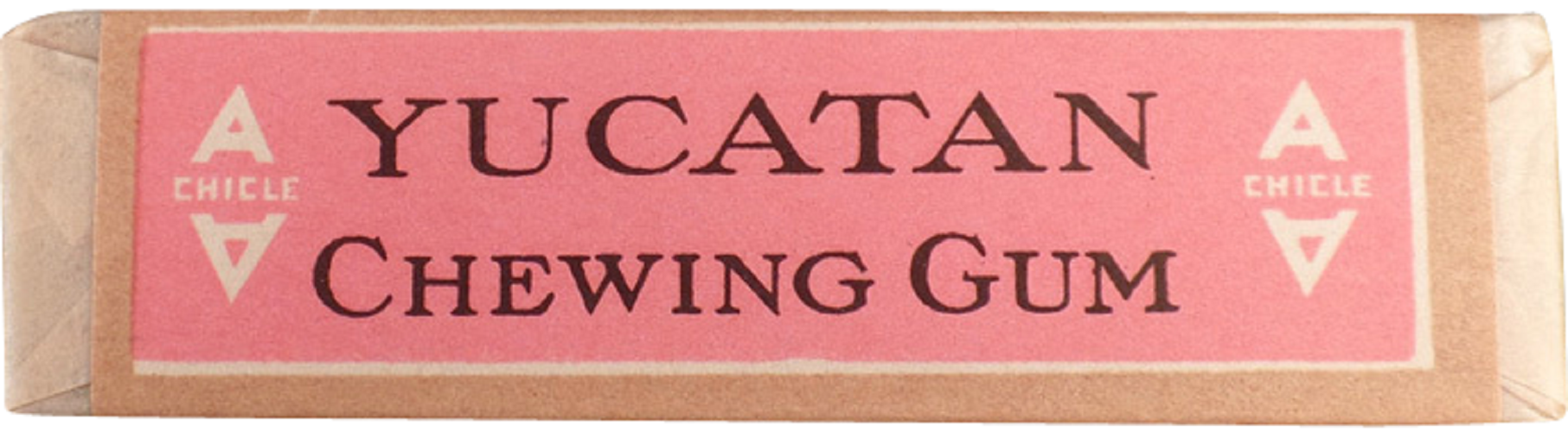
White experimented with various flavors and ultimately determined that peppermint extract was the longest lasting. He thereupon developed and marketed a peppermint flavored chewing gum called “Yucatan,” named after the Yucatan Peninsula of Mexico, from whence his chicle had originated.

He cut his gum into sticks, packaged them in pink paper, and soon found that he was a very wealthy man – for he was none other than the Chewing Gum King, the inventor of modern, flavored chewing gum.

White was also a marketing genius, for he knew how to target consumers, as evidenced by the introduction of another chewing gum he branded “Red Robin.” “Red Robin” was popular with young boys because White brilliantly affixed to every wrapper a “Boy’s Fortune,” not dissimilar to the fortune we encounter inside Chinese fortune cookies. One such wrapper which has survived records the following rather perplexing and unfortunate prognostication:

You are a very good boy, only when Jake Riger and Bob Spoots get you to go on with them to steal watermelons and peaches from old Daddy Boker. Then you always take the lead in deviltry. You will try to get his Bartlett pears and will get fast on a wire fence, and his dog Bose will tear the whole back part of your pants off before you get out, and when you go home your best girl will be there and you will be so afraid that she will see you, that you will sleep in the barn all night. But you finally become a minister and marry a widow with three very bad sons.

By 1884, no longer able to meet demand for his confectionary gold from his kitchen, White was manufacturing his chewing gum at a plant located at 57 South Water Street (West 9th St.). By 1888, demand was such that White was able to build a new factory at 1675 Detroit Avenue to manufacture both his Yucatan and Red Robin chewing gums.

The Detroit factory still stands, now converted into residential units and known as the Chicle Building (10307 Detroit Avenue), and is a listed National Historical Landmark.

In 1890, White founded the American Chicle Co., which operated two plants in Cleveland, employing hundreds. By this time, White was recognized as the largest chewing gum manufacturer in the world, having sold well over 150 million sticks of chewing gum. By 1906, White was reportedly earning over $500,000 a year from his confectionary interests alone. When White was asked by journalist James Morrow if he thought that the gum business might fade away, White responded, “The gum business will not play out. Americans are so nervous that they must bite on something. Farmers use hay, other men use tobacco.”

A Move to Edgewater

White had mastered confectionary alchemy and successfully turned base chicle into monetary gold. Having done so, he spent no time in spending that gold.

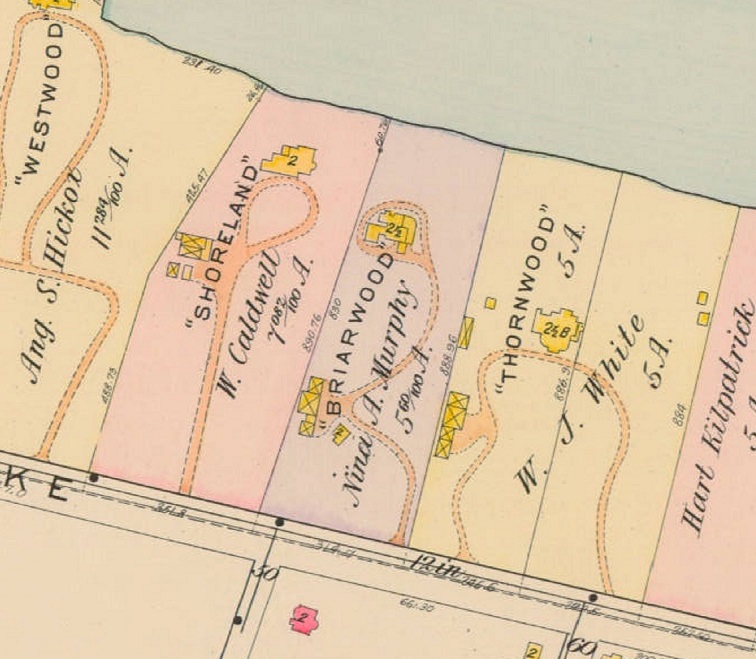
In 1889, White purchased a large estate on Lake Avenue, which he called Thornwood. On that estate, he built a fifty-two room mansion, which he generously bedecked with oriental carpets, antique furniture, fine paintings, and luxurious tapestries. He also purchased a 500 acre farm located about eight miles from Cleveland Public Square, called “Two Minute Stock Farm,” where he raised and bred 125 thoroughbred horses, several of which were world record holders at the time. For recreation, he indulged in yachting on Lake Erie. Of particular note, he purchased the steam yacht “Say When” in 1890, which he sailed from Chicago to Cleveland in forty-five hours and thirty-five minutes during the Columbian Exposition in 1893. He also sailed his yacht to England, where he purportedly presented his wife and his gum to King Edward VII.

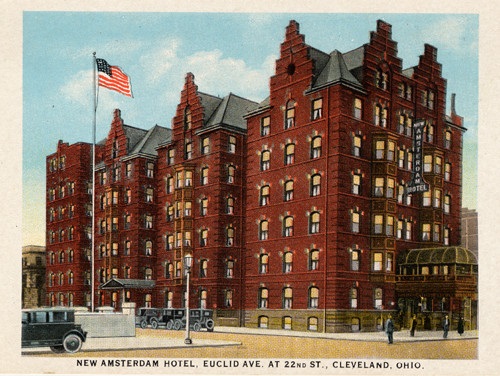
White also used his new found wealth to purchase substantial business and maritime interests. He was a substantial stockholder in the Cleveland and Buffalo Transit Company, the Owen Transportation Company, the First National Bank, the Columbia Savings and Loan Company, and the West Cleveland Banking Company (of which he was also president). He also owned real estate throughout the United States, including business blocks and apartment houses in Chicago, Cleveland, Lorain and other cities, as well as a large farm in Canada. His maritime interests included several steamers, including the Britannic and Ballentine. In 1901, he built the New Amsterdam Hotel, a seven-story brick and stone residential hotel, which stood on the southwest corner of Euclid Avenue and East 22nd Street until being razed in 1969.

Electoral Politics

For additional diversion, White engaged in electoral politics. In 1889, after moving to Lake Avenue, he was elected mayor of the Village of West Cleveland – scurrilous rumor claiming he secured his electoral victory, in part, by distributing free chewing gum to the electorate. White served one two-year term as mayor. As background, for those unfamiliar with the story of the Village of West Cleveland, the Village was created in 1871 and consisted of 1,500 acres of land. It was bounded on the north by Lake Erie, on the east by the Cleveland corporation line near Gordon Avenue (West 65th Street), on the west by Highland Avenue (West 117th Street), and on the south by Lorain Street. Prior to 1871, the area was part of Brooklyn Township. In 1893, the electorate of the Village of West Cleveland voted to annex to the City of Cleveland and, the following year, the Village and the City agreed upon the terms of the annexation.

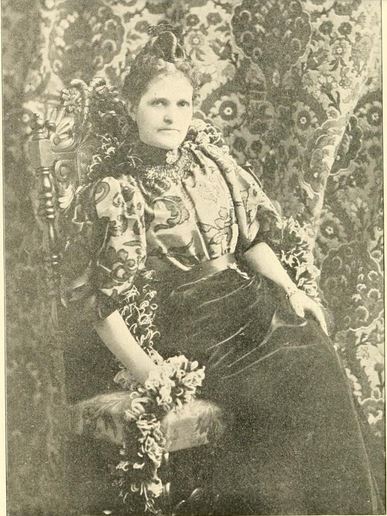
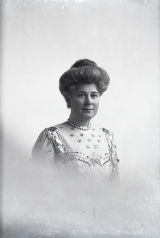
After his term as mayor, he decided to run for the U.S. House of Representatives. He was elected as a Republican to the Fifty-third Congress (March 4, 1893-March 3, 1895) but declined to be a candidate for re-nomination in 1894. During his term in Congress, he introduced and piloted to successful passage the law known as the “White Bill,” an Act which regulated navigation on the Great Lakes and their connecting and contributary waters. Ever the salesman, it is reported that White gave a box of his Yucatan chewing gum to every U.S. congressman while he served in Congress. The picture of Mrs. White with this article is from The Washington Sketch Book: A Society Souvenir (1895), which had the following to say of Mrs. White:

“Mrs. William J. White, wife of the Representative of the Twelfth District, is one of the interesting women that Ohio lent to adorn the official society of Washington for the Winter. Mrs. White is a lady of quiet dignity of manner, rare tact, intelligence and charming personality. She possesses a kind, generous nature and a warm affectionate heart, which attract even casual acquaintances to her and make her many warm friends. Mrs. White was born in Cleveland, Ohio, and is the daughter of Orange and Marletto Howard, of Mansfield. Mr. and Mrs. White are very hospitable and entertained in Washington, as at their beautiful Cleveland home, in a magnificent style and manner. One of the most elegant afternoon receptions of the season of 1895 was that given by them at the Shoreham. They have one lovely daughter, Miss Georgia, who is being carefully educated.”

Conclusion

Perhaps it is not surprising that a gentleman as frenetic as White appears to have been would find settled domestic life less than satisfying. Newspaper headlines reported that at one point the married White gave Anna Held, an internationally renown stage performer and singer, most often associated with impresario Florenze Ziegfeld, a $120,000 neckless.

They also record that White divorced his first wife, Ellen, in 1906 and married the very next day the wealthy divorcee Helen Sheldon. He and Helen moved to New York.

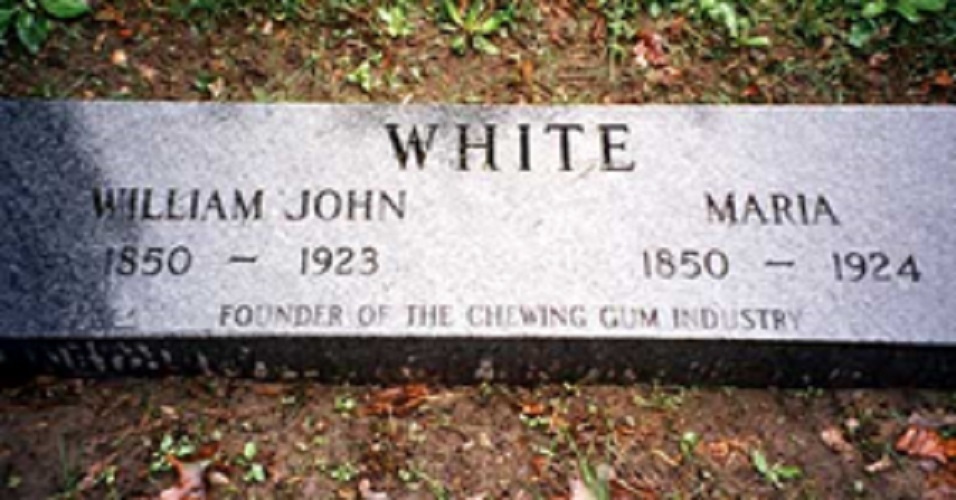
Probably in 1916, White became penniless after business difficulties and was removed as president of American Chicle Co. By 1920, White had founded Wm. J. White Chicle Co. in Niagara Falls, where he reportedly made and lost another fortune. He returned to Cleveland in 1922, penniless; however, always resourceful, he built a new factory determined to achieve success yet again. But, alas, before success came, in January 1923, White slipped on a sidewalk and died a few weeks later. He is buried in Lake View Cemetery.