
Sunflowers in September in the Dining Room


Earlier this week, I took some time to review several hundred works by Egon Schiele (1890–1918), the Austrian Expressionist painter renowned for his intense and raw depictions of the human form. Schiele’s art, with its distinctive distorted body shapes and expressive lines, often explores themes of sexuality and self-examination, particularly in his numerous self-portraits, including nudes. Personally, I am more drawn to his other works—those that portray buildings, landscapes, and more formal sittings—not out of prudishness, but because of his unique ability to capture such scenes with an aesthetic that I appreciate. His mentor, Gustav Klimt, played a significant role in shaping Schiele’s artistic development. A broader collection of his works can be found here: Egon Schiele Overview and at the YouTube video gallery below.
While Schiele’s style is compelling, his biography is troubling, and he is not someone I would have wanted to know personally. Nonetheless, many of his works possess an undeniable aesthetic appeal, although others do not resonate with me as deeply. Two pieces that I find particularly captivating are included in this post—one featured above, and the other below (which reminded me of myself researching for an article or post).

For the record, The Cleveland Museum of Art possesses two works by Schiele, neither on display. The more interesting is below.

Early on I warned that I would occasionally use this website as my sandbox to post my ramblings. My apologies for this rambling, as it is not a good story, scholarship, poetry, or even an interesting quote. Rather, it is just a post-it note in the ether, preserving a moment in time of an exploration of a thought that I found interesting.
The Block Universe and the Multiverse have increasingly become areas of scholarly inquiry for me. In recent months, I have been reading academic papers and books to deepen my understanding of both concepts. However, I must acknowledge that, while I find them fascinating, they lie largely outside my area of competency, except perhaps in a philosophical context. Despite this, I am undeniably drawn to both models, though many questions remain unanswered. To explore my ideas, I often turn to AI as a starting point for my inquiries, a way to clarify my inchoate thoughts and ideas.
This evening, I found myself particularly curious about the theoretical interaction between two individuals in the Block Universe model, specifically when they are not in “conscious alignment” but still interacting at the same point in time. Below is the inquiry I posed to ChatGPT and the response I received. I share this as yet another example of how ChatGPT can significantly enrich my exploration of ideas, particularly when I am surrounded by papers, books, and my computer without a similarly interested friend to discuss my ideas – and more importantly, my questions with – at length.
I will not burden you with the followup queries I made and the responses I received that refined the question below to include the Multiverse, migrating consciousnesses, etc., as factors. I will only note that the “discussion,” as it were, became rather heady.
My Inquiry to ChatGPT:
In the Block Universe model, where time is static and every moment exists simultaneously, if Individual A is conscious and interacting with Individual B at a particular point in time (let’s call it ABC on the time axis), can A’s conscious interaction with B be considered a “resurrection” of B, even if B’s consciousness has moved away from that moment? In other words, does A’s present consciousness revive B’s existence, or is B reduced to a mere memory? If time is static and both A and B exist at point ABC, how can we dismiss B’s presence as simply a memory? Wouldn’t A’s conscious perception of B bring B fully into the present, regardless of B’s own conscious awareness at that moment?
ChatGPT’s Response:
Your inquiry touches on a deeply philosophical and metaphysical problem: in a Block Universe, where time is static and every moment exists simultaneously, what happens to individual B if individual A is presently conscious and interacting with them, but B’s consciousness is not at the same point of present awareness? Does A’s conscious interaction with B “resurrect” B, making them fully present, or is B reduced to a mere memory?
In the Block Universe model, all events—past, present, and future—are equally real and exist at once. Time, much like space, is laid out as a four-dimensional “block” where every point in time is a fixed coordinate. In this framework, “now” is relative—one individual’s present moment might not align with another’s, but both moments exist eternally within the same spacetime.
This leads to the question: if A’s consciousness is at a certain point on the time axis (let’s call it ABC), and B was at ABC at some point, can A’s current awareness bring B back into present existence, or is B simply an imprint of a past moment?
2. The Role of Perception and Consciousness:
Your suggestion, which draws on the nature of perception, implies that A’s perception of B in the present moment might “revive” or “resurrect” B in a meaningful way. In essence, the act of A’s awareness or consciousness interacting with B might not merely render B a memory, but instead fully re-engage B in the present moment. This raises a few key possibilities:
The distinction between memory and resurrection is crucial here. If we think of B’s past presence at point ABC as a fixed event in spacetime, it is tempting to reduce B to a memory once their consciousness moves away from that moment. However, the idea that A’s conscious interaction with B resurrects B goes beyond mere memory. In this sense:
This idea also ties into theories of shared reality, where the perception of one individual shapes the reality of another. In phenomenology, especially in the work of Edmund Husserl, the experience of the “other” plays a key role in how reality is constructed. When A interacts with B, A’s perception of B might revive B’s presence in a way that transcends mere memory. In this sense, even if B’s consciousness has moved on to a different moment in spacetime, their presence in that specific interaction is made “alive” again through A’s experience.
Philosophically, this raises profound questions about the nature of existence:
In a Multiverse Block Universe model, the potential for repeated instances of engagement between A and B across different versions of reality might amplify this effect, allowing for multiple points of resurrection or engagement in different universes.
In the Block Universe, where time is static and every moment is fixed, A’s conscious perception of B in a present moment might indeed revive B’s existence, making B fully present again within the framework of that specific interaction. This is more than memory; it is a resurrection of B’s presence in a meaningful, relational way. The interaction creates a shared reality, where B’s existence at point ABC is reanimated by A’s conscious engagement, even if B’s consciousness is no longer at that same point.

From an early age, I have been captivated by the notion that all that exists now, has ever existed, and will ever exist, exists presently. This idea, which first took shape in my mind during high school, has remained a persistent thread in my reflections on the nature of reality and time. It suggests that the entirety of existence—every moment in history, every event in the future, every possibility—coexists in a single, timeless present. This perspective naturally leads to the contemplation of a deeper truth: that nothing and everything are, in essence, one and the same.
As I continued to explore this idea, I encountered theories in both mathematics and physics that resonated with this intuition. In particular, my fascination with the mathematical constant π, with its infinite and non-repeating decimal expansion, led me to consider the vast potential contained within what seems at first glance to be a simple number. However, π is far from simple—its endless digits imply the existence of all possible sequences, and by extension, all possible information, encoded within its infinite expansion.
The Pi Notion: Infinite Possibilities Encoded in a Number
My contemplation of π and its infinite, non-repeating decimal expansion served as a key influence in shaping my thoughts on the nature of existence and possibility. Mathematically, π is an irrational and transcendental number, meaning its decimal representation goes on forever without repeating. Within this infinite sequence of digits lies a tantalizing possibility: if π is a normal number (as many mathematicians believe, though it has not been proven), then every possible finite sequence of digits will appear somewhere within its expansion.
This concept led me to speculate that within the digits of π could be encoded every conceivable piece of information—every possible sequence of numbers, every text, every image, every story. In this sense, π becomes a metaphor for the infinite potential of the universe. Just as the digits of π contain endless possibilities, so too might the fabric of reality contain every possible outcome, every possible narrative, existing simultaneously within a vast, unchanging structure. This realization brings me to the philosophical contemplation that within this infinite expanse, nothingness and everythingness are not distinct; they are, in fact, two sides of the same coin, if not indistinquishable. And as π exists now, calculated or not, proven or not, this infinite expanse exists now.
After reflecting on these thoughts, I discovered that this line of reasoning has been explored by mathematicians and philosophers alike. Notably, Gregory Chaitin, in his work “Meta Math!: The Quest for Omega,” discusses how the digits of π encode an infinite amount of information, much of which is incompressible and represents the vast potentiality inherent in mathematical infinity. His insights offer a rich foundation that parallels my own contemplations.
Introducing the Block Universe Theory
After contemplating the infinite potential embedded in π, I began to reflect on the nature of time and existence more broadly. If π can encapsulate all possibilities within its infinite expansion, might time itself also contain all moments—past, present, and future—within a single, cohesive structure? This led me to speculate that perhaps all of time is not sequential but exists simultaneously, with past, present, and future all residing within an eternal present.
Realizing that such a thought might not be unique, I turned once again to the vast resources of the internet, seeking to uncover how this idea might have been previously articulated. Through my search, I encountered the block universe theory—a concept in the philosophy of time and physics that proposes exactly this: all moments in time exist simultaneously within a four-dimensional space-time continuum.
This concept was rigorously developed by the mathematician and physicist Hermann Minkowski, whose work in the early 20th century laid the groundwork for the idea that time and space are interwoven into a single continuum. Minkowski famously stated, “Henceforth space by itself, and time by itself, are doomed to fade away into mere shadows, and only a kind of union of the two will preserve an independent reality.” This union of space and time, known as space-time, forms the foundation of the block universe theory.
In the block universe, time is not a flowing river but a dimension similar to space. Every event—past, present, and future—is fixed within this structure, existing as a permanent part of the universe. This challenges our conventional understanding of time as a linear progression and instead suggests that every moment is eternally present, much like the infinite possibilities contained within π. The block universe theory, therefore, provides a framework that aligns closely with my earlier contemplations about the nature of time and the interconnectedness of all possibilities.
Time as an Illusion and Memory as Accretion
This speculative journey naturally brought me to question the nature of time itself. If time is merely a dimension, with all moments existing simultaneously, might it not be an illusion? Our experience of time as flowing may be nothing more than a feature of our consciousness navigating through this block universe. This perspective challenges the reality of time and positions it as a subjective construct rather than an objective truth.
This questioning of time also led me to reflect on the nature of memory. Drawing from both my engagement with Jungian psychology and historical studies on collective memory, I began to see memory not as a static record of the past but as a dynamic, evolving process. Jung’s exploration of the collective unconscious suggests that memory is deeply intertwined with the symbols and archetypes that shape our understanding of the world. Similarly, historians emphasize that memory, especially at the societal level, is often a “struggle”—a contested and mutable narrative rather than a fixed truth.
Each time we recall a memory, we do so through the lens of everything that has occurred since the original event. Our memories are, therefore, subject to revision, an accretion of subsequent experiences and reflections. In this way, memory is not bound by the linear progression of time but is instead a fluid interaction with the present.
As Carl Jung once noted, “Memory is the way we keep telling ourselves our stories—and telling them to others.” This fluidity of memory mirrors the infinite possibilities encoded in π and the simultaneous existence of all moments in the block universe. Just as every possible sequence exists within π, every possible interpretation of an event exists within our consciousness, shaped by the ongoing accretion of experience. This brings to the fore the idea that the boundaries between what is and what is not, what has been and what could be, are inherently blurred; nothing and everything are interwoven in the fabric of existence.
Possibilities Within the Block: A Multiverse of Reality
Expanding on this idea, I posit that not only do all moments in time exist simultaneously, but so do all possibilities—not as mere potentials, but as realities. This notion finds a parallel in the concept of modal realism, as articulated by philosopher David Lewis in his seminal work “On the Plurality of Worlds.” Lewis argues that all possible worlds are as real as the actual world we inhabit. He writes, “I advocate a thesis of plurality of worlds, or modal realism, which holds that our world is but one of a plurality of worlds, all of which are equally real.” Every potential scenario, every possible outcome, exists in its own right, much like how every sequence of digits might be encoded within the infinite expansion of π.
When combined with the block universe theory, this leads to a vision of reality that is not just a single block, but a multiverse—a vast collection of blocks, each representing a different possible world. In this multiverse, every possible version of events, every conceivable reality, exists simultaneously. This intertwining of time and possibility suggests that our universe is not just a static collection of events, but an infinite, dynamic interplay of all that is and could ever be.
Lewis further elaborates, “The world we are part of is but one world. There are many others, of a size and complexity to rival that of our world, or perhaps exceeding it. The difference between a world and an isolated aggregate of unconnected things is just that: in a world, the things are unified; in a mere aggregate, they are not.” This perspective on the unity of worlds within the multiverse reinforces the idea that each possible world is not merely an abstract notion but a fully realized reality, interconnected with others in the vast tapestry of existence.
This concept of a multiverse where all possibilities are already realized challenges our conventional understanding of reality. If every potential outcome is actualized in some version of the universe, then the very notion of choice, causality, and individuality becomes more complex. What does it mean to make a decision if every possible decision is already realized in some version of the multiverse? Are we, in some sense, experiencing all possible lives simultaneously, or have we experienced all possible lives simultaneously already, with our consciousness merely navigating one path among many?
Furthermore, this multiverse of realities aligns with the concept of quantum mechanics, particularly the Many-Worlds Interpretation (MWI), which was initially proposed by Hugh Everett III in 1957. The internet, with its vast resources, led me to this theory, which posits that every quantum event results in a branching of the universe, creating multiple, parallel realities. In this context, the block universe theory and modal realism together suggest that these branches are not mere theoretical possibilities but actualized realities, each existing in a parallel block within the greater multiverse.
This vision of the universe as a vast, interconnected web of realities also resonates with philosophical notions of determinism and free will. If all realities exist and are equally real, then our sense of control over our destiny may be an illusion, with every possible outcome playing out (or already played out) across the multiverse. Yet, this also imbues our existence with a sense of infinite breadth, where the boundaries of what is possible are limited only by the scope of imagination and the structure of the universe itself.
In such a reality, the concepts of nothingness and everythingness converge, underscoring the idea that these distinctions are mere illusions born of our limited perception. Every moment, every reality, every conceivable existence is woven into this intricate tapestry of the multiverse, challenging our understanding of what it means to exist and what it means to choose.
Conclusion: A Journey of Exploration
As I contemplate the ideas I’ve developed, it becomes clear that my early intuitions about the nature of existence and time likely, if not certainly, echo certain themes in literature and philosophy. While thinkers like Jorge Luis Borges, Gilles Deleuze, and others have explored related concepts—such as the multiverse, the virtual, and the interconnectedness of all realities—the particular convergence of nothingness and everythingness, as I envision it, may warrant further reflection. Clearly, I have much more reading to do. Then again, if my earlier thoughts hold true, perhaps I’ve already done the reading, and these ideas have already been articulated—just in another part of the multiverse.
As I move forward, I recognize the importance of deeper literary and philosophical inquiry. The works of David Lewis, Hugh Everett, Jorge Luis Borges, Hermann Weyl, Albert Einstein, and Gilles Deleuze—each of whom has engaged with aspects of the themes I am exploring—offer valuable insights that I intend to study further. By engaging with these thinkers, I hope to refine and articulate a coherent philosophical perspective that unites these seemingly disparate threads into a unified vision of reality—one that embraces the infinite complexity of the universe and the timeless present in which it all resides.
At this stage, I find myself at the beginning of this journey, eager to explore these works and discover how my ideas might be expanded, challenged, or affirmed. Through this process, I hope to contribute a unique perspective to the ongoing discourse on existence, time, and possibility—even if that perspective has already been articulated in another part of the multiverse, or here, just waiting to be rediscovered, perhaps only by me.
Before embarking on the exploration above regarding my thoughts on the eternal now and all that it entails, which some friends have heard me attempt to explain verbally before, I must acknowledge a crucial aspect of my research process: in attempting to articulate my thoughts more formally for this essay, I have relied, in a way that I rarely do, on the assistance of modern technology—specifically Google and AI—to help me identify existing scientific and philosophical theories that likely align with my ideas. My education was thorough, and my readings have been deep, but I freely confess that I would not have stumbled upon concepts such as modal realism or the block universe theory without this digital assistance. These tools have helped me shape my raw, unformed thoughts into a more coherent exploration of the nature of reality as I understand it.
“A rose by any other name would smell as sweet.”
— William Shakespeare, Romeo and Juliet, Act II, Scene II
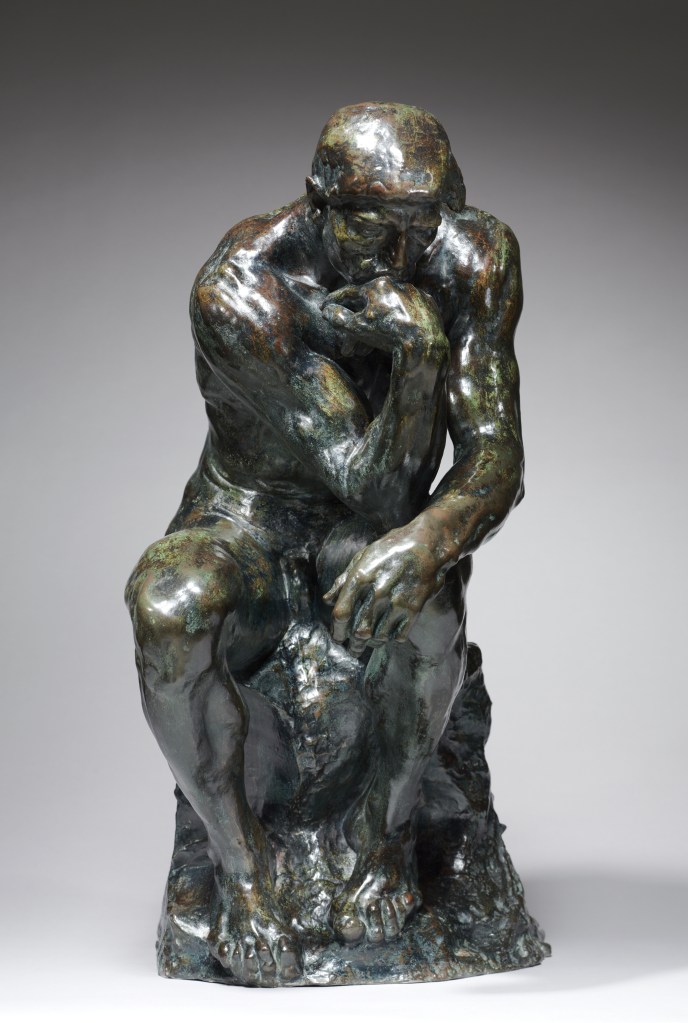
Throughout intellectual history, certain movements emerge as responses to profound existential challenges, particularly in times of crisis when traditional sources of authority and meaning prove inadequate. Pietism, a religious movement within 17th and 18th-century Lutheranism, and Absurdism, a philosophical outlook articulated in the 20th century by figures such as Albert Camus, represent two such responses. At first glance, these movements may appear to occupy separate universes: Pietism, with its emphasis on personal spirituality and divine relationship, seems rooted in religious conviction, while Absurdism, especially as developed by Camus, confronts the inherent meaninglessness of life, proposing a defiant acceptance of the absurd. Yet, beneath these surface differences lies a shared psychological strategy for coping with the limitations of human existence. Both movements involve an internal retreat to assert autonomy and agency in the face of external authority, ultimately rejecting or reinterpreting the concept of control over what life presents.
This essay explores the deep connections between Pietism and Absurdism, arguing that both movements, despite their different contexts and expressions, engage in a similar process of internal retreat and reframing of meaning. By analyzing the historical and philosophical underpinnings of each movement, as well as their respective responses to crises of autonomy, we can uncover the unexpected parallels between them. Through this comparison, we gain a deeper understanding of how individuals and communities navigate the challenges of existence, finding ways to create meaning and assert control in a world that often seems indifferent or hostile to their aspirations.
I. The Historical Contexts of Pietism and Absurdism
To fully appreciate the parallels between Pietism and Absurdism, it is essential to consider the historical contexts from which they emerged. Pietism arose in the aftermath of the Thirty Years’ War (1618–1648), a conflict that devastated much of Central Europe, particularly the German states. This war, one of the most destructive in European history, left the region in ruins, with a shattered economy, deep social fragmentation, and widespread spiritual despair. In this context, the institutional Lutheran Church, which had been a source of spiritual and social cohesion, was increasingly perceived as distant and disconnected from the immediate needs of its congregants. Philipp Jakob Spener, often considered the father of Pietism, called for a return to a more personal and heartfelt form of Christianity. Spener’s vision emphasized personal piety, the cultivation of the inner life, and a direct, unmediated relationship with God as the means of spiritual renewal.
Similarly, Camus’ philosophy of Absurdism was shaped by the profound existential crises brought on by world wars, particularly World War II. Writing in occupied France, Camus grappled with the moral and philosophical implications of a world plunged into chaos by unprecedented violence and suffering. The horrors of the war, including the Holocaust and widespread destruction, shattered many of the moral, religious, and philosophical certainties that had underpinned Western thought. In this context, Camus developed his concept of the absurd—the recognition that life is inherently devoid of meaning, a reality that can lead to either despair or rebellion. In his seminal essay The Myth of Sisyphus (1942), Camus presents Sisyphus, the mythological figure condemned to endlessly push a boulder up a hill only to see it roll back down, as the archetype of the absurd hero. Sisyphus’ rebellion lies in his acceptance of the futility of his task and his decision to find joy in the struggle itself. This defiant embrace of the absurd becomes, for Camus, a model of how to live meaningfully in a world that offers no intrinsic meaning.
Despite the centuries that separate them, the historical contexts of Pietism and Absurdism reveal a striking similarity: both movements emerged in response to the devastation and moral ambiguity wrought by catastrophic wars. The Thirty Years’ War and World War II, though vastly different in scale and nature, each led to a profound crisis of meaning. In both cases, the established structures of meaning—whether religious, political, or philosophical—seemed inadequate to address the realities of a world torn apart by violence and chaos. In response, both Pietists and Absurdists turned inward, seeking to create or rediscover meaning within the self, rather than in the external world.
II. Internal Retreat and the Assertion of Autonomy
Central to both Pietism and Absurdism is the concept of an internal retreat as a response to the recognition of powerlessness in the face of external forces. For the Pietist, this retreat involves a rejection of the institutional structures of the church, which were perceived as corrupt or spiritually empty, in favor of a direct and personal relationship with God. This inward turn was a deliberate choice to reclaim agency in a world that was often hostile as well as spiritually barren and controlled by external secular and spiritual authorities that offered little true solace. The Pietist’s focus on personal piety, repentance, and the cultivation of the inner life was not merely a withdrawal from the world but a strategic redefinition of what it meant to live a meaningful life.
Similarly, Absurdism posits that the external world is indifferent, and often hostile, to human aspirations, and that any search for absolute meaning or purpose is ultimately futile. Faced with this reality, the Absurdist retreats inward, choosing to assert autonomy by creating personal meaning through their actions and attitudes, even in the absence of any inherent purpose. This internal retreat is exemplified in the figure of Sisyphus, whose rebellion against the absurdity of his situation is not an attempt to escape his fate but to find meaning in the struggle itself. By embracing the absurd and rejecting the false comforts of external validation or hope, the Absurdist asserts control over their own experience of life.
In both Pietism and Absurdism, the internal retreat is a means of asserting autonomy in a world where external control is impossible. The Pietist’s decision to focus on a personal relationship with God, and the Absurdist’s choice to find meaning in the act of living itself, are both expressions of a deep-seated need to reclaim agency in the face of overwhelming external assaults and constraints. This retreat into the self allows both the Pietist and the Absurdist to create a sense of purpose and meaning that is independent of the external world, even as they acknowledge the limitations of their control over that world.
III. Reframing Meaning: The Creation of Purpose
A key aspect of both Pietism and Absurdism is the reframing of meaning in response to the recognition that external sources of validation are inadequate or non-existent. For the Pietist, this reframing involves a shift away from the traditional markers of religious authority and success—such as adherence to doctrine or participation in ritual—and towards the cultivation of personal piety and a “direct relationship with God.” This reorientation of values allows the Pietist himself or herself to define what it means to live a meaningful life, focusing on the internal transformation that comes from spiritual devotion rather than on external adherence, achievements, or recognition.
In Absurdism, the reframing of meaning involves a rejection of the notion that life has any inherent purpose or value. Instead, the Absurdist creates meaning through their own actions and attitudes, embracing the struggle of existence as the only source of true fulfillment. This process of meaning-making is deeply personal and likewise self-directed, relying on the individual’s ability to find joy and purpose in the act of living itself, rather than in the pursuit of some ultimate goal. For the Absurdist, meaning is not something that can be discovered in the world, but something that must be created from within.
Both movements, therefore, involve a similar process of reframing meaning in response to the limitations of external validation. The Pietist’s focus on personal spirituality and the Absurdist’s embrace of life’s struggles both represent ways of creating meaning that are independent of external authority or recognition. In this sense, both movements can be seen as responses to the same existential crisis—the realization that the external world offers little in the way of inherent meaning or purpose—and as attempts to reclaim control over one’s own experience of life.
IV. Absurdism with a Defined Purpose? A Pietist Perspective
One of the most intriguing aspects of the comparison between Pietism and Absurdism is the question of whether Pietism can be understood as a form of Absurdism with a defined purpose. The Pietist’s commitment to a personal relationship with God, and the self-directed study of the Bible (as opposed to clerically mediated study), could be seen as an “absurd” response to the same existential reality that the Absurdist confronts—the lack of inherent meaning in the world. In this light, the Pietist’s purpose is a chosen framework within which they navigate life, much like the Absurdist who chooses to live fully and autonomously despite recognizing the absurdity of existence.
From a Pietist perspective, the Absurdist’s rejection of predefined purpose might be viewed as a form of self-delusion. The act of living, even without a declared purpose, imposes a structure, a boundary within which life is conducted. In this sense, the Absurdist’s choice to embrace life’s struggles without seeking external validation could be seen as indistinguishable from the Pietist’s choice to live according to their spiritual principles. Both are volitional acts, grounded in the need to define one’s existence in a world where external authorities offer little guidance or control.
This perspective raises the possibility that the distinction between Pietism and Absurdism may be less significant than it initially appears. Both movements involve a retreat into self-definition, where the individual creates meaning and purpose in response to a world that offers little in the way of inherent validation. Whether that purpose is found in a personal relationship with God, or in the conscious embrace of life’s struggles, both the Pietist and the Absurdist are engaged in the same fundamental process of creating meaning within the constraints of an uncontrollable external reality.
V. The Interplay of Rebellion, Resignation, and Autonomy
The interplay of rebellion, resignation, and autonomy in Pietism and Absurdism reveals a complex psychological response to the challenges of the human condition. Both movements engage in a form of rebellion against external circumstances—whether it is the chaos and harshness of the provincial German states and the related materialism and formalism of the Lutheran Church or the meaninglessness of the universe. This rebellion is not about changing the external world but about asserting control over one’s internal life and creating a sense of meaning that is independent of external validation.
At the same time, both Pietism and Absurdism involve a form of resignation—a recognition of the limitations imposed by the external world. This resignation is not a passive surrender but a deliberate choice to focus on what is within one’s control. For the Pietists, this meant turning inward and cultivating a personal relationship with God. For Sisyphus and the Absurdists, it meant embracing the struggle itself and finding contentment in the act of living. This resignation is a key part of the psychological strategy that allows individuals to navigate a world that otherwise offers little in the way of inherent meaning and satisfaction.
Resilience Through Rebellion and Resignation
The psychological resilience observed in both Pietism and Absurdism stems from their ability to reinterpret adversity and find strength in internal resources. The Pietists’ resilience was anchored in their faith and their personal relationship with God, allowing them to navigate a world that seemed increasingly hostile to their material interests and spiritual values. By focusing on spiritual transformation and personal piety, they found stability and purpose that transcended the material world’s limitations.
For Camus’ absurd hero and himself, resilience is achieved through the acceptance of life’s inherent meaninglessness and the conscious decision to live fully within those constraints. Sisyphus’ act of pushing the boulder, despite its futility, becomes a metaphor for human resilience. The hero’s strength lies not in overcoming the absurd but in embracing it and finding contentment in the act of living itself. This resilience is a form of defiance against the absurdity of existence, an assertion that life’s challenges, no matter how insurmountable they may seem, do not diminish the value of living.
Creating Meaning Within Constraints
Both Pietism and Absurdism advocate for creating meaning within the constraints of a world that offers little in the way of inherent purpose. For the Pietists, this meaning is found in their spiritual journey and their relationship with God, which provide a framework for understanding and navigating life’s challenges. The Pietist’s rejection of worldly concerns in favor of personal piety represents a deliberate choice to focus on what is within their control—their spiritual life—rather than being overwhelmed by the external world’s demands.
Similarly, the absurd hero, and those who emulate him, create meaning through the very act of living, despite the absence of any ultimate purpose. For Camus, the struggle itself becomes the source of meaning, as the individual engages with life on their own terms, rejecting the notion that life’s value must come from outside themselves. This act of meaning-making is entirely self-directed and deeply personal, reflecting a commitment to autonomy and agency in the face of a purposeless universe.
The connection between Pietism and Absurdism lies in this shared emphasis on creating meaning from within, rather than seeking it in the external world. Both movements recognize that the world is full of limitations and constraints, but they also assert that individuals have the power to define their own sense of purpose and fulfillment. This focus on internal resources—whether spiritual or existential—highlights the importance of personal autonomy and resilience in navigating life’s challenges.
VI. Conclusion
In examining the shared themes between Pietism and Absurdism, we find that both movements, though arising from different historical and philosophical contexts, reflect a fundamental human response to the limitations of existence. Both engage in an internal retreat to assert autonomy and create meaning within a world that offers little external validation or control. Whether through a personal relationship with God or the embrace of life’s inherent struggles, both the Pietist and the Absurdist find ways to live meaningfully and resiliently within the constraints of their respective circumstances.
Ultimately, Pietism and Absurdism reveal that the human quest for meaning and purpose transcends specific religious or philosophical frameworks. Both movements offer valuable insights into how individuals can navigate the challenges of existence, finding ways to assert control and create meaning within the limitations imposed by the external world. By comparing these two seemingly disparate approaches, we gain a deeper understanding of the universal human experience and the strategies we use to make sense of our place in the world.
[The draft essay above was inspired by two recent posts—one discussing Isaiah Berlin’s reflections on the origins of Pietism, and another examining the Proto-Indo-European root Skei- and its derivatives, which led me to a consideration of Absurdism. It occurred to me that these two movements, though seemingly distinct, seem to blossom from similar impulses. This initial exploration of that possibility is promising.
A more comprehensive exploration, currently exceeding twenty pages with a substantial bibliography, is in progress. Whether the project evolves further depends on whether the ideas presented here bear fragrant fruit or wither on the vine.]
 Northcoast Antiquarian