

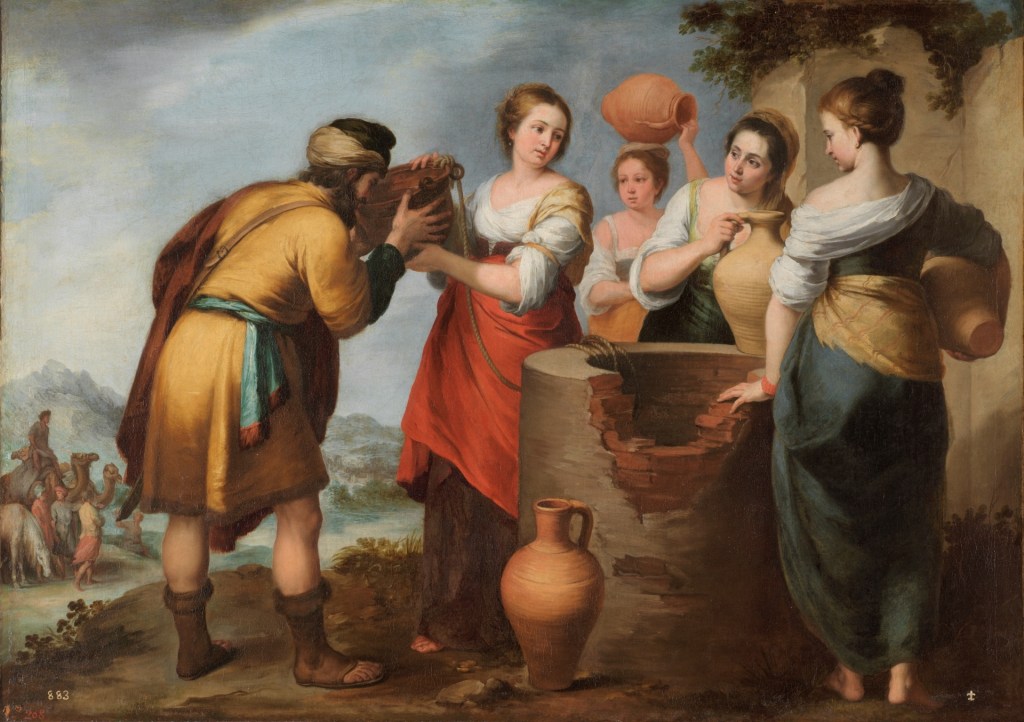
And the Lord said, “I indeed have seen the abuse of My people that is in Egypt and its outcry because of its taskmasters. I have heard, for I know its pain. And I have come down to rescue it from the hand of Egypt and to bring it up from that land to a goodly and spacious land, to a land flowing with milk and honey, to the place of the Canaanite and the Hittite and the Amorite and the Perizzite and the Hivvite and the Jebusite.”
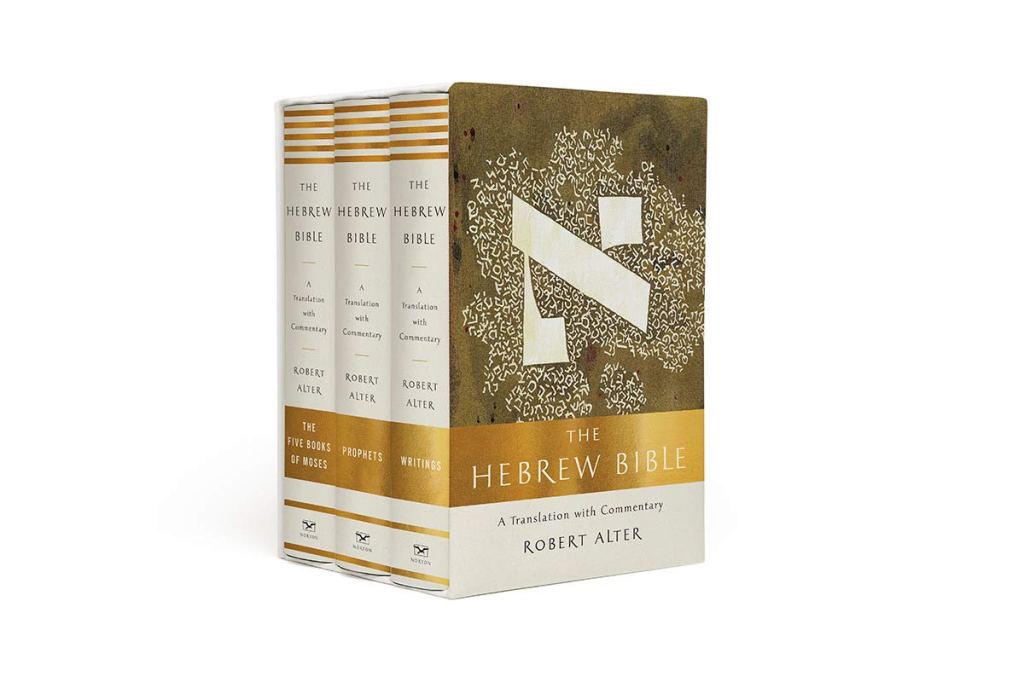
Exodus 3:7-8. From Robert Alter’s The Hebrew Bible : A Translation with Commentary.
What particularly caught my attention after reading this passage was Robert Alter’s commentary on the milk and honey to be found in The Promised Land. He stated the following: “The honey in question is probably not bee’s honey, for apiculture was not practiced in this early period, but rather a sweet syrup extracted from dates. The milk would most likely have been goat’s milk and not cow’s milk. In any case, these two synecdoches for agriculture and animal husbandry respectively become a fixed epithet for the bounty of the promised land” (Alter, Robert (2019). The Hebrew Bible: A Translation with Commentary, v. 1, p. 221, n. 8.).
Immediately upon reading this I was seized with a curiosity to know more about the sweet syrup extracted from dates and apiculture in the Holy Land. Let us begin with a research paper that helps me understand the comment above and discusses the earliest known archaeological apicultural remains in The Promised Land.

In 2010, Guy Bloch and others published an exciting paper detailing the oldest archaeological evidence related to bee-keeping ever discovered (Bloch, Guy; Francoy, Tiago; Wachtel, Ido; Panitz-Cohen, Nava; Fuchs, Stefan; and Mazar, Amihai. (2010). Industrial Apiculture in the Jordan Valley during Biblical Times with Anatolian Honeybees. In Proceedings of the National Academy of Sciences of the United States of America. 107. 11240-4. 10.1073).
The work began by noting that: “[a]lthough texts and wall paintings suggest that bees were kept in the Ancient Near East for the production of precious wax and honey, archaeological evidence for beekeeping has never been found. The Biblical term “honey” commonly was interpreted as the sweet product of fruits, such as dates and figs.” This confirmed Alter’s comment, above. But then the paper proceeded to share its extraordinary findings:
“However, actual evidence for beekeeping in antiquity had not been found before the recent discovery of what appears to be a well-organized apiary at Tel Rehov in the middle Jordan valley in northern Israel. Tel Rehov is one of the largest Iron Age sites in Israel. A city 10 ha in area flourished there between the 12th and 9th centuries Before Common Era (B.C.E.). The apiary includes ≈30 hives (of 100–200 estimated) that were made as unfired clay cylinders. The hives have a small hole on one side for the bees to enter and exit and a lid on the opposite side for the beekeepers to access the honeycomb. Three rows of such hives were located in a courtyard that was part of a large architectural complex that was severely destroyed, most probably at the end of the 10th or beginning of the 9th centuries B.C.E. In terms of Biblical historiography, this period corresponds with the United Monarchy of David and Solomon and the beginning of the kingdom of northern Israel” p. 11240.
What is also extraordinarily interesting is that the authors report the discovery of remains of honey bees and their larvae inside the hives, which allowed them to identify the species of bee. The authors determined that the bees in the hives were A. m. anatoliaca, which currently resides in Turkey. This suggested to them that either Western honeybee subspecies distribution has undergone rapid change during the past 3,000 years or that the ancient beekeepers at Tel Rehov imported bees with a less aggressive temperament and superior honey yield (3 to 8 times more yield than the native species, A. m. syriaca). The possibility of importation cannot be easily dismissed given tantalizing hints of a developed apiculture transport practices, such as the following, cited by the authors:
“There is evidence that beekeeping was practiced in Anatolia during the Late Bronze Age (1); Hittite laws dated to the 14th–13th centuries B.C.E. contain severe punishments for thieves of bee swarms and hives (25). The Zenon papyri from Egypt suggest that transferring bees in portable hives or pottery jars was practiced in the third century B.C.E. (1). An Assyrian memorial stele dated to the mid-eighth century B.C.E. (about 100–150 y later than the beehives at Tel Rehov) describes the importation of honeybees from a country called “Habha,” probably in the Zagros or Taurus mountains (modern day southeastern Turkey
or northwestern Iran), about 300–400 km to the north or northeast of the land of Suhu on the Middle Euphrates (the modern border zone between Syria and Iraq)” pp. 11243-11244.
Today, apiculture is flourishing in The Promised Land. The Israeli Honey Production and Marketing Board says that apiculture and the trade in honey produced by honey bees can be traced back to 1882. The Israeli honeybee is actually of Italian origin, and is known as the Apis mellifera ligustica – a subspecies of the western honey bee. There are 529 beekeepers in Israel tending to approximately 120,000 hives. Their bees produce approximately 35 kilograms of honey per hive annually. Fortunately, honeybee populations are reported to be stable in The Promised Land, which serves as a transition to my next “connected” reading.
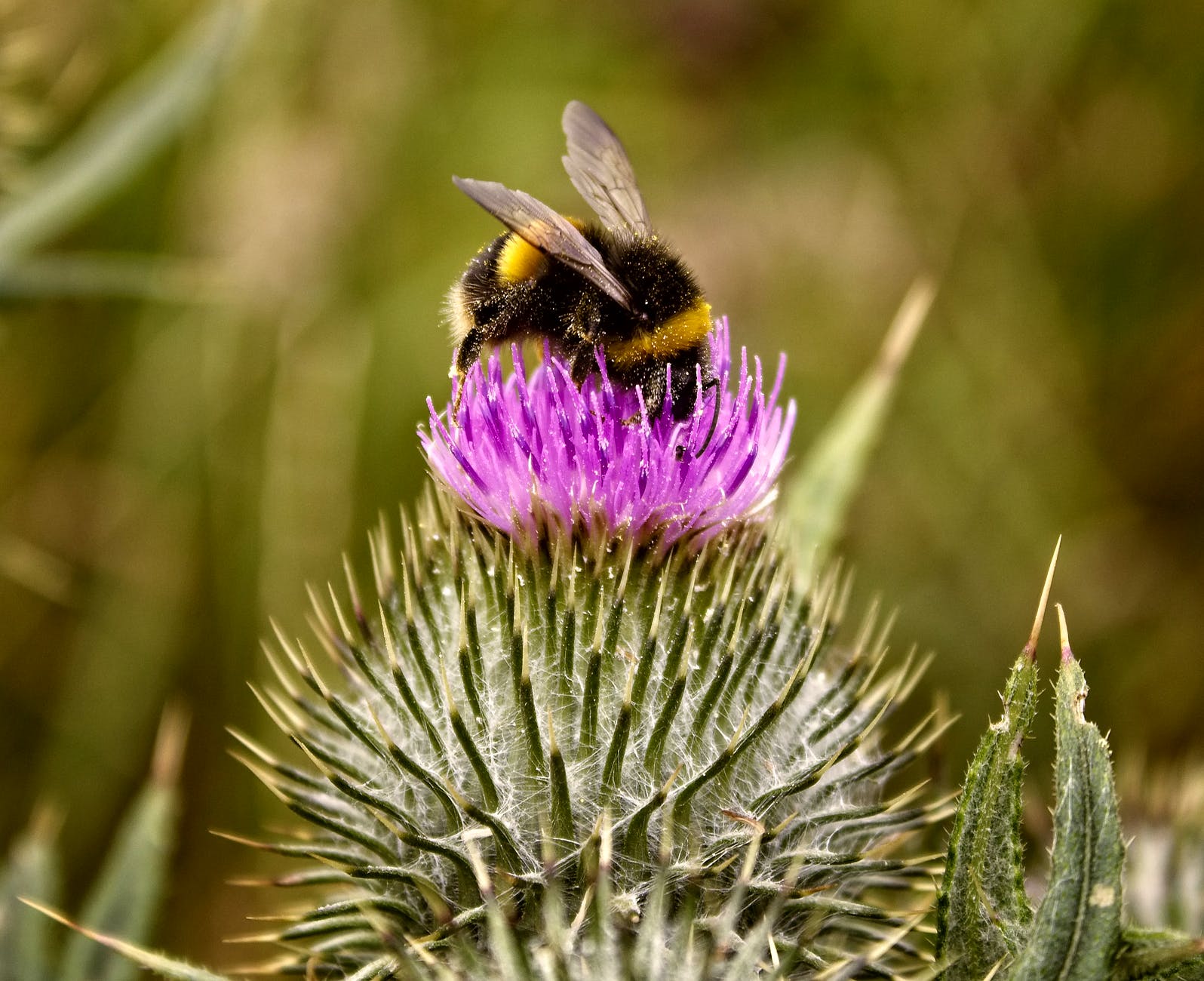
Newsweek reported earlier this week that the U.S. Fish and Wildlife Service reviewed a petition calling for the the American bumble bee to be listed as an endangered or threatened species and found it “may be warranted.” The petition, which can be found here, was written and submitted by the Center for Biological Diversity and the Bombus Pollinators Association of Law Students. The petition states, in part, in its executive summary, the following:

“The American bumble bee (Bombus pensylvanicus De Geer) is one of the most iconic native pollinators in North America. This highly adaptable pollinator once ranged coast to coast, foraging in the grasslands, fields, and open spaces in 47 of the lower 48 states. Like the endangered rusty-patched bumble bee, it is a generalist that provides essential pollination service to a wide variety of plants—including native plants and cultivated crops, across a vast range. Its loss will have considerable consequences to whole ecosystems and to crop production. Once the most commonly observed bumble bee in the United States, the American bumble bee has declined by 89 percent in relative abundance and continues to decline toward extinction due to the disastrous, synergistic impacts of threats including habitat loss, pesticides, disease, climate change, competition with honey bees, and loss of genetic diversity. In the last 20 years, the American bumble bee has vanished from at least eight states, mostly in the Northeast, and it is in precipitous decline in many more. For example, in New York it has suffered a catastrophic decline of 99 percent in relative abundance, and in Illinois it has disappeared from the northern part of the state and is down 74 percent since 2004. In sum, the American bumble bee has become very rare or possibly extripated from 16 states in the Northeast and Northwest; it has experienced declines of over 90 percent in the upper Midwest; and 19 other states in the Southeast and Midwest have seen declines of over 50 percent” p. 8.
That the American Bumble Bee would be so close to extinction, in the land that so many identify as the new promised land, is depressing. Which leads to one final, not bee related but promised land related reading: Charles Taylor’s book review, An America That Could Explain: On Barack Obama’s “A Promised Land.” The reader should read the review but for my purposes, I will share only the concluding thought of the review, as it seemed most appropriate for these troubled times:
In Caste, Isabel Wilkerson quotes Taylor Branch, the author of the magisterial Martin Luther King Jr. biography America in the King Years. “The real question,” Branch asks, “would be if people were given the choice between democracy and whiteness, how many would choose whiteness?” At last count, the answer is 74,222,958.




 Northcoast Antiquarian