

There is much I do not understand. And the little I do understand is inconsequential. So, I accept the joy of wonder … wondering what it is all about and knowing that I will never know.
From My Facebook Post on August 18, 2011

There is much I do not understand. And the little I do understand is inconsequential. So, I accept the joy of wonder … wondering what it is all about and knowing that I will never know.
From My Facebook Post on August 18, 2011

Yarab is an Anglicized spelling of the Slovak surname Jaráb. It is a zoonym, which is a name of an animal. That animal is a crane, for in 19th century Slovak Jaráb is akin to the Czech word jeřáb, which means crane. Accordingly, when I happened across the the above coin from Selinus, depicting a crane on its reverse, I had to learn a little bit more about the history of Selinus and the imagery appearing on this stunning coin.
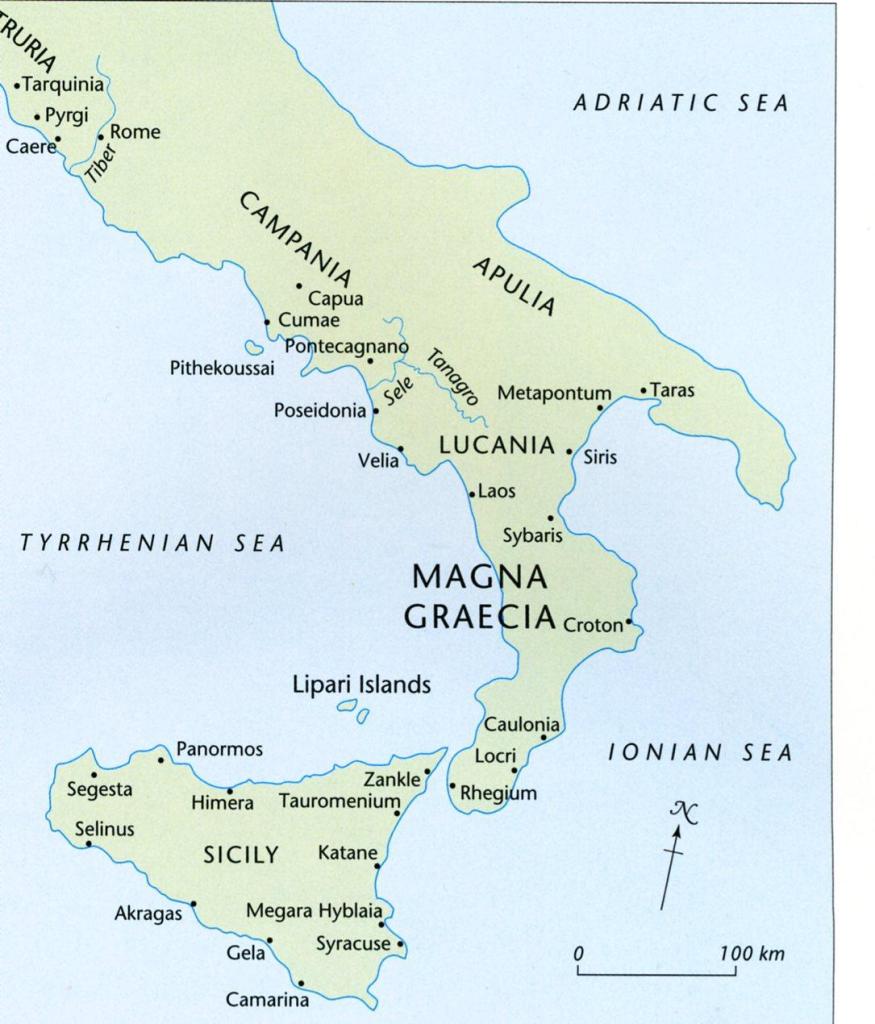
Selinus is located on the south-west coast of Sicily and, according to Thucydides, was founded in 628BC by Greek colonists from Megara Hyblaea, a Greek colony on the eastern side of Sicily. It was the most western Greek colony on Sicily and one of the first Greek colonies in Sicily to issue coins.
The colony covered a large and well-planned urban and sacred area. The sacred area is reputed to have had ten separate temples dating from the 6th to 5th century BC. The Temple of Hera is amongst the city’s most famous ruins.
The World History Encyclopedia article on Selinus records that the city was completely redesigned between 580-570BC and that the city is one of the best examples of ancient town planning. It also notes that indicators of the city’s wealth were the presence of a theatre, its prolific mint, and its satellite colonies (such as Eraclea Minoa, established in 570 BC).
Selinus allied itself with Carthage in 480BC and was often at war with rival city Segesta on the northern coast of the island. Although initially ruled by an oligarchy, Selinus was governed by tyrants throughout the 5th century BC. Selinus was sacked by Carthage in 409BC after Hannibal besieged the city for nine days; some 16,000 of the city’s inhabitants were slain after the city fell. The city was rebuilt by the Syracusan exile Hermocrates, but was under Carthaginian control in the 4th century BC. During the first Punic War (264-241BC), the city was abandoned.
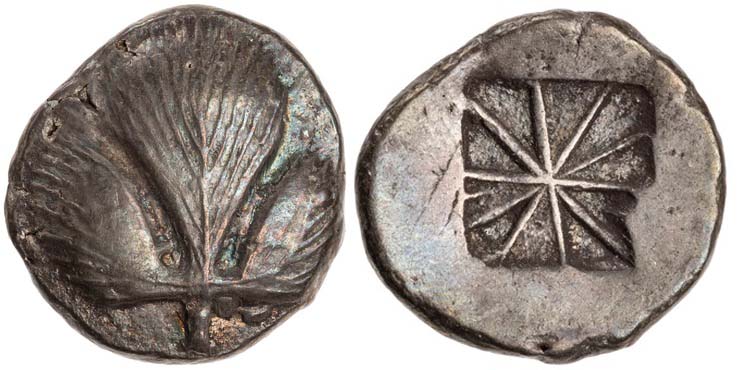
As mentioned above, Selinus was among the the first cities to strike coins in Sicily. In Greek Coinages of Southern Italy and Sicily, N.K. Rutter records that “the obverse of the first coins had a canting type represent the name of the city in a visual form: a leaf of the celery plant, selinon in Greek, mostly presented in a stylized way with three parts, a central frond supported by a frond on either side. Later versions of the leaf are more complex. The reverse bears an incuse square, on the earlier issues divided into triangles, usually with raised and depressed sections” (p. 102). These types may have been struck from c. 530 -470BC.
The coin which is of especial interest to this post, however, was struck c.450BC and was of a very different type. Of this type, Rutter says the following (pp. 138-139):

“A little later, perhaps around 450, Selinus revived the minting activity that it seems to have abandoned around the time of the Carthaginian attack in 480 (or perhaps a decade later) with a series of coins rich in religious imagery and references to local cults. … On earlier coins of Selinus a leaf of the celery plant had been the main type, now it is merely a small symbol in the field. The didrachms repeat the theme of sacrifice on the reverse – performed now by Hypsas the other river-god of Selinus – while the obverse shows Heracles fighting the Cretan bull: the hero brandishes his club in his right hand, while with his left he seizes one of the bull’s horns. The cult of Heracles is well-attested at Selinus and had a special interest for its citizens: it linked them to Argos, home of the dynasty that gave birth to Heracles, and also to Cnossos in Crete, where the hero had performed one of his celebrated labors.”
For those unfamiliar, Eurystheus’s demand that Heracles capture and bring the Cretan bull to him alive was the Seventh Labor of Heracles. It was a labor easily accomplished. See Apollodorus. The Library, Volume I: Books 1-3.9. Translated by James G. Frazer. Loeb Classical Library 121. Cambridge, MA: Harvard University Press, 1921. pp. 198-201 or, perhaps more readily available, see The Labors of Hercules.
Regarding the bird appearing on the reverse of this type and identified as a crane (which it is currently identified as in most references and databases (such as the American Numismatic Society’s database) and most trade offerings (see various offerings as recorded in coinarchives.com and acsearch.info), it was first identified as a crane as early as 1876 in the British Museum catalogue. But this identification was not unchallenged, apparently. For a period, numismatists, being uncertain, identified the bird simply as a marsh bird, and then were prone to identify it as a heron or egret. See pp. 90-91 of the following article for a discussion of this issue: Lloyd, A. H. “THE COIN TYPES OF SELINUS AND THE LEGEND OF EMPEDOCLES.” The Numismatic Chronicle and Journal of the Royal Numismatic Society, vol. 15, no. 58, 1935, pp. 73–93. JSTOR, http://www.jstor.org/stable/42664348. Accessed 14 Aug. 2021.
However, cranes have been present in western Sicily recently (e.g. most recently in the Trapani salt marshes, an area not too distant from ancient Selinus), and have been present in western Sicily historically, and there should be no reason to doubt the initial identification of the “marsh bird” on the coin’s reverse as a crane. See Masseti, Marco. “The lost cranes of the island of Lampedusa (Italy).” Rivista Italiana di Ornitologia, vol. 86 (I), 2016, pp. 49-54.
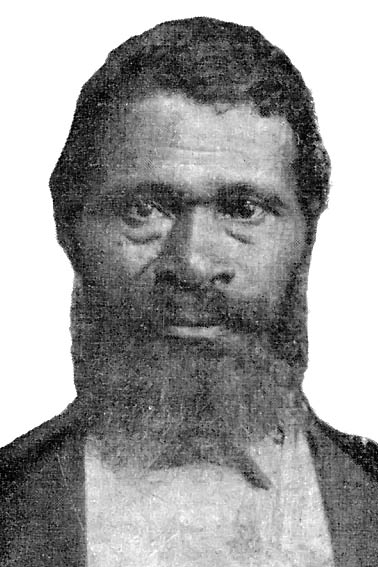
It is a historical nugget which has been oft-told in newspapers, blogs, and classrooms over the years. I reposted a telling of the story on Facebook several years ago and, having come across the recently again, am inclined to tell the story again. It simply deserves to be told, again and again.
Jordan (or Jourdan) Anderson was born somewhere in Tennessee around 1825 and by age 7 or 8 had been sold to a plantation owned by Gen. Paulding Anderson in Big Spring, Tennessee. Patrick Henry Anderson was one of the general’s sons and, by the mid-1840s owned Jordan and other slaves. Jordan Anderson married Amanda McGregor in 1848 and they had 11 children. During the Civil War, Union troops camped on the plantation. The Provost-Marshall-General of the Department of Nashville freed Jordan in 1864. After being freed, Jordan Anderson made his way to Dayton, Ohio, where he spent the remaining 40 years of his life.
In July 1865, shortly after the conclusion of the Civil War, Jordan Anderson’s former master, Confederate Col. Patrick Henry Anderson, wrote to him asking him to return to the plantation to help him to restore it. Anderson’s letter in response, dictated from his home in Ohio in August 1865, was also published in many newspapers at the time, including the Cincinnati Commercial. It is thought that he was assisted in the endeavor by his abolitionist employer, Valentine Winters. The response is viewed by some as an example of “slave humor” or satire one a level with that written by Mark Twain, whereas I view it as a simply elegant, human, and moving response that encapsulates in remarkably civil tones the day-to-day violence and injustice of the South’s so-called “peculiar institution” and a profound assertion of dignity.
The complete text of Anderson’s response to his former master is as follows:
“Dayton, Ohio, August 7, 1865.
To my old Master, Colonel P. H. Anderson, Big Spring, Tennessee.
Sir:
I got your letter, and was glad to find that you had not forgotten Jourdon, and that you wanted me to come back and live with you again, promising to do better for me than anybody else can. I have often felt uneasy about you. I thought the Yankees would have hung you long before this, for harboring Rebs they found at your house. I suppose they never heard about your going to Colonel Martin’s to kill the Union soldier that was left by his company in their stable. Although you shot at me twice before I left you, I did not want to hear of your being hurt, and am glad you are still living. It would do me good to go back to the dear old home again, and see Miss Mary and Miss Martha and Allen, Esther, Green, and Lee. Give my love to them all, and tell them I hope we will meet in the better world, if not in this. I would have gone back to see you all when I was working in the Nashville Hospital, but one of the neighbors told me that Henry intended to shoot me if he ever got a chance.
I want to know particularly what the good chance is you propose to give me. I am doing tolerably well here. I get $25 a month, with victuals and clothing; have a comfortable home for Mandy (the folks call her Mrs. Anderson), and the children, Milly, Jane, and Grundy, go to school and are learning well. The teacher says Grundy has a head for a preacher. They go to Sunday school, and Mandy and me attend church regularly. We are kindly treated. Sometimes we overhear others saying, “Them colored people were slaves” down in Tennessee. The children feel hurt when they hear such remarks; but I tell them it was no disgrace in Tennessee to belong to Colonel Anderson. Many darkeys would have been proud, as I used to be, to call you master. Now if you will write and say what wages you will give me, I will be better able to decide whether it would be to my advantage to move back again.
As to my freedom, which you say I can have, there is nothing to be gained on that score, as I got my free papers in 1864 from the Provost-Marshal-General of the Department of Nashville. Mandy says she would be afraid to go back without some proof that you were disposed to treat us justly and kindly; and we have concluded to test your sincerity by asking you to send us our wages for the time we served you. This will make us forget and forgive old scores, and rely on your justice and friendship in the future. I served you faithfully for thirty-two years, and Mandy twenty years. At $25 a month for me, and $2 a week for Mandy, our earnings would amount to $11,680. Add to this the interest for the time our wages have been kept back, and deduct what you paid for our clothing, and three doctor’s visits to me, and pulling a tooth for Mandy, and the balance will show what we are in justice entitled to. Please send the money by Adams Express, in care of V. Winters, Esq., Dayton, Ohio. If you fail to pay us for faithful labors in the past, we can have little faith in your promises in the future. We trust the good Maker has opened your eyes to the wrongs which you and your fathers have done to me and my fathers, in making us toil for you for generations without recompense. Here I draw my wages every Saturday night; but in Tennessee there was never any pay-day for the negroes any more than for the horses and cows. Surely there will be a day of reckoning for those who defraud the laborer of his hire.
In answering this letter, please state if there would be any safety for my Milly and Jane, who are now grown up, and both good-looking girls. You know how it was with poor Matilda and Catherine. I would rather stay here and starve and die, if it come to that, than have my girls brought to shame by the violence and wickedness of their young masters. You will also please state if there has been any schools opened for the colored children in your neighborhood. The great desire of my life now is to give my children an education, and have them form virtuous habits.
From your old servant,
Jourdon Anderson
P.S.— Say howdy to George Carter, and thank him for taking the pistol from you when you were shooting at me.”
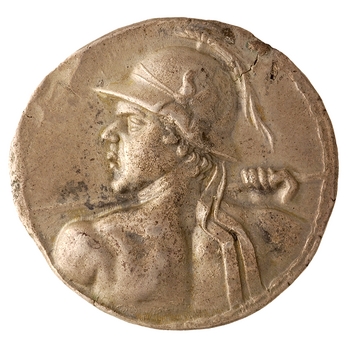
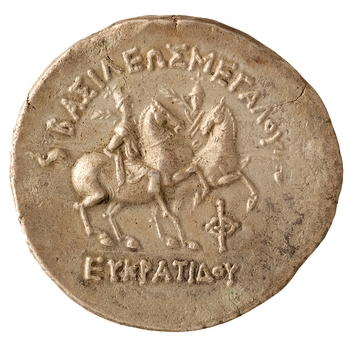
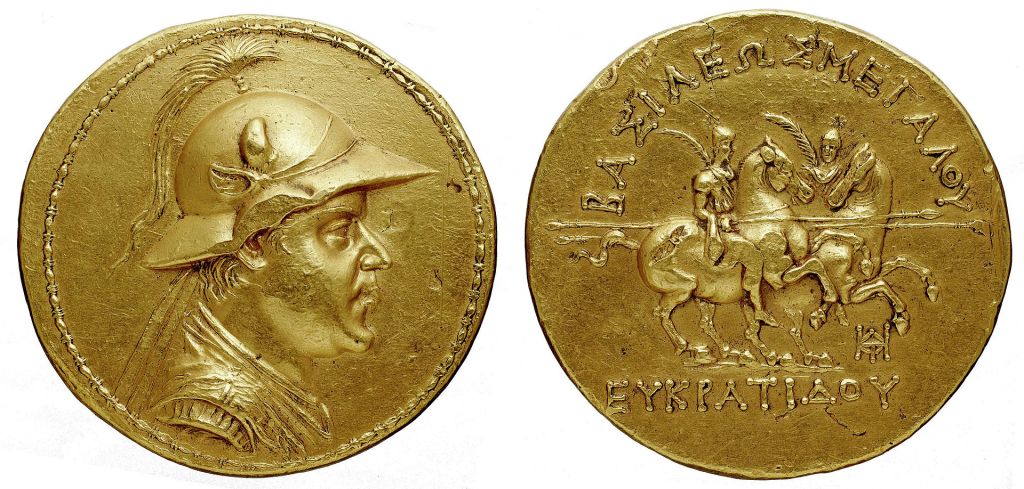
The Silver tetradrachm heading this post features on the obverse a helmeted and diademed bust of Eucratides, bare shoulders, throwing javelin to his left. The tetradrachm’s reverse has the Greek inscription ΒΑΣΙΛΕΩΣ ΜΕΓΑΛΟΥ ΕΥΚΡΑΤΙΔΟΥ (of great king Eucratides) around an image of the dioscuri (the twin brothers and sons of Zeus, Pollux and Castor) charging right holding long lances and palms. Peter Thonemann, commenting on this highly individualist and explicitly martial portraiture opined as follows: “… we may be grateful that not all kings paraded their military credentials in quite so butch a fashion as Eucratides I of Bactria.”
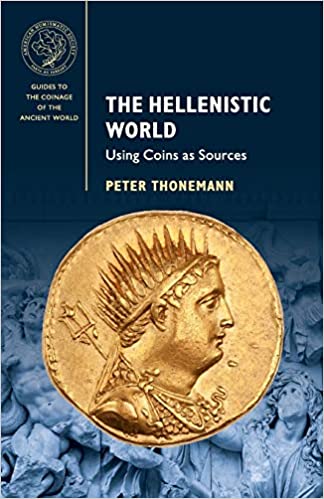
Peter Thonemann’s wonderful work, The Hellenistic World: Using Coins as Sources, is a superb introductory survey of both the history and coins of the Hellenistic world from c. 323-31BC. It is engagingly written and well-illustrated, often with coins from the collection of the American Numismatic Society. Although many of the coin photographs which are reproduced are slightly disappointing due to being in black and white and produced life size, when enlargements would have been more suitable, the coins selected for the work were well chosen and served the survey and the reader well. And, since the author and publisher were so careful to credit the sources of the photographs, when a particular coin caught my fancy, I was often able to go the the source on the internet, such as the ANS’s online collection database, and see the original color photographs of the coin.
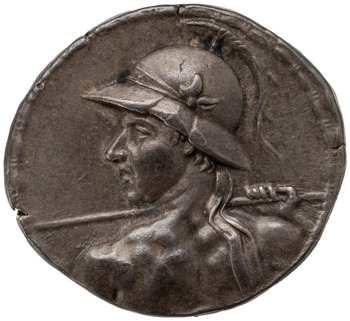
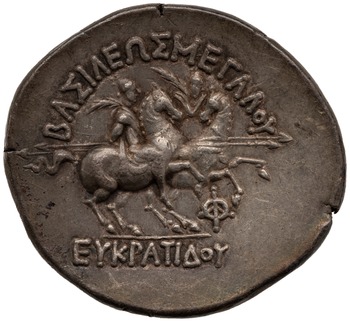
So, after I read about Eucratides I the Great of Bactria (c. 170-145) and his stunning coins in Thonemann’s work, then saw the coins in their glory on the ANS database, and followed up with an interesting conversation about the coins and what type of workout routines were around in the ancient world with my good friend SF (more about the exercise and workout routines of the ancients below), I knew that a post was forthcoming.
First, what do we know about Eucratides I? From the 2nd century AD writer and historian Justin, we have this small snippet of information:
“Almost at the same time that Mithridates ascended the throne among the Parthians, Eucratides began to reign among the Bactrians; both of them being great men. But the fortune of the Parthians, being the more successful, raised them, under this prince, to the highest degree of power; while the Bactrians, harassed with various wars, lost not only their dominions, but their liberty; for having suffered from contentions with the Sogdians, the Drangians, and the Indians, they were at last overcome, as if exhausted, by the weaker Parthians. Eucratides, however, carried on several wars with great spirit, and though much reduced by his losses in them, yet, when he was besieged by Demetrius king of the Indians, with a garrison of only three hundred soldiers, he repulsed, by continual sallies, a force of sixty thousand enemies. Having accordingly escaped, after a five months’ siege, he reduced India under his power. But as he was returning from the country, he was killed on his march by his son, with whom he had shared his throne, and who was so far from concealing the murder, that, as if he had killed an enemy, and not his father, he drove his chariot through his blood, and ordered his body to be cast out unburied.” Epitome of the Philippic History of Pompeius Trogus, XLI 6.1-5
Appropriate to a king assuming the title “the Great” on his coins (a numismatic innovation of Eucratides, Eucratides also is famous for another numismatic feat, as explained by CoinWeek columnist Mike Markowitz in Metal Monsters: The Biggest Ancient Coins (march 18, 2014):
“[Eucratides] commissioned the largest surviving gold coin struck in antiquity: a 20-stater piece, 58 mm in diameter, weighing 169.2 grams. That’s nearly five and a half ounces. The unique example was found in 1867 in Bukhara (Uzbekistan), nearly 300 miles northwest of the Baktrian heartland. Eventually acquired by Napoleon III, it resides today in the Bibliothéque nationale in Paris.
On the obverse we see the king in profile, wearing a plumed cavalry helmet. On the reverse, the twin heroes Castor and Pollux carry long lances and palm branches and ride prancing horses surrounded by a carelessly lettered inscription: ‘Great King Eucratides.’”
A quick side note before moving on to the portion of the post answering my friend SF’s query about exercise and workout routines in antiquity: as king of Bactria, Eucratides I ruled over the city of Ai Khanoum, which we discussed in an earlier post.
Jack W. Berryman wrote a short essay entitled Motion and rest: Galen on exercise and health published in The Lancet (Vol. 380, Issue 9838, 21 July 2012, pp. 210-211). From the essay is the following relevant quote:
“Exercise was an important component of ancient medical theory and a physician’s duties included the preservation and promotion of health as well as the prevention of disease. In this context, physicians in antiquity emphasised the centrality of exercise and diet, or what was known as regimen, as a key part of one’s way of life.
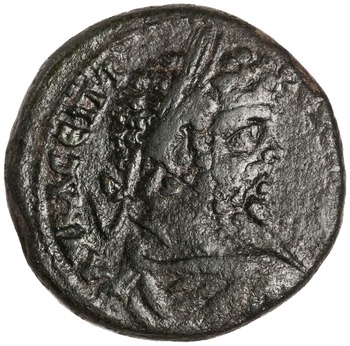

It was Hippocrates (c 460–370 BC) who wrote three books on regimen and noted that ‘eating alone will not keep a man well; he must also take exercise.’ Galen (c 129–210 AD), who borrowed much from Hippocrates, structured his medical “theory” upon the “naturals” (of, or with nature—physiology), the “non-naturals” (things not innate—health), and the “contra-naturals” (against nature—pathology). Central to Galen’s theory was hygiene (named after the goddess of health Hygieia) and the uses and abuses of Galen’s “six things non-natural”. Galen’s theory was underpinned by six factors external to the body over which a person had some control: air and environment; food (diet) and drink; sleep and wake; motion (exercise) and rest; retention and evacuation; and passions of the mind (emotions). Galen proposed that these factors should be used in moderation since too much or too little would put the body in imbalance and lead to disease or illness.”
Jarrett A. Lobell wrote a short snippet, entitled The Ancient Pursuit of Wellness: Exercise, in the September/October 2021 issue of Archaeology, which explicitly linked exercise to military preparation among the Greeks. I quote more extensively from Lobell:
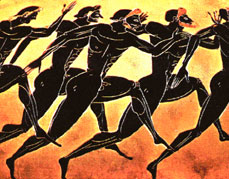
“For the ancient Greeks, exercise meant competition, often in organized festivals such as the Olympics—the word “athlete” comes from the ancient Greek athlos, meaning contest. Participation in these events was limited to young men of certain classes. Exercise was also a crucial part of preparation for Greek military service, and thus women were excluded. But in the Roman world, exercise was more universally popular, and both men and women were frequent participants. Romans often exercised at the public baths, where both sexes and most social classes regularly gathered, says classicist Nigel Crowther of Western University. Men might play ball, run, wrestle, box, or lift weights. Women swam, played a hoop-rolling game called trochus, and especially favored ball games. ‘Galen suggests that ball games were good training for the fitness of both body and mind,’ Crowther says.”
Finally, as it summarizes so well many of the ancient sources regarding workouts and exercises, I provide the following lengthy quote from an article entitled The Real Gladiator Workout: Train Like A Gladiator (posted 9/14/14) on RENAISSANCE MAN JOURNAL:
“There is a story that was often told of Milo of Croton. This was an Ancient Greek athlete from the Greek city-state of Croton located in what is now southern Italy. He lived in the 6th century BC and was training for the Olympics.
One of the ways that he was training was by taking a newly born bull, hoisting it up on his shoulders and carrying it for some distance. He would do it every day. As time passed, the bull would grow larger and so Milo kept on hoisting more and more weight. This culminated with him walking into the Olympic stadium with a full grown bull on his shoulders.
So over time he was increasing the weight he was lifting. This is basically the birth of progressive overload. The ancients knew that if you want your muscles to grow and get stronger, you need to lift heavier and heavier weights.

Another principle from the ancient world is that of periodization. Many gladiator schools probably used periodization training, which is an organization of training that splits training into blocks of time, each one focusing on different skills. They would be training all day and split their training into units of time during which they would focus on just one skill.
The ancient gladiators also knew about the intensity of training and that you should not go into training full speed at the beginning, but need to warm up first, otherwise you risk injury. Galen wrote that intensity should be increased gradually: “Intensity should be gradually increased, peaking at the end. This should be of special concern in order to avoid injury to competitors.”
The cool-down process was also important. Hippocrates (an Ancient Greek doctor) said that “those who walk after exercising will then have a stronger and more rested body.” This means that there should be a period of cool down after intense training and people should not fall down and lie on the ground immediately, but instead the person should cool down by walking around. Also on rest days, according to Hippocrates, the athlete should not do completely nothing, but instead do something of low intensity.
The ancients were very aware of the dangers of over-training and many of the doctors preached against it. They knew that the body needs rest in order to recover from intense training and also that your body achieves the best results if rest is a part of your routine.
Throughout their training, the gladiators would use different types of equipment and do all kinds of varied exercises.

Galen divided exercises into three types:
Vigorous exercises: These were exercises performed with strength, but without speed. Examples of these include: digging, picking up any kind of heavy load and either standing still with it or walking (especially up a hill), climbing a rope, hanging from rope or beam for as long as possible, holding arms up (with or without weights) while partner tried pushing them in a downwards direction…etc. These exercises show that the Ancient Greeks and Romans had an understanding of overload (including progressive overload) and its positive effects on building strength and muscles.
Speed exercises: Here the primary objective was speed, apart from strength and force. Examples of these include: running, shadow boxing, hitting the punching bag, running around with balls, arm and leg exercises like drill stuff…etc.
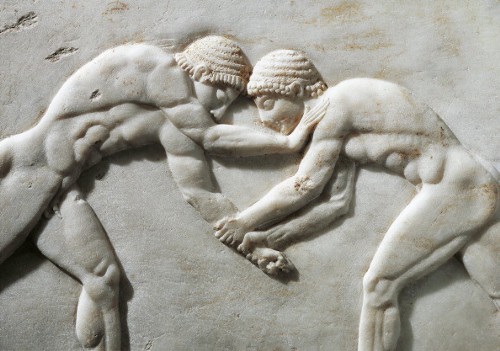
A particular example of this type of exercise that was performed has the Greek name “pitylysma”. The exercise goes like this: start by standing on tip toes, stretch your arms upwards, move one arm quickly forward, while moving the other one backwards, roll quickly on the ground, quickly come up, stand erect and start jumping up and down, sometimes with a backward kick, sometimes bringing each leg forward in an alternating fashion.
Violent exercises: These combined speed and strength. Exercises classified as vigorous became violent if you increased their speed – jumping continuously without rest, or any speed exercises performed with weight became violent – moving around quickly in heavy armor.
The word ‘violent’ in this context could be better understood if you use it as a synonym for the word ‘power.’ A recommendation of Galen for these types of exercises was to rest between the different individual exercises.”
So, yes, the highly muscled king appearing on those beautiful coins likely had plenty of thoughtful exercise routines behind those sculpted muscles — or he kept buff by throwing lots of javelins while trying to preserve his kingdom.

A little over a year ago, I complained to my friend Dr. JW about the imprudent tendency of all too many archaeologists and historians to do too much with too little. As I recall I may have actually bellowed in exasperation at the time that these scholars fabricate too much history out of wisps of little more than air. For in truth, the paucity of material available to many archaeologists and historians is so slight, and the edifices that they build upon the available material is so seemingly profound, that Prudence herself, our auriga virtutum (charioteer of the virtues), cannot but be offended.
I entered into the discussion with Dr. JW after having read several dozens of scholarly articles related to Slavic pre-history and early Slavic history. It was not surprising to see how ideology affected the historical and archeological scholarship, but it was surprising to see how compromised much of the work was and how it was negatively impacted by other more mundane influences. Such influences, as near as I could divine, were related to ego (look at me!), the need to publish (publish or perish), and/or the desire to publish (agenda driven) even when the evidentiary material did not support the conclusions ultimately being proffered.
Time and time again I read articles where all the factual statements were true, but the conclusions drawn from those facts bore little to no relation to those facts. Similarly, I read articles where some of the factual statements were true, and some were mostly true, and some gray, and then some were outright suppositions. And finally, I read articles where scholars of great authority engaged in combat with other scholars of great authority … and its seemed to me that the weapons were nothing other than opinion for I noted that facts and evidence were nowhere to be seen. Such combat must be exhilarating but it is certainly not illuminating.
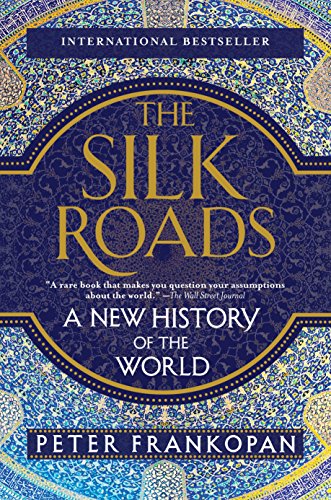
This post is occasioned by my reading, or rather by my decision to stop reading, Peter Frankopan’s The Silk Roads: A New History of The World. I should have known better than to have engaged a “popular history,” an international best seller at that, endorsed by The Wall Street Journal as “[a] rare book that makes you question your assumptions about the world.” I find that, rather than questioning my assumptions about the world, I am questioning my assumptions about the competency of the scholar-author of this particular work. Mr. Frankopan, whom I suspect is a very able scholar generally, has failed in the specifics of this work. Although the work is engaging on the macro level, and the broad narrative and theme is both agreeable and correct, it is unacceptable on the micro level to such a degree that he has offended my scholarly sensibilities to such an extent that I would implore him to be more prudent when attempting such popular works in the future. I shall provide a few examples in support of my position.
Frankopan , on page 82, when discussing the Muslim conquest of the Middle East, acknowledges that “[t]he sources for this period are notoriously difficult to interpret because they are complicated and contradictory, but also because many were written long after the events.” That was a very prudent acknowledgement and should have guided his writing and presentation throughout the chapters. [See James Howard -Johnston’s Witnesses to A World Crisis: Historians and Histories of the Middle East in the Seventh Century for a superb exploration and autopsy of the complexity of this topic.] But, alas, it did not. Rather, we encounter sentences such as this on p. 83: “In fact, it appears that the Arab conquests were neither as brutal nor as shocking as the commentators make out, for example, there is little evidence of violent conquest in the archaeological record” and these equivocating muddles of sentences on p. 84: “The fact that new churches were built at the same time, in North Africa, Egypt and Palestine, suggests that a modus vivendi quickly established itself where religious tolerance was normative. This seems to have been echoed in lands taken from the Sasanians, where at least to start with Zoroastrians were either ignored or left alone. In the case of Jews and Christians, it is not impossible that this was even formalised.” From my vantage point, the need to pepper an analysis with the words “suggests that,” “seems,” and especially “it is not impossible that” make for a profoundly shoddy historical analysis. I, myself, could write some wildly interesting historical works if I seasoned them with “it is not impossible that.”
The above examples – just a few of many that the author included in the relevant chapters – were intended, I believe, to set an appeasing tone for a gentle Muslim conquest as a theme to comfort the reader. But it was the sin of creating history from wisps. Fortunately, Frankopan did atone for this sin by including, here and there, information contradicting the theme such as that found on p.89: “The cities of Central Asia were picked off one by one, the loose links between them sealing their downfall: without an organizational structure to co-ordinate defences, each awaited its fate in turn. The inhabitants of Samarkand were pressured into paying a huge sum of money for the Muslim commander to withdraw, though in time it had to surrender anyway. At least the city’s governor was spared the fate of Dewashtich, ruler of Panjikent (in modern Tajikistan) who styled himself King of Sogdia; he was deceived, trapped and crucified in front of his own people. The governor of Balkh (in what is now northern Afghanistan) suffered a similar fate.” So much for the gentle Muslim conquest. Of course, I will not abandon a book for a theme if the author is kind enough to include, and not suppress, evidence, contradictory to the theme.
So, why, dear reader, have I abandoned Frankopan’s tome? The answer is simple: imprudence. On page 86, he imprudently embraced a numismatic speculation that I, and I believe all knowledgeable scholars, adjudge to be wildly provocative and simply beyond supportable. Here are the relevant arguments. First, the offending embrace from Mr. Frankopan:
“After the Caliph began to issue coins with the legend ‘There is no God but God alone; Muhammad is the messenger of God’ in the early 690s, Constantinople retaliated. Coins were struck which no longer had the image of the Emperor on the front (the obverse), but put it on the reverse instead. In its place on the obverse was a dramatic new image: Jesus Christ. The intention was to reinforce Christian identity and to demonstrate that the empire enjoyed divine protection.


In an extraordinary development, the Islamic world now matched the Christians like with like. Remarkably, the initial response to the issuing of coins with Jesus and the Emperor on them was to respond with an image on coins minted for a few short years of a man in the parallel role to that played by Jesus – as the protector of the lands of the faithful. Although this image is usually presumed to be that of the Caliph ‘Abd al-Malik, it is entirely possible that this is none other that Muhammad himself. He appears in a flowing tunic, which a lustrous beard and holding a sword in a scabbard. If this is the Prophet, then it is the earliest-known image of him, and remarkably one that those who knew him during his lifetime were aware of and saw for themselves. … The coins did not stay in circulation long, for by the end of the 690s the currency circulating in the Islamic world was completely redesigned: all images were removed and were replaced by verses from the Quran on both sides of the coin.”


Above is a handsome representation of the Standing Caliph type from the collection of the American Numismatic Society. According to an in-depth study entitled The Standing Caliph Coins of Jerusalem published in 2015 by Ingrid and Wolfgang Schulze, Standing Caliph coins are characterized by an obverse that features the standing caliph with a sword and a reverse featuring a column on steps or an m (the Byzantine mark of value for 40 nummi). As of 2015, there were 18 mint names identified for the Standing Caliph coins, which included the following: ‛Ammān (Philadelphia), Anṭākiya (Antioch), Ba‛albak, (Heliopolis), Dimashq (Damascus), Ḥalab (Aleppo), Ḥarrān (Carrhae), Ḥimṣ (Emesa), Īliyā (Jerusalem), Jibrīn, Ludd (Diospolis), Ma‛arrat Miṣrīn, Manbij (Hierapolis), Qinnasrīn (Chalcis), Qūrus (Cyrrhus), al-Ruhā (Edessa), Sarmīn, Tanūkh (a tribal name) and Yubnā (Yavne). Additionally, there are countless mintless types and it is sometimes doubted whether mint names written on the coins point to an actual mint place.
Returning to the controversy, the notion that the standing figure on the coin type may have been Muhammad is, at best, generously described as a minority position within the scholarship. It is, perhaps, more accurately described as wild speculation. In either event, it was imprudent to present the position so prominently in a popular history outside of an endnote, where such a minority position or speculation would more properly reside.
So, you may ask, how did scholars arrive at the position that the image was a Standing Caliph and not the Prophet? Below, I share, in rather more detail than usual, the positions of the the proponents of both positions. I begin with Writing the Biography of the Prophet Muhammed: Problems and Solutions, by Robert Hoyland. Mr. Hoyland argued in his tract that the standing image was the image of the Prophet:
“This is generally assumed to be a representation of the caliph himself and
so the coins are known as the ‘standing caliph’ coins. However, there are
a number of reasons to doubt this:
Firstly, it ignores the war in visual and verbal propaganda going on between Justinian II and ‘Abd al-Malik and the wider issue of the use of religious images and slogans that was being hotly debated at this time. If, in response to Justinian’s demotion of himself to the reverse of Byzantine coins in favour of Christ’s effigy on the front, ‘Abd al-Malik had merely put this own image on the front of Muslim coins, it would have seemed a very feeble reply in the view of Christians; rather, the obvious move for him would have been to put an image that would challenge that of the image of Christ, which could only be that of the Prophet Muhammad himself. The very dramatic nature of these changes, their closeness in time, their evidently polemical overtones and enormous propaganda impact (coins circulate very widely) at a time of great tension (in particular, the Byzantines suffered a major defeat at Sebastopolis in 73/692–93) make it essential for these two innovations to be considered together.
Secondly, it ignores the context of the Arab civil war of 685–92 in which religion had played a major role for diverse groups clamouring for greater social justice, and ‘Abd al-Malik saw the chance to steal their thunder and to heal the divisions among the Muslim community by putting Islam at the heart of the state. Henceforth, the name of the Prophet Muhammad, which had been absent from all state media (i.e. administrative documents, monumental inscriptions, etc.), became de rigeur on every official text and became pretty much standard in epitaphs and graffiti. This makes it unlikely that the image on the front of ‘Abd al-Malik’s new coins was himself, which would have been condemned by Muslims as an imitation of infidel kings, and much more likely that it is a religious personage, again most obviously Muhammad himself.
Thirdly, the iconography of the person on ‘Abd al-Malik’s coinage is closer to that of Justinian II’s Christ figure than to an emperor figure: both have long, flowing hair and are bearded, and both are without headgear (i.e. no turban or crown).
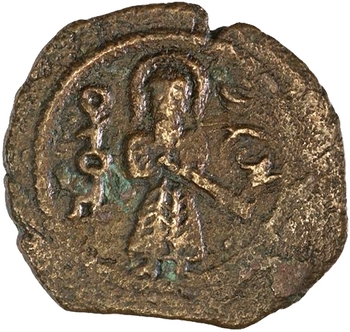

Fourthly, the standing-figure coins of Jerusalem, Harran and al-Ruha (Edessa) do not, unlike those of other mints, name the Prophet Muhammad and the Caliph ‘Abd al-Malik, but only mention Muhammad. As Clive Foss has remarked, ‘ever since the inception of portrait coinage in the Hellenistic period, the image and superscription had gone together, that is, the inscription names the figure portrayed . . . I know of no coin where the obverse inscription refers to someone different from the figure portrayed.'”
Mr. Hoyland’s arguments, though worthy of consideration at first blush, easily fall, when considered even momentarily. In 2010 Ingrid and Wolfgang Schulze did consider the arguments, and responded fairly, in an article published in The Numismatic Chronicle entitled The Standing Caliph Coins of al-Jazīra: some problems and suggestions. Here are the relevant portions of their response:
“There are still a number of unsolved problems concerning the iconography of the Standing Caliph coinage. The first question is, does the sword bearing person really represent the caliph or is it the representation of the governor of the jund where the coins were minted? In our opinion it is probably the caliph, ‘Abd al-Malik. There is a statue, found in Khirbet near Jericho, and now in the Rockefeller Museum in Jerusalem, and dated 720, showing the caliph in a similar way. Also, the caliph’s name is written on about half the coins. This suggests their designation as ‘Standing Caliph coins’ is correct. Sometimes the standing figure is regarded as the prophet Muhammad. We will come back to this question when discussing the coins of Harrân. On one obverse die of some coins of Sarmīn a certain Abd al-Rahman is named, but his identity is unknown.”
Thus, they acknowledged that the identification of the standing figure as Muhammad had been raised, and promised to address it, which they did as follows:
“In Harrân the use of the isolated Muhammad is striking. Starting from the idea that ‘whenever an inscription with a name accompanies the image, it identifies the portrait’ Clive Foss and Robert Hoyland draw the conclusion that the ‘Muhammad’ coins struck in Palestine and Mesopotamia do not portray the caliph but the prophet Muhammad.
We do not agree with this suggestion. The consequence would be that one would have to interpret the figure on the coins bearing the name of ‘Abd al-Malik as the caliph himself and the ‘Muhammad’ coins as showing the prophet. How would one interpret the coin with the name of ‘Abd al-Rahman? Finally, how are the anonymous coins to be interpreted? Should we interpret the shahāda of the legend as a reference to the figure?
Proceeding from the premise that the design of the figure was ordered by the central administration in Dimashq, and this was followed in all the Standing Caliph mints, the figure must have had a uniform meaning. It is hardly imaginable that an identical picture on coins in daily use would have carried different messages.
Taking into consideration that about 50% of the Standing Caliph coins bear the name of ‘Abd al-Malik, we are all the more convinced that we have to regard the figure as that of the caliph.
Nevertheless it is very odd to find Muhammad written twice on the coins of Harrân. It is also remarkable to see it written in different styles of Kufic. This could lead to the suggestion that Muhammad, written in standard Kufic, refers to the prophet, while Muhammad, written in unusual Kufic, refers to Muhammad b. Marwān, governor of al-Jazīra at that time. This interpretation can only be regarded as provisional.”
Tony Goodwin and Rika Gyselen, writing in Arab Byzantine Coins from the Irbid Hoard (London 2015), while consistently referring to the coin type as the Standing Caliph type, also addressed the issue. They wrote as follow :”For many years the Standing Caliph image has created considerable interest as it is our only record of the appearance of ʿAbd al-Malik. There has been much written about details of his dress. The question has also arisen from time to time of whether the image was based to some extent on the image of Justinian II on his gold solidi or on already existing depictions of the caliph. Given the legend naming the caliph which usually appears around the image there has been little doubt about the identity of the individual depicted. However, the coins of Jund Filastīn … never name the caliph and always have the obverse legend Muhammad Rasûl Allāh. Furthermore the images are very unlike those found on coins naming ʿAbd al-Malik, and at Yubnā there is a remarkable variety of images. In a study of the Yubnā mint Goodwin suggested that some of these could possibly be based on images of Christ or Muhammad, but more recently Foss has gone further and proposed that the figure depicted on Jund Filastīn coins probably is intended as Muhammad. He argued that where a coin has an image of an individual and a legend including a name, the two always match, so it is logical to regard the individual depicted as Muhammad. We do not know whether the proscription on depictions of the Prophet was in place at this early date, so Foss’ proposal is certainly not as far-fetched as it might at first appear” (pp. 36-37). It is worth noting, however, that Stephen Album, who wrote the Sylloge of Islamic Coins in the Ashmolean. Vol. I: the Pre-reform Coinage of the Early Islamic Period (2002) with Goodwin, and is perhaps the world’s foremost authority on Islamic coins, has no compunction whatsoever about identifying the image on the coins as the Standing Caliph and is not distracted by the argument as to whether the image may be Muhammed or Christ in his Checklist of Islamic Coins (3rd Edition, 2015)(see pp. 36-38).
This, given the lack of iconographical support for interpreting the image as being the Prophet, there really is little argument to support that the standing figure should be understood now, or was supposed to be understood at the time, as Muhammad. And it does compel the conclusion that it was imprudent to dedicate so much space outside an endnote, in a general work, for a mass audience, that Muhammad appeared on a coin when not only is the proposition highly debatable, but most unlikely.


 Northcoast Antiquarian


.jpg)

