

The Roman Prequel: Tiberius Gracchus and the Bequest of Attalus III
In the late 130s BC, Tiberius Gracchus, serving as a tribune in Rome, emerged as a polarizing figure through his vigorous advocacy for the passage of the lex agraria. This legislation aimed to redistribute land from the affluent elite to the impoverished masses, engendering substantial animosity among the propertied interests. Reflecting the entrenched hostility of these interests, the Roman Senate obstructed the law’s implementation by withholding the requisite funding, thus stymying Gracchus’ reformist agenda.
In 133 BC, the political tensions reached a crescendo when Tiberius Gracchus “accepted” the bequest of Attalus III of Pergamum. Upon his death, Attalus III bequeathed his kingdom, personal treasure, and royal estates to the Roman people. This testament explicitly excluded the city of Pergamum, other Greek cities with their respective territories, and temple lands from the bequest. Gracchus sought to employ this newfound wealth to finance his agrarian reforms, viewing it as an opportunity to alleviate social inequalities. However, his opponents perceived this maneuver as an audacious encroachment upon the Senate’s prerogatives and an exacerbation of the threat to property rights and societal propriety.

The Kingdom of Pergamum, located in Asia Minor, was ruled by the Hellenistic Attalid Dynasty. This dynasty was founded by Philetairos, who ruled from approximately 282 to 263 B.C. In 188 B.C., the kingdom greatly benefited from the Treaty of Apamea, whereby the Roman Senate granted Pergamum extensive territories formerly held by the defeated Seleucid Empire.
In the wake of these escalating tensions, Gracchus’ adversaries felt justified in resorting to extralegal measures. In a purported “defense” of property and societal order, they orchestrated the murder of Tiberius Gracchus and unceremoniously disposed of his body in the Tiber River. A subsequent purge of his followers from the political sphere ensued, marking a dark chapter in Rome’s history. This brutal response underscored the lengths to which the conservative elite were willing to go to preserve their privileges and stifle reformist efforts.
The Challenge to Attalus III’s Bequest in Pergamum: Rise of Aristonicus

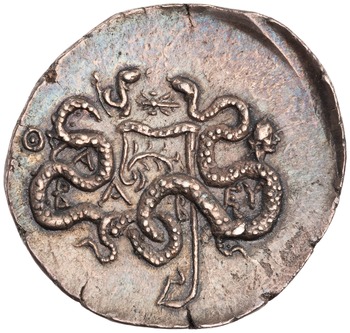
Meanwhile, in Pergamum, Aristonicus, the half-brother of Attalus III and son of Eumenes II and a harpist or lyre-player from Ephesus, declared his intention to seize the throne of Pergamum by right of his lineage, irrespective of the intentions of Attalus III and the Romans. Adopting the regnal name Eumenes III, Aristonicus garnered significant support, amassing both troops and ships, and commenced his campaign to conquer the kingdom of Pergamum. Initially, he achieved notable successes both on land and at sea. He raised the standard of uprising at Leucase, Phocaea joined him, and he conquered Colophon, Notium, Samos, and Myndus. His efforts were further bolstered by his ability to secure sufficient precious metals and strike them into coinage, as evidenced by the cistophorus illustrated below. The coinage series, and its significance, is discussed in an interesting 2021 article written by Lucia Carbone, “A New-ish Cistophorus for the Rebel Aristonicus.”
Roots and Support of Aristonicus’ Uprising
Aristonicus’ uprising was fundamentally rooted in the succession crisis following the death of Attalus III. As an illegitimate son of Eumenes II, Aristonicus claimed the throne of Pergamon under the name Eumenes III, challenging the Roman claim based on Attalus III’s testament. His campaign can be viewed through several lenses:
- Dynastic Claim: Aristonicus presented himself as the rightful heir to the Pergamene throne, contesting the Roman-imposed transition. This dynastic legitimacy resonated with certain segments of the population who were loyal to the Attalid lineage.
- Social and Economic Grievances: The uprising tapped into widespread discontent among various social groups, including disenfranchised citizens, slaves, and other marginalized populations. Aristonicus’ promise of social reform and liberation found a receptive audience among those dissatisfied with the existing social and economic order.
- Anti-Roman Sentiment: There was considerable resentment towards Roman interference and the impending direct control over Pergamon. Aristonicus’ resistance symbolized a broader opposition to the expansionist policies of Rome and its impact on local autonomy.
Support Base
Aristonicus’ supporters came from diverse backgrounds, reflecting the multi-faceted nature of the uprising:
- Disenfranchised Individuals and Slaves: A significant portion of Aristonicus’ forces consisted of slaves and lower-class citizens. The promise of freedom and a more equitable society motivated these groups to join the uprising. Aristonicus’ vision of a utopian society, often referred to as “Citizens of the Sun” (Heliopolitae), aimed to create an egalitarian state that resonated with these marginalized groups [Recent scholarship provides ample grounds to re-evaluate the significance and meaning of the Heliopolitae titulature and the role of slaves/disenfranchised individuals. (see Daubner in sources below)].
- Local Greek Cities: While some Greek cities in Asia Minor supported Rome, others were sympathetic to Aristonicus, driven by a desire to preserve their autonomy and resist Roman dominance. These cities provided crucial support in terms of resources and manpower.
- Mercenaries and Soldiers: Aristonicus also attracted professional soldiers and mercenaries who saw an opportunity in the conflict. Their military expertise was vital in the early successes of the uprising.
Eumenes III (Aristonicus): The Struggle for Support and Survival
Eumenes III (Aristonicus) faced significant challenges in his bid to consolidate power. Despite his initial successes, he failed to win over many citizens of the city of Pergamum itself and was unable to conquer the city. It is plausible that the citizens believed they would be better off freed from royal governance and trusted that the Romans would honor Attalus III’s will by not incorporating them directly under Roman rule. Furthermore, Eumenes III did not gain the support of the kings of neighboring Hellenistic kingdoms, all of whom marched against him at Rome’s behest. These neighboring monarchs, wary of Aristonicus’ revolutionary ideals and eager to maintain favorable relations with Rome, aligned themselves against him.
Despite this formidable opposition, Rome’s local allies initially struggled to subdue Eumenes III. His forces proved resilient and capable, inflicting notable casualties on their adversaries. A significant moment in the conflict was the death of Ariarathes V of Cappadocia, who perished in battle against Aristonicus’ forces, underscoring the intensity and ferocity of the resistance. The support Aristonicus garnered from disenfranchised groups, including slaves and lower-class citizens, played a crucial role in sustaining his campaign against the combined might of Rome and its allies.
By 131 BC, the Romans were compelled to dispatch an army under the command of the consul Publius Licinius Crassus Mucianus to confront the challenge posed by Eumenes III and secure the legacy bequeathed to them by Attalus III. However, Crassus Mucianus was captured by Eumenes’ forces and, after striking one of his captors, was killed. His decapitated head was sent to Eumenes III, marking a grim turn in the conflict. This event underscored the determination and ferocity of Aristonicus’ resistance, significantly alarming Rome and its allies.
The Beginning of the End for Aristonicus
Although the defeat of a Roman army could have signaled the beginning of success for Eumenes III, it was, in fact, the onset of his decline. This turn of fortune came not at the hands of the Romans, but from Ephesus. Unsettled by the new king’s numerous naval victories and conquests, Ephesus armed a fleet and engaged Eumenes III in battle off the coast of Cyme in Aeolis. The outcome was decisive, forcing Eumenes to abandon the coast and withdraw into the interior.
This defeat also marked a transformation in the character of Eumenes III’s reign. In an effort to broaden his appeal and replenish his forces, he called upon peasants from royal domains, slaves, and others whom historians characterize as underprivileged. To the slaves, he promised freedom; to the others, economic relief. His appeal was successful, and multitudes responded to his call. He named his new followers Heliopolitae [Ἡλιοπολῖται], Citizens of the Sun.[1] This utopian vision of a society based on equality and justice resonated deeply with those disenfranchised by the existing order.
Ideological Influences: Blossius of Cumae and the Heliopolitae
One must wonder if Eumenes was motivated in the “social program” of his recruitment campaign (e.g., emancipation and economic relief) by his reported association at this point with the Stoic philosopher Blossius of Cumae, a devoted ally of Tiberius Gracchus. Blossius had fled Rome after Tiberius’ murder and attached himself to Eumenes. Some historians perceive Blossius’ ideological influence in the Heliopolitae movement. Blossius, having been a proponent of the Gracchan reforms, likely brought with him a philosophical foundation that emphasized social justice and the alleviation of inequality. His presence in Eumenes III’s court suggests a continuity of the radical ideas that had stirred Rome, now transplanted to Asia Minor and adapted to the local context.
The Final Defeat and Capture of Eumenes III
In the wake of Crassus’ defeat in 130 B.C., the Roman Senate dispatched the consul Marcus Perperna to subdue Eumenes III and secure the Kingdom of Pergamum for Rome. Perperna promptly arrived, assembled his troops, and marched into the interior, where he decisively defeated Eumenes. Aristonicus had expanded his campaign inland, focusing on regions such as Lydia and Mysia, including the strategic city of Kyzikos. His efforts in these areas were marked by a combination of military engagements and political maneuvering to gain the support of local populations. Despite these efforts, Eumenes was ultimately outmatched by the superior Roman forces. Following his defeat, he fled to the city of Stratonicea, where the Romans besieged him. The siege was marked by a protracted struggle, as the Romans systematically cut off supplies, starving the city and its defenders into submission. Ultimately, Eumenes was captured and sent to Rome in chains. In 129 B.C., the Senate decreed his execution by strangulation, thus extinguishing his challenge to Roman authority.
Consolidation of Roman Rule and the Fate of the Heliopolitae
Following the capture of Eumenes III, the Romans proceeded to organize the new province of Asia, despite ongoing resistance from the remnants of the Heliopolitae. These remnants, inspired by the egalitarian ideals of Aristonicus, continued to resist Roman domination. However, their defiance was brutally quashed by the Romans, who resorted to poisoning the water supplies of their impregnable strongholds—a tactic even they considered disgraceful. By 129 B.C., or 127 B.C. at the latest, the Romans had likely secured their Attalid inheritance, fully integrating the territory into the Roman Republic.
Is there a libretto or play in the story above?
This exposition is recited with confidence that it provides rich source material for a compelling play or opera. Indeed, I have begun work on such a project, sketching the broad outlines of a libretto—acts and scenes—and have already written substantial portions. Recognizing my weaknesses in character development, I am focusing on refining this aspect. However, I am pleased with one section I have written. After Aristonicus has been captured and is in chains, he contemplates his situation. Below is a scene I have written, set to music so I have a sense of the possibilities:
Aristonicus in Chains
Setting: A dark Roman dungeon. Aristonicus, bound in chains, reflects on his fate and the enduring spirit of his cause.
Aristonicus (Recitative):
Oh fate, thou art a cruel mistress,
To wrest my dreams and cast them low.
Yet here I stand, though bound in chains,
My spirit soars, untouched by woe.
Aristonicus (Aria):
In chains, my spirit stands free,
No Roman yoke shall master me.
For in my heart, a kingdom lives,
A beacon bright, the Sun still gives.
Oh, Citizens of the Sun,
Your hope was mine, our battle won,
Not in the fields where we did fall,
But in the hearts that heeded our call.
From Pergamum’s hills to the wide sea,
Our dream of freedom shall always be.
Though walls of stone around me rise,
The Sun shall never set on skies.
Oh, Perpernas, behold my fate,
A king unbowed by Roman hate.
For even in this darkest hour,
My will remains, my soul has power.
(Bridge):
To the poor and enslaved, my voice shall reach,
In every heart, our cause I’ll teach.
No chains can hold what is divine,
Our struggle, our dream, forever shine.
(Aria da capo):
In chains, my spirit stands free,
No Roman yoke shall master me.
For in my heart, a kingdom lives,
A beacon bright, the Sun still gives.
Oh, Citizens of the Sun,
Your hope was mine, our battle won,
Not in the fields where we did fall,
But in the hearts that heeded our call.
(Recitative):
So take me now, to Rome’s great halls,
But know this truth, as empire falls:
A dream once born, can never die,
In chains, my spirit soars the sky.
SOURCES:
Africa, T. W. (1961). Aristonicus, Blossius, and the City of the Sun. International Review of Social History, 6(1), 110-124.
Daubner, F. (2006). Bellum Asiaticum: Der Krieg der Römer gegen Aristonikos von Pergamon und die Einrichtung der Provinz Asia (2nd ed., Quellen und Forschungen zur Antiken Welt 41). München: Herbert Utz Verlag. [*Daubner’s work is the current definitive study on the Aristonicus uprising and the establishment of the Roman province of Asia. It challenges many of the outlines of the traditional scholarship over the past century (including much presented in my post above) and concludes that there is extraordinarily little evidence to suggest that he was the utopian social reformer that earlier scholars feared or lionized in their writings. In a sense, his scholarship is sober prose based on all the current and continuously emerging evidence whereas what came before (and what I write above) is akin to romantic poetry based on the then sparse antiquarian fragments. Yet, some scholars still adhere to the older interpretations of Aristonicus as a social reformer. See the work by Mesihović , below, as an example.]
Hochard, P.O. (2021). Quand Aristonicos s’écrit avec un E. Bulletin De La Société Française De Numismatique, 76(02), 47–54.
Magie, D. (1950). Roman Rule in Asia Minor (Vol. 1). Princeton University Press, 147-158.
Mesihović, S. (2017). Aristonik i država Sunca (Drugi dio: Aristonicus Solis Reform). Radovi Filozofskog fakulteta u Sarajevu, Knjiga XX, 2017.[Mesihović, without taking note of – let alone attempting to address – Daubner’s scholarship, reiterates the argument that Aristonicus’s movement was fundamentally reform-oriented and revolutionary. He iterates that the movement aimed to challenge the existing social and political structures by advocating for social and democratic reforms, thereby attracting support from the lower classes and slaves. He stresses that Aristonicus’ movement was not merely a struggle for control of the Attalid kingdom but had a significant ideological dimension, seeking to establish an egalitarian and communal society, which posed a substantial threat to the established order of both local elites and the Roman authorities. The views encompassed in this work serve as the basis for an operatic libretto, as it is poetic, but may have been superseded as scholarship.]
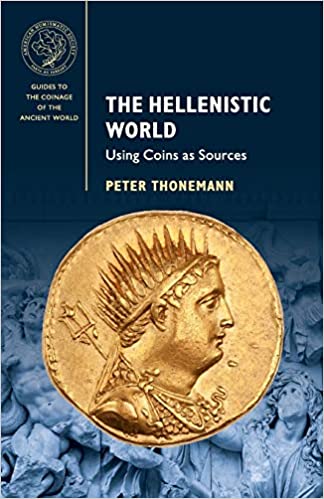
Thonemann, P. (2013). Attalid Asia Minor: Money, International Relations and the State. Cambridge University Press. [Of particular note is how Thonemann’s first chapter characterizes the Attalid state as an innovative and unique monarchy that emerged in the second century BC. The Attalids transformed their kingdom from a small city-state into a major territorial power, characterized by a non-charismatic and decentralized style of rule. They implemented a federative model, portraying their state as a coalition of free cities rather than a centralized monarchy, and emphasized civic participation and local governance. This approach was reflected in their economic policies, such as the introduction of the cistophoric coinage, which supported the kingdom’s administrative and fiscal autonomy. The expansion of the state was largely a result of the Treaty of Apameia in 188 BC, which redistributed Seleukid territories to the Attalids, significantly enlarging their realm and elevating their political status.]
[1] The Heliopolitae (Citizens of the Sun)
The concept of the Heliopolitae, or “Citizens of the Sun,” is a central theme in understanding Aristonicus’ revolt. This term embodies the utopian and revolutionary ideals that Aristonicus promoted to garner support from various disenfranchised groups.
- Symbolism and Ideals: The name “Heliopolitae” is symbolic of Aristonicus’ vision for a new society based on equality and justice. It represents a community united under the metaphor of the Sun, which signifies enlightenment and purity. This ideological framework was used to attract slaves, the poor, and other marginalized groups by promising them freedom and a better social order.
- Historical Accounts: Strabo and Diodorus provide key historical accounts that describe how Aristonicus retreated into the interior regions of Lydia after a naval defeat and rallied the oppressed classes, including slaves, around his cause. Strabo mentions that Aristonicus promised freedom to these groups, who then became known as the Heliopolitae.
- Scholarly Debate: The article highlights the debate among scholars regarding the nature and significance of the Heliopolitae. Some view it as evidence of a broader social revolution, akin to other slave revolts in antiquity, while others argue it was a strategic move by Aristonicus to consolidate his power. The text suggests that while there is evidence to support both views, the primary aim was likely to use ideological rhetoric to strengthen Aristonicus’ claim and unify his diverse followers.
- Religious and Utopian Context: The term “Heliopolitae” also carries religious connotations, linking the movement to solar worship and the Hellenistic tradition of divine kingship. This religious aspect provided additional legitimacy to Aristonicus’ rule and helped create a cohesive identity among his supporters. The use of the term is compared to other utopian experiments, but the article emphasizes that Aristonicus’ movement was distinct in its context and execution.














 Northcoast Antiquarian

