From the Lead-Grey Sky

Proof of gelid gust dusts all we see—
the fence-lines, the avenue, the cars half-buried,
the scatter of November’s leaves
now sealed beneath a stilling plea.
What survives survives by yielding: branches bow,
the eaves let fall their weighted load
in muffled thuds along the yard and walk—
an elemental treaty now.

The world composes its reply
to summer’s claim and autumn’s boast.
No cardinal law, no thunder-host
proclaims what drifts down from the lead-grey sky,
yet everything it touches seeks
to answer why it must comply—
the wild rose hips, the window frames,
the question lingering in its wake.

By morning all dispute is moot.
The snow has made its argument
without a word, without assent,
soft-covering the curb and root,
the path we thought was permanent,
the streets where we were confident
we’d marked our necessary route.

Autumnal Note for October 28, 2025

Just returned from a brief errand. As I drove east along Lake Avenue in Lakewood, the autumn foliage was at its radiant peak, a kaleidoscope of living color, and the mid-morning sun—at 10:50—displayed it to full advantage. Gemstones would be embarrassed, and rainbows would blush.

Upon reaching the Lakewood–Cleveland border, it was clear the colors were not as vivid. So moved was I by the brilliance I had just witnessed that I immediately turned back so that I could trace the same three-mile eastward path once more, simply to behold again the wonder of dancing color, of light and leaves. It was a small diversion of time and effort that gladdened the heart, soothed the soul, and reminded me how splendiferous autumn can be—more wondrous than any peacock’s fan of tail could ever hope to be.

Joseph M. Gasser: Immigrant, Patriot, and Florist

Joseph M. Gasser, was a resident of the Edgewater neighborhood from 1886 until his death in 1908. His honorable life of sacrifice, service, contribution, and industry, stands as stern rebuke to those small-minded fear-mongers amongst us who would build walls to shut out immigrants from foreign lands seeking refuge in the land of opportunity.

Joseph was born in 1843 in Switzerland, the son of Nicholas, a carpenter. His family immigrated to the United States in 1854. The family came to Cleveland where Joseph began to attend both the common schools and work in a pail factory in the flats at the age of twelve years old. Joseph continued working at the pail factory until the outbreak of the Civil War.
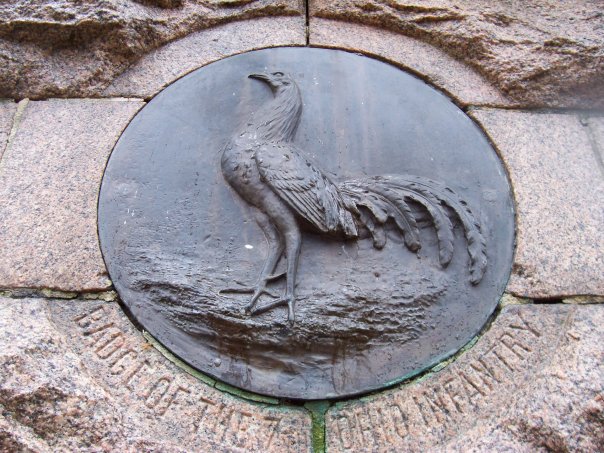
As soon as Joseph learned that the Southern rebels had fired on Fort Sumter, he enlisted for three months service as a private at the age of 19 in the Sprague Zouave Cadets, which was organized in Cleveland under the direction of Captain Charles A. DeVillers. The Sprague Zouave Cadets were subsequently mustered into the service of the United States as the Seventh Regiment of the Ohio Voluntary Infantry as Company B, retaining that letter during its service in the field. He reenlisted, June 19, 1861, for a period of three years. The Seventh Regiment was known as the Roosters.”
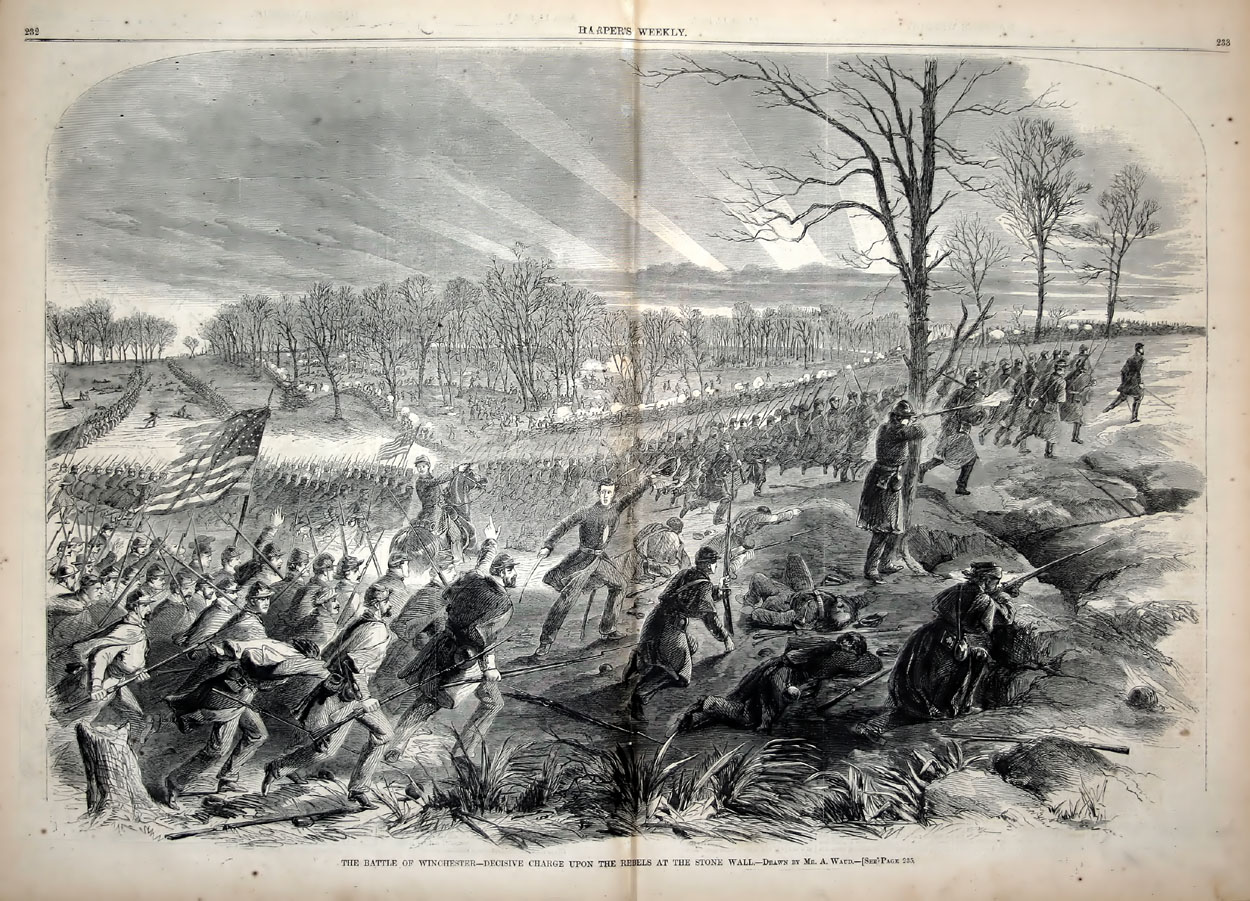
Mr. Gasser participated in the following Civil War battles: Battle of Kressler’s Cross Lanes (Cross Lanes, Virginia), August 26, 1861; First Battle of Kernstown (Winchester, Virginia), March 23, 1862, (in which Mr. Gasser was wounded severely in the left arm and side and was incapacitated for service until June 3, 1863); The Battle of Gettysburg (Gettysburg, Pennsylvania), July 1, 2, and 3, 1863; Lookout Mountain, Tennessee, November 24, 1863; Missionary Ridge, Tennessee, November 25, 1863; The Battle of Ringgold Gap (Ringgold, Georgia), November 27, 1863; Dalton, Georgia, May 8, 1864; Rocky Face Ridge, Georgia, May 1864; Resaca, Georgia, May 13 to 15, 1864, and Dallas, or New Hope Church, Georgia, May 26, 1864. Mr. Gasser was mustered out of service with an honorable discharge at the expiration of his enlistment on July 6, 1864.

The Seventh Regiment’s service was commemorated locally by the Seventh Regiment OVI Association with a monument erected at Woodland Cemetery (Woodland Avenue/East 71st Street). The monument was dedicated in 1872. The principal speakers at its dedication were General John W. Geary, the Governor of the State of Pennsylvania, General Erastus B. Tyler, and Major William McKinley, later Governor of Ohio and President of the United States. The monument cost $8,500 and consisted of Quincy granite for the base, a shaft of Peterhead red granite, and was topped with an eagle with outstretched wings of Peterhead gray granite.

The granite was quarried, polished, and engraved with a list of the Regiment’s battles in Scotland before being shipped to the United States. The lot on which it was erected was donated by the City of Cleveland.
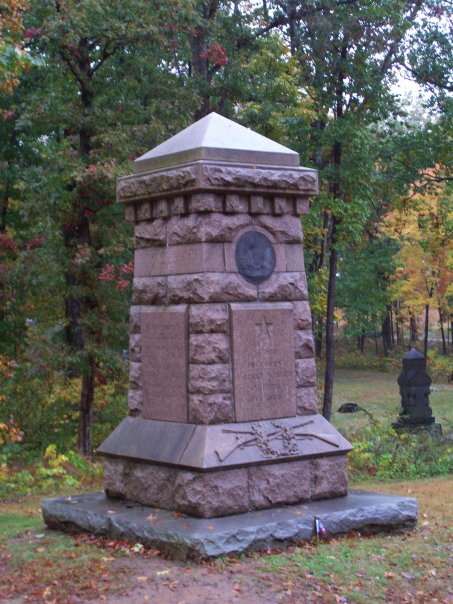
Of course, the Ohio Generally Assembly also commemorated the service of the Seventh Regiment at the Battle of Gettysburg with the erection a marker, which is located near Gettysburg, Pennsylvania in Adams County at the intersection of Slocum Avenue and Williams Avenue. It was dedicated on September 14, 1887, and marks the position held by the Regiment on July 2 and 3, 1863. If you have occasion to visit the Gettysburg Battlefield, you now know of its Edgewater connection.

When Mr. Gasser returned to civilian life after nearly four difficult years of service to his adopted country, he sought both employment and education. The available information indicates that he initially boarded with his father at 63 Orange Street and worked for the Weaver Brothers Wholesale Liquor House (87 & 89 Merwin), the grocery firm of Pope & Hains (163 Ontario Street), and subsequently for five years as a postal carrier. He also sought to further his education while working so paid for two years of education at the Humiston Institute. The Humiston Institute, also known as the Cleveland Institute, was a private coeducational school for secondary education founded in 1859 by Professor Ransom F. Humiston, a respected Cleveland educator, who offered a college preparatory curriculum to both students from out of state as well as from the Cleveland area. The Institute closed in 1868.

In 1867, the industrious Mr. Gasser found love and married Miss Katherine Fox, with whom he had a daughter, Josephine.

The Cleveland Directory Company’s 1872/73 Directory reflects that Mr. Gasser was still a letter carrier but now resided and operated a business out of his residence at 345 Pearl. The business was listed under various headings, including confectionary, cigars, fruit, and variety goods. The Cleveland Directory Company’s 1877/78 directory reflects that Mr. Gasser moved his residence and business to 347 Pearl, and only listed his business under the headings notions, stationary, and confectionery.

In the August 13, 1921, issue of The Florist Exchange (p. 347), a article recounting Cleveland’s floral history recorded that “on Saturdays, [Mr. Gasser] made up bouquets and boutonnieres of Roses from the garden of Mrs. Gasser’s mother. As a dancing school was located on the second floor [of his small store], Mrs. Gasser thought a few buttonhole bouquets would sell–from this very small beginning grew the large business of today. The first greenhouses were built in Rocky River in 1880. Then a range of glass was built on Lake Ave. in 1885. The store was continued on [Pearl] until 1883, when a store was opened on lower Euclid Ave. in connection with the Heyse & Weisgerber Co., who were leading caterers in those days. It was only a few years later before they felt able to use an entire store individually. They bought a lot and built on Euclid Ave., near Bond St. [East 4th], moving to their present location later. The business was incorporated in 1901. Meanwhile, new greenhouses were started in Rocky River hamlet on Wooster Road. Here the main crop of flowers was grown. Now the firm has 350,000 sq. ft. of glass, covering eight acres. They cut as many as 9,000 Roses, 10,000 Carnations, and 5,000 Lilies daily. In 1902, the Lake Ave. greenhouses were moved and rebuilt at Rockport place. The store is now on Euclid Ave., next to the Cleveland Trust Co.” Other sources record that the innovative Mr. Gasser was also the first florist in Cleveland to utilize delivery wagons for floral deliveries.

Mr. Gasser eventually established a separate wholesale business to supply other florists while also maintaining his retail floral shops. His success was great and his services were much in demand by the most discriminating clientele in Cleveland.

WOODCLIFF

The Cleveland Director Company’s 1886/87 Directory records that Mr. and Mrs. Gasser resided on Lake Avenue, making them amongst the earliest residents of the neighborhood. And, of course, we know from city maps, that his residence with the greenhouses was called Woodcliff.

Although we know that Senator Marcus A. Hanna hosted the “Wedding of the Century” in the Edgewater neighborhood in 1903, it is fair to say that Mr. Gasser hosted the first Grand Affair in the Edgewater Neighborhood. Specifically, in 1896, during the Centennial Celebrations for the City of Cleveland, the Society of American Florists held its twelfth annual convention in Cleveland during the month of August. The convention was quite a success, as recorded by The Official Report of the Centennial Celebration of the Founding of the City of Cleveland and the Settlement of the Western Reserve (1896), which stated:

“An excellent opportunity for the study of the beautiful was afforded to Centennial visitors by the grand Floral Exposition held during ” Floral Week,” in connection with the twelfth annual convention of the Society of American Florists. This exhibition was opened on Tuesday afternoon, August 18th, in the Central Armory. An extensive and varied botanical display was set forth in the main auditorium, plants and flowers having been brought from all parts of the country to compete for prizes. It was the largest exhibition ever given in Cleveland. The Armory was transformed into a conservatory in which floral beauties from the North, East, South and West vied with each other for honors. There were palms and ferns and mosses and shrubs in terraces and groups, lilies in cluster, roses, violets — flowers of every class and kind. The exhibition was divided into two departments, one being the main display under the auspices of the Cleveland Floral Society, and the other being a trade exhibit for which a large section of the hall was reserved. The convention headquarters were in Army and Navy Hall, in front of which was displayed the national flag of the society. The hall was elaborately decorated. Garlands of evergreen hung from the ceiling, banks of palms arose in the corners and windows, and the plat form was almost hidden in a profusion of plants and cut flowers.” [pp. 160-161]

Mr. and Mrs. Gasser did not hesitate to host their colleagues most graciously:

“Late in the afternoon of the first day the delegates, accompanied by their wives, set out for a trolley ride. There were five hundred in the party for which a specially chartered train of eight cars was provided. The cars were gorgeously decorated with flowers and were freely admired as they passed through the streets. The destination was Woodcliff, the home of Mr. J. M. Gasser, on Lake avenue, where the president’s reception was held. The guests, about five hundred in all, were cordially received by Mr. and Mrs. Gasser on their lawn — a floral park of great beauty — and the company was later photographed. Refreshments were served under a canopy on the lake front, and after this came dancing and other amusements. Fairy lamps and Japanese lanterns were hung over the grounds, making the effect after nightfall very pretty.” [p. 162]

Mr. Gasser was a member of the Republican party, the Knights of Pythias, the Clifton Club and the Chamber of Commerce. The Cleveland Blue Book 1907 indicates his daughter and her husband, James C. Pettee, lived with Mr. and Mrs. Gasser at Woodcliff.

Mr. Gasser died on March 12, 1908, in Flint, Michigan after several years of poor health. He was buried in Lake View Cemetery (Lot 11-30 BNE).

The Florist Exchange reported, in its March 28, 1908, (p 466), edition, the following, as a sad denouement to such an accomplished life:

An estate of $250,000 would be worth approximately $6,100,000 in 2017.

Mrs. Katherine F. Gasser died on September 20, 1921, and is buried beside him. His life exemplified one of service to his country as well as business acumen and success.

It cannot be controverted that, of all the men who lived in the Edgewater neighborhood during the Gilded Age, no other is more deserving of our respect and admiration than Mr. Joseph M Gasser. He volunteered for military service as a private to preserve the Union, fought in many major battles that we still remember by name today, and was severely wounded in service to his adopted country. He was industrious and innovative, building a business, not from inherited wealth, but from the fruit of his labor, a successful business that sustained his family while employing and sustaining others and their families. And there is no evidence in the record that he accomplished any of the foregoing while betraying any trust, exploiting any workman, or bankrupting any business.


Julius Feiss & Ednawood

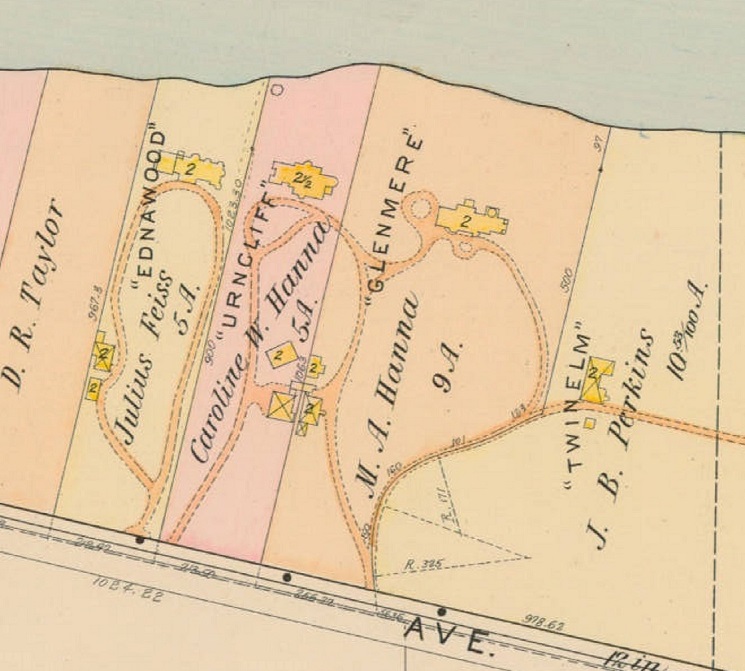
Few physical remains of the Gilded Age mansions that once defined the Edgewater neighborhood remain. However, for the observant, there are remains to be seen and which, when researched, reveal a story. On the northern side of Lake Avenue, between West 104th and 110th Streets, may be found the remains of a stone entrance way standing silent sentinel to what was once known as Ednawood, the mansion and estate of Julius Feiss (1848-1931).

Feiss was a partner in The Joseph & Feiss Company, an organizing member of the Cleveland Parks Commission, and, at his death, president of the Cleveland Federation of Jewish Charities. Ednawood’s original address was 10520 Lake Avenue, and extended from Lake Avenue to the shores of Lake Erie. The address was later changed to 10530 Edgewater Drive.

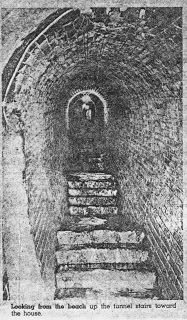
Ednawood once was erroneously associated with the Underground Railroad because it had a tunnel connecting the basement of the home to the shores of Lake Erie. Mazie Adams, in an article entitled, “Lakewood in the Civil War: More Underground Railroad Tunnels in Lakewood?”explains the error thusly: “[S]ome of this confusion stems from the work of Wilbur Weibert, noted 1890s historian of the underground railroad in Ohio, [who] suggested that Lakewood was part of a route for the underground railroad. Unfortunately, it appears he based his theory partially on the existence of a tunnel emptying into Lake Erie just east of Lakewood.

Interestingly, this tunnel was also featured in a Plain Dealer article, dated February 12, 1950, and focused on Dr. Siebert’s work on the underground railroad in Ohio. Included in the article was an image of a ‘slave-escape tunnel, somewhere in Cleveland…photo from Dr. Siebert’s collection, but the exact location is not known.’ Sharp-eyed readers quickly inundated the paper with calls and letters correctly identifying the tunnel as belonging to ‘Ednawood.’

As Ednawood was built in 1895, it and its tunnel obviously post-dated the Underground Railroad. Ms. Adams continues the article to note that one of Julius Feiss’ sons described the tunnel as “leading from a basement recreation room with a big fireplace and small rooms where bathers could change before and after swims in the lake. The tunnel is said to have cost about $11,000 when built.” She notes that the Plain Dealer reported that the tunnel, “attracted dozens of boys who swam or rowed along this section, for many have written or phoned about the fun they used to have around it. But they couldn’t get beyond the great iron entrance door in the cliff.”

In fact, an entry from the June 16, 1899, About the Town column in the Plain Dealer, heralds the construction of the tunnel as part of the newly built Ednawood estate for Julius Feiss: “Mr. Julius Feiss, of Goldsmith, Joseph, Feiss & Co., has been connected with that firm for exactly thirty-five years, working his way up from the bottom of the ladder. While he is still very active in the business, he is a man of domestic tastes and his house, adjoining Senator Hanna’s on the lake shore, is a veritable model of comfort. Among the features of the place is a tunnel, cut out of the solid rock under the bak, leading from the house to a point close to the shore, where it ends in a spacious den, a smoking room some twenty feet in diameter, tiled in Dutch blue, and provided with all manner of appurtenances for the inner comfort. From this den it is but a step to the bath houses so that all the advantages of the location may be enjoyed with the least inconvenience” (p. 5). 

Notice of Ednawood’s pending construction was published in The Inland Architect and News, Vol. XXI, No. 3, p. 42 (April 1893), which noted that that the architects Lehman and Schmitt were designing and constructing “a country residence for Julius Feiss on Lake Avenue; frame, 60 by 125 feet in size; cost $40,000; all modern improvements including steam heat and electricity. For same party a gardener’s cottage and stable, costing $5,500; both frame buildings, respectively 26 by 40 and 30 by 45 feet in size.”

The Cleveland Landmark Commission records the following information about Lehman and Schmitt in its architect database:

Lehman and Schmitt were in business from 1885 to 1935. Both Israel Lehman and Theodore Schmitt had worked in the office of George H. Smith. The firm did a substantial amount of work for local government. They designed the Cuyahoga County Courthouse, and courthouses in Lexington, Kentucky; Peru, Indiana; and Franklin and Towanda, Pennsylvania. They also designed the Central Police Station on Champlain Street; an 1894 addition to the second Cuyahoga County Courthouse; the Central Armory for the Ohio National Guard; the National Guard Armory in Geneva; the Erie County Children’s Home in Sandusky; and the Lorain County Children’s Home. The firm also designed several significant synagogues, including the Anshe Chesed Synagogue built in 1886 on Scovill Avenue, Temple Tifereth Israel at Central and East 55th Street, built in 1894, and the later Anshe Chesed Synagogue at 8302 Euclid Avenue, built in 1912. The name of Lehman and Schmitt was retained after Israel e death  din 1914. The firm’s offices moved to the Electric Building in 1914. Buildings designed by the firm after 1914 included the Cook (now the Prospect Park) Building, the Pierce Arrow Dealership, and the Bing Building. The early history of the firm shows that they designed numerous residences. Frederick Baird worked as a draftsman and designer with the firm for several years. See http://planning.city.cleveland.oh.us/landmark/arch/archDetail.php?afil=&archID=160&pageNum_rsArchitects=1&totalRows_rsArchitects=335&sk=fName&sd=ASC

The Cleveland Plain Dealer noted that construction was underway on Ednawood in 1895, but was not yet completed, in its article, Lake Avenue Residences, published May 10, 1895.

U.S. Census records reveal that the massive house with its intriguing tunnel was home to Julius, his wife Carrie (nee Dryfoos), and their children Paul, Henry Otto, Richard, Jessy, George, and Edna, his niece Emma Seligmann, as well as three servants, Catherine Lazzro, Emma Boyer, and Johanna Miller, in 1900. It was apparently named after Julius’ daughter Edna, who was born in 1886.

Julius Feiss himself was born in Mussbach, Bavaria and emigrated to the United States in 1866. His story, like that of several other residents already profiled, is an immigrant’s rags to riches story. An October 1920 article in the American Magazine by Frank Copley relates Feiss’ Horatio Alger story:

When Julius Feiss came to this country as a boy, his assets were just about limited to his character, which included a full capacity for hard, grinding toil. If he had a decided bent for mechanics, this at the beginning was more of a liability than an asset. As Richard Feiss puts it, “Father began life starving to death as an inventor.” To save himself from literally starving, Julius Feiss went to work in the clothing shop of the firm that was destined to bear his name. This was in 1866. The twelve-hour day was then the standard, but Feiss, as the newest arrival, was required to devote practically the whole twenty four hours to the firm’s service. He had to clean up the shop after the regular day’s work, sleep there in a packing box among the rats, and be ready to open the door for the other employees at six-thirty in the morning. After four years, through sheer force of character, he rose to be a member of the firm. The business prospered.

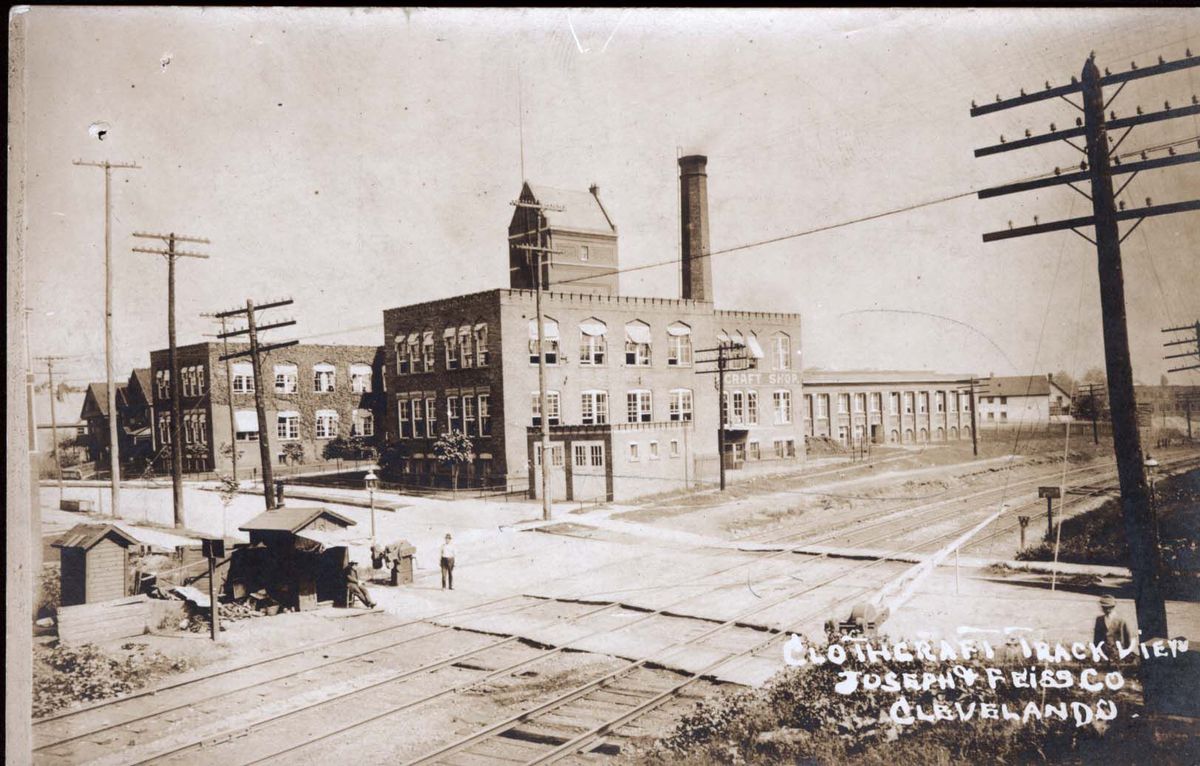
A few words about “the business” are in order as the company had an impact and longevity that are worthy of especial appreciation. The Joseph & Feiss Company was founded in 1841 as the Koch, Kauffman & Loeb general store in Meadville, Pennsylvania. In 1845, proprietors Kaufman Koch and Samuel Loeb relocated to Cleveland where they opened a store at 82 Superior Street, specializing in tailored men’s clothing and piece goods to local tailors. The company changed hands as it grew larger: Koch & Levi in 1853, Koch, Levi & Mayer in 1855, Koch, Mayer & Goldsmith in 1867, Koch, Goldsmith & Company in 1871 and Goldsmith, Joseph, Feiss & Company in 1892. Moritz Joseph and Julius Feiss both joined the clothing company in the 1870s. When Jacob Goldsmith retired in 1907, the firm adopted the name The Joseph & Feiss Company.

In Jim Debelko’s article, “The Joseph and Feiss Company: A Pioneer in Progressive Capitalism,” we learn what an extraordinary company it was. He reports the following: “Prior to 1909, the company was a typical garment manufacturer of that era, paying its employees as little as possible and working them for as many hours as hard it reasonably could. But in that year, Richard Feiss became factory manager. While living in Boston from 1897-1904 and obtaining his undergraduate and law degrees from Harvard University, Feiss had become a disciple of Frederick Taylor, the well-known industrial efficiency engineer of the late nineteenth century. When Feiss returned to Cleveland, he set out to manage the company’s work force in a manner that would maximize productivity but at the same time create a humane work environment that would keep workers healthy and happy. 

Feiss, with the assistance of Progressive era reformer Mary Barnett Gilson whom Feiss made head of the company’s employment and services department, redesigned the chairs employees sat on and the tables they worked upon to reduce injury and fatigue; provided employees with well-lit and well-ventilated work areas; sponsored employee dances, picnics, choral societies, clubs, orchestras, and athletic programs; provided medical and counseling services; established employee savings programs; awarded promotions based on performance; and increased wages. In addition, in 1917, Feiss introduced the five-day work week for employees at the company’s plant, several years before Henry Ford, often cited as the first industrial employer in the United States to do so.

“Perhaps it was progressive policies like the above that kept Joseph & Feiss a non-union shop in the decades of the 1910s and 1920s–a time when garment manufacturers in New York, Chicago, and elsewhere were fast becoming union shops. It wasn’t until 1934, during the Great Depression and almost a decade after Richard Feiss was forced out of the company in 1925 by his father and older brother, that the American Clothing Workers of America, finally won the right to bargain for and represent the garment workers of Joseph & Feiss.

In 1989, Joseph & Feiss was acquired by Hugo Boss AG, a West German clothing firm, for $150 million and was made a division of its subsidiary, International Fashions Apparel Corporation. Men’s Warehouse acquired the Joseph & Feiss trademark in December 1996.

So, when you spy the remnants of Ednawood when you walk along Lake Avenue, you should reflect on its stories: the rags to riches story of an immigrant, the myth of an Underground Railroad station, the powerhouse clothing manufacturer that lasted nearly 150 years, and the progressive and scientific methods that manufacturer introduced to industry before they were commonplace.

Centenary of the Publication of The Beautiful Homes of Cleveland

Previous Beacon articles highlighted the Edgewater neighborhood in the Gilded Age, which ran from the 1870s to about 1900, when a small number of imposing mansions hugged the shore of Lake Erie along Lake Avenue. Without exception, those mansions were demolished shortly after the turn of the twentieth century and were gradually replaced with more modest, but still distinctly grand homes. The aesthetic appeal of this second generation of Edgewater residences was recognized early on, as illustrated, quite literally, in the publication Beautiful Homes of Cleveland, which was published by the Cleveland Topics Company in 1917.

Beautiful Homes of Cleveland was a photographic presentation of approximately one hundred “of the most beautiful homes” in the Cleveland area. The book grouped the homes into six areas: the Euclid Group, the Wade Park Group, the Bratenahl Group, the Heights Group, the West Side Group, and the Suburban Group. The West Side Group features a small, but readily familiar representation of homes from the Edgewater neighborhood. This article extracts the photographs of the featured Edgewater homes and provides supplemental information regarding the homes and their original owners.

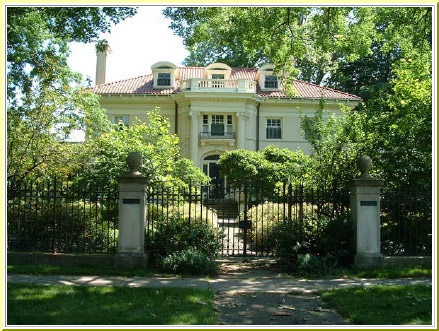
The first home from the Edgewater neighborhood featured in the publication was built at 10324 Lake Avenue in 1914 for Henry T. Holmes (1863-1938) and his wife Gussie (1863-1959). Mr. Holmes had been the president of the Holmes-Shepherd Lumber Company, which was located at the junction of Pearl Road and Scranton Avenue.

The 1920 U.S Census recorded that Mr. and Mrs. Holmes lived in the home with their adult children Ruth E. and Erwin L., as well as a servant, John Slavens.

Interestingly, the 1930 U.S. Census shows that even after Mr. Holmes sold his Lake Avenue residence he stayed in the neighborhood as he and Mrs. Holmes are recorded as residing at 10418 Edgewater Drive with their maid, Celia Moran. The 1940 U.S. Census records that, after Mr. Holmes died, Mrs. Holmes continued to reside on Edgewater Drive along with her son, Erwin, his wife, their three children, and a servant. Eventually, Mrs. Holmes moved to Shaker Heights, where she died at the age of 95. She and her husband are buried in Lakeview Cemetery in Fort Atkinson, Wisconsin.

The Holmes home was designed by architect Gustave Bernard Bohm (1874-1934). It was also featured in a heavily photographed article showcasing Mr. Bohm’s residential works in The Ohio Architect, Engineer, and Builder (Mr. Bohm’s Work, December 1916, pp. 32-43). Mr. Bohm designed several other homes in the Edgewater neighborhood (such as the Christian Schuele residence, 10498 Lake Avenue, 1914), as well as the more famous Faerber-Morse mansion at 13405 Lake Avenue in Lakewood.

The Cleveland Landmark Commission’s Cleveland Architects Database provides the following information about Mr. Bohm:

Gustave B. Bohm attended West High School, and graduated from Columbia University. His brother Max Bohm was a well-known artist who lived in Paris. He was mostly noted as a residential architect with most commissions on the west side of Cleveland and Lakewood. He lived at 8912 Detroit Avenue, where his parents had lived, later moving to 19429 Frazier in Rocky River. He wrote the article “The American Adaption of A Swiss Chalet” for the September 1908 Ohio Architect and Builder, and “How the Architect Helps the Home Builder” in Material Facts, May 1915. He is buried in Lakeview Cemetery.

The next home from the Edgewater neighborhood included in Beautiful Homes of Cleveland was built for Gustav Adolph Weitz (1862-1911) at 10405 Lake Avenue in 1908.

Mr. Weitz had been president of Forest City Ice Company, which proudly advertised that the ice it sold was not obtained from within the city limits.

The 1910 U.S. Census recorded that Mr. Weitz lived in the home with his wife Mary K. (1857-1929); his adult children Albert, Josephine, Elsie, Elfreda, and Emma; and their servants, Amelia Nurnberg, Frederica Aberle, and Salmon Dile. By the time of the 1920 U.S. Census, the census records that only Mary Weitz and her daughter Elsie still loved at the house. Mrs. Weitz died in August 1929.

The Cleveland Landmark Commission’s Cleveland Architects Database records that the home was designed by William W. Hodges (1867-1923). The database records the following information regarding Mr. Hodges:

W.W. Hodges was born in Troy, Geauga County, Ohio and went to grammar and high school in Hart, Michigan. He came to Cleveland in 1888 and took up the study of architecture. In June 1894 he and brother Fred F. Hodges formed the firm of Hodges and Hodges, that was dissolved in 1900 when he went into business for himself. He designed several churches and schools for the Roman Catholic diocese. He lived at 2062 West Boulevard.

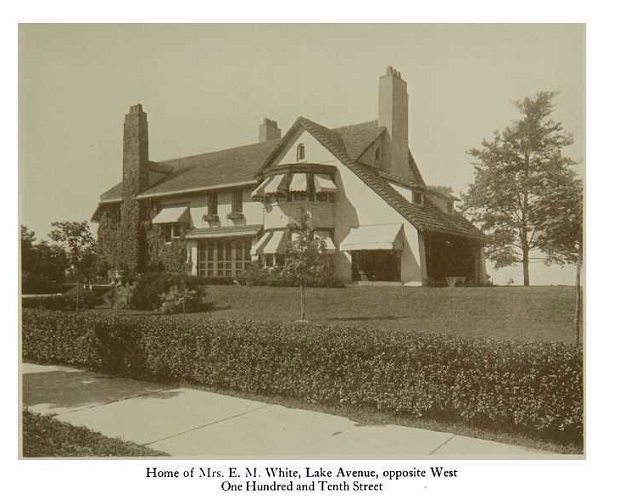
The next home featured was that of Ellen M. White (1850-1924), located at 11006 Edgewater Drive, which was built in 1910.

Readers may recall that Mrs. White was previously profiled in the spring 2015 Beacon along with her husband, William J. White, the “Chewing Gum King.” Mr. and Mrs. White divorced in October 1906 and, while Mr. White moved from the Thornwood estate they shared while married to New York, Mrs. White stayed in the Edgewater neighborhood, eventually moving from the 52 room Thornwood mansion to the more modest home she had built on Edgewater Drive.

The 1920 U.S. Census records that Mrs. White lived in the Edgewater residence with her adult son, William B., and a housekeeper, Mary Mastin. Mrs. White died at her residence in 1924 and is buried in Lake View Cemetery in Cleveland alongside her ex-husband, William, who had died in 1923.

The Cleveland Landmark Commission’s Cleveland Architects Database records that the home was designed by Frank B. Meade (1867-1947) and records the following information regarding Mr. Meade:

“Frank B. Meade was born in Norwalk, Ohio and educated in the Cleveland public schools, graduating from Central High School. He graduated from Wesleyan College and Boston Tech (later known as Massachusetts Institute of Technology) in 1888. He spent four years in Chicago working for the firm of Jenney and Mundie before returning to Cleveland in 1893 where he worked in the offices of Charles Schweinfurth and George H. Smith. He opened an office in 1895. From 1896-7 he was in partnership with Alfred Hoyt Granger; from 1898 to 1905 he was in partnership with Abram Garfield; and from 1911 to 1939 his was associated with James M. Hamilton. Throughout his career, no matter the makeup of the firm, he was known as the architect of some of the city’s finest residential projects built in the early 20th century, including numerous residences in the Euclid Heights development and Shaker Heights. He was known for the English domestic style of architecture. He designed houses for wealthy patrons throughout his career. He also designed several clubhouses and commercial buildings. He was appointed a member of the Cleveland Group Plan Commission after the death of Daniel Burnham.”

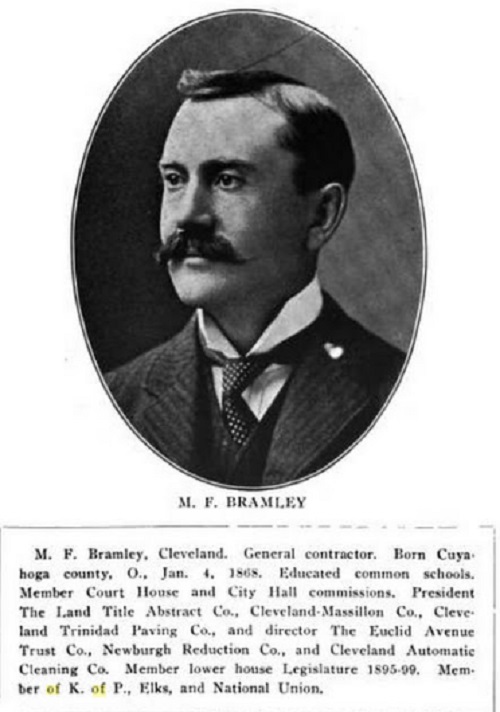
The final Edgewater home featured in the book was Bramleigh Park, located at 11420 Harborview Drive, which was built in 1915 for Matthew Frederick Bramley (1868-1941).

Mr. Bramley was president of the Land Title Abstract Company, the Cleveland-Massillon Company, the Cleveland Trinidad Paving Company, and Templar Motors. He also served in various elected public offices. Mr. Bramley and Bramleigh Park were subjects of an article in the fall 2015 Beacon written by David Buehler. Pertinent information from that article includes the following:

One owner, Mr. Matthew F. Bramley, owner of the Westwood Estate, which was minus the mansion from the fire, decided to develop his portion of the Lake Avenue land through his own Land Company, the ‘Land & Title Abstract Co.” (est. 1907), calling this new housing development by the name of “Bramleigh Park” and selling lots through the Real Estate Dept. of the Cleveland Trust Bank Co.

Mr. M.F. Bramley also built his new house on the shores of Lake Erie as part of the new land development project to replace the residence Westwood which had burnt down in 1908. On April 13, 1915, a city building permit was taken out for the new house with the new address of 11420 Harborview Drive. It was designed by noted local architect, William S. Lougee, with the building being described as a 85’ft. x 38’ft two story structure with clay tile roof.

The Cleveland Landmark Commission’s Cleveland Architects Database records the following information about William S. Lougee (1867-1935):

“William S. Lougee was born in Buckfield, Maine and received his education in Boston. In 1884, at the age of seventeen, he went to work for architect Tristam Griffin and remained in that office for six years before moving to Cleveland. He was associated with Adolphus Sprackling in 1892 as the Cleveland Architectural Company. He had his own office in Cleveland in 1893. In 1895 he was working with George Steffens. He was associated with architect John Eisenmann until 1900. From 1901 to 1905 he was assistant architect for the Board of Education. On April 4, 1905 during the Mayoral administration of Tom L. Johnson he was appointed deputy inspector of buildings and on March 4, 1907 he was made the chief building inspector. He resigned his City position at the end of 1909 when Johnson left office and resumed a private practice. During the administration of Newton D. Baker (1912-5) he supervised the construction of Cleveland City Hall. He later became City Architect and Building Commissioner under the administration of Mayor Ray T. Miller (1932-3).”

References:

For a wonderfully informative and well-researched Lakewood Historical Society monograph on the Faerber-Morse Mansion see

http://www.lakewoodhistory.org/pdf/Newsletters/Faerber-Morse%20House.pdf

For online access to Beautiful Homes of Cleveland at the Cleveland Public Library website, see http://cplorg.cdmhost.com/digital/collection/p128201coll0/id/2658

For online access to the article, Mr. Bohm’s Work, see

https://books.google.com/books?id=GHcoAAAAYAAJ&pg=RA5-PA32&dq=mr.+bohms+works&hl=en&sa=X&ved=0ahUKEwjNmJm67e_RAhUM74MKHb3KBhsQ6AEIJTAC#v=onepage&q=mr.%20bohms%20works&f=false

For online access to the valuable and searchable Cleveland Landmark Commission’s Architects Database, see

http://planning.city.cleveland.oh.us/landmark/arch/architects.php