

The brevity of life catches one short of breath.
We thought there was time to inhale once more, only to discover a final exhalation.
Was it a dream, a hallucination, or merely the meeting of the circle?
Stars. Dust. Return.
Tag: modern poetry

Every Angel is Terrifying
By Donald S. Yarab
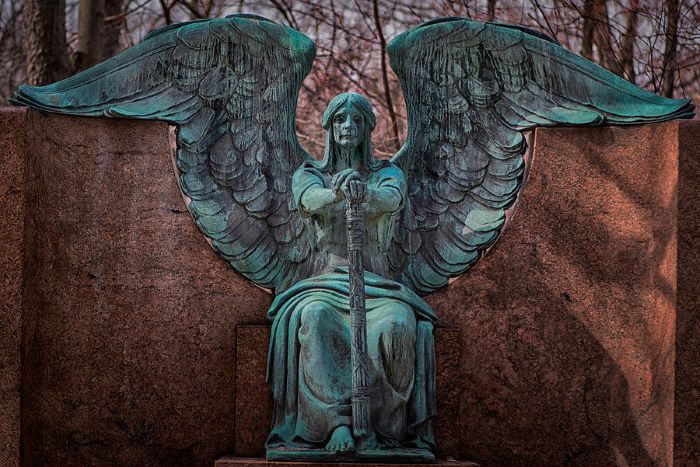
The photograph was taken by Rosette Doyle.
Yet we keep calling them down,
hoping for comfort,
dreaming of radiance.
They arrive without warning,
bearing weight, not mercy:
the silence that collapses sound,
the gaze that unravels marrow.
We tremble,
for their wings are woven
of light we cannot bear to see,
of shadow we cannot learn to name.
What they touch is never the same.
A tree becomes flame.
A breath becomes prayer.
A man becomes dust.
But is this terror for one heart alone?
No—their shadow falls on cities and nations,
their silence unsettles centuries.
They do not stoop to whisper comfort.
They stride through millennia,
their wings stirring wars and kingdoms,
their silence heavier than empires.
Temples tremble,
mountains bow down,
a bell falls silent in the square,
the proud are unmade
by a glance that knows no compromise.
Still, we call them down,
for without their terror we would never glimpse
the depth of beauty,
nor know that awe and fear
are one.
Awe belongs not to possession,
nor fear to a single soul,
but to the common lot of mortals
who stand together before the unendurable.
Share this:

Conscripted Dust

“Dry bones can harm no one”—
So sang the voice from Wasteland’s shore,
But I have walked the killing fields
And know the lie that silence bore.
The bones do speak, though long decayed,
Unearthed by hands not theirs to claim,
Given tongues by zealot priests
Who mouth their prayers and speak their shame.
In Kosovo’s fields, in Gaza’s dust,
In Armenia’s buried grief,
Across the sands of Erbil’s night,
The dead are stirred—not for relief.
They rise not in their own defense,
They rise to justify the blade,
Embroidered with fresh fable-cloth,
With memories half-new, half-made.
The Promised Land is paved with skulls
That never sought a throne or crown.
The gospel of the grave is preached
In voices never theirs to claim.
The soul-stained call them forth once more—
These ventriloquists of vengeance
Make calcium speak of causes
The buried never chose to bless.
They cry for peace, yet hear their names
Proclaimed to summon death, not justice.
Their marrow plundered, their repose
Defiled while ancient wounds burn bright.
They do not ask to be avenged—
No whisper from the tomb requests
A mother’s tears be matched by some
New covenant of blood and fire.
Until we bury not just bone
But pride and myth and righteous sword,
The dead shall march in vengeful script
To scrawl our creeds in sacred dust.
Dry bones should harm no one—
Yet see how we conscript the dust,
Make weapons of our ancestors,
And brand our vengeance just.
Share this:

Ode to the Deep

I. Stillness Before the Descent
What stirs in silence but the thought of falling?
The soul leans forward at the edge of time,
Where earth gives way to rhythm without measure—
No firmament beneath, no axis left to climb.
The wind is absent here. The light, unsure.
All motion trembles on the breath of stillness.
We speak of peace, yet dread the calmest shore—
For we have built our gods from fear and witness.
II. The Water Below
Not storm, not wave, nor tempest’s hissing swell,
But quiet depth—the fathomless unknown,
Uncoiling silence from a buried bell
Where light has never touched the sea-worn stone.
Here dwell no monsters, save the mind’s own eye.
The fear is not of drowning, but of seeing—
That which reflects not sky, but self, and why
The soul recoils from naked being.
III. The Humbling
The sea does not instruct with word or wind—
It shapes the soul by salt and slow erosion.
A kneeling cliff, worn smooth where waves have pinned
Each boast to sand, each name to dark devotion.
The deeper still you go, the less you hold—
No torch remains, no doctrine, no command.
The deep forgives, but never does it fold—
It presses wonder into trembling hand.
IV. What Remains
So is the fear a gift, once held aright—
A trembling compass on the soul’s long chart.
For he who feared the deep, yet dared its night,
Returns not wise—but hollowed, whole of heart.
He cannot speak of what he saw below,
Only that silence taught him how to kneel.
And those who know will know. The rest may go
To read their truths upon a turning wheel.

 Northcoast Antiquarian