
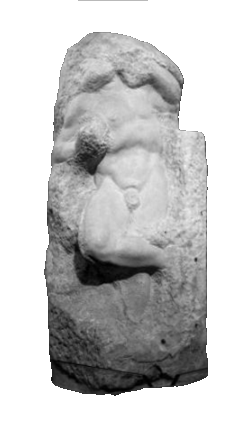
A body caught between measure and becoming.
I. On Bloom and the Anxiety of Influence
As the poet of Vitruvian Man Unbound, I find myself drawn to Harold Bloom’s understanding of how poetry functions within tradition—not as mere imitation or influence, but as a creative misreading that transforms both predecessor and successor. Bloom’s vocabulary—his clinamen (poetic swerve), daemonization, and apophrades (the return of the dead)—offers a framework for understanding my own relationship with Leonardo’s iconic drawing.
Yet I would press beyond the confines of Bloom’s categorical system. The strongest poetry, as Bloom himself recognized, resists easy resolution. Vitruvian Man Unbound embodies what he called a tessera—a completion of its precursor that simultaneously preserves and undermines its foundational terms. The poem does not simply revise Leonardo; it retroactively reshapes our understanding of him. It allows us to see Vitruvian Man as an incomplete gesture, one whose implicit metaphysical longing only achieves full articulation through the poem’s unfolding of form, desire, and transcendence.
II. The Paradox of Poetic Creation as Discovery
When I began Vitruvian Man Unbound, there was no conceit of a new idea. Rather, I felt I was unearthing the obvious—articulating for the first time verses that had already been rendered, waiting to be heard.
This situates the poem not as invention but as discovery—a Renaissance conception of artistic creation. Michelangelo spoke of liberating the form already imprisoned within the marble. Leonardo, too, conceived of art as revelation through observation, uncovering structures latent in nature and proportion. I participate in that lineage: the transcendence of the circle was already latent in Leonardo’s drawing. My poem does not overwrite Vitruvian Man but unveils what it always contained.
III. Poetry as Transcription of Revealed Truth
Poetry is primarily, in my conception, the art of transcription. Poetry is ultimately truth revealed, however rendered.
This belief is ancient. Poets once invoked the Muse, believing their songs were received rather than authored. Plato cast poets as possessed vessels of divine madness. In scriptural traditions, the prophet or sage writes not from invention but from vision. In this view, the poet is not creator but conduit.
This understanding reorients poetic practice. What matters most is not novelty of theme or form but receptivity—a cultivated attentiveness to truths that ask to be heard. To compose well is to listen well. The most vital poems do not invent so much as reveal. The poet’s charge, then, is fidelity.
Vitruvian Man Unbound aspires to this kind of transcription. It draws out from Leonardo’s image the philosophical tensions embedded therein: between proportion and possibility, containment and becoming, structure and the longing to transcend it.
IV. The Poem’s Journey: From Containment to Transcendence
At its heart, my poem charts a metaphysical journey—the awakening of a consciousness confined within geometry, gradually realizing its cosmic vocation. The Vitruvian figure, bound in ratios and ruled lines, discovers within himself not mere form but flame. The movement is from being drawn to drawing, from being measured to measuring.
The poem gives voice to this paradox: “I am both bound and boundless, large and small, / Both measured part and immeasurable all.”
This is no empty contradiction. It is the philosophical heart of the work. The circle becomes “not wall but door,” not negated but reimagined. Limitation, as I came to understand, is not the enemy of freedom but its precondition. Form does not imprison; it allows the infinite to appear in the guise of the finite.
This idea resonates with multiple traditions: the Christian theology of kenosis, quantum indeterminacy, the aesthetics of the golden ratio, even the existential struggle of Camus’ Sisyphus. In Vitruvian Man Unbound, I sought to draw them all into poetic coherence.
V. Beyond Influence: Co-Creation and Transcendence
My relationship to Leonardo’s drawing is not one of mere homage or critique. The poem does not simply descend from his vision; it reconfigures how I understand that vision. In Bloom’s terms, it enacts an apophrades: the precursor is altered by the successor, the past rewritten by the presence of the present.
I acknowledged this inversion within the poem itself: “Da Vinci dreamed me into being’s start; / I dream myself anew with conscious art.”
This was not rebellion against the tradition but transcendence through deep fidelity. I did not seek to destroy Leonardo’s Vitruvian Man; I hoped to fulfill him. I entered the drawing and found the voice that seemed to have been waiting there. The Vitruvian Man, for me, ceased to be object and became subject, consciousness incarnate.
VI. Poetry as Epistemological Practice
If poetry is the transcription of revealed truth, then it is not merely aesthetic. It is epistemological. It helps us understand not only what is, but how we come to know what is. The most original poems do not dazzle through novelty alone; they resonate because they name what we already suspected was true, but had not yet heard.
Vitruvian Man Unbound aspires to such resonance. I hope it awakens a dormant dimension in Leonardo’s drawing—and perhaps, in us. I did not set out to create a new form, but to reveal the old form’s silent music. For me, it was an act not of invention, but of listening—not conquest, but witnessing. A poetry of revelation.
Thus the ink that once bound becomes the ink that reveals.
VII. Echoes of Prometheus
In reflecting on Vitruvian Man Unbound, I recognize the shadow of another unbound figure—Shelley’s Prometheus. His liberation from cosmic tyranny, his transformation into a visionary voice of harmony, and his rejection of vengeance in favor of transcendence, all resonate deeply with the arc of my poem. Like Prometheus, the Vitruvian figure is not merely released; he is revealed—as a bearer of fire, of knowledge, of poetic truth. It is not accidental that in striving toward the infinite, we find ourselves echoing those myths and verses where the infinite has already spoken.
Discover more from Northcoast Antiquarian
Subscribe to get the latest posts sent to your email.

 Northcoast Antiquarian