The 1771 AR Medal by Johann Leonhard Oexlein serves as a remarkable numismatic artifact that commemorates a pivotal moment in Polish history—the delivery of King Stanisław August Poniatowski from a plot against him orchestrated by the Confederation of Bar. This post aims to shed light on the intricate details of its design and the political climate of the time.
The Medal’s Artistic Elements
The medal, measuring 44mm in diameter and weighing 21.84 grams, is a work of intricate craftsmanship. The obverse features the Latin inscription “NOLITE TANGERE CHRISTOS MEOS,” which translates to “Do not touch my anointed ones.” It is a quotation from the Bible, Psalm 105:15 (or 103:15 in the Latin Vulgate), where God warns the kings of the earth not to harm his chosen people and his prophets. It depicts an attack on the king by two Furies, one holding a sword and another a torch. The Hand of God descends from a cloud to protect the king, while a storm looms over a cityscape in the background. The artist, J.L. Oexlein, places his signature at the lower right, and the date and time of the event are inscribed in the exergue.
The reverse of the medal bears another Latin inscription, “OCVLI DOMINI SVPER IVSTOS,” meaning “The eyes of the Lord are upon the righteous.” It is another quotation from the Bible, Psalm 34:15 (or 33:16 in the Latin Vulgate), where David praises God for his protection and deliverance from his enemies. Here, King Stanislaus stands before a palace, flanked by kneeling subjects. The exergue carries the phrase “FIDA POLONIA/GAVDET,” which can be translated as “Faithful Poland rejoices.”
Historical Context
The Bar Confederation was a movement of Polish nobles and gentry that opposed the Russian influence and interference in Poland’s affairs in the late 18th century. It was formed in 1768 at the fortress of Bar in Podolia, now part of Ukraine, and lasted until 1772. The confederates opposed Polish king Stanisław II August Poniatowski, who was seen as a puppet of Russia, and against the Russian army that freely accessed much of Poland. They also resisted the reforms that granted equal rights to religious minorities, such as Protestants and Orthodox Christians, in the predominantly Catholic country.
In 1770, the Council of the Bar Confederation proclaimed King Stanisław II August Poniatowski dethroned. Richard Butterwick narrates the events which followed quite ably:
Having declared Stanisław August’s reign void, [the Bar Confederates] decided to abduct him, probably in order to put him on trial. However, the attempt backfired badly, not least because only the king’s version of events is known. In short it is as follows:
On the evening of 3 November 1771 Stanisław August was returning to the Royal Castle from a visit to the nearby residence of Michał Czartoryski, when confederate riders surrounded his lightly guarded carriage. After a brief struggle, they headed out of the city with the wounded monarch. One by one, they lost either their nerve or their bearings, until the king was able to talk round the last of his captors and find refuge in the house of a miller. Help soon arrived from Warsaw. Whatever else actually happened that night, afterwards Stanisław August was able to depict the confederates to all Europe as regicides, and himself as a man of mercy. Despite the pressure from Catherine II for the severest penalties to be applied to the ‘regicides’, he kept his promise to spare his last captor’s life. He even paid him a pension in exile for the remainder of his reign.
-Butterwick, R. (2020). The Polish-Lithuanian Commonwealth 1733-1795: Light and Flame, Yale University Press: New Haven. p. 115.
Butterwick notes that Stanisław August preserved the clothes that he had been wearing that evening as “quasi-relics,” and interpreted his survival from the conspiracy as a sign that he was destined to achieve great things for the Commonwealth. The king also placed even greater trust in Divine Providence going forward. The direct action against the king, however, had unfortunate and far-reaching consequences for the Bar Confederation.
In 1772, Adam Naruszewicz wrote an ode commemorating the king’s remarkable clemency towards the conspirators. Naruszewicz’s “ODA III DO SPRAWIEDLIWOŚCI,” included, at lines 57-60, the following statement: “I can only interpret such a fate as a marvel: to have kings as defenders of their own grievances, to seek revenge through kindness, and with a sincere mind prefer mercy over being a hero of power” (from Naruszewicz, A. (2005). Poezje zebrane. Vol. II. Wolska, B. (ed). Poland: Instytut Badań Literackich. p. 109, which read: “Polszczę to tylko takie los zostawił dziwy: mieć królów obrońcami urazy właściwej, szukać zemsty dobrocią, a umysłem szczerem woleć litości, niż być mocy bohaterem”).
AR Medal by Jan Filip Holzhaeusser. POLAND. 1771, Featuring Adam Naruszewicz and Maciej Sarbiewski. Struck by order of Stanisław August to commemorate these famous Polish poets. HC-3961
Wolska, the editor of the volume that I translated the ode fragment from, implied that Naruszewicz seemed to be contrasting Stanisław August’s humanitarianism with rulers such as the usurper Catherine II and expansionist Frederick II who found their fame on policies of aggression and wars that lead to the deaths of many people (from Naruszewicz, A. (2005), p. 6, which read: “Daje to okazję do przeciwsta wienia postawy pełnej humanitaryzmu władcom budującym swe zna czenie i sławę na wzbudzającej strach agresywnej polityce i wojnach, które przyczyniają się do śmierci wielu ludzi”).
Political Repercussions
The direct assault on the person of the king led the Habsburgs and other foreign courts to withdraw their support from the Confederation of Bar, resulting in, among other things, the expulsion of their members from their territories. This incident also provided the neighboring powers—Russia, Prussia, and Austria—a pretext to highlight the so-called “Polish anarchy,” thereby “justifying” their interventionist policies and the first partition of Poland. Consequently, the Confederation lost much of its European support, and the king reverted to the Russian faction.
Conclusion
The 1771 AR Medal by Johann Leonhard Oexlein is not merely a numismatic curiosity; it is a tangible representation of this tumultuous period in Polish history. It encapsulates the complexities of political alliances, the fervor of nationalistic movements, and the divine providence attributed to the survival of a king. As such, it serves as an invaluable artifact for scholars and enthusiasts interested in the interplay between numismatics and history.
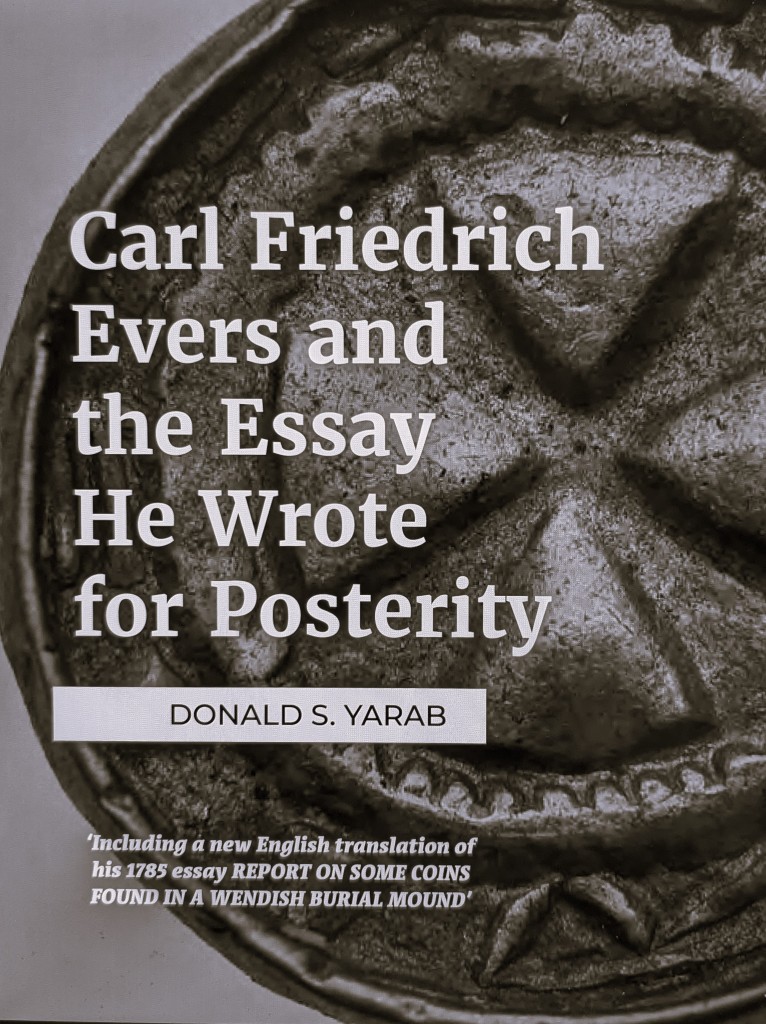
Pleased to have completed a translation of Evers’ 1785 essay, which still appears in scholarship today. Although Evers missed the mark in his attribution of the coins to the Wends, he was nonetheless one of the earliest to attempt a scholarly treatment of the coins now known as Randpfennige or cross denarii and certainly amongst the first to illustrate the coins.
A copy of the monograph I prepared to accompany the translation is available with a click of the button below:
The articles translated originally were published in Rocznik Kaliski in 2005 and 2010. An author associated with both articles was A. Kędzierski, perhaps the foremost authority on cross denarii in Poland. The articles translated are:
Kędzierski, A., Miłek, S. 2005. Mennica denarów krzyżowych w Kaliszu. Rocznik Kaliski 31, pp. 227-236.
Kędzierski, A. 2010. Czy istnieją denary krzyżowe Władysława Hermana? Rocznik Kaliski 36, pp. 255-262.
Kędzierski’s more recent works, of course, supersede and supplement these articles, but I thought it was still worth translating for better understanding the later works. The articles were translated strictly for use in personal scholarship. The translations can be accessed at the links below.
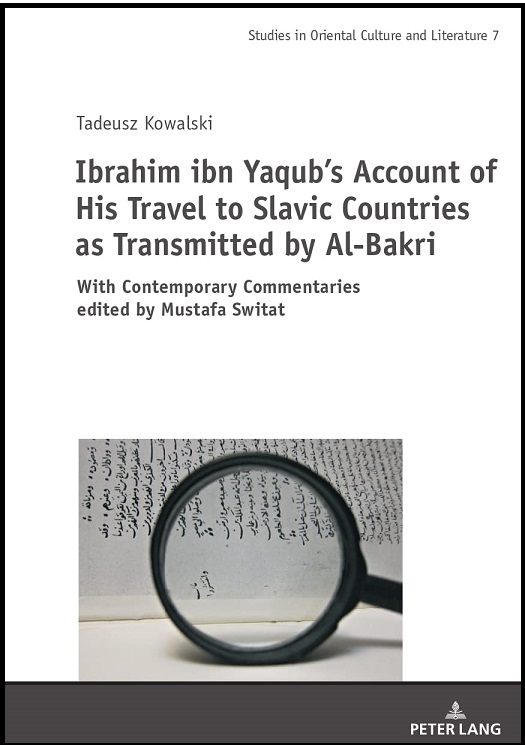
2022 Release of English Translation of Kowalski’s Invaluable Scholarship
12/30/31 UPDATE: A review of the work above was published in Polish by D. Sikorski in 2023 which is highly critical of the work for its lack of fidelity to Kowalski’s original scholarship and translation, as well as for its lack of familiarity with the scope and breath of all the relevant current scholarship. The review stated that the editor “made several decisions significantly changing the original shape of the old edition, in places even scandalously distorting it.“ The review illustrated a number of the editorial and factual failings in the work in detail. The reviewer summarized his opinion rather succinctly as follows: “Among the positive aspects of the presented book is primarily the availability in a widely understood language of T. Kowalski’s findings regarding Ibrahim ibn Jakub and his extensive and very detailed commentaries on al-Bakri’s text. On the negative side, the main issue is the removal of the critical apparatus from the Arabic text, depriving it of its scholarly character. Another serious flaw of the publication is the attempt to include two different English translations in one text. Thirdly, there is an inadequate discussion of the state of research on Ibrahim’s text.” I note that, on balance, the work still retains some utility for those who cannot access Kowalski’s work, or who cannot read works in Polish or Arab regarding Ibrahim’s Account; however, I share the reviewer’s enthusiasm for an upcoming release by French Arabist, Jean-Charles Ducène, who is preparing an edition of all fragments of Ibrahim’s Account for Monumenta Germaniae Historica – as the reviewer noted, the forthcoming edition by Ducène will render the above work and its deficiencies obsolete and eclipse T. Kowalski’s work in terms of the text.See review at:Sikorski, D. (2023). Review of Ibrahim ibn Yaqub’s Account of His Travel to Slavic Countries as Transmitted by al-Bakri, with Contemporary Commentaries, by M. Switat (Ed.), A. Waśkiewicz (Trans.). Roczniki Historyczne, 89, 179-186.
In February 2022, my post entitled “Remarks on Mieszko’s Payments to His Warriors: ‘Market Weights’ or ‘Good Coins (Dirhams) of Fixed Value’?” noted that the above referenced translation of Kowalski’s 1946 foundational scholarship [Relacja Ibrāhīma ibn Ja’ḳūba z podróży do krajów słowiańskich w przekazie al-Bekrīego (Relatio Ibrāhīm ibn Ja’ḳūb de itinere Slavico, quo traditur apud al-Bekrī). Cracow: PAU, 1946] was forthcoming. I have been eagerly awaiting its arrival ever since. It has finally been published and, this week, I received my long-anticipated copy.
Previous to this translation of Ibrahim ibn Yaqub’s references to Slavic lands based on his travels in the 960s, I relied on the very able and sound English translations of Dmitrij Mishin (Mishin 1996) and Paul Lunde and Caroline Stone (Lunde and Stone 2012). I was aware of the 1946 Kowalski scholarship because all translations of Ibrahim ibn Yaqub’s original texts ultimately draw from the well of Kowalski’s 1946 magisterial work. Unfortunately, I was unable to draw upon that well both because of the language barrier and the physical inaccessibility of the work. The newly released publication allows me and others who faced similar barriers to finally access much of Kowalski’s original 1946 scholarship. Unfortunately, four of the original supplementary essays by other scholars in the work were not republished due to copyright issues. Although the essays were likely outdated, it would no doubt have been beneficial to understand the full scholarly context of the original publication to have had those essays in translation.
The new publication does not, ultimately, disappoint, in spite of the copyright issues limiting the completeness of its re-publication in translation. Of course, the heart of the work is its presentation of the translation, from Arabic, of Ibrahim ibn Yaqub’s references to Slavic lands. The translation is remarkably detailed, thorough, and heavily footnoted. It quickly becomes apparent that this translation is the first I will consult when I am researching and writing, as it is clearly the foundation upon which my understanding will be built. However, when writing narratively, rather than for scholarly purposes, my quotations will continue to come from Mishin or Lunde and Stone. One quick illustrative example will suffice to demonstrate why.
In Kowalski 2022, the first lines of the Arabic text are translated as follows (citations removed): “Slavs are those born {belong to descendants (come from descendant)} of Mādhāy Ibn {the son of} Yāfith. Their dwellings {continually} [spread] from the north to the west.” In Lunde and Stone 2012, the same lines are translated as follows:”The Saqāliba are the descendants of Mādhāy, son of Yāfith (Japheth) and they dwell in the north-west.”
Obviously, Kowalski is a translation foundational to scholarly understanding (especially with its abundant citations) whereas Lunde and Stone is a translation useable in flowing narratives.
The translation also includes extensive, helpful philological commentary, a reconstruction of the biographical identity of Ibrahim ibn Yaqub, and a very useful discussion of proposed dates for his travels. Of particular note are two new commentaries by Mateusz Bogucki and Mateusz Wilk. Bogucki contributed an entry entitled “Archaeological Commentary on Ibrāhīm ibn Yaʿqūb’s Account” while Wilk contributed one entitled “Ibrāhīm ibn Yaʿqūb’s Account in the Context of Source Analysis.” Finally, there are biographical notes, indices of names, and the Arabic text which was translated.
Although I am thrilled to add this work to my library, and will consult it frequently, as I already have, I am somewhat disappointed that the opportunity presented by its publication to attach the most recent, more clarifying scholarship, when warranted, was not exploited more robustly. Several areas where such updates were possible were identified in a 2006 conference celebrating the 60th anniversary of the publication of Kalkowski’s 1946 work. The conference papers were published in Zaborski, Andrzej (ed.). Ibrahim Ibn Jakub i Tadeusz Kowalski w sześćdziesiątą rocznicę edycji, Cracow, 2008.
I wrote about one area of particular interest in my February 2022 post. Although that area was ostensibly addressed in Bogucki’s commentary in the new publication, Bogucki’s treatment of the issue is puzzling and incomplete, as I will discuss below.
In my February 2022 post, I quoted this excerpt from Mishin:
Ibrahim Ibn Ya’Qub reported the following regarding Mieszko and his realm: “The country of Mashaqqah [that is Mieszko, earlier in the text identified as ‘King of the North’] is the largest one among the countries [of the Slavs]. It abounds in food, meat, honey, and agricultural produce. The taxes are collected in market weights. Those are the salary of his men in every month, and each of them has a certain amount of them to get. He has three thousand warriors wearing coats of mail; a hundred of them is worth a thousand of other warriors in the battle. He gives those men clothes, horses, arms, and everything they need. If a child is born to one of them, he orders the child to be paid a maintenance, regardless of the latter’s sex. When the child grows, and he is a boy, he marries him and pays the dowry to her father. The dowry of the Slavs if very big, and they pay it in the same way as the Berbers do. If a man, thus, has two or three daughters, he gets rich, but if he has two sons, he becomes poor.”
Mishin (1996), pp. 187-188.
I noted that scholars have long focused on the references to the taxes collected and paid by Mieszko to support his three thousand warriors, the warriors which allowed Mieszko to expand, consolidate, and stabilize his realm because current scholarship does not support that Mieszko issued any coinage of his own. Rather, it shows that his son, Boleslaw Chrobry, struck Poland’s first denars between 992 A.D. and 1000 A.D. (see Suchodolski 2019 and Suchodolski 2015 for a discussion of which denars are contenders for earliest denars struck in Poland).
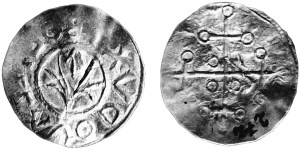
Denar of Boleslaus Chrobry of Poland, ca. 992-1000 A.D. Tree of life with arrow, inscription / cross. One of the contenders for the first coins struck in Poland. Photograph from Suchodolski 2015.
Accordingly, we must look elsewhere for what, exactly, Mieszko may have collected for taxes and used to pay his force of warriors.
Mishin, in his translation, indicated that Mieszko collected taxes in “market weights,” which were then used to pay his warriors a fixed monthly salary. As I noted in February 2022, Mishin based his translation, “market weights” for matāqīl al-murquatiyya, on Kowalski’s scholarship. Kowalski arrived at this rather peculiar translation because al-matāqīl or al-matākīl is the Arabic word for dinar, a gold coin, which did not circulate in Slavic lands and it was modified by a previously unattested or corrupted modifying word al-murquatīyya or al-marqatīya, which Kowalski rendered as market or commercial.
In a paper prepared for a 2006 conference celebrating the 60th anniversary of Kowalski’s remarkable scholarship regarding the testimony of Ibrahim Ibn Ya’qub, Andrzej Zaborski discussed this translation issue at length, noting that alternatives proposed over the years have include Byzantine money (a proposal widely rejected), legal tender/money, and his own hypotheses, “good coins of fixed value” or “coins of diminished value.” Zaborski concluded that the translation issue required further investigation. (Zaborski, pp. 64-65).
In February 2022, I suggested that the text itself had revealed all that it would yield and that the evidence on the ground, or rather in the ground, argued that “good coins of fixed value” should prevail as the preferred translation. To support this contention, I appealed to the numismatic hoard evidence. Specifically, I made the following argument:
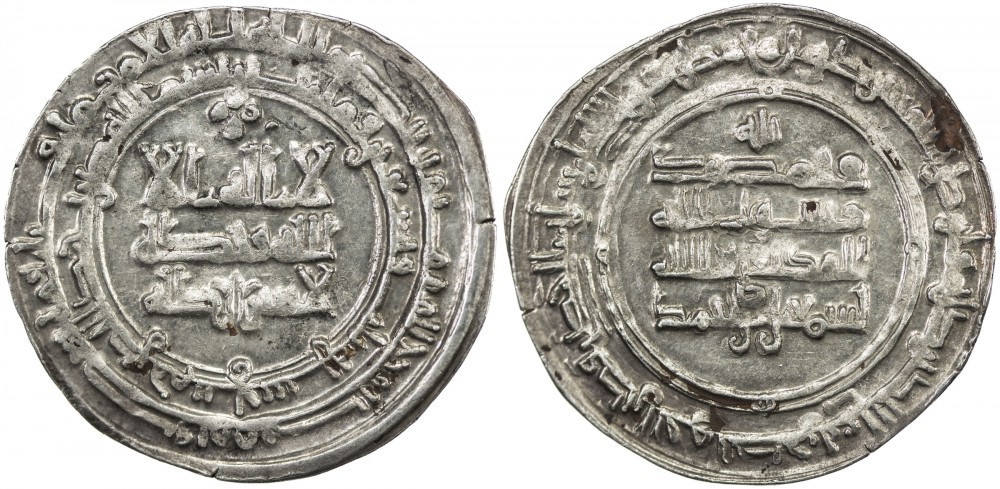
A Dirham of the type found in hoards in Poland from the early 10th century. SAMANID: Isma’il I, 892-907, AR dirham (2.89g), Balkh, AH293, A-1443. Photograph courtesy Stephen Album Rare Coins.
Mateusz Bogucki discussed the use of silver dirhams in Slavic lands in 2011, based on hoard evidence, and divided the time periods during which the hoards went into the ground into seven phases. Bogucki’s Phase III most aligns with the period during which Mieszko is referred to as collecting taxes and paying warriors salaries. Here is, in part, what Bogucki has to say about that period: “Phase III (early tenth century). At the turn of the ninth and tenth centuries, an important change in dirham importation may be observed. A significantly greater number of hoards are known from the period 900-40, and they are much larger (up to 1,000 coins). They are found in eastern Poland, Great Poland and Pomerania. Dirhams are almost exclusively whole coins. Some complete (undamaged) ornaments also occur in the hoards. Analysis of the coins and ornaments demonstrates that, during this phase, two important routes were in use. Coins found in Pomerania came via the Baltic, whereas coins in the eastern parts of Poland and Great Poland arrived mainly via the eastern land-route” (Bogucki (2011), p. 136).
In 2016, Bogucki explicitly tied the influx of dirhams into Poland to Mieszko’s use of mercenaries to consolidate his realm: “Assuming the chronology of the deposits is solid, it may even be suggested that the influx of silver to Wielkopolska from the East preceded the Pomeranian route by more than a decade and was initially greater in importance. The issue of the commodity exchanged for silver in the early-Piast state is still difficult to ascertain. It is apparent that the metal was needed to pay for mercenary services and to develop a proper network of administration and infrastructure based on strongholds. Archaeological research proves that the first half of the 10th century, when the core of the state in Wielkopolska was being established, brought destruction to a large percentage of tribal stronghold centres. Juxtaposing these facts with the chronology of the influx of oriental silver into Wielkopolska (discussed above) and the information found in written Arab sources, we may conclude that the economic basis for building the earliest Piast state came from selling slaves – the inhabitants of the destroyed tribal centres of Wielkopolska. By eliminating their hostile neighbours, the Piasts acquired silver, which they could use to consolidate their power” (Bogucki 2016, p. 246).
Based on the above, we know that Mieszko had access to good quality dirhams, in quantity, and that the dirhams were not yet always reduced to intensely fragmented hack-silver (where they would need to be regularly weighed to be paid out as a salary) as they were in later phases (such as Phase IV, from 970-1010 A.D., which Bogucki noted often included coins and items that were “intensely fragmented”). This adds support to Zaborski’s hypothesis, and my contention, that the contentious translation should be “good coins of fixed value” rather than the unsatisfactory and less supportable “market weights.” I note that Bogucki, in a 2005 paper, made passing reference to the issue of the form of the warrior salaries (in an article that was poorly translated into English) without addressing the underlying translation issue:
In my opinion buying meat by silver doesn’t hinder from buying by the silver politically loyalty. In the matter of salary and taxes it’s better to quote the words of Ibrahim: ‘Received by him (king Mieszko I) taxes are trade weights. They are used as payment for his mans (knights). Each month to each man it’s a known number of it’ (Kowalski 1946, 50). Here is necessary to comment the term trade weights –mataqil murquatiyya. Ibrahim might have known the name of dirhems, the western European denars he called Kinszar, so I think that Ibrahim noticed the hack silver, taken not for pieces, but for weight. This relation doesn’t mean that salary and taxes weren’t paid in animals, grain or any other goods. But it shows, that in this matter it isn’t possible to give only one single answer.
Bogucki (2005), p. 1152.
So, in 2005, Bogucki published an article translating the Arabic phrase at issue as trade weights. He does so because he views the currency in circulation in the Polish lands at the time of Ibrahim ibn Yaqub’s writing as either whole dirhams or, more likely, intensely fragmented hack-silver. So, how does Bogucki view the issue in his commentary in the new translation in 2022?
Bogucki writes the following:
Ibrahim also wrote that in Mieszko I’s country, taxes were levied in al-matākīlal-marqatiya. This term was originally rendered as ‘commercial weights’; however, W. Kubiak has proved that the term actually denoted coins. Ibrahim seems to have used a familiar term to describe collecting fragmented silver by weight. The crucial information is that taxes were collected in metal coins. Naturally, it is difficult to assume that each peasant individually paid the prince in silver, but a complex fiscal system, where a peasant or a craftsman paid his due to the relevant official (the town comes) in produce, animals or products, and the official, in his turn, paid the prince with silver seems highly probable. Incidentally, Arab dirhams were widely used in Mieszko I’s country, a fact that Ibrahim fails to mention (he did note their use at Otto I’s court, however). It is worth recalling here that in the light of the most recent research, the slave trade, in which slaves were sold for Arab silver, played an important role in building Mieszko I’s power. Naturally, direct archaeological material does not corroborate the slave trade, but wide-scale archaeological studies seem to confirm this thesis.
Kowalski (2022), pp. 168-169.
Although it is gratifying that Bogucki is seemingly prepared to render the disputed phrase as referring to coins and no longer referring to weights, it is unclear how he would actually translate it, if at all. Is he proposing that the words be translated, as Kubiak did, as market money, or current coin, or market coin? I note that Zaborski, in reviewing Kubiak’s scholarship, was troubled by Kubiak’s interpretation as it relied on a translation that embraced etymology for market that was only attested in the 20th century in the Arabic dialect of the Jews of Algiers (Zaborski, pp. 48 and 65). The brevity of Bogucki’s comments on the issue leave these questions unaddressed, unfortunately.
On balance, however, the scholarly debate has advanced sufficiently that any translation of the phrase involving weights may be set aside. For my own purposes, I will leave the phrase untranslated, as Lunde and Stone do in their translation, and provide a note indicating that current scholarship understands the phrase as meaning current coin (e.g., dirhams and/or hack-silver).
REFERENCES/SOURCES: (Blue boxes may be clicked to be taken to reference works available online for review. Red boxes indicate reference works are not available for online review. If a link for a blue box is no longer working, please advise me of such as nca@northcoastantiquarian.com. Thank you.).
Note: Zabroski’s work is a compilation of scholarly papers read at a May 2006 conference celebrating the 60th anniversary of the publication of the first and most critical edition of Ibrahim Ibn Ya’Qub’s reports on the Slavs, which had been prepared and published by Tadeusz Kowalski [Kowalski, Tadeusz. Relacja Ibrāhīma ibn Ja’ḳūba z podróży do krajów słowiańskich w przekazie al-Bekrīego (Relatio Ibrāhīm ibn Ja’ḳūb de itinere Slavico, quo traditur apud al-Bekrī). Cracow: PAU, 1946].
Today, I was researching the early medieval coins known variously as Sachsenpfennige, Wendenpfennige, Randpfennige, Hochrandpfennige, Denary krzyzowe, or cross denarii. As part of this research, I have been consulting the works of the earliest writers to discuss these coins, including Evers, Mader, and Lelewel. When consulting Lelewel’s Numismatique du Moyen-âge, considérée sous le rapport du type (Paris, 1835), I was absolutely thrilled with Lelewel’s sense of humor and writing style. In truth, I had a hardy chuckle when I read the section of his work which led up to his discussion of the types which are the subject of my research.
My free translation of the text that gave rise to my pleasure follows. It discusses the mutilated inscriptions, inscription fragments, or random letters, which Lelewel noted as appearing on some early medieval German coins.
The coinage of Germany offers more examples of deformity than any other; it has sometimes enigmatically imitated Anglo-Saxon coins, most often only having the remains of an inscription and thus becoming infinitely obscure. I believe there are pieces that have the letters mixed up aimlessly, without reason or symmetry. Anglo-Saxon riddles are more inventive and complete and hold more to a complicated and organized method. German riddles are rather more puzzling with their raw obscurity, outdoing all the others. Letters are mixed aimlessly, without reason, without symmetry. The captions are truncated and mutilated, and the small number of letters that are preserved are not spared harm, to such an extent that all traces to be deciphered disappear. It is not the incapacity of the artist that breaks the necks of legends and letters but his whim, or his willful inattention, or his inadvertence. You see the letters reversed ass-over-head. Sometimes they lie on their backs, sometimes crawl belly to the ground; some walk with firm feet, others turned with their legs upside down. In their continual somersaults, they appear lame and bent, their limbs are dislocated, shattered, or scattered.
Part III, p . 155 ff.
Lelewel is not wrong. He expresses his indignation with an exasperated eloquence that I have rarely encountered but which I greatly appreciate!








 Northcoast Antiquarian