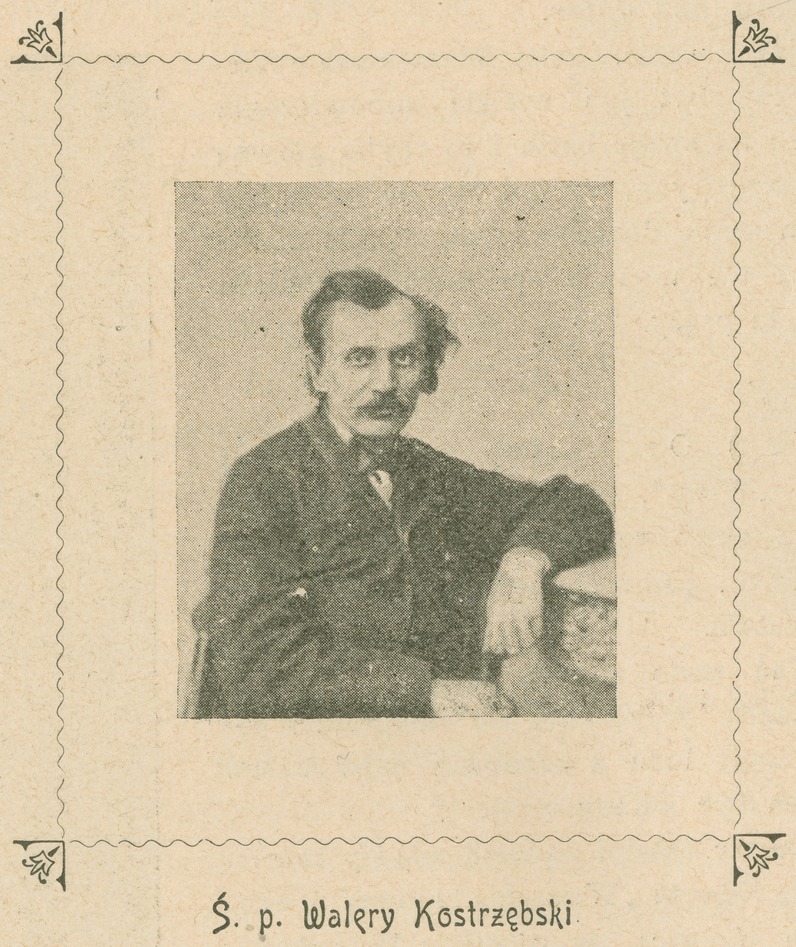
Walery Kostrzębski (8 December 1828 – 26 October 1899) was an eminent figure in Polish numismatics, whose star shone quite brightly in that lustrous circle of luminaries which included Beyer, Müller, Stronczyński, Kiska, and Przyborowski.
Kostrzębski worked as an assayer at the Warsaw Mint from 1850 through its closing in 1867. In carrying out his duties at the mint, he had an opportunity to view all the interesting numismatic materials that flowed into the mint to be melted, which sparked an intense scholarly interest in numismatics. After the mint was closed, Kostrzębski devoted himself with great enthusiasm to numismatic studies, especially of the medieval period. At the time of his death, he was undertaking a careful and exacting study of cross denars and their place in Polish numismatics.
Cross Denarii (formerly known as Sachsenpfennige or Wendenpfennige)
His work was instrumental to the studies of Marian Gumowski and the great numismatists that followed and is still routinely cited in the studies of cross denars to this day, most recently in Adam Kędzierski’s magisterial Skarb Słuszków I. Denary krzyżowe z przełomu XI i XII wieku (The Słuszków I hoard. Cross denarii from the end of the 11th and the beginning of the 12th century).
The articles collected for your convenience include a remembrance written in honor of Kostrzębski after his death and a series on cross denars that was published posthumously in his name which represented his views on what were then often called Wendenpfennige but which he called Slav denars.
Contents, which include the following, are accessible by pressing the button found below:
Bog, Walenty (1899). “Wspomnienia,” Wiadomości Numizmatyczno-Archeologiczne, Vol. IV, No. 4, p. 126-128.
Kostrzębski, Walery (1900). “O denarach Słowian zwanych wendyjskimi,” Wiadomości Numizmatyczno-Archeologiczne, Vol. IV, no.1, pp. 257-261.
Kostrzębski, Walery (1901). “O denarach Słowian zwanych wendyjskimi: ciąg dalszy,” Wiadomości Numizmatyczno-Archeologiczne Vol. IV, no. 1, pp. 303-307.
Cross Denar similar to those found in the Słuszków Hoards CROSS DENAR: Anonymous, ca. 1070-1100, AR pfennig (0.79g), Gumowski-59; Dannenberg-1341, Bishop’s crozier surrounded by pellets // cross with pellets and crescents in quarters, raised rims of the randpfennig type, possibly struck at Halle-Giebichenstein or Merseberg, Fine to VF, S. The early pfennige of Saxony have seen a number of different attributions over the years. Some were known as “wendenpfennige” from the native Slavic peoples of eastern Germany and Pomerania and others as “randpfennige” (rim pfennigs) from their up-raised edges and attributed to the early Polish bishoprics and kingdoms. More recent studies have concluded they were civic issues of various eastern cities, with places such as Bremen, Halle-Giebichenstein, Meissen, Merseberg, and Naumburg being cited as points of origin. Ex Stephen Album Rare Coins Auction 31, Lot 1309 (2018).
The first hoard from the village of Słuszków near Kalisz was discovered accidentally in 1935. Krzysztof Dąbrowski, head of the archaeological department of the Institute of the History of Material Culture of the Polish Academy of Sciences (Kalisz), and later director of the State Archaeological Museum, secured the hoard for the state, thereby preserving it for study. The hoard, as it currently survives, is presently located in the Muzeum Okręgowe Ziemi Kaliskiej (District Museum of the Kalisz Region). The deposit has over 13,000 pieces, largely comprised of the later varieties of cross denarii, but also large module denars of the palatine Sieciech, Western European coins, and silver ornaments and “silver cakes”. The content and deposit date of this hoard provided scholars with the opportunity to address the issue of the origin of the later types of cross denars, which were the most common circulating coin in eleventh-century Poland. The reader is encouraged to review the sources linked below for a survey of the advances which the hoard has allowed. I have included an English translation of one of the most important articles for your convenience.
Surprisingly, the actual discovery location of the 1935 hoard in Słuszków is still unknown, despite repeated efforts by archaeologists to relocate it. Recently, however, it was reported by Archeologia Żywa (see articles cited below) that archaeologists from Kalisz and Warsaw were successful in finding an additional deposit of 6,500 silver coins in a corn field near the village of Słuszków, arranged in linen pouches, along with silver cakes, fragments of lead, and four gold rings, while searching for the original discovery location in November 2020.
Adam Kędzierski, an extraordinary scholar and archaeologist with the Interdisciplinary Center of Archaeological Research (Kalisz) of the Polish Academy of Sciences, reported the circumstances of the find: “According to the official version, the [original 1935 hoard, Słuszków 1] was hidden at the intersection of the border of three plots, located in the northern part of the village. This information turned out to be false, which is why during this year’s exploration work, attention was focused on the field closer to the road. This place was identified by the Rev. Jan Stachowiak, who obtained the information from the original finders of the hoard in the early 80s.” Kędzierski said the new hoard of denars was found within two days of the commencement of archaeological work in a well-preserved clay vessel “filled to the brim” located about 12 inches below the surface.
From my perspective, one of the gold rings in the recent hoard is most historically intriguing and raises the most interesting questions. The ring at issue is inscribed, in Cyrillic, Господ]ипомъзи [ра]бесвое[и] Марии. Adrian Jusupović, of the Institute of History (Warsaw) of the Polish Academy of Sciences, translates this inscription to “Lord help your servant Maria.” Kędzierski, after reviewing the coins in the latest hoard, which is now called Słuszków 2, has determined that, as the deposit can be dated to around 1105 A.D., the ring hypothetically can be attributed to the wife of Duke Casimir the Restorer of Poland, Duchess Maria Dobroniega (1010/1016 – 1087 A.D.), daughter of Grand Duke Vladimir of Kiev.
I hope to prepare a comprehensive summary of all the pertinent literature, with appropriate pictures, in the near future, outlining the understanding of the role of cross denars in Polish numismatic history by scholars.
SOURCES/REFERNCES:
Blue buttons are linked to the articles referenced. The first article is a new translation, in English, of the article immediately below it. If you have suggestions for improvements in the translation, please do not hesitate to contact me at nca@northcoastantiquarian.com.
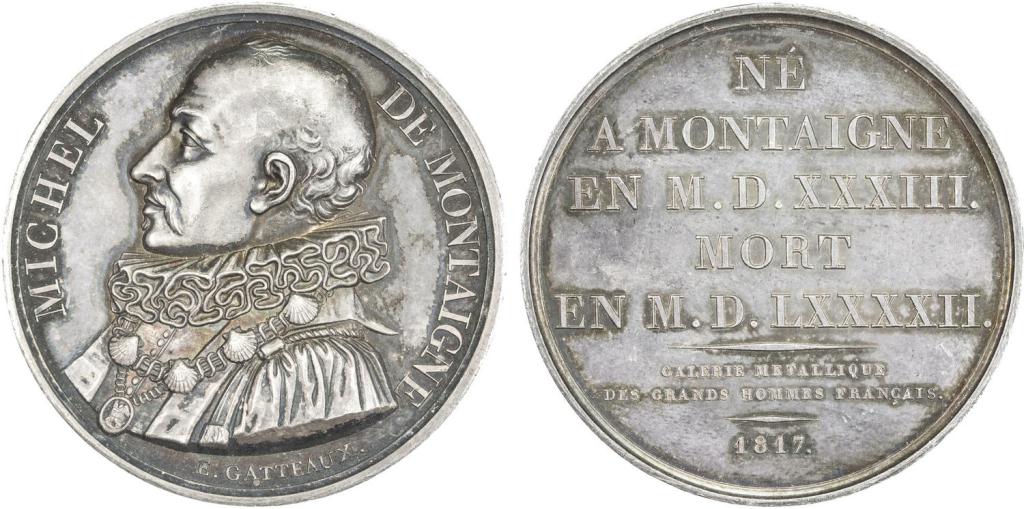
AR medal, 1817, 41mm by E. Gatteaux of Michel De Montaigne. Bust of De Montaigne left, MICHEL DE MONTAIGNE around, engraver E. GATTEAUX below // NE’ / A MONTAIGNE / EN M. D. LXXXIII. / MORT / EN M.D.LXXXXII. / GALERIE METALLIQUE / DES GRANDS HOMMES FRANCAIS. / 1817. Ex: STEPHEN ALBUM RARE COINS, AUCTION 29, LOT 748. Image and description courtesy Stephen Album Rare Coins.
“I quote others only in order the better to express myself.”
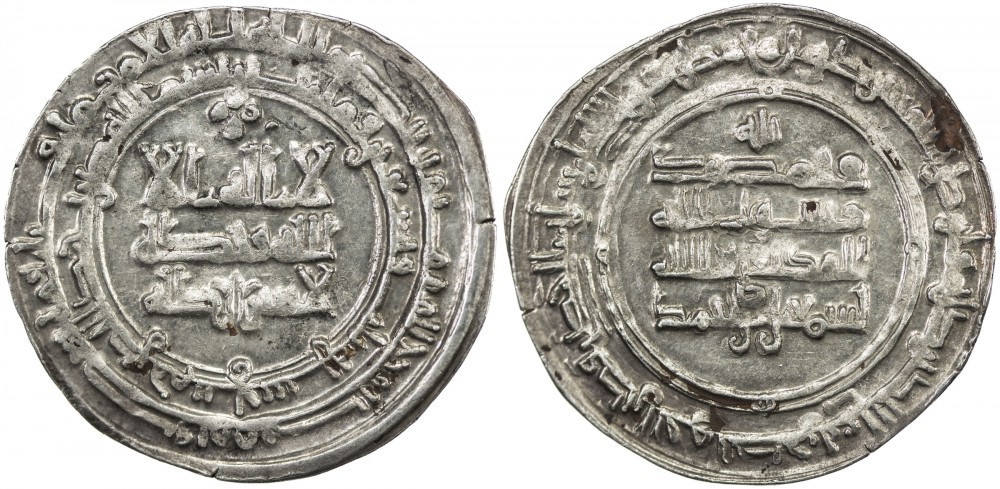
A Dirham of the type found in hoards in Poland from the early 10th century. SAMANID: Isma’il I, 892-907, AR dirham (2.89g), Balkh, AH293, A-1443. Photograph courtesy Stephen Album Rare Coins.
Widukind of Corvey’s Deeds of the Saxons [Res gestae saxonicae], records the following: “They happily received Wichmann, who then wore down the barbarians, who lived even further away, with numerous battles. Wichmann defeated King Miesco, who ruled over the Slavs called the Licicaviki, in two battles, and killed his brother. He then extorted a great quantity of booty from them” (Widukind of Corvey, p. 140).
Widukind’s entry regarding Mieszko, typically attributed to the year 963 A.D., is generally identified as the earliest reference to Mieszko and the polity he reigned over, latterly known as Poland. However, some scholars have posited that the fragmentary reports on the Slavs prepared by Ibrahim Ibn Ya’Qub al-Isra’ili at-Turtushi, which were latterly preserved through their incorporation into Al-Bakrī’s Kitāb al-masālik wa’l-mamālik (Book of the Roads and Kingdoms), may have reflected travels that occurred as early as 961-962 A.D., not the usually posited 965-966 A.D., and thus antedate Widukind’s first entry regarding Mieszko and his Slavs (Zaborski, p. 8).
Miezko I, the historically attested founder of Poland’s Piast Dynasty
Ibrahim Ibn Ya’Qub reported the following regarding Mieszko and his realm: “The country of Mashaqqah [that is Mieszko, earlier in the text identified as ‘King of the North’] is the largest one among the countries [of the Slavs]. It abounds in food, meat, honey, and agricultural produce. The taxes are collected in market weights. Those are the salary of his men in every month, and each of them has a certain amount of them to get. He has three thousand warriors wearing coats of mail; a hundred of them is worth a thousand of other warriors in the battle. He gives those men clothes, horses, arms, and everything they need. If a child is born to one of them, he orders the child to be paid a maintenance, regardless of the latter’s sex. When the child grows, and he is a boy, he marries him and pays the dowry to her father. The dowry of the Slavs if very big, and they pay it in the same way as the Berbers do. If a man, thus, has two or three daughters, he gets rich, but if he has two sons, he becomes poor” (Mishin, pp. 187-188).
“Wichman defeated and mortally wounded, surrenders to Mieszko I, handing over his sword to the ruler” – illustration from “Album de Wilna” by Jan Kazimierz Wilczyński. (1787). Source: Muzeum Narodowe w Krakowie – Photograph by Karol Kowalik
What is of particular interest to the numismatically inclined, and has been of interest to generations of scholars, are the references to the taxes collected and paid by Mieszko to support the three thousand warriors, warriors that allowed Mieszko to expand, consolidate, and stabilize his realm and, as recorded in a second entry by Widukind, become friend of the emperor and enjoy ultimate victory over Wichman (Widukind of Corvey, pp. 143-145).
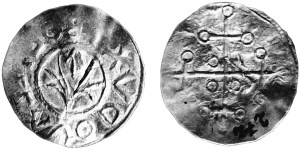
Denar of Boleslaus Chrobry of Poland, ca. 992-1000 A.D. Tree of life with arrow, inscription / cross. One of the contenders for the first coins struck in Poland. Photograph from Suchodolski 2015.
As current scholarship does not support that Mieszko issued any coinage of his own and reveals that his son, Boleslaw Chrobry, struck Poland’s first denars between 992 A.D. and 1000 A.D. (see Suchodolski 2019 and Suchodolski 2015 for a discussion of which denars are contenders for earliest denars struck in Poland), we must look elsewhere for what, exactly, Mieszko may have collected for taxes and used to pay his force of mercenary warriors.
Mishin, in his translation of Ibrahim Ibn Ya’Qub, indicated that Mieszko collected taxes in “market weights,” which were then used to pay his warriors a fixed monthly salary. This peculiar translation, “market weights,” is ultimately based on the scholarship of Tadeusz Kowalski, who proposed this translation (matᾱqῑl al-murquatiyya) (because the Arabic word for “dinar” (matᾱqῑl) was followed by a corrupted (?) or unattested Arabic word modifying it which has stymied the best attempts of scholars searching for an appropriate translation for generations but which some, including Kowalski, viewed as meaning market (al-murquatiyya) – and a market dinar would, hypothetically be most appropriately translated as a “market weight”.
In a paper prepared for a 2006 conference celebrating the 60th anniversary of Kowalski’s remarkable scholarship regarding the testimony of Ibrahim Ibn Ya’qub, Andrzej Zaborski discussed this translation issue at length, noting that alternatives proposed over the years have include Byzantine money (a proposal widely rejected), legal tender/money, and his own hypotheses, “good coins of fixed value” or “coins of diminished value.” Zaborski concluded that the translation issue required further investigation. (Zaborski, pp. 64-65). I suggest that the text has revealed all that it will yield and that the evidence on the ground, or rather in the ground, argues that “good coins of fixed value” should prevail as the preferred translation. To support this contention, I appeal to the numismatic hoard evidence.
Mateusz Bogucki discussed the use of dirhams in Slavic lands in 2011, based on hoard evidence, and divided the time periods during which the hoards went into the ground into seven phases. Bogucki’s Phase III most aligns with the period during which Mieszko is referred to as collecting taxes and paying warriors salaries. Here is, in part, what Bogucki has to say about that period: “Phase III (early tenth century). At the turn of the ninth and tenth centuries, an important change in dirham importation may be observed. A significantly greater number of hoards are known from the period 900-40, and they are much larger (up to 1,000 coins). They are found in eastern Poland, Great Poland and Pomerania. Dirhams are almost exclusively whole coins. Some complete (undamaged) ornaments also occur in the hoards. Analysis of the coins and ornaments demonstrates that, during this phase, two important routes were in use. Coins found in Pomerania came via the Baltic, whereas coins in the eastern parts of Poland and Great Poland arrived mainly via the eastern land-route” (Bogucki (2011), p. 136).
In 2016, Bogucki explicitly tied the influx of dirhams into Poland to Mieszko’s use of mercenaries to consolidate his realm: “Assuming the chronology of the deposits is solid, it may even be suggested that the influx of silver to Wielkopolska from the East preceded the Pomeranian route by more than a decade and was initially greater in importance. The issue of the commodity exchanged for silver in the early-Piast state is still difficult to ascertain. It is apparent that the metal was needed to pay for mercenary services and to develop a proper network of administration and infrastructure based on strongholds. Archaeological research proves that the first half of the 10th century, when the core of the state in Wielkopolska was being established, brought destruction to a large percentage of tribal stronghold centres. Juxtaposing these facts with the chronology of the influx of oriental silver into Wielkopolska (discussed above) and the information found in written Arab sources, we may conclude that the economic basis for building the earliest Piast state came from selling slaves – the inhabitants of the destroyed tribal centres of Wielkopolska. By eliminating their hostile neighbours, the Piasts acquired silver, which they could use to consolidate their power” (Bogucki 2016, p. 246).
Based on the above, we know that Mieszko had access to good quality dirhams, in quantity, and that the dirhams were not yet reduced to hacksilber (where they would need to be regularly weighed to be paid out as a salary) as they were in later phases (such as Phase IV, from 970-1010 A.D., which Bogucki noted often included coins and items that were “intensely fragmented”). This adds support to Zaborski’s hypothesis, and my contention, that the contentious translation should be “good coins of fixed value” rather than the unsatisfactory and less supportable “market weights.” I note that Bogucki, in a 2005 paper, made passing reference to the issue of the form of the warrior salaries (in an article that was poorly translated into English) without addressing the underlying translation issue being discussed in this post :
In my opinion buying meat by silver doesn’t hinder from buying by the silver politically loyalty. In the matter of salary and taxes it’s better to quote the words of Ibrahim: ‘Received by him (king Mieszko I) taxes are trade weights. They are used as payment for his mans (knights). Each month to each man it’s a known number of it’ (Kowalski 1946, 50). Here is necessary to comment the term trade weights –mataqil murquatiyya. Ibrahim might have known the name of dirhems, the western European denars he called Kinszar, so I think that Ibrahim noticed the hack silver, taken not for pieces, but for weight. This relation doesn’t mean that salary and taxes weren’t paid in animals, grain or any other goods. But it shows, that in this matter it isn’t possible to give only one single answer.
Bogucki (2005), p. 1152.
I suspect if Bogucki would reflect further on the issue, and consider the later arguments of Zaborski and the nature of the hoard evidence when Mieszko was doing the bulk of the consolidation of his polity, he might abandon his attachment from market weights to good coins of fixed value. Yet, it is important to take note of the hacksilber hoards and what they may represent and for that, I direct readers to the comments in the article below by Florin Curta.
And finally, as if in response to the 60th Anniversary Conference honoring Kowalski’s scholarship, an updated edition of his work, translated into English, will soon be released. The editor of the new edition was Mustafa Switat, a Research Fellow with the University of Warsaw. Of course, I am most eagerly awaiting to see how the most recent scholarship addresses the issue of the translation issue discussed above and whether Zaborski’s proposed resolution is adopted or perhaps another solution is at hand.
REFERENCES/SOURCES: (Blue boxes may be clicked to be taken to reference works available online for review. Red boxes indicate reference works are not available for online review. If a link for a blue box is no longer working, please advise me of such as nca@northcoastantiquarian.com. Thank you.).
Note: Zabroski’s work is a compilation of scholarly papers read at a May 2006 conference celebrating the 60th anniversary of the publication of the first and most critical edition of Ibrahim Ibn Ya’Qub’s reports on the Slavs, which had been prepared and published by Tadeusz Kowalski [Kowalski, Tadeusz. Relacja Ibrāhīma ibn Ja’ḳūba z podróży do krajów słowiańskich w przekazie al-Bekrīego (Relatio Ibrāhīm ibn Ja’ḳūb de itinere Slavico, quo traditur apud al-Bekrī). Cracow: PAU, 1946]. The May 2006 conference concluded by calling for an updated edition of Kalkowski’s work to be published, with appropriate emendations to reflect the latest scholarship, and for it to be translated into English. Fortunately, the conference’s appeal has been answered as the following is soon to be released: Kowalski, Tadeusz. Ibrāhīm ibn Yaʿqūb’s Account of His Travel to Slavic Countries as Transmitted by Al-Bakri with Contemporary Commentary. Ed. Mustafa Switat. Trans. Agnieszka Waskiewicz.
In The Origins of Money (Philip Grierson. The Origins of Money. Research in Economic Anthropology, Vol. 1, 1978, pp. 1-35), Grierson, in discussing the origin of monetary values, noted that monetary values pre-existed market economies and that monetary values were well-attested as existing in “customary” and “command” pre-market societies. He stated that “[i]n such societies [monetary values] provided a scale for evaluating personal injuries in the institution which the Anglo-Saxons termed the wergild, and it is in this institution that the origin of money as a standard of value must, I believe, be sought. The practice of wergild, that of paying a compensation primarily for the killing of a man but the term by extension covering compensations for injuries to himself or his family and household, is most familiar to us in its Indo-European setting” (p.12). Grierson proffers various supporting evidence for his thesis, but one linguistic and one quite trivial and ancillary struck my fancy.
Grierson’s linguistic argument presents concisely and rather convincingly the connection between monetary value and its compensatory use in its opening paragraph (although, I note, that his evidence, linguistic and otherwise, does not, of course, dilute other arguments for the origins of money that are often discussed that are unrelated to markets):
“Our best approach to the problem is through the testimony of language, often the most revealing key to the structure of early societies. It has naturally not been neglected by writers on early money. Everyone is familiar with the connection of pecunia and pecus – this was known to the Romans themselves – of fee and O.E. feoh, cow (mod. Germ. Vieh), of the derivation of shilling and rouble (rubl’) from verbs meaning to cut (skilja, rupit’. i.e., pieces of precious metal), of the relationship of talent, lira, and pound with the process of weighing metal. What we are concerned with, however, are not particular units but the notion of money in general and how it was first used. Much of our own vocabulary is borrowed from Latin by way of French and is not relevant to Germanic antiquities, though one may note in passing that pay comes through Fr. Payer from Lat. pacare “to pacify” ‘to make peace with,” and that behind the idea of appeasing your creditor lies the more revealing pacere, to come to terms with the injured party. Si membrum rupsit, ni cum eo pacit, talio esto, “If a limb is injured, unless peace is made with him (i.e., with the injured party, by paying compensation), there shall be retaliation,” was the Roman doctrine, as set out in the Law of the Twelve Tables” (footnotes redacted, pp. 15-16).
After exploring his linguistic argument, Grierson noted that it might be difficult to generalize from the available “compensatory law codes” for the pre-market Germanic, Celtic and Russian societies to other early pre-market Indo-European societies but he noted that the available codes provide an extraordinary wealth of detail. In this regard, he noted that the compilers of the codes “sometimes seem to be trying to provide for every contingency, of however improbable a nature.” “The other is their occasional frivolity, for some of their provisions, especially in the Celtic codes, must have been inserted more or less in fun. How else can one explain … the responsa of Cormac Mac Art and Cennfaeladh in the Book of Aicill providing compensations for bee stings – Irish bees were apparently of unexampled ferocity – but allowing a deduction of the value of a bee from the compensation if the bee was killed by the injured party? Clearly such provisions were not meant to be taken seriously” (p 17).
The unexampled ferocity of Irish bees had me immediately scampering to find out more about the Book of Aicill, its authors, and precisely what it said about Irish bees and how their attacks were to be compensated. Having examined the Book of Aicill, I would disagree that frivolity was intended. Either the section was intended in earnest or was intended as an example of how an arbiter should reason through similar, but perhaps more likely and just as serious, injuries. For here is what the pages dedicated to the ferocious Irish bees said in the book:
Injuries in the case of bees. That is, a hive is the fine for the blinding, and two hives for the killing of a person; and a book mentions the hive for the blinding, and it does not mention two hives for the killing; but as there is twice the ‘eric’-fine due from a person for killing a person that there is for blinding him, it is right from this, that it is twice the ‘eric’-fine which is due from a bee for blinding him that should be due for killing him. A man’s full meal of honey is the fine for drawing blood; a fifth of the full meal for an injury which leaves a lump, three-fourths of it for a white blow which leaves a sinew in pain, or green, or swollen, or red; if it be one or two of these injuries that are present, it (the penalty) is one-fifth with half one-fifth; one-fifth only for his natural white wound. A hive is the fine for the death-maim necessitating the removal of a limb, but if there be no removal of a limb, it (the fine) is a hive, less one-seventh; two-thirds of it for a ‘cumhal’-maim; one-third of it for a tent-wound of six ‘seds’; one-sixth or one-seventh part is to be added to it for the tent-wound of seven ‘seds.’
From the owners of the bees these fines are due for the persons. What shall be due from the persons for the bees? If the person has killed the bee while blinding him or inflicting a wound on him until it reaches bleeding, a proportion of the full meal of honey equal to the ‘eric’-fine for the wound shall be remitted in the case; the remainder is to be paid by the owner of the bee to the person injured. If the person killed the bee while inflicting a white wound upon him, they (the fines) shall be set off against each other. If the person killed the bee while inflicting a lump-wound on him, four-fifths of the fine shall be remitted, and one-fifth paid. If it was while inflicting a white wound which left a sinew under pain, or green, or swollen, or red, he killed the bee, three-fifths of the fine are to be remitted, and two-fifths paid. If it was while inflicting one or two of them (the wounds) he killed the bee, half one-fifth is to be remitted, and one-fifth paid. From the owners of the bees these fines are due for the persons, and from the persons for the bees. What shall be due from the owners of the bees for the animals injured, and from the owners of the animals for the bees? If the bee has blinded or killed the animal, what shall be the fine for it? The proportion which the hive that is due from the owners of the bees bears to the fine for their blinding the person, or which the two hives that are due for their killing him bear to the natural body-fine of the person, is the proportion which the full natural dire-fine of the animal shall bear to that fine which shall be due from the bee for blinding or killing it (the animal). One-half of what is due for killing it is due for blinding it, or inflicting a death maim which necessitates the removal of a limb; if there be no removal of a limb, it (the fine) is one-half, less half one fifth, if it be a quadruple animal; or one-half, less the half of one-half, if it be an animal of double. Two-thirds of this are due for a ‘cumhal’-maim; one-third for a tent wound of six ‘seds’; and an equivalent of a sixth or seventh part is to be added to it for a tent- wound of seven ‘seds,’ over and above what shall be due for the tent-wound of six ‘seds.’
What shall be due from a bee for making the animal bleed? The proportion which the full meal of honey that is due from a bee for making a person bleed bears to the hive that is due from it for killing him, is the proportion which the ‘eric’-fine for blinding or killing the animal bears to that which will be due from a bee for making it bleed, i.e. four-fifths is the proportion for its lump-wound, three-fifths for its white wound which leaves a sinew in pain, or green, or swollen, or red. If it be one or two of them that are inflicted, it (the fine) is two-fifths and half one-fifth. Two-fifths is the proportion for a natural white wound. From the owners of the bees these fines are due for the animals. What shall be due from the owners of animals for the bees? If the animal killed the bee while in the act of blinding it, or killing it, or inflicting a wound upon it until it reaches bleeding, a proportion of the ‘eric’-fine for the wound equal to a full meal of honey shall be remitted, and the remainder shall be paid by the owner of the bee to the owner of the animal. If it was while in the act of causing the animal to bleed it (the animal) killed the bee, they i.e. the bleeding of the animal and the killing of the bee, shall be set off against each other; or else, indeed, according to others, the difference which is between causing a person to bleed and causing an animal to bleed is the difference that shall be paid by the owner of the animal to the owner of the bee. If it was while inflicting a lump-wound on it the bee was killed, four-fifths shall be remitted, and one-fifth, the difference, paid. If it was while inflicting a white wound which left a sinew in pain, or green, or swollen, or red, the bee was killed, three fifths shall be remitted, and two-fifths, for the difference, paid. If the bee was killed while inflicting one or two of them (the wounds), two-fifths and a half shall be remitted, and two-fifths and a half, for the difference, paid. If the bee was killed while inflicting a natural white wound on it (the animal), one fifth shall be remitted, and four-fifths, for the difference, paid.
If there were many gardens, or if there were many bees, lots are to be cast to discover from which garden the injury was done; and when it shall have been discovered, if there were many possessions in that garden, lots are to be cast on them till the particular possession be discovered from which the injury was done; and when it shall have been discovered, if there were many hives’ in that possession, lots are to be cast upon them until the particular hive from which the injury was done shall have been discovered. And the reason why this is done is, that a bad hive may not be given in place of a good hive, or that a good hive may not be given in place of a bad hive; but that the very hive from which the injury was done may go for the injury. If it was intentionally or inadvertently in unlawful anger the person killed the bee, a man’s full meal of honey shall be given as compensation, and four full meals as dire-fine. If it was inadvertently in lawful anger he killed the bee, a man’s full meal of honey is given as compensation, and two full meals as dire-fine. If it was through unnecessary profit he killed the bee, only a full meal of honey is given as compensation. This is due from the bees of a native freeman for a person; the half thereof from the bees of a stranger; a fourth of it from the bees of a foreigner; there is nothing due from the bees of a daer-person, until it reaches sick maintenance or compensation, or, according to others, even when it does. From the bees of a native freeman this is due for a person; four-sevenths thereof from the bees of a stranger; two-sevenths and one-fourteenth from the bees of a foreigner; there is nothing due from the bees of a daer-person, until it reaches sick maintenance or compensation, or, according to others, even when it does. From the bees of a native freeman this is due for a cow; the half thereof from the bees of a stranger; a fourth of it from the bees of a foreigner; and there is nothing from the bees of a daer-person until it reaches sick maintenance or compensation, or, according to others, even when it does. From the bees of a native freeman this is due for a horse; half thereof from the bees of a stranger; a fourth of it from the bees of a foreigner; and there is nothing due from the bees of a daer-person until it reaches sick maintenance or compensation, or, according to others, even when it does. From the bees of a native freeman this is due; a fourth thereof from the bees of a stranger; a half and a seventh from the bees of a foreigner; an exact half from the bees of a daer person.
The sophistication of the compensatory structure regarding damages for injuries from bees discussed in the Book of Aicill does not strike me as being as frivolous as Grierson suggested when one considers that the temperature of a cup of coffee from a fast food franchise which spills onto an elderly woman, an incident deemed by many frivolous, can justifiably make a successful $2.9 million tort claim in the American legal system (Andrea Gerlin. A Matter of Degree: How a Jury Decided That a Coffee Spill Is Worth $2.9. Wall Street Journal. September 1, 1994). So perhaps the sagacity and foresightedness of authors of the Book of Aicill were greater than Grierson and others perceived.
As to the authors, Laurence Ginnell (Laurence Ginnell. The Brehon Laws: A Legal Handbook. T. Fisher Unwin, London, 1894), provided a colorful, even if antiquated background, for them and the Book of Aicill in his legal handbook well over century ago. I quote liberally from therein:
The whole of the Book of Aicill is composed of the opinions or placita of two eminent men, illustrious in law and in other respects: The first was King Cormac mac Airt, otherwise called Cormac ua Cuinn; the second was Cennfaeladh the Learned. Cormac was one of the most deservedly celebrated of the monarchs of ancient Erinn. He was Ard-Rig from A.D. 227 until 266 (according to others from 218 until 260). He was, as his names signify, the son of Art and the grandson of Conn of the Hundred Battles, both monarchs of Erinn, and he was the father of Cairbre who may be said to have succeeded him, the very short reign of Eochaidh alone intervening. He was also the father of Grainne, celebrated in the Fenian poetry of Oisin and his contemporaries. In youth he was violent enough, perhaps unscrupulous in pursuit of power; but his subsequent life proved that his ambition rose from the solid basis of ability to rule men; and to this extent, as also by the use he made of power when acquired, he justified himself. He was a great reformer of the national institutions of his time, civil and military, including the Feis of Tara; and most of the traces of its former greatness now existing at Tara are attributed to his time. Consistently with his reforming spirit, he was a great patron of literature, art, and industry, the first of whose patronage we have undoubted evidence. He either wrote himself or procured the writing of several works on law, history, and other important subjects. Some of these works on subjects other than law were still extant so late as the seventeenth century, but appear to have been since destroyed or lost. Among the useful things for which the country was indebted to Cormac was the introduction of the water-mill. He had the first mill erected on a small stream on the slope of Tara. He was a man in many respects far in advance of his time. Though living long before Saint Patrick’s arrival, and king of a pagan nation, there is reason for thinking that he was a believer in Christianity before his death. He at all events ceased to believe in the pagan gods. …
According to one Gaelic authority Cormac was the author of the text of the Book of Aicill throughout, and Cennfaeladh afterwards modified and commented on the whole of it, besides adding some of the case law which had grown up in the interval. And I am inclined to think that this view is correct. However, the introduction to the Book of Aicill gives a different account, and naturally it is that usually accepted. It begins thus: “The place of this book is Aicill, close to Tara, and its time is the time of Coirpri Lifechair (Carbre of the Liffey), the son of Cormac, and its author is Cormac, and the cause of its having been composed was the blinding of the eye of Cormac by Aengus Gabhuaidech.” Owing to the loss of his eye, Cormac became incapable under the Irish law of retaining the sovereignty, “because it is a prohibited thing for one with a blemish to be king at Tara.” The sovereignty was transferred to his son, after a temporary usurper had been got rid of, and Cormac retired to Aicill, now called Skreen, near Tara. It is stated that in difficult cases he was consulted by his son the young king. However this may be, a great deal of the Book of Aicill is written as if in answer to questions submitted, and the answer in each case begins with the words, “My son, that thou mayest know.”
It was on account of this injury to his eye that Cormac expelled the Deisi from the district in Meath still from them called Deece, and drove them to Munster where they settled and gave their name to a district there also.
Having told where, when, on what occasion, and by whom, the book was first written, the introduction proceeds: “These were the place and time of it as far as regards Cormac. But as regards Cennfaeladh, its place is Daire Lurain (now Derryloran, in Tyrone), and its time was the time of Domhnall, son of Aedh, son of Ainmire; and its author was Cennfaeladh, son of Oilell, and the cause of its being composed was that part of his brain was taken out of his [Cennfaeladl1’s] head after it had been split in the battle of Magh Rath.” The Domhnall (Donal) in whose reign this occurred was monarch of Ireland and fought the battle of Magh Rath (now Anglicised Moira) in A.D. 634 (? 642) against Congal Claen, king of Uladh.
The foregoing statements are remarkably clear and explicit. They represent the Book of Aicill as the production of two authors, one writing in the third century, the other in the seventh. Notwithstanding this, Sir Henry Maine, the standard authority on ancient law, in his learned discoveries of “village communities” where they never existed, represents Cennfaeladh as assisting Cormac! Worse still, I find an Irish author saying gravely that Cormac was just the man to appreciate Cennfaeladh’s services! Granted that Cormac was highly endowed, still the power of appreciating services rendered more than three hundred years after his owndeath can hardly be conceded even to Cormac mac Airt; and if he had such power, any express recognition of Cennfaeladh’s services would then have been rather premature.
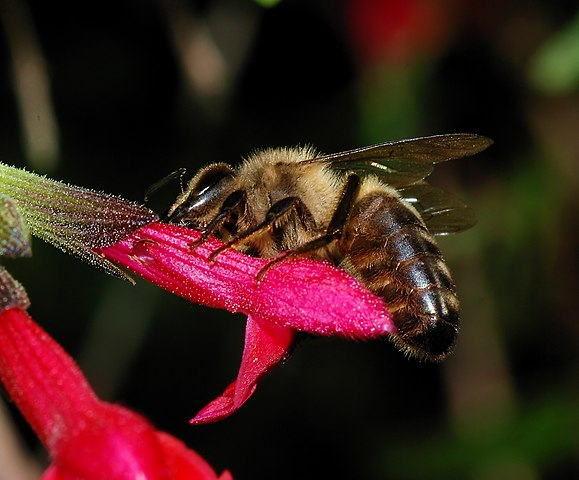
In future, after considering the above, when confronted with a ferocious Irish bee, you may have occasion to reflect on the Book of Aicill and the ultimate origins of money. And, more importantly, if in future you are injured by said ferocious Irish bee, you will know what compensation you may seek for redress for the injury inflicted from the owner of the hive of the mischievous bee.






 Northcoast Antiquarian
