The Thasian tetradrachm is among the most recognizable silver issues of the late Hellenistic world. Its garlanded Dionysus and its heroic Herakles circulated widely across the Balkans and the Lower Danube, where they became prototypes for the diverse and often striking imitative series struck by Celtic and other tribal groups from the late second to first century BC.
ISLANDS OFF THRACE, Thasos. Tetradrachm, c. 148-90/80 BC. (Silver, 16.96 g, 10 h). Obv. Head of Dionysos to right, wearing ivy wreath. Rev. ΗΡΑΚΛΕΟYΣ ΣΩΤΗΡΟΣ ΘΑΣΙΩΝ Herakles standing facing, head to left, resting his right hand on grounded club and with lion’s skin draped over his left arm; in field to left, monogram. American Numismatic Society, 1948.19.583, CC BY-NC 4.0
One such Celtic imitation appeared recently at auction. The obverse presents a highly abstracted Dionysus—angular, almost post-modern with geometric features—while the reverse reduces Herakles to a ritual stick figure framed by pellet-rows.
LOWER DANUBE REGION. Imitation of Thasos. Late 2nd-1st century BC. Tetradrachm (Silver, 32 mm, 16.36 g, 12 h). Obv. Highly stylized head of a youthful Dionysos to right. Rev. Herakles, in the form of a stick figure, standing facing, holding a club in his right hand with cloak over his left arm; four rows of pellets to left and right, and a single row below. Nomos 37, Lot 16 (November 2025)
The cataloguer rightly observes that these transformations reflect indigenous artistic traditions rather than “primitiveness,” a point well aligned with contemporary scholarship on Celtic visual language. There is no question that the engravers were interpreting, not merely degrading, the Hellenistic prototypes.
It must be said that the auction house in question is one for which I hold the highest regard. Its catalogues have long exemplified best practice: careful numismatic description, transparent provenance, and a consistent habit of guiding collectors toward relevant current scholarship. Precisely for that reason, the explanatory note appended to this coin was so noticeable. Beneath an otherwise exemplary entry appeared the following claim:
” … recent research suggests that the striking of coins by the Celts, the ancient British, and other ancient peoples, other than the Greeks and Romans and those very strongly influenced by them, had a highly ritualistic nature. Ancient sources tell us that prior to the beginning of the minting process, the ancient die engravers would drink copious amounts of what is now known as poitín or poteen, thus, providing them with visions that they then tried to engrave. Looking at the surviving coins makes this theory seem highly likely.”Nomos 37, Lot 16
It is a vivid statement. It is also, in every sense, extraordinary.
No ancient textual source with which I am familiar describes Celtic or Danubian engravers intentionally entering states of ritual intoxication in order to produce dies. No archaeological, metallurgical, or workshop evidence with which I am familiar supports the notion of visionary drink preceding coin production. While ecstatic ritual and alcohol appear in broader Celtic cultural contexts, such general ethnographic data cannot be converted into specific claims about the minting process without concrete evidence.
Stylistic abstraction in Celtic numismatics has long been understood more soberly: as a deliberate reinterpretation of Greek prototypes through indigenous symbolic systems with their own aesthetic grammar. These coins do not require intoxicated celators to be understood; indeed, there is nothing in their style that supports such a narrative.
If research genuinely exists supporting this theory, it ought to be cited with author, title, publication, and date—particularly because the claim is, by its nature, difficult if not impossible to substantiate even if there were scant wisps of archaeological or textual evidence suggestive of such practices. The omission of such citation risks misleading those who encounter the statement and, unintentionally, lowering the high scholarly standard that this firm has otherwise consistently upheld.
The coins themselves are reward enough. Set beside the Thasian model, the Celtic imitation is not a drunken distortion but a cultural reinterpretation—evidence of a visual world reshaping the Hellenistic canon according to its own inherited forms. To impose a tale of visionary potions upon the engravers is not only unnecessary but obscures the far more interesting truth: that artistic autonomy, not intoxication, shaped these remarkable issues.
The content details the historical events surrounding the rise and fall of Eumenes III, also known as Aristonicus, in the kingdom of Pergamum. It explores the political turmoil and power struggles involving Rome, rebellions, and military confrontations. The narrative also touches upon the potential for a compelling play or opera based on these events, with a focus on the character development of key figures. The text is supplemented with an excerpt from a possible libretto, where Aristonicus reflects on his fate. Overall, it provides rich material for dramatic storytelling, combining historical significance with personal introspection.
A snippet of Aristonicus’ story as “opera.”
The Roman Prequel: Tiberius Gracchus and the Bequest of Attalus III
In the late 130s BC, Tiberius Gracchus, serving as a tribune in Rome, emerged as a polarizing figure through his vigorous advocacy for the passage of the lex agraria. This legislation aimed to redistribute land from the affluent elite to the impoverished masses, engendering substantial animosity among the propertied interests. Reflecting the entrenched hostility of these interests, the Roman Senate obstructed the law’s implementation by withholding the requisite funding, thus stymying Gracchus’ reformist agenda.
In 133 BC, the political tensions reached a crescendo when Tiberius Gracchus “accepted” the bequest of Attalus III of Pergamum. Upon his death, Attalus III bequeathed his kingdom, personal treasure, and royal estates to the Roman people. This testament explicitly excluded the city of Pergamum, other Greek cities with their respective territories, and temple lands from the bequest. Gracchus sought to employ this newfound wealth to finance his agrarian reforms, viewing it as an opportunity to alleviate social inequalities. However, his opponents perceived this maneuver as an audacious encroachment upon the Senate’s prerogatives and an exacerbation of the threat to property rights and societal propriety.
Kingdom of Pergamum circa 188 B.C. under the Attalid Dynasty The Kingdom of Pergamum, located in Asia Minor, was ruled by the Hellenistic Attalid Dynasty. This dynasty was founded by Philetairos, who ruled from approximately 282 to 263 B.C. In 188 B.C., the kingdom greatly benefited from the Treaty of Apamea, whereby the Roman Senate granted Pergamum extensive territories formerly held by the defeated Seleucid Empire.
In the wake of these escalating tensions, Gracchus’ adversaries felt justified in resorting to extralegal measures. In a purported “defense” of property and societal order, they orchestrated the murder of Tiberius Gracchus and unceremoniously disposed of his body in the Tiber River. A subsequent purge of his followers from the political sphere ensued, marking a dark chapter in Rome’s history. This brutal response underscored the lengths to which the conservative elite were willing to go to preserve their privileges and stifle reformist efforts.
The Challenge to Attalus III’s Bequest in Pergamum: Rise of Aristonicus
The statue of Aristonicus, known as Eumenes III, King of Pergamum between 133-129 BC, which stands in the city of Pergamum, now known as the city of Bergama, Turkey.
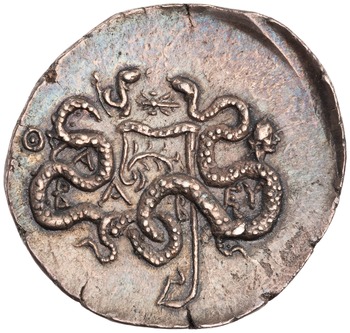
Meanwhile, in Pergamum, Aristonicus, the half-brother of Attalus III and son of Eumenes II and a harpist or lyre-player from Ephesus, declared his intention to seize the throne of Pergamum by right of his lineage, irrespective of the intentions of Attalus III and the Romans. Adopting the regnal name Eumenes III, Aristonicus garnered significant support, amassing both troops and ships, and commenced his campaign to conquer the kingdom of Pergamum. Initially, he achieved notable successes both on land and at sea. He raised the standard of uprising at Leucase, Phocaea joined him, and he conquered Colophon, Notium, Samos, and Myndus. His efforts were further bolstered by his ability to secure sufficient precious metals and strike them into coinage, as evidenced by the cistophorus illustrated below. The coinage series, and its significance, is discussed in an interesting 2021 article written by Lucia Carbone, “A New-ish Cistophorus for the Rebel Aristonicus.”
Reverse of AR cistophorus of Eumenes III of Pergamun featuring two coiled serpents between bow-case and bow. BA EY, a winged thunderbolt above the bow-case and a beardless male head in field right.ANS 1944.100.37579 American Numismatic Society
Roots and Support of Aristonicus’ Uprising
Aristonicus’ uprising was fundamentally rooted in the succession crisis following the death of Attalus III. As an illegitimate son of Eumenes II, Aristonicus claimed the throne of Pergamon under the name Eumenes III, challenging the Roman claim based on Attalus III’s testament. His campaign can be viewed through several lenses:
Dynastic Claim: Aristonicus presented himself as the rightful heir to the Pergamene throne, contesting the Roman-imposed transition. This dynastic legitimacy resonated with certain segments of the population who were loyal to the Attalid lineage.
Social and Economic Grievances: The uprising tapped into widespread discontent among various social groups, including disenfranchised citizens, slaves, and other marginalized populations. Aristonicus’ promise of social reform and liberation found a receptive audience among those dissatisfied with the existing social and economic order.
Anti-Roman Sentiment: There was considerable resentment towards Roman interference and the impending direct control over Pergamon. Aristonicus’ resistance symbolized a broader opposition to the expansionist policies of Rome and its impact on local autonomy.
Support Base
Aristonicus’ supporters came from diverse backgrounds, reflecting the multi-faceted nature of the uprising:
Disenfranchised Individuals and Slaves: A significant portion of Aristonicus’ forces consisted of slaves and lower-class citizens. The promise of freedom and a more equitable society motivated these groups to join the uprising. Aristonicus’ vision of a utopian society, often referred to as “Citizens of the Sun” (Heliopolitae), aimed to create an egalitarian state that resonated with these marginalized groups [Recent scholarship provides ample grounds to re-evaluate the significance and meaning of the Heliopolitae titulature and the role of slaves/disenfranchised individuals. (see Daubner in sources below)].
Local Greek Cities: While some Greek cities in Asia Minor supported Rome, others were sympathetic to Aristonicus, driven by a desire to preserve their autonomy and resist Roman dominance. These cities provided crucial support in terms of resources and manpower.
Mercenaries and Soldiers: Aristonicus also attracted professional soldiers and mercenaries who saw an opportunity in the conflict. Their military expertise was vital in the early successes of the uprising.
Eumenes III (Aristonicus): The Struggle for Support and Survival
Eumenes III (Aristonicus) faced significant challenges in his bid to consolidate power. Despite his initial successes, he failed to win over many citizens of the city of Pergamum itself and was unable to conquer the city. It is plausible that the citizens believed they would be better off freed from royal governance and trusted that the Romans would honor Attalus III’s will by not incorporating them directly under Roman rule. Furthermore, Eumenes III did not gain the support of the kings of neighboring Hellenistic kingdoms, all of whom marched against him at Rome’s behest. These neighboring monarchs, wary of Aristonicus’ revolutionary ideals and eager to maintain favorable relations with Rome, aligned themselves against him.
Despite this formidable opposition, Rome’s local allies initially struggled to subdue Eumenes III. His forces proved resilient and capable, inflicting notable casualties on their adversaries. A significant moment in the conflict was the death of Ariarathes V of Cappadocia, who perished in battle against Aristonicus’ forces, underscoring the intensity and ferocity of the resistance. The support Aristonicus garnered from disenfranchised groups, including slaves and lower-class citizens, played a crucial role in sustaining his campaign against the combined might of Rome and its allies.
By 131 BC, the Romans were compelled to dispatch an army under the command of the consul Publius Licinius Crassus Mucianus to confront the challenge posed by Eumenes III and secure the legacy bequeathed to them by Attalus III. However, Crassus Mucianus was captured by Eumenes’ forces and, after striking one of his captors, was killed. His decapitated head was sent to Eumenes III, marking a grim turn in the conflict. This event underscored the determination and ferocity of Aristonicus’ resistance, significantly alarming Rome and its allies.
The Beginning of the End for Aristonicus
Although the defeat of a Roman army could have signaled the beginning of success for Eumenes III, it was, in fact, the onset of his decline. This turn of fortune came not at the hands of the Romans, but from Ephesus. Unsettled by the new king’s numerous naval victories and conquests, Ephesus armed a fleet and engaged Eumenes III in battle off the coast of Cyme in Aeolis. The outcome was decisive, forcing Eumenes to abandon the coast and withdraw into the interior.
This defeat also marked a transformation in the character of Eumenes III’s reign. In an effort to broaden his appeal and replenish his forces, he called upon peasants from royal domains, slaves, and others whom historians characterize as underprivileged. To the slaves, he promised freedom; to the others, economic relief. His appeal was successful, and multitudes responded to his call. He named his new followers Heliopolitae [Ἡλιοπολῖται], Citizens of the Sun.[1] This utopian vision of a society based on equality and justice resonated deeply with those disenfranchised by the existing order.
Ideological Influences: Blossius of Cumae and the Heliopolitae
One must wonder if Eumenes was motivated in the “social program” of his recruitment campaign (e.g., emancipation and economic relief) by his reported association at this point with the Stoic philosopher Blossius of Cumae, a devoted ally of Tiberius Gracchus. Blossius had fled Rome after Tiberius’ murder and attached himself to Eumenes. Some historians perceive Blossius’ ideological influence in the Heliopolitae movement. Blossius, having been a proponent of the Gracchan reforms, likely brought with him a philosophical foundation that emphasized social justice and the alleviation of inequality. His presence in Eumenes III’s court suggests a continuity of the radical ideas that had stirred Rome, now transplanted to Asia Minor and adapted to the local context.
The Final Defeat and Capture of Eumenes III
In the wake of Crassus’ defeat in 130 B.C., the Roman Senate dispatched the consul Marcus Perperna to subdue Eumenes III and secure the Kingdom of Pergamum for Rome. Perperna promptly arrived, assembled his troops, and marched into the interior, where he decisively defeated Eumenes. Aristonicus had expanded his campaign inland, focusing on regions such as Lydia and Mysia, including the strategic city of Kyzikos. His efforts in these areas were marked by a combination of military engagements and political maneuvering to gain the support of local populations. Despite these efforts, Eumenes was ultimately outmatched by the superior Roman forces. Following his defeat, he fled to the city of Stratonicea, where the Romans besieged him. The siege was marked by a protracted struggle, as the Romans systematically cut off supplies, starving the city and its defenders into submission. Ultimately, Eumenes was captured and sent to Rome in chains. In 129 B.C., the Senate decreed his execution by strangulation, thus extinguishing his challenge to Roman authority.
Consolidation of Roman Rule and the Fate of the Heliopolitae
Following the capture of Eumenes III, the Romans proceeded to organize the new province of Asia, despite ongoing resistance from the remnants of the Heliopolitae. These remnants, inspired by the egalitarian ideals of Aristonicus, continued to resist Roman domination. However, their defiance was brutally quashed by the Romans, who resorted to poisoning the water supplies of their impregnable strongholds—a tactic even they considered disgraceful. By 129 B.C., or 127 B.C. at the latest, the Romans had likely secured their Attalid inheritance, fully integrating the territory into the Roman Republic.
Is there a libretto or play in the story above?
This exposition is recited with confidence that it provides rich source material for a compelling play or opera. Indeed, I have begun work on such a project, sketching the broad outlines of a libretto—acts and scenes—and have already written substantial portions. Recognizing my weaknesses in character development, I am focusing on refining this aspect. However, I am pleased with one section I have written. After Aristonicus has been captured and is in chains, he contemplates his situation. Below is a scene I have written, set to music so I have a sense of the possibilities:
Audio Music file of Aristonicus in Chains (Lyrics by D.S. Yarab, Music created using Udio.com)
Aristonicus in Chains
Setting: A dark Roman dungeon. Aristonicus, bound in chains, reflects on his fate and the enduring spirit of his cause.
Aristonicus (Recitative):
Oh fate, thou art a cruel mistress, To wrest my dreams and cast them low. Yet here I stand, though bound in chains, My spirit soars, untouched by woe.
Aristonicus (Aria):
In chains, my spirit stands free, No Roman yoke shall master me. For in my heart, a kingdom lives, A beacon bright, the Sun still gives.
Oh, Citizens of the Sun, Your hope was mine, our battle won, Not in the fields where we did fall, But in the hearts that heeded our call.
From Pergamum’s hills to the wide sea, Our dream of freedom shall always be. Though walls of stone around me rise, The Sun shall never set on skies.
Oh, Perpernas, behold my fate, A king unbowed by Roman hate. For even in this darkest hour, My will remains, my soul has power.
(Bridge):
To the poor and enslaved, my voice shall reach, In every heart, our cause I’ll teach. No chains can hold what is divine, Our struggle, our dream, forever shine.
(Aria da capo):
In chains, my spirit stands free, No Roman yoke shall master me. For in my heart, a kingdom lives, A beacon bright, the Sun still gives.
Oh, Citizens of the Sun, Your hope was mine, our battle won, Not in the fields where we did fall, But in the hearts that heeded our call.
(Recitative):
So take me now, to Rome’s great halls, But know this truth, as empire falls: A dream once born, can never die, In chains, my spirit soars the sky.
SOURCES:
Africa, T. W. (1961). Aristonicus, Blossius, and the City of the Sun. International Review of Social History, 6(1), 110-124.
Daubner, F. (2006). Bellum Asiaticum: Der Krieg der Römer gegen Aristonikos von Pergamon und die Einrichtung der Provinz Asia (2nd ed., Quellen und Forschungen zur Antiken Welt 41). München: Herbert Utz Verlag. [*Daubner’s work is the current definitive study on the Aristonicus uprising and the establishment of the Roman province of Asia. It challenges many of the outlines of the traditional scholarship over the past century (including much presented in my post above) and concludes that there is extraordinarily little evidence to suggest that he was the utopian social reformer that earlier scholars feared or lionized in their writings.In a sense, his scholarship is sober prose based on all the current and continuously emerging evidence whereas what came before (and what I write above) is akin to romantic poetry based on the then sparse antiquarian fragments. Yet, some scholars still adhere to the older interpretations of Aristonicus as a social reformer. See the work by Mesihović , below, as an example.]
Hochard, P.O. (2021). Quand Aristonicos s’écrit avec un E. Bulletin De La Société Française De Numismatique, 76(02), 47–54.
Magie, D. (1950). Roman Rule in Asia Minor (Vol. 1). Princeton University Press, 147-158.
Mesihović, S. (2017). Aristonik i država Sunca (Drugi dio: Aristonicus Solis Reform). Radovi Filozofskog fakulteta u Sarajevu, Knjiga XX, 2017.[Mesihović, without taking note of – let alone attempting to address – Daubner’s scholarship, reiterates the argument that Aristonicus’s movement was fundamentally reform-oriented and revolutionary. He iterates that the movement aimed to challenge the existing social and political structures by advocating for social and democratic reforms, thereby attracting support from the lower classes and slaves. He stresses that Aristonicus’ movement was not merely a struggle for control of the Attalid kingdom but had a significant ideological dimension, seeking to establish an egalitarian and communal society, which posed a substantial threat to the established order of both local elites and the Roman authorities. The views encompassed in this work serve as the basis for an operatic libretto, as it is poetic, but may have been superseded as scholarship.]
Thonemann, P. (2013). Attalid Asia Minor: Money, International Relations and the State. Cambridge University Press. [Of particular note is how Thonemann’s first chapter characterizes the Attalid state as an innovative and unique monarchy that emerged in the second century BC. The Attalids transformed their kingdom from a small city-state into a major territorial power, characterized by a non-charismatic and decentralized style of rule. They implemented a federative model, portraying their state as a coalition of free cities rather than a centralized monarchy, and emphasized civic participation and local governance. This approach was reflected in their economic policies, such as the introduction of the cistophoric coinage, which supported the kingdom’s administrative and fiscal autonomy. The expansion of the state was largely a result of the Treaty of Apameia in 188 BC, which redistributed Seleukid territories to the Attalids, significantly enlarging their realm and elevating their political status.]
The concept of the Heliopolitae, or “Citizens of the Sun,” is a central theme in understanding Aristonicus’ revolt. This term embodies the utopian and revolutionary ideals that Aristonicus promoted to garner support from various disenfranchised groups.
Symbolism and Ideals: The name “Heliopolitae” is symbolic of Aristonicus’ vision for a new society based on equality and justice. It represents a community united under the metaphor of the Sun, which signifies enlightenment and purity. This ideological framework was used to attract slaves, the poor, and other marginalized groups by promising them freedom and a better social order.
Historical Accounts: Strabo and Diodorus provide key historical accounts that describe how Aristonicus retreated into the interior regions of Lydia after a naval defeat and rallied the oppressed classes, including slaves, around his cause. Strabo mentions that Aristonicus promised freedom to these groups, who then became known as the Heliopolitae.
Scholarly Debate: The article highlights the debate among scholars regarding the nature and significance of the Heliopolitae. Some view it as evidence of a broader social revolution, akin to other slave revolts in antiquity, while others argue it was a strategic move by Aristonicus to consolidate his power. The text suggests that while there is evidence to support both views, the primary aim was likely to use ideological rhetoric to strengthen Aristonicus’ claim and unify his diverse followers.
Religious and Utopian Context: The term “Heliopolitae” also carries religious connotations, linking the movement to solar worship and the Hellenistic tradition of divine kingship. This religious aspect provided additional legitimacy to Aristonicus’ rule and helped create a cohesive identity among his supporters. The use of the term is compared to other utopian experiments, but the article emphasizes that Aristonicus’ movement was distinct in its context and execution.
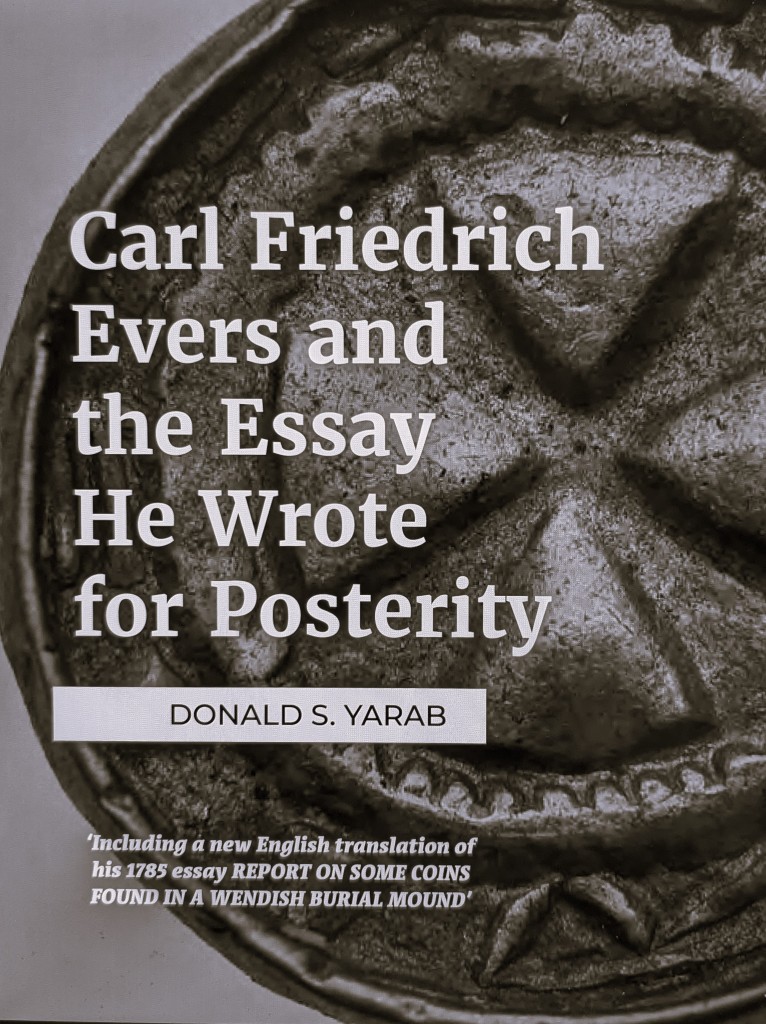
Pleased to have completed a translation of Evers’ 1785 essay, which still appears in scholarship today. Although Evers missed the mark in his attribution of the coins to the Wends, he was nonetheless one of the earliest to attempt a scholarly treatment of the coins now known as Randpfennige or cross denarii and certainly amongst the first to illustrate the coins.
A copy of the monograph I prepared to accompany the translation is available with a click of the button below:
The articles translated originally were published in Rocznik Kaliski in 2005 and 2010. An author associated with both articles was A. Kędzierski, perhaps the foremost authority on cross denarii in Poland. The articles translated are:
Kędzierski, A., Miłek, S. 2005. Mennica denarów krzyżowych w Kaliszu. Rocznik Kaliski 31, pp. 227-236.
Kędzierski, A. 2010. Czy istnieją denary krzyżowe Władysława Hermana? Rocznik Kaliski 36, pp. 255-262.
Kędzierski’s more recent works, of course, supersede and supplement these articles, but I thought it was still worth translating for better understanding the later works. The articles were translated strictly for use in personal scholarship. The translations can be accessed at the links below.
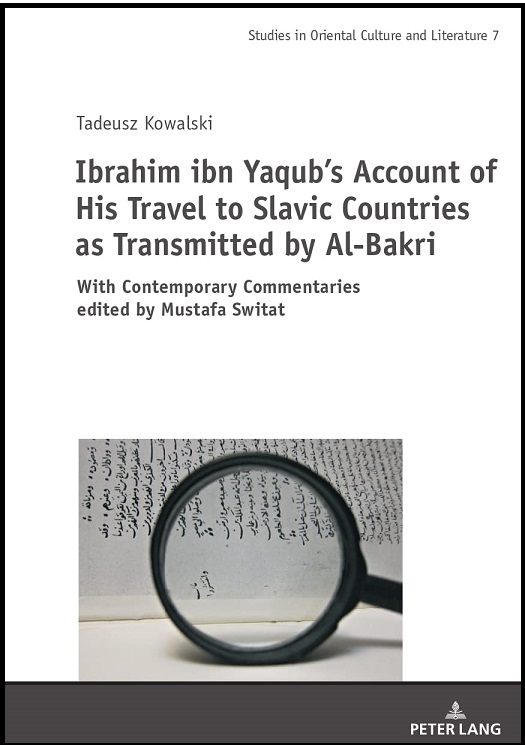
2022 Release of English Translation of Kowalski’s Invaluable Scholarship
12/30/31 UPDATE: A review of the work above was published in Polish by D. Sikorski in 2023 which is highly critical of the work for its lack of fidelity to Kowalski’s original scholarship and translation, as well as for its lack of familiarity with the scope and breath of all the relevant current scholarship. The review stated that the editor “made several decisions significantly changing the original shape of the old edition, in places even scandalously distorting it.“ The review illustrated a number of the editorial and factual failings in the work in detail. The reviewer summarized his opinion rather succinctly as follows: “Among the positive aspects of the presented book is primarily the availability in a widely understood language of T. Kowalski’s findings regarding Ibrahim ibn Jakub and his extensive and very detailed commentaries on al-Bakri’s text. On the negative side, the main issue is the removal of the critical apparatus from the Arabic text, depriving it of its scholarly character. Another serious flaw of the publication is the attempt to include two different English translations in one text. Thirdly, there is an inadequate discussion of the state of research on Ibrahim’s text.” I note that, on balance, the work still retains some utility for those who cannot access Kowalski’s work, or who cannot read works in Polish or Arab regarding Ibrahim’s Account; however, I share the reviewer’s enthusiasm for an upcoming release by French Arabist, Jean-Charles Ducène, who is preparing an edition of all fragments of Ibrahim’s Account for Monumenta Germaniae Historica – as the reviewer noted, the forthcoming edition by Ducène will render the above work and its deficiencies obsolete and eclipse T. Kowalski’s work in terms of the text.See review at:Sikorski, D. (2023). Review of Ibrahim ibn Yaqub’s Account of His Travel to Slavic Countries as Transmitted by al-Bakri, with Contemporary Commentaries, by M. Switat (Ed.), A. Waśkiewicz (Trans.). Roczniki Historyczne, 89, 179-186.
In February 2022, my post entitled “Remarks on Mieszko’s Payments to His Warriors: ‘Market Weights’ or ‘Good Coins (Dirhams) of Fixed Value’?” noted that the above referenced translation of Kowalski’s 1946 foundational scholarship [Relacja Ibrāhīma ibn Ja’ḳūba z podróży do krajów słowiańskich w przekazie al-Bekrīego (Relatio Ibrāhīm ibn Ja’ḳūb de itinere Slavico, quo traditur apud al-Bekrī). Cracow: PAU, 1946] was forthcoming. I have been eagerly awaiting its arrival ever since. It has finally been published and, this week, I received my long-anticipated copy.
Previous to this translation of Ibrahim ibn Yaqub’s references to Slavic lands based on his travels in the 960s, I relied on the very able and sound English translations of Dmitrij Mishin (Mishin 1996) and Paul Lunde and Caroline Stone (Lunde and Stone 2012). I was aware of the 1946 Kowalski scholarship because all translations of Ibrahim ibn Yaqub’s original texts ultimately draw from the well of Kowalski’s 1946 magisterial work. Unfortunately, I was unable to draw upon that well both because of the language barrier and the physical inaccessibility of the work. The newly released publication allows me and others who faced similar barriers to finally access much of Kowalski’s original 1946 scholarship. Unfortunately, four of the original supplementary essays by other scholars in the work were not republished due to copyright issues. Although the essays were likely outdated, it would no doubt have been beneficial to understand the full scholarly context of the original publication to have had those essays in translation.
The new publication does not, ultimately, disappoint, in spite of the copyright issues limiting the completeness of its re-publication in translation. Of course, the heart of the work is its presentation of the translation, from Arabic, of Ibrahim ibn Yaqub’s references to Slavic lands. The translation is remarkably detailed, thorough, and heavily footnoted. It quickly becomes apparent that this translation is the first I will consult when I am researching and writing, as it is clearly the foundation upon which my understanding will be built. However, when writing narratively, rather than for scholarly purposes, my quotations will continue to come from Mishin or Lunde and Stone. One quick illustrative example will suffice to demonstrate why.
In Kowalski 2022, the first lines of the Arabic text are translated as follows (citations removed): “Slavs are those born {belong to descendants (come from descendant)} of Mādhāy Ibn {the son of} Yāfith. Their dwellings {continually} [spread] from the north to the west.” In Lunde and Stone 2012, the same lines are translated as follows:”The Saqāliba are the descendants of Mādhāy, son of Yāfith (Japheth) and they dwell in the north-west.”
Obviously, Kowalski is a translation foundational to scholarly understanding (especially with its abundant citations) whereas Lunde and Stone is a translation useable in flowing narratives.
The translation also includes extensive, helpful philological commentary, a reconstruction of the biographical identity of Ibrahim ibn Yaqub, and a very useful discussion of proposed dates for his travels. Of particular note are two new commentaries by Mateusz Bogucki and Mateusz Wilk. Bogucki contributed an entry entitled “Archaeological Commentary on Ibrāhīm ibn Yaʿqūb’s Account” while Wilk contributed one entitled “Ibrāhīm ibn Yaʿqūb’s Account in the Context of Source Analysis.” Finally, there are biographical notes, indices of names, and the Arabic text which was translated.
Although I am thrilled to add this work to my library, and will consult it frequently, as I already have, I am somewhat disappointed that the opportunity presented by its publication to attach the most recent, more clarifying scholarship, when warranted, was not exploited more robustly. Several areas where such updates were possible were identified in a 2006 conference celebrating the 60th anniversary of the publication of Kalkowski’s 1946 work. The conference papers were published in Zaborski, Andrzej (ed.). Ibrahim Ibn Jakub i Tadeusz Kowalski w sześćdziesiątą rocznicę edycji, Cracow, 2008.
I wrote about one area of particular interest in my February 2022 post. Although that area was ostensibly addressed in Bogucki’s commentary in the new publication, Bogucki’s treatment of the issue is puzzling and incomplete, as I will discuss below.
In my February 2022 post, I quoted this excerpt from Mishin:
Ibrahim Ibn Ya’Qub reported the following regarding Mieszko and his realm: “The country of Mashaqqah [that is Mieszko, earlier in the text identified as ‘King of the North’] is the largest one among the countries [of the Slavs]. It abounds in food, meat, honey, and agricultural produce. The taxes are collected in market weights. Those are the salary of his men in every month, and each of them has a certain amount of them to get. He has three thousand warriors wearing coats of mail; a hundred of them is worth a thousand of other warriors in the battle. He gives those men clothes, horses, arms, and everything they need. If a child is born to one of them, he orders the child to be paid a maintenance, regardless of the latter’s sex. When the child grows, and he is a boy, he marries him and pays the dowry to her father. The dowry of the Slavs if very big, and they pay it in the same way as the Berbers do. If a man, thus, has two or three daughters, he gets rich, but if he has two sons, he becomes poor.”
Mishin (1996), pp. 187-188.
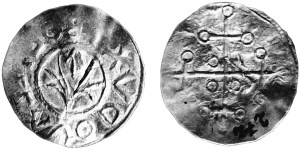
I noted that scholars have long focused on the references to the taxes collected and paid by Mieszko to support his three thousand warriors, the warriors which allowed Mieszko to expand, consolidate, and stabilize his realm because current scholarship does not support that Mieszko issued any coinage of his own. Rather, it shows that his son, Boleslaw Chrobry, struck Poland’s first denars between 992 A.D. and 1000 A.D. (see Suchodolski 2019 and Suchodolski 2015 for a discussion of which denars are contenders for earliest denars struck in Poland).
Denar of Boleslaus Chrobry of Poland, ca. 992-1000 A.D. Tree of life with arrow, inscription / cross. One of the contenders for the first coins struck in Poland. Photograph from Suchodolski 2015.
Accordingly, we must look elsewhere for what, exactly, Mieszko may have collected for taxes and used to pay his force of warriors.
Mishin, in his translation, indicated that Mieszko collected taxes in “market weights,” which were then used to pay his warriors a fixed monthly salary. As I noted in February 2022, Mishin based his translation, “market weights” for matāqīl al-murquatiyya, on Kowalski’s scholarship. Kowalski arrived at this rather peculiar translation because al-matāqīl or al-matākīl is the Arabic word for dinar, a gold coin, which did not circulate in Slavic lands and it was modified by a previously unattested or corrupted modifying word al-murquatīyya or al-marqatīya, which Kowalski rendered as market or commercial.
In a paper prepared for a 2006 conference celebrating the 60th anniversary of Kowalski’s remarkable scholarship regarding the testimony of Ibrahim Ibn Ya’qub, Andrzej Zaborski discussed this translation issue at length, noting that alternatives proposed over the years have include Byzantine money (a proposal widely rejected), legal tender/money, and his own hypotheses, “good coins of fixed value” or “coins of diminished value.” Zaborski concluded that the translation issue required further investigation. (Zaborski, pp. 64-65).
In February 2022, I suggested that the text itself had revealed all that it would yield and that the evidence on the ground, or rather in the ground, argued that “good coins of fixed value” should prevail as the preferred translation. To support this contention, I appealed to the numismatic hoard evidence. Specifically, I made the following argument:
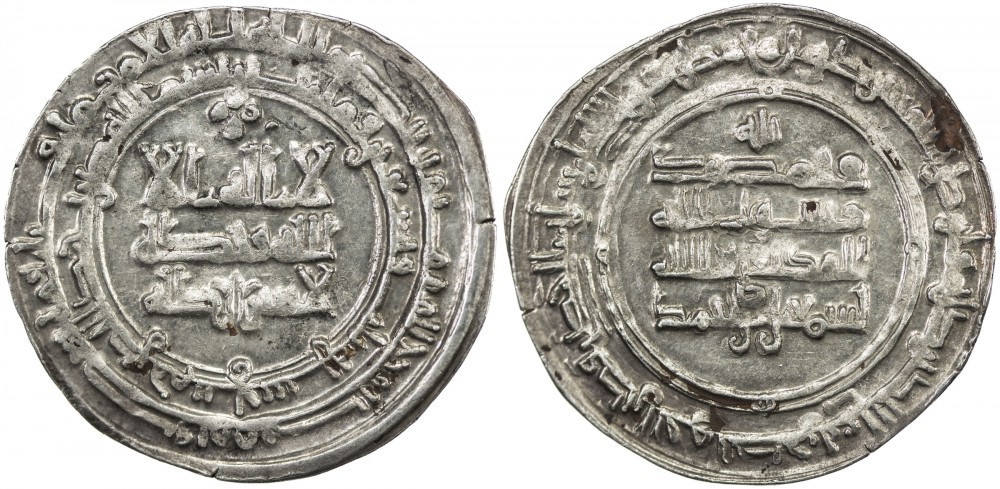
A Dirham of the type found in hoards in Poland from the early 10th century. SAMANID: Isma’il I, 892-907, AR dirham (2.89g), Balkh, AH293, A-1443. Photograph courtesy Stephen Album Rare Coins.
Mateusz Bogucki discussed the use of silver dirhams in Slavic lands in 2011, based on hoard evidence, and divided the time periods during which the hoards went into the ground into seven phases. Bogucki’s Phase III most aligns with the period during which Mieszko is referred to as collecting taxes and paying warriors salaries. Here is, in part, what Bogucki has to say about that period: “Phase III (early tenth century). At the turn of the ninth and tenth centuries, an important change in dirham importation may be observed. A significantly greater number of hoards are known from the period 900-40, and they are much larger (up to 1,000 coins). They are found in eastern Poland, Great Poland and Pomerania. Dirhams are almost exclusively whole coins. Some complete (undamaged) ornaments also occur in the hoards. Analysis of the coins and ornaments demonstrates that, during this phase, two important routes were in use. Coins found in Pomerania came via the Baltic, whereas coins in the eastern parts of Poland and Great Poland arrived mainly via the eastern land-route” (Bogucki (2011), p. 136).
In 2016, Bogucki explicitly tied the influx of dirhams into Poland to Mieszko’s use of mercenaries to consolidate his realm: “Assuming the chronology of the deposits is solid, it may even be suggested that the influx of silver to Wielkopolska from the East preceded the Pomeranian route by more than a decade and was initially greater in importance. The issue of the commodity exchanged for silver in the early-Piast state is still difficult to ascertain. It is apparent that the metal was needed to pay for mercenary services and to develop a proper network of administration and infrastructure based on strongholds. Archaeological research proves that the first half of the 10th century, when the core of the state in Wielkopolska was being established, brought destruction to a large percentage of tribal stronghold centres. Juxtaposing these facts with the chronology of the influx of oriental silver into Wielkopolska (discussed above) and the information found in written Arab sources, we may conclude that the economic basis for building the earliest Piast state came from selling slaves – the inhabitants of the destroyed tribal centres of Wielkopolska. By eliminating their hostile neighbours, the Piasts acquired silver, which they could use to consolidate their power” (Bogucki 2016, p. 246).
Based on the above, we know that Mieszko had access to good quality dirhams, in quantity, and that the dirhams were not yet always reduced to intensely fragmented hack-silver (where they would need to be regularly weighed to be paid out as a salary) as they were in later phases (such as Phase IV, from 970-1010 A.D., which Bogucki noted often included coins and items that were “intensely fragmented”). This adds support to Zaborski’s hypothesis, and my contention, that the contentious translation should be “good coins of fixed value” rather than the unsatisfactory and less supportable “market weights.” I note that Bogucki, in a 2005 paper, made passing reference to the issue of the form of the warrior salaries (in an article that was poorly translated into English) without addressing the underlying translation issue:
In my opinion buying meat by silver doesn’t hinder from buying by the silver politically loyalty. In the matter of salary and taxes it’s better to quote the words of Ibrahim: ‘Received by him (king Mieszko I) taxes are trade weights. They are used as payment for his mans (knights). Each month to each man it’s a known number of it’ (Kowalski 1946, 50). Here is necessary to comment the term trade weights –mataqil murquatiyya. Ibrahim might have known the name of dirhems, the western European denars he called Kinszar, so I think that Ibrahim noticed the hack silver, taken not for pieces, but for weight. This relation doesn’t mean that salary and taxes weren’t paid in animals, grain or any other goods. But it shows, that in this matter it isn’t possible to give only one single answer.
Bogucki (2005), p. 1152.
So, in 2005, Bogucki published an article translating the Arabic phrase at issue as trade weights. He does so because he views the currency in circulation in the Polish lands at the time of Ibrahim ibn Yaqub’s writing as either whole dirhams or, more likely, intensely fragmented hack-silver. So, how does Bogucki view the issue in his commentary in the new translation in 2022?
Bogucki writes the following:
Ibrahim also wrote that in Mieszko I’s country, taxes were levied in al-matākīlal-marqatiya. This term was originally rendered as ‘commercial weights’; however, W. Kubiak has proved that the term actually denoted coins. Ibrahim seems to have used a familiar term to describe collecting fragmented silver by weight. The crucial information is that taxes were collected in metal coins. Naturally, it is difficult to assume that each peasant individually paid the prince in silver, but a complex fiscal system, where a peasant or a craftsman paid his due to the relevant official (the town comes) in produce, animals or products, and the official, in his turn, paid the prince with silver seems highly probable. Incidentally, Arab dirhams were widely used in Mieszko I’s country, a fact that Ibrahim fails to mention (he did note their use at Otto I’s court, however). It is worth recalling here that in the light of the most recent research, the slave trade, in which slaves were sold for Arab silver, played an important role in building Mieszko I’s power. Naturally, direct archaeological material does not corroborate the slave trade, but wide-scale archaeological studies seem to confirm this thesis.
Kowalski (2022), pp. 168-169.
Although it is gratifying that Bogucki is seemingly prepared to render the disputed phrase as referring to coins and no longer referring to weights, it is unclear how he would actually translate it, if at all. Is he proposing that the words be translated, as Kubiak did, as market money, or current coin, or market coin? I note that Zaborski, in reviewing Kubiak’s scholarship, was troubled by Kubiak’s interpretation as it relied on a translation that embraced etymology for market that was only attested in the 20th century in the Arabic dialect of the Jews of Algiers (Zaborski, pp. 48 and 65). The brevity of Bogucki’s comments on the issue leave these questions unaddressed, unfortunately.
On balance, however, the scholarly debate has advanced sufficiently that any translation of the phrase involving weights may be set aside. For my own purposes, I will leave the phrase untranslated, as Lunde and Stone do in their translation, and provide a note indicating that current scholarship understands the phrase as meaning current coin (e.g., dirhams and/or hack-silver).
REFERENCES/SOURCES: (Blue boxes may be clicked to be taken to reference works available online for review. Red boxes indicate reference works are not available for online review. If a link for a blue box is no longer working, please advise me of such as nca@northcoastantiquarian.com. Thank you.).
Note: Zabroski’s work is a compilation of scholarly papers read at a May 2006 conference celebrating the 60th anniversary of the publication of the first and most critical edition of Ibrahim Ibn Ya’Qub’s reports on the Slavs, which had been prepared and published by Tadeusz Kowalski [Kowalski, Tadeusz. Relacja Ibrāhīma ibn Ja’ḳūba z podróży do krajów słowiańskich w przekazie al-Bekrīego (Relatio Ibrāhīm ibn Ja’ḳūb de itinere Slavico, quo traditur apud al-Bekrī). Cracow: PAU, 1946].








 Northcoast Antiquarian