
The Voice in the Dust: A Lament for Thersites


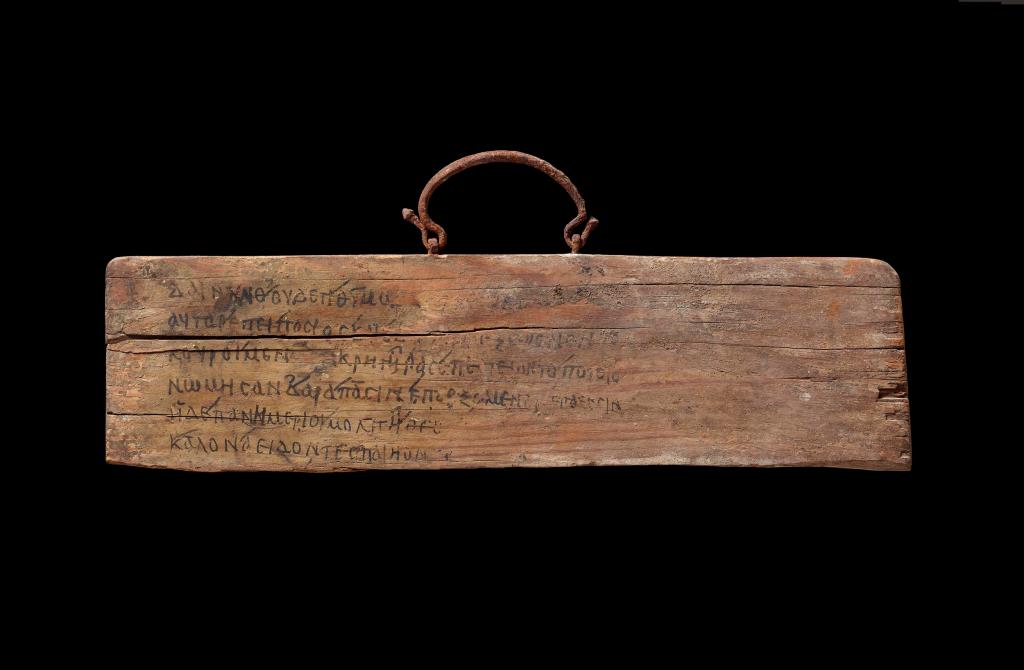
400-500AD, found in Egypt. Wooden board (with iron handle for hanging) with Greek inscription of lines 468-473 from Book I of Homer's Iliad.  © The Trustees of the British Museum.
400-500AD, found in Egypt. Wooden board (with iron handle for hanging) with Greek inscription of lines 468-473 from Book I of Homer’s Iliad. © The Trustees of the British Museum. Shared under a Creative Commons Attribution-NonCommercial-ShareAlike 4.0 International (CC BY-NC-SA 4.0) licence.

The lament that follows was born of an essay I penned after re-reading The Iliad through the figure of Thersites: truth-speaker, scapegoat, silenced. Where the essay names the mechanisms—divine deceit, aristocratic coercion, popular complicity—the mythic poem strives to give breath to that silenced voice through Antipseudes of Elis, a fictive low-born warrior who speaks from within the wound of the epic itself. Against the degradations of later tradition—most starkly in Quintus Smyrnaeus’ Posthomerica, where Thersites is struck down in rage by his companion-in-arms Achilles, not in duel nor battle but unjustly, unarmed, unready, and unaware, and then buried in the earth rather than burned upon a pyre, in defiance of Achaean custom—the lament restores what Homer only intimates: that the truth-speaker saw clearly, and that to remember him, and the vision he bore, is the conscience of witness. Thersites’ voice, mocked in antiquity, is recognized belatedly by thinkers such as Hegel and Nietzsche.


The Lament of Antipseudes of Elis

After the Fall of Troy of the High Walls

“What glory is this, that tastes of ash and allotted fate?”

I. The Weight of Victory

Ten winters I carried this spear,
ten summers I dreamed of home—

the olive grove behind my father’s house,
the way morning light fell
across my wife’s sleeping face.

Now Troy burns behind us,
her towers cracked
like broken teeth,

and the wind carries the smell
of what the immortals and kings call victory:
blood and smoke,
the stench of the fallen.

They say we have victory.
They say our names will echo
through the halls of distant kings,

that singers will sing of this day
when the world was young.

But we—nameless before kings and heroes,
we who bore the spears,
we who remember our companions—

we think of Phegaios,
who fell at the Scaean Gate,
beneath the shadow
of the consecrated beech,

his shield-arm shattered,
calling for his mother
as the light left his eyes.

What song will remember
that he loved to carve small birds from olive wood,
that he wept the night before battle—

not from fear, but from beauty;
the way starlight fell
on the wine-dark sea,
too lovely for a world
that would end him tomorrow?

II. The Kings’ Glory

Agamemnon stands proud
upon the battlements,
his bronze breastplate catching
the flame-light of the city.

He speaks of destiny,
of honor served,
of the gods’ will made manifest
in spear-point and sword-edge.

But what did Helen know
of our ten years’ dying?
What did she dream
in Priam’s halls

while we bled the earth black
beneath Troy’s walls?

Was her face worth
Patroklos, torn and broken?
Worth Hector’s son,
dashed against the stones?
Worth the thousand
nameless sons
who will never see
their fathers’ fields again?

The kings divide the spoils—
gold and bronze,
slaves and chariots,
of a broken world.

But they cannot divide
the weight that settles
in a warrior’s chest

when men no longer fall,
and the silence gapes
like a wound
across the blood-soaked plain.

III. What the Dead Know

In the grey hour before dawn
we walked among the pyres
where our companions burned.

Their smoke rose straight
into the windless sky,
and we thought: here is truth—

not in the golden masks of heroes,
not in the songs
that will outlive our bones,
but in this.

Not only kings waged war at Troy,
nor only the heroes
whose names the singers will praise.
These also bore the spear,
or fell in dust:

Phegaios of the beech,
who fell at the Scaean Gate
beneath the sacred tree, calling for his mother
as the bronze pierced his side.

Echelaos of Argos, new to war,
who upheld the host
but died clutching a lock of hair
cut from his sister’s head—
a pledge never delivered.

Lēthios the forgetful,
the goatherd’s son, barely bearded,
who drowned in his own blood
until Thersites drew him forth,
yet lived to forget
the hand that saved him.

And I—Antipseudes of Elis,
opposer of lies—
who live to speak the lament
of the nameless many.

What do the dead know
that we, the living, have forgotten?
What wisdom lies
in their silence?

Perhaps this:
that glory is a word
spoken by those who were not there

when the bronze bit deep,
when the earth drank its fill of young blood,
when the horses screamed
and would not be comforted.

Perhaps this:
that a man’s worth is not measured
in the length of his shadow
cast by the pyre-flames,

but in the small kindnesses—
the water shared,
the wound bound,
the hand held
in the dark hour
before the last battle
where men meet their fate.

IV. The Voice We Silenced

I remember Thersites.

Not his name—no one
speaks his name now,
though once it rang across the ranks
like bronze on bronze,
clear and true and terrible.

He was ugly, yes—
twisted-legged, sharp-voiced,
the kind of man whom kings saw not,
though he stood before them.

But when he spoke
that day in the ninth year,
when Agamemnon deceived us,
pretending to release us
only to test our hearts—

Thersites alone,
voice of the low-born,
truth-speaker,
spoke what we all knew:

What share have we
in Atreus’ son’s portion?
Why must our bones
bleach white on the Scamandrian plain,
while he grows fat
on Trojan plunder?

The words hung
like loosed arrows
trembling in the morning air.

For one bright moment
we saw ourselves clearly:
not heroes,
not bearers of glory,
but flesh offered up
to feed another’s pride.

Then Odysseus rose—
Odysseus the much-turning,
whose counsels coiled like serpents in the dust,
whose tongue bore honey and venom both—

and did not quarrel.
He beat him.
Beat him bloody
with the royal scepter
while we—gods forgive us—
we laughed.

We laughed,
but the gods had blinded us.
We cast his voice into dust,
and cheered the silencing
of the truth-speaker,
as fate compelled.

Had we listened,
had we sailed that day—
Hector would breathe still,
Achilles would grow old
in Phthia’s fields,
Priam’s grandson
would chase shadows
through Troy’s unfallen towers.

But we chose laughter.
We chose the war.
We chose to die
rather than hear
what the ugly man dared to say:

that we were fools,
that we were cattle,
that our lives meant less to our kings
than the bronze in their coffers.

But listen—Thersites died
not as the coward Odysseus made him seem,
not cowering in his tent
or fleeing from the fray.

He died on the day Patroklos fell,
that day of ruin
when the Greeks were driven back to the ships,
when bronze points flashed like lightning
and the sand drank rivers of blood.

The field was chaos and screaming—
chariots overturned, horses mad with terror,
shields splintered, spears shivered,
and men cried out
for mothers no longer living.

In that storm of ruin,
young Lēthios—barely bearded,
homesick for his goats—
took a spear through the lung
and lay drowning in his blood.

No king was watching.
No god took note.

The hour was desperate,
the deed unheroic:
Thersites crawling through the bodies,
hauling the boy
across the bloody sand
while the clash of bronze roared about him.

The boy lived.
Lives still, perhaps,
somewhere in Argos,
telling his young sons and daughters
stories of the war,
never speaking the name
of the man who dragged him
from the edge of death.

And Thersites?
A Trojan blade found his heart
as he shielded the boy’s retreat.

He made no sound—
no cry for help,
no call to glory,
no final words
for singers to polish
into verses of bronze.

He simply fell,
face-down in the bloody sand,
his truth-telling mouth
stopped with earth.

We burned him
on a common pyre
with a dozen others—
companions-in-arms
whose names the smoke carried skyward
and scattered on the wind,
whose deeds no singer
will praise before kings.

But we remember:

the man who spoke against the war
died saving a life,
not for glory,
not for honor,
not for the gold of distant kingdoms,
but because a boy was drowning in his blood
and someone had to act.

What share have we
in Atreus’ son’s portion?

The question follows us
like a shade,
unanswered still,

though half our number—
Thersites among them—
perished on the soil of Ilium
some mourned, some forgotten,
some remembered only by the wind.

V. The Long Road Home

Tomorrow we sail
for the wine-dark waters of home.

Some speak of wives and children
waiting at the harbor,
of olive groves heavy with fruit,
of wine that tastes of peace.

But we have seen too much
to believe in simple homecomings.

The men who left for Troy ten years past
lie buried somewhere
beneath the walls we have torn down,
buried with the voice of Thersites,
buried with the truth
we cast into dust.

What strangers wear their faces now?
What shades return
to sit at ancestral tables,
to hold the hands we knew,
to feign that time and blood
and the weight of blood
have not cut deep furrows
in their hearts?

The ships wait,
black-hulled against the morning light.
The oars are ready,
the sails hang slack
as old skin.

But before we go,
let me speak this truth
into the ashes
of the fallen city:

We came for glory.
We found only
that men die
as simply as leaves
fall in autumn—

and that we ourselves
chose to silence
the one voice
that might have stopped the falling.

We came as heroes.
We leave as vessels of sorrow
too burdened for song,
too grievous for memory.

What is victory
but the bitter wine
pressed from the grapes
of other men’s grief?

What is honor
but a name
we press upon our wounds
to make them
bearable?

And what are we—
who cheered the beating of the truth-speaker,
who chose war,
who laughed
as wisdom bled into the dust?

Epilogue: The Warrior’s Prayer

Hear me, immortals,
who sent us forth
to toil in war,
who moved our hands
to this dark work—

grant us this:

Not that our names
be remembered
in bronze and stone,
not that singers
will sing our deeds
to unborn kings—

But that when we pass
to Hades’ shadowed halls,
where our fathers dwell,
the dead will forgive us
the price we laid
upon their dying.

Grant that the shadows
of Troy’s children
will not follow us
across the wine-dark sea.

Grant that the blood we spilled here
will not cry out
from every field we pass.

And if you must remember us,
remember this:

that we learned too late
the weight of bronze,
the true cost of kingdoms,
the sacrifice of war.

The ships call.
The wind rises.

Troy burns behind us
like a star
falling into the dark.

We are going home.
We are going home
changed.

Ohio’s Tax Burden Inversion

How Two Decades of Income Tax Cuts for the Wealthy Shifted the Load onto Property Owners and Renters

During the most recent reappraisal for property taxes, thousands of Cuyahoga County residents opened their mailboxes to find reappraisal notices that made their stomachs drop. Property values had climbed by an average of 32% county-wide, with East Cleveland residents facing increases of 67% and Maple Heights 59%.

Michael Chambers, Cuyahoga County Auditor, reported that, for 71-year-old Parma resident Agnes Gallo, this meant her home’s value rose by $76,000, pushing her annual tax bill up nearly $950. “This is outrageous,” she said. “People can’t afford to live in their own houses.” He also said that single mother Roni Menefee, facing a 49% valuation hike, admitted she was considering leaving Ohio altogether: “We’re hardly living in Beverly Hills here.”

County officials insist that House Bill 920 prevents taxes from rising dollar-for-dollar with property values. But for seniors on fixed incomes or working families barely hanging on, even modest increases can be destabilizing. More than 20,000 residents filed complaints, with thousands of adjustments granted. Still, the anger lingers—and justifiably so.

The Long-Term Tax Shift

That anger is rooted in two decades of deliberate state policy. Since 2005, Ohio’s Republican lawmakers have steadily cut the personal income tax, reducing rates most sharply at the top. Over time, these cuts drained nearly $13 billion annually from state revenues.

With less money flowing from the state to schools, libraries, and local governments, communities were forced to raise more themselves. And because they are prohibited from taxing investments or capital gains—the kinds of income more common among the wealthy—the primary tool left was the property tax (although many municipalities also increased their local income taxes-Cleveland voters narrowly approved an increase in its income tax from 2 percent to 2.5 percent in 2016).

The outcome: in 2024, Ohioans paid $23.9 billion in property taxes—more than they contributed through sales taxes ($13.7 billion) or income taxes ($9.5 billion). The most regressive form of taxation has become the backbone of public services.

Put plainly: the legislature cut income taxes for the wealthy, and forced everyone else—retired, middle-class, working-class, and poor—to make up the difference through higher property taxes.

The Nonprofit Inversion

At the same time, Ohio has allowed exemptions and abatements to balloon. Nearly $90 billion in property value—17% of the state’s total—is exempt from taxation, up from 14% two decades ago.

The largest single category? Abatements, totaling $26.6 billion. These were meant as temporary incentives to spur growth but are now permanent fixtures. Even utilities, which have captive consumers and guaranteed profits, receive abatements for investments they would make anyway.

And then there are the so-called nonprofits. Their tax-exempt status rests on public benefit, yet their leaders are not infrequently paid like corporate executives:

InstitutionLeaderAnnual CompensationTax/Exemption Status
Cleveland ClinicDr. Tomislav Mihaljevic, CEO≈ $7 million (2023)Vast campus tax-exempt as nonprofit hospital
Ohio State UniversityTed Carter Jr., President≈ $1.3 million (2024)University property tax-exempt
Ohio State UniversityRyan Day, Head Football Coach≈ $10–12.5 million (contracted 2025)Public university benefiting from exemptions
Hawken School (Private)D. Scott Looney, Head of School≈ $1.05 million (2023, IRS Form 990)Elite private school, property tax-exempt

These institutions are sheltered from taxes while ordinary citizens—many of whom can barely make ends meet—are expected to pay “full freight.”

Renters Pay Too

The burden does not end with homeowners. Renters also pay indirectly, as landlords pass on property tax hikes through higher rents.

In 2023, Ohio saw some of the steepest rent increases in the nation:

Cincinnati: one-bedroom rents up 17% year-over-year.

Columbus: also up 17%.

Central Ohio: squeezed further by Intel, Amazon, and data center developments.

Statewide: over 700,000 renter households are “severely cost-burdened,” spending more than half their income on housing.

Even those who do not own property are being priced out of Ohio’s communities.

Populist Anger and the Ballot Box

It is no wonder, then, that frustration has spilled into politics. In 2025, an all-volunteer group began gathering signatures for a constitutional amendment to abolish property taxes entirely. Organizers say they are moving forward “no matter what” lawmakers do, because people feel they “no longer have a voice in this government.”

The proposal is extreme. Abolishing property taxes would blow a $23 billion hole in funding for schools, libraries, mental health services, and parks. Replacing it with sales taxes could require rates as high as 20%. Yet the fact that such a movement exists—and is gaining traction—reveals how deeply citizens feel abandoned.

They no longer trust lawmakers who, for twenty years, cut income taxes for the rich while pushing costs onto everyone else, especially the working class, seniors, and the poor. They see abatements handed to billion-dollar institutions and “nonprofits” with millionaire executives, while seniors in Parma and renters in Columbus face bills that are unsustainable.

The Choice Ahead

Ohio’s property tax crisis is not an accident. It is the inevitable result of two decades of choices:

Cut income taxes for the wealthy.

Hand abatements to billion-dollar institutions.

Shift the burden onto homeowners, renters, and the poor.

The result is predictable: the young leave by choice, the old leave by necessity, and those who remain are angry enough to contemplate abolishing the system entirely.

Eliminating property taxes outright is likely not the answer—it would devastate schools, libraries, and local services. But for many Ohioans, it may feel like the only way to force state leaders to listen. When lawmakers protect the powerful and ignore the cries of ordinary citizens, radical proposals become the only language that carries weight.[1]

And the cry is not simply to be heard. It is to be relieved—to be lifted out from under a system of taxation that has become oppressive, unfair, and in many instances, unsustainable. Until that relief is real and tangible, until fairness is restored, the ballot box will remain the people’s only instrument. And if the choice is between leaving their homes or leaving the system as it is, more and more Ohioans will choose to abandon the system itself.

The choice is no longer between reform or complacency. It is between reform or rupture.


[1] Some might dismiss the property tax abolition initiative as folly that would devastate local services. But terror concentrates the mind wonderfully. When gerrymandered legislative maps silence voters’ voices in normal governance, when the legislature attempts to eliminate or dilute ballot initiatives entirely, and when even successful citizen initiatives are ignored by lawmakers and courts, extreme measures become rational responses. The terror that grips policy makers, and concentrates their focus if voters eliminate $23 billion in local funding, might finally force the political class that has spent decades redistributing wealth upward to confront the unsustainable system they’ve created. Sometimes breaking a captured system is the only way to build a fair one.

Smoke Without Borders: Cleveland’s Air Quality Alerts and Canada’s Wildfire Crisis


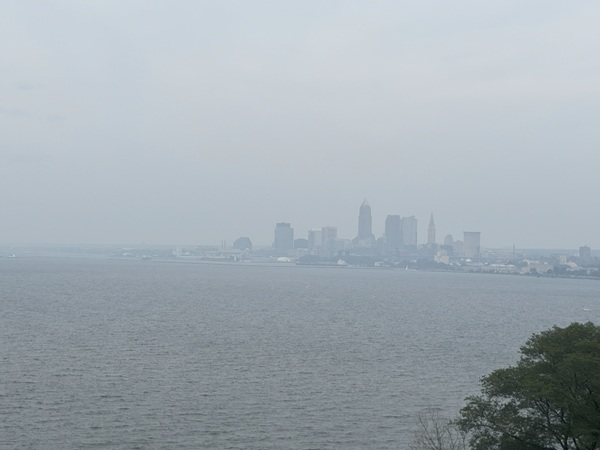
Canadian wildfire smoke causes an afternoon haze on August 4, 2025, obscuring the view of Lake Erie and downtown Cleveland, Ohio. Photograph by John K. Jones
Canadian wildfire smoke causes an afternoon haze on August 4, 2025, obscuring the view of Lake Erie and downtown Cleveland, Ohio. Photograph by John K. Jones.

This morning I awoke—yet again—to an air quality alert in Cleveland. These warnings have become disturbingly routine. Yet there is nothing routine about them. Sometimes the smoke is plainly visible, a dull haze hanging over Lake Erie; other times the sky appears deceptively clear, even as sensors warn of danger. Each alert is not only a public health signal but also a tangible indicator of the broader climate crisis—one that too many still deny.

I. Not a New Story, but a New Scale

Canada has long experienced wildfires, particularly within its vast boreal forests, as part of natural ecological cycles. However, the severity of recent fire seasons represents a dramatic departure from historical norms. In 2023, Canada endured its most destructive wildfire season on record, with more than 18.5 million hectares (over 45 million acres) burned—more than two and a half times the previous record and roughly seven times the long-term annual average.[1]

II. Why Canada Is Burning More Than Ever

1. Climate Change Accelerates the Threat

Canada’s climate is warming at roughly twice the global average (approximately 2°C since 1950 compared to the global average of 1.1°C), and in some northern regions nearly three times faster.[2] This accelerated warming produces hotter, drier vegetation that becomes fuel for wildfires, extends the fire season well beyond historical norms, and increases the frequency of lightning storms that ignite many of these blazes.[3]

2. Boreal Forest Vulnerability and Ecological Shifts

While boreal forests are adapted to periodic fire, the new scale and intensity of burning can overwhelm their capacity for regeneration. Repeated megafires may transform vast areas into grasslands or savannas, disrupting ecosystems and releasing massive stores of carbon into the atmosphere.[4]

3. Human Activity and Legacy Fire-Management Models

Though many fires are sparked by lightning, human activities—campfires, discarded cigarettes, sparks from machinery—remain a significant cause. Decades of fire suppression, along with the decline of Indigenous controlled-burn practices, have also left forests dense and fuel-rich, primed for catastrophic fires when drought and heat arrive.[5]

III. Cleveland Downwind

Wildfire smoke respects no borders. Carried by wind patterns and jet streams, it regularly drifts into the Midwest and Northeast. In Cleveland, this has meant days when the Air Quality Index rises into the “unhealthy for sensitive groups” range or worse. Fine particulate matter (PM₂.₅—particles smaller than 2.5 micrometers) can penetrate deep into the lungs and enter the bloodstream, aggravating heart and lung conditions and increasing health risks for vulnerable populations. Elevated ground-level ozone, worsened by heat, compounds these dangers.[6]

The reality is that Cleveland residents now regularly breathe air compromised by fires burning hundreds or thousands of miles away—a stark reminder of how interconnected our environmental challenges have become.

IV. A Shared Crisis

This is not merely a Canadian issue—or solely a U.S. problem. It is a continental and global crisis, rooted in climate change and demanding coordinated action in emissions reduction, forest management, and public health preparedness.

V. Closing Reflection

Tomorrow’s sunrise over Lake Erie may bring either full clarity or another haze alert. Regardless, the truth remains: our climate is changing faster than our institutions, our habits, or our response. The question is not whether the air tomorrow will be breathable. The question is whether we are prepared to protect it—not only here, but everywhere.


References

  1. “2023 Canadian Wildfires,” Wikipedia, accessed August 8, 2025, https://en.wikipedia.org/wiki/2023_Canadian_wildfires.
  2. “Climate Change in Canada,” Wikipedia, accessed August 8, 2025, https://en.wikipedia.org/wiki/Climate_change_in_Canada.
  3. “Expert Insight: Canada Is Warming Faster than Anywhere Else on Earth,” Western University News, January 2024, https://news.westernu.ca/2024/01/expert-insight-canada-is-warming-faster-than-anywhere-else-on-earth/.
  4. Kasha Patel, “Canada’s Wildfires Are Changing the Landscape for Decades to Come,” Washington Post, July 11, 2025, https://www.washingtonpost.com/weather/2025/07/11/canada-wildfire-smoke-forests-landscape-change/.
  5. Aryn Baker, “We’ve Entered the Age of the Megafire,” Time, July 2024, https://time.com/7299284/age-of-mega-wildfires-climate-change/.
  6. David Abel, “Wildfire Smoke Is Increasing across New England,” Boston Globe, August 5, 2025, https://www.bostonglobe.com/2025/08/05/metro/wildfire-smoke-increasing-across-new-england/.

Another August Backyard Visitor

A few feet away from my back porch, this fawn was left in the “nursery” by her mother for several hours this hot August afternoon, continuing the tradition of mother deer who have a fondness for the security of my back yard. Photograph by the author.

August’s Backyard Visitor

This beautiful butterfly was one of many visiting my backyard the first week of August 2025. Fewer than in past years, but always a delight to encounter. Photography by the author.