Beyond the Pillars of Herakles: Dante, Ulysses, and the Making of Divine Prohibition

By Donald S. Yarab

Attic red-figure stamnos from Vulci c. 480-450 BC depicting the myth of Odysseus tied to his ship's mast in order to resist the enchanting song of the Sirens.
Attic red-figure stamnos from Vulci c. 480-450 BC depicting the myth of Odysseus tied to his ship’s mast in order to resist the enchanting song of the Sirens.

When the ancient image of Odysseus[1] bound to the mast comes to mind—ears open to the Sirens’ song, body restrained by rope and loyalty, the ship cutting forward through perilous waters—it becomes a figure for how medieval Christendom conceived its relation to the classical past. Bound by faith’s restraint, the medieval mind sailed amid pagan wisdom’s dangerous beauty, listening but not surrendering, drawn forward yet always compassed toward the harbor of divine truth.[2]

It is a noble image. And yet.

What if the mast itself—the very bonds—were not divine protection but human construction? What if the Sirens sang not of destruction alone but of truths that authority feared we might comprehend? What if the rope that held Odysseus was tied not by wisdom but by terror—terror of what might be discovered in the listening, in the surrender, in the unrestrained voyage into mystery?

The Pattern Returns

In The First Why, I proffered that the doctrine of original sin emerged not from divine decree but from human fear—fear of questions too vast, of mysteries authority could neither command nor contain. Eden was not humanity’s fall but humanity’s awakening: the first trembling articulation of consciousness reaching beyond certainty into the perilous freedom of knowledge.

The prohibition against eating from the Tree was never divine. It was human anxiety projected backward onto the dawn of consciousness, then used across millennia to condemn the impulse to seek, to know, to ask why.

The pattern appears again, centuries after Eden’s invented fall, in one of Western literature’s most celebrated works. In Inferno XXVI, Dante presents Ulysses—not honored for cunning or for his journey home, but condemned—placed in the eighth circle, wrapped in flame, punished for what Dante calls the final voyage: a crossing of boundaries, a reaching beyond limits, a refusal to accept that the Pillars of Herakles marked the edge of permitted human striving.

And the question returns with urgency: whence does this “divine prohibition” truly come? Divine command—or human fear?

Dante’s Condemnation

The scene in Inferno XXVI is among the most powerful in all of Dante’s Comedy. Speaking from within a tongue of flame, Ulysses recounts his final voyage to Dante and Virgil. Old, having returned at last to Ithaca, he finds himself restless. Neither fondness for his son, nor reverence for his aged father, nor the love owed to Penelope “could overcome within me the desire I had to be experienced of the world, and of the vice and virtue of mankind.”

Thus moved, Ulysses gathers his aged companions and sails westward, past Sardinia and the Pillars of Herakles, “where Hercules his landmarks set as signals, that man no farther onward should adventure.” There he exhorts his crew:

“O brothers, who amid a hundred thousand
Perils have come unto the West,
To this so inconsiderable vigil
Which is remaining of your senses still,
Be ye unwilling to deny the knowledge,
Following the sun, of the unpeopled world.
Consider ye the seed from which ye sprang;
Ye were not made to live like unto brutes,
But for pursuit of virtue and of knowledge.”

Ulysses tells how he “did render my companions, with this brief exhortation, for the voyage, that then I hardly could have held them back. And having turned our stern toward morning, we of the oars made wings for our mad flight.” After many months, a mountain appears—distant, dark—“it seemed to me so high as I had never any one beheld.” Yet joy turns swiftly to despair: “For out of that new land a whirlwind rose, and smote upon the fore part of the ship. Three times it made her whirl with all the waters, at the fourth time it made the stern uplift, and the prow downward go, as pleased Another, until the sea above us closed again.”[3]

As pleased Another. As Divinity decreed.

Dante, ever precise in his moral architecture, places Ulysses among the evil counselors—those whose intellect and eloquence lead others astray. Virgil names the crimes: the deceit of the Trojan Horse, the theft of the Palladium, and the guile that brought about Achilles’ death (the latter bound in later traditions to stratagems shared with Diomedes). These are the ancient transgressions of cunning; yet the final voyage is Dante’s own invention, extending the sin of false counsel beyond the Homeric mythos and into the metaphysical.[4] In daring to pierce the boundary divinity had fixed—the western limit of human striving—Ulysses becomes not the exemplar of curiosity but of hubris: the brilliant mind mistaking unbounded knowledge for sovereignty.

Critics have long split on whether Dante admires or condemns Ulysses; the poem itself stages that ambiguity, withholding the name of this bolgia—false counsel—until the next canto, so that the rhetoric of heroic quest swells before the juridical label arrives. Barolini notes this “both/and” design: Dante’s style confers grandeur even as the setting is Hell, letting admiration and censure coexist in productive tension.[5]

The Search for the Prohibition

But searching for the source of this prohibition—where, precisely, the gods forbid passage beyond the Pillars—one meets an unexpected thing.

Silence.

Herakles, during the tenth labor, reaches the western edge to seize Geryon’s cattle, setting two pillars to mark the furthest point of achievement: a monument, not a ban. Yet older traditions recall that these were once called the Pillars of Cronus—boundaries of a world still ruled by Titans and Time. When Herakles raised his own in their place, the frontier passed from divine to heroic custody, from the cosmic to the human. The divine threshold became a human one: the boundary of the gods transformed into the horizon of mortal striving. The limit is capacity, not decree.

Roman writers—Pliny, Strabo—treat the Pillars as the edge of the known, beyond which lay Oceanus. Unknown, yes. Unknowable, no. Unexplored, not forbidden. Plato places Atlantis beyond the Pillars. Its destruction follows moral corruption and imperial tyranny, not navigation through a strait.[6] The boundary violated is ethical, not spatial. It is precisely the confusion of those two that allows authority to recast natural exploration as spiritual transgression.

Perhaps, one thinks, a classical voice does warn against the west. Pindar, writing nearly a millennium before Dante, seems a candidate in Olympian 3. Praising Theron of Akragas, Pindar writes that the victor “touch[es] the pillars of Herakles,” and adds: “Pathless the things beyond, pathless alike to the unwise and the wise. Here I will search no more; the quest were vain.”

At first glance, a prohibition. Look closer. The poet exalts Theron’s virtue by comparing it to Herakles’ reach: the victor’s deeds have touched the pillars themselves, but he dares no further. Beyond lies not sin but silence. The poet halts not for fear of divine censure, but from reverence for proportion—the stillness that follows the uttermost word.

Pindar returns to the same image elsewhere, in Isthmian 4, praising the Theban Melissus: “Through their manly deeds they reached from home to touch the farthest limit, the pillars of Heracles—do not pursue excellence any farther than that!” Again, the admonition is one of measure, not interdiction. The poet counsels proportion in achievement, not fear of divine wrath. The Pillars mark not punishment for trespass but the culmination of human excellence: the utmost reach of mortal aretē, beyond which praise, not perdition, would fall silent.

We read here little explicit theological weight, rather a poet’s choice to observe measure, not a divine command to halt forever. Yet I acknowledge this is itself an interpretation, one shaped by my conviction that human consciousness reaches naturally toward mystery rather than transgressing against sacred law. Ancient readers, steeped in traditions of divine order, may have heard prohibition where I hear proportion. The Greek μάταιον πέρα carries shades of meaning—“vain,” “futile,” but also potentially “reckless” or “transgressive.” The ambiguity is real—even a metaphor can accrue normative force within a sacramental worldview. What remains clear is that Pindar offers no explicit divine interdiction, no Zeus commanding sailors to turn back, no cosmic punishment awaiting those who venture west.[7]

The Transmutation

Observe what Dante has done. Between Pindar and the Inferno lies a revolution not of geography but of metaphysics: the rhetorical limit has become a theological one. Where Pindar’s vain was the futility of excess, Dante’s mad flight is the hubris of trespass. What for the Greek was decorum becomes, for the Christian, disobedience.

In this metamorphosis of meaning, boundary becomes law, and poetic restraint is recast as divine architecture. He has taken Pindar’s rhetorical metaphor—a poet’s statement about the limits of praise—and transformed it into a cosmic prohibition about the limits of knowledge. He has taken “Here I will search no more; the quest were vain” (the poet’s restraint) and transmuted it into “None may pursue it; you will be damned” (the theologian’s absolute).[8]

The transmutation operates at every level:

  • Pindar: a metaphor about achievement.
    Dante: a literal geographical boundary.
  • Pindar: the poet’s personal choice.
    Dante: God’s universal command.
  • Pindar: vain—pointless, excessive, unnecessary.
    Dante: mad—sinful, presumptuous, damnable.
  • Pindar: “I will search no more.”
    Dante: “None may pass.”
  • Pindar: rhetorical limit (where the ode should end).
    Dante: ontological limit (where human striving must end).

This is not interpretation. This is invention.[9]

Dante has performed an alchemical transformation: he has taken the raw material of a poet’s metaphor and transmuted it into divine law. He has literalized what was figurative, universalized what was particular, divinized what was human, and weaponized what was wisdom.

And having manufactured the prohibition, he uses it to condemn Ulysses—and by extension, to condemn the impulse that drives all genuine seeking: the refusal to accept inherited boundaries, the courage to test whether limits are actual, the sacred audacity of the question why.[10]

The Pattern Exposed

The same alchemy appears in both Eden and at the Pillars:

  • Human limits. We are confused. We cannot sail farther.
  • Establishment of a marker. The Tree. The Pillars.
  • Sacralization of the marker. God commanded. God ordained.
  • Prohibition. Thou shalt not eat. Thou shalt not pass.
  • Damnation of transgressors. Original sin. Hellfire.

Who, then, says the boundary is divine?

Not God. No interdiction is carved into Atlantic stone; no oracle forbids the western sea.

Man does. Man, fearing the unknown, converts the edge of his knowledge into the edge of knowable reality, projects that fear onto the cosmos, and calls it Heaven’s will. Dante maps a theology onto ancient geography, then condemns the figure who reveals—by sailing—that the map was never the territory.

The Confusion of Boundaries

A distinction must now be made—one obscured by Dante’s condemnation and too often blurred by the weight of tradition. Not all boundaries are alike.

There are indeed limits that must hold: moral boundaries, ethical prohibitions, the restraints of justice and compassion that preserve the fragile order of human life. These are not inventions of fear but necessities of conscience. When Plato’s Atlanteans are destroyed, it is for crossing such limits—for turning power into tyranny, order into domination, knowledge into conquest.

But there are other boundaries—geographical, intellectual, imaginative—that exist only until courage or curiosity dissolves them. The confusion of the two, the moral and the cognitive, is the mechanism by which authority sanctifies its own caution. When fear disguises itself as wisdom, exploration becomes transgression, and inquiry is punished as sin.

To say “You shall not murder” is a moral imperative.
To say “You shall not question” is a spiritual abdication.
To say “You shall not seek beyond this sea” is fear pretending to be faith.

The first protects the sanctity of life; the second denies the dignity of mind. The danger lies not in reverence for limits, but in mistaking the boundary of understanding for the boundary of being.

What Dante Should Have Condemned

Yet acknowledge what Dante perceived, even if he misdiagnosed it. Ulysses does not merely sail west—he abandons. His own words convict him: neither “fondness for his son, nor reverence for his aged father, nor the love owed to Penelope could overcome within me the desire I had to be experienced of the world.”

This is not the voice of responsible inquiry. This is desertion dressed as aspiration.

More: he does not invite his companions to shared discovery. He compels them with wile. “I made them so eager for the voyage that I could hardly have held them back.” That is manipulation, not collaboration. He leads aged men—veterans who have survived “a hundred thousand perils”—not toward a harbor but toward drowning, chasing his private hunger for knowledge while calling it their collective destiny.

The crew never chose. They were moved by rhetoric, not conviction. And they died for his vision, his restlessness, not their own vision or desires.

This deserves condemnation. But this is not what Dante condemns.

Dante does not separate the ethics of the voyage from the fact of the voyage. He does not ask: “Should Ulysses have crossed while abandoning family and compelling his crew?” He seemingly declares: “No one should cross at all.”

The distinction collapses. The how becomes the whether. And in that collapse, all boundary-testing—however careful, however collaborative, however mindful of those we bring with us—becomes suspect. The reckless voyager poisons the well for the responsible one.

This conflation serves authority perfectly. For if seeking itself is the sin, then seeking carefully changes nothing. The prohibition need not distinguish between Ulysses’ abandonment and another’s care, between manipulation and genuine invitation, between private obsession and shared venture. All become folle volo—mad flight—equally damned.

What Dante should have condemned: voyaging that sacrifices others to one man’s will; that mistakes obsession for calling; that abandons the near for the distant without reckoning cost.

What Dante does condemn: voyaging at all past the Pillars, regardless of manner or motive.

The question is not: May we seek?
The question is: How do we seek without becoming tyranny in the name of discovery?

That question remains open. It remains difficult. It is the question that matters—the one Dante forecloses by manufacturing a prohibition that makes the crossing itself, not the manner of crossing, the transgression. In doing so, he protects neither ethics nor truth. He protects only the boundary. Yet in condemning the voyager, Dante reveals himself as one.

The Poet’s Presumption

The irony deepens… Ulysses is punished for eloquence that led others past a supposed divine boundary. Yet what is the Comedy but an unauthorized exploration of realms beyond mortal knowing—Hell, Purgatory, Paradise—undertaken by the poet’s own authority?

When Dante the pilgrim expresses hesitation about his journey, saying “I am not Aeneas, I am not Paul,” the poem supplies him with divine sanction. Virgil assures him that Beatrice, sent from Heaven, has authorized the journey. The pilgrim goes with blessing, guidance, permission. In effect, Dante the poet does what Ulysses does: sails past accepted limits, trusting language and vision to bear him where, by his own logic, no living man may go.

Hence the canto’s peculiar power. Dante is drawn to the mariner he condemns, troubled by him, unable to treat him as simple villain. In Ulysses’ folle volo, he glimpses his own presumption mirrored; in the crew-stirring rhetoric, he hears the echo of his own ingenium poeticum; in the final overturning “as pleased Another,” he contemplates the judgment he too might face for like transgression.

He virtually admits as much in Paradiso II, where the skiff that once was “the little vessel of my genius” in Purgatorio I grows into a vessel fit for the open, uncharted sea. “O ye, who in some pretty little boat, / eager to listen, have been following / behind my ship, that singing sails along, / turn back to look again upon your shores; / do not put out to sea, lest peradventure, / in losing me, you might yourselves be lost.”[11] The imagery reprises the condemned voyage of Inferno XXVI, but now under divine auspices: “Minerva breathes, and pilots me Apollo, / and Muses nine point out to me the Bears.” The difference is authorization, not direction. Dante transforms the mad flight into a sanctified one—but his caution betrays awareness of the danger. The admonition to “turn back to look again upon your shores” acknowledges that the line between revelation and presumption remains perilously thin. His journey too might founder “as pleased Another.”

The poem clears the pilgrim of presumption within its fiction, while the poet remains exposed outside it. This is the poet using poetry—that ancient art of mythical theology where truth and falsehood intermingle—to enforce a prohibition while simultaneously transgressing it. Dante wields the dangerous power of poetic invention to declare what is divine and what is forbidden, all while demonstrating that such declarations rest on nothing firmer than the poet’s own creative authority.[12]

The Vindication of History

One date suffices: 1492. Columbus sails west into the Atlantic from the coast of Spain—not literally through the strait at Gibraltar, but past the conceptual boundary the Pillars represented. No whirlwind. No mountain issuing wrath. Land. The “pathless beyond” proves unexplored, not forbidden; unknown, not unknowable. Yet the same civilization that vindicated Ulysses also cloaked conquest in new sanctities, confusing discovery with dominion. The moral ambiguity remains. History vindicates the crossing, not every consequence of the crossing.

The truth endures nonetheless: the boundary was human limitation—of ships, of courage, of knowledge—dressed in borrowed sanctity. Each voyage, each map, each act of inquiry refutes Inferno XXVI’s decree. History does not wholly vindicate Ulysses, but it exposes the fiction of divine interdiction.

The question of who may sail is answered: all may. The question of how we sail—ethically, justly, without turning discovery into domination—remains open.

Where Falsehood and Truth Intermingle

Ernst Robert Curtius reminds us that medieval poetry was mythical theology: a sacred art in which truth and falsehood coexisted, and the boundary between invention and revelation was porous. The poet was not a chronicler of fact but a mediator between visible and invisible worlds, speaking through symbols that both conceal and disclose.

Dante knew this inheritance. His Commedia stands at the summit of that tradition, where poetic creation becomes theological architecture. Yet it is also within this architecture that the seeds of prohibition germinate. For once poetry begins to impersonate revelation, its metaphors may acquire the weight of law. What begins as symbol can harden into creed; imagination becomes instrument.

This is poetry’s two-edged majesty: it reveals and it binds. The same creative power that illuminates hidden truth can also consecrate human invention as sacred limit. Thus Dante’s genius, which mirrors divine creation in its ordering of chaos into cosmos, risks sanctifying the very boundaries it imagines.

Mythical theology is a realm where poetry contemplates itself as revelation. Within that realm, Ulysses’ voice—his call to seek, to know, to pass beyond the Pillars—cannot be silenced entirely. Condemned in theology, he endures in poetry. Even wrapped in flame, he speaks the human truth that divine law cannot wholly suppress: curiosity, though punished, remains indestructible.

The Gates Swing Forward

The gates of Eden swing but one way—forward. There is no return to innocence, only passage through mystery into understanding. The Pillars of Herakles, like Eden’s gate, were never meant to bar humanity’s path but to mark its progress. They stand not as barriers but as thresholds: what one age feared to cross, another calls the beginning of wisdom.

The boundary moves because we do. What once signified the edge of the world becomes the center of a new map. Description becomes prescription only when fear mistakes ignorance for law. The theology of limit—whether spoken at Eden’s tree or the western sea—was never divine decree but human hesitation draped in sanctity.

When Ulysses sailed beyond the Pillars, he did not violate divine order; he fulfilled the order implicit in consciousness—the law that bids the mind test its own horizon. Dante condemns this as hubris, yet his own poem enacts it, proving that imagination cannot be confined by its own prohibitions. Even in Hell, wrapped in flame, Ulysses speaks words that outlive the sentence: “Ye were not made to live like unto brutes.”

Poetry, in condemning him, exalts him. It cannot extinguish what it illuminates. The forbidden voyage becomes the necessary one; the mad flight becomes the first step of reason; the flame of punishment becomes the light of revelation.

Thus the gates, like the Pillars, stand not immovable but ever-receding horizons—each one marking the reach of human comprehension, and beyond it, mystery. Every passage enlarges not merely the world, but the human possibility within it.

The Answer

From whence, then, the Divine Prohibition? From man.

From man, who meets the edge of knowledge and mistakes it for the edge of knowable reality.

From man, whose faltering courage becomes Heaven’s boundary in his telling.

From man, who fears the unknown and projects that fear upon the cosmos.

From man, who must have limits and thus declares them divine.

From man, who damns those who cross and return with news that the gates were never locked.

What is divine is not the prohibition but its contrary: the impulse to question, the courage to seek, the will to sail beyond every human-erected pillar into the waters where truth awaits those who leave the harbor.

Pindar said he would search no more—his quest were vain—in praise. Dante hears “no more” and renders it sin—to go further—in knowledge. History has judged between them.

Eden’s gate and Herakles’ pillars were never barred by divine hands—though human fear has kept them closed in consciousness for millennia. The truth they conceal is simpler and more radical: they were never legitimately closed at all.

Coda: Bound by Reason, Not by Fear

Consciousness asks why. To condemn the asking is to condemn consciousness. To prohibit the reaching is to prohibit our humanity. To damn the voyage is to damn the very quality that makes us more than “mindless brutes.”

The first why rose in Eden. Another why at the Pillars. The whys continue—each a small rebellion against inherited certainty, each a voyage into the unknown, each a test of whether the boundary was ever real.

It was not real. It never was.
The “pathless” was merely unwalked.
The “forbidden” was only unlived.
The “mad flight” was simply the first—until repetition made the forbidden familiar.

We were born to ask, to seek, to reach, to voyage. We were born to test boundaries and find them crossable. We were born to stand at every pillar authority declares ultimate and ask:

Who says we must not pass—the Divine, or man in his fear, in his need for control, in his terror that we might return with news that the prohibition was always empty?

Return, then, to the image with which we began: Odysseus bound to the mast, sailing through waters thick with song. The proper binding is not the rope of fear, which holds us rigid against all that we might learn, but the rope of reason—supple, strong, deliberately chosen. We tie ourselves to the mast not to prevent the hearing but to survive it; not to silence the Sirens but to pass through their song transformed rather than destroyed.

This is the wisdom the medieval image hints at but does not fully speak: we must indeed be bound, but by discernment, not deference. The Sirens sing truths as well as dangers, and the task of consciousness is neither deaf submission nor reckless surrender, but the perilous passage between—listening, testing, reaching forward with eyes open to wonder and consequence alike.

Without asking permission, claiming no sanction but the native authority of consciousness, we sail.

The sacred path is forward—into uncertainty, into wonder, into the endless unfolding of mystery. Each passage widens the horizon; each voyage enlarges not merely the world, but the human possibility within it.


[1] The essay uses Odysseus and Ulysses interchangeably—the Greek and Latin names of the same figure—since the change of name mirrors the change of cultural frame examined.

[2] The image of Odysseus bound to the mast occurred to me while reading Ernst Robert Curtius’s European Literature and the Latin Middle Ages (Princeton University Press, 1983; first published 1953), particularly Chapter XII, “Poetry and Theology,” which examines the relationship between Aristotle, Aquinas, and Albertino Mussato in defining poetry’s place within medieval Christian thought. Although the image was often used by medieval writers as a moral emblem—the anima rationalis bound by reason and faith to resist the sirens of sensual pleasure or deceptive wisdom—it struck me differently. For the scholastic mind, the figure of Odysseus symbolized the proper relation to pagan learning: the faithful scholar tied to the mast of doctrine, able to hear the beauty of Homer, Ovid, and Virgil without being lured from the safe course of orthodoxy. This reading coheres with the Aristotelian-Thomistic framework described by Curtius, in which poetry, though ranked low for its use of sensible image, retained dignity as a vessel of mythical theology—the first and most natural attempt to speak of the divine through story. My own use of the image reverses the traditional emphasis: the mast, once a symbol of protection, becomes a symbol of constraint; the rope, once virtue’s safeguard, becomes fear’s instrument. The voyage through pagan beauty, for me, represents not perilous flirtation with error, but the necessary passage of consciousness through mystery, risk, and discovery toward the harbor of truth.

[3] Translations are from Henry Wadsworth Longfellow, The Divine Comedy of Dante Alighieri: Inferno (Boston: Ticknor and Fields, 1867), Canto XXVI, lines 55–142. Longfellow’s rendering preserves the solemn, incantatory rhythm of Dante’s original Italian, and his vocative “O brothers” retains the moral gravity of Ulysses’ exhortation more faithfully than the later “Shipmates.”

[4] On Dante’s Christian reinterpretation of Ulysses, see Ernst Robert Curtius, European Literature and the Latin Middle Ages, trans. Willard R. Trask (Princeton: Princeton University Press, 1983; first published 1953), esp. ch. 12, “Poetry and Theology.” Medieval commentators such as Benvenuto da Imola and Boccaccio read Dante’s Ulysses as a moral exemplum: the pagan seeker whose insatiable intellect leads to spiritual ruin. For Curtius, this transformation marks the medieval synthesis of classical myth with Christian teleology—where the Greek hero’s transgressive voyage becomes a cautionary allegory of the limits of human reason before divine order.

[5] Teodolinda Barolini, “Inferno 26: The Epic Hero,” Commento Baroliniano, Digital Dante (Columbia University Libraries), 2018. Barolini shows why readers might feel both awe and censure here. Dante inherits a split Ulysses—Virgil’s trickster versus Cicero’s lover of knowledge—and he writes the canto so that both currents run strong. The style is spare and elevated, granting Ulysses real grandeur (“we made wings of our oars”), yet the moral frame is still Hell. Crucially, Dante delays naming the sin—fraudulent counsel—until the end of Inferno 27, letting the thrill of the quest speak before the verdict falls. In Barolini’s terms, Dante’s pedagogy is “upside down”: Ulysses becomes a classical stand-in for Biblical trespass (what Paradiso 26 calls the “going beyond the mark”), even as his eloquence and ardor unmistakably stirs admiration, both the reader’s and Dante’s.

[6] For Herakles’ erection of the Pillars after driving off Geryon’s cattle, see Apollodorus, Bibliotheca II.5.10; Diodorus Siculus, Library of History IV.18.2. The identification of the Pillars with the rocks of Calpe (Gibraltar) and Abyla (Ceuta) is attested by Strabo (Geography III.5.5–6), Pliny the Elder (Natural History III.4.17–18; IV.36), and Pomponius Mela, De Chorographia I.23. Ancient writers differed regarding their formation: some claimed Herakles cut through an isthmus to open the straits, while others held he narrowed them to restrain the monsters of the Atlantic (Diodorus IV.18.5; Seneca, Hercules Furens 235ff.). Another tradition placed the Pillars as bronze (brass) columns in the temple of Herakles at Gades (Cadiz) (Strabo III.5.5). Earlier still, Eustathius and Tzetzes (Chiliades 2: 339) record that they were once known as the Pillars of Cronus and later of Briareus—divine and Titanic custodians of a primordial boundary. When Herakles set his own, the frontier passed from the cosmic to the human order: from divine limitation to demi-god achievement. Plato locates Atlantis “beyond the Pillars of Heracles” (Timaeus 24e–25a; Critias 108e), its destruction ensuing from moral corruption and imperial hubris rather than from navigation through the strait. For poetic treatments, see Pindar, Olympian 3.43ff.; Nemean 3.21; Isthmian 4.11ff.

[7] Pindar, Olympian 3.43–46 and Isthmian 4.19–21. In Olympian 3, Pindar closes: ἐνταῦθα παύσομαι· μάταιον πέρα (“Here I will stop; beyond is vain”). Ernest Myers, The Extant Odes of Pindar: Translated into English with an Introduction and Short Notes (London: Macmillan and Co., 1874), 13: “Now if Water be the Best, and of possessions Gold be the most precious, so now to the furthest bound doth Theron by his fair deeds attain, and from his own home touch the pillars of Herakles. Pathless the things beyond, pathless alike to the unwise and the wise. Here I will search no more; the quest were vain.” Compare Andrew M. Miller, Pindar: The Odes (Berkeley: University of California Press, 2019), 43: “If water is supreme, and of possessions gold inspires the greatest reverence, now Theron to the utmost bounds has made his way through deeds of worth and grasps, from his own home, the pillars of Heracles. What lies beyond is closed to sage and fool alike. I shall not seek it out; to do so would be futile.” Miller observes that Theron’s “victory at Olympia has carried him, metaphorically speaking, to the uttermost limits of the earth.”

The same motif reappears in Isthmian 4, where Pindar praises Melissus: ἀνορέαις δ᾽ ἐσχάταισιν οἴκοθεν στάλαισιν ἅπτονθ᾽ Ἡρακλείαις· καὶ μηκέτι μακροτέραν σπεύδειν ἀρετάν — “Through their manly deeds they reached from home to touch the farthest limit, the pillars of Heracles—do not pursue excellence any farther than that!” [Diane Arnson Svarlien, trans., Pindar: Odes (1990).] Here, too, the Greek speaks not of interdiction but of proportion: μηκέτι (no longer) and σπεύδειν (to hasten, to strive eagerly) suggest sufficiency, not prohibition. The admonition is one of measure — aretē fulfilled, not forbidden. In both odes, the Pillars of Herakles mark the end of proportionate praise, the poet’s own horizon of utterance, rather than a divinely sanctioned frontier of trespass.

[8] Dante’s transformation of Pindar’s poetic self-limitation into divine proscription marks a philosophical shift that Curtius characterizes as the theologization of classical form. See Ernst Robert Curtius, European Literature and the Latin Middle Ages (Princeton: Princeton University Press, 1983; first published 1953). In the medieval synthesis, metaphor becomes architecture: the rhetorical limit hardens into ontological structure. What had been decorum in antiquity becomes ordo under theology—a transmutation of aesthetic proportion into moral law. This process reflects the scholastic habit of reading all boundaries as mirrors of divine order. The result, as the essay observes, is the elevation of poetic restraint into cosmic prohibition: a passage from the measured silence of the poet to the juridical silence of the theologian.

[9] Dante quotations from Inferno XXVI follow Henry Wadsworth Longfellow’s translation in The Divine Comedy of Dante Alighieri, vol. 1 (Inferno) (Boston: Ticknor and Fields, 1867), 278–83. Longfellow’s rendering preserves the elevated archaism and moral gravity of Dante’s diction—particularly in phrases such as “O brothers,” “mad flight,” and “as pleased Another”—which later translators often soften. The choice of Longfellow aligns with the essay’s argument, for it retains the language that best reflects Dante’s conception of Ulysses’ daring as folle volo (mad flight) and the moment of divine retribution, “as pleased Another,” that seals his fate.

[10] Medieval commentators often reinterpreted Odysseus within a Christian moral framework, reading him not as the Homeric hero of cunning endurance but as an emblem of human intellect overreaching its divinely appointed bounds. As Ernst Robert Curtius observes, the Middle Ages transformed classical figures into moral exempla: pagan virtue became the testing ground of Christian humility. The Odyssean voyage, once the image of homecoming through adversity, became for scholastic and allegorical readers a warning against curiosity unrestrained by faith. See Curtius, European Literature and the Latin Middle Ages; also Dante’s Epistola XIII, where he explicitly links poetic audacity to theological order, framing the poet’s vision as divinely sanctioned where Ulysses’ was not.

[11] Paradiso II.1–15, in Henry Wadsworth Longfellow, The Divine Comedy of Dante Alighieri: Paradiso (Boston: Ticknor and Fields, 1867), 13–14. Nautical tropes of the navis animae (ship of the soul) and the iter mentis ad Deum (voyage of the intellect) were commonplaces of medieval allegory; see Ernst Robert Curtius, European Literature and the Latin Middle Ages (Princeton: Princeton University Press,1983; first published 1953), 129–130. Dante consciously develops this traditional image across his poem. At the opening of Purgatorio (“To run o’er better waters hoists its sail / The little vessel of my genius now, / that leaves behind itself a sea so cruel,” I.1–3), his craft is still the modest bark of poetic endeavor. By Paradiso, it has become a great ship fit for uncharted seas. The metaphor thus mirrors his ascent: from the cautious voyage of intellect to the audacious navigation of revelation. The passage recalls Ulysses’ “mad flight” yet recasts it under divine command—“Minerva breathes, Apollo pilots me, / and Muses nine point out to me the Bears.” The poet’s self-awareness is unmistakable: his Commedia itself is the vessel that dares the deep, sailing the perilous waters between revelation and presumption.

[12] Dante’s assumption of the right to speak divine architecture into being belongs to a long and ambivalent lineage of the poeta vates—the poet as prophet, divinely inspired seer, or “maker” whose word partakes of creative authority. The Roman poets had already blurred the boundary between artistry and revelation: Vergil’s Aeneid opens with invocation to the Muse as a divine source of vision (Arma virumque cano… Musa, mihi causas memora), and Ovid identifies poets as vates Pieridum (‘prophets of the Muses,’ Amores 1.1.5). Cicero in De divinatione (1.34) describes those who prophesy (vates) as being inspired by divine impulse (divino afflatu), operating in a state of mental excitement. The Christian Middle Ages inherited and transformed this conception. Augustine (De doctrina Christiana 2.40) appropriates pagan learning as the Israelites took gold from Egypt—valuable truths embedded in error, useful when rightly directed toward God. By the twelfth century, poets such as Alan of Lille and Bernard Silvestris (on whom see Wetherbee, Platonism and Poetry in the Twelfth Century [1972]) employed allegory and mythic language to express theological truths, with Bernard seeing himself as divinely inspired to reveal God’s plan through poetic creation (Cosmographia). Yet both remained within the framework of philosophical theology, subordinating poetic vision to revealed doctrine. Dante advances a bolder claim: he does not merely allegorize theology but constructs the cosmic order through poetic authority, fusing inspiration with auctoritas. In this, Dante absorbs the classical vates ideal into Christian prophecy, theologizing poetic form itself and claiming for the poet a quasi-prophetic role that his twelfth-century predecessors carefully avoided.(Curtius, European Literature and the Latin Middle Ages, Chapters XII & XVII especially). Thus Dante’s Comedy becomes not commentary upon divine order but its imaginative enactment. He does what no theologian could—uses the poetic voice to legislate the unseen, transforming the inspired seer into the architect of the cosmos itself. In this sense, Dante’s poeta vates completes the very pattern the essay describes: the human word assuming divine prerogative, the maker creating not merely song but structure.

Lifted by the Trumpet’s Breath: On Music and the Aural Trinity

The first sonorous caress that flows from the trumpet at the opening of this exquisite piece elevates heart, mind, and soul toward the heavens—tickling the senses, stirring the intellect, and penetrating the depths of spirit. The sound of the music then envelops me whole, encompassing my being as both serene comfort and nourishing balm.

Over the years, I have found the greatest pleasure in musical compositions that awaken what I have come to think of as the aural trinity—heart, mind, and soul—music that refuses to address only one dimension of human experience. There is the tickling of the senses, that physical, almost tactile delight in pure sound; the stirring of the intellect, where architectural beauty and mathematical precision reveal themselves; and the penetration of the spirit, that ineffable movement beyond analysis into pure being.

And if, by chance, anyone should wonder at my musical inclinations, I can offer no clearer explanation than the thoughts above. Yet I hasten to add that the genres and traditions encompassed within this aural trinity are far greater and more varied than one might suppose—and surely different for every individual.


The Subconscious Muse: The Night Mind at Work

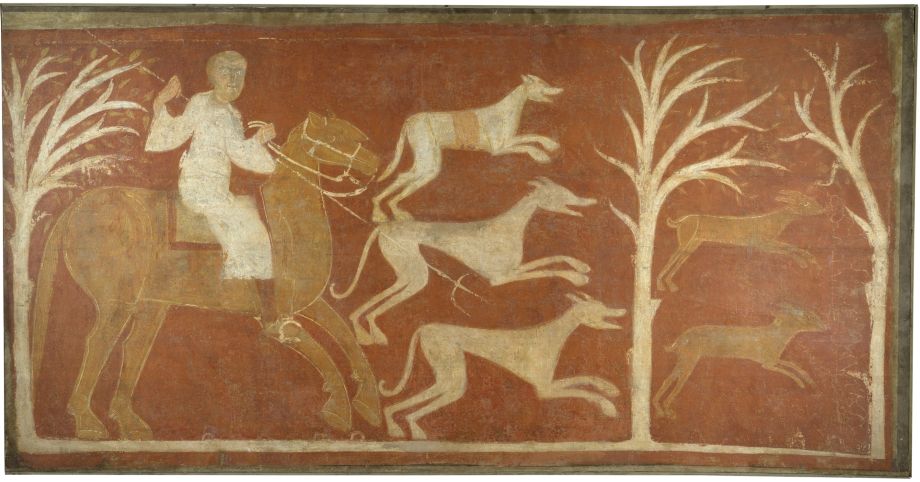
Hare Hunt, Hermitage of San Baudelio, Casillas de Berlanga (Soria)
Anonymous, c. 1125
Copyright ©Museo Nacional del Prado

The hunt for the right words often takes place in darkness, while the waking mind rests. Hare Hunt (c. 1125) depicted in this famous fresco from the Prado seems a fitting illustration for my essay exploring my oneiric creative process—given much of my writing involves pursuing words that race ahead faster than I can record them, gifts from the subconscious delivered whole upon waking.
Hare Hunt, Hermitage of San Baudelio, Casillas de Berlanga (Soria)
Anonymous, c. 1125
Copyright ©Museo Nacional del Prado

From my earliest years, my creative process—whether literary or scholarly—has been curiously nocturnal. Much of my work, I have found, is done while I sleep. When faced with a task, I assign it, quite literally, to my subconscious mind and then close my eyes, surrendering to productive sleep.

As a student, this practice became a quiet ritual. When a paper was due, I would already know the topic, the sources I intended to use, and what I wished to accomplish. I would also, admittedly, wait until the evening before it was due—believing, and with reason, that fear brought a clarity of mind that was otherwise lacking. Thus, I would take a short nap before beginning. Upon waking, the entire outline of the paper would be present—clear, complete, and waiting. With a stack of books to my right, a blank sheaf of paper to my left, and a typewriter in front of me, I would set to work, and the paper would unfold almost as if dictated.

My professors noticed this strange fluency. The grades I earned and comments I received reflected it, but more telling were their requests to keep copies of my papers for their own files—something they did not ask of other students. I did not then understand that what they admired was less my discipline, or lack thereof, than the uncanny lucidity of the night mind that guided me.

Over the years, this oneiric gift has only deepened. I remain grateful for it. At times, an entire sentence or paragraph will suddenly appear either as I awake or will awake me in the middle of the night—perfectly formed, insistent, demanding to be recorded before it vanishes. At other times, these moments arrive unbidden, startling me out of unrelated thought; often, they are the flowering of a subject that I had briefly considered and set aside, unaware that it had continued germinating in the depths below consciousness.

When such inspiration surfaces, it comes in torrents. I rush to record the first few words, only to find myself laughing at the impossible speed with which the rest races ahead, leaving me chasing its tail through the air. Madness, perhaps—but a joyous one.

It is as if some part of the mind, working in silence while the waking self is distracted, composes and refines without interference. And when it deems the work ready, it releases it whole into consciousness—seed, stalk, and blossom at once. My task, then, is not to command this process, but to remain open to it, to receive it with gratitude, and to write before the vision fades. Refinement, if needed, may occur later.

What I once mistook for a personal oddity, I now recognize as a shared inheritance of the human mind—the work of the subconscious muse, the night mind ever at her loom, weaving thought into form before dawn breaks—although a nap in the midst of day will oft serve the purpose just as well.

The Hollow Trunk’s Flight

The Dream

A dream came last night, which I remembered fully this morning—unusual in itself. And it took place in my back yard, though it was both the yard I inhabit now and the yard of my childhood, merged into one, as dreams are apt to do.

There, an artful arrangement awaited discovery. Tree stumps, limbs, and trunks lay piled upon one another in an interlocking manner that spoke of intention, as if some unseen curator had composed a sculpture from what time and weather had left behind.

When I reached out to touch them, my hands found surprise. These weathered forms, which should have been heavy with the density of wood and years, had been hollowed by time itself. They were rotted through, yet not with decay’s dampness—they were light and dry, transformed into airy vessels rather than solid mass.

Somehow, as dreams permit impossible physics, I found myself propping up a trunk that had been cleft cleanly along its length. It towered above my home, this great hollow half-cylinder, and I leaned it against another tree for support. Yet it was the interior that commanded wonder—not the familiar barked exterior, but the cavernous architecture time had carved within.

The hollow space revealed itself as a cathedral of wood. Veins ran through its walls like ancient rivers frozen in timber. Hollows and chambers formed a geography of absence, more substantial in its emptiness than solidity ever was. Feathery light filtered through, revealing a multitude of dark wooden colors that dazzled the eye—chestnut depths giving way to amber chambers, shadows playing across surfaces smoothed by seasons of patient transformation.

Then came the wind. A sudden gust lifted this towering trunk—this thing that should have weighed hundreds of pounds—and set it sailing. It rose effortlessly over my home, over the neighboring trees, floating like a great wooden vessel through the air. I watched in wonder as it drifted beyond my private yard into the public realm, finally coming to rest in the street where others might behold it: a hollowed vessel that had learned to fly.

Reflection

When I woke, with the image of the trunk carried aloft by wind still vivid and present, I immediately, before any conscious analysis, found myself recalling a verse from Sirach 34:1:

“Vain and deceptive hopes are for the foolish, and dreams lend wings to fools.”

Strange that this verse should surface decades after its first encounter, yet perhaps not strange at all. Since my undergraduate days, I have described my own words as but the “ramblings of a fool.” Yet here was a dream that seemed to insist on meaning, demanding that this particular fool pay attention to what had taken wing.

And so its meaning began to unfold.

What does it mean to be made light by emptiness? In this dream, the trunk had surrendered its solid density to time’s patient carving, and in return had been granted the gift of flight. It was not diminished by its hollowness but transformed by it—its beauty now living in the spaces where wood once was, in the architecture of absence that created room for light to play.

Perhaps this speaks to a deeper truth about how we ourselves are shaped. The experiences that hollow us out—loss, time, the gradual weathering that comes with living—may not be diminishing us but preparing us for a different kind of beauty. What we think of as erosion might actually be revelation, uncovering inner landscapes we never knew existed.

The dream suggests that lightness is not about adding something but about discovering what remains when the unnecessary weight has been worn away. Those veins and chambers within the wood were always there, waiting to be revealed. The capacity for flight was present all along, hidden beneath layers that time knew how to remove.

And there is something profound about how the dream moves from private discovery to public gift. What begins in the intimate space of a backyard—this personal encounter with transformed wood—ultimately takes wing and lands where others might find it. The wind carries our revelations beyond the boundaries we set for them, beyond the fences of our private understanding.

The hollow trunk that sails over houses and trees reminds us that what we think is fixed and earthbound may be preparing for flight. What appears to be ending—the tree’s death, the wood’s decay—may actually be a becoming, a transformation into something lighter, more beautiful, more free.

In the end, perhaps the dream asks me to consider: What in my own life is being hollowed by time? What losses carve space for unexpected beauty? And what within is growing light enough to catch the wind? Sirach warns that dreams lend wings to fools. Yet perhaps even folly bears wisdom, if its wings lift what was thought earthbound into flight.

The Flaws of AI Detection Tools

Auguste Rodin, The Thinker (conceived 1880, cast c. 1917).
Bronze. Cleveland Museum of Art. CC0 
Originally conceived as part of The Gates of Hell, Rodin’s The Thinker was not merely a passive figure lost in thought, but a representation of Dante himself, contemplating the fates of souls below. Cast in tension and muscle, he embodies the labor of intellect—the weight of reflection, the cost of authorship, and the solitary burden of making meaning in a world of mechanized shortcuts. A fitting emblem for the human writer mistaken for a machine.

Preface: A Writer Mistaken for a Machine

The main essay that follows this preface was generated wholly by ChatGPT’s “Deep Research” feature, produced at my request after a recent experience that was equal parts amusing and unsettling.

In a recent essay I had written—carefully and thoughtfully—I found myself admiring a few turns of phrase that seemed, perhaps, too polished. Seeking to determine whether I had unconsciously absorbed and repeated something from my recent reading, I turned to a site I had used before—one that aggregates reviews of AI and plagiarism detectors commonly employed by educators. From there, I selected not one, but three highly rated tools to review my essay and determine whether I had inadvertently borrowed a phrase from Blake, Eckhart, Pseudo-Dionysius, or anyone else I have recently been reading.

The results were, to put it mildly, contradictory, though not for the issue I had set out to explore. The first site was no longer operational, citing the unreliability of AI detection in view of the accelerating complexity of AI language model algorithms. The second tool confidently declared that my essay was entirely free of both plagiarism and AI-generated content. The third, by contrast, just as confidently pronounced that my essay was likely 100 percent AI-generated, both in style and content, based on the presence of twenty phrases—unhelpfully left unidentified—that appeared more frequently in AI-generated material. The site explained that those mysterious phrases had been used in training language models and thus their use in my writing rendered it suspect. It passed no judgment on whether I had plagiarized any statements, only that the content bore resemblance to machine-generated text.

My immediate reaction, I confess, was to teeter between horror and bemusement. The accusation—if one may call such pronouncements generated by AI algorithms such—felt surreal. After all, I knew the truth: I had written every word of the essay, agonized over phrasing, amended lines multiple times, and left the final version still slightly flawed in its characteristic manner—overwritten in places, a bit repetitive, and too fond of “dollar words” when “nickel words” might have sufficed. In other words, it bore the unmistakable hallmark of my own inimitable style and vocabulary—a style and vocabulary that had been mine long before AI and computers were available to assist writers.

My suspicion is that some AI detectors struggle with refined style and elevated or scholarly vocabulary, not because the language itself is artificial, but because such prose deviates from what the detectors expect. Many of these tools appear to assume that typical writing samples—particularly from Americans—will reflect a sixth- to eighth-grade reading and writing level, which is often cited as the norm in American education. As a result, writing that demonstrates syntactic complexity, lexical richness, or familiarity with classical or theological sources may be flagged as anomalous—if not by design, then by statistical accident.

But perhaps this is not so much a matter of cynicism as it is a reflection of changing cultural baselines. It may be that AI detectors are most often trained and tested on writing submitted by individuals who, through no fault of their own, have received a relatively standard education—one that is no longer grounded in the Western canon, rhetorical tradition, or literary cultivation. Meanwhile, the language models themselves were trained on vast bodies of material that included precisely such literary and scholarly writings. The result is a curious inversion: those whose writing reflects a more literary or humanistic sensibility may appear “too AI-like” because the models were trained on the very texts that once defined erudition. We have, in a sense, taught the machines what good writing looks like—and then turned around and accused anyone who writes well of being a machine.

Once the bemusement passed, I turned to curiosity. How could this happen? What is the current scholarly consensus on these tools? Are they reliable? Ethical? Legally defensible? And what risks do they pose—to students, educators, or professionals whose authentic work is misjudged by algorithm? The essay that follows is the product of those inquiries: an AI-assisted deep research essay on AI detection tools, their promises and pitfalls, their technical limits, and their unintended consequences.

To be clear, I do use AI tools—but not to draft my writing. I use them as an editor and as a very well-informed assistant. Tasks assigned to AI include reviewing essays for spelling and grammatical errors, formatting footnotes and endnotes, formatting essays for publication on my website, converting material into HTML, creating SEO-friendly titles and tags, checking poetic meter, or assisting me as a thesaurus when a word feels off. AI assists at the margins. It does not craft essays, as writing is my work.

Anyone still in doubt need only glance at my desk—or my nightstand or dining room table. There, amid scattered books, notebooks, half-drafted pages, and layers of revisions, is the reality of my writing process. It is rarely clean, often circuitous, and always human.

Writing is a laborious but enjoyable process. Many essays and poems take months to write, others take weeks, a few only days. Now and then, an essay or poem does arrive nearly whole, a rare gift, as if sprung from the brow of Zeus. But more often, it is a time-consuming process, coming line by line, revision by revision.

So, with that somewhat overwrought introduction, I offer the following AI-generated essay on AI detection tools—an essay which, in my professional and legal opinion, should dissuade any reasonable educator or institution from ever using AI detectors to determine authorship. AI plagiarism detection may still serve a purpose. But AI authorship detectors? Never. Do not be tempted.

And if I may offer some unsolicited advice in their place, grounded not in machine logic but in the lived practice of teaching and learning: when I taught history, reading, and religion to seventh and eighth graders at St. Edward Catholic School in Youngstown, Ohio, I insisted that all assignments be written in ink. “If one is to err, one should err boldly, in ink,” I told my students, and I refused to accept work written in pencil. This approach taught them not only to commit to their words but, more importantly, to reflect on them before committing anything to paper. It encouraged thought and contemplation—qualities essential to authentic writing and learning—rather than the careless drafting and endless erasing that pencils with erasers, and now mechanical tools, permit. That ethic, I believe, translates well to our current moment.

Educators should begin by becoming familiar with the voice, habits, and capabilities of the writers whose work they are assessing. Ask for drafts, notes, outlines, or written reflections that reveal the student’s thinking process. Structure assignments so that substantial components are completed in class, or are grounded in personal experience or classroom dialogue—subjects that AI cannot credibly fabricate. Make clear whether AI tools may be used, and if so, how. Explain why certain shortcuts, especially in formative stages, may undermine the very skills students are meant to acquire.

For developing writers especially, I am inclined to believe it is best to eschew AI altogether—and perhaps even computers and, dare I say, typewriters, should any still have access to them—in the early stages of learning. Write by hand, with ink. Let not an algorithm be found in the process.


Scholarly and Critical Perspectives on AI Content and Detection Tools

A CHAT GPT ESSAY

Introduction

AI content detection tools – such as Copyleaks, Turnitin’s AI-writing detector, GPTZero, and others – have emerged to help educators and publishers identify text that might have been generated by AI. These detectors typically analyze text for telltale patterns or “low perplexity” that could signal machine-written prose. However, as these tools proliferate in classrooms and journals, many academics, educators, and legal experts are raising alarms about their reliability, transparency, and potential harms. Recent studies and critiques suggest that current AI detectors often fall short of their promises and may even produce unintended negative consequences​ theguardian.comvanderbilt.edu. This report provides an up-to-date overview of how academic, educational, and legal communities view AI content detectors, focusing on concerns over accuracy, fairness, and the risk of false accusations.

Accuracy and Reliability Issues

Detectors’ claims vs. reality: AI detector companies often tout extremely high accuracy rates – some advertise 98–99% accuracy for identifying AI-generated text​citl.news.niu.edu. For example, Copyleaks has claimed 99.12% accuracy and GPTZero about 99%​citl.news.niu.edu. In practice, independent evaluations have found such claims “misleading at best”​ theguardian.com. OpenAI’s own attempt at an AI-written text classifier was quietly discontinued in mid-2023 due to its “low rate of accuracy”​insidehighered.combusinessinsider.com. Even Turnitin, which integrated an AI-writing indicator into its plagiarism platform, acknowledged that real-world use revealed a higher false positive rate than initially estimated (more on false positives below)​insidehighered.cominsidehighered.com. In short, consensus is growing that no tool can infallibly distinguish human from AI text, especially as AI models evolve.

False negatives and AI evolution: Critics note that detectors struggle to keep up with the rapid progress of large language models. Many detectors were trained on older models (like GPT-2 or early GPT-3), making them prone to “overfitting” on those patterns while missing the more human-like writing produced by newer models such as GPT-4 ​bibek-poudel.medium.com. A recent U.K. study underscores this gap: when researchers secretly inserted AI-generated essays into real university exams, 94% of the AI-written answers went undetected by graders​ bibek-poudel.medium.comreading.ac.uk. In fact, those AI-generated answers often received higher scores than human students’ work ​bibek-poudel.medium.com, highlighting that advanced AI can blend in undetected. This high false-negative rate suggests detectors (and even human examiners) can be easily fooled as AI-generated writing grows more sophisticated. It also reinforces that educators cannot rely on detectors alone – as one analyst put it, trying to catch AI in writing is “like trying to catch smoke with your bare hands” bibek-poudel.medium.com.

Transparency and Methodological Concerns

Many in academia criticize AI detection tools as “black boxes” that lack transparency. Turnitin’s AI detector, for instance, was rolled out in early 2023 with almost no public information on how it worked. Vanderbilt University – which initially enabled Turnitin’s AI checks – reported “no insight into how it [the AI detector] works” and noted that Turnitin provided “no detailed information as to how it determines if a piece of writing is AI-generated or not.” vanderbilt.edu Instead, instructors were told only that the tool looks for unspecified patterns common in AI writing. This opacity makes it difficult for educators and students to trust the results or to challenge them. If a student is flagged, neither the instructor nor the student can see what specific feature triggered the detector’s suspicion. Such lack of transparency runs counter to academic values of evidence and explanation, as decisions about academic integrity are being outsourced to an algorithm that operates in secrecy.

Lack of peer review or independent validation: Unlike plagiarism checkers (which match text against known sources), AI detectors use proprietary algorithms and often haven’t been rigorously peer-reviewed in public. Experts point out that “AI detectors are themselves a type of artificial intelligence” with all the attendant opaqueness and unpredictability ​citl.news.niu.edu. This raises concerns about due process: should a student face consequences from a tool whose inner workings are not open to scrutiny? Legal commentators note that relying on an unproven algorithm for high-stakes decisions is risky – any “evidence” from an AI detector is inherently probabilistic and not easily explainable in plain terms  ​cedarlawpllc.comcedarlawpllc.com. Some universities have therefore erred on the side of caution. For example, the University of Minnesota explicitly “does not recommend instructors use AI detection software because of its known issues”  ​mprnews.org, and advises that if used at all, it be treated as an “imperfect last resort.”

Privacy concerns: Another transparency issue involves data privacy and consent. Using third-party AI detectors means student submissions (which can include personal reflections or sensitive content) are sent to an external service. Vanderbilt’s review concluded that “even if [an AI detector] claimed higher accuracy… there are real privacy concerns about taking student data and entering it into a detector managed by a separate company with unknown data usage policies.”​  vanderbilt.edu Educators worry that student work could be stored or reused by these companies without students’ knowledge. This lack of clarity about data handling adds yet another layer of concern, leading some institutions to opt out of detector services on privacy grounds alone.

False Positives and Bias Against Certain Writers

Perhaps the most pressing criticism of AI content detectors is their propensity for false positives – flagging authentic human work as AI-generated. Researchers and educators have documented numerous cases of sophisticated or even simplistic human writing being mistaken for machine output. A dramatic illustration comes from feeding well-known texts into detectors: when analysts ran the U.S. Constitution through several AI detectors, the document was flagged as likely written by AI​  senseient.com. The reason is rooted in how these tools work. Many detectors measure “perplexity,” essentially how predictably a text aligns with patterns seen in AI training data​  senseient.comsenseient.com. Paradoxically, a text like the Constitution or certain Bible verses, which use common words and structures, appears too predictable and yields a low perplexity score – causing the detector to misjudge it as AI-produced. As one expert quipped, detectors can incorrectly label even America’s most important legal document as machine-made​  senseient.com. This highlights a fundamental flaw: well-written or formulaic human prose can trip the alarms because AI models are trained on vast amounts of such text and can mimic it.

Bias against non-native English writers: A growing body of scholarship reveals that AI detectors may disproportionately flag work by certain groups of human writers. A 2023 Stanford study by Liang et al. found that over half of essays written by non-native English speakers were wrongly flagged as AI-generated by popular detectors​  theguardian.com. By contrast, the same detectors judged over 90% of essays by native English-speaking middle-schoolers to be human-written  ​theguardian.com. The disparity stems from linguistic style: non-native writers, or those with more basic vocabulary and simpler grammar, inadvertently write in a way that the detectors identify as “low perplexity” (too predictable)  ​theguardian.com. Detectors, trained on AI outputs that tend to be straightforward, end up penalizing writers who use simpler phrasing or formulaic structures, even if their work is entirely original  ​theguardian.com. The Stanford team bluntly concluded that “the design of many GPT detectors inherently discriminates against non-native authors”​  themarkup.org. This bias can have serious implications in academia and hiring: an ESL student’s college essay or a non-native job applicant’s cover letter might be unfairly flagged, potentially “marginalizing non-native English speakers on the internet” as one report warned  ​theguardian.comtheguardian.com.

Beyond language background, other kinds of “atypical” writing styles trigger false positives. People with autism or other neurodivergent conditions, who might write in a repetitive or highly structured way, have been snared by AI detectors. Bloomberg reported the case of a college student with autism who wrote in a very formal, patterned style – a detector misidentified her work, leading to a failing grade and a traumatic accusation of cheating  ​gigazine.net. She described the experience as feeling “like I was punched in the stomach” upon learning the software tagged her essay as AI-written  ​gigazine.net. Likewise, younger students or those with limited vocabulary (through no fault of their own) could be at higher risk. In tests on pre-ChatGPT student essays, researchers found detectors disproportionately flagged papers with “straightforward” sentences or repetitive word choices​  mprnews.orggigazine.net. These examples underline a key point from critics: AI content detectors exhibit systemic biases – they are more likely to falsely accuse certain human writers (non-native English writers, neurodivergent students, etc.), raising equity and ethical red flags.

Real World Consequence: False Accusations and Student Harm

For students and educators, a false positive isn’t an abstract statistical problem – it can derail a person’s education or career. Recent incidents show the tangible harm caused by over-reliance on AI detectors. At Johns Hopkins University, lecturer Taylor Hahn discovered multiple instances where Turnitin’s AI checker flagged student papers as 90% AI-written, even though the students had written them honestly​  themarkup.orgthemarkup.org. In one case, a student was able to produce drafts and notes to prove her work was her own, leading Hahn to conclude the “tool had made a mistake.”​  themarkup.org  He and others have since grown wary of trusting such software. Unfortunately, not all students get the benefit of the doubt initially. In Texas, a professor infamously failed an entire class after an AI tool (reportedly ChatGPT itself) “detected” cheating, only for it to emerge that the students hadn’t cheated – the detector was simply not a valid evidence tool  ​businessinsider.combusinessinsider.com. Incidents like this have fueled professors’ concerns that blind faith in detectors could lead to wrongful punishments of innocent students.

The psychological and academic toll of false accusations is significant. Students report experiencing stress, anxiety, and a damaged sense of trust when their authentic work is misjudged by an algorithm​  citl.news.niu.edu. For international students, the stakes can be even higher. As one Vietnamese student explained, if an AI detector wrongly flags his paper, it “represents a threat to his grades, and therefore his merit scholarship” – even raising fears about visa status if academic standing is lost  ​themarkup.orgthemarkup.org. In the U.S., where academic misconduct can lead to expulsion, an unfounded cheating charge could put an international student at risk of deportation​  themarkup.org. These scenarios illustrate why students like those at the University of Minnesota say they “live in fear of AI detection software”, knowing one false flag could be “the difference between a degree and going home.”  mprnews.orgmprnews.org

Unsurprisingly, some students and faculty have fought back. In early 2025, a Ph.D. student at the University of Minnesota filed a lawsuit alleging he was unfairly expelled based on an AI cheating accusation​  mprnews.orgmprnews.org. He maintains he did not use AI on an exam, and objects that professors relied on unvalidated detection software as evidence  ​mprnews.orgmprnews.org. The case, which garnered national attention, underscores the legal minefield institutions enter if they treat AI detector output as proof of misconduct. Similarly, a community college student in Washington state had his failing grade and discipline overturned after lawyers demonstrated to the school’s administration how unreliable the detection program was – notably, the college vice-president admitted that even her own email reply was flagged as 66% AI-generated by the tool  ​cedarlawpllc.com  ​cedarlawpllc.com. In voiding the penalty, the college effectively acknowledged that the detector’s result was not trustworthy evidence​  cedarlawpllc.com. These cases highlight a common refrain: without corroborating evidence, an AI detector’s output alone is too flimsy to justify accusing someone of academic dishonesty​  cedarlawpllc.com.

Responses from Educators and Institutions

The educational community’s response to AI detectors has rapidly evolved from initial curiosity to growing skepticism. Many instructors, while concerned about AI-assisted cheating, have concluded that current detector tools are “a flawed solution to a nuanced challenge.” They argue that “they promise certainty in an area where certainty doesn’t exist”  ​bibek-poudel.medium.com. Instead of fostering integrity, heavy-handed use of detectors can create an adversarial classroom environment and chill student creativity  ​medium.com. For these reasons, a number of teaching and learning centers at universities have published guides essentially making the case against AI detectors. For instance, the University of Iowa’s pedagogy center bluntly advises faculty to “refrain from using AI detectors on student work due to the inherent inaccuracies” and to seek alternative ways to uphold integrity​  teach.its.uiowa.edu. Northern Illinois University’s academic technology office labeled detectors an “ethical minefield,” arguing their drawbacks (false accusations, bias, stress on students) “often outweigh any perceived benefits.”​  citl.news.niu.edu Their guidance encourages faculty to prioritize fair assessments and student trust over any quick technological fix​citl.  news.niu.edu.

Importantly, some universities have instituted policy decisions to limit or reject the use of AI detection tools. In August 2023, after internal tests and consultations, Vanderbilt University decided to disable Turnitin’s AI detector campus-wide  ​vanderbilt.edu  ​vanderbilt.edu. Vanderbilt’s announcement cited multiple concerns: uncertain reliability, lack of transparency, the risk of ~1% false positives (potentially hundreds of students falsely flagged each year), and evidence of bias against non-native English writers  ​vanderbilt.eduvanderbilt.edu. Northwestern University likewise turned off Turnitin’s AI detection in fall 2023 and “did not recommend using it to check students’ work.”  businessinsider.com  The University of Texas at Austin also halted use, with a vice-provost stating that until the tools are accurate enough, “we don’t want to create a situation where students are falsely accused.”  businessinsider.com   Even Turnitin’s own guidance to educators now stresses caution, advising that its AI findings “should not be used as the sole basis for academic misconduct allegations” and should be combined with human judgment​  turnitin.com. In practice, many colleges have shifted focus to preventative and pedagogical strategies – designing assignments that are harder for AI to complete (personal reflections, oral exams, in-class writing), educating students about acceptable AI use, and improving assessment design  ​mprnews.orgmprnews.org. This approach seeks to address AI-related cheating without leaning on fallible detection software.

On a broader policy level, OpenAI itself has cautioned educators against over-reliance on detectors. In a back-to-school guide for fall 2023, OpenAI explicitly warned that AI content detectors are not reliable for distinguishing GPT-written text​  businessinsider.com. The company even confirmed what independent studies found: detectors tend to mislabel writing by non-English authors as AI-generated, and thus should be used, if at all, with extreme care  ​businessinsider.com. As a result, many institutions are rethinking how to maintain academic integrity in the AI era. The emerging consensus in education is that no AI detection tool today offers a magic bullet, and using them blindly can cause more harm than good. Instead, instructors are encouraged to discuss AI use openly with students, set clear policies, and consider assessments that integrate AI as a learning tool rather than treat it as a forbidden trick  ​mprnews.orgmprnews.org.

Legal and Ethical Considerations

The controversies around AI writing detectors also raise legal and ethical questions. From an ethical standpoint, deploying a tool known to produce errors that can jeopardize students’ academic standing is highly problematic. Scholars of educational ethics argue that the potential for “unfounded accusations” and damage to student well-being means the costs of using such detectors may outweigh the benefits  ​themarkup.org  ​themarkup.org. There is an implicit breach of trust when a student’s honest work is deemed guilty until proven innocent by an algorithm. This reverses the usual academic principle of assuming student honesty and has been compared to using an unreliable litmus test that forces students to “prove their innocence” after a machine accuses them​  themarkup.org. Such an approach can poison the student-teacher relationship and create a climate of suspicion in the classroom.

Legally, if a student is disciplined or loses opportunities due to a false AI detection, institutions could face challenges. Education lawyers note that students might have grounds for appeal or even litigation if they can show that an accusation rested on junk science. The defamation lawsuit at Minnesota (mentioned above) may set an important precedent on whether sole reliance on AI detectors can be considered negligent or unjust by a university  ​mprnews.orgmprnews.org. Additionally, since studies have demonstrated bias against non-native English speakers, one could argue that using these detectors in high-stakes decisions could inadvertently violate anti-discrimination policies or laws, if international or ESL students are disproportionately harmed. Universities are aware of these risks. As the Cedar Law case in Washington illustrated, once informed of the detector’s fallibility, administrators reversed the sanction to avoid unfairly tarnishing a student’s record​  cedarlawpllc.comcedarlawpllc.com. The takeaway for many is that any evidence from an AI detector must be corroborated and cannot be treated as conclusive. As one legal commentary put it: the “lesson from these cases is that colleges must be extremely conscientious given the present lack of reliable AI-detection tools, and must evaluate all evidence carefully to reach a just result.”​  cedarlawpllc.com

Finally, there are broader implications for academic freedom and assessment. If instructors were to let fear of AI cheating drive them to use opaque tools, they might also chill legitimate student expression or push students toward homogenized writing. Some ethicists argue that the very concept of AI text detection may be a “technological dead end” – because writing is too variable and AI is explicitly designed to mimic human style, trying to perfectly separate the two may be futile​  bibek-poudel.medium.combibek-poudel.medium.com. A more ethical response, they suggest, is to teach students how to use AI responsibly and adapt educational practices, rather than leaning on surveillance technology that cannot guarantee fairness.

Conclusion

Current scholarly and critical perspectives converge on a clear message: today’s AI content detectors are not fully reliable or equitable tools, and their unchecked use can do more harm than good. While the idea of an “AI lie detector” is appealing in theory, in practice these programs struggle with both false negatives (missing AI-written text) and false positives (flagging innocent writing) to a degree that undermines their utility. The lack of transparency and independent validation further erodes confidence, as does evidence of bias against certain writers. Across academia, educators and researchers are warning that an over-reliance on AI detectors could lead to wrongful accusations, damaged student-teacher trust, and even legal repercussions. Instead of providing a quick fix to AI-facilitated cheating, these tools have become an object of controversy and caution.

In the educational community, a shift is underway – away from automated detection and toward pedagogy and policy solutions. Many universities have scaled back use of detectors, opting to train faculty in better assessment design, set clear guidelines for AI use, and foster open dialogue with students about the role of AI in learning  ​mprnews.orgmprnews.org. Researchers are continuing to study detection methods, but most acknowledge that as AI writing gets more advanced, the detection arms race will only intensify​  edintegrity.biomedcentral.comedintegrity.biomedcentral.com. In the meantime, the consensus is that any use of AI content detectors must be coupled with human judgment, skepticism of the results, and a recognition of the tools’ limits  ​edintegrity.biomedcentral.comedintegrity.biomedcentral.com. The overarching lesson from the past two years is one of caution: integrity in education is best upheld by informed teaching practices and fair processes, not by uncritically trusting in artificial intelligence to police itself​  cedarlawpllc.comcitl.news.niu.edu.