The Hush and the Breath

A Poetic Transformation

Some texts are not revised so much as they are reheard. After publishing my essay Between Noise and Silence: On the Literal, the Metaphoric, and the Space Where Meaning Resides, I found myself haunted by one sentence in particular:

“It is the hush in a conversation—not the words, but the breath that precedes or follows them—that can speak more profoundly than the speech itself.”

Those words returned to me again and again. And in their insistence, they asked for more.

The following poetic fragment emerged in response.
It is offered here as a kind of imagined rediscovery—
a scroll unearthed, not written; gathered, not composed.
Said to be copied from a fragment attributed to the Scribe of the Restoration, it may be read as a poetic conceit: a transformation of thought into voice, of prose into hush.


Ruach (Breath, Wind, Spirit — An Aureate Silence)
Intended as a visual companion to Scroll of the Breath – Fragment III, evoking the unseen architecture of spirit and the luminous hush before the word.

Scroll of the Breath Fragment III

It is the hush in a conversation—not the words, but the breath that precedes or follows them—that can speak more profoundly than the speech itself.
(Saying attributed to the Elder in exile, during the Years of Listening.)

1
There is a hush that is not silence.
It is the waiting before the word.
It is the veil drawn back,
not by hands,
but by reverence.

2
It is the pause in the soul,
where meaning prepares to enter.
It is not the absence of presence,
but presence unadorned.

3
And breath—
Breath is not speech.
It is the spirit moving before sound.
It is the wind before the voice,
the current beneath the utterance.

4
The sages of old did not name this breath lightly.
In the tongue of the first covenant, they called it ruach
wind, breath, spirit.
It moved across the waters.
It entered the nostrils of clay.
It bore the world on its whisper.

5
Do not rush past the hush.
Do not cast out the breath.
The hush is the cradle of truth.
The breath is its midwife.

6
In the sacred gatherings,
before the chant begins,
there is a breath.
It is not sung,
yet the song is born of it.

7
In the way of the temple,
the priest lifts the cup.
But before he speaks the ancient words,
there is a breath.
In that breath,
time bends,
and the Presence leans close.

7a
And in the house of the laborer,
the mother bends to lift the child.
But before she speaks comfort,
there is a breath.
In that breath, love gathers strength.
In that hush, sorrow is made bearable.

8
In the theatre of the East,
the dancer stands still.
The motion does not begin with movement,
but with breath.
So too the soul.

9
The hush is not confusion.
It is awe.
The breath is not delay.
It is consecration.

10
Blessed is the one who waits without speaking.
Blessed is the one who breathes before declaring.
For wisdom comes not in haste,
but in readiness.

11
And if you seek the voice of the Holy One,
look not in the thunder,
nor in the fire,
nor in the noise of many things.

12
But listen in the hush.
Watch in the breath.
And there—
you may find what does not speak,
but knows.

13
The scribe gathers what the wind leaves behind.
Not with hands,
but with silence.
Not in speech,
but in breath.
He walks as dust that remembers flame.
The fragments are many,
but the hush makes them whole.

Poetry as Revelation: Engaging with “Vitruvian Man Unbound”

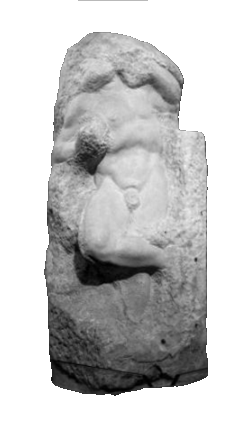
Michelangelo, The Awakening Slave (c. 1525–30).
A body caught between measure and becoming.

I. On Bloom and the Anxiety of Influence

As the poet of Vitruvian Man Unbound, I find myself drawn to Harold Bloom’s understanding of how poetry functions within tradition—not as mere imitation or influence, but as a creative misreading that transforms both predecessor and successor. Bloom’s vocabulary—his clinamen (poetic swerve), daemonization, and apophrades (the return of the dead)—offers a framework for understanding my own relationship with Leonardo’s iconic drawing.

Yet I would press beyond the confines of Bloom’s categorical system. The strongest poetry, as Bloom himself recognized, resists easy resolution. Vitruvian Man Unbound embodies what he called a tessera—a completion of its precursor that simultaneously preserves and undermines its foundational terms. The poem does not simply revise Leonardo; it retroactively reshapes our understanding of him. It allows us to see Vitruvian Man as an incomplete gesture, one whose implicit metaphysical longing only achieves full articulation through the poem’s unfolding of form, desire, and transcendence.

II. The Paradox of Poetic Creation as Discovery

When I began Vitruvian Man Unbound, there was no conceit of a new idea. Rather, I felt I was unearthing the obvious—articulating for the first time verses that had already been rendered, waiting to be heard.

This situates the poem not as invention but as discovery—a Renaissance conception of artistic creation. Michelangelo spoke of liberating the form already imprisoned within the marble. Leonardo, too, conceived of art as revelation through observation, uncovering structures latent in nature and proportion. I participate in that lineage: the transcendence of the circle was already latent in Leonardo’s drawing. My poem does not overwrite Vitruvian Man but unveils what it always contained.

III. Poetry as Transcription of Revealed Truth

Poetry is primarily, in my conception, the art of transcription. Poetry is ultimately truth revealed, however rendered.

This belief is ancient. Poets once invoked the Muse, believing their songs were received rather than authored. Plato cast poets as possessed vessels of divine madness. In scriptural traditions, the prophet or sage writes not from invention but from vision. In this view, the poet is not creator but conduit.

This understanding reorients poetic practice. What matters most is not novelty of theme or form but receptivity—a cultivated attentiveness to truths that ask to be heard. To compose well is to listen well. The most vital poems do not invent so much as reveal. The poet’s charge, then, is fidelity.

Vitruvian Man Unbound aspires to this kind of transcription. It draws out from Leonardo’s image the philosophical tensions embedded therein: between proportion and possibility, containment and becoming, structure and the longing to transcend it.

IV. The Poem’s Journey: From Containment to Transcendence

At its heart, my poem charts a metaphysical journey—the awakening of a consciousness confined within geometry, gradually realizing its cosmic vocation. The Vitruvian figure, bound in ratios and ruled lines, discovers within himself not mere form but flame. The movement is from being drawn to drawing, from being measured to measuring.

The poem gives voice to this paradox: “I am both bound and boundless, large and small, / Both measured part and immeasurable all.”

This is no empty contradiction. It is the philosophical heart of the work. The circle becomes “not wall but door,” not negated but reimagined. Limitation, as I came to understand, is not the enemy of freedom but its precondition. Form does not imprison; it allows the infinite to appear in the guise of the finite.

This idea resonates with multiple traditions: the Christian theology of kenosis, quantum indeterminacy, the aesthetics of the golden ratio, even the existential struggle of Camus’ Sisyphus. In Vitruvian Man Unbound, I sought to draw them all into poetic coherence.

V. Beyond Influence: Co-Creation and Transcendence

My relationship to Leonardo’s drawing is not one of mere homage or critique. The poem does not simply descend from his vision; it reconfigures how I understand that vision. In Bloom’s terms, it enacts an apophrades: the precursor is altered by the successor, the past rewritten by the presence of the present.

I acknowledged this inversion within the poem itself: “Da Vinci dreamed me into being’s start; / I dream myself anew with conscious art.”

This was not rebellion against the tradition but transcendence through deep fidelity. I did not seek to destroy Leonardo’s Vitruvian Man; I hoped to fulfill him. I entered the drawing and found the voice that seemed to have been waiting there. The Vitruvian Man, for me, ceased to be object and became subject, consciousness incarnate.

VI. Poetry as Epistemological Practice

If poetry is the transcription of revealed truth, then it is not merely aesthetic. It is epistemological. It helps us understand not only what is, but how we come to know what is. The most original poems do not dazzle through novelty alone; they resonate because they name what we already suspected was true, but had not yet heard.

Vitruvian Man Unbound aspires to such resonance. I hope it awakens a dormant dimension in Leonardo’s drawing—and perhaps, in us. I did not set out to create a new form, but to reveal the old form’s silent music. For me, it was an act not of invention, but of listening—not conquest, but witnessing. A poetry of revelation.

Thus the ink that once bound becomes the ink that reveals.

VII. Echoes of Prometheus

In reflecting on Vitruvian Man Unbound, I recognize the shadow of another unbound figure—Shelley’s Prometheus. His liberation from cosmic tyranny, his transformation into a visionary voice of harmony, and his rejection of vengeance in favor of transcendence, all resonate deeply with the arc of my poem. Like Prometheus, the Vitruvian figure is not merely released; he is revealed—as a bearer of fire, of knowledge, of poetic truth. It is not accidental that in striving toward the infinite, we find ourselves echoing those myths and verses where the infinite has already spoken.

An Essay About the State of the Republic Entitled “TODAY”

A Reading of D.S. Yarab’s essay “TODAY”

TODAY

We are a nation without reason.
We are a nation without morals.
We are a nation without purpose.

We have failed our inheritance.
We have failed our promise.
We have failed our future.

Once, we were a people who sought wisdom in the governance of reason, who fashioned our republic in the crucible of Enlightenment thought. We held that truth could be discerned, that knowledge was the safeguard against tyranny, that free inquiry was the antidote to superstition. Yet, we have cast aside the intellect of our forebears, bartering reason for the cheap currency of factional dogma, of ignorance parading as virtue.

Once, we understood that a republic, to endure, must be anchored in moral responsibility. The city upon a hill was not merely a boast—it was a charge, a demand, an expectation. Yet, we have allowed that moral vision to fragment, perverted into empty postures of righteousness, where sectarian division supplants shared virtue, and the sacred call to justice is drowned in the clamor of self-interest.

Once, we were a people of purpose, our liberties not mere indulgences but the instruments of human dignity and national strength. We were called to the defense of freedom, not merely for ourselves but for those who would follow. Yet, today, our purpose dissolves in the tide of complacency, our freedoms bartered for fleeting comforts, our equality abandoned to the rising chorus of cynicism and despair.

All factions—left, right, and center—have forsaken the principles that once defined us. Each has wrapped itself in the illusion of virtue while kneeling at the altar of Mammon. We claim fidelity to truth, but we scorn reason when it contradicts our desires. We speak of morality, yet we wield it as a weapon rather than a compass. We invoke purpose, but only as rhetoric to mask our pursuit of power and comfort.

And so we arrive at Today.

If we are honest—if we strip away our illusions and stand before the bar of judgment without recourse to excuse, evasion, or self-justification—we must confess: we are all complicit. No single faction bears this burden alone, nor can any claim the mantle of righteousness. We, the people, have chosen indulgence over discipline, grievance over responsibility, spectacle over substance. And in that choosing, we have undone the Republic.

But we are not bound to our ruin.

We must restore reason.
We must restore morality.
We must restore purpose.

To do so, we must abandon the golden idols who are unworthy to serve us, the oligarchs who plunder us, the ideologies that subvert reason. We must cast aside the anger, the bitterness, the division that have led us to forsake one another, that have severed us from our future and our purpose. If we are to be a people again—if we are to reclaim the inheritance we have squandered—we must choose anew. Not comfort, not grievance, not self-interest. We must choose to be worthy of the Republic, or else surrender to its final dissolution.

If we continue on our present course, where do we go?

If we have abandoned reason, morality, and purpose, what remains?

It is no longer a question of mere decline but of transformation. A Republic that ceases to be a Republic does not simply fade into irrelevance; it becomes something else, something unrecognizable to those who once believed in its founding principles. Have we already crossed that threshold? Have we slipped, not merely toward decay, but into authoritarianism?

The signs are unmistakable. A government that no longer serves its people but instead entrenches power. A citizenry that, weary of self-governance, willingly submits to rule by force or deception. A society that exalts spectacle over substance, division over unity, and vengeance over justice. These are the hallmarks of a nation no longer free in spirit, even if it still pretends to be free in form.

Authoritarianism does not always come with the fanfare of a coup or the boot of the oppressor; more often, it arrives in whispers, in the slow erosion of rights once taken for granted, in the willing abdication of responsibility by a people who have lost the will to govern themselves. It arrives when power, unchecked, ceases to be accountable. When the institutions meant to preserve liberty instead secure their own perpetuity. When law becomes a weapon, wielded not for justice but for control.

If we have not yet fallen fully into authoritarianism, then we are on its precipice. A people who no longer hold their leaders accountable, who no longer value reason, morality, or purpose, will find themselves ruled—not by wisdom, not by justice, but by those who know only how to command and demand obedience.

And so, we face a choice.

Do we accept this slow descent into tyranny, consoling ourselves with the illusion that we are still free, so long as we are comfortable? Do we resign ourselves to the idea that the Republic was always doomed, that we are powerless to reclaim it?

Or do we resist?

To resist is not merely to oppose a party or a faction. It is not to trade one demagogue for another. True resistance is the restoration of the very things we have abandoned: reason, morality, and purpose. It is the rejection of fear and cynicism, the refusal to accept the inevitability of our own undoing.

It is to say, as those before us have said in darker times: not yet, not now, not here.

Today is the reckoning.

What shall we make of tomorrow?

Finding Humility Through Montaigne’s Wheat Allegory

Photo by Pixabay on Pexels.com

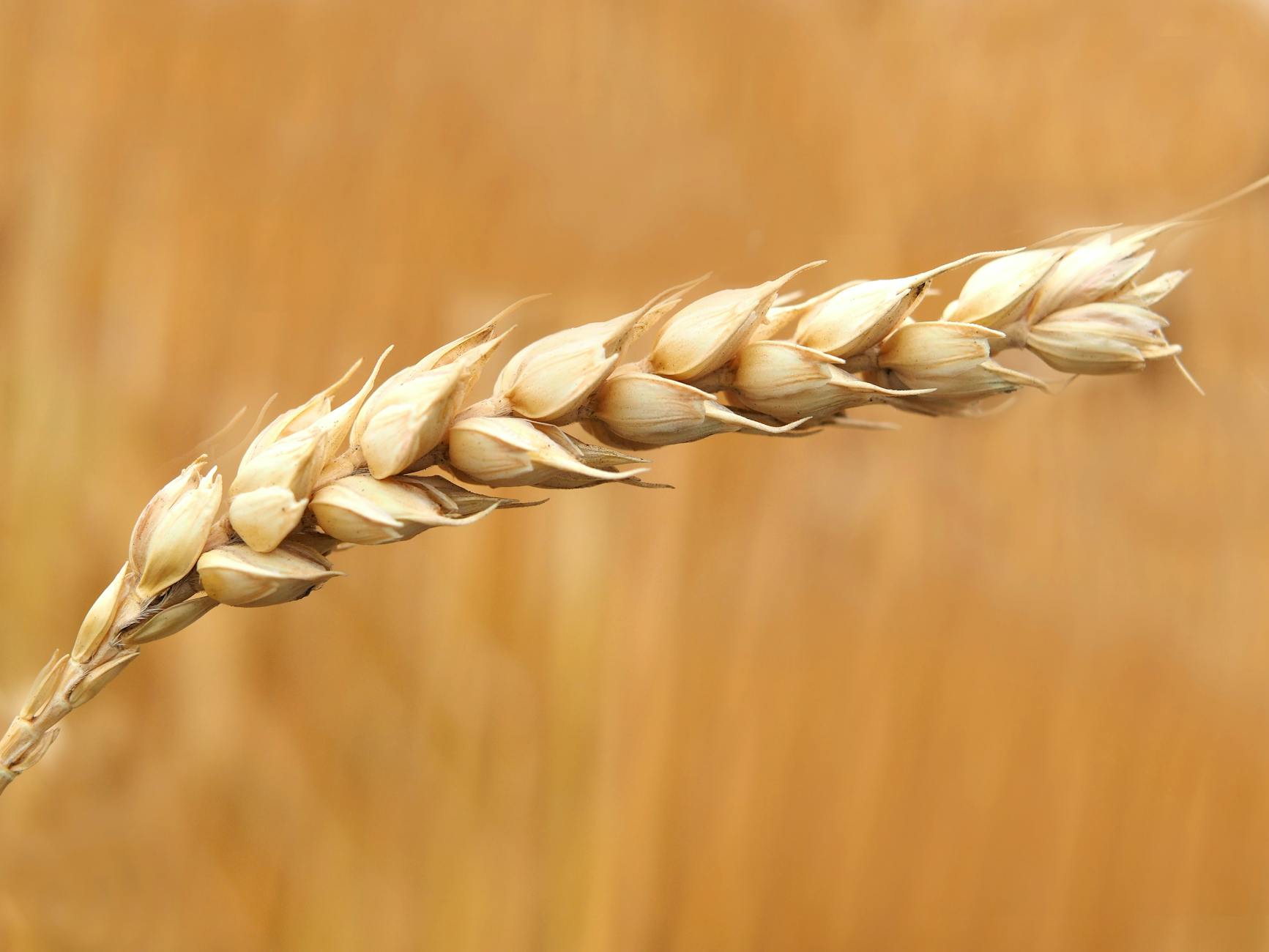
One of the most striking images from Montaigne’s Essays, which has lodged itself firmly in my mind, comes from his Apology for Raymond Sebond. Specifically, within one paragraph, he uses wheat as an extended metaphor or an allegory wherein he suggests that the more wisdom or knowledge one acquires, the more humble one becomes. He writes:

To really learned men has happened what happens to ears of wheat: they rise high and lofty, heads erect and proud, as long as they are empty; but when they are full and swollen with grain in their ripeness, they begin to grow humble and lower their horns. (Montaigne, 1963, p. 227)

The image captures what I have found to be my experience insofar as that, with each passing year, as my hair has silvered and my eyes dimmed, I have found that wisdom requires casting the certitude, rigidity, and knowledge of youth aside for the humility of lived experience.  

Additionally, I find the lesson to be an extraordinary corollary to my personal motto, about which I have previously written, Humilitatem Initium Sapientiae (humility is the beginning of wisdom).

Thus, having reflected if not obsessed upon Montaigne’s insight for well over a fortnight, I finally shaped my thoughts about it into a poem, the results of which are below.


The Ripened Ear
(Inspired by Montaigne)

Beneath the sun’s unyielding gaze, it grows,
The tender stalk, upright and full of pride,
Its hollow strength unbent by winds that blow,
Yet void of fruit, it stands unsatisfied.

But time, the patient sower, bids it yield,
To weight of grain within its swelling breast,
It bows its head, as on the golden field,
The burdened ear finds wisdom’s humble crest.

So too the soul, in ignorance, stands tall,
Unbowed by truths it dares not yet to see,
Until the harvest’s gentle weight does call,
And bends the heart to find humility.

For wisdom ripens where humility’s sown,
And humbleness, by wisdom, is full-grown.


Montaigne, M. de. (1963). Essays and selected writings: A bilingual edition (D. M. Frame, Trans. & Ed.). St. Martin’s Press.

Exploring Life’s Seasons: A Folk-Country Ballad Inspiration

This past week found me felled by a viral affliction. Partaking neither in food nor drink, and scarcely participating in sensible cognition, I was confined to bed for more days than I care to recall. Yet, as the affliction ebbed and fragments of normalcy returned, I turned instinctively to the rejuvenating essays of Montaigne and Ralph Waldo Emerson—sources of intellectual nourishment I revisit whenever my spirit requires renewal.

Immersed in their timeless prose, I found myself drifting into a peculiar, lyrical state of mind. Suspended between the lingering exhaustion of illness and the clarity that accompanies recovery, I began reflecting on the seasons of life as illuminated by these great essayists. One restless night, as I contemplated the transformations we undergo from youth to old age, a thought emerged: our lives might be divided into three distinct seasons. The first is the boundless optimism of youth, the second the tempered cynicism of middle age, and the third, a kind of amiable reconciliation in later years.

Initially, I intended to encapsulate each season in a simple couplet, but inspiration soon carried me beyond that modest aim. Each season grew into a stanza, and those stanzas evolved into lyrics for a song. To the surprise of anyone familiar with my usual preferences, I envisioned the piece as a folk-country ballad—an entirely unexpected departure. Adding a touch of mischief, I deliberately included a non-grammatical line to irk a particular friend who finds such lapses intolerable to his Germanic sensibilities. With lyrics in hand, I collaborated with Udio.com to set the lyrics I had written to music. The result is a short composition titled Three Seasons We Live.

This song traces the journey of life through its phases: from the bright-eyed optimism of youth, through the shadows of midlife cynicism, and ultimately into the serenity of autumnal reflection. Its brevity is telling of my still-recovering stamina; I am reserving my energy for Vitruvian Man Unbound, a work that remains in need of substantial emendation, refining, revising, reorganizing—and likely, the painful excision of several dozen eight-line stanzas. I simply got carried away with the iambic pentameter once I got started.

In the meantime, as Monty Python would say, “And now for something completely different.” I invite you to listen to this heartfelt piece, an unexpected blend of introspection and melody, crafted during a week marked by convalescence and quiet inspiration.