Enlargement of the highly stylized bird motif on the American stoneware discussed in this post.
This exquisite example of American stoneware features a masterfully rendered cobalt blue depiction of a bird on its front, with gracefully detailed tail feathers and flowing, artistic lines. On the reverse, a simple yet elegant cluster of cobalt motifs, suggestive of floral forms with delicate stamen emerging from their centers, complements the primary design. Together, these elements create a charming piece that beautifully bridges utility and artistry.
American Stoneware, later 19th century, featuring bird motif. From the author’s collection.
The reverse design consists of a trio of stylized floral motifs, each appearing to have stamen delicately emerging from the center.
Historical Context
Stoneware was a cornerstone of 19th-century domestic life, essential for food preparation and storage. By the mid-19th century, stoneware shifted from ovoid shapes to more cylindrical forms, as seen in this vessel. This stylistic transition helps to date such pieces, with cylindrical containers typically associated with the latter half of the century.
New York State became a leading center for stoneware production, with its extensive canal system facilitating the transport of white clay from New Jersey and the distribution of finished goods across the region. Potters adorned these utilitarian wares with freehand cobalt designs, firing them in salt-glaze kilns to achieve their characteristic shiny finish.
The artistic designs on such stoneware, often created by untrained but skilled potters, are now celebrated as American folk art. Birds and floral motifs were among the most popular subjects, making this piece an exceptional representation of the genre.
Key Features
Primary Design: Freehand cobalt bird with stunningly detailed tail feathers, noted for its fluid and dynamic form.
Secondary Design: A trio of cobalt blue floral motifs on the reverse, each appearing to have stamen delicately emerging from the center, providing balance and artistic flair.
Additional Details: Cobalt highlights on the handles, a thoughtful touch indicative of the potter’s attention to detail.
Dimensions: 11 inches in height x 7 inches wide (flaring to 8 1/4 inches at top rim)
Condition: Very good for its age with minor glaze imperfections typical of the period. No cracks, chips, or restorations.
Artistic and Functional Legacy
This stoneware vessel exemplifies the creative spirit of 19th-century American potters, who transformed everyday objects into enduring works of art. Though utilitarian in origin, the piece’s intricate designs and craftsmanship ensure its lasting appeal as a collector’s item and a testament to the era’s artistry.
How old is the literary tradition of the golden plow? This question arose unexpectedly while I was working my way through William Blake’s Jerusalem, where I encountered these striking lines:
They Plow’d in tears, the trumpets sounded before the golden Plow And the voices of the Living Creatures were heard in the clouds of heaven … (Blake, 1988, p. 205)
As often happens in literary exploration, the evocative image of the golden plow immediately diverted me from my primary task of continuing to read and understand Jerusalem. The golden plow, I realized, resonates deeply in our cultural consciousness, appearing not only in poetry (see also Blake’s Augeries of Innocence, where he writes: “When Gold & Gems adorn the Plow / To peaceful Arts shall Envy Bow”) but also in modern contexts—such as the Golden Plow Award, the highest honor presented to a sitting member of Congress by the American Farm Bureau.
The reasons for the golden plow’s enduring power as a poetic device are clear: the plow itself is a universal symbol of labor, cultivation, and renewal—an instrument that transforms barren soil into fertile ground, embodying humanity’s intimate connection with nature and the cycles of life. By portraying this familiar tool as golden, poets imbue it with sacred significance, elevating it from the mundane to the divine. Gold has long been associated with divinity, purity, and incorruptibility. In this sense, the golden plow often becomes not merely a tool of agriculture but a metaphor for spiritual or moral transformation, where the act of plowing symbolizes preparing the soul or society for renewal and growth.
This striking image led me to investigate its earliest literary appearances, which brought me to Herodotus’s Histories (late 5th century BC). In Book Four, he recounts the Scythian origin myth:
According to the Scythians, theirs is the youngest of nations, and it came into existence in the following way. The first man born in this land, when it was still uninhabited, was named Targitaos. They say that the parents of this Targitaos were Zeus and the daughter of the River Borysthenes, though that does not sound credible to me. Nevertheless, that is their claim. From such stock, then came Targitaos, and to him were born three sons: Lipoxais, Arpoxais, and the youngest of them, Colaxais. While they reigned, certain objects made of gold fell from the sky: they were a plow, a yoke, a battle-axe, and a cup. When these objects came to rest on Scythian ground, they were seen first by the eldest son, who, wanting to take them up, approached where they lay. But as he came near them, the gold caught on fire, so he left them there; and when the second son approached, the same thing happened. Thus the burning gold drove both of them away; but when the third and youngest son approached, the fire stopped burning and went out, so he carried the gold home, and the elder brothers reacted to this event by agreeing to surrender the entire kingdom to the youngest. (Herodotus, 2007, pp. 283–284)
While the specifically golden plow appears rarely in classical and medieval literature, the plow itself features prominently as a powerful symbol. In Virgil’s Georgics, the unadorned plow serves as both a practical tool and metaphor for poetic creation:
It must also be said what tools are the weapons of the hardy rustics, without which neither could crops be sown nor harvests rise: the plowshare and the heavy timber of the curved plow, the slow-moving wagons of the Eleusinian mother, the threshing boards, the sledges, and the rakes with uneven weight. (Virgil, 1846, Georgics I, lines 160–162, trans. by author)
Although Virgil’s plow is neither golden nor even gilded, its role as both a practical tool and poetic metaphor anticipates later literary uses of the golden plow as a symbol of sacred labor and creation.
The Jewish and Christian traditions, drawing upon their holy books, provided writers throughout the ages with rich sources of plowing imagery for metaphorical and allegorical purposes. Consider Luke 9:62, where commitment to discipleship is illustrated through the image of putting one’s hand to the plow; Amos 9:13, where the plowman overtaking the reaper symbolizes divine abundance and the promise of restoration; and Isaiah 2:4, where the transformation of swords into plowshares symbolizes divine peace. In these texts, the plow consistently signifies renewal, moral preparation, and divine purpose. This deep reservoir of symbolic meaning helps us understand the significance of Blake’s golden plow in Jerusalem.
In both Blake’s visionary poem and Herodotus’s historical narrative, the golden plow stands as a transformative symbol. For Blake, it is likely part of a cosmic act of redemption, accompanied by trumpets and celestial voices. For Herodotus, it conveys legitimacy and divine sanction within the founding myth of a nation. In each case, the golden plow bridges the earthly and the divine, elevating labor and effort to the realm of the sacred. This enduring image, rich with cultural and poetic imagination, invites reflection on how humanity’s most basic acts—plowing, cultivating, laboring—can become acts of profound spiritual significance.
That the symbol persists into our own time through awards like the Golden Plow Award suggests its continuing resonance with fundamental human values of cultivation, transformation, and excellence. Yet I wonder: might there be an even earlier literary reference to this powerful symbol than Herodotus’s account? Readers who know of earlier appearances are invited to share their findings.
References
Blake, W. (1988). The complete poetry & prose of William Blake (D. Erdman, Ed.; H. Bloom, Commentary). Anchor Books.
Ginsberg Project. (2024, October 14). William Blake – from The Marriage of Heaven and Hell – 14. Retrieved December 13, 2024, from https://allenginsberg.org/2024/10/oct14/ The Ginsberg Project has an interesting discussion of the Jerusalem extract which is the object of this post.
Herodotus. (2007). The landmark Herodotus: The histories (R. B. Strassler, Ed.; A. L. Purvis, Trans.; R. Thomas, Introduction). Pantheon Books.
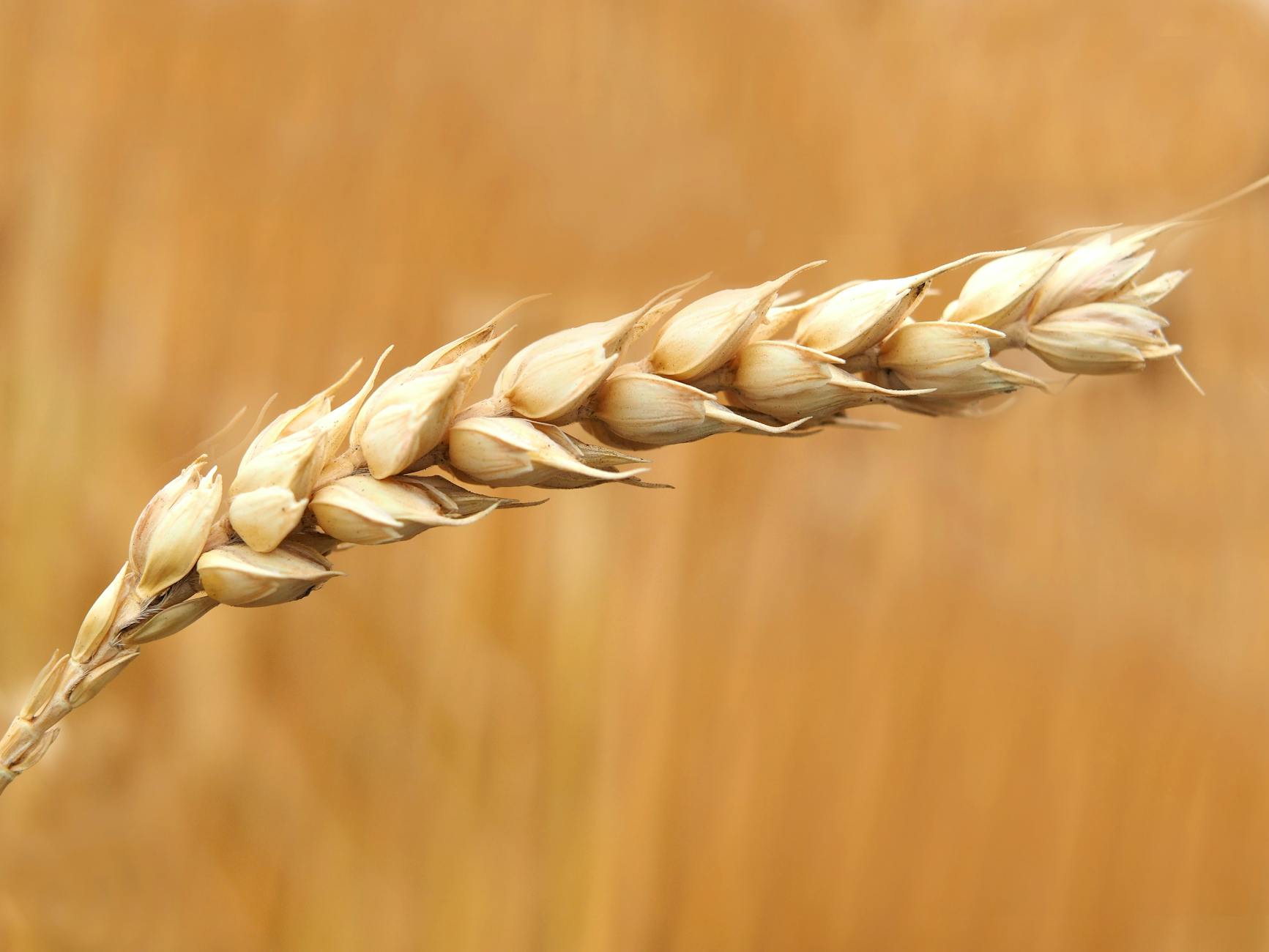
One of the most striking images from Montaigne’s Essays, which has lodged itself firmly in my mind, comes from his Apology for Raymond Sebond. Specifically, within one paragraph, he uses wheat as an extended metaphor or an allegory wherein he suggests that the more wisdom or knowledge one acquires, the more humble one becomes. He writes:
To really learned men has happened what happens to ears of wheat: they rise high and lofty, heads erect and proud, as long as they are empty; but when they are full and swollen with grain in their ripeness, they begin to grow humble and lower their horns. (Montaigne, 1963, p. 227)
The image captures what I have found to be my experience insofar as that, with each passing year, as my hair has silvered and my eyes dimmed, I have found that wisdom requires casting the certitude, rigidity, and knowledge of youth aside for the humility of lived experience.
Additionally, I find the lesson to be an extraordinary corollary to my personal motto, about which I have previously written, Humilitatem Initium Sapientiae (humility is the beginning of wisdom).
Thus, having reflected if not obsessed upon Montaigne’s insight for well over a fortnight, I finally shaped my thoughts about it into a poem, the results of which are below.
The Ripened Ear (Inspired by Montaigne)
Beneath the sun’s unyielding gaze, it grows, The tender stalk, upright and full of pride, Its hollow strength unbent by winds that blow, Yet void of fruit, it stands unsatisfied.
But time, the patient sower, bids it yield, To weight of grain within its swelling breast, It bows its head, as on the golden field, The burdened ear finds wisdom’s humble crest.
So too the soul, in ignorance, stands tall, Unbowed by truths it dares not yet to see, Until the harvest’s gentle weight does call, And bends the heart to find humility.
For wisdom ripens where humility’s sown, And humbleness, by wisdom, is full-grown.
Montaigne, M. de. (1963). Essays and selected writings: A bilingual edition (D. M. Frame, Trans. & Ed.). St. Martin’s Press.
Guillaume Guillon Lethière (French, 1760 – 1832) The Death of Virginia, about 1825–1828, Oil on paper, mounted on canvas. Unframed: 73.5 × 117 cm (28 15/16 × 46 1/16 in.). The J. Paul Getty Museum, Los Angeles, 2023.7
Livy’s History of Early Rome offers a timeless case study in the corruption of power through the story of Verginia. In Book 3, Appius Claudius – a member of the decemviri tasked with codifying Roman law – becomes consumed by lustful desire for Verginia, a young woman of plebeian birth. Unable to win her through legitimate means, he orchestrates a fraudulent court case to claim her as a slave, abusing his authority to ensure the verdict.
When her father Verginius, a soldier, arrives to defend his daughter, he finds the machinery of justice has been wholly perverted to serve Appius’s desires. Faced with no recourse against this tyranny, Verginius takes his daughter’s life in the forum rather than see her enslaved and defiled. His tragic act galvanizes both the people and army, leading to the overthrow of the decemviri and restoration of constitutional government.
The story has relevance today as we witness how unchecked power still corrupts, with modern figures who – like Appius – seduce both masses and elites with promises of reform while pursuing personal gain and dismantling democratic safeguards. The allusive poem I drafted below below explores this persistent danger, using Verginia’s sacrifice to illuminate the cost of our collective failure to recognize and resist tyranny in its early stages.
The Wages of Compromise: The Blood of Verginia
Beneath the rostra’s shadowed height, he stood, The man whose gilded words had bought the crowd. Their cheer, a wreath for virtue misconstrued, Their gaze averted, though his deeds grew loud. What harm, they thought, if petty sins abound? A jest, a taunt, though brazen, met no plea; The slights were not whispered, though unjust, Personal gain o’er public trust was clear to see.
Yet they excused what honesty would shun, For promised change, for vengeance lightly jested. The wrongs of old made present wrongs seem none; A brighter future claimed, though untested. And so, unchecked, his shadow stretched and grew, Till justice bowed before his grim designs. A father’s hand, with love and fury true, Struck down the bonds of tyranny’s confines.
Her blood, a warning, sanctified the square, The people’s slumber shattered by her cry. The forum rang with shouts that pierced the air, The dream of freedom breathed, though she must die. No longer could they feign or look away— Their wish for ease had birthed a tyrant’s reign. The jest of vengeance turned to ash that day, And Appius fled, undone by grief and shame.
Let not the lesson fade within our time: That deeds unchallenged fester into might. To mock the law, to cloak a crime sublime In promised gold, ensures the coming blight. The people’s trust, the lords’ approving nod, May crown a man or break his staff and rod.








 Northcoast Antiquarian