James Baldwin on Race: Insights from ‘The Cross of Redemption’

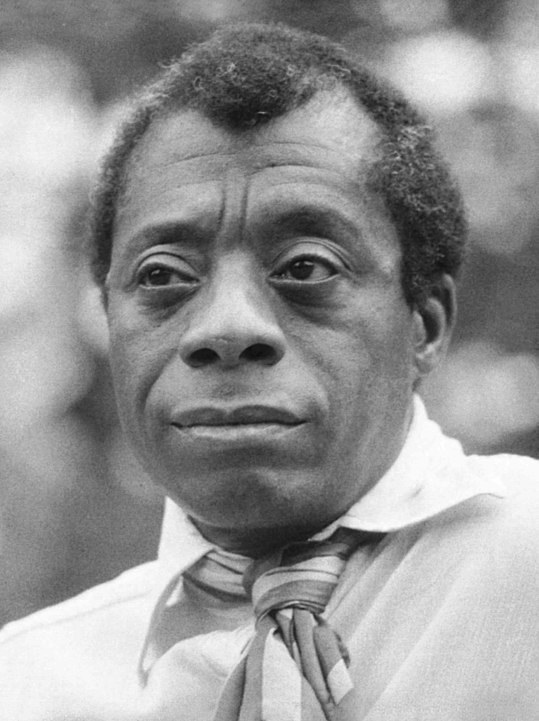
Photo of James Baldwin in  1969
James Baldwin in 1969. Photograph: Allan Warren CC BY-SA 3.0

One of the books I am currently reading is James Baldwin: The Cross of Redemption (Uncollected Writings), edited with an introduction by Randall Kenan and published in 2010. One of the essays in the collection, dated 1984 but still strikingly relevant, is “On Being White … and Other Lies.” A particular passage from that essay stood out to me:

“Just so does the white community, as a means of keeping itself white, elect, as they imagine, their political (!) representatives. No nation in the world, including England, is represented by so stunning a pantheon of the relentlessly mediocre. I will not name names—I will leave that to you.

But this cowardice, this necessity of justifying a totally false identity and of justifying what must be called a genocidal history, has placed everyone now living into the hands of the most ignorant and powerful people the world has ever seen. And how did they get that way? By deciding they were white. By opting for safety instead of life. By persuading themselves that a black child’s life meant nothing compared with a white child’s life. By abandoning their children to the things white men could buy. By informing their children that black women, black men, and black children had no human integrity that those who call themselves white were bound to respect. And in this debasement and definition of black people, they debased and defined themselves.” (The Cross of Redemption, pp. 168–169)

This passage struck me as just as relevant today as it was in Baldwin’s time. The language of racial division may sometimes be more coded—though often, it is not—but the underlying dynamics remain. Some now speak of a mythical golden age to be restored, painting diversity, equity, and inclusion as enemies to be vanquished. Yet Baldwin’s pantheon of the relentlessly mediocre remains firmly in place, with a growing number of elected officials – led by one in particular – who traffic in racial grievance and nostalgia for an edifice of the past that was built upon exclusion. The resentment they cultivate is growing more visceral, more vengeful by the day.

At its core, Baldwin’s essay is a reminder that race is a social construct—one created not out of noble ideals or science but out of moral rot. It was, and remains, a means of defining power and justifying subjugation. Today’s renewed emphasis on racial division in politics—whether explicit or coded—is no less morally bankrupt than in Baldwin’s time.

The Gulf of Mexico Renaming: A Shift Toward Authoritarianism

Perhaps historians, social commentators, and others have overlooked the significance of the official renaming of the Gulf of Mexico by the U.S. government. In retrospect, this single action—more than all the other actions of the recent past—may be the clearest indication that the Republic has slid into authoritarianism.

Consider this: every other action undertaken recently, no matter how heinous, illegal, or unconstitutional, was not truly surprising. These actions were long planned—rooted in old hatreds of people, ideas, and ideologies that have been debated in this country for decades, if not longer.

But to the point—he had a thought, perhaps fleeting, perhaps deliberate, to arbitrarily rename the Gulf. This was not a longstanding controversy, not a battle waged over decades. No committee debated it, no scholars weighed in, no political factions fought over it. It had never been considered or raised. It is not a point of hate or ideology. It was simply arbitrary, irrational, and ahistorical. And yet—voilà—it was done. No resistance. No hesitation. The act was obeyed with the same mechanical efficiency as in North Korea, the Soviet Union, Communist China, Nazi Germany, or Fascist Spain.

It was a test. Could he control thought, speech, and language itself without resistance? Yes. He could.

There were no legal battles, no protests, no challenges. The Gulf of Mexico was not—and had never been—an issue of public contention or even a discussion. Yet this renaming was an exercise in raw, unchecked power. And no one even stopped to ask, Wait—what? Why?

Thus, the Authoritarian States of America arrived. The Republic can be declared dead as of the day the U.S. government—or, at the latest, Google Maps—recognized the change.

Orwell warned us. Read Nineteen Eighty-Four. Read Politics and the English Language.

The Shattered Eagle: A Poetic Reflection on Democracy

Introduction

The Shattered Eagle is a poignant examination of constitutional crisis and democratic decay in modern America. Through vivid imagery and elegiac tone, it traces the symbolic fall of the American Republic, using the eagle as a metaphor for a nation once soaring with purpose but now battered by corruption, authoritarianism, and civic erosion. This meditation on institutional collapse examines the deterioration of checks and balances, the rise of illiberal power, and the fraying of democratic norms.

Themes and Significance

The poem critiques the erosion of constitutional democracy, judicial independence, and legislative integrity. It reflects on how demagoguery, partisan dysfunction, and the corruption of public institutions have undermined democratic ideals and the rule of law. Through its exploration of societal polarization and institutional decay, it captures the zeitgeist of a republic in crisis.

Yet amid constitutional peril and democratic backsliding, the poem poses a crucial question about renewal. Its final stanzas challenge readers to consider whether civic restoration is possible through recommitment to democratic principles and constitutional values.

A Poem for Our Times

Rich in metaphor and steeped in political philosophy, The Shattered Eagle invites readers to confront the realities of democratic erosion while contemplating paths to institutional renewal. Drawing on the tradition of great political poetry like Yeats’s The Second Coming and Auden’s September 1, 1939, this work speaks to the universal struggle to preserve constitutional democracy and the rule of law in an age of mounting illiberalism.


The Shattered Eagle

Once soared an eagle, wings outspread,
Its cry a clarion, freedom bred.
From gilded heights, it carved the skies,
Its dreams a nation dared to rise.

Yet winds of discord tore its plume,
Ambition’s torch became its tomb.
The golden thread of union frayed,
As shadows deepened, hope decayed.

Where laws were forged by reason’s might,
Now darkness shrouds their guiding light.
Once sworn to serve the commonweal,
They sold their oaths for power’s appeal.

The halls once rang with measured voice,
Where reason swayed the public choice.
Yet now the chambers echo lies,
As honeyed tongues weave thin disguise.

No laws they craft, but favors they sell,
To oligarchs who cast their spell.
Once stewards strong, they now kneel low,
To serve a leader’s fleeting glow.

The scales of justice, firm and true,
Now tilt, corrupted, favoring the few.
Once blind, now stained with partisan hue,
They take their bribes in plainest view.

No fealty now to law's command,
But whispers guide the justices’ hand.
From lofty heights, the court descends,
A tool for power, not amends.

The eagle's perch, the people's trust,
Now yields to one with tyrannous lust.
The laurels fall, the wreath departs,
A crown is forged for lawless hearts.

No equal here, a king ascends,
While truth dissolves and honor bends.
The oath betrayed, the power abused,
A throne of lies by fear infused.

The wheels once turned to serve the land,
Now falter at one man’s command.
Where duty reigned with steady hand,
Now chaos thrives and rot expands.

The gears once turned with steady grace,
Impartial hands for every case.
Now oiled with fear, the cogs obey,
A sovereign’s whims, the people's dismay.

No law to guide, no truth to bind,
The constitution lies maligned.
The servants sworn to guard the land
Now yield to lash at one command.

Ideals once held as shining beacons,
Now crumble ‘neath the weight of treasons.
Their lofty light, now dimmed and lost,
Is bartered for ambition’s cost.

The shining hill, a beacon high,
Now shrouded 'neath a darkened sky.
Its lofty dreams by greed betrayed,
By hands of those whose hearts decayed.

No vision guides, no ideals inspire,
But petty aims and base desire.
The noble pact, to truth once sworn,
Now trampled, tattered, and forlorn.

A fractured land, a shattered will,
Where hatred reigns and hearts grow still.
What union stood now falls apart,
Its seams undone by poisoned hearts.

The land now split by faction’s line,
Where rancor festers, hopes decline.
The brother turns on brother’s hand,
And hatred scorches all the land.

No union binds, no concord stays,
But discord reigns in endless days.
Society rent, uncivil, torn,
A weary people, broken, worn.

...

A weary people, broken, worn,
Where shadows fall and freedoms mourn.
Yet seeds may bloom, if hearts remain,
Resolved to rise through toil and pain.

A Folk Art Treasure: American Stoneware with Bird and Floral Motifs

Enlargement of the highly stylized bird motif on the American stoneware discussed in this post.

This exquisite example of American stoneware features a masterfully rendered cobalt blue depiction of a bird on its front, with gracefully detailed tail feathers and flowing, artistic lines. On the reverse, a simple yet elegant cluster of cobalt motifs, suggestive of floral forms with delicate stamen emerging from their centers, complements the primary design. Together, these elements create a charming piece that beautifully bridges utility and artistry.


American Stoneware, later 19th century, featuring bird motif. From the author’s collection.

The reverse design consists of a trio of stylized floral motifs, each appearing to have stamen delicately emerging from the center.

Historical Context

Stoneware was a cornerstone of 19th-century domestic life, essential for food preparation and storage. By the mid-19th century, stoneware shifted from ovoid shapes to more cylindrical forms, as seen in this vessel. This stylistic transition helps to date such pieces, with cylindrical containers typically associated with the latter half of the century.

New York State became a leading center for stoneware production, with its extensive canal system facilitating the transport of white clay from New Jersey and the distribution of finished goods across the region. Potters adorned these utilitarian wares with freehand cobalt designs, firing them in salt-glaze kilns to achieve their characteristic shiny finish.

The artistic designs on such stoneware, often created by untrained but skilled potters, are now celebrated as American folk art. Birds and floral motifs were among the most popular subjects, making this piece an exceptional representation of the genre.

Key Features

  • Primary Design: Freehand cobalt bird with stunningly detailed tail feathers, noted for its fluid and dynamic form.
  • Secondary Design: A trio of cobalt blue floral motifs on the reverse, each appearing to have stamen delicately emerging from the center, providing balance and artistic flair.
  • Additional Details: Cobalt highlights on the handles, a thoughtful touch indicative of the potter’s attention to detail.
  • Dimensions: 11 inches in height x 7 inches wide (flaring to 8 1/4 inches at top rim)
  • Condition: Very good for its age with minor glaze imperfections typical of the period. No cracks, chips, or restorations.

Artistic and Functional Legacy

This stoneware vessel exemplifies the creative spirit of 19th-century American potters, who transformed everyday objects into enduring works of art. Though utilitarian in origin, the piece’s intricate designs and craftsmanship ensure its lasting appeal as a collector’s item and a testament to the era’s artistry.


The Symbolism of the Golden Plow in Literature

From William Blake’s Jerusalem, Chapter 3

How old is the literary tradition of the golden plow? This question arose unexpectedly while I was working my way through William Blake’s Jerusalem, where I encountered these striking lines:

They Plow’d in tears, the trumpets sounded before the golden Plow And the voices of the Living Creatures were heard in the clouds of heaven … (Blake, 1988, p. 205)

As often happens in literary exploration, the evocative image of the golden plow immediately diverted me from my primary task of continuing to read and understand Jerusalem. The golden plow, I realized, resonates deeply in our cultural consciousness, appearing not only in poetry but also in modern contexts—such as the Golden Plow Award, the highest honor presented to a sitting member of Congress by the American Farm Bureau.

The reasons for the golden plow’s enduring power as a poetic device are clear: the plow itself is a universal symbol of labor, cultivation, and renewal—an instrument that transforms barren soil into fertile ground, embodying humanity’s intimate connection with nature and the cycles of life. By portraying this familiar tool as golden, poets imbue it with sacred significance, elevating it from the mundane to the divine. Gold has long been associated with divinity, purity, and incorruptibility. In this sense, the golden plow often becomes not merely a tool of agriculture but a metaphor for spiritual or moral transformation, where the act of plowing symbolizes preparing the soul or society for renewal and growth.

This striking image led me to investigate its earliest literary appearances, which brought me to Herodotus’s Histories (late 5th century BC). In Book Four, he recounts the Scythian origin myth:

According to the Scythians, theirs is the youngest of nations, and it came into existence in the following way. The first man born in this land, when it was still uninhabited, was named Targitaos. They say that the parents of this Targitaos were Zeus and the daughter of the River Borysthenes, though that does not sound credible to me. Nevertheless, that is their claim. From such stock, then came Targitaos, and to him were born three sons: Lipoxais, Arpoxais, and the youngest of them, Colaxais. While they reigned, certain objects made of gold fell from the sky: they were a plow, a yoke, a battle-axe, and a cup. When these objects came to rest on Scythian ground, they were seen first by the eldest son, who, wanting to take them up, approached where they lay. But as he came near them, the gold caught on fire, so he left them there; and when the second son approached, the same thing happened. Thus the burning gold drove both of them away; but when the third and youngest son approached, the fire stopped burning and went out, so he carried the gold home, and the elder brothers reacted to this event by agreeing to surrender the entire kingdom to the youngest. (Herodotus, 2007, pp. 283–284)

While the specifically golden plow appears rarely in classical and medieval literature, the plow itself features prominently as a powerful symbol. In Virgil’s Georgics, the unadorned plow serves as both a practical tool and metaphor for poetic creation:

It must also be said what tools are the weapons of the hardy rustics,
without which neither could crops be sown nor harvests rise:
the plowshare and the heavy timber of the curved plow,
the slow-moving wagons of the Eleusinian mother,
the threshing boards, the sledges, and the rakes with uneven weight. (Virgil, 1846, Georgics I, lines 160–162, trans. by author)

Although Virgil’s plow is neither golden nor even gilded, its role as both a practical tool and poetic metaphor anticipates later literary uses of the golden plow as a symbol of sacred labor and creation.

The Jewish and Christian traditions, drawing upon their holy books, provided writers throughout the ages with rich sources of plowing imagery for metaphorical and allegorical purposes. Consider Luke 9:62, where commitment to discipleship is illustrated through the image of putting one’s hand to the plow; Amos 9:13, where the plowman overtaking the reaper symbolizes divine abundance and the promise of restoration; and Isaiah 2:4, where the transformation of swords into plowshares symbolizes divine peace. In these texts, the plow consistently signifies renewal, moral preparation, and divine purpose. This deep reservoir of symbolic meaning helps us understand the significance of Blake’s golden plow in Jerusalem.

In both Blake’s visionary poem and Herodotus’s historical narrative, the golden plow stands as a transformative symbol. For Blake, it is likely part of a cosmic act of redemption, accompanied by trumpets and celestial voices. For Herodotus, it conveys legitimacy and divine sanction within the founding myth of a nation. In each case, the golden plow bridges the earthly and the divine, elevating labor and effort to the realm of the sacred. This enduring image, rich with cultural and poetic imagination, invites reflection on how humanity’s most basic acts—plowing, cultivating, laboring—can become acts of profound spiritual significance.

That the symbol persists into our own time through awards like the Golden Plow Award suggests its continuing resonance with fundamental human values of cultivation, transformation, and excellence. Yet I wonder: might there be an even earlier literary reference to this powerful symbol than Herodotus’s account? Readers who know of earlier appearances are invited to share their findings.


References

Blake, W. (1988). The complete poetry & prose of William Blake (D. Erdman, Ed.; H. Bloom, Commentary). Anchor Books.

Ginsberg Project. (2024, October 14). William Blake – from The Marriage of Heaven and Hell – 14. Retrieved December 13, 2024, from https://allenginsberg.org/2024/10/oct14/ The Ginsberg Project has an interesting discussion of the Jerusalem extract which is the object of this post.

Herodotus. (2007). The landmark Herodotus: The histories (R. B. Strassler, Ed.; A. L. Purvis, Trans.; R. Thomas, Introduction). Pantheon Books.

Krisak, L. (2006). [Review of the book Virgil’s Georgics: A New Verse Translation, by J. Lembke]. Translation and Literature, 15(1), 111–113. Edinburgh University Press.

Lincoln, B. (2014). Once again “The Scythian” myth of origins (Herodotus 4.5–10). Nordlit, 33, 19–34.

The Jerusalem Bible: Reader’s Edition. (1968). Doubleday & Company.

Virgil (Publius Vergilius Maro). (1846). Georgica [Georgics], Book I, lines 160–162 (Hachette ed.). Translated by the author. Wikisource. Retrieved December 9, 2024, from https://la.wikisource.org/wiki/Georgica_(Hachette)/Liber_I

Virgil. (2005). Virgil’s Georgics (J. Lembke, Trans.). Yale University Press.