

The old fiction that America’s two major parties represent opposing interests—one for business, the other for working people—no longer persuades anyone who pays attention. Nor does the claim that they meaningfully occupy the ideological poles of right and left. The observant voter, that dwindling minority, sees that both parties have long answered to the same masters: corporations, financiers, and those who profit from the machinery of endless growth and permanent inequality. In 2024, the top one hundred billionaire families poured $2.6 billion into federal elections—one of every six dollars spent. Dark money reached a record $1.9 billion, more than double the amount in 2020. Corporate lobbying hit $4.4 billion, with Big Tech alone spending $61.5 million and employing one lobbyist for every two members of Congress. Their quarrels are theatrical. Their policies, however dressed in partisan language, converge upon the preservation of the same order.
But something darker has taken hold. The oligarchs who once influenced the system now rule it directly. They have seized one party outright, hollowed out the other through dependence on the same donors, and reduced the national contest to absurd theater. Thirteen billionaires with combined wealth exceeding $450 billion now hold cabinet positions in the federal government—the wealthiest administration in American history. The man who spent between $277 and $290 million to help elect the president—the largest individual political donation ever recorded—was rewarded with a government position granting access to Treasury Department systems containing Americans’ Social Security numbers and bank accounts. The performance conceals the deeper reality—that the constitutional balance envisioned by the founders has collapsed, not from sudden assault but from gradual surrender. We have kept the shell of the Republic while its substance has been drained away.
Today, all three branches of government serve the same masters—and it is not the people.
The Executive
On June 7, 2025, a president deployed approximately 2,000 National Guard troops and 700 U.S. Marines to Los Angeles after immigration raids sparked protests, claiming “incidents of violence and disorder…constitute a form of rebellion against the authority of the Government.” The governor actively opposed the deployment, stating local police could handle the situation. Three months later, U.S. District Judge Charles Breyer ruled the action violated federal law, writing that “there was no rebellion, nor was civilian law enforcement unable to respond to the protests and enforce the law.” Judge Breyer described the administration’s rationale as “contrived” and warned of an apparent attempt at “creating a national police force with the President as its chief.” It marked the first time since 1965 that a president deployed National Guard over a governor’s objections.
By October 2025, the president has authorized federal troop deployments to at least five American cities on fabricated claims of civil disorder, including to Washington D.C. claiming a “crime emergency” despite violent crime being at a thirty-year low, to Memphis despite crime at a twenty-five-year low, and to Portland where a federal judge found protests “generally limited to fewer than 30 people and were largely sedate.” When courts issued restraining orders, the president threatened to invoke the Insurrection Act, declaring at an August cabinet meeting: “I have the right to do anything I want to do. I’m the president of the United States.”
He orders the Justice Department to prosecute political opponents and protect allies, compiling an enemies list reminiscent of the darkest regimes of the twentieth century. On September 25, 2025, former FBI Director James Comey became the first senior government official indicted under the second Trump administration—four days after the previous federal prosecutor was fired for refusing to pursue charges he considered baseless, and four days after Trump’s former personal attorney was installed as the new prosecutor. She presented the case to the grand jury alone, without a single career prosecutor present. The president had posted on social media five days earlier: “We can’t delay any longer, it’s killing our reputation and credibility.” A grand jury probe of New York’s Attorney General stretched five months despite federal prosecutors finding insufficient evidence. Investigations were ordered into a philanthropist’s foundation for potential racketeering charges. The Attorney General stated on national television: “Whether you’re a billionaire, funding organizations to try to keep Donald Trump out of office, everything is on the table. We will investigate you.”
He threatens to revoke media licenses for unfavorable coverage and uses emergency powers as instruments of ordinary governance. After a comedian criticized the president’s supporters on September 16, 2025, the FCC Chairman appeared on a conservative podcast the next afternoon threatening license revocation. That same evening, major network affiliates announced they would not air the program, and the network suspended it indefinitely. During the suspension, the company lost close to $5 billion in market value, employees received death threats, and approximately twenty affiliate stations refused to air the program even after its return. The president stated aboard Air Force One: “They give me only bad publicity or press, and I mean, they’re getting a license, I would think maybe their license should be taken away.” The FCC Chairman followed: “I don’t think this is the last shoe to drop…the consequences are going to continue to flow.” An FCC Commissioner responded: “The FCC does not have the legal authority, the constitutional right, or the ability to revoke a license just because the president does not like what that broadcaster is broadcasting. But the threats are the point.”
On his first day in office, he declared a “National Energy Emergency” claiming “precariously inadequate and intermittent energy supply” despite government research showing fossil fuel production had reached record levels. In April, he invoked emergency powers to impose tariffs, declaring that trade relationships with “each and every country in the world” posed “unusual and extraordinary threats”—including nations he dismissed as places “nobody has ever heard of.” He declared a border emergency claiming America’s sovereignty was “under attack” despite December 2024 recording the second-smallest number of border encounters since August 2020, representing an 81% decrease from the previous year. He invoked emergency powers eight times in his first hundred days—more than any modern president in the same period—transforming what were meant to be extraordinary measures into instruments of routine policy preference.
When Congress appropriates funds he dislikes, he withholds them in defiance of the Impoundment Control Act. The Government Accountability Office issued six formal findings by September 2025 that the administration violated the law requiring presidents to spend funds as Congress appropriates. Congressional investigators estimate the administration has frozen, canceled, or fought in court to block more than $410 billion in funding—for electric vehicle infrastructure, early childhood education, school upgrades, emergency shelter programs. When challenged, the budget director dismissed the findings as “non-events with no consequence. Rearview mirror stuff.” The administration removed public access to agency funding data until a federal court ordered its restoration in August 2025. On September 26, the Supreme Court allowed the withholding of $4 billion in foreign aid just weeks before the funds would expire, despite a lower court finding the administration had no discretion to refuse spending what Congress had appropriated. Justice Kagan warned in dissent: “At issue is the allocation of power between the Executive and Congress over the expenditure of public monies.”
When statutes require Senate confirmation of senior officials, he ignores the Appointments Clause, leaving “acting” loyalists in place indefinitely. One official simultaneously served as Senate-confirmed Secretary of State and acting administrator of another agency before that agency was closed entirely and its workforce reduced from over twelve thousand to seven hundred eighteen employees. Federal courts found multiple violations of the Federal Vacancies Reform Act. Criminal defendants challenged appointments in federal court, arguing the administration’s interpretation would allow “never-confirmed, FVRA-ineligible shadow officials” with “no limits or eligibility requirements” to serve “indefinitely.” The executive branch has become not an executor of law but the law itself.
The Legislative
Congress, paralyzed by faction and captive to donor interests, has ceased to function as a coequal branch. For fiscal year 2025, it enacted zero of the twelve full-year appropriations bills required by law—the last time all appropriations passed before a fiscal year began was 1997. Instead, on March 15, 2025, it passed a continuing resolution extending the previous year’s funding levels, eliminating $15.9 billion in approved projects, and mistakenly omitting routine provisions that threatened the nation’s capital with over $1 billion in cuts.
On October 1, 2025, the government shut down. As of October 8, approximately 750,000 federal workers remain furloughed, with 420,000 working without pay. Air traffic control towers have closed due to sick calls, causing flight delays. National parks began shuttering. The Senate has failed three times to pass funding bills—on September 30, October 6, and October 8—with the Majority Leader stating the chamber would “keep voting on the same competing bills over and over.” The Speaker canceled the House’s return to Washington, keeping members in their districts, and declared: “The ball is in the court of the Senate Democrats.” The Minority Leader responded: “His members aren’t even here doing their jobs, they’ve been home for weeks.” A controversial administration memo suggested furloughed workers may not receive guaranteed back pay, contradicting a law the president himself signed in 2019. Congress cannot pass a budget without brinkmanship and shutdowns.
It cannot enforce subpoenas or conduct genuine oversight. In August 2025, the House Oversight Committee issued subpoenas for closed-door depositions to multiple former officials, including five former Attorneys General, two former FBI Directors, and various political figures. Yet courts have given little legal help to congressional committees, causing subpoena fights to drag out for years with no conclusive ability to enforce them quickly. Following a 2020 circuit court ruling, Congress lost a key option for civil enforcement and now faces three inadequate choices: referral to the Justice Department it seeks to investigate, slow and uncertain civil suits, or an inherent contempt power unused since the 1930s and described as “cumbersome, inefficient, and unseemly.” The Afghanistan withdrawal investigation exemplified these challenges, with the Justice Department’s Office of Legal Counsel claiming subpoenas were unenforceable because they interfered with presidential powers.
It legislates by continuing resolution and press release. In its abdication, it resembles not the Roman Senate of the Republic but the Senate of the Empire—still meeting, still debating, but powerless to constrain the ruler it nominally advises. Sixty-four percent of Americans believe major donors have “a lot” of influence on how members of Congress vote, compared to only fourteen percent who believe constituents have such influence. Research published in 2023 found “a robust relationship between donors and speech” in Congress, with donor activity shaping not just votes but legislative priorities and agenda-setting. One study found that sixty percent of billionaire wealth now derives from “inheritance, monopoly power or crony connections” rather than merit. These are the masters Congress serves.
The Judiciary
Most perilous of all, the Supreme Court—once the guardian of limits—has become the instrument of their removal. On July 1, 2024, in Trump v. United States, the Court grants the president immunity so sweeping that criminal accountability for official acts effectively vanishes. Chief Justice Roberts writes for the majority that presidents have absolute immunity for actions within their “conclusive and preclusive constitutional authority” and presumptive immunity for all official acts unless prosecution “would pose no dangers of intrusion on the authority and functions of the Executive Branch.” The decision covers actions “so long as they are not manifestly or palpably beyond [his] authority.” Critically, Roberts rules that courts may not inquire into presidential motives when dividing official from unofficial conduct, calling such inquiry “highly intrusive.”
Justice Sotomayor opens her dissent with words that will echo through history: “Today’s decision to grant former Presidents criminal immunity reshapes the institution of the Presidency. It makes a mockery of the principle, foundational to our Constitution and system of Government, that no man is above the law.” She concludes: “Whether described as presumptive or absolute, under the majority’s rule, a President’s use of any official power for any purpose, even the most corrupt, is immune from prosecution…In every use of official power, the President is now a king above the law. With fear for our democracy, I dissent.” A former federal judge states: “There is no support whatsoever in the Constitution or even in the Supreme Court’s precedents, for the past 200 years, for this reprehensible decision.”
In abandoning the Chevron precedent on June 28, 2024, the Court strips regulatory agencies of authority to interpret and enforce the laws Congress enacts, transferring power from the legislature to the judiciary and, by extension, to the executive the judiciary favors. Chief Justice Roberts declares that courts, not agencies, must “decide all relevant questions of law” and claims agencies “have no special competence in resolving statutory ambiguities. Courts do.” The decision overturns precedent cited in over eighteen thousand lower court decisions and seventy Supreme Court cases. Justice Kagan warns in dissent that the Court “gives itself exclusive power over every open issue—no matter how expertise-driven or policy-laden—involving the meaning of regulatory law…the majority turns itself into the country’s administrative czar.” She provides examples of technical questions courts must now decide without deference: “whether and when an ‘alpha amino acid polymer’ qualifies as a ‘protein’ under the Public Health Service Act, or whether one population of squirrels is ‘distinct’ from another under the Endangered Species Act.”
The Court declines to enforce the Impoundment Control Act or the Appointments Clause, ignoring clear statutory and constitutional text. On September 26, 2025, it rules that private parties lack standing to sue over spending law violations—effectively making the Impoundment Control Act unenforceable except by a comptroller general the executive could simply ignore. Judge Florence Pan warns in an appellate dissent: “The Supreme Court and our court have stated in no uncertain terms that the Executive, as a constitutional matter, has no authority to disobey duly enacted statutes for policy reasons. Yet that is what the majority enables today.”
On June 27, 2025, the Court rules that federal district courts generally lack authority to issue nationwide injunctions protecting non-parties from executive orders. Justice Barrett writes for the majority that such injunctions “likely exceed the equitable authority that Congress has granted to federal courts.” Justice Jackson warns in dissent: “The Court’s decision to permit the Executive to violate the Constitution with respect to anyone who has not yet sued is an existential threat to the rule of law…a zone of lawlessness within which the executive has the prerogative to take or leave the law as it wishes.” Rights now depend on geography and litigation status. For the first time in modern history, constitutional protections may vary by state depending on whether parents sued.
Through emergency orders on its shadow docket, the Court allows the president to fire officials whom statutes protect from at-will removal—commissioners of independent agencies that Congress deliberately insulated from political control. On September 22, 2025, the Court grants full review signaling likely overturn of the 1935 precedent protecting such officials. Justice Kagan dissents, writing that emergency orders reveal “how that eventual decision will go” and criticizes “the impatience to get on with things—to now hand the president the most unitary, meaning also the most subservient, administration since Herbert Hoover (and maybe ever).”
It strikes down precedents by ideological fiat while leaving standing decisions that expand corporate and executive dominion. What was once judicial review has become judicial complicity. Legal observers characterize the Court’s current term as “executive power, executive power, executive power,” noting the Court’s decisions “may be fueling Trump’s maximalist approach to executive power” in 2025.
Thus the separation of powers, the very architecture of the Constitution, exists now only as echo. The branches that were meant to check one another instead reinforce one another’s dereliction. Congress surrenders; the president seizes; the Court sanctifies. The forms persist—elections are held, opinions are issued, sessions convene—but their meaning is gone. We recite the rituals of democracy while living under the logic of autocracy.
The timeline of 2025 makes visible what might otherwise remain abstract. In June, federal troops deployed to Los Angeles over a governor’s objections—a federal judge would later call it an attempt at “creating a national police force.” In September, the Justice Department indicted a former FBI Director four days after the president’s personal attorney was installed as prosecutor. That same month, the Supreme Court allowed the administration to withhold $4 billion in congressionally appropriated funds, while Justice Kagan warned of executive power unchecked. By October, the government had shut down, 750,000 workers furloughed, and Congress had passed zero of its twelve required appropriations bills. The oligarchs who funded this transformation—thirteen billionaires in the cabinet, one man’s quarter-billion-dollar investment yielding a government position with Treasury access—now govern directly. The forms persist: courts issue rulings the executive ignores, Congress meets but cannot fund the government, elections are held but determined by billions in dark money. What was constitutional architecture has become constitutional theater.
It did not happen overnight. For decades, both parties courted the same wealth, privatized public life, and distracted voters with culture wars while dismantling the civic foundations beneath them. Oligarchic money captured the means of communication, turning news into spectacle and grievance into commodity. In 2024, billionaire wealth grew by $2 trillion—$5.7 billion per day, three times faster than the previous year—creating 204 new billionaires, nearly four per week. Meanwhile, median household income increased just $1,040, a statistically insignificant change, remaining essentially flat compared to pre-pandemic levels. The top one-tenth of one percent saw income growth of 1,003% from 1979 to 2021 while the bottom twenty percent experienced 132% growth—meaning top earners’ incomes grew 7.6 times faster. The top ten percent of earners now own 66.6% of all wealth.
Yet on his first day in office in 2025, the president signed executive orders declaring war not on this inequality but on diversity programs, defining sex as “immutable biological classification,” and mandating only two gender options on federal forms. Within two weeks came orders banning transgender military service, pardoning abortion clinic protesters, and threatening to withhold education funding from schools allowing transgender athletes in women’s sports. Five hundred seventy-five anti-LGBTQ state bills were introduced in 2025, with fifty-four passing into law. Twenty-seven states now ban gender-affirming care for minors, affecting 40% of transgender youth. The Attorney General launched a “Civil Rights Fraud Initiative” to prosecute diversity programs while the Civil Rights Division lost sixty percent of its workforce.
When discontent grew, anger was redirected away from the architects of inequality toward the scapegoats of convenience—immigrants, minorities, the powerless. A survey of thirty-six countries found sixty percent of respondents identified “rich people having too much political influence” as the primary cause of inequality, and sixty-six percent of Americans want major economic system changes or complete reform. Yet analysis of the president’s inaugural address and major speeches found he “spent most of his time on the ‘invasion’ of illegal immigrants” and “surprisingly had little to say about his economic plans,” focusing instead on what he termed a “revolution of common sense” emphasizing cultural grievance. Greed, hatred, and fear again proved their ancient utility: they divide the governed and unite their governors.
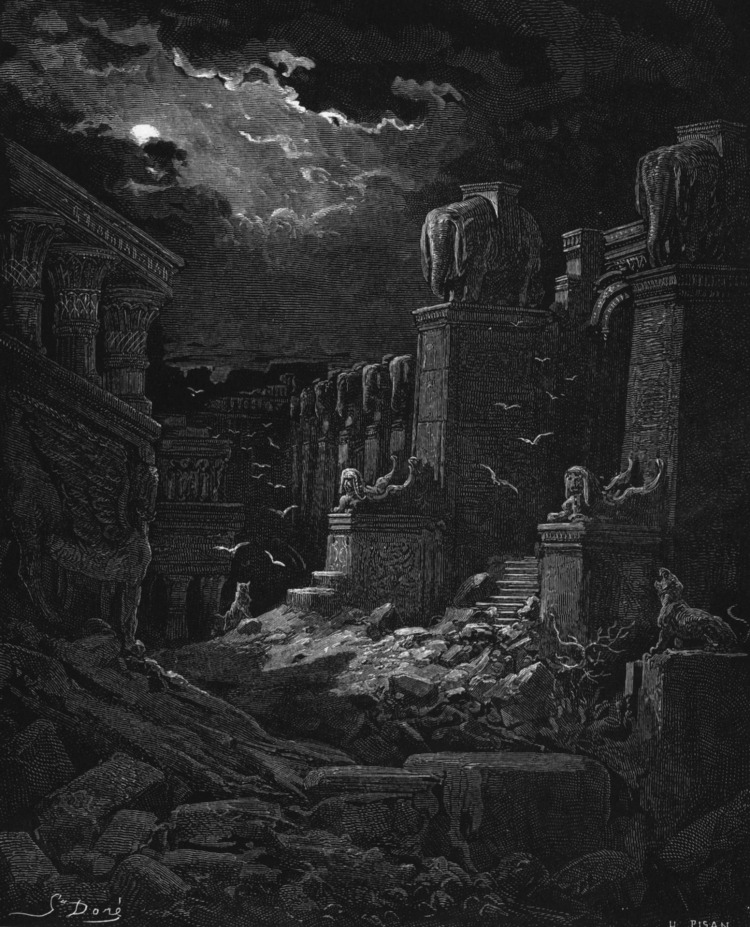
The result is the government we now inhabit: a Republic that remembers its own name but not its meaning. The Constitution functions as civic décor—invoked ceremonially, ignored in practice. Statutory law becomes optional, precedent disposable, truth negotiable. The president acts; the Court justifies; Congress applauds or cowers. The citizen, bewildered and exhausted, retreats into private life, convinced that participation is futile.
And yet, elegy need not end in silence. The very act of recognizing loss is the beginning of renewal. What has been hollowed out can, in principle, be refilled. But it cannot be refilled by faith in institutions that have already abdicated their purpose. It must begin where the Republic began—in the conscience and courage of ordinary citizens who refuse to mistake ritual for reality. Renewal, if it comes, will come not from those who rule but from those who remember what ruling was meant to serve.
For now, we inhabit echoes. But if we still possess the capacity to listen—to hear the faint music of the Republic beneath the noise of power—then the silence need not be permanent. The dance may yet begin again, not at the command of the puppet master, but when the people cut their strings and remember they were never meant to dance to another’s tune.


 Northcoast Antiquarian