When the noise comes … it arrives as promise, As liberation, as the four-day week or some such rot— Tools to free us from the tyranny of distance, From the friction of flesh, of paper, of time.
When the noise comes … we open our doors, Thinking the chains have been struck from our wrists, Not seeing how they lengthen, how they follow, How they slip beneath the blankets, coil around our sleep.
When the noise comes … the waves are ceaseless, Each notification a crest that will not break, And we are flotsam, buoyant but not swimming, Tossed up, pulled under, in the very same motion.
When the noise comes … there is no shore, Only the turbulence of feeds and the whirlpools of threads, The shoals of outrage hidden just beneath the scroll, And our eyes blur from the salt and the light.
When the noise comes … we gasp between the swells, Thinking: surely the next breath will be deeper, Surely the merry-go-round’s music will stop, Surely there will be a weekend at the end of this week.
But the calliope plays on, and the carousel never ceases turning, The painted horses rise and fall, rise and fall, And we cannot tell if we are moving forward Or if we have been circling the same worn orbit since morning.
When the noise comes … we look down at our feet, And see that we have not moved, That the frantic pace was only the illusion of motion, The exhaustion mistaken for progress toward something.
When the noise comes … we pause for a moment— The WiFi fails, the battery dies, the server times out— And in that accidental silence the low places remember: The weight of time, the gift of an empty hour, The deep stillness from which we were torn when we said yes To this round-the-clock tether, this chain we call connection.
When the noise comes … we have already forgotten What we meant to think, to say, to comprehend; The forgetting sea is not ahead but around us, We are already drowning in its medium, Already borne away from ourselves While thinking ourselves urgent, essential, awake.
When the noise comes … no one comes to save us, For we have built the flood with our own hands, Subscribed to the deluge, optimized the overwhelm, And called it opportunity, flexibility, freedom— The chains that followed us home, That slipped into our beds, That wind around us even now as we try to sleep, As we remember sleep, As we forget what sleep was.
The immeasurable joy that a pup feels upon spying the perfect stick—though is not every stick perfect?—to seize it between the teeth, to trot about in triumphant exaltation, to preen and prance, to clench and cherish it as though gold, or life itself, were held within the jaws, precious beyond all things. If only I could delight in anything with such unfeigned enthusiasm—as that stick, its discovery, its seizure, its hold.
Ah, to find such rapture in the ordinary! To greet the world not with suspicion but with wonder, to see in the roughness of bark and the scent of earth a treasure beyond price. She asks no meaning of the stick, no purpose beyond the play; she does not weigh its straightness nor lament its splinters. She exults simply because it is there—because it can be grasped, borne, and shared with the wind.
And when I feign to take her most prized possession from her, she does not crouch defensively nor guard it with wounded pride. She startles not in fear, nor suspects deceit, but spies instead an opportunity for play—for spirited contest, for joyous fun. A game of keep-away, of chase, of tug-of-war, of tag. The stick becomes not a treasure to hoard, but a bond to share, a spark of communion between kindred souls who, for a moment, forget the hierarchy of species and simply are. How effortless her wisdom seems: to turn every threat into invitation, every grasp into dance. What the world calls possession, she calls participation; what we call loss, she calls laughter.
Laugh I must too, for in her play I am carried back to youth—when a stick could be anything the heart desired: a sword flashing against unseen foes, a spear cast toward the sky, a knight’s lance, a shepherd’s staff, a trumpet summoning invisible armies, a conductor’s baton commanding the symphony. How endless were the shapes of imagination then! She reminds me of what I once possessed without knowing its worth—the gift of invention, the sacred power of play.
And so I laugh, though a tear is not far behind, for the years slip away like autumn leaves on the wind, and I remember what it was to live so lightly. She, in her wisdom, has become my teacher—her joy a gentle rebuke to my solemnity, her play a sermon on the holiness of delight. If ever there is grace to be found, it is in such simple acts: a stick, a chase, a glint of sunlight on the grass, a heart unburdened by purpose. Perhaps salvation lies not in grand design, but in this—to love a stick as though it were the world, and to find, in that loving, the world made whole again.
These ten poetic reflections revisit the protest anthems, lullabies, and cultural hymns that shaped a generation—songs we once sang in innocence, defiance, or hope. But time has sharpened their meanings, revealed their silences, and unsettled their assurances.
Songs I Thought I Understood is not a repudiation of the music, but a reckoning with what we missed—or could not yet see—in the melodies we inherited. Each piece responds to a specific song, not by rewriting it, but by listening anew with older ears and quieter questions.
Songs I Thought I Understood
A Requiem and Reflection in Ten Refrains
by Donald S. Yarab
“For the ones who heard the songs and still ask the questions.”
The Ten Refrains:
Puff Remembers (after “Puff the Magic Dragon”)
The Valley Below (after “One Tin Soldier”)
The Flowers Still Bloom (after “Where Have All the Flowers Gone”)
The Needle Lifts (after “This Land Is Your Land”)
The Submarine Below (after “Yellow Submarine”)
No One Was Saved (after “Eleanor Rigby”)
The Wind Still Blows (after “Blowin’ in the Wind”)
Can It Be (after “Let It Be”)
Neon Psalm (after “The Sound of Silence”)
We Have Not (after “We Shall Overcome”)
Puff Remembers
(after “Puff the Magic Dragon”)
Somewhere over the rainbow, Once upon a time, In a land not so far away— Yes, with dragons.
Puff—I remember him well. He sailed without maps, Carried no sword, Only stories.
But Little Jackie Paper— No, I never knew him. He came, they say, with sealing wax, With strings, with child-sized laughter.
And then he left. As children do. As they must.
Puff stayed behind, Watching the tide pull dreams from the sand, Waiting longer than most would, Believing perhaps too much.
Now I am older than Puff was then. The toys are gone. The books are shut. Even memory, sometimes, forgets its lines.
Still— Sometimes I think I hear the flap of canvas, The creak of rope, The rhythm of a boat That knows its way through time.
He may be out there yet— Not waiting, exactly, But still sailing, With room for one more story.
The Valley Below
(after “One Tin Soldier”)
I remember One Tin Soldier, The mountain people, the treasure buried deep, The message of peace— Unspoken, unread, Trampled by riders from the valley below.
As a child, I did not understand Why they came with swords To claim what was freely offered. I did not understand Why they could not wait, Why they did not read.
They were simply the People in the Valley Below.
But now—I know them. They live not far from here. They speak in votes and verdicts, In profits and justifications, In silence, and in slogans Worn smooth with use.
Some are kind, some mean well. Most are afraid. Many never climb.
And though the treasure still lies buried— That old dream of peace, The circle unbroken, The better world whispered in songs— I see fewer walking toward the mountain. Fewer still willing to wait.
The child I was weeps, Not for the dead soldier, But for the living who will never read The words beneath the stone.
The Flowers Still Bloom
(after “Where Have All the Flowers Gone”)
The flowers—I see them. They bloom each spring, In roadside ditches, In tended gardens, In places untouched by war Only by accident.
But where are they, Even now? Where are the promises they once held— The wreaths we laid, The songs we sang, The lessons we said we had learned?
Where are the girls who picked them, And the boys they gave them to, Before uniforms, Before funerals, Before forgetting?
They bloom still, Unconcerned. Nature does not mourn the fallen. It only covers them.
We placed our hope in petals And let them drift into the graves— Answers too proud Or too ashamed To be spoken.
Yes, I see the flowers. But I see them differently now. They are not peace. They are not memory. They are what grows when nothing else is left.
The Needle Lifts
(after “This Land Is Your Land”)
This land is your land, This land is mine— That is what the song said. And we sang it, Hand in hand, Before we knew Who drew the lines.
From California to the New York island— Yes, the rivers still run, The redwoods still rise, But whose boots Are turned away At the fence? Whose tent Stands just outside The melody?
I walked that ribbon of highway once. I saw the “No Trespassing” sign, Half-buried in dust. And behind it— Nothing but wind, And memory.
This land was made for you and me. But the deed was never signed. Or if it was, It has been lost Beneath centuries of ash and ink.
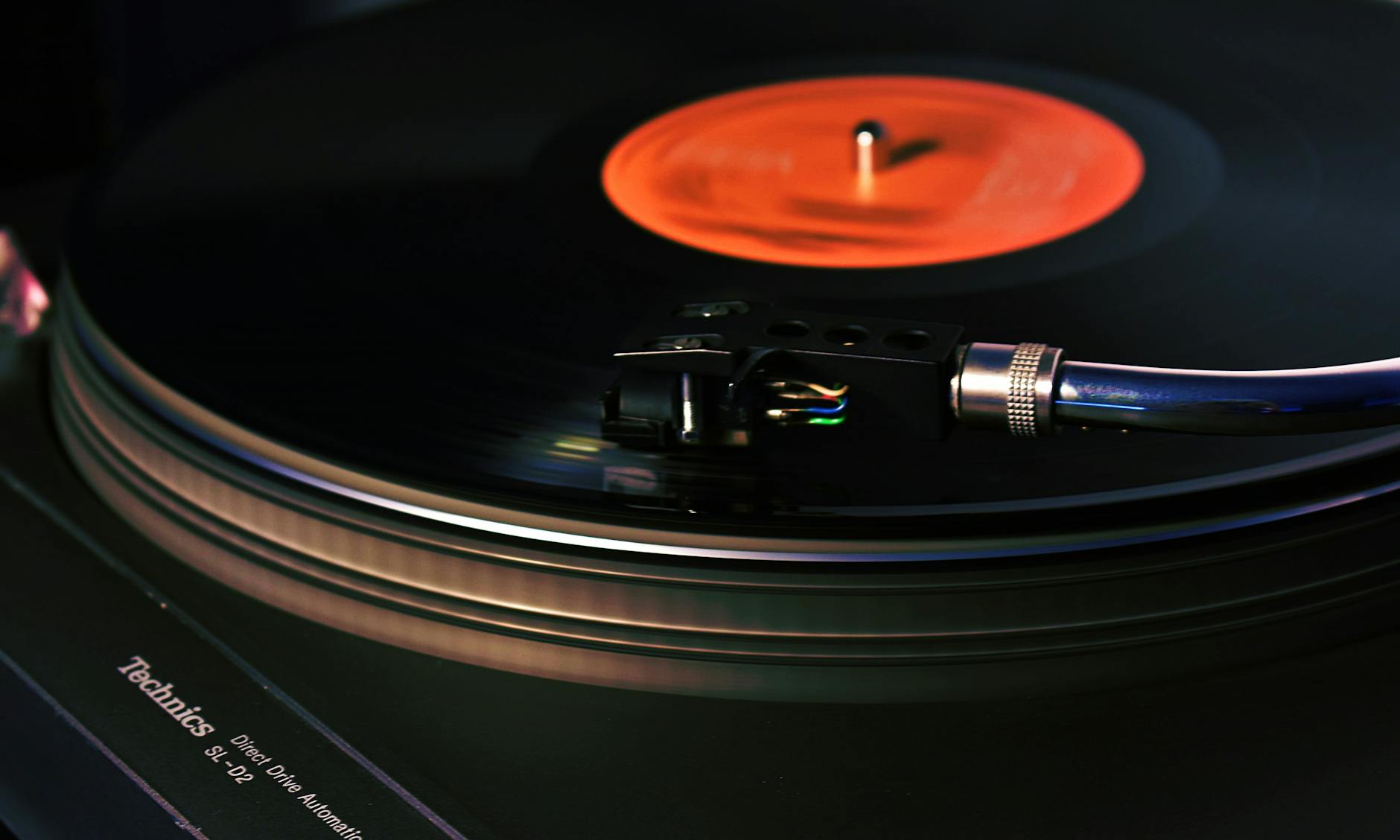
The voices fall quiet. The turntable slows. The needle lifts.
And still the land stretches, Unresolved. The chorus unreturned. The question unsung.
The Submarine Below
(after “Yellow Submarine”)
We all lived there, once— In the Yellow Submarine. Or so we sang.
A vessel of laughter, Of porthole dreams And choruses in perfect time.
We believed in it, In its bright hull, Its cartoon courage, Its watertight world Where everyone belonged And nothing intruded.
Unity, We thought, Could be painted in primary colors. Could float beneath the noise, And keep us safe.
But the world knocked. And the hull bent. And the sea Was not always blue.
Some never boarded. Some were told There was no room. Some were thrown overboard Before the song began.
Now I wonder— Was the submarine ever real? Or just a dream we made To keep the waters from us?
If it sails still, It does so With ghosts at the helm, And a quiet We mistook for peace.
No One Was Saved
(after “Eleanor Rigby”)
Eleanor gathered the rice like a rite— Not a wedding, But a funeral in disguise. No one noticed. No one asked Why she did it alone.
She lived in a world of quiet corners, Of teacups with dust, Of pews that creaked For no one in particular.
I did not see her then. Not really. She was background— A figure in a verse I sang without knowing.
And Father McKenzie— He wrote his sermons by candlelight, Even when no one came. He believed in the act, In the speaking itself, As if God were listening Even if the people were not.
I used to think They were odd. Sad, yes— But distant, Part of another time.
Now I see them in doorways, At bus stops, Scrolling through silence On glowing screens. I see them in myself, In the way I answer fewer calls, In the prayers I no longer finish.
All the lonely people— They are not elsewhere. They are not lost in some old song. They are here. And no one was saved.
The Wind Still Blows
(after “Blowin’ in the Wind”)
I remember when the answer Was blowing in the wind. We sang it as if that meant It was near, As if the breeze would carry it to us If we just opened our hands Or listened hard enough.
But I have stood in that wind now. Not once. Not in youthful chorus, But in silence.
And the answers do not ride so lightly.
How many roads? Too many to count. Too many lined with names Etched in metal, Or cardboard signs that ask Not for peace, But for spare change.
How many ears must one man have Before he hears the cry? Enough to wear out the listening. Enough to forget which voice was his.
The cannonballs still fly, Though we call them by different names now— Policy. Preemption. Profit. “Necessary force.”
Yes, the wind still blows. But the answers, If they are there, Have long since been scattered Across deserts, Across oceans, Across generations too tired To ask the questions anymore.
Can It Be
(after “Let It Be”)
When I find myself in times of silence, I do not hear The words of wisdom. I hear the ache of asking Whether silence is answer, Or simply absence.
Let it be, they said. And I tried. I tried to let the world Unfold as it would, To trust in the slow work of time.
But still the wars came. Still the towers fell. Still the hands reached out And found nothing waiting.
Mother Mary— She comes to some. But others Find no visitor In the night.
Let it be? Can it be? Is there something We have not yet asked, Some word not spoken Because we were told Not to speak at all?
There will be an answer— So the song promised. But I have learned That sometimes The answer is another question.
Neon Psalm
(after “The Sound of Silence”)
Hello darkness— It does not answer. It scrolls. It flashes.
We used to whisper to the void And hope it heard. Now we shout And hope it trends.
The prophets write in hashtags, Their sermons flickering Across shattered glass, Their congregations swiping And moving on.
No one walks the quiet streets, No one weeps in the back pew. The cathedral is a comment thread Lit by the glow Of the god we built To hear ourselves.
No one dared disturb The sound of silence— That was the line. But now it is all disturbance. The silence Is what we fear.
I remember when words Had gravity, When they settled in the chest And waited To be spoken with care.
Now even grief Is curated.
Still— Somewhere beneath the algorithms, Beneath the noise mistaken for voice, Beneath the sponsored silence, I believe the old language Waits.
Not to go viral. But to be heard.
We Have Not
(after “We Shall Overcome”)
We shall overcome— That is what we sang. We locked arms, Lit candles, Marched softly into nights Thick with dogs and doubt.
And some did overcome. Some bridges held. Some laws changed. Some doors opened.
But not all.
Not for everyone. Not everywhere. And not for long.
Some came after And tore down the signs, Or rewrote them in finer script. Some left the door ajar Just wide enough To say it had been opened.
I do not mock the song. I remember it. In the bones. In the breath held Before a verdict. In the quiet After a child is buried.
We shall overcome— We whispered it When shouting would not do.
But the road is longer Than the hymnbook said. And the hill steeper Than memory allows.
We have not. Not yet.
Still— There is something in the singing, Even now. Even if the words tremble. Even if the chorus Grows thin.
Some time ago—perhaps a year or more—I shared the thought with a friend that, in the absence of a life partner, career milestones, or the outward markers many associate with ongoing joy and fulfillment, I found myself sustained by something smaller, more elusive, yet no less profound: moments. Fleeting as they are, these glimpses—of joy, beauty, tenderness, or connection—carry a weight that lingers long after they pass. Whether in laughter with a friend, a burst of color in nature, the unexpected joy found in art and music, or the hush of shared silence, these moments are what remain.
This conversation was brought to mind earlier today, during a pause in some simple yard work. A robin—one I have come to recognize—perched beside me on a rock for nearly twenty minutes. He did not fly, only hopped, watching me as if we were resting together. That brief companionship, quiet and unexpected, brought back the full force of that earlier insight.
The poem that follows is a first, rough attempt to give shape to that reflection.
This robin, who kept me quiet company, reminded me of the beauty in small moments—and even allowed me, kindly, to take his portrait.
Moments
by Donald S. Yarab
After so long, I see it now— life is not the grand arc we thought we were writing, not triumph etched in time or years stacked with care. It is moments.
The held door, a beat longer than required. A cloud painting itself across the sky. A flower blooming through a crack in concrete.
The hum of a bee, the song of a bird, a friend’s first hello— welcome, familiar music in the air. Laughter spilling like light through a quiet room.
A touch that speaks without language. Sunlight flickering through leaves— nature’s own Morse code. The warm drift from the kitchen: garlic, hope, onions, memory.
The first bite of something sweet dissolving on the tongue. The joy of someone you love laughing till they snort, till they can’t breathe, till you’re laughing too at nothing, at everything.
These— small rebellions against the world’s weight: its monotony, its cold indifference.
But the moments— oh, they persist. They slip through the cracks of our hardest days and remind us why we stay, why we watch, why we dare to hope for just one more:
one more kindness, one more beauty, one more laugh, one more flicker of light— each a defiance, each a benediction in this brief, bright, impossible gift of being alive.
The Destruction of Leviathan by Gustave Doré (1865)
Author’s Note
This essay, The Void at the Heart, is presented as a contemplative meditation on the moral and spiritual collapse visible in aspects of contemporary governance and public life. It is a deliberately focused reflection, tracing the descent from cruelty in action to the corruption of thought, to the inversion of traditional values, and finally to the eclipse of the soul itself.
This essay may, in future, be expanded into a fuller monograph-length work. Such a work would likely incorporate historical and contemporary examples, address counterarguments, consider cultural issues, and distinguish more sharply between causes and symptoms of decay. For now, however, I offer this essay as a completed meditation in its own right—a starting point for further reflection.
The Void at the Heart
On Cruelty, the Collapse of Reason, and the Eclipse of the Soul
There is a void at the heart of the soul, a place where the ordinary bounds of morality and ethical consideration seem to collapse into nothingness. It is not merely that questionable policies are advanced—that has ever been the case in human governance—but rather that their implementation is accompanied by a conspicuous and grotesque relish for cruelty. Even if one were to suspend judgment upon the legitimacy of the policies themselves, the manner of their enforcement betrays a deeper and more troubling decay: a delight in the infliction of pain.
Deportation of unauthorized aliens, for instance, is not approached as an unfortunate necessity carried out with solemnity and regret. It is heralded as a triumph, an occasion for rejoicing, even as it often rips apart families, sunders years of labor and stability, and leaves children disoriented and/or abandoned. Similarly, the mass termination of public servants and contractors—individuals who dedicated themselves to fields such as public health, education, consumer protection, and law enforcement—is not seen as a sorrowful consequence of political/policy change or fiscal concerns, but is rather celebrated with an air of gleeful vindictiveness. Grants and subsidies intended for the most vulnerable, from students to farmers, are not merely ended; they are rescinded with evident gleeful satisfaction, as though deprivation itself were a moral good.
Even those nearing completion of their educational journeys, standing on the threshold of careers that might benefit society, are not spared. Educational visas are canceled without warning or cause, months or even weeks before graduation. Opportunities are crushed underfoot. Dreams are shattered not as a side effect of some broader administrative goal, but seemingly as an end in themselves, an assertion that the suffering of others is righteous and overdue.
This spirit of cruelty is defended and magnified through a rhetoric that frames suffering as deserved, earned, or insufficiently severe. The pain of others is no longer a regrettable cost, but an instrument of moral theater: those who suffer are cast as villains, their misfortunes paraded as proof of divine or civic justice. In such a worldview, mercy is weakness, empathy is betrayal, and the infliction of pain is a form of virtue.
There is a profound difference between enacting necessary policies with reluctant firmness and celebrating the devastation they cause. A just society may impose burdens, but it ought never to rejoice in doing so. When joy is found in the destruction of livelihoods, when cheers rise at the deportation of neighbors, when applause greets the impoverishment of fellow citizens, something foundational has been lost. The wound is not merely political; it is spiritual.
The embrace of cruelty as a public virtue hollows out the soul of a nation. It numbs the collective conscience, distorts the notion of justice, and substitutes vindictiveness for principle. Over time, the society that delights in the suffering of others does not merely lose its victims; it loses itself. It becomes a cold and pitiless machine, capable of great power but incapable of true greatness, capable of order but incapable of meaning.
If the celebration of cruelty corrupts action and spirit, it inevitably corrupts thought as well. The human mind, which depends upon honesty and openness to discern the world aright, cannot remain untouched by the moral decay of the soul.
The Eclipse of Reason
The celebration of cruelty does not remain confined to the sphere of action; it metastasizes into the realm of thought itself. When a society exalts the suffering of the vulnerable and frames mercy as weakness, it necessarily distorts its ability to process information honestly. Truth ceases to be measured by coherence, evidence, or fidelity to reality. Instead, it is judged by its conformity to the prevailing narratives of contempt, fear, hatred, or greed.
Thus, expertise—whether scientific, legal, historical, or journalistic—is no longer respected as a necessary guide to sound judgment. It becomes suspect by its very nature if it fails to mirror the animosities of the moment. Scientists who warn of ecological degradation, public health crises, or technological risks are dismissed as conspirators or ideologues. Legal scholars who point to constitutional violations or abuses of authority are castigated as partisan agitators. Historians who trace the patterns of injustice, violence, or repression are branded as enemies of national pride. Journalists who seek to uncover uncomfortable truths are denounced as purveyors of “fake news,” their integrity impugned simply because they refuse to tailor their findings to the dominant ideological climate.
The citizenry themselves, infected by the ethos of cruelty, become willing participants in this willful blindness. They refuse to hear, to consider, to weigh, or to deliberate. Instead, they declare all sources outside their ideological fortress to be corrupt, unreliable, or part of some imagined conspiracy. Knowledge itself becomes an object of scorn, and expertise is equated with betrayal. The very faculties that distinguish the informed citizen—the ability to discern evidence, to listen with patience, to reason without rancor—atrophy and are replaced by reflexive suspicion and tribal affirmation.
Orwell, ever the grim prophet, would recognize the phenomenon with bitter familiarity. In his imagined dystopias, the manipulation of language, the corruption of thought, and the triumph of ideology over reality are not the consequences of brute force alone, but of a populace that chooses to believe falsehoods because those falsehoods are more comforting—or more satisfying—than the difficult demands of truth. Ignorance is strength, he wrote, capturing the dark alchemy by which the renunciation of reason is transmuted into a perverse kind of certainty.
It is not merely that ideology colors perception; it replaces perception altogether. Information is no longer evaluated according to standards of credibility or methodology, but according to its utility in reinforcing contempt for the foreigner, the minority, the poor, or the vulnerable. If facts threaten to humanize the other, they are rejected. If scholarship suggests the necessity of compassion or restraint, it is denounced as corruption. Only that which fuels resentment is permitted to be heard; only that which magnifies grievance is deemed “true.”
In such a climate, dialogue becomes impossible. The very idea of dialogue presupposes a willingness to listen, to admit complexity, to concede error. But where cruelty reigns, these are forbidden virtues. In their place stand slogans, shouted endlessly into a void that no longer seeks understanding but only echoes its own bitter triumphs.
In such a climate, governance itself grows chaotic and erratic, not by accident but by design. Policies are proclaimed and abandoned with little coherence; programs are implemented or canceled with open disregard for planning, expertise, or consequence. The instability is treated not as a failure, but as a virtue: a sign of disruption, toughness, authenticity. Yet beneath the slogans, the disorder corrodes trust, hollows out institutions, and leaves citizens adrift in a landscape where no promise endures and no framework holds. It is a cruelty not merely of action, but of confusion—a destabilization that magnifies alienation and feeds the collapse of both thought and community.
Yet even this collapse of thought is but a precursor to a deeper betrayal: the corruption of the very values that once defined and ennobled a people.
The Inversion of Values
As cruelty becomes a public virtue and ideology supplants reason, the final and most insidious transformation takes place: the subversion and inversion of traditional values themselves. The outward forms and labels of religion, civic duty, and ethical conduct may be preserved, but their substantive meanings are hollowed out and replaced by their very opposites. Language itself is corrupted; words once signifying aspiration, mercy, and justice now serve as empty vessels, bearing meanings recognizable only as antonyms of their epistemological truths.
Faith, once the call to humility before the divine and charity toward one’s fellow man, is distorted into a weapon of exclusion and punishment. Love of neighbor becomes conditional, subject to ideological conformity; compassion is reserved for the in-group alone, while hatred of the stranger is sanctified as a form of righteousness. The prophets and founders who once preached repentance, mercy, and love are invoked by those who trample upon their teachings, their sacred words reinterpreted to bless cruelty as strength and vindictiveness as virtue.
Civic values fare no better. Patriotism, once the measured love of one’s country expressed through service, sacrifice, and the protection of rights, degenerates into a shrill and defensive chauvinism. The rule of law, once understood as a shield for the weak and a restraint upon the strong, is twisted into a blunt instrument to punish enemies and protect the powerful. Freedom, once the delicate balance between personal liberty and communal responsibility, is redefined as the license to oppress, to dominate, to revel without shame in the suffering of others.
Even the ethical precepts that ground common life—the golden rule, the dignity of work, the sanctity of truth—are inverted. Do unto others becomes do unto others first, lest they do unto you; the dignity of labor is reserved for some and withheld from others based on arbitrary categories of race, origin, or ideology; truth itself becomes malleable, no longer a standard to which men must conform, but a tool to be wielded, bent, or abandoned as expediency demands.
In this bleak mirror-world, tradition becomes little more than pageantry—a hollow ritual masking a profound spiritual betrayal. The ancient words are mouthed, the venerable ceremonies performed, but their meaning is lost. Their light has been inverted into darkness, their call to transcendence replaced by a shout of tribal triumph. What was once sacred has become profane, and the keepers of the tradition are blind to their own apostasy.
Yet the descent does not end even there. It reaches further downward, to the degradation of the individual soul itself.
The Final Descent
Ultimately, the mind infected by cruelty and blinded by ideology forgets how to think, how to reason, how to love. The soul, once the wellspring of compassion, imagination, and truth-seeking, is lost. What remains is a hollow creature, a being still outwardly human but inwardly diminished, descending toward an animalistic existence governed only by base and grotesque instincts.
No longer illuminated by the light of reason, no longer stirred by the love of others or the awe of the divine, such a being reverts to the raw appetites of dominance, fear, rage, and self-preservation. The faculties that once elevated humanity—the search for truth, the capacity for self-sacrifice, the impulse toward mercy—atrophy and rot. What once distinguished man as a creature formed in the image of the divine is obscured beneath layers of suspicion, resentment, and brutality.
In such a state, crassness replaces dignity, and rudeness masquerades as strength. The subtleties of manners, the graces of dialogue, and the silent obligations owed to neighbor and stranger alike are discarded as burdensome relics of a now-despised civilization. Material success becomes the sole remaining measure of worth, and individual gratification the only recognized good. The broader community—once the nurturing ground of the self—becomes either invisible or hostile, perceived only as an impediment to personal appetite or ambition.
Alienation takes root, first unnoticed, then unchallenged, feeding upon itself. Having severed the ties that bind individuals to each other through mutual respect, shared memory, and common purpose, society decays into a landscape of lonely, embittered selves, suspicious of all and merciful to none. This alienation colors every interaction with a thin, toxic miasma: a pervasive bitterness, a readiness to assume the worst, a ceaseless litany of grievance against an imagined host of enemies.
The community, too, begins to crumble. No society can endure when its members are ruled by suspicion rather than trust, hatred rather than fraternity, cruelty rather than justice. Institutions falter, not because they are attacked from without, but because the very spirit that once animated them has fled.
Yet the gravest tragedy is not merely societal collapse, but the debasement of the individual soul. Each man or woman who abandons thought for slogan, love for contempt, truth for expedience, does more than wound the body politic; they desecrate the image of the divine that resides within.
Thus, the moral and ethical void at the heart of the soul becomes complete. And from that void, no nation, no civilization, no human heart emerges unscathed.
Epilogue: The Faint Memory of Light
Yet even amidst the ruin, a faint memory endures.
The divine image, though battered and obscured, is never wholly extinguished. Buried beneath the ash of cruelty and the rubble of falsehood, there remains a spark—a silent witness to the soul’s higher calling. It is not easily rekindled. It demands humility where pride has reigned, mercy where vengeance has triumphed, courage where fear has prevailed.
The path back is arduous and uncertain, for it requires the infected soul to remember that it has forgotten; it requires a people to repent not merely of actions, but of the passions that animated them. It requires that tradition be not merely repeated but restored, that truth be not merely spoken but once again loved, that reason be not merely used but honored.
If such a reawakening is to come, it will come quietly at first, as all true renewals do—not in thunderous proclamations, but in the whispered refusal to hate, the silent act of mercy, the solitary pursuit of truth in a world grown hostile to it. From these small and stubborn acts, unseen and unsung, a civilization might yet be reborn.
But if not, then the void will deepen, and the ruins will spread, and future generations will wonder at how lightly men once abandoned what was most precious: not wealth, nor power, nor comfort, but the light of mind and soul that marks the human being as more than a beast among beasts.
The choice remains, as it always has, hidden in the quiet precincts of each heart.






 Northcoast Antiquarian