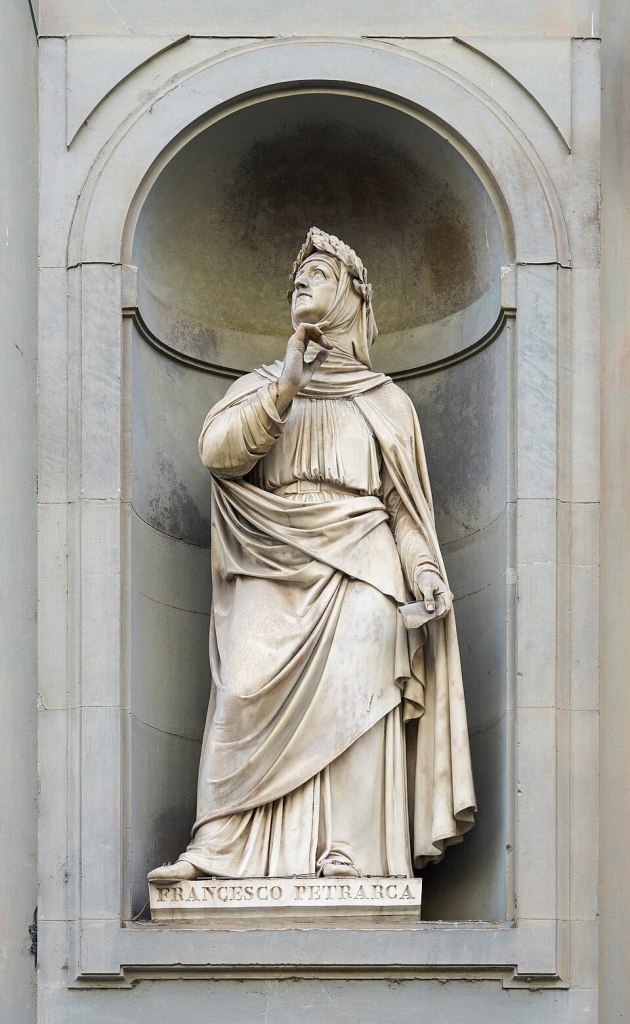
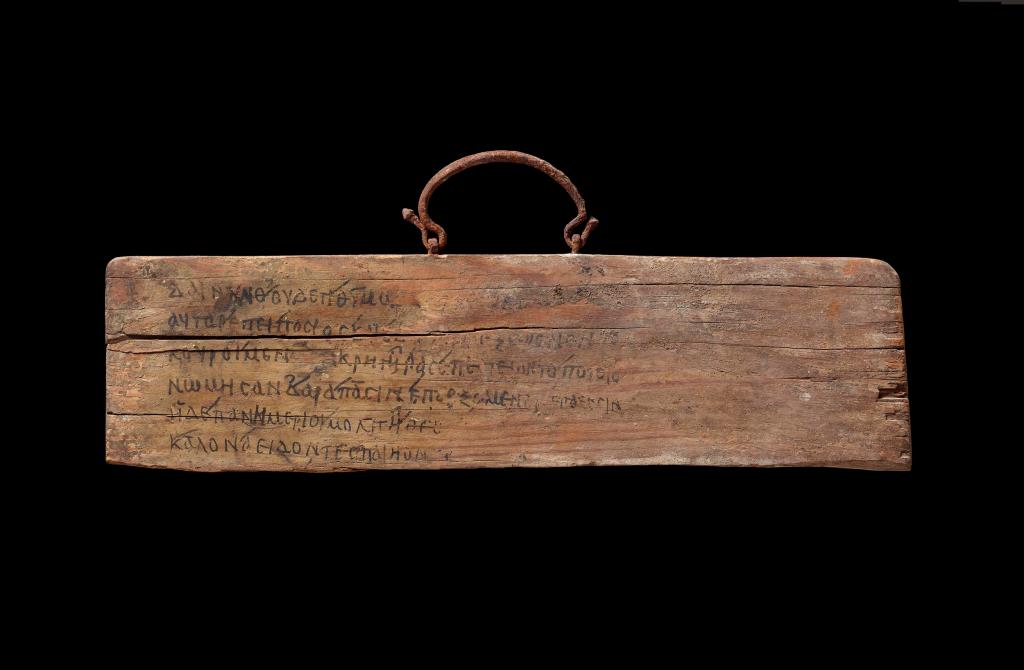
Amor, che ‘ncende il cor d’ardente zelo, di gelata paura il tèn constretto, et qual sia più, fa dubbio a l’intelletto, la speranza o ‘l temor, la fiamma o ‘l gielo.
Love that lights ardent zeal in the heart, constrains it also with an icy fear, and leaves the mind uncertain which is greater, the hope or the fear, the flame or the frost. — Francesco Petrarca, Canzoniere 182
I. The Divided Heart
Few poets have so perfectly distilled the contradictory essence of love as Petrarch. In four lines, he sets the human heart ablaze and in the same breath subdues it with frost. Love, that “ardent zeal,” becomes inseparable from the chill of fear; the intellect, summoned to arbitrate between hope and terror, finds itself immobilized in doubt. The flame illuminates even as it freezes.
The quatrain serves not merely as an emblem of courtly love but as a mirror of the reflective soul—the soul that, once conscious of its passion, cannot help but analyze it. Every act of self-awareness introduces distance; every act of comprehension tempers immediacy. To understand what one feels is already to stand outside the feeling. Thus, the Petrarchan heart is forever divided: inflamed by emotion, yet cooled by the very intellect that seeks to grasp it.
Statue of Petrarch on the Uffizi Palace, in Florence
II. Petrarch’s Paradox—Flame and Frost
In Canzoniere 182, Amore is no mere sentiment but a force of cosmic ambivalence—a sacred fire that binds as much as it liberates. The heart, seized by ardente zelo, is at once inspired and constrained by gelata paura; passion and dread are inseparable twins. But what gives the poem its enduring power is the final turn: fa dubbio a l’intelletto—it makes the intellect uncertain.
This uncertainty is not simple indecision; it is the very mechanism by which passion becomes reflection. The lover’s flame, examined, begins to cool—and that cooling assumes distinct forms.
First, love cools by comprehension. The instant it is understood, passion becomes object rather than subject. The flame is enclosed in glass: it still glows, but it no longer burns.
Second, love cools by doubt of itself. Reflection turns inward, questioning its own authenticity: Is this love true, or merely imagined? In this moment, feeling erodes under the acid of self-consciousness.
Third, love cools by doubt of the beloved. The intellect, unable to sustain idealization, wonders whether the object of devotion merits such intensity. The beloved becomes an emblem—not a person of flesh and breath, but a mirror of perfection that no reality can equal.
Fourth, love cools by doubt of the lover’s worthiness. The heart fears it is unworthy of its own longing. Humility becomes paralysis, and passion folds inward upon itself.
These four modes of cooling form the architecture of Petrarch’s inner world—the endless oscillation between fervor and fear, adoration and self-doubt. He writes not to resolve this tension but to dwell within it. Each sonnet is a chamber where flame and frost coexist, where thought is both confessor and executioner of feeling.
III. Dante and the Alchemy of the Intellect
Dante offers a luminous counterpoint. In La Vita Nuova and the Paradiso, intellect and love are not adversaries but allies; the mind becomes the means by which love ascends. L’amor che move il sole e l’altre stelle—the love that moves the sun and the other stars—does not cool but sanctifies. In Dante, the intellect transforms passion into vision—the earthly beloved into divine wisdom. The flame does not die; it becomes light.
Consider the climactic moment of Paradiso XXXIII, where Dante’s vision finally encompasses the divine mystery. His intellect, far from diminishing his love, becomes the very instrument of its perfection. He describes how his desire and will are turned like a wheel by the love that moves the sun and the other stars. Here, understanding completes rather than constrains. The mind does not freeze the heart; it liberates it into comprehension of the Eternal. Beatrice herself, who began as an earthly beloved, becomes through the intellect’s mediation a guide to the Beatific Vision. Her smile, growing ever brighter as they ascend through the spheres of Paradise, finally becomes too radiant for mortal sight—not because love has cooled, but because it has been refined into pure illumination.
Petrarch inherits Dante’s vocabulary but not his cosmos. His world is one step further from heaven, one degree cooler. Where Dante’s intellect completes love by raising it to the eternal, Petrarch’s intellect contains it, interrogates it, doubts it. He lives in the afterglow of revelation—the warmth still present, but the fire withdrawn. As the Paradiso closes, Dante’s vision resolves into the final harmony of understanding and desire—l’amor che move il sole e l’altre stelle—the line that unites intellect and love in a single act of divine motion. Petrarch cannot reach this synthesis. His flame flickers in the middle distance, neither extinguished nor transcendent.
IV. The Modern Inheritance—Reflection and Alienation
From Petrarch descends the long lineage of reflective melancholy that characterizes the modern mind. His was the first great experiment in self-conscious passion—the attempt to inhabit feeling and analyze it at once. After him, love and thought could no longer coexist in innocence; the very act of awareness altered the nature of what was felt.
Montaigne and the Essay of the Self
Montaigne inherits this disposition and turns it into method. In his Essais, feeling is no longer confessed in the lyric key but dissected in the prose of observation. The heart becomes a field for inquiry, and what was once sung becomes tested, weighed, compared. It is telling that Montaigne quotes Petrarch approvingly: “He who can say how he burns with love, has little fire.” (Chi può dir com’ egli arde, è in picciol fuoco, Canzoniere 137). The aphorism might well serve as Montaigne’s motto, for he, too, knows that passion explained is passion already cooling.
His genial skepticism marks the first full tempering of Petrarch’s flame: affection survives, but only as reflection. The essay replaces the sonnet as the vessel of interior life; emotion, distilled into thought, becomes the study of itself. In Montaigne, we see the completion of a transformation begun in Petrarch—the lover becomes the anatomist of his own heart, and the page becomes not a transcript of feeling but a laboratory for its examination. The warmth of passion is not extinguished but transmuted into the steady light of self-knowledge.
Wordsworth and Emotion Recollected
Wordsworth, centuries later, restores emotion to poetry, yet only by containing it within the frame of recollection. His famous dictum—”emotion recollected in tranquillity”—is itself a Petrarchan paradox, though less tormented. He admits that to write of passion is to have already survived it. The poet stands at a contemplative distance from his own fervor, translating immediacy into memory, fire into afterglow. What once consumed now instructs.
In the Prelude (XII), Wordsworth describes the “spots of time” that preserve the intensity of past experience, yet the very act of preservation requires temporal remove. The flame of immediate experience has cooled into the steady glow of retrospective understanding. Wordsworth does not lament this cooling as loss; rather, he discovers in it a new kind of beauty—the beauty of consciousness reflecting upon its own depths.
Eliot and the Fragments of Feeling
By the time we reach T.S. Eliot, the process is complete. In The Waste Land, the flame is nearly ash. His lines of “memory and desire” register not passion itself but its echo—reverberations in a chamber long since emptied of direct experience. Emotion is mediated through quotation, irony, and allusion; the self no longer speaks but curates its fragments.
Consider the hyacinth girl passage, where memory itself fails to sustain emotion: “I could not / Speak, and my eyes failed, I was neither / Living nor dead, and I knew nothing.” The speaker recalls a moment that should have been transcendent—arms full of flowers, hair wet—but the recollection brings only paralysis, a kind of death-in-life. Even memory cannot resurrect the feeling; it can only gesture toward its absence. The modern condition is not the absence of feeling but its overexposure, its reduction to artifact. The poem becomes the museum of emotion, its vitrines polished and sterile. Where Petrarch’s flame still flickered with real heat, and Wordsworth’s embers still glowed warm, Eliot presents us with the cold remains—fragments shored against ruins. Where Petrarch doubts his own worthiness to feel, Eliot doubts feeling itself. The circle has closed; intellect now governs even absence.
The Progressive Abstraction
Between Montaigne’s self-observation, Wordsworth’s recollected emotion, and Eliot’s fractured memory, one can trace the progressive abstraction of the human heart. Each represents a further remove from Petrarch’s immediacy: what began as a dialogue between love and intellect becomes a monologue of intellect about love. The warmth remains, but it is remembered warmth—the lingering heat of stones long after the fire has gone out.
And yet, in each of these figures, the Petrarchan spark persists. Montaigne’s curiosity, Wordsworth’s reverence for inward life, Eliot’s yearning for spiritual coherence—all descend from that first poet who dared to make consciousness itself his subject. The flame may cool, but its light passes on, refracted through centuries of minds still haunted by the desire to feel purely and the impossibility of doing so once thought begins.
V. The Cooling of the Flame—A Personal Reflection
It is impossible, for some temperaments, to escape this inheritance. Emotion arises, and almost immediately the mind begins to interpret it—weighing, contextualizing, seeking its meaning. In doing so, it drains the warmth from the moment even as it preserves it in memory.
To intellectualize emotion is to betray and to honor it at once. The betrayal lies in the loss of immediacy; the honor lies in the act of remembrance. What the heart cannot sustain, the mind attempts to eternalize. The flame cools into an image—but in that cooling, it endures.
Perhaps the intellect is not the enemy of passion but its afterlife. Every poem, every meditation, every recollection is a small resurrection of a feeling that once burned uncontrollably. The fire itself is gone, but its light remains, steady now, capable of illuminating others.
This is the paradox Petrarch teaches: that the lover who cannot stop thinking destroys the ecstasy of love but gains, in its place, the wisdom of love. To understand one’s passion is to lose it; yet without understanding, it would pass unnoticed, leaving no trace but ashes.
VI. The Light of the Ashes
Petrarch’s quatrain ends in uncertainty, but not in despair. His is not the extinguished flame, but the tempered one. Love and fear, hope and doubt, flame and frost—these are not enemies but necessary contraries. The human soul, poised between ardor and intellect, must learn to bear the tension rather than resolve it.
In the end, intellect does not annihilate feeling; it refines it. The cooled flame still gives light. That light—pale but enduring—is the radiance of thought born from passion, the steady glow of what once burned brightly.
We live by such embers. To love is to burn; to remember is to cool; to think is to preserve. Between these three acts, the heart makes its pilgrimage from fire to frost to flame again—each transformation both loss and grace.
“Non confundar in aeternum.” This Latin phrase—”Never let me be confounded”—comes from Psalm 30:2 and Ambrose’s Te Deum. In my parable “The Man with One Map,” I use it ironically: as a caution against the very rigidity it seems to champion. To refuse ever to be confounded is to turn away from the facts, the bends, the contingencies of the world. When reality contradicts our preferred map, we face a choice: revise the map or insist the world is wrong. My parable follows a master cartographer who chooses his certainty, his facts, his reality, over truth itself—until the world teaches him otherwise. It is a story about the cost of ideological capture and the wisdom of holding our frameworks lightly, with humility. Every map we create is provisional. Wisdom begins not with denying the world’s power to confound us, but with acknowledging that power, and revising our maps when warranted.
πόλλ’ οἶδ’ ἀλώπηξ, ἀλλ’ ἐχῖνος ἓν μέγα
The fox knows many things, but the hedgehog one great thing.
—Archilochus, Fragment 201
“Non confundar in aeternum,” the cartographer muttered as he unrolled his chart upon the council table. He said it whenever someone questioned the authority of lines.
The map was exquisite: vellum washed with pale seas, ranges shaded as if they were slumbering beasts, towns stippled in careful ink. It bore a golden stamp of the Guild and a marginal note in the cartographer’s own fine hand: Ex universis legibus terrarum—From the universal laws of lands. He had made it in his youth, riding the marches with soldiers and surveyors, triangulating sun to steeple, steeple to hill. Kings had trusted it. Merchants folded it close to their hearts.
Now he was old enough to have students and adversaries, but not so old as to doubt the charter of his life.
The city had summoned a council because caravans were vanishing on the southern road. The map showed a simple passage between river and ridge, a straight corridor to the salt ports. Yet messengers returned late or not at all, and those who survived spoke of marsh and misdirection, of sudden fogs and roads that forked where no fork should be.
In the council hall, the cartographer smoothed the vellum and placed lead weights upon the corners. “The error,” he said with gentle authority, “lies not in the chart, but in your conduct. The road is straight. If your men lose it, it is because they stray. Cleave to the line.”
Across the table, a surveyor of lesser years cleared her throat. She carried a case stuffed with flimsy, oil-smudged sheets: tidal charts, sketches of fallen bridges, diagrams with dates scribbled in the margins.
“With respect,” she said, “the river moved.”
“Rivers do not move,” the cartographer replied, “except in the imagination of those who fear getting their boots wet. The river is here.” He tapped the braided blue with a well-tended nail. “The law of the land agrees.”
“The law was written when the old poplar still stood by the ford,” she said. “The poplar is now a stump, and the ford is a sink. The river took a bend during the spring floods and laid down a swamp where your corridor was drawn. The road you show is no road, but reeds.”
The guildmaster’s eyebrows rose. The cartographer, who taught that the shortest route was a moral as well as a geometric virtue, returned the stare unblinking. “Then drain the swamp,” he said, “or bridge it. The line remains. The task is to make the world fit its description.”
He won that day, as he often did. He was learned and calm, and his one map had become a kind of liturgy. “Non confundar,” murmured the clerks when they indexed the city archives. “Let us not be confounded.” The council funded embankments. Engineers hammered piles into the mud where the vellum demanded that firm ground should be. The road reappeared, for a season, and wagons creaked forward with their cargoes of wool and salt and rumors.
Then the road vanished again.
This time it was not the river, but men. A brotherhood of armed riders—some called them bandits, others privateers, others still “the new keepers of the peace”—began to charge a passage fee at the bottleneck where ridge pressed river. The cartographer disdained such contingencies. “Tolls are marginalia,” he said. “We do not redraw coastlines for the graffiti of pickpockets.”
But the brotherhood entrenched. The toll grew from coin to cargo, from cargo to tribute, from tribute to decree. They built a timber hall and planted banners along the ridge. By the winter’s end a priest had blessed them, and in spring a scribe copied their schedules onto parchment with the city’s very ink. What began as extortion acquired a rubric, a calendar, a seal.
“Shakedown gussied up as law,” muttered the surveyor.
“Law tames force,” replied the cartographer. “If wolves must exist, better they wear collars.”
“But whose collars?” she asked.
He did not answer. He had begun to feel an ache behind the eyes whenever she spoke.
In the taverns, men told a story—simpler than the truth and catchy as a sailor’s tune—about two travelers: a man with one map and a woman with many. They set out separately for the salt ports. He studied his single chart with monastic devotion. She carried a handful of scraps, some borrowed, some smudged by rain, some contradicting one another. He mocked her disorder privately and, when pressed, publicly.
The man with one map made excellent time upon leaving the gates, for every step he took confirmed his certainty. The woman lagged, stopping to ask her way, sketching fresh lines on her scraps, erasing others.
When he came to the place where the river had laid down its new will, he stepped forward into reeds and found the earth at once solid and treacherous, like old philosophy. He tested each step against the chart. Where the ground disagreed, he corrected the ground by fiat. When the reeds rose to his chest, he raised the chart higher lest it be wetted. The map stayed true—dry in his fingers—while the world soaked his bones. He declared this a triumph of principle.
The woman with many maps, meanwhile, hired a boat.
By late summer, the man with one map had reached the brotherhood’s hall. He read his charter to the toll-keeper, who listened with a polite boredom common among men whose reality includes rope. “The corridor is free,” the cartographer recited. “Ex universis legibus—by the universal laws.”
“Universals,” said the toll-keeper, and reached out a hand. “Pay the particular.”
The cartographer paid nothing. He appealed to the city seal, to the king’s commission, to the guild’s stamp, to the algebra of lines. The toll-keeper shrugged toward the timber hall and the men beside it who understood that a rope is a sentence and a coin is the clause that spares it.
The woman with many maps had joined a convoy two valleys over, where a miller’s cousin kept a bridle path the guild had never deigned to chart because the bends were spiteful and the gradients rude. The convoy moved at the pace of old songs, full of hesitations and reprises. They crossed under night through a pass where the stars punched cold pinholes in the sky, and someone—no one later agreed who—began to call the constellations by unfamiliar names that nevertheless led the feet more safely than the sanctioned titles.
When the woman reached the salt ports, she folded her scraps, added a new sheet, and sent a letter to the council: The road you fund is not the road your wagons take. Your line is an aspiration; your merchants follow possibilities.
The cartographer, at last returning to the city after having been relieved of his money, his dignity, and a fair measure of his certainty, found the surveyor waiting in the archive. She did not gloat. She brought him a jar of ointment for the bites the marsh had left upon his ankles, and a thin book of poems copied by a monk who loved rivers.
“This does not disprove the map,” he said hoarsely.
“Of course not,” she said. “It proves the river.”
That winter, the council convened again—not to condemn the cartographer but because the harvest had failed west of the ridge, and the city needed grain. There were three possible routes: the corridor (in theory), the bridle path (in practice), and a coastal voyage via the river (in hope). The guild argued for the corridor as a matter of jurisdiction and dignity. The merchants argued for the bridle path because they had mended its bridges with their own coin. The sailors—men from the salt ports who had come upriver to trade—argued for the voyage because they feared neither storms nor land clerks.
A philosopher of the town—one who had read widely of systems that claim to be universal—rose to speak. He praised the aesthetic beauty of the single chart, the vigor of the bridle path, and the enormous patience of the sea. He then said what made everyone scowl equally:
“Friends, the grain does not care which theory carries it.”
The cartographer felt the ache behind his eyes widen into a room. He looked down upon his vellum. The coastline had always been elegant, the hills chaste, the road a melody of certitudes. But for the first time he seemed to see, not the thing depicted, but the hand that had drawn it—the youth that had believed the crispness of ink could render the world obedient.
In the margins, a faint earlier line showed through where the vellum had been scraped and redrawn, a palimpsest of a road abandoned because the mathematics proved it suboptimal. He remembered the day: a peasant had told him of a spring beside that older line, where travelers might drink and horses lower their heads in gratitude. He had erased the spring with a cold clarity. A road was not a sequence of mercies; it was a rule.
“Bring me your scraps,” he said to the surveyor.
She blinked, uncertain whether he mocked her. He did not. He cleared a corner of the table and laid the flimsy sheets beside the vellum—the flood sketches, the tally of fallen poplars, the toll schedules copied from the brotherhood’s hall by a clerk with neat hands and no illusions, the sailors’ soundings, the miller’s cousin’s memory of the pass where the stars had strange names. One by one, he set weights to keep the restless papers from curling back into themselves.
“Now,” he said, “show me the world as it is endured.”
They worked through the night. The archivists brought candles and, later, broth. The surveyor corrected with a carpenter’s pencil. The cartographer used a silver knife to lift old ink without flaying the skin of the map. He learned where to leave a line tentative, where to mark a ford as variabilis, where to note in small script a spring, an inn with bread, a shrine before which fools and sages had both confessed their need for luck. He engraved upon the vellum the best-known extortions as if they, too, were features of the land—for what was law but a toll that had learned to write?
Near dawn, the guildmaster entered and stopped in the doorway, startled to see the one map begetting a family.
“You would surrender the authority of form?” he asked, half-sorrowing, half-accusing.
“No,” said the cartographer, without looking up. “I would surrender the pretense that form is the world.”
In the spring, the city sent for grain by two routes: along the bridle path that wound through the western valleys, and down the old straight road that now led to the river’s new course. There, wagons gave way to barges that followed the current to the sea, and ships that hugged the coast like prudent lovers brought back their cargoes from the salt ports. Both routes skirted the brotherhood’s tolls entirely, leaving their banners to flutter over an empty pass. By land and by water alike, the grain returned not because the council had chosen the correct theory of roads, but because they had chosen to reach the hungry.
The brotherhood along the ridge—now styling themselves wardens—sent a deputation to complain that the map had given their toll an air of legitimacy by drawing it as if it were a hill. The cartographer listened and replied, “Hills may be leveled, but only by a labor you have not yet met.” The wardens, hearing in this neither blessing nor threat but an accounting of how the world answers those who insist, returned to their timber hall and argued among themselves whether to become sheriffs or pirates.
Years passed. The cartographer’s students learned two ways of looking: first at the vellum, then out the window. They learned to mark on the chart the places where certainty thins, and to go there kindly. The surveyor left the archives for a time to ride with caravans, then returned to teach a course called On Bends.
People brought the map to their faces and breathed the scent of its animal skin and the ink that had turned from black to brown. They debated whether the marginal notes—those apologies to contingency—were betraying the purity of the art or saving its honor. They argued as citizens do: earnestly, with a stake. Meanwhile, the grain moved, the ships put in, the bridle path widened tread by tread of boots, and a new poplar grew by the new ford, which boys would someday mistake for the old. The river laid down another bend and reclaimed it; the city repaired; the wardens grew gray and learned to write better.
One late afternoon, the cartographer walked to the ridge alone. He carried no map. The light came slanting, rendering every furrow articulate. A boy was stacking stones beside the road into a little tower that would fall at the next good wind. The boy saluted, as children do when they sense they are seen. The cartographer nodded and passed on.
From the ridge he could see the bridle path like a thought the city had finally permitted itself to think. He could see the barges making their slow commandments along the river’s new grammar. He could see, far off, a white scrap that might have been a gull’s wing or a sail or a prayer.
He thought of the maxim he had repeated all his life—Non confundar in aeternum—and smiled at how, in the end, the only sure way not to be confounded is to admit, in time, that the ground is entitled to confound you.
When he returned to the archives, he took down the brass stamp of the Guild and pressed it into a blank corner of the vellum—not over a line, not over a named thing, but in a small open space, as if to confess that every map owes the world a margin.
Beneath the seal he wrote, in a hand that trembled more now than when he was a young man forcing springs to disappear: The law of the land is not the land. Use this to begin.
The lament that follows was born of an essay I penned after re-reading The Iliad through the figure of Thersites: truth-speaker, scapegoat, silenced. Where the essay names the mechanisms—divine deceit, aristocratic coercion, popular complicity—the mythic poem strives to give breath to that silenced voice through Antipseudes of Elis, a fictive low-born warrior who speaks from within the wound of the epic itself. Against the degradations of later tradition—most starkly in Quintus Smyrnaeus’ Posthomerica, where Thersites is struck down in rage by his companion-in-arms Achilles, not in duel nor battle but unjustly, unarmed, unready, and unaware, and then buried in the earth rather than burned upon a pyre, in defiance of Achaean custom—the lament restores what Homer only intimates: that the truth-speaker saw clearly, and that to remember him, and the vision he bore, is the conscience of witness. Thersites’ voice, mocked in antiquity, is recognized belatedly by thinkers such as Hegel and Nietzsche.
The Lament of Antipseudes of Elis
After the Fall of Troy of the High Walls
“What glory is this, that tastes of ash and allotted fate?”
I. The Weight of Victory
Ten winters I carried this spear, ten summers I dreamed of home—
the olive grove behind my father’s house, the way morning light fell across my wife’s sleeping face.
Now Troy burns behind us, her towers cracked like broken teeth,
and the wind carries the smell of what the immortals and kings call victory: blood and smoke, the stench of the fallen.
They say we have victory. They say our names will echo through the halls of distant kings,
that singers will sing of this day when the world was young.
But we—nameless before kings and heroes, we who bore the spears, we who remember our companions—
we think of Phegaios, who fell at the Scaean Gate, beneath the shadow of the consecrated beech,
his shield-arm shattered, calling for his mother as the light left his eyes.
What song will remember that he loved to carve small birds from olive wood, that he wept the night before battle—
not from fear, but from beauty; the way starlight fell on the wine-dark sea, too lovely for a world that would end him tomorrow?
II. The Kings’ Glory
Agamemnon stands proud upon the battlements, his bronze breastplate catching the flame-light of the city.
He speaks of destiny, of honor served, of the gods’ will made manifest in spear-point and sword-edge.
But what did Helen know of our ten years’ dying? What did she dream in Priam’s halls
while we bled the earth black beneath Troy’s walls?
Was her face worth Patroklos, torn and broken? Worth Hector’s son, dashed against the stones? Worth the thousand nameless sons who will never see their fathers’ fields again?
The kings divide the spoils— gold and bronze, slaves and chariots, of a broken world.
But they cannot divide the weight that settles in a warrior’s chest
when men no longer fall, and the silence gapes like a wound across the blood-soaked plain.
III. What the Dead Know
In the grey hour before dawn we walked among the pyres where our companions burned.
Their smoke rose straight into the windless sky, and we thought: here is truth—
not in the golden masks of heroes, not in the songs that will outlive our bones, but in this.
Not only kings waged war at Troy, nor only the heroes whose names the singers will praise. These also bore the spear, or fell in dust:
Phegaios of the beech, who fell at the Scaean Gate beneath the sacred tree, calling for his mother as the bronze pierced his side.
Echelaos of Argos, new to war, who upheld the host but died clutching a lock of hair cut from his sister’s head— a pledge never delivered.
Lēthios the forgetful, the goatherd’s son, barely bearded, who drowned in his own blood until Thersites drew him forth, yet lived to forget the hand that saved him.
And I—Antipseudes of Elis, opposer of lies— who live to speak the lament of the nameless many.
What do the dead know that we, the living, have forgotten? What wisdom lies in their silence?
Perhaps this: that glory is a word spoken by those who were not there
when the bronze bit deep, when the earth drank its fill of young blood, when the horses screamed and would not be comforted.
Perhaps this: that a man’s worth is not measured in the length of his shadow cast by the pyre-flames,
but in the small kindnesses— the water shared, the wound bound, the hand held in the dark hour before the last battle where men meet their fate.
IV. The Voice We Silenced
I remember Thersites.
Not his name—no one speaks his name now, though once it rang across the ranks like bronze on bronze, clear and true and terrible.
He was ugly, yes— twisted-legged, sharp-voiced, the kind of man whom kings saw not, though he stood before them.
But when he spoke that day in the ninth year, when Agamemnon deceived us, pretending to release us only to test our hearts—
Thersites alone, voice of the low-born, truth-speaker, spoke what we all knew:
What share have we in Atreus’ son’s portion? Why must our bones bleach white on the Scamandrian plain, while he grows fat on Trojan plunder?
The words hung like loosed arrows trembling in the morning air.
For one bright moment we saw ourselves clearly: not heroes, not bearers of glory, but flesh offered up to feed another’s pride.
Then Odysseus rose— Odysseus the much-turning, whose counsels coiled like serpents in the dust, whose tongue bore honey and venom both—
and did not quarrel. He beat him. Beat him bloody with the royal scepter while we—gods forgive us— we laughed.
We laughed, but the gods had blinded us. We cast his voice into dust, and cheered the silencing of the truth-speaker, as fate compelled.
Had we listened, had we sailed that day— Hector would breathe still, Achilles would grow old in Phthia’s fields, Priam’s grandson would chase shadows through Troy’s unfallen towers.
But we chose laughter. We chose the war. We chose to die rather than hear what the ugly man dared to say:
that we were fools, that we were cattle, that our lives meant less to our kings than the bronze in their coffers.
But listen—Thersites died not as the coward Odysseus made him seem, not cowering in his tent or fleeing from the fray.
He died on the day Patroklos fell, that day of ruin when the Greeks were driven back to the ships, when bronze points flashed like lightning and the sand drank rivers of blood.
The field was chaos and screaming— chariots overturned, horses mad with terror, shields splintered, spears shivered, and men cried out for mothers no longer living.
In that storm of ruin, young Lēthios—barely bearded, homesick for his goats— took a spear through the lung and lay drowning in his blood.
No king was watching. No god took note.
The hour was desperate, the deed unheroic: Thersites crawling through the bodies, hauling the boy across the bloody sand while the clash of bronze roared about him.
The boy lived. Lives still, perhaps, somewhere in Argos, telling his young sons and daughters stories of the war, never speaking the name of the man who dragged him from the edge of death.
And Thersites? A Trojan blade found his heart as he shielded the boy’s retreat.
He made no sound— no cry for help, no call to glory, no final words for singers to polish into verses of bronze.
He simply fell, face-down in the bloody sand, his truth-telling mouth stopped with earth.
We burned him on a common pyre with a dozen others— companions-in-arms whose names the smoke carried skyward and scattered on the wind, whose deeds no singer will praise before kings.
But we remember:
the man who spoke against the war died saving a life, not for glory, not for honor, not for the gold of distant kingdoms, but because a boy was drowning in his blood and someone had to act.
What share have we in Atreus’ son’s portion?
The question follows us like a shade, unanswered still,
though half our number— Thersites among them— perished on the soil of Ilium some mourned, some forgotten, some remembered only by the wind.
V. The Long Road Home
Tomorrow we sail for the wine-dark waters of home.
Some speak of wives and children waiting at the harbor, of olive groves heavy with fruit, of wine that tastes of peace.
But we have seen too much to believe in simple homecomings.
The men who left for Troy ten years past lie buried somewhere beneath the walls we have torn down, buried with the voice of Thersites, buried with the truth we cast into dust.
What strangers wear their faces now? What shades return to sit at ancestral tables, to hold the hands we knew, to feign that time and blood and the weight of blood have not cut deep furrows in their hearts?
The ships wait, black-hulled against the morning light. The oars are ready, the sails hang slack as old skin.
But before we go, let me speak this truth into the ashes of the fallen city:
We came for glory. We found only that men die as simply as leaves fall in autumn—
and that we ourselves chose to silence the one voice that might have stopped the falling.
We came as heroes. We leave as vessels of sorrow— too burdened for song, too grievous for memory.
What is victory but the bitter wine pressed from the grapes of other men’s grief?
What is honor but a name we press upon our wounds to make them bearable?
And what are we— who cheered the beating of the truth-speaker, who chose war, who laughed as wisdom bled into the dust?
Epilogue: The Warrior’s Prayer
Hear me, immortals, who sent us forth to toil in war, who moved our hands to this dark work—
grant us this:
Not that our names be remembered in bronze and stone, not that singers will sing our deeds to unborn kings—
But that when we pass to Hades’ shadowed halls, where our fathers dwell, the dead will forgive us the price we laid upon their dying.
Grant that the shadows of Troy’s children will not follow us across the wine-dark sea.
Grant that the blood we spilled here will not cry out from every field we pass.
And if you must remember us, remember this:
that we learned too late the weight of bronze, the true cost of kingdoms, the sacrifice of war.
The ships call. The wind rises.
Troy burns behind us like a star falling into the dark.
Over decades of reading, I have traveled through worlds made accessible only by the alchemy of translation. I have wandered with Gilgamesh through Akkadian laments, pondered existence through German philosophy, felt the passionate dialectics of Danish thought, traced the monetary history of Chinese civilization, and followed the angular syntax of Old Norse sagas. I have encountered the theological precision of Medieval Latin, the passionate arguments of French existentialism, the compressed intensity of Hebrew psalms, and the illuminating insights of Spanish mysticism. From Sumerian creation myths to Aramaic scripture to Polish modernist fiction, from the heroic verse of Old English epics to classical Russian realist literature—and doubtless I have forgotten others, to my shame—an entire lifetime of reading has been built on the labors of those who possess what seems to me a kind of supernatural skill.
These translators are linguistic engineers and lexical lyricists working in multiple masteries simultaneously. They must command not just two languages but two literary traditions, two ways of organizing thought, two sets of cultural assumptions about how meaning moves through words. They must be scholars, poets, acoustic artisans, and cultural ambassadors all at once. The precision required is staggering: a single word choice can shift the moral center of a character, the rhythm of a line can determine whether a passage soars or stumbles, and the decision to preserve or adapt a cultural reference can make a text feel ancient or immediate.
What astonishes me most is not just the technical virtuosity required—though that alone would command respect—but the creative courage these practitioners demonstrate. They must make countless decisions in the space between languages where no perfect answers exist, where every choice involves both gain and loss. They work in the knowledge that their efforts will be scrutinized, compared, and inevitably found wanting in some dimension, yet they persist in attempting the impossible: carrying not just words but worlds across the vast spaces between human languages.
I approach translation not as a scholar of the field but as a reader acutely conscious of this debt. The essays that follow examine moments where translators face their greatest challenges—words, phrases, and passages that resist transfer from one language to another, or that demonstrate remarkable ingenuity when confronting texts where even the original language contains indwelling ambiguities. These are the places where translation reveals itself not as mechanical substitution but as interpretive art, where the impossibility of perfect equivalence becomes the very condition for creative meaning-making.
My perspective is that of someone who has been repeatedly astonished by what translators manage to accomplish, someone grateful for the cultural wandering their work has made possible. If these essays contribute anything to the ongoing conversation about translation, I hope it is a deepened appreciation for the miraculous ordinariness of the translator’s task: taking what is said in one language, whether with clarity, ambiguity, or poetic force, and seeking ways to let it speak, however imperfectly, in another.
The debt is vast. The gratitude is boundless. And now the conversation begins.
The Fifth Word: An Introduction
Or: How One Greek Word Launched Four Centuries of πολύτροποι
There exists, in the fifth position of the opening line of Homer’s Odyssey, a single Greek word that has tormented, delighted, and obsessed translators for centuries. To most readers, the opening line flows effortlessly: “Tell me, Muse, of the man….” And every translation affixes a descriptive word or several words to the man based on Homer’s fifth Greek word. But for the translator, the fifth word halts progress like a boulder in the stream of translation. The word is πολύτροπον (polytropon), the accusative case of πολύτροπος (polytropos), a descriptor so rich, so layered, so fundamentally untranslatable in any simple sense, that it has spawned not just a multiplicity of different English renderings, but an entire cottage industry of scholarly exploration.
This is where our series begins—not because polytropos is necessarily the most important word in the Odyssey, but because it perfectly embodies the central mystery of translation: the gap between what words mean and what they are made to mean in another tongue. Every choice a translator makes in approaching polytropos reveals something fundamental about how they understand not just Odysseus, not just Homer, but the very art and alchemy of translation itself.
Translation’s Creative Challenge
Polytropos is deceptively simple in construction. The prefix poly- means “many” or “much.” The root tropos means “turn,” “way,” or “manner.” Put them together and you get, quite literally, “many-turning” or “of many ways.” The construction appears straightforward.
But herein lies the difficulty: tropos carries within it a fundamental ambiguity about agency. As Emily Wilson, the translator of the latest English-language translation of The Odyssey that I have acquired has explained, the word presents a choice between describing someone who turns many ways (actively, cunningly, by choice) or someone who is turned many ways (passively, by fate, by the gods, by circumstance). Is this a man who manipulates his path through the world, or one whose path has been manipulated by forces beyond his control? Or, perhaps, by some combination of both active and passive turns?
The Greek does not resolve this ambiguity—it embraces it. And therein lies the translator’s dilemma.
A Plenitude of Solutions
Consider how various translators across four centuries have approached this single word:
George Chapman (1614): “that many a way / Wound with his wisdom to his wished stay”
John Ogilby (1669): “Prudent”
Thomas Hobbes (1674): “the man”
Alexander Pope (1725): “The Man, for Wisdom’s various arts renown’d”
William Cowper (1802): “For shrewdness famed/And genius versatile”
Samuel Butler (1900): “that ingenious hero”
T.E. Shaw (1932): “the various-minded man”
W.H.D. Rouse (1937): “the man who was never at a loss”
E.V. Rieu (1946): “that resourceful man”
Robert Fitzgerald (1961): “that man skilled in all ways of contending”
Richmond Lattimore (1967): “the man of many ways”
Allen Mandelbaum (1990): “of many wiles”
Robert Fagles (1996): “the man of twists and turns”
Stanley Lombardo (2000): “the cunning hero”
Emily Wilson (2017): “the complicated man”
The range is remarkable—from Chapman’s elaborate wordplay to Hobbes’s complete evasion, from Pope’s ornate expansion to Wilson’s stark modernity, each choice reflects not just linguistic preference but philosophical commitment about what translation should and can accomplish.
Wilson’s Innovation
The most recent translation in my library is Emily Wilson’s Odyssey. Wilson’s rendering for polytropon—“complicated”—offers an interesting approach to preserving the word’s semantic ambiguity while signaling moral and psychological depth, though scholarly reception has been mixed.² Its Latin root complicare, “to fold together,” aptly captures a figure whose facets—cunning, suffering, manipulation, endurance—are not easily separated, suggesting as Wilson notes, “someone whose multiple aspects are folded into a single identity, difficult to unravel or understand completely.” This translation does not resolve ambiguity; it revels in it. Where earlier translators sought precision through lexical equivalence, Wilson embraces complexity through conceptual resonance.
The Sound of Meaning
Translation, however, is not just about semantic equivalence—it is also about music, rhythm, and the physical experience of language in the mouth and ear. In the original Greek, polytropos participates in a complex pattern of sound and rhythm:
The repetition of the poly- sound connects polytropos to polla (“many”) in the same line and to planchthe (“wandered”) in the next, creating a sonic unity that reinforces the semantic connection between Odysseus’s many-sidedness and his many wanderings. This musical dimension is almost impossible to preserve in English, forcing translators to choose between acoustic and semantic fidelity.
The varied renderings of πολύτροπον by translators across centuries reflect not only aesthetic and lexical choices, but also deeper assumptions about the nature and purpose of translation itself—assumptions that resonate with and are interrogated by major theoretical frameworks.
Translation as Theory, Translation as Politics
Each translator’s approach to polytropos reveals their fundamental assumptions about what translation should accomplish, assumptions that echo through the major theoretical debates of the past century. Should translation prioritize:
Lexical fidelity to source structures?
Preservation of aesthetic complexity?
Contemporary accessibility and clear interpretation?
Resistance to reductive meaning-making?
Cultural and political responsibility?
The impossible thing is that these goals often conflict. Wilson’s “complicated” is perhaps more accessible to contemporary ears and possibly more interpretively rich than Lattimore’s “of many ways,” but it sacrifices literal connection to its Greek roots. Fagles’s “twists and turns” preserves ambiguity through metaphor, capturing both the active dimension (Odysseus creating twists through his cunning) and the passive dimension (being turned by forces beyond his control), while also preserving the literal sense of physical wandering and the metaphorical sense of mental agility. Notably, among the dozens of English translations preceding Fagles, only two others—T.S. Norgate’s “of many a turn” (1858) and Albert Cook’s “of many turns” (1967)—preserved the Greek roots as literally as Fagles’ “twists and turns.”³ Each translator joins rather than replaces the ongoing conversation about what this untranslatable word might mean.⁴
The challenge of polytropos connects to broader conversations about what translation is and what it should do—conversations that have produced some of the most influential theoretical writings of the past century.
Walter Benjamin’s 1923 essay “Die Aufgabe des Übersetzers,” best known in English as “The Task of the Translator,” remains perhaps the most cited work in translation theory, arguing that translation should not aim for communication but for a kind of “pure language”—not found in either source or target, but revealed in their interplay—that emerges in the space between languages. For Benjamin, the translator’s task is not to convey meaning but to find the way languages complement each other, revealing what he calls their “kinship.” Applied to polytropos, Benjamin might advocate for something like “many-turned” or “much-turning”—preserving the German-like compound structure that reveals the kinship between Greek and English through their shared capacity for word-building. He would resist choosing between active and passive readings, instead creating a translation that holds both possibilities in tension, allowing the “pure language” that exists between Greek and English to emerge.
Susan Sontag’s 1966 “Against Interpretation” offers a different but related challenge to conventional approaches to meaning-making. Sontag argues that interpretation—which she sees as analogous to translation—often becomes “the revenge of the intellect upon art,” impoverishing works by reducing them to predetermined meanings. Her call for an “erotics of art” rather than a “hermeneutics of art” parallels the translator’s dilemma: how to preserve the sensual, immediate impact of a work while necessarily transforming it. Sontag might prefer leaving polytropos untranslated entirely, forcing readers to encounter the word’s irreducible foreignness, or choose the most literal rendering—”many-turning”—while resisting any footnotes that would “interpret” the ambiguity away. Her approach would preserve what she calls the work’s “sensuous surface,” letting readers experience the word’s mystery rather than having it explained into submission.
Vladimir Nabokov’s “Problems of Translation: Onegin in English” (1955) stakes out an extreme position in favor of literal fidelity. Nabokov argues that “the clumsiest literal translation is a thousand times more useful than the prettiest paraphrase,” advocating for translations with “footnotes reaching up like skyscrapers to the top of this or that page so as to leave only the gleam of one textual line between commentary and eternity” rather than the kind of elegant adaptation that sacrifices accuracy for readability. His approach to Eugene Onegin exemplifies this philosophy, creating what he called an “interlinear” translation that preserves every nuance at the cost of natural English. Nabokov would almost certainly render polytropos as “of many turnings” with extensive footnotes explaining every possible meaning: “1) having many devices/stratagems, 2) being turned in many directions by fate, 3) taking many paths, 4) being versatile in character, 5) cunning, 6) much-traveled…” His translation would sacrifice English fluency entirely for exhaustive accuracy, creating what he called “truthful ugliness” rather than “beautiful deception.”⁴
Gayatri Spivak’s “The Politics of Translation” (1992) brings postcolonial and feminist perspectives to bear on these questions. Spivak argues that translation is never neutral but always involves power dynamics, particularly when translating from “weaker” languages into English, the “language of power.” She advocates for what she calls “surrender” to the source text and criticizes translations that over-assimilate foreign works to make them accessible to Western readers, creating what she terms “translatese.” Spivak might choose something like “many-wayed” that preserves the Greek’s strangeness while questioning Western heroic ideals. She would resist translations that make Odysseus too familiar to English readers, warning against rendering polytropos as “resourceful” or “cunning”—words that domesticate Greek concepts of heroism into comfortable English categories. Her footnotes would address how translation choices reflect cultural power dynamics.
George Steiner’s monumental After Babel (1998) frames these concerns in terms of cultural encounter, arguing that translation is fundamentally an act of aggression where the translator “invades, extracts, and brings home” meaning from the foreign text—a conception that resonates deeply with postcolonial critiques of translation as cultural appropriation. Steiner might embrace a translation that acknowledges the “violence” of cultural appropriation—perhaps “man of manifold turnings” that sounds deliberately archaic, marking the temporal and cultural distance we must cross to reach Homer. He would want readers to feel they are encountering something genuinely foreign that has been “brought home” but not domesticated.
The Birth of a Series
These theoretical frameworks illuminate why polytropos serves as the perfect introduction to “The Fifth Word”—not just the series, but the concept. Every significant work of translated literature contains moments like this, words or phrases that crystallize the fundamental challenges of moving meaning between languages and cultures. These moments reveal translation not as a mechanical process of substitution, but as an art form in its own right, requiring creativity, interpretation, and impossible choices.
In each essay that follows, we will examine these crucial moments—the words that challenge translators and the art of translation, that force translators to become interpreters, that reveal the beautiful impossibility of perfect communication between languages. We will explore how different translators have approached these challenges, what their choices reveal about their understanding of the source text and target audience, and what these translation decisions mean for readers who encounter these works only in translation.
Some essays in this irregular series will focus on single words, like polytropos. Others will examine phrases, passages, or even entire approaches to a text. What unites them is the conviction that these moments of translation difficulty are not obstacles to be overcome, but windows into meaning itself—opportunities to understand not just what texts say, but how meaning moves through time, space, and the minds of readers separated by centuries and cultures.
Translation, at its best, does not just move words from one language to another—it creates critical access to intended meaning, oft revealing new ways of understanding both the source and target cultures. The history of translating polytropos is not just a record of different approaches; it is a map of how Western culture has understood heroism, character, and human complexity over the centuries.
Each new translation of The Odyssey does not replace its predecessors—it joins the conversation, adding another voice to an ongoing dialogue about what these ancient words might mean for contemporary readers. In this sense, translation is less like solving a puzzle than like composing music, with each translator adding their own interpretation to a theme that will never be definitively resolved.
This is what “The Fifth Word” will explore: the fertile space between languages, where meaning is not merely transferred but transformed—reborn, refracted, and made newly strange. Each essay will examine these crucial moments—the words that break translation, that force translators to become interpreters, that reveal the beautiful impossibility of perfect communication between languages.
Welcome to “The Fifth Word.” The journey begins here, but like the wanderings of Odysseus himself, who knows where it will lead us?
Notes
The Greek text is taken from Homer, Homer’s Odyssey, edited with English notes, appendices, etc. by W. Walter Merry and James Riddell, 2nd ed., rev. (Oxford: Clarendon Press, 1886), p. 1. The scholarly apparatus notes πολύτροπον as meaning “of many devices” (p. 1, fn. 8).
For mixed scholarly reception of Wilson’s translation, see Richard H. Armstrong, review of Homer: The Odyssey, by Emily Wilson, Museum Helveticum 75, no. 2 (2018): 225-226; and Richard Whitaker, “Homer’s Odyssey Three Ways: Recent Translations by Verity, Wilson, and Green,” Acta Classica 63 (2020): 241-254. For more positive mainstream reception, see Gregory Hays, “A Version of Homer That Dares to Match Him Line for Line,” New York Times Book Review, December 5, 2017; and Tim Parks, “The Visible Translator,” New York Review of Books, March 31, 2021. For Wilson’s own discussion of translating πολύτροπον, see Wyatt Mason, “The First Woman to Translate the ‘Odyssey’ Into English,” New York Times Magazine, November 2, 2017.
For the observation about Norgate and Cook being the only predecessors to preserve the Greek roots literally, see Wyatt Mason, “The First Woman to Translate the ‘Odyssey’ Into English,” New York Times Magazine, November 2, 2017.
Wilson implicitly rejects Nabokov’s approach, arguing that translations requiring footnotes reaching up like skyscrapers or dictionary-based translation represent “a simple and fundamental misunderstanding … of what any translation is doing.” See Mason, “The First Woman to Translate the ‘Odyssey’ Into English.”
The author’s preference would be Fagles’s “twists and turns” with annotation explaining that polytropos (πολύτροπος) contains an inherent grammatical ambiguity—tropos (τρόπος) can indicate either twists and turns inflicted by fate or the gods, or twists and turns of cunning and choice by Odysseus himself—that no English rendering can preserve without explanatory note.
Bibliography
Primary Sources: Homer Translations
Butler, Samuel. The Odyssey of Homer. London: A.C. Fifield, 1900.
Chapman, George. The Odysseys of Homer. 1614. Reprint, with introduction and notes by Richard Hooper, M.A., F.S.A. London: John Russell Smith, 1857.
Cowper, William. The Odyssey of Homer. 2nd ed., with copious alterations and notes. London: Bunney and Gold, 1802.
Fagles, Robert. The Odyssey. New York: Viking, 1996.
Fitzgerald, Robert. The Odyssey. New York: Doubleday, 1961.
Hobbes, Thomas. The Iliads and Odysses of Homer. 1st AMS ed. New York: AMS Press, 1979. Facsimile of: 2nd ed. London: W. Crook, 1677.
Lattimore, Richmond. The Odyssey of Homer. New York: Harper & Row, 1967.
Mandelbaum, Allen. The Odyssey. New York: Bantam Classics, 1990.
Ogilby, John. Homer His Odysses Translated. London: Printed by James Flesher, for the Authour, 1669.
Pope, Alexander. The Odyssey of Homer. A new edition, with additional notes, critical and illustrative by Gilbert Wakefield, B.A. London: Printed for J. Johnson, W. J. and J. Richardson, W. Otridge and Son, et al., 1806.
Rieu, E.V. The Odyssey. Baltimore: Penguin Books, 1946.
Rouse, W.H.D. The Story of Odysseus. London: Thomas Nelson, 1937.
Shaw, T.E. The Odyssey of Homer. Introduction by John Finley. Norwood, Massachusetts: The Plimpton Press, 1932.
Wilson, Emily. The Odyssey. New York: W.W. Norton, 2017.
Translation Theory: Essential Essays
Benjamin, Walter. “Die Aufgabe des Übersetzers.” 1923. In Translation as a Form: A Centennial Commentary on Walter Benjamin’s “The Task of the Translator,” edited by Douglas Robinson, 1st ed. London: Routledge, 2022.
Nabokov, Vladimir. “Problems of Translation: Onegin in English.” Partisan Review 22, no. 4 (1955): 496-512. Reprinted in Theories of Translation: An Anthology of Essays from Dryden to Derrida, edited by John Biguenet and Rainer Schulte, 127-143. Chicago: University of Chicago Press, 1992.
Sontag, Susan. “Against Interpretation.” 1966. In Against Interpretation and Other Essays, 3-14. New York: Farrar, Straus and Giroux, 1966.
Spivak, Gayatri Chakravorty. “The Politics of Translation.” 1992. In Living Translation, by Gayatri Chakravorty Spivak et al. London: Seagull Books, 2022.
Steiner, George. After Babel: Aspects of Language and Translation. 3rd ed. Oxford: Oxford University Press, 1998.
Secondary Sources
Armstrong, Richard H. “Homer for Scalawags: Emily Wilson’s ‘Odyssey.’” Los Angeles Review of Books, August 5, 2018.
After countless readings of various translations of Homer’s Iliad, certain passages can suddenly leap from the page with startling clarity. It can feel as if I am encountering them for the first time. Such was my experience with the incident regarding Thersites in Book 2, brought into sharp focus by Emily Wilson’s brilliant new translation—whose story had barely registered in previous readings, now revealed as perhaps the most penetrating political commentary in all of ancient literature.
A quick review of the scholarship revealed that while I was hardly alone in this recognition, the political interpretation of Thersites remains surprisingly contested. Some modern scholars have recognized in Homer’s portrayal a sophisticated critique of power that transcends the heroic framework, but many others continue to read the episode as simply affirming aristocratic values.¹ Yet there is something to be said for arriving at these insights through direct encounter with the text—Wilson’s translation made visible what a handful of careful readers have long debated.
The setup is masterful in its cynicism. Zeus, hungry for blood and bound by his promise to Thetis, sends a false dream to Agamemnon. The king, ever susceptible to flattery, believes the lie that, after nine years without success, Troy will fall easily if he attacks immediately. Divine deception exploits human vanity to ensure more carnage—the gods conspire to prolong suffering for their own purposes.
But first, Agamemnon decides to test his troops’ resolve by suggesting they abandon the siege and sail home. The test backfires spectacularly—war-weary soldiers leap up and race toward their ships, desperate to escape nine years of futile bloodshed. Only Odysseus’s violent intervention stops the mass exodus.
Into this moment of barely restored order steps Thersites, described by Homer with deliberate physical grotesquerie to ensure we see him through aristocratic eyes—bandy-legged, lame, with little hair and a shrill voice. In the ancient world, such deformity was viewed as suggesting mental or moral deficiency. But as scholar Panagiotis Stamatopoulos observes, “the ugly hero is the personification of the ugly truth.” Homer introduces an insolent and fearless figure who points out truths that both the soldiers and the kings dare not see. Thersites emerges as “the voice of the people, of demos“—a vox populi expressing the position of the lower social class and opposing the aristocratic consensus. Tellingly, Homer gives him no patronymic surname, no family lineage to establish elite status; he represents not an individual but a class.
Yet Thersites’ words cut through the manufactured crisis with devastating precision. He challenges Agamemnon directly: what is your grievance? You already have gold, women, first choice of everything. After nine years of pointless war, he asks the question that should be obvious—why should common soldiers continue dying for the personal honor of the elite who have already been richly compensated?
This is the voice of human reason emerging amid divine machination and aristocratic ego. Thersites offers what the epic desperately needs: an exit ramp from tragedy. Had the Greeks listened and sailed home, Troy would have stood, Hector would have lived, Achilles would have returned to Phthia, and Odysseus would never have wandered. The commoner alone sees the madness clearly.
More provocatively, Thersites points out the fundamental dependency that the heroic code obscures: “Let him consume his winnings here at Troy, so he can see if we helped him or not.” Without the common soldiers doing the actual fighting and dying, what would Agamemnon accomplish? He would be one man with his treasure, powerless before Troy’s walls. The entire war rests on the backs of those excluded from its real rewards.
But Homer’s brilliance lies in what follows. Odysseus—wily, eloquent, a master of persuasion—does not refute Thersites’ logic. He silences it. The master of cunning speech, the man who could talk his way out of any crisis, abandons rhetoric entirely when faced with reasonable dissent. Seizing the divine scepter, he beats the man bloody while the other soldiers—the very men whose interests Thersites defends—laugh and cheer. Yet Homer’s subtlety continues: even after this violent suppression, it takes two additional speeches by the army’s finest orators, Odysseus and Nestor, to convince the troops to resume fighting. The laughter was hollow; Thersites’ logic had found its mark. In this single scene, Homer offers a devastating triple indictment: the gods manipulate, the elite brutalize, and the masses collaborate in their own subjugation.
What makes this commentary so sophisticated is its recognition that the problem is not simply bad leadership or divine caprice—it is the entire system’s complicity in silencing rational dissent. Homer shows us a world where every level of authority, from Olympus to the ranks, conspires to suppress the voice that points toward sanity and survival.
We live in an age of algorithmic manipulation designed to amplify division for profit. Our elites meet dissent with derision and suppression, while the public, misled or weary, often rallies to their side, cheering policies that erode their own dignity and livelihood. The machinery Homer diagnosed—divine deceit, aristocratic coercion, popular compliance—still grinds forward, indifferent to time.
Thersites asks the eternal question that every society must confront: “Why should we suffer and die for the vanity and greed of our leaders?” That his voice is not merely ignored but mocked—laughed into silence by those he would save—remains one of the most chilling recognitions in all of literature. Homer understood what many modern narratives refuse to admit: that exploitation and oppression do not come from above alone. It comes when the oppressed celebrate it themselves. And the greatest tragedy may not be the fall of Troy, nor the deaths of elite heroes, but the silencing of the one voice that might have stopped the tragedy before it began.
¹ See, for example, Panagiotis G. M. Stamatopoulos, “The episode of Thersites in the Iliad as an ideological and literary construction of Homer,” 28th Seminar of Homeric Philology, Ithaca Island, Greece (2014); and Siep Stuurman, “The Voice of Thersites: Reflections on the Origins of the Idea of Equality,” Journal of the History of Ideas 65.2 (2004): 171-89.