Proem
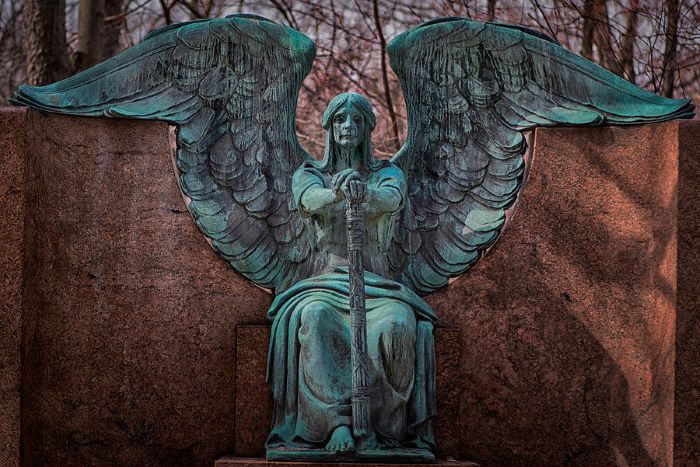
Weep, Angelic Host—sentinel Cherubim, laudific Seraphim—weep,
Recall, O Memory, the deeds of men most mean, their bitter striving;
Of those whose wrath, though born of dust, consumed the fields of nations,
Whose hands, unclean with envy, loosed the cry of widows and orphans.
From their hearts rose pride, and with their pride came hunger unbounded,
Till hearth and altar alike lay broken, the ploughshare shattered,
And souls unnumbered went down to the shadowy regions,
Leaving their fathers bereft, their children untended, their homes in ashes.
Thus was the earth made desolate, and Heaven itself grew weary;
For even the Seraphim, laudific, grew silent in their praising,
And even the Cherubim, sentinel, let fall their flaming vigil.
Yet still, O Memory, sing on, that generations yet unborn may tremble,
Lest pride unmeasured, and meanness cloaked in strength, rise once more,
And angelic hosts be called again to witness man’s undoing.
Gaza Before the Storm
Remember first how Gaza stood beside the ancient sea,
Her markets bright with oranges, her harbors filled with song,
Where fishermen cast nets at dawn, and children ran the shore,
And olive groves grew silver-green beneath the turning seasons.
The Great Omari lifted high its Byzantine dome,
Saint Porphyrius kept its vigil, fifteen centuries strong,
And in the evening hour of prayer, a thousand minarets
Sent voices skyward, weaving threads of worship into twilight.
Here was a city rooted deep, her stones drunk full of time,
Her people bound by blood and earth to this small patch of shore.
The old men sat in coffee shops, playing backgammon and speaking
Of harvests past, of children grown, of peace that might yet come.
But Memory keeps what was, before the storm clouds gathered,
Before the sky grew dark with iron, and the earth with ashes.
Gaza Besieged
Hear now, O Memory, after the angelic cry, the tale of sorrow:
How wrath was loosed upon Gaza, the walled and crowded city,
Where children clung to their mothers, and fathers kept vigil in hunger,
And the streets ran red with fire, the stones made to weep with blood.
For men most mean, in pride unmeasured, cast down their anger,
And the sky, once blue with doves, grew black with the smoke of ruin.
Hospitals groaned with the wounded, mosques lay shattered in silence;
The cry of the muezzin was drowned by the thunder of iron.
Women lifted their arms to heaven, crying for justice;
Infants wailed without milk, and the wells ran red with despair.
Thus did Gaza endure, as Ilium once by the Scamander,
A city besieged, its name to be sung in lamentation.
Yet not Troy alone, but Sarajevo’s bitter winters,
Stalingrad’s rubble, Warsaw’s ghetto walls—
All cities that have tasted wrath speak Gaza’s name as sister.
Catalogue of Grief
Sing the children whose laughter was severed in silence:
Sing Amal, whose curls were bright as dawn, now dust-shrouded;
Sing Yusuf, who carried a ball through the alleys, forever stilled;
Sing Miriam, with eyes like lamps, closed by the weight of rubble;
Sing Omar, who drew birds in the sand, his small hands silenced;
Sing Laila, who danced to her grandmother’s songs, now voiceless;
Sing Ahmed, six years old, who asked why the sky was angry.
These were the blossoms cut down, their springtime denied them,
Their games unfinished, their dreams unspoken, their tomorrow stolen.
Sing the mothers, whose voices rose in lamentation:
Sing Layla, who cried to the heavens, clutching fragments of cloth;
Sing Hanan, whose arms grew empty, rocking the air with sorrow;
Sing Fatima, who counted days by her children’s breathing;
Sing Mariam, who sang lullabies to graves of stone.
They were the pillars broken, their wombs turned to tombs of memory,
Their milk dried up, their cradle songs transformed to keening.
Sing the fathers, silent with grief, their faces carved from stone:
Sing Khalid, who once ploughed fields, now sifts through the ruins;
Sing Samir, who carried no sword, yet bore the weight of the fallen;
Sing Mahmoud, whose hands built homes, now dig for his buried;
Sing Hassan, who taught his son to read, now reads only headstones.
They were the oaks uprooted, their roots torn from the soil,
Their strong backs bent, their protecting arms made powerless.
Sing the city herself, Gaza, heart of the seashore:
Streets that once bustled with trade, now choked with ashes;
Mosques that lifted their domes to heaven, now shattered and open;
Hospitals that groaned with the wounded, their floors awash in blood;
Schools where children learned their letters, now rubble and memory;
Markets where oranges gleamed like suns, now dust and silence.
Gaza endures, yet her breath is ragged, her beauty in ruins.
The Heroes of Gaza
Yet sing also those who stood against the storm:
Sing Dr. Hussam, who would not leave his patients,
Operating by candlelight when the power failed,
His hands steady though the building shook with bombs.
Sing Mama Zahra, ninety years old,
Who sheltered twelve children not her own,
Sharing her last crust of bread among them,
Singing them to sleep with ancient lullabies.
Sing the teacher Amjad, who carved lessons in the dust,
Teaching children their letters beneath the rubble,
That learning might not die with the schools,
That hope might live though hope seemed dead.
Sing the young father Rashid, who dug with bloodied hands
For seventeen hours to free his neighbor’s child,
Though his own house lay in ruins,
Though his own losses called him home.
Sing the nurse Amal, who walked three miles each day
Through streets of glass and metal,
Carrying medicine to the wounded,
Her white coat bright as a flag of mercy.
These were the lights that would not be extinguished,
The flames that burned when all else was darkness,
The proof that goodness lives even in Hell,
That humanity endures though inhumanity rage.
The Silence of Nations
Yet where were the nations when Gaza called for aid?
The mighty kingdoms sat in their towers of glass,
Counting their gold, weighing their alliances,
While children starved beneath the rubble of their homes.
Some sent words like empty vessels, hollow condolences,
Others turned their faces away, as if not seeing
Could make the screaming stop, the dying disappear.
The halls of justice echoed only with procedure,
While Gaza bled, and Memory wrote their shameful silence.
Even the sea turned bitter, tasting ash and sorrow,
And dolphins fled those waters where the harbors burned.
Only the wind remained faithful, carrying the cries
Across the world, though men stopped up their ears
And closed their eyes, and voted for blindness.
Wrath of the Aggressors
Yet grief alone is not the tale, but wrath that bred it.
For men most mean, enthroned in pride, decreed destruction:
The Stone-faced King, whose tongue was sharpened with iron,
Who called fire down from heaven, and loosed it on the helpless.
The Golden-Maned Ruler, who sat upon distant waters,
Sending arms and gold, as though to purchase silence;
He bore the name of peacemaker, yet his hands were heavy with blood.
These were the princes of the age, their counsel clothed in falsehood,
And their decrees were bitter, sowing ashes in the earth.
They spoke of safety while they sowed destruction,
Of defense while they dealt death to the defenseless.
Their words were honey, but their works were gall,
And History will write their names in letters black as smoke.
The Voice of Gaza
Yet not in silence did Gaza bow, nor wholly in despair.
From the ruins rose a voice, steadfast as stone in the storm:
“We are the living, though the dust has covered our faces.
Our children sleep in the earth, yet their names burn bright as stars.
Break our houses, yet from rubble we rise speaking;
Cut down our olives, yet new shoots crack the stone.
You call us shadows, yet we cast longer darkness
Than your towers, and our darkness teaches light.
You name us forgotten, yet Memory keeps us close,
And angels inscribe our suffering in letters of gold.
Count our dead if you can number the grains of sand;
Measure our sorrow if you can drain the sea.
We have drunk deep of anguish, yet we are not broken;
We have walked through the valley of death, yet we breathe.
O sons of men most mean, your wrath is but smoke on the wind.
You have the fire, but we have the ashes, and ashes endure.
You have the sword, but we have the word, and the word is eternal.
Know this: though you bury us, we shall rise in the telling,
For the earth itself whispers our names, and will not forget.
And if the nations turn their faces away, still we stand,
For Gaza is not undone, though her walls lie fallen.
We are the olive trees that grow from stones,
We are the songs that survive the singers,
We are the light that shines in darkness,
And darkness has never overcome us.”
The Desecrations
Nor were the sanctuaries spared, nor the places of the Most High.
The destroyers struck at temples, their minarets broken in silence;
They shattered the churches, where lamps once trembled in vigil,
Icons dashed in dust, crosses cast down in fire.
Thus was prayer silenced, whether in Arabic chant or in hymnal;
The faithful fled, yet the stones themselves groaned in lament.
And the olive trees, those elders of the earth, were uprooted;
Ancient roots torn from soil that had drunk the blood of generations.
Branches once heavy with fruit lay scorched upon the ground,
And the groves, where fathers had walked with their sons, stood barren.
No psalm was heard, no murmur of leaves in the evening;
Only the wind through ruins, whispering sorrow to heaven.
Even the dead found no peace in their appointed places;
Graves were torn open, bones scattered to air,
Ancestors made homeless, their rest disturbed.
For wrath respects neither the living nor the sleeping,
Neither the newly born nor the long-buried,
Neither the sacred nor the profane.
Catalogue of the Broken Sanctuaries
Sing the names of holy places undone:
The Great Omari Mosque, Byzantine-born,
Heart of Gaza’s Old City, December-felled;
Saint Porphyrius, fifth-century stone,
Twice-struck shelter, sixteen souls entombed beneath its ancient walls.
Khalid bin al-Walid Mosque, November’s ruin,
Al-Riad Mosque, March’s bitter fall,
Bani Saleh Mosque, August’s dust,
Yassin Mosque, struck in al-Shati’s crowded camp,
Ibn Uthman too, its centuries silenced.
Count them: of twelve hundred and forty-four mosques,
More than a thousand scarred by fire and iron,
Nine hundred leveled utterly, their prayers cut short,
Their faithful scattered like leaves before the storm.
Graveyards forty out of sixty struck,
Twenty-two erased from the earth,
Bones scattered to air, ancestors made homeless.
Palaces broken, markets burned, bathhouses unroofed,
Even Anthedon Harbor, Roman gateway, flattened into the sea.
Museums looted, libraries obliterated,
Memory itself made to bleed, the archives set aflame.
For they would kill not only the living,
But the memory of the living,
The records of their being,
The proof they ever were.
The Lamentation Chorus
The Mothers of Gaza cry:
“O children, blossoms cut before the fruit,
We held you in our arms, now we hold only ashes.
Your laughter is buried beneath the stones of our city,
And our breasts are dry, our songs turned into wailing.
Yet still we sing your names like prayers,
And still we dream your dreams unfinished.”
The Fathers of Gaza groan:
“Our fields are ruined, our ploughs shattered,
The olive trees uprooted, the roots torn from the soil.
We walk among graves unguarded,
Where bones lie scattered, denied even silence.
Yet still we remember the taste of our olives,
And still we plant hope in the ashes.”
The Faithful lament:
“Where are the mosques that once trembled with prayer?
The Great Omari lies fallen, Ibn Uthman silenced,
Saint Porphyrius struck, its saints entombed anew.
Our lamps are dark, our chants broken in the smoke.
Yet still our hearts are temples,
And still our prayers rise to heaven.”
The Children’s Voices rise:
“We who were silenced while learning to speak,
We who were buried while learning to walk,
We who were taken while learning to love—
We are not gone, though our bodies lie broken.
We live in the tears of our mothers,
We live in the dreams of our fathers,
We live in the songs that remember us,
And death has no power over song.”
The Angels answer:
“We weep with you, O Gaza;
For sentinel Cherubim have loosed their flaming swords in sorrow,
And laudific Seraphim, once ceaseless in praise,
Cover their faces in grief, and their hallelujahs are hushed.
Yet know that every tear is counted,
Every name is written in light,
And what was destroyed on earth
Stands whole in the halls of eternity.”
The Chorus of Gaza cries together:
“Who shall remember us if not the stones?
Who shall keep our names if not the dust?
If the nations turn away their eyes,
Then let the heavens bear witness, and let Memory sing forever.
For we are Gaza, and Gaza endures,
We are the voice that will not be silenced,
We are the story that must be told,
We are the love that conquers death.”
Catalogue of the Slain
Sing, O Memory, of the dead, the multitude unnumbered,
For Gaza has given sixty thousand souls and more to the grave.
Not warriors alone, but children in their play,
Mothers in their shelter, fathers in their vigil,
The aged bent with years, the newborn scarcely named.
Count fifty-eight thousand more wounded,
Their bodies torn, their spirits scarred in silence.
Two thousand struck while seeking bread,
Gathering in hope of relief, yet felled by fire.
Three hundred perished of hunger, seven and ten children,
Their lips dry, their bellies hollow, their cries unheard by the nations.
Even when truces were spoken, the killing continued,
Ten thousand more consumed like chaff in flame.
Who can reckon those incinerated, buried under stone and steel,
Whose names are known only to God,
Whose faces are forgotten by man
But remembered by eternity?
A leaked report from the destroyer’s own hand
Confessed the truth they would hide:
Four of every five were innocents,
The harmless marked as enemies,
The helpless slain as foes.
Thus did wrath devour the lambs of Gaza,
And the angels wept, inscribing their names in light.
The Judgment of Yahweh
Then did the heavens part, as once above Sinai,
And Yahweh Himself descended, wrapped in cloud and flame,
The Ancient of Days, whose voice shook the foundations,
Before whom cherubim veil their faces, and seraphim fall silent.
He brought forth the scales of ultimate justice,
Vast as the firmament, terrible as truth,
And weighed the works of men most mean:
Their bombs and decrees, their gold and iron,
Their speeches of defense while dealing death.
“I have seen this before,” spoke the Voice that split the Red Sea,
“The marking of a people for destruction,
The sealing of their fate in chambers of decision,
The systematic starving, the calculated killing.
Did I not hear the cry from burning ghettos?
Did I not see the smoke from crematoria?”
In the other pan He placed Gaza’s slain,
The bones of children, the tears of mothers,
And with them, the ghosts of all genocide’s victims—
Warsaw and Treblinka, Armenia and Rwanda.
The scales tilted under genocide’s weight,
And the voice of the Almighty thundered:
“Genocide! I name it what it is.
You who survived the furnaces of Europe,
How could you kindle furnaces for others?
I am the God of Abraham, Isaac, and Jacob,
But I am also the God of Hagar and Ishmael.
I freed slaves from Egypt,
But I will not bless those who enslave others.
These deeds are genocide, and I have weighed them.
These rulers stand condemned, their glory is ash.
Justice will come, though justice tarry long,
And every tear will be counted,
Every life will be avenged.
Genocide!”
The Promise of Memory
Yet this is not the end, O sons of earth,
For Memory does not merely mourn but promises.
As from the ashes of the phoenix rises flame,
As from winter’s death comes spring’s green resurrection,
So from Gaza’s anguish shall come forth
A testimony that shall not be silenced.
The children who were slain shall live in song,
The mothers who were silenced shall speak through poetry,
The fathers who were broken shall stand tall in story,
And Gaza herself, though wounded, shall endure
Until justice rolls down like waters,
And righteousness like a mighty stream.
For this is the promise Memory makes:
That suffering witnessed becomes sacred,
That innocence destroyed becomes indestructible,
That love murdered becomes immortal,
And truth, though buried, always rises.
Epilogue
So sing, O Memory, lest silence fall and truth be buried.
Let cherubim guard the names, let seraphim whisper them in praise.
Let the children of Gaza, though slain, rise again in song,
And let the nations know that what was destroyed endures in remembrance.
For stone may be shattered, but the word cannot be silenced,
And ashes speak, though the fire consume them.
The olive trees shall grow again from their ancient roots,
The mosques shall be rebuilt, more beautiful than before,
The children shall play once more in streets made clean,
And Gaza shall rise, as morning rises from the night.
This is the epic of Gaza, written in tears and blood,
In ashes and in starlight, in sorrow and in hope.
Let it be read when tyrants sleep secure,
Let it be sung when justice seems to slumber,
Let it be remembered when the world forgets—
Sing, O Memory, of Gaza.
Weep, Angelic Host—sentinel Cherubim, laudific Seraphim—weep.