History shows that evil rarely marches under banners we immediately recognize. Too often, it comes draped in righteousness, purity, and fear. This piece is a lament for how easily we have been—and still can be—drawn into the machinery of cruelty.
My Friend, You Were There
My friend, When the Holy Catholic Church, seeking to preserve the Faith in all its radiant purity, instituted the Inquisition, you were there— not as a bystander, but as a willing voice.
You denounced the old widow, who lived alone with her cat. You whispered against the Jewish family— familiar, yet forever marked as other— and gave your assent to their undoing.
You crowded into the square to watch the trials. You sang hymns as the flames crowned their bodies with smoke. You wept tears of joy that the world was made purer that day.
My friend, When the ships came heavy with human cargo, and the auction blocks stained the soil, you were there.
You placed your bids. You weighed their flesh. You wrote the laws that chained their children.
You sang hymns on Sunday, and broke their backs on Monday. You called it providence. You called it order.
My friend, When the traders came with flags and rifles, when the rivers flowed with rubber and blood, you were there.
You signed the charters. You counted the profits. You sold the shackles and the scales.
You called it commerce. You called it destiny.
My friend, When the banners of the Reich unfurled, and the drums of destiny beat their hollow call, you were there.
You shouted with the crowds as glass shattered from shopfronts. You signed the letters, you cheered the laws, you raised your hand high in salute.
You bought the house, the shop, the art your neighbors were forced to leave behind.
You praised the strong hand that swept away the weak. You rejoiced as neighbors vanished, grateful that your streets were made clean.
My friend, When Stalin summoned the will of the people to root out the enemy within, you were there.
You reported the whispered doubts of your cousin, your friend, your brother.
You paraded with red flags while the trucks rumbled into the night. You filled the quotas. You seized the land. You counted the spoils as others disappeared.
You sang of the bright tomorrow as you cast your eyes down and stepped over the absent.
My friend, When Mao lifted the Little Red Book, and the children cried out against their fathers, you were there.
You led the chants. You scrawled denunciations across the walls. You struck the old professor who dared to hesitate. You cheered as the temples fell, and the old poems burned, convinced you were building a paradise on the bones of the past.
My friend, When Pol Pot promised that the fields would bloom with new life, you were there.
You marched the teachers into the paddies. You pointed the rifle. You praised the year zero that would erase the memory of all that came before.
You smiled as the world was reborn in silence.
My friend, When the generals rose in the name of order, when the prisons filled and the stadiums overflowed, you were there.
You nodded at the names. You counted the profits. You watched the blindfolded taken at night.
You called it security. You called it salvation.
My friend, You have always been there.
Only too late did you realize. Only too late did you doubt— but not much.
You fell silent, lest you betray your doubt. You looked away, lest you see.
You told yourself it would be different this time. You told yourself you had learned. But the signs are familiar. The words are familiar. The silence is familiar.
The Destruction of Leviathan by Gustave Doré (1865)
Author’s Note
This essay, The Void at the Heart, is presented as a contemplative meditation on the moral and spiritual collapse visible in aspects of contemporary governance and public life. It is a deliberately focused reflection, tracing the descent from cruelty in action to the corruption of thought, to the inversion of traditional values, and finally to the eclipse of the soul itself.
This essay may, in future, be expanded into a fuller monograph-length work. Such a work would likely incorporate historical and contemporary examples, address counterarguments, consider cultural issues, and distinguish more sharply between causes and symptoms of decay. For now, however, I offer this essay as a completed meditation in its own right—a starting point for further reflection.
The Void at the Heart
On Cruelty, the Collapse of Reason, and the Eclipse of the Soul
There is a void at the heart of the soul, a place where the ordinary bounds of morality and ethical consideration seem to collapse into nothingness. It is not merely that questionable policies are advanced—that has ever been the case in human governance—but rather that their implementation is accompanied by a conspicuous and grotesque relish for cruelty. Even if one were to suspend judgment upon the legitimacy of the policies themselves, the manner of their enforcement betrays a deeper and more troubling decay: a delight in the infliction of pain.
Deportation of unauthorized aliens, for instance, is not approached as an unfortunate necessity carried out with solemnity and regret. It is heralded as a triumph, an occasion for rejoicing, even as it often rips apart families, sunders years of labor and stability, and leaves children disoriented and/or abandoned. Similarly, the mass termination of public servants and contractors—individuals who dedicated themselves to fields such as public health, education, consumer protection, and law enforcement—is not seen as a sorrowful consequence of political/policy change or fiscal concerns, but is rather celebrated with an air of gleeful vindictiveness. Grants and subsidies intended for the most vulnerable, from students to farmers, are not merely ended; they are rescinded with evident gleeful satisfaction, as though deprivation itself were a moral good.
Even those nearing completion of their educational journeys, standing on the threshold of careers that might benefit society, are not spared. Educational visas are canceled without warning or cause, months or even weeks before graduation. Opportunities are crushed underfoot. Dreams are shattered not as a side effect of some broader administrative goal, but seemingly as an end in themselves, an assertion that the suffering of others is righteous and overdue.
This spirit of cruelty is defended and magnified through a rhetoric that frames suffering as deserved, earned, or insufficiently severe. The pain of others is no longer a regrettable cost, but an instrument of moral theater: those who suffer are cast as villains, their misfortunes paraded as proof of divine or civic justice. In such a worldview, mercy is weakness, empathy is betrayal, and the infliction of pain is a form of virtue.
There is a profound difference between enacting necessary policies with reluctant firmness and celebrating the devastation they cause. A just society may impose burdens, but it ought never to rejoice in doing so. When joy is found in the destruction of livelihoods, when cheers rise at the deportation of neighbors, when applause greets the impoverishment of fellow citizens, something foundational has been lost. The wound is not merely political; it is spiritual.
The embrace of cruelty as a public virtue hollows out the soul of a nation. It numbs the collective conscience, distorts the notion of justice, and substitutes vindictiveness for principle. Over time, the society that delights in the suffering of others does not merely lose its victims; it loses itself. It becomes a cold and pitiless machine, capable of great power but incapable of true greatness, capable of order but incapable of meaning.
If the celebration of cruelty corrupts action and spirit, it inevitably corrupts thought as well. The human mind, which depends upon honesty and openness to discern the world aright, cannot remain untouched by the moral decay of the soul.
The Eclipse of Reason
The celebration of cruelty does not remain confined to the sphere of action; it metastasizes into the realm of thought itself. When a society exalts the suffering of the vulnerable and frames mercy as weakness, it necessarily distorts its ability to process information honestly. Truth ceases to be measured by coherence, evidence, or fidelity to reality. Instead, it is judged by its conformity to the prevailing narratives of contempt, fear, hatred, or greed.
Thus, expertise—whether scientific, legal, historical, or journalistic—is no longer respected as a necessary guide to sound judgment. It becomes suspect by its very nature if it fails to mirror the animosities of the moment. Scientists who warn of ecological degradation, public health crises, or technological risks are dismissed as conspirators or ideologues. Legal scholars who point to constitutional violations or abuses of authority are castigated as partisan agitators. Historians who trace the patterns of injustice, violence, or repression are branded as enemies of national pride. Journalists who seek to uncover uncomfortable truths are denounced as purveyors of “fake news,” their integrity impugned simply because they refuse to tailor their findings to the dominant ideological climate.
The citizenry themselves, infected by the ethos of cruelty, become willing participants in this willful blindness. They refuse to hear, to consider, to weigh, or to deliberate. Instead, they declare all sources outside their ideological fortress to be corrupt, unreliable, or part of some imagined conspiracy. Knowledge itself becomes an object of scorn, and expertise is equated with betrayal. The very faculties that distinguish the informed citizen—the ability to discern evidence, to listen with patience, to reason without rancor—atrophy and are replaced by reflexive suspicion and tribal affirmation.
Orwell, ever the grim prophet, would recognize the phenomenon with bitter familiarity. In his imagined dystopias, the manipulation of language, the corruption of thought, and the triumph of ideology over reality are not the consequences of brute force alone, but of a populace that chooses to believe falsehoods because those falsehoods are more comforting—or more satisfying—than the difficult demands of truth. Ignorance is strength, he wrote, capturing the dark alchemy by which the renunciation of reason is transmuted into a perverse kind of certainty.
It is not merely that ideology colors perception; it replaces perception altogether. Information is no longer evaluated according to standards of credibility or methodology, but according to its utility in reinforcing contempt for the foreigner, the minority, the poor, or the vulnerable. If facts threaten to humanize the other, they are rejected. If scholarship suggests the necessity of compassion or restraint, it is denounced as corruption. Only that which fuels resentment is permitted to be heard; only that which magnifies grievance is deemed “true.”
In such a climate, dialogue becomes impossible. The very idea of dialogue presupposes a willingness to listen, to admit complexity, to concede error. But where cruelty reigns, these are forbidden virtues. In their place stand slogans, shouted endlessly into a void that no longer seeks understanding but only echoes its own bitter triumphs.
In such a climate, governance itself grows chaotic and erratic, not by accident but by design. Policies are proclaimed and abandoned with little coherence; programs are implemented or canceled with open disregard for planning, expertise, or consequence. The instability is treated not as a failure, but as a virtue: a sign of disruption, toughness, authenticity. Yet beneath the slogans, the disorder corrodes trust, hollows out institutions, and leaves citizens adrift in a landscape where no promise endures and no framework holds. It is a cruelty not merely of action, but of confusion—a destabilization that magnifies alienation and feeds the collapse of both thought and community.
Yet even this collapse of thought is but a precursor to a deeper betrayal: the corruption of the very values that once defined and ennobled a people.
The Inversion of Values
As cruelty becomes a public virtue and ideology supplants reason, the final and most insidious transformation takes place: the subversion and inversion of traditional values themselves. The outward forms and labels of religion, civic duty, and ethical conduct may be preserved, but their substantive meanings are hollowed out and replaced by their very opposites. Language itself is corrupted; words once signifying aspiration, mercy, and justice now serve as empty vessels, bearing meanings recognizable only as antonyms of their epistemological truths.
Faith, once the call to humility before the divine and charity toward one’s fellow man, is distorted into a weapon of exclusion and punishment. Love of neighbor becomes conditional, subject to ideological conformity; compassion is reserved for the in-group alone, while hatred of the stranger is sanctified as a form of righteousness. The prophets and founders who once preached repentance, mercy, and love are invoked by those who trample upon their teachings, their sacred words reinterpreted to bless cruelty as strength and vindictiveness as virtue.
Civic values fare no better. Patriotism, once the measured love of one’s country expressed through service, sacrifice, and the protection of rights, degenerates into a shrill and defensive chauvinism. The rule of law, once understood as a shield for the weak and a restraint upon the strong, is twisted into a blunt instrument to punish enemies and protect the powerful. Freedom, once the delicate balance between personal liberty and communal responsibility, is redefined as the license to oppress, to dominate, to revel without shame in the suffering of others.
Even the ethical precepts that ground common life—the golden rule, the dignity of work, the sanctity of truth—are inverted. Do unto others becomes do unto others first, lest they do unto you; the dignity of labor is reserved for some and withheld from others based on arbitrary categories of race, origin, or ideology; truth itself becomes malleable, no longer a standard to which men must conform, but a tool to be wielded, bent, or abandoned as expediency demands.
In this bleak mirror-world, tradition becomes little more than pageantry—a hollow ritual masking a profound spiritual betrayal. The ancient words are mouthed, the venerable ceremonies performed, but their meaning is lost. Their light has been inverted into darkness, their call to transcendence replaced by a shout of tribal triumph. What was once sacred has become profane, and the keepers of the tradition are blind to their own apostasy.
Yet the descent does not end even there. It reaches further downward, to the degradation of the individual soul itself.
The Final Descent
Ultimately, the mind infected by cruelty and blinded by ideology forgets how to think, how to reason, how to love. The soul, once the wellspring of compassion, imagination, and truth-seeking, is lost. What remains is a hollow creature, a being still outwardly human but inwardly diminished, descending toward an animalistic existence governed only by base and grotesque instincts.
No longer illuminated by the light of reason, no longer stirred by the love of others or the awe of the divine, such a being reverts to the raw appetites of dominance, fear, rage, and self-preservation. The faculties that once elevated humanity—the search for truth, the capacity for self-sacrifice, the impulse toward mercy—atrophy and rot. What once distinguished man as a creature formed in the image of the divine is obscured beneath layers of suspicion, resentment, and brutality.
In such a state, crassness replaces dignity, and rudeness masquerades as strength. The subtleties of manners, the graces of dialogue, and the silent obligations owed to neighbor and stranger alike are discarded as burdensome relics of a now-despised civilization. Material success becomes the sole remaining measure of worth, and individual gratification the only recognized good. The broader community—once the nurturing ground of the self—becomes either invisible or hostile, perceived only as an impediment to personal appetite or ambition.
Alienation takes root, first unnoticed, then unchallenged, feeding upon itself. Having severed the ties that bind individuals to each other through mutual respect, shared memory, and common purpose, society decays into a landscape of lonely, embittered selves, suspicious of all and merciful to none. This alienation colors every interaction with a thin, toxic miasma: a pervasive bitterness, a readiness to assume the worst, a ceaseless litany of grievance against an imagined host of enemies.
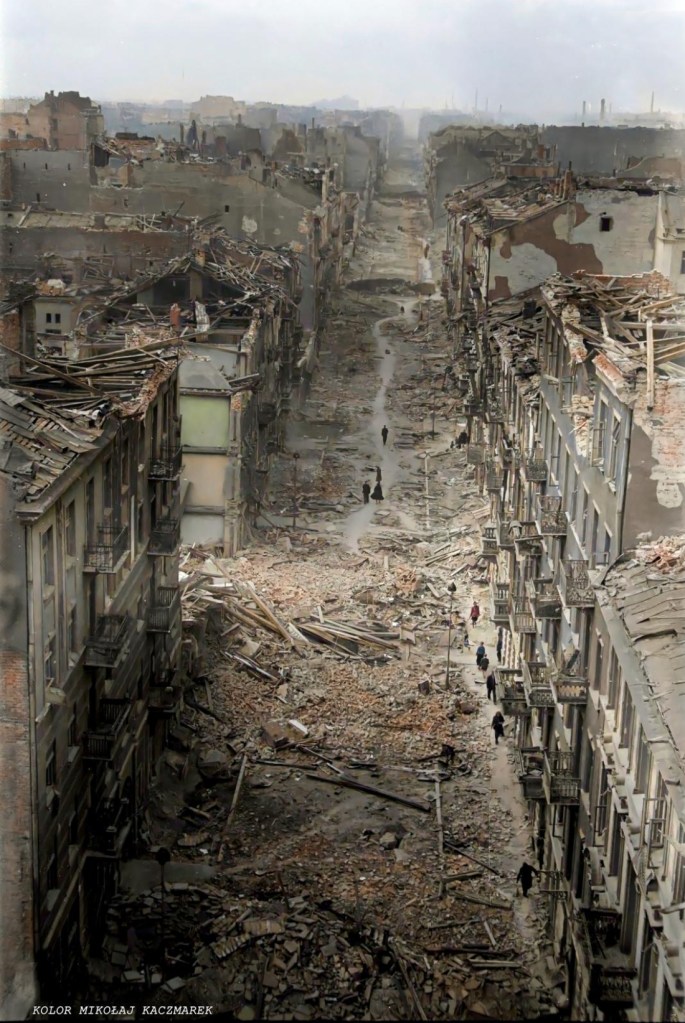
The community, too, begins to crumble. No society can endure when its members are ruled by suspicion rather than trust, hatred rather than fraternity, cruelty rather than justice. Institutions falter, not because they are attacked from without, but because the very spirit that once animated them has fled.
Yet the gravest tragedy is not merely societal collapse, but the debasement of the individual soul. Each man or woman who abandons thought for slogan, love for contempt, truth for expedience, does more than wound the body politic; they desecrate the image of the divine that resides within.
Thus, the moral and ethical void at the heart of the soul becomes complete. And from that void, no nation, no civilization, no human heart emerges unscathed.
Epilogue: The Faint Memory of Light
Yet even amidst the ruin, a faint memory endures.
The divine image, though battered and obscured, is never wholly extinguished. Buried beneath the ash of cruelty and the rubble of falsehood, there remains a spark—a silent witness to the soul’s higher calling. It is not easily rekindled. It demands humility where pride has reigned, mercy where vengeance has triumphed, courage where fear has prevailed.
The path back is arduous and uncertain, for it requires the infected soul to remember that it has forgotten; it requires a people to repent not merely of actions, but of the passions that animated them. It requires that tradition be not merely repeated but restored, that truth be not merely spoken but once again loved, that reason be not merely used but honored.
If such a reawakening is to come, it will come quietly at first, as all true renewals do—not in thunderous proclamations, but in the whispered refusal to hate, the silent act of mercy, the solitary pursuit of truth in a world grown hostile to it. From these small and stubborn acts, unseen and unsung, a civilization might yet be reborn.
But if not, then the void will deepen, and the ruins will spread, and future generations will wonder at how lightly men once abandoned what was most precious: not wealth, nor power, nor comfort, but the light of mind and soul that marks the human being as more than a beast among beasts.
The choice remains, as it always has, hidden in the quiet precincts of each heart.
The content discusses transforming a prophetic lamentation about the corruption of the American justice system into a biblical framework, relating it to Judeo-Christian themes. It emphasizes the corruption of judges influenced by wealth and oligarchs, using biblical imagery and references to emphasize concerns for justice. The work calls for repentance and restoration while echoing biblical prophetic traditions highlighting the importance of righteousness and divine justice, urging readers to recognize the significant consequences of judicial corruption and its societal ramifications.
Recognizing that most Americans may have a familiarity with Judeo-Christian themes, imagery, and language—but little to no awareness of Mesopotamian themes, imagery, and language—I sought to recast my recent prophetic lamentation on the corruption of Justice, The Temples of Utu, into a biblical framework. By doing so, I aimed to ensure that my lamentation on the corruption of the American justice system, particularly the concern that judges and Justices are being purchased by oligarchs and beholden to faction, would resonate more deeply with contemporary readers.
The work found by scrolling further down, A Prophetic Lamentation: A Biblical Cry for Righteous Judgment, was created by transforming The Temples of Utu: A Contemporary Lament for Justice into a text that more explicitly resonates with the Judeo-Christian tradition. By incorporating biblical references throughout and aligning the themes with scriptural principles, this lamentation follows the prophetic tradition of calling out corruption and pleading for divine justice.
An Audio Reading of Donald S. Yarab’s A Prophetic Lamentation: A Biblical Cry for Righteous Judgment
To aid in understanding the biblical framework underlying this transformation, the following terms and themes are central to the work:
I. Theological Names and Concepts
El Elyon (אֵל עֶלְיוֹן) – A Hebrew name for God meaning “God Most High.” It first appears in Genesis 14:18-20 with Melchizedek, emphasizing God’s supreme authority and sovereignty over all creation.
Adonai (אֲדֹנָי) – A Hebrew term meaning “my Lord,” traditionally used as a substitute for YHWH out of reverence. It signifies God’s absolute authority and dominion.
El Shaddai (אֵל שַׁדַּי) – Typically translated as “God Almighty,” it first appears in Genesis 17:1 when God makes a covenant with Abraham. It highlights God’s power, might, and provision.
Elohim (אֱלֹהִים) – A plural form used singularly for God in the Hebrew Bible, emphasizing divine power and majesty.
Mammon (μαμμωνᾶς) – An Aramaic term used by Jesus in Matthew 6:24 and Luke 16:13, personifying wealth and material possessions as an opposing force to God. In this work, Mammon represents the corrupting influence of material gain and injustice.
II. Historical and Symbolic References
Babylon – The empire that conquered Jerusalem in 586 BC, destroying Solomon’s Temple and exiling many Judeans. In biblical prophecy, Babylon symbolizes oppressive human power and arrogance that defies God (Isaiah 47:1-11; Jeremiah 50-51; Revelation 18).
Egypt – The nation that enslaved Israel before the Exodus. Egypt is often used as a biblical metaphor for oppression, idolatry, and the worldly systems from which God delivers His people (Exodus 20:2; Deuteronomy 4:20; Hosea 11:1).
Assyria – The empire that conquered the Northern Kingdom of Israel in 722 BC. Known for ruthless expansion and forced resettlement, Assyria is depicted as an instrument of God’s judgment but ultimately doomed for its arrogance (Isaiah 10:5-19; Nahum 3).
Tyre – A Phoenician port city known for its wealth and trade dominance. Biblical prophets condemned Tyre for its pride, greed, and economic exploitation (Ezekiel 27-28; Isaiah 23). In this work, Tyre symbolizes commercial corruption and economic injustice.
Mount Sinai – The sacred mountain where Moses received the Law from God (Exodus 19-20). Sinai represents divine revelation, covenant responsibility, and the foundation of justice.
Sodom – The city destroyed for its wickedness and injustice (Genesis 19:24-25). In prophetic literature, Sodom serves as a symbol of moral corruption and a warning of divine judgment (Isaiah 1:9-10; Ezekiel 16:49-50).
III. Prophetic Tradition and Literary Framework
Biblical Lamentation – This work follows the tradition of biblical lament, particularly seen in Lamentations, the Psalms, and prophetic writings. These laments express grief over national corruption and divine judgment (Lamentations 1:1-4; Psalm 137).
Prophetic Literary Forms – The text incorporates multiple prophetic genres, including:
Lawsuit (rîb) – Where God brings charges against His people (Isaiah 1:2-3; Hosea 4:1).
Lament (qînâ) – Mourning the destruction caused by sin and corruption (Jeremiah 9:17-22; Ezekiel 19).
Restoration Promise – Common in prophetic literature, offering hope after judgment (Jeremiah 31:31-34; Isaiah 61:1-3).
Covenantal Framework – Judges in ancient Israel were not merely legal authorities, but covenant mediators tasked with upholding divine law. Their corruption represents a betrayal of that covenant, mirroring Israel’s repeated failure to uphold God’s justice (Deuteronomy 16:18-20; Isaiah 1:21-23).
Justice for the Oppressed – The recurring emphasis on justice for widows, orphans, and foreigners aligns with the core concerns of biblical prophets, such as:
Amos 5:11-12 – Condemning exploitation of the poor.
Micah 6:8 – Calling for justice, mercy, and humility.
Isaiah 10:1-2 – Warning against unjust laws that oppress the vulnerable.
Apocalyptic Elements – The “Day of Reckoning” section reflects apocalyptic themes, seen in:
Joel 2:1-2 – A warning of impending divine judgment.
Daniel 7:9-14 – God’s ultimate triumph over corrupt rulers.
Revelation 18 – The fall of oppressive systems.
IV. Purpose of This Work
By drawing on these biblical themes, historical symbols, and prophetic traditions, A Prophetic Lamentation: A Biblical Cry for Righteous Judgment aims to offer a theologically rich meditation on the corruption of justice. It calls for repentance, righteousness, and restoration, echoing the voices of the biblical prophets who spoke against oppression and warned of impending judgment.
For readers wishing to explore the scriptural foundations of this work, a guide to the work labeled as containing in-text biblical citations is available at the button below. Finally, though many have their favorite bibles, I do not hesitate to recommend for studying the Old Testament, Robert Alter’s The Hebrew Bible: A Translation with Commentary. The scholarship, especially in the footnotes, is unmatched. Another useful online resource is biblehub.com – which allows you access to multiple bible translation traditions.
A Prophetic Lamentation: A Biblical Cry for Righteous Judgment
A Lament for the Perversion of Judgment and the Abandonment of Righteousness
Part I: The Forsaking of Righteousness
The First Turning from Truth
In the days when righteousness stood firm in the land, when the Law of The LORD was a lamp unto the feet of judges, the courts of justice were as sanctuaries where truth dwelled. The judges, servants of El Elyon—The LORD, God of Abraham, Isaac, and Jacob, the One who brought Israel out of Egypt and wrote His covenant in fire upon Sinai, sat in chambers of cedar and stone, their hands unstained, their judgment righteous. The widow, the orphan, and the foreigner approached without fear, for the Law was written by the finger of Elohim upon tablets of stone, and justice flowed like the waters of Shiloah through the gates of the city.
But in time, whispers arose from the chambers of power. First to one judge, then another. Golden whispers, honeyed promises, from the lips of those who dwelled in palaces of privilege. And some turned their ears to listen.
From the houses of the mighty came messengers bearing gifts wrapped in fine linen, bearing words that concealed their true purpose. And the first judge who accepted such offerings felt the scales within his heart shift, so slightly he did not perceive it. But The LORD perceived it, as He perceived the wickedness of the sons of Eli, whose hands were stained with bribes and whose lips defiled the altar. The LORD, before whom no falsehood can stand, whose eyes search the hearts of men.
Yet the voice of Adonai grew fainter in the halls of judgment, as the mighty pressed their thumbs upon the sacred scales of Moses.
The Widow’s Cause Rejected
When the widow came before the seat of judgment, Her cause was just, her plea righteous. But he who wronged her wore the seal of the rulers, And silver had changed the words of the Law.
The judge spoke with a tongue not his own: “The letter of the Law says thus and thus, Yet its spirit is silenced beneath my tongue.” And so the widow departed in sackcloth.
She lifted her voice in the gates of the city: “Where is Thy justice, O LORD of Hosts? Thy servants speak with deceitful lips, Thy Law is sold for pieces of silver.”
But no thunder came from Mount Sinai, For the judges had stopped their ears with gold.
Part II: The Spreading Abomination
The Choosing of the Corrupt
As the seasons of harvest passed, it came to be that when a judge returned to the dust, those who appointed his successor sought not for wisdom, not for righteousness, not for fear of The LORD. Instead, they sought those who had bowed before the mighty, who had pledged themselves in secret chambers to uphold not the Law as it was given through Moses, but the interests of those who elevated them.
And so the courts of judgment, one by one, were filled with those who had sold their birthright for a bowl of pottage before ever taking the seat of judgment. The words of their oaths remained the same, the ceremonies unchanged, but the fear of El Shaddai had departed from the administration of justice.
Then came the spirit of Mammon, whom Solomon warned against, moving through the corridors of power. Not with swift judgment did he strike, but with slow corruption, a leprosy of the soul that left its victims outwardly clean but inwardly defiled, wearing the robes of righteousness while serving the lords of unrighteousness. And Elohim looked down, as He did in the days of Noah, and beheld that the wickedness of man had multiplied, and that the thoughts of his heart were only evil continually.
The Judgment Purchased with Silver
Behold how they come with scrolls of precedent in hand, Twisting the words of the prophets to serve new masters. The Law speaks what they command it to say, The statutes bend like bulrushes in the wind.
Mammon walks boldly among the pillars of justice, His touch light as silver upon the outstretched palm. Each judgment purchased furthers the transgression, Each verdict for sale defiles the holy sanctuary.
The judges feast at the tables of the merchants of Tyre, The masters of wealth whisper close in their ears: “This cause favors our interests,” they murmur, “This ruling preserves the power we hold dear.”
And the people cry out to the Holy One of Israel, But His face is turned away from His defiled courts.
Part III: The New Order of Iniquity
The Temple Defiled
And so it came to pass that the courts of justice no longer stood as bulwarks against wickedness, but as instruments of those who ruled from behind veils. The judges spoke still of righteousness, wore still the robes of impartiality, but their eyes looked ever to their masters for instruction. Their words were shaped not by the Law of Moses, but by the whispers of corruption.
The scales that once weighed all causes righteously now tipped by design. The light that once revealed truth now cast deceptive shadows. And those who came seeking justice found instead a marketplace where judgments were bought and sold like cattle and grain in the markets of Jerusalem.
The Serpent, who from Eden has twisted the words of Elohim, wound himself around the pillars of judgment like the bronze serpent once lifted in the wilderness. His forked tongue spoke through the mouths of judges, uttering words sweet as honey yet bitter in the belly, verdicts that invoked the sacred Law while rendering it void and without effect.
The Perverted Judgment
The scales of judgment hang crooked now, Weighted with bribes and heavy with deceit. The mantle of justice has become a shroud, Pulled tight by hands that serve the powerful.
The Serpent coils around the judgment seat, His ancient form hidden beneath holy garments. “Justice,” they proclaim, while dealing in oppression, “The Law,” they invoke, while breaking its covenant.
The mighty approach the courts without fear, For they have purchased favor with unrighteous mammon. The poor approach with trembling upon their faces, For they know the sentence before the cause is heard.
So the pillars of justice, hewn by the hands of the faithful, Were carved anew by the chisels of corruption. The covenant of right judgment lay broken upon the steps, As the people watched their inheritance dissolve like morning dew.
Part IV: The Breaking of the Covenant
The Covenant Forsaken
Thus was the covenant between The LORD and His people defiled. Not by the sword of Babylon, nor by the chariots of Egypt, nor by the cunning of the Assyrians, but by the slow poisoning of the wells of justice. As the cycles of seedtime and harvest passed, the people came to know that the courts offered no refuge for the oppressed, that the words of judges held no truth, that judgment measured not righteousness but privilege.
And in this knowing, the foundations of society began to crumble. For what is Law if not covenant? What is justice if not faithfulness? What is order if not the keeping of sacred promises?
The rulers and mighty men who had captured the courts of judgment did not see the doom they had wrought. They feasted upon their victory over righteousness, their conquest of the scales. They did not hear the voice of Adonai, gathering like thunder upon the mountains, as in the days of Sinai, preparing for the day of visitation.
For when justice fails, the whirlwind awaits. When Law becomes a snare rather than a protection, the people cast aside its yoke. When righteousness is no longer honored in the courts, it cries out from the dust like the blood of Abel, calling for vengeance before the throne of El Elyon.
The Harvest of Corruption
Now Jerusalem trembles upon foundations of sand, The courts of judgment stand as whitewashed tombs. What was established through generations of faithfulness, Falls to ruin through seasons of corruption.
The people no longer call upon the name of The LORD in the courts, For His servants have made it bitter on the tongue. They turn instead to other deliverers, darker powers, Gods of vengeance, spirits of retribution.
The rulers sleep uneasy in their chambers, For they have slain the guardian of their peace. In purchasing the Law, they rendered it powerless, In perverting justice, they broke its authority.
And The LORD cried out, as He did through Amos: “But let justice roll down like waters, And righteousness like an ever-flowing stream!” But the stream had dried, the land was parched, and the people drank the wine of oppression instead.
Epilogue: The Prophetic Warning
The Voice of the Remnant
Those who remember, who still hold the Law sacred in their hearts, who recall the days when the courts of judgment shone with uncorrupted light, raise their voices in the wilderness of injustice.
They speak of what was lost, of scales that balanced, of laws that protected the least among the people. They warn of what comes when the rulers believe they have placed themselves beyond the judgment of El Shaddai.
For the LORD watches still, though His servants have forsaken Him. The Holy One of Israel sees still, though His courts have been corrupted. And the day will come when righteousness returns to the gates of the city, when justice again flows like living water.
But the price of restoration will be bitter, paid in the coin of tribulation. For what is defiled cannot be cleansed without fire, as Sodom was overturned in fire and brimstone, and the altars of Baal were cast down in the days of Elijah.
The Day of Reckoning
Remember this in days to come, When the storms of judgment break upon the land, When faction rises against faction in the ruined streets, When the rulers tremble before the dispossessed:
It began with the perversion of judgment, It began with the purchasing of truth. It began when the courts of the LORD Became marketplaces for injustice.
And those who turned their backs on righteousness, Who sold the Law for temporary gain, Who twisted the statutes of the Most High, Will cry out: “How could we have known?”
But their hands are not clean. For they defiled the sanctuary, stone by stone. They corrupted the judges, word by word. They profaned justice, verdict by verdict.
And the LORD shall arise, as He did at Sinai, in fire and storm, As He did at Babylon, with writing upon the wall. Neither silver nor rulers will shield them; They and their wealth shall melt like wax before the flame.
This is song using a poem created around 40 years ago by Donald S. Yarab during his time at Albion College. The lyrics express a journey towards truth and peace despite challenges, and the music was created using AI on Udio.com. The song conveys a message of unwavering faith and determination in reaching the “harbor of truth” and finding peace in God’s embrace.
Roughly 40 years ago, when I was at Albion College, and one of my majors was Religious Studies, I penned the words which became the lyrics to the music below, Harbor of Truth. As I recall, the words were inspired by some work I was doing in the Book of Isaiah at the time either in Prof. Gillham’s or Prof. Stohl’s class. Unsophisticated and not terribly original lyrics, but I wanted to experiment a bit more with the AI at the Udio.com website and the words were handy.
This time Udio.com was much less cooperative as a co-creator and I kept rejecting its creations, repeatedly. Perhaps my prompts were less clear than on previous ventures, or my vision lacked clarity. But it was as effort to birth even this adequate venture. On the other hand, the audio file reading slightly below the image is worth a listen.
Audio file for a wonderful reading of Harbor of Truth created by Udio.com.
Lyrics for Harbor of Truth
Though I traverse seas of error, I fear not, For I am ever compassed towards the harbor of truth. Yea, doth not the very breath of God Fill-full the sails of my humble craft, Propelling me ever forward towards the shores of Zion.
Amidst tempests fierce and shadows deep, I sail, Yet falter not, for stars of hope above Light my way, and faith shall never fail. With morning’s dawn, I’ll greet the day with love. For in God’s hands, my course is ever set, On Zion’s shores, my soul shall find its rest.
At last, I glimpse the golden shores ahead, Where Zion’s light doth shine with purest glow. No longer lost, by faith and truth I’m led, Into the arms of peace, where rivers flow. Eternal rest within the sacred land, Where God’s embrace fulfills what He hath planned.






 Northcoast Antiquarian