“Dry bones can harm no one”— So sang the voice from Wasteland’s shore, But I have walked the killing fields And know the lie that silence bore.
The bones do speak, though long decayed, Unearthed by hands not theirs to claim, Given tongues by zealot priests Who mouth their prayers and speak their shame.
In Kosovo’s fields, in Gaza’s dust, In Armenia’s buried grief, Across the sands of Erbil’s night, The dead are stirred—not for relief.
They rise not in their own defense, They rise to justify the blade, Embroidered with fresh fable-cloth, With memories half-new, half-made.
The Promised Land is paved with skulls That never sought a throne or crown. The gospel of the grave is preached In voices never theirs to claim.
The soul-stained call them forth once more— These ventriloquists of vengeance Make calcium speak of causes The buried never chose to bless.
They cry for peace, yet hear their names Proclaimed to summon death, not justice. Their marrow plundered, their repose Defiled while ancient wounds burn bright.
They do not ask to be avenged— No whisper from the tomb requests A mother’s tears be matched by some New covenant of blood and fire.
Until we bury not just bone But pride and myth and righteous sword, The dead shall march in vengeful script To scrawl our creeds in sacred dust.
Dry bones should harm no one— Yet see how we conscript the dust, Make weapons of our ancestors, And brand our vengeance just.
I saw it—yes—just there, in the silence between breaths: a blade of grass bowed not by wind but by a single flicker of light, that tender emissary of dusk— the lightning bug, that priest of fire who blesses every meadow.
O you small bearer of green and gold, what vast wisdom coils within your tiny belly? What songs do you blink to the darkened world, what truths do you flash to the blade you hold?
I, too, have grasped the green earth in my palm— felt its tremble and thrum, watched a whole summer declare itself in the way grass leans toward starlight.
Do not speak to me of empires and theories— tell me instead how the hush after thunder is where the soul begins, how the firefly remembers the sun, and carries its pulse through the hollows of night.
Here is your scripture: dew-wet grass, the pulse of insect wings, the scent of warm loam rising at twilight— and yes, the low chant of crickets, singing hosannas in the key of soil.
I stand barefoot in this republic of clover, declaring allegiance to the unnoticed: to the tree frog’s stillness near an old stump, the clover’s soft petition beneath my heel, the breeze that forgets no leaf, the dandelion seed drifting without regret, the shimmer barely seen, the flash in the periphery, the small, bright pulse that stirs the dusk and reminds me—ah!—I am alive.
For is it not enough to say: a lightning bug chose a blade of grass, and that was revelation?
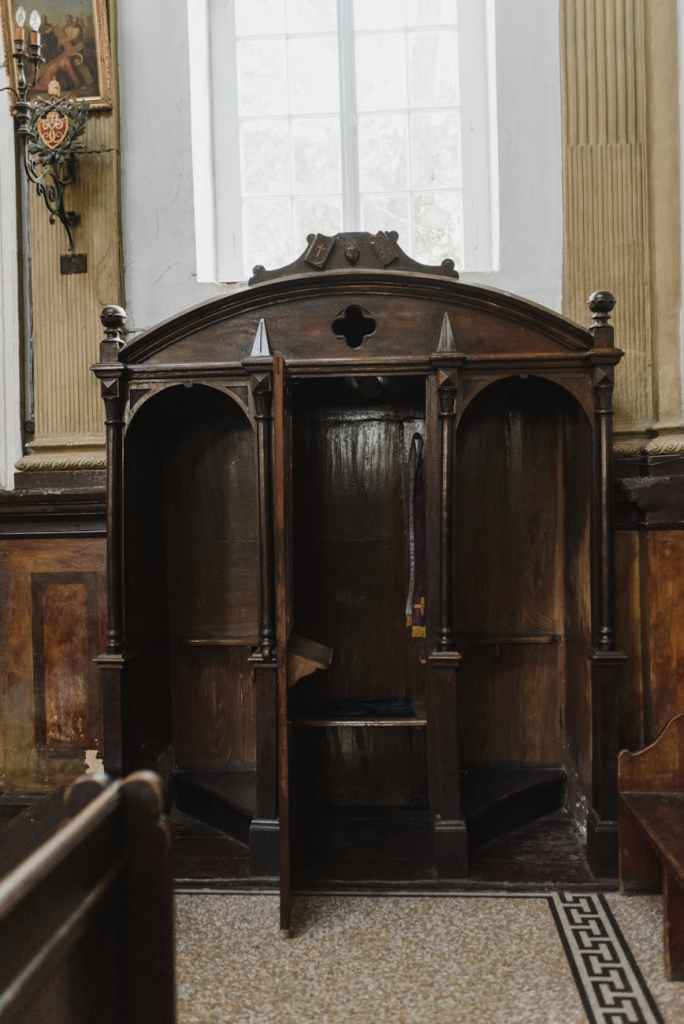
Forgive us, Father, for we have sinned, It has been… we cannot count the years— since we knew what sin meant.
We mouth the words the nuns and priests once taught us, but the syllables taste foreign now, like prayers in a dead language we pretend to understand.
We have forgotten why we kneel, though still our knees recall the stone. We have lost the thread of what was broken, but feel the weight of something severed.
We built cathedrals out of doubt and filled them with our questions. We replaced altars with algorithms, confession with comment sections.
We are no longer sure You are listening— or if listening is something we invented to make the silence bearable, the vastness less vacant.
We have sinned—we think— though we are not sure against what. Against nature? Against each other? Against some half-remembered covenant, written in a script we can no longer read?
We recite the forms like actors who have forgotten their motivation, performing the ancient motions because they feel like muscle memory— like DNA calling us home to a house we are no longer certain exists.
Still we gather, still we whisper these inherited incantations, hoping they might still hold power, hoping the words might remember what we have forgotten.
O my God… we are… we think we are… sorry… for having… for having what? For having forgotten how to finish this prayer?
“The poem is the cry of its occasion, / Part of the res itself and not about it.” — Wallace Stevens, “An Ordinary Evening in New Haven”
Lacrimae Sanguinis 2025: A Lamentation in Four Movements
By Donald S. Yarab
I.
Lacrimae sanguinis, Animae nigrae hominum terram maculant. They walk not as men, but as shadows unshriven, Each step a silence, each breath a wound. The ground groans beneath the weight of the fallen, And justice, long buried, forgets her name. No trumpet sounds for the guiltless slain, Only the whisper of blood in the dust.¹
Lacrimae sanguinis— The blackened souls of men stain the earth.
II.
Hate kindles fires no rain can quell, Greed carves its name in the marrow of kings. Fear is a vulture, circling unborn hopes, Its wings beating lies into trembling hearts. These three—unholy trinity—march undenied,² And temples crack beneath their tread. Where once stood gardens, now only ash— And the breath of God withdraws in sorrow.³
Lacrimae sanguinis— The blackened souls of men stain the earth.
III.
No voice comes forth from the cloud or flame, The heavens are sealed in unyielding hush.⁴ The stars avert their gaze, and time forgets its course— Even the winds have ceased to speak His name. Altars stand cold, their offerings stale, And the priest no longer lifts his hands. The silence is not peace, but exile— A stillness too vast for prayer to fill.⁵
Lacrimae sanguinis— The blackened souls of men stain the earth.
IV.
He turned His face—and we, our backs.⁶ Not in wrath, but in weary disdain. The mirror cracked, the image lost, And we wander, eyes open yet unseeing.⁷ We build our Babels in crumbling dust, Raise thrones upon bones, call ruin law. Light knocks, but we bolt the gate from within— And call the silence proof He never was.⁸
Lacrimae sanguinis— The blackened souls of men stain the earth.
Footnotes:
“Shadows unshriven” / “Justice… forgets her name” — Cf. Psalm 82:6–7 and Isaiah 59:14–15. Echoes of prophetic lament over moral collapse and unreconciled souls.
“Unholy trinity” — An inverted image of Augustine’s De Trinitate: hate, greed, and fear form a perverse sacred order.
“Gardens turned to ash” — Evokes Eden undone. The breath of God (Genesis 2:7) has withdrawn.
“The heavens are sealed” — Amos 8:11–12; Lamentations 3:8. Divine silence as the most damning judgment.
“Silence… not peace, but exile” — Apophatic void, not luminous unknowability. Cf. Isaiah 45:15: Deus absconditus.
“He turned His face” — Inverts the Aaronic blessing (Numbers 6:24–26). A divine turning not in anger, but in sorrowful withdrawal.
“Mirror cracked” — A fall from incomplete vision (1 Corinthians 13:12) into permanent distortion.
“Call the silence proof He never was” — Resonates with Nietzsche’s “God is dead,” here framed as mutual estrangement, not denial.
Note: The image of the soul as stained through inordinate attachment finds classical expression in Summa Theologica I–II, Q.86, Art.1, where Aquinas defines sin’s stain not as a substance, but as a privation of the soul’s brightness—a metaphorical shadow cast when the soul cleaves inordinately to created things, against reason and divine order. In this lamentation, the stain is projected outward: what is blackened within stains the world without.ain is projected outward—what is blackened within stains the world without.
It is easy to imagine the critical response already. Some heir to Harold Bloom’s anxiety-of-influence throne would ascertain that I, the creator, am anxious, insecure, prone to nail-biting—that I found it necessary to express my anxiety in more apparatus than poem, drowning the verse in scholarly scaffolding because I lack confidence in the work’s ability to stand alone.
Such banal criticism would miss the point entirely. If I were anxious about critical reception, if I were truly insecure about the poem’s merits, I would have foregone apparatus altogether in sure foreknowledge of such harsh rebuke. The apparatus exists precisely because I am secure in my intent, my method, and my purpose. I am not writing for elite pedantics and pedagogues who jealously guard their interpretive privileges, but for myself and any who wish to partake of poetry’s riches, whatever their opportunity to swim in the canon’s depths.
The truth is, those who argue against apparatus are those who would have poems essentially confined to an elite club, complete with secret handshakes, symbols, and degrees of membership. Like Skull and Bones or the Masonic lodges, traditional poetry criticism has long functioned as an initiatory society where full membership requires years of study, the right mentors, and familiarity with increasingly obscure reference points. The “let the poem stand on its own” argument sounds democratically pure but functions as cultural gatekeeping, preserving poetry as the domain of those who already possess the cultural capital to decode allusions, recognize forms, and trace influences.
When critics rail against apparatus, they defend a system where interpretive authority belongs to those with the “right” education, the proper literary pedigree. The poem becomes a kind of shibboleth—if you do not immediately recognize the echoes of Job, the inversions of Augustine, the liturgical cadences, well, perhaps serious poetry isn’t for you.
My apparatus dismantles that exclusivity. It offers initial guideposts to anyone willing to engage, no secret handshakes required. This is cultural hospitality, not anxiety—a deliberate act of democratization that makes visible the materials from which the poem emerged.
The Method: Nexus, Interaction, Reflection
A poem does not emerge from nothing. It rises from what might be called a nexus—a convergence of memory, reading, experience, and the particular urgency that calls forth language. In composing Lacrimae Sanguinis, this nexus became especially visible: biblical lament tradition, Thomistic theology, contemporary spiritual desolation, and liturgical rhythms that have shaped both prayer and protest for centuries. But rather than hide this genealogy, I choose to make it visible as part of the poem’s offering.
The nexus is not a conscious construction—it cannot be willed into being. Rather, it emerges when conditions are right, when reading and experience have prepared a space where seemingly unrelated elements suddenly reveal their hidden kinship. The Latin refrain lacrimae sanguinis did not arise from scholarly deliberation but from convergence, where liturgical memory met contemporary anguish.
Within this nexus, meaning arises through interaction—the dynamic tension between elements that resist easy synthesis. The “unholy trinity” of hate, greed, and fear stands in deliberate tension with Augustine’s conception of divine Trinity, not as simple inversion but as recognition of how spiritual language can be perverted by the very forces it seeks to name and resist. The line “He turned His face—and we, our backs” emerges from interplay between the Aaronic blessing and the lived experience of mutual estrangement.
The apparatus participates in this interaction by creating dialogue between poem and source. When I note that “silence is not peace, but exile” resonates with Isaiah’s Deus absconditus, I do not suggest the poem merely illustrates the biblical text. Rather, I propose that ancient prophetic cry and modern spiritual dislocation illuminate one another—that meaning arises in their interaction, not in either alone.
The apparatus reveals process without explaining away mystery. When I show that “He turned His face—and we, our backs” emerges from tension between Aaronic blessing and contemporary estrangement, I do not solve the line’s meaning—I multiply its resonances. The reader now encounters not just the line’s immediate emotional impact but also its dialogue with liturgical tradition, its inversion of expectation, its theological implications. The apparatus does not reduce mystery to mechanism; it shows how many mysteries converge in a single moment of language.
This transparency serves poetry’s deepest purpose: not to mystify through obscurity but to reveal the actual complexity of experience. When sources remain hidden, readers may sense depths they cannot fathom and mistake inaccessibility for profundity. When sources become visible, the true marvel emerges—not that the poet knows obscure references, but that these disparate materials can achieve such unity, that ancient texts still speak to contemporary anguish.
Finally, reflection—not as conclusion but as ongoing process. The apparatus serves this reflective function, helping both creator and reader recall not just sources but the quality of attention that makes encounter possible. By showing rather than hiding the poem’s genealogy, it acknowledges that interpretation is always collaborative, that meaning emerges from ongoing conversation between text and reader.
Confidence, Not Anxiety
This method emerges from confidence rather than defensiveness. When apparatus functions generously, it says to readers: here are some materials that were present when this poem emerged, but you are free to make of them—and of the poem itself—what you will. This represents confidence in both the work’s integrity and the reader’s capacity for independent meaning-making.
Critics will object that apparatus risks over-determining meaning, that by naming sources I constrain interpretation. This objection misunderstands how meaning actually works in poetry. The apparatus does not tell readers what to think about the convergence of Nietzschean pronouncement and prophetic lament—it simply makes that convergence visible as one layer among many.
Consider the reader who recognizes the Aaronic blessing inversion without consulting footnotes, discovers resonances I never anticipated or intended, and finds connections to their own liturgical memory. The apparatus does not prevent this encounter—it enriches the conversation by adding another voice. Meaning multiplies rather than contracts when more materials become available for interaction.
The real constraint on interpretation comes from ignorance, not knowledge. When readers miss allusions entirely, they are trapped in partial understanding. When sources become visible, readers gain freedom to accept, reject, or build upon the connections offered. The apparatus functions as invitation, not limitation.
We live in an age where what was once common cultural knowledge—biblical narratives, classical philosophy, liturgical traditions—can no longer be assumed as shared reference points. This is not a failure of readers or education but a consequence of cultural acceleration. Neither poets nor readers can be expected to carry the full weight of cultural memory. When canonical works become unfamiliar, when classical allusions require explanation, apparatus serves not as condescension but as courtesy.
The apparatus preserves a record of one moment’s convergence—the nexus as it appeared when the poem emerged—but it cannot and should not constrain future encounters. It functions as invitation rather than explanation, creating conditions for ongoing dialogue rather than settling interpretive questions once and for all.
Method as Cultural Hospitality
What emerges is method as interpretive generosity rather than critical control. The apparatus offers tools for encounter while acknowledging that even the creator does not exhaust the poem’s meaning. The poem, once written, becomes available for encounter rather than possession, even by the one who wrote it.
This hospitality extends to readers at all levels of familiarity with the sources. Those who recognize the allusions immediately may find additional layers in seeing them made explicit. Those encountering Augustine or Isaiah for the first time receive invitations to explore further. Those who prefer immediate encounter may ignore the scholarly apparatus entirely. All approaches are welcome.
In this way, creative method and interpretive philosophy align. Both resist the fantasy of complete control or final understanding. Both acknowledge that meaning emerges in relationship. Both find fulfillment not in closure but in the ongoing conversation they make possible.
The apparatus, properly understood, serves this conversation. It is not the last word on the poem’s meaning but an invitation to the kind of careful attention that allows meaning to emerge. Like the poem itself, it creates conditions for encounter rather than commanding specific responses.
This is method in poetry as in interpretation: not a tool of conquest but a lens through which the materials of experience might reveal some of their hidden connections. The nexus forms, interactions unfold, reflection deepens—and occasionally, if conditions are right, something emerges that was not there before. Something worth sharing with anyone willing to receive it.
These ten poetic reflections revisit the protest anthems, lullabies, and cultural hymns that shaped a generation—songs we once sang in innocence, defiance, or hope. But time has sharpened their meanings, revealed their silences, and unsettled their assurances.
Songs I Thought I Understood is not a repudiation of the music, but a reckoning with what we missed—or could not yet see—in the melodies we inherited. Each piece responds to a specific song, not by rewriting it, but by listening anew with older ears and quieter questions.
Songs I Thought I Understood
A Requiem and Reflection in Ten Refrains
by Donald S. Yarab
“For the ones who heard the songs and still ask the questions.”
The Ten Refrains:
Puff Remembers (after “Puff the Magic Dragon”)
The Valley Below (after “One Tin Soldier”)
The Flowers Still Bloom (after “Where Have All the Flowers Gone”)
The Needle Lifts (after “This Land Is Your Land”)
The Submarine Below (after “Yellow Submarine”)
No One Was Saved (after “Eleanor Rigby”)
The Wind Still Blows (after “Blowin’ in the Wind”)
Can It Be (after “Let It Be”)
Neon Psalm (after “The Sound of Silence”)
We Have Not (after “We Shall Overcome”)
Puff Remembers
(after “Puff the Magic Dragon”)
Somewhere over the rainbow, Once upon a time, In a land not so far away— Yes, with dragons.
Puff—I remember him well. He sailed without maps, Carried no sword, Only stories.
But Little Jackie Paper— No, I never knew him. He came, they say, with sealing wax, With strings, with child-sized laughter.
And then he left. As children do. As they must.
Puff stayed behind, Watching the tide pull dreams from the sand, Waiting longer than most would, Believing perhaps too much.
Now I am older than Puff was then. The toys are gone. The books are shut. Even memory, sometimes, forgets its lines.
Still— Sometimes I think I hear the flap of canvas, The creak of rope, The rhythm of a boat That knows its way through time.
He may be out there yet— Not waiting, exactly, But still sailing, With room for one more story.
The Valley Below
(after “One Tin Soldier”)
I remember One Tin Soldier, The mountain people, the treasure buried deep, The message of peace— Unspoken, unread, Trampled by riders from the valley below.
As a child, I did not understand Why they came with swords To claim what was freely offered. I did not understand Why they could not wait, Why they did not read.
They were simply the People in the Valley Below.
But now—I know them. They live not far from here. They speak in votes and verdicts, In profits and justifications, In silence, and in slogans Worn smooth with use.
Some are kind, some mean well. Most are afraid. Many never climb.
And though the treasure still lies buried— That old dream of peace, The circle unbroken, The better world whispered in songs— I see fewer walking toward the mountain. Fewer still willing to wait.
The child I was weeps, Not for the dead soldier, But for the living who will never read The words beneath the stone.
The Flowers Still Bloom
(after “Where Have All the Flowers Gone”)
The flowers—I see them. They bloom each spring, In roadside ditches, In tended gardens, In places untouched by war Only by accident.
But where are they, Even now? Where are the promises they once held— The wreaths we laid, The songs we sang, The lessons we said we had learned?
Where are the girls who picked them, And the boys they gave them to, Before uniforms, Before funerals, Before forgetting?
They bloom still, Unconcerned. Nature does not mourn the fallen. It only covers them.
We placed our hope in petals And let them drift into the graves— Answers too proud Or too ashamed To be spoken.
Yes, I see the flowers. But I see them differently now. They are not peace. They are not memory. They are what grows when nothing else is left.
The Needle Lifts
(after “This Land Is Your Land”)
This land is your land, This land is mine— That is what the song said. And we sang it, Hand in hand, Before we knew Who drew the lines.
From California to the New York island— Yes, the rivers still run, The redwoods still rise, But whose boots Are turned away At the fence? Whose tent Stands just outside The melody?
I walked that ribbon of highway once. I saw the “No Trespassing” sign, Half-buried in dust. And behind it— Nothing but wind, And memory.
This land was made for you and me. But the deed was never signed. Or if it was, It has been lost Beneath centuries of ash and ink.
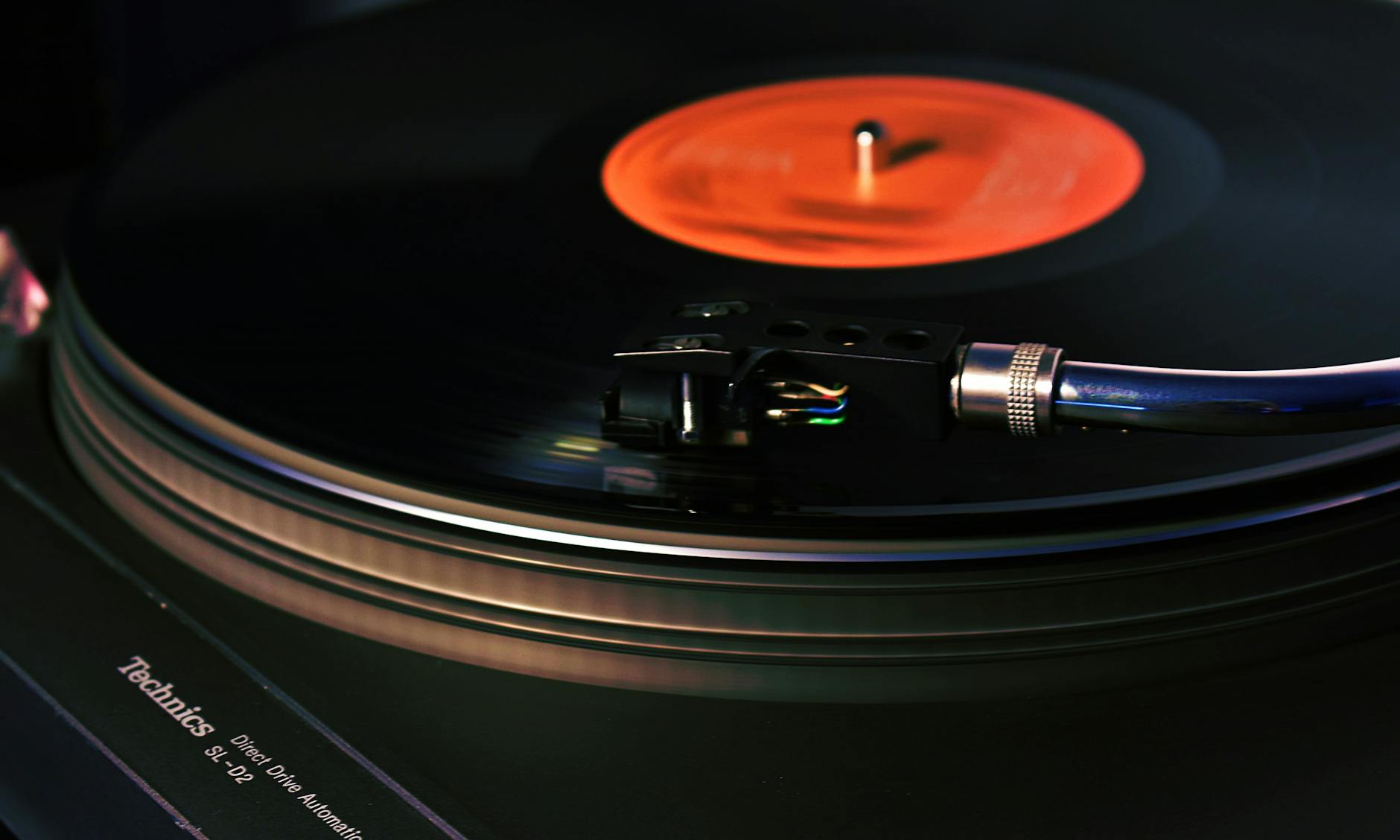
The voices fall quiet. The turntable slows. The needle lifts.
And still the land stretches, Unresolved. The chorus unreturned. The question unsung.
The Submarine Below
(after “Yellow Submarine”)
We all lived there, once— In the Yellow Submarine. Or so we sang.
A vessel of laughter, Of porthole dreams And choruses in perfect time.
We believed in it, In its bright hull, Its cartoon courage, Its watertight world Where everyone belonged And nothing intruded.
Unity, We thought, Could be painted in primary colors. Could float beneath the noise, And keep us safe.
But the world knocked. And the hull bent. And the sea Was not always blue.
Some never boarded. Some were told There was no room. Some were thrown overboard Before the song began.
Now I wonder— Was the submarine ever real? Or just a dream we made To keep the waters from us?
If it sails still, It does so With ghosts at the helm, And a quiet We mistook for peace.
No One Was Saved
(after “Eleanor Rigby”)
Eleanor gathered the rice like a rite— Not a wedding, But a funeral in disguise. No one noticed. No one asked Why she did it alone.
She lived in a world of quiet corners, Of teacups with dust, Of pews that creaked For no one in particular.
I did not see her then. Not really. She was background— A figure in a verse I sang without knowing.
And Father McKenzie— He wrote his sermons by candlelight, Even when no one came. He believed in the act, In the speaking itself, As if God were listening Even if the people were not.
I used to think They were odd. Sad, yes— But distant, Part of another time.
Now I see them in doorways, At bus stops, Scrolling through silence On glowing screens. I see them in myself, In the way I answer fewer calls, In the prayers I no longer finish.
All the lonely people— They are not elsewhere. They are not lost in some old song. They are here. And no one was saved.
The Wind Still Blows
(after “Blowin’ in the Wind”)
I remember when the answer Was blowing in the wind. We sang it as if that meant It was near, As if the breeze would carry it to us If we just opened our hands Or listened hard enough.
But I have stood in that wind now. Not once. Not in youthful chorus, But in silence.
And the answers do not ride so lightly.
How many roads? Too many to count. Too many lined with names Etched in metal, Or cardboard signs that ask Not for peace, But for spare change.
How many ears must one man have Before he hears the cry? Enough to wear out the listening. Enough to forget which voice was his.
The cannonballs still fly, Though we call them by different names now— Policy. Preemption. Profit. “Necessary force.”
Yes, the wind still blows. But the answers, If they are there, Have long since been scattered Across deserts, Across oceans, Across generations too tired To ask the questions anymore.
Can It Be
(after “Let It Be”)
When I find myself in times of silence, I do not hear The words of wisdom. I hear the ache of asking Whether silence is answer, Or simply absence.
Let it be, they said. And I tried. I tried to let the world Unfold as it would, To trust in the slow work of time.
But still the wars came. Still the towers fell. Still the hands reached out And found nothing waiting.
Mother Mary— She comes to some. But others Find no visitor In the night.
Let it be? Can it be? Is there something We have not yet asked, Some word not spoken Because we were told Not to speak at all?
There will be an answer— So the song promised. But I have learned That sometimes The answer is another question.
Neon Psalm
(after “The Sound of Silence”)
Hello darkness— It does not answer. It scrolls. It flashes.
We used to whisper to the void And hope it heard. Now we shout And hope it trends.
The prophets write in hashtags, Their sermons flickering Across shattered glass, Their congregations swiping And moving on.
No one walks the quiet streets, No one weeps in the back pew. The cathedral is a comment thread Lit by the glow Of the god we built To hear ourselves.
No one dared disturb The sound of silence— That was the line. But now it is all disturbance. The silence Is what we fear.
I remember when words Had gravity, When they settled in the chest And waited To be spoken with care.
Now even grief Is curated.
Still— Somewhere beneath the algorithms, Beneath the noise mistaken for voice, Beneath the sponsored silence, I believe the old language Waits.
Not to go viral. But to be heard.
We Have Not
(after “We Shall Overcome”)
We shall overcome— That is what we sang. We locked arms, Lit candles, Marched softly into nights Thick with dogs and doubt.
And some did overcome. Some bridges held. Some laws changed. Some doors opened.
But not all.
Not for everyone. Not everywhere. And not for long.
Some came after And tore down the signs, Or rewrote them in finer script. Some left the door ajar Just wide enough To say it had been opened.
I do not mock the song. I remember it. In the bones. In the breath held Before a verdict. In the quiet After a child is buried.
We shall overcome— We whispered it When shouting would not do.
But the road is longer Than the hymnbook said. And the hill steeper Than memory allows.
We have not. Not yet.
Still— There is something in the singing, Even now. Even if the words tremble. Even if the chorus Grows thin.






 Northcoast Antiquarian