
A Handful of Dust, A Handful of Light

Detail highlighting the dust motes from “Støvkornenes dans i solstrålerne” (Dust Motes Dancing in the Sunbeams, 1900)
By Vilhelm Hammershøi (1864-1916)
Oil on canvas, 70 cm × 59 cm
Ordrupgaard Museum. Photograph Public Domain.

Dust lingers in the ruins of empires, in the fading footprints of the past. It clings to the forgotten, settles upon the broken. T.S. Eliot’s The Waste Land declares “I will show you fear in a handful of dust,” evoking a profound existential dread—the terror of insignificance, the finality of death in a world where nothing endures. Shelley’s Ozymandias presents the cruel irony that even the mightiest fall into dust, their ambitions erased by time. Shakespeare reinforces this democratic nature of mortality in Cymbeline, reminding us that: “Golden lads and girls all must, / As chimney-sweepers, come to dust” (Act IV, Scene 2). The biblical refrain, “For dust you are, and to dust you shall return” (Genesis 3:19) serves as a humbling reminder of human mortality—our bodies fated to mingle with soil and ruin.

This narrative of dust as dissolution has dominated our cultural consciousness for millennia. Yet beneath this interpretation lies a profound irony: the very science that revealed our cosmic insignificance also offers us a path to transcendence.

As we began to understand the origins of matter itself, a counternarrative emerged. The spectrographic analysis of stars, the discovery of nucleosynthesis, and the mapping of elemental creation within stellar lifecycles revealed an unexpected truth: the dust of our being is not merely the residue of life lost but the particulate remnants of stars long dead.

This scientific revelation transforms our relationship with dust. No longer just the symbol of our inevitable decay, it becomes evidence of our cosmic lineage. In this expanded understanding, we are made of elements forged in stellar cores—carbon, oxygen, nitrogen, iron—the ashes of ancient supernovae. As Carl Sagan elaborated: “The nitrogen in our DNA, the calcium in our teeth, the iron in our blood, the carbon in our apple pies were made in the interiors of collapsing stars.” (Cosmos, 1980)

The death of those stars gave birth to us. Thus, when our bodies return to dust, they are not returning to nothingness, but to the infinite. This is a poetic inversion of the traditional dread associated with dust. Instead of entropy as a reduction to meaninglessness, it becomes a return to something larger than the self.

Where Eliot shows us fear in dust, Carl Sagan tells us: “The cosmos is within us. We are made of star-stuff.” Lawrence M. Krauss echoes this sentiment: “Every atom in your body came from a star that exploded…. You are all stardust… the carbon, nitrogen, oxygen, iron …. They were created in the nuclear furnaces of stars.” (A Universe from Nothing, 2009)

The Paradox of Cosmic Fear

If one understands oneself as a finite being, bound to decay, dust is terrifying—it signifies loss. But if one understands oneself as an ephemeral expression of the universe, momentarily coalesced and destined to dissolve back into the great celestial flow, then there is no reason for fear. The end is not the end, but a return to origins.

So why does existential dread persist? Perhaps it is the ego’s reluctance to let go of selfhood. Perhaps it is the mind’s inability to accept that individual consciousness does not endure. Perhaps it is because dust, unlike stars, is silent. A ruined city, a forgotten name, a scattering of bones—all speak of oblivion, not grandeur.

As William Blake advised in The Proverbs of Hell, we “Drive [our] cart and [our] plow over the bones of the dead,” suggesting our instinctive fear of becoming that which is trampled and forgotten. Jorge Luis Borges captures this anxiety when he writes that “time is a river which sweeps me along, but I am the river”—we are both the eroder and the eroded, the dust-maker and the dust.

Yet, as a poem once attributed to Emily Dickinson but now considered of uncertain authorship reminds us: “Ashes denote that fire was; / Revere the grayest pile / For the departed creature’s sake / That hovered there awhile.” Dust does not truly vanish. It transforms.

Yet if the erasure of self is what we fear, we must ask: is selfhood truly lost, or merely transformed? If dust dissolves, does it vanish—or does it scatter into something greater?

From Dust to Light: The Redemption of Stardust

Yet if we understand dust not as an annihilation of self but as the very fabric of renewal, the fear dissolves. The metaphor itself must be rewritten: From dust we are made, from stardust we are formed. To dust we return, to the stars we return.

Walt Whitman intuited this cycle when he wrote: “I bequeath myself to the dirt to grow from the grass I love.” (Song of Myself, LII) His biological understanding of transformation prefigures our cosmic one—matter recycled through systems larger than ourselves.

If the metaphor itself shifts, then the meaning shifts with it. We do not fall into dust; we rise into radiance. We do not vanish into the void; we dissolve into the cosmos, as much a part of the next great supernova as we once were of the last. Even in knowing that we return to the stars, a quiet unease remains: what of the self? If I dissolve into light, is there still an “I”?

This cosmic transformation demands a new poetic language—one that recasts the traditional imagery of dust not as a symbol of loss but as a promise of renewal. If we are to truly grasp this shift in understanding, we must reimagine the very metaphors through which we comprehend our mortality. In the spirit of this reframing, I offer these verses that trace our journey from stardust to dust and back again:

From dust we are made—
  Not of earth, but embered light,
  Forged in stellar furnace bright,
  A whisper of stars in the cosmic shade.

To dust we return—
  Not to silence, not to loss,
  But scattered bright across the gloss
  Of galaxies that twist and burn.

Fear not the handful of dust—
  It is not death, nor mere decay,
  But embers cast upon the way,
  To rise once more in cosmic trust.

Thus, the fear in Eliot’s handful of dust dissolves when we see it not as an end, but as a beginning of something else. In the vast cosmic cycle, there is no finality—only motion, only transformation. The Rubaiyat of Omar Khayyam gestures toward this understanding when it speaks of being “Star-scatter’d on the Grass”—our elements returning to the cosmos from which they came. If all that we are, all that we love, all that we create ultimately returns to the stars, is that not immortality?

The Choice of Understanding

We return to the beginning, as dust does. The words of Genesis remind us: “For dust you are, and to dust you shall return.”

Yet now, having traced the journey of dust from earth to stars, we hear these words anew. Through the narrow human lens, we interpret them as a grim certainty—dust as ruin, silence, and the erasure of memory. We see only decay, the dissolution of self, the inevitable fading of all things into oblivion.

But through the enlightened cosmic lens, we recognize a deeper truth. Dust is not an end, but a transformation. It is not absence, but renewal. It is potential, energy, and the foundation of new worlds.

As Jorge Luis Borges reflects in We Are the Time:

“We are the time. We are the famous
metaphor from Heraclitus the Obscure.
We are the water, not the hard diamond,
the one that is lost, not the one that stands still.
We are the river and we are that Greek
who looks himself in the river.”

Borges, invoking Heraclitus’ ever-flowing river, offers a vision of existence as movement, dissolution, and renewal. We are not fixed, immutable beings; we are the water, ever-changing, ever-returning to the whole. If we are dust, then we are not the dust that settles, but the dust that travels—the dust that, like the stars, finds itself scattered only to be reshaped into something new.

To understand this is to grasp something beyond the immediate and the visible. It is to move past fear into recognition: that what was once bound into form returns to the vastness, not in loss, but in continuation. That what dissolves is not diminished but remade, part of a cycle stretching beyond human time. What Yeats called “a terrible beauty” is born in this transformation—terrible in its finality, beautiful in its cosmic potential.

Perhaps it is our task, then, to choose how we understand our own dust—not as the extinguishing of life, but as its return to the great fire from which it came. In this cosmic understanding, we are not merely dust returning to dust, but light returning to light—briefly kindled, then scattered again, not into oblivion, but into reunion with the luminous whole from which we emerged.


Exploring Wistfulness: The Weight of Longing and the Lightness of Dreams

The completion of my poem Whispers of the Waning Light left an impression lingering in my thoughts, a quiet meditation on the nature of longing, time, and the elusive quality of memory. In reflecting on that poem, I found myself drawn to the word wistful—a word that seems to stretch between the weight of longing and the lightness of a dream. The following brief essay is an exploration of that thought.


Støvkornenes dans i solstrålerne (Dust Motes Dancing in the Sunbeams, 1900)
By Vilhelm Hammershøi (1864-1916)
Oil on canvas, 70 cm x 59 cm.
Ordrupgaard Musuem. Photograph Public Domain.

An audio recitation of the essay by the author.

The Weight of Longing and the Lightness of Dreams

Wistful is a wonderful word in our lexicon. It has slender shoulders but a muscular frame, and with each passing year, it grows, paradoxically enough, in vigor—able to inspire more ably imagination, poetry, memory, and vivid recall. The language with which we write, think, and contemplate is most remarkable indeed.

There is a paradox at the heart of wistfulness. It is a longing imbued with both the weight of the past and the lightness of the dream. Unlike simple nostalgia, which binds one to memory with a chain of sentiment, wistfulness carries a certain buoyancy, a gentle drift between what was and what might have been. It is not an emotion of mere loss, but rather one of continued yearning—an ache that does not wound but instead stirs, provokes, and enlivens.

Across centuries, wistful has carried shades of longing, attention, and awareness—never merely a passive sigh but a reaching toward what shimmers just beyond our grasp.

It is the mind’s way of grappling with the ethereal, of shaping dreams from recollections, of crafting possibilities from the echoes of what has already passed.

This duality—the weight of longing and the lightness of dream—has long been explored in poetry and literature. Keats’ Ode to a Nightingale shimmers with this very tension, the desire to dissolve into beauty while being tethered to the mortal world. Proust’s In Search of Lost Time captures it in the way a madeleine dipped in tea can summon an entire universe of memory. Even T.S. Eliot, in The Love Song of J. Alfred Prufrock, wrestles with the wistfulness of unlived potential, of questions left unanswered and paths left untaken.

Yet wistfulness is not purely literary; it is deeply personal, shaping our thoughts in quiet moments of reflection. It is the fleeting recognition of something beautiful that has passed, or the sudden awareness of an almost-forgotten dream. It is the feeling of standing at the edge of a vast, metaphorical ocean, where the horizon shimmers with the unknown, both beckoning and receding at the same time.

Perhaps this is why wistfulness endures, growing not weaker but stronger with time. It is an emotion that deepens as we collect more moments of beauty and loss, as we come to understand that our longings are not burdens but invitations—to reflect, to remember, and to dream anew.

An Essay About the State of the Republic Entitled “TODAY”

A Reading of D.S. Yarab’s essay “TODAY”

TODAY

We are a nation without reason.
We are a nation without morals.
We are a nation without purpose.

We have failed our inheritance.
We have failed our promise.
We have failed our future.

Once, we were a people who sought wisdom in the governance of reason, who fashioned our republic in the crucible of Enlightenment thought. We held that truth could be discerned, that knowledge was the safeguard against tyranny, that free inquiry was the antidote to superstition. Yet, we have cast aside the intellect of our forebears, bartering reason for the cheap currency of factional dogma, of ignorance parading as virtue.

Once, we understood that a republic, to endure, must be anchored in moral responsibility. The city upon a hill was not merely a boast—it was a charge, a demand, an expectation. Yet, we have allowed that moral vision to fragment, perverted into empty postures of righteousness, where sectarian division supplants shared virtue, and the sacred call to justice is drowned in the clamor of self-interest.

Once, we were a people of purpose, our liberties not mere indulgences but the instruments of human dignity and national strength. We were called to the defense of freedom, not merely for ourselves but for those who would follow. Yet, today, our purpose dissolves in the tide of complacency, our freedoms bartered for fleeting comforts, our equality abandoned to the rising chorus of cynicism and despair.

All factions—left, right, and center—have forsaken the principles that once defined us. Each has wrapped itself in the illusion of virtue while kneeling at the altar of Mammon. We claim fidelity to truth, but we scorn reason when it contradicts our desires. We speak of morality, yet we wield it as a weapon rather than a compass. We invoke purpose, but only as rhetoric to mask our pursuit of power and comfort.

And so we arrive at Today.

If we are honest—if we strip away our illusions and stand before the bar of judgment without recourse to excuse, evasion, or self-justification—we must confess: we are all complicit. No single faction bears this burden alone, nor can any claim the mantle of righteousness. We, the people, have chosen indulgence over discipline, grievance over responsibility, spectacle over substance. And in that choosing, we have undone the Republic.

But we are not bound to our ruin.

We must restore reason.
We must restore morality.
We must restore purpose.

To do so, we must abandon the golden idols who are unworthy to serve us, the oligarchs who plunder us, the ideologies that subvert reason. We must cast aside the anger, the bitterness, the division that have led us to forsake one another, that have severed us from our future and our purpose. If we are to be a people again—if we are to reclaim the inheritance we have squandered—we must choose anew. Not comfort, not grievance, not self-interest. We must choose to be worthy of the Republic, or else surrender to its final dissolution.

If we continue on our present course, where do we go?

If we have abandoned reason, morality, and purpose, what remains?

It is no longer a question of mere decline but of transformation. A Republic that ceases to be a Republic does not simply fade into irrelevance; it becomes something else, something unrecognizable to those who once believed in its founding principles. Have we already crossed that threshold? Have we slipped, not merely toward decay, but into authoritarianism?

The signs are unmistakable. A government that no longer serves its people but instead entrenches power. A citizenry that, weary of self-governance, willingly submits to rule by force or deception. A society that exalts spectacle over substance, division over unity, and vengeance over justice. These are the hallmarks of a nation no longer free in spirit, even if it still pretends to be free in form.

Authoritarianism does not always come with the fanfare of a coup or the boot of the oppressor; more often, it arrives in whispers, in the slow erosion of rights once taken for granted, in the willing abdication of responsibility by a people who have lost the will to govern themselves. It arrives when power, unchecked, ceases to be accountable. When the institutions meant to preserve liberty instead secure their own perpetuity. When law becomes a weapon, wielded not for justice but for control.

If we have not yet fallen fully into authoritarianism, then we are on its precipice. A people who no longer hold their leaders accountable, who no longer value reason, morality, or purpose, will find themselves ruled—not by wisdom, not by justice, but by those who know only how to command and demand obedience.

And so, we face a choice.

Do we accept this slow descent into tyranny, consoling ourselves with the illusion that we are still free, so long as we are comfortable? Do we resign ourselves to the idea that the Republic was always doomed, that we are powerless to reclaim it?

Or do we resist?

To resist is not merely to oppose a party or a faction. It is not to trade one demagogue for another. True resistance is the restoration of the very things we have abandoned: reason, morality, and purpose. It is the rejection of fear and cynicism, the refusal to accept the inevitability of our own undoing.

It is to say, as those before us have said in darker times: not yet, not now, not here.

Today is the reckoning.

What shall we make of tomorrow?

The Symbolism of the Golden Plow in Literature

From William Blake’s Jerusalem, Chapter 3

How old is the literary tradition of the golden plow? This question arose unexpectedly while I was working my way through William Blake’s Jerusalem, where I encountered these striking lines:

They Plow’d in tears, the trumpets sounded before the golden Plow And the voices of the Living Creatures were heard in the clouds of heaven … (Blake, 1988, p. 205)

As often happens in literary exploration, the evocative image of the golden plow immediately diverted me from my primary task of continuing to read and understand Jerusalem. The golden plow, I realized, resonates deeply in our cultural consciousness, appearing not only in poetry but also in modern contexts—such as the Golden Plow Award, the highest honor presented to a sitting member of Congress by the American Farm Bureau.

The reasons for the golden plow’s enduring power as a poetic device are clear: the plow itself is a universal symbol of labor, cultivation, and renewal—an instrument that transforms barren soil into fertile ground, embodying humanity’s intimate connection with nature and the cycles of life. By portraying this familiar tool as golden, poets imbue it with sacred significance, elevating it from the mundane to the divine. Gold has long been associated with divinity, purity, and incorruptibility. In this sense, the golden plow often becomes not merely a tool of agriculture but a metaphor for spiritual or moral transformation, where the act of plowing symbolizes preparing the soul or society for renewal and growth.

This striking image led me to investigate its earliest literary appearances, which brought me to Herodotus’s Histories (late 5th century BC). In Book Four, he recounts the Scythian origin myth:

According to the Scythians, theirs is the youngest of nations, and it came into existence in the following way. The first man born in this land, when it was still uninhabited, was named Targitaos. They say that the parents of this Targitaos were Zeus and the daughter of the River Borysthenes, though that does not sound credible to me. Nevertheless, that is their claim. From such stock, then came Targitaos, and to him were born three sons: Lipoxais, Arpoxais, and the youngest of them, Colaxais. While they reigned, certain objects made of gold fell from the sky: they were a plow, a yoke, a battle-axe, and a cup. When these objects came to rest on Scythian ground, they were seen first by the eldest son, who, wanting to take them up, approached where they lay. But as he came near them, the gold caught on fire, so he left them there; and when the second son approached, the same thing happened. Thus the burning gold drove both of them away; but when the third and youngest son approached, the fire stopped burning and went out, so he carried the gold home, and the elder brothers reacted to this event by agreeing to surrender the entire kingdom to the youngest. (Herodotus, 2007, pp. 283–284)

While the specifically golden plow appears rarely in classical and medieval literature, the plow itself features prominently as a powerful symbol. In Virgil’s Georgics, the unadorned plow serves as both a practical tool and metaphor for poetic creation:

It must also be said what tools are the weapons of the hardy rustics,
without which neither could crops be sown nor harvests rise:
the plowshare and the heavy timber of the curved plow,
the slow-moving wagons of the Eleusinian mother,
the threshing boards, the sledges, and the rakes with uneven weight. (Virgil, 1846, Georgics I, lines 160–162, trans. by author)

Although Virgil’s plow is neither golden nor even gilded, its role as both a practical tool and poetic metaphor anticipates later literary uses of the golden plow as a symbol of sacred labor and creation.

The Jewish and Christian traditions, drawing upon their holy books, provided writers throughout the ages with rich sources of plowing imagery for metaphorical and allegorical purposes. Consider Luke 9:62, where commitment to discipleship is illustrated through the image of putting one’s hand to the plow; Amos 9:13, where the plowman overtaking the reaper symbolizes divine abundance and the promise of restoration; and Isaiah 2:4, where the transformation of swords into plowshares symbolizes divine peace. In these texts, the plow consistently signifies renewal, moral preparation, and divine purpose. This deep reservoir of symbolic meaning helps us understand the significance of Blake’s golden plow in Jerusalem.

In both Blake’s visionary poem and Herodotus’s historical narrative, the golden plow stands as a transformative symbol. For Blake, it is likely part of a cosmic act of redemption, accompanied by trumpets and celestial voices. For Herodotus, it conveys legitimacy and divine sanction within the founding myth of a nation. In each case, the golden plow bridges the earthly and the divine, elevating labor and effort to the realm of the sacred. This enduring image, rich with cultural and poetic imagination, invites reflection on how humanity’s most basic acts—plowing, cultivating, laboring—can become acts of profound spiritual significance.

That the symbol persists into our own time through awards like the Golden Plow Award suggests its continuing resonance with fundamental human values of cultivation, transformation, and excellence. Yet I wonder: might there be an even earlier literary reference to this powerful symbol than Herodotus’s account? Readers who know of earlier appearances are invited to share their findings.


References

Blake, W. (1988). The complete poetry & prose of William Blake (D. Erdman, Ed.; H. Bloom, Commentary). Anchor Books.

Ginsberg Project. (2024, October 14). William Blake – from The Marriage of Heaven and Hell – 14. Retrieved December 13, 2024, from https://allenginsberg.org/2024/10/oct14/ The Ginsberg Project has an interesting discussion of the Jerusalem extract which is the object of this post.

Herodotus. (2007). The landmark Herodotus: The histories (R. B. Strassler, Ed.; A. L. Purvis, Trans.; R. Thomas, Introduction). Pantheon Books.

Krisak, L. (2006). [Review of the book Virgil’s Georgics: A New Verse Translation, by J. Lembke]. Translation and Literature, 15(1), 111–113. Edinburgh University Press.

Lincoln, B. (2014). Once again “The Scythian” myth of origins (Herodotus 4.5–10). Nordlit, 33, 19–34.

The Jerusalem Bible: Reader’s Edition. (1968). Doubleday & Company.

Virgil (Publius Vergilius Maro). (1846). Georgica [Georgics], Book I, lines 160–162 (Hachette ed.). Translated by the author. Wikisource. Retrieved December 9, 2024, from https://la.wikisource.org/wiki/Georgica_(Hachette)/Liber_I

Virgil. (2005). Virgil’s Georgics (J. Lembke, Trans.). Yale University Press.

Finding Humility Through Montaigne’s Wheat Allegory

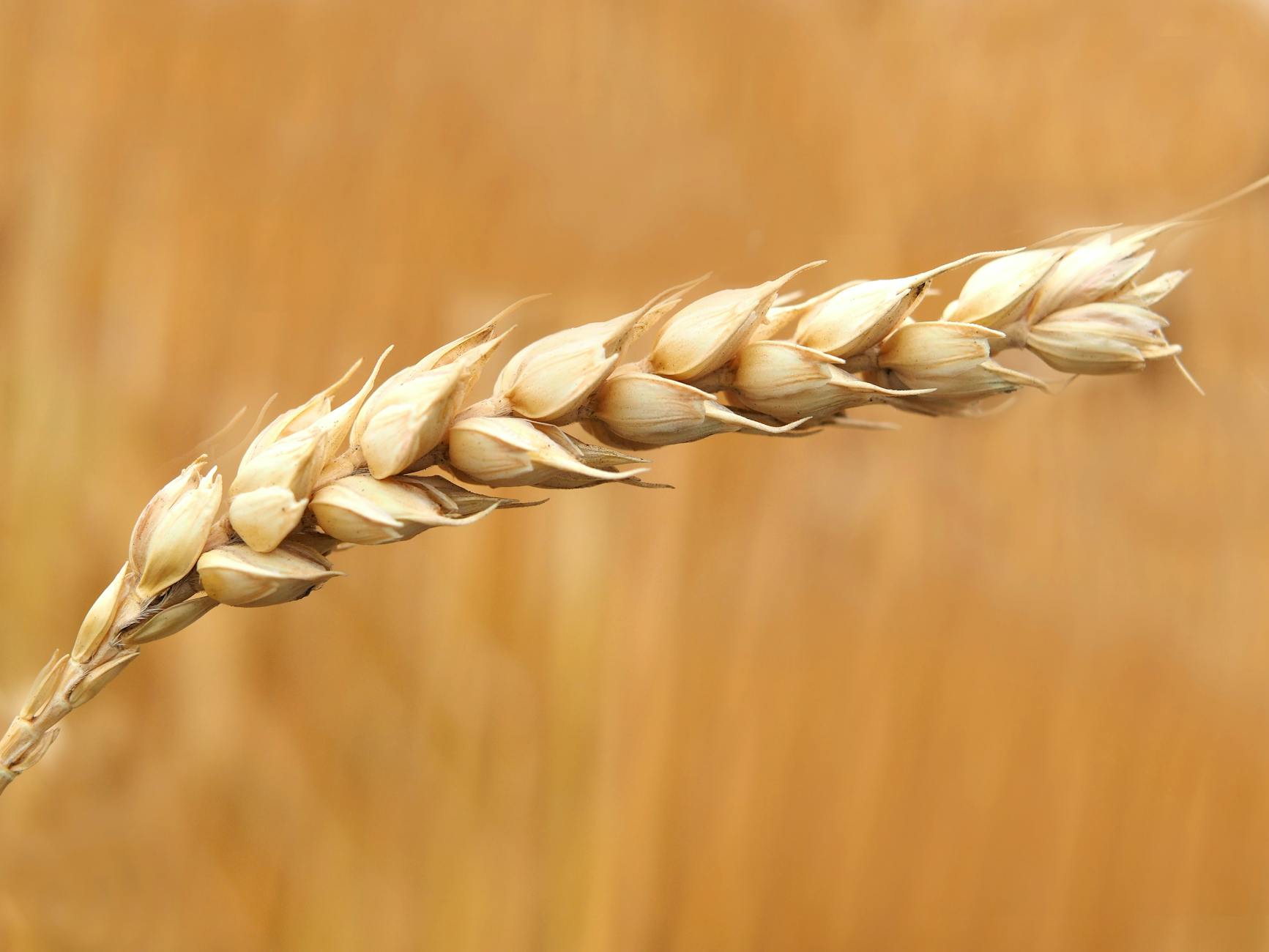
Photo by Pixabay on Pexels.com

One of the most striking images from Montaigne’s Essays, which has lodged itself firmly in my mind, comes from his Apology for Raymond Sebond. Specifically, within one paragraph, he uses wheat as an extended metaphor or an allegory wherein he suggests that the more wisdom or knowledge one acquires, the more humble one becomes. He writes:

To really learned men has happened what happens to ears of wheat: they rise high and lofty, heads erect and proud, as long as they are empty; but when they are full and swollen with grain in their ripeness, they begin to grow humble and lower their horns. (Montaigne, 1963, p. 227)

The image captures what I have found to be my experience insofar as that, with each passing year, as my hair has silvered and my eyes dimmed, I have found that wisdom requires casting the certitude, rigidity, and knowledge of youth aside for the humility of lived experience.  

Additionally, I find the lesson to be an extraordinary corollary to my personal motto, about which I have previously written, Humilitatem Initium Sapientiae (humility is the beginning of wisdom).

Thus, having reflected if not obsessed upon Montaigne’s insight for well over a fortnight, I finally shaped my thoughts about it into a poem, the results of which are below.


The Ripened Ear
(Inspired by Montaigne)

Beneath the sun’s unyielding gaze, it grows,
The tender stalk, upright and full of pride,
Its hollow strength unbent by winds that blow,
Yet void of fruit, it stands unsatisfied.

But time, the patient sower, bids it yield,
To weight of grain within its swelling breast,
It bows its head, as on the golden field,
The burdened ear finds wisdom’s humble crest.

So too the soul, in ignorance, stands tall,
Unbowed by truths it dares not yet to see,
Until the harvest’s gentle weight does call,
And bends the heart to find humility.

For wisdom ripens where humility’s sown,
And humbleness, by wisdom, is full-grown.


Montaigne, M. de. (1963). Essays and selected writings: A bilingual edition (D. M. Frame, Trans. & Ed.). St. Martin’s Press.