

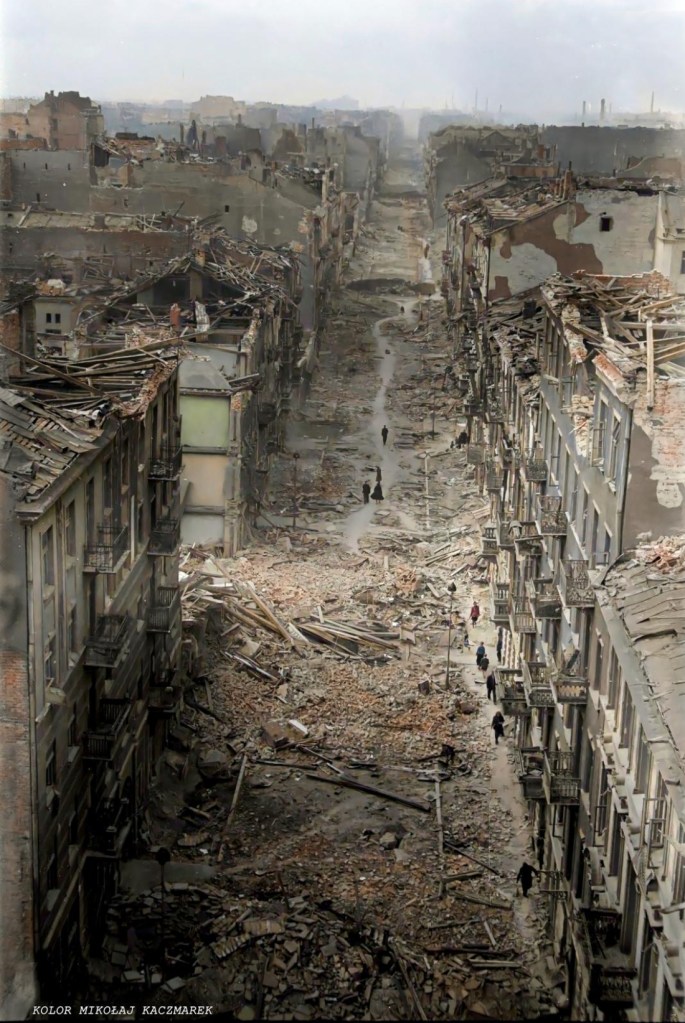
Not of Myth, Yet Hero Born

He lifts himself from bed without remark
to meet the worn, repeated tasks at hand.
No record marks the ground on which he strains—
no witness, no laurel, no acclaim.
His strength lies not in storied deed but labor plain:
a hearth kept warm, a family fed, life sustained.
No tale is told, no stone inscribed or raised—
the ordinary man, in toil, is born.

The meaning lies in being, not in praise;
in beauty glimpsed, not possessed though understood.
No crowns he needs nor feast days held for him;
his worth is in the craft, the nail, the wood.
He does not seek to master, nor to flee,
but walks the field, or mends a gate, or tends a tree.
In passing light, in gesture undesigned,
a truth is touched, not grasped, yet binds.

The purpose is in others—in shared bread,
the coat repaired, the cup placed in the hand;
in love soft-spoken, faithful in its giving,
not in the vow proclaimed, but in the deed.
His days are stitched with care that shows no seam,
his name unsung, his work by others’ need.
Though he may pass unnamed when he is gone,
he will have sown the path that others walk upon.

The Weight of Existence: Sisyphus’ New Dawn


Franz von Stuck, Sisyphus (1920)
Oil on canvas, 103 × 89 cm. Galerie Ritthaler, Munich.
© Collection Galerie Ritthaler.

“Il faut imaginer Sisyphe heureux.”
(“One must imagine Sisyphus happy.”)
—Albert Camus, Le Mythe de Sisyphe (1942)

But perhaps he was mistaken.
Perhaps the truth is simpler:
When the stone is gone, the man remains. 


Sisyphus Undone; or, It Was Tuesday

by Donald S. Yarab

He rose, as ever, with the morning’s breath,
the hill still steep, the silence oddly wide.
No stone to greet him with its weight or will—
no groan of earth, no task to be defied.

The gods were gone. Their laughter had grown faint,
or else the air refused to carry sound.
The path he wore through centuries lay bare,
a scar now healing into senseless ground.

He searched for signs: a crack, a trace, a mark,
but found no proof that toil had ever been.
His hands, once strong with strain, now idle hung,
still shaped by burdens long dissolved within.

He sat. The dust rose lightly at his knee.
A lark began to sing, then flew away.
The sky, untroubled, held no word for him.
The world had turned. It was another day.

What is the self when labor fades to wind?
What is the myth once struggle slips its chain?
He breathed. No answer stirred the lucid air.
The hill was whole. The man was left, and plain.

The Sermon on the Stump: Beneath the Rain


Photo by Ali Hassan on Pexels.com

The Sermon on the Stump

by Donald S. Yarab

It was raining. The crowd—
too few to be a crowd—perhaps
a gathering, or the assembled,
more ghosts than listeners,
their coats darkened not just by weather
but by the weight of waiting.

He stood on the stump,
not of authority, but of loss—
the remnant of a tree felled long before,
as if the forest had once believed
in clearing room for prophecy.

He spoke not of thunder,
but of hush. Not of redemption,
but of what remained
after the soil forgot its seed.

The gathering, if such it was,
did not cheer, nor weep.
They listened with the rain,
as if the water itself
were translating his broken cadence
into something nearly true.

He spoke not of hope, or loss,
of tomorrow, or yesterday,
or even today.
He named no sins,
offered no absolution,
held no book but the hush
of water sliding down his sleeve.

His voice did not rise.
It pooled.
Like the rain in the hollow of the stump
beneath him.
He said only:
“You have heard the wind.
Now hear the stillness it leaves behind.”

And they did not answer.
Not from doubt,
but because his words were not questions.
They were roots—
groping downward through silence,
seeking something older than belief.

A dog barked in the distance.
A child shifted,
not from boredom,
but from the weight of understanding
too early what it meant to stand still
in a world that keeps spinning.

He stepped down,
the stump left wet,
as if it had wept a little too.

And the assembled, if that is what they were,
dispersed—no closer,
no farther,
but marked.

Some were bewildered.
Others thought they were enlightened,
but knew not how.
Still others could not recall
what he had said,
only that his voice was comforting,
his cadence soothing—
not the lullaby of forgetfulness,
but the murmur of rain on old wood,
reminding them of something
they had never quite known.

No creed was offered.
No call to return.
Yet a few found themselves
walking more slowly afterward,
listening more intently
to trees, to puddles,
to silences that did not demand reply.

And the stump remained—
neither altar nor monument,
but a place where words once settled
like mist
and did not vanish.

I Am Undone

The vague glimmer of a head suspended in space
 (1891, Lithograph)
Odilon Redon (1840–1916)

I Am Undone

I.

It came not with fury, nor with fire.
Not a blow, but a breath withheld.
A stillness uncoiling in the spine.
I did not cry out. I did not fall.
I said only—I am undone.
And the words were true,
though I did not yet know
how much they would mean.


II.

The star chart curled into ash.
Landmarks dimmed, receded,
folded into fog.
I had names once—
for the road, the self, the longing.
They rusted in my mouth.
I said again, am I—
but the word faltered.
Was I I? Was am still?
Was undone the end, or only
a door swinging inward with no floor?


III.

I wandered, perhaps.
Or stood still and the world wandered past.
The days no longer linked.
Events occurred—but not to me.
Faces mouthed shapes I could not
hear or remember.
I touched a wall that had always been there.
It crumbled under my hand.
I called it home, or meant to.
Or once had.
I think.

Un—done—I am—undone am I—
I am…am I…?


IV.

And the past…
no, the shape before the past—
was it mine?
Or borrowed from the eyes of others?
Their eyes are gone.
The mirror does not
answer.
I meant to say a thing—
some thing—
a small
        thing—
but the mouth no longer forms
what the mind no longer sends.

There is no forward.
There is no back.
There is no—

(no is)


V. Dissolution

I think I said—I was—
no. I had said.
Once.

Undone.
It was the word. I said it.
Before.
Or after.
I do not—

No shape to the day.
No frame to the thought.
They come—go—
without edge.

The name of the thing
was… not there.
And the word for that—
what was the word?
The word is gone.
The knowing is
not.

I am
        am I
                un—
        not
     not done—
            not I—
      I—was

(was?)

And now—

When Cruelty Becomes Virtue: The Erosion of Soul and Society


The Destruction of Leviathan by Gustave Doré (1865)

Author’s Note

This essay, The Void at the Heart, is presented as a contemplative meditation on the moral and spiritual collapse visible in aspects of contemporary governance and public life. It is a deliberately focused reflection, tracing the descent from cruelty in action to the corruption of thought, to the inversion of traditional values, and finally to the eclipse of the soul itself.

This essay may, in future, be expanded into a fuller monograph-length work. Such a work would likely incorporate historical and contemporary examples, address counterarguments, consider cultural issues, and distinguish more sharply between causes and symptoms of decay. For now, however, I offer this essay as a completed meditation in its own right—a starting point for further reflection.


The Void at the Heart

On Cruelty, the Collapse of Reason, and the Eclipse of the Soul

There is a void at the heart of the soul, a place where the ordinary bounds of morality and ethical consideration seem to collapse into nothingness. It is not merely that questionable policies are advanced—that has ever been the case in human governance—but rather that their implementation is accompanied by a conspicuous and grotesque relish for cruelty. Even if one were to suspend judgment upon the legitimacy of the policies themselves, the manner of their enforcement betrays a deeper and more troubling decay: a delight in the infliction of pain.

Deportation of unauthorized aliens, for instance, is not approached as an unfortunate necessity carried out with solemnity and regret. It is heralded as a triumph, an occasion for rejoicing, even as it often rips apart families, sunders years of labor and stability, and leaves children disoriented and/or abandoned. Similarly, the mass termination of public servants and contractors—individuals who dedicated themselves to fields such as public health, education, consumer protection, and law enforcement—is not seen as a sorrowful consequence of political/policy change or fiscal concerns, but is rather celebrated with an air of gleeful vindictiveness. Grants and subsidies intended for the most vulnerable, from students to farmers, are not merely ended; they are rescinded with evident gleeful satisfaction, as though deprivation itself were a moral good.

Even those nearing completion of their educational journeys, standing on the threshold of careers that might benefit society, are not spared. Educational visas are canceled without warning or cause, months or even weeks before graduation. Opportunities are crushed underfoot. Dreams are shattered not as a side effect of some broader administrative goal, but seemingly as an end in themselves, an assertion that the suffering of others is righteous and overdue.

This spirit of cruelty is defended and magnified through a rhetoric that frames suffering as deserved, earned, or insufficiently severe. The pain of others is no longer a regrettable cost, but an instrument of moral theater: those who suffer are cast as villains, their misfortunes paraded as proof of divine or civic justice. In such a worldview, mercy is weakness, empathy is betrayal, and the infliction of pain is a form of virtue.

There is a profound difference between enacting necessary policies with reluctant firmness and celebrating the devastation they cause. A just society may impose burdens, but it ought never to rejoice in doing so. When joy is found in the destruction of livelihoods, when cheers rise at the deportation of neighbors, when applause greets the impoverishment of fellow citizens, something foundational has been lost. The wound is not merely political; it is spiritual.

The embrace of cruelty as a public virtue hollows out the soul of a nation. It numbs the collective conscience, distorts the notion of justice, and substitutes vindictiveness for principle. Over time, the society that delights in the suffering of others does not merely lose its victims; it loses itself. It becomes a cold and pitiless machine, capable of great power but incapable of true greatness, capable of order but incapable of meaning.

If the celebration of cruelty corrupts action and spirit, it inevitably corrupts thought as well. The human mind, which depends upon honesty and openness to discern the world aright, cannot remain untouched by the moral decay of the soul.

The Eclipse of Reason

The celebration of cruelty does not remain confined to the sphere of action; it metastasizes into the realm of thought itself. When a society exalts the suffering of the vulnerable and frames mercy as weakness, it necessarily distorts its ability to process information honestly. Truth ceases to be measured by coherence, evidence, or fidelity to reality. Instead, it is judged by its conformity to the prevailing narratives of contempt, fear, hatred, or greed.

Thus, expertise—whether scientific, legal, historical, or journalistic—is no longer respected as a necessary guide to sound judgment. It becomes suspect by its very nature if it fails to mirror the animosities of the moment. Scientists who warn of ecological degradation, public health crises, or technological risks are dismissed as conspirators or ideologues. Legal scholars who point to constitutional violations or abuses of authority are castigated as partisan agitators. Historians who trace the patterns of injustice, violence, or repression are branded as enemies of national pride. Journalists who seek to uncover uncomfortable truths are denounced as purveyors of “fake news,” their integrity impugned simply because they refuse to tailor their findings to the dominant ideological climate.

The citizenry themselves, infected by the ethos of cruelty, become willing participants in this willful blindness. They refuse to hear, to consider, to weigh, or to deliberate. Instead, they declare all sources outside their ideological fortress to be corrupt, unreliable, or part of some imagined conspiracy. Knowledge itself becomes an object of scorn, and expertise is equated with betrayal. The very faculties that distinguish the informed citizen—the ability to discern evidence, to listen with patience, to reason without rancor—atrophy and are replaced by reflexive suspicion and tribal affirmation.

Orwell, ever the grim prophet, would recognize the phenomenon with bitter familiarity. In his imagined dystopias, the manipulation of language, the corruption of thought, and the triumph of ideology over reality are not the consequences of brute force alone, but of a populace that chooses to believe falsehoods because those falsehoods are more comforting—or more satisfying—than the difficult demands of truth. Ignorance is strength, he wrote, capturing the dark alchemy by which the renunciation of reason is transmuted into a perverse kind of certainty.

It is not merely that ideology colors perception; it replaces perception altogether. Information is no longer evaluated according to standards of credibility or methodology, but according to its utility in reinforcing contempt for the foreigner, the minority, the poor, or the vulnerable. If facts threaten to humanize the other, they are rejected. If scholarship suggests the necessity of compassion or restraint, it is denounced as corruption. Only that which fuels resentment is permitted to be heard; only that which magnifies grievance is deemed “true.”

In such a climate, dialogue becomes impossible. The very idea of dialogue presupposes a willingness to listen, to admit complexity, to concede error. But where cruelty reigns, these are forbidden virtues. In their place stand slogans, shouted endlessly into a void that no longer seeks understanding but only echoes its own bitter triumphs.

In such a climate, governance itself grows chaotic and erratic, not by accident but by design. Policies are proclaimed and abandoned with little coherence; programs are implemented or canceled with open disregard for planning, expertise, or consequence. The instability is treated not as a failure, but as a virtue: a sign of disruption, toughness, authenticity. Yet beneath the slogans, the disorder corrodes trust, hollows out institutions, and leaves citizens adrift in a landscape where no promise endures and no framework holds. It is a cruelty not merely of action, but of confusion—a destabilization that magnifies alienation and feeds the collapse of both thought and community.

Yet even this collapse of thought is but a precursor to a deeper betrayal: the corruption of the very values that once defined and ennobled a people.

The Inversion of Values

As cruelty becomes a public virtue and ideology supplants reason, the final and most insidious transformation takes place: the subversion and inversion of traditional values themselves. The outward forms and labels of religion, civic duty, and ethical conduct may be preserved, but their substantive meanings are hollowed out and replaced by their very opposites. Language itself is corrupted; words once signifying aspiration, mercy, and justice now serve as empty vessels, bearing meanings recognizable only as antonyms of their epistemological truths.

Faith, once the call to humility before the divine and charity toward one’s fellow man, is distorted into a weapon of exclusion and punishment. Love of neighbor becomes conditional, subject to ideological conformity; compassion is reserved for the in-group alone, while hatred of the stranger is sanctified as a form of righteousness. The prophets and founders who once preached repentance, mercy, and love are invoked by those who trample upon their teachings, their sacred words reinterpreted to bless cruelty as strength and vindictiveness as virtue.

Civic values fare no better. Patriotism, once the measured love of one’s country expressed through service, sacrifice, and the protection of rights, degenerates into a shrill and defensive chauvinism. The rule of law, once understood as a shield for the weak and a restraint upon the strong, is twisted into a blunt instrument to punish enemies and protect the powerful. Freedom, once the delicate balance between personal liberty and communal responsibility, is redefined as the license to oppress, to dominate, to revel without shame in the suffering of others.

Even the ethical precepts that ground common life—the golden rule, the dignity of work, the sanctity of truth—are inverted. Do unto others becomes do unto others first, lest they do unto you; the dignity of labor is reserved for some and withheld from others based on arbitrary categories of race, origin, or ideology; truth itself becomes malleable, no longer a standard to which men must conform, but a tool to be wielded, bent, or abandoned as expediency demands.

In this bleak mirror-world, tradition becomes little more than pageantry—a hollow ritual masking a profound spiritual betrayal. The ancient words are mouthed, the venerable ceremonies performed, but their meaning is lost. Their light has been inverted into darkness, their call to transcendence replaced by a shout of tribal triumph. What was once sacred has become profane, and the keepers of the tradition are blind to their own apostasy.

Yet the descent does not end even there. It reaches further downward, to the degradation of the individual soul itself.

The Final Descent

Ultimately, the mind infected by cruelty and blinded by ideology forgets how to think, how to reason, how to love. The soul, once the wellspring of compassion, imagination, and truth-seeking, is lost. What remains is a hollow creature, a being still outwardly human but inwardly diminished, descending toward an animalistic existence governed only by base and grotesque instincts.

No longer illuminated by the light of reason, no longer stirred by the love of others or the awe of the divine, such a being reverts to the raw appetites of dominance, fear, rage, and self-preservation. The faculties that once elevated humanity—the search for truth, the capacity for self-sacrifice, the impulse toward mercy—atrophy and rot. What once distinguished man as a creature formed in the image of the divine is obscured beneath layers of suspicion, resentment, and brutality.

In such a state, crassness replaces dignity, and rudeness masquerades as strength. The subtleties of manners, the graces of dialogue, and the silent obligations owed to neighbor and stranger alike are discarded as burdensome relics of a now-despised civilization. Material success becomes the sole remaining measure of worth, and individual gratification the only recognized good. The broader community—once the nurturing ground of the self—becomes either invisible or hostile, perceived only as an impediment to personal appetite or ambition.

Alienation takes root, first unnoticed, then unchallenged, feeding upon itself. Having severed the ties that bind individuals to each other through mutual respect, shared memory, and common purpose, society decays into a landscape of lonely, embittered selves, suspicious of all and merciful to none. This alienation colors every interaction with a thin, toxic miasma: a pervasive bitterness, a readiness to assume the worst, a ceaseless litany of grievance against an imagined host of enemies.

The community, too, begins to crumble. No society can endure when its members are ruled by suspicion rather than trust, hatred rather than fraternity, cruelty rather than justice. Institutions falter, not because they are attacked from without, but because the very spirit that once animated them has fled.

Yet the gravest tragedy is not merely societal collapse, but the debasement of the individual soul. Each man or woman who abandons thought for slogan, love for contempt, truth for expedience, does more than wound the body politic; they desecrate the image of the divine that resides within.

Thus, the moral and ethical void at the heart of the soul becomes complete. And from that void, no nation, no civilization, no human heart emerges unscathed.

Epilogue: The Faint Memory of Light

Yet even amidst the ruin, a faint memory endures.

The divine image, though battered and obscured, is never wholly extinguished. Buried beneath the ash of cruelty and the rubble of falsehood, there remains a spark—a silent witness to the soul’s higher calling. It is not easily rekindled. It demands humility where pride has reigned, mercy where vengeance has triumphed, courage where fear has prevailed.

The path back is arduous and uncertain, for it requires the infected soul to remember that it has forgotten; it requires a people to repent not merely of actions, but of the passions that animated them. It requires that tradition be not merely repeated but restored, that truth be not merely spoken but once again loved, that reason be not merely used but honored.

If such a reawakening is to come, it will come quietly at first, as all true renewals do—not in thunderous proclamations, but in the whispered refusal to hate, the silent act of mercy, the solitary pursuit of truth in a world grown hostile to it. From these small and stubborn acts, unseen and unsung, a civilization might yet be reborn.

But if not, then the void will deepen, and the ruins will spread, and future generations will wonder at how lightly men once abandoned what was most precious: not wealth, nor power, nor comfort, but the light of mind and soul that marks the human being as more than a beast among beasts.

The choice remains, as it always has, hidden in the quiet precincts of each heart.