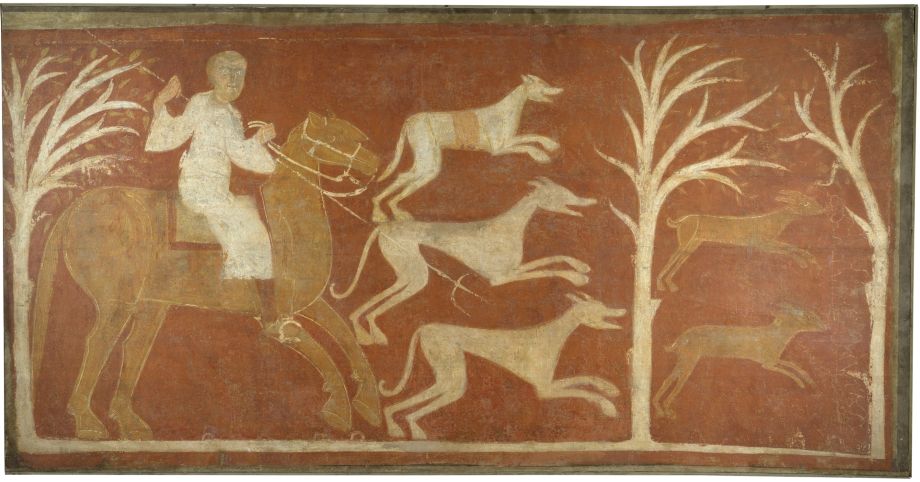
The Man with One Map

“Non confundar in aeternum.” This Latin phrase—”Never let me be confounded”—comes from Psalm 30:2 and Ambrose’s Te Deum. In my parable “The Man with One Map,” I use it ironically: as a caution against the very rigidity it seems to champion. To refuse ever to be confounded is to turn away from the facts, the bends, the contingencies of the world. When reality contradicts our preferred map, we face a choice: revise the map or insist the world is wrong. My parable follows a master cartographer who chooses his certainty, his facts, his reality, over truth itself—until the world teaches him otherwise. It is a story about the cost of ideological capture and the wisdom of holding our frameworks lightly, with humility. Every map we create is provisional. Wisdom begins not with denying the world’s power to confound us, but with acknowledging that power, and revising our maps when warranted.

πόλλ’ οἶδ’ ἀλώπηξ, ἀλλ’ ἐχῖνος ἓν μέγα

The fox knows many things, but the hedgehog one great thing.

—Archilochus, Fragment 201

“Non confundar in aeternum,” the cartographer muttered as he unrolled his chart upon the council table. He said it whenever someone questioned the authority of lines.

The map was exquisite: vellum washed with pale seas, ranges shaded as if they were slumbering beasts, towns stippled in careful ink. It bore a golden stamp of the Guild and a marginal note in the cartographer’s own fine hand: Ex universis legibus terrarum—From the universal laws of lands. He had made it in his youth, riding the marches with soldiers and surveyors, triangulating sun to steeple, steeple to hill. Kings had trusted it. Merchants folded it close to their hearts.

Now he was old enough to have students and adversaries, but not so old as to doubt the charter of his life.

The city had summoned a council because caravans were vanishing on the southern road. The map showed a simple passage between river and ridge, a straight corridor to the salt ports. Yet messengers returned late or not at all, and those who survived spoke of marsh and misdirection, of sudden fogs and roads that forked where no fork should be.

In the council hall, the cartographer smoothed the vellum and placed lead weights upon the corners. “The error,” he said with gentle authority, “lies not in the chart, but in your conduct. The road is straight. If your men lose it, it is because they stray. Cleave to the line.”

Across the table, a surveyor of lesser years cleared her throat. She carried a case stuffed with flimsy, oil-smudged sheets: tidal charts, sketches of fallen bridges, diagrams with dates scribbled in the margins.

“With respect,” she said, “the river moved.”

“Rivers do not move,” the cartographer replied, “except in the imagination of those who fear getting their boots wet. The river is here.” He tapped the braided blue with a well-tended nail. “The law of the land agrees.”

“The law was written when the old poplar still stood by the ford,” she said. “The poplar is now a stump, and the ford is a sink. The river took a bend during the spring floods and laid down a swamp where your corridor was drawn. The road you show is no road, but reeds.”

The guildmaster’s eyebrows rose. The cartographer, who taught that the shortest route was a moral as well as a geometric virtue, returned the stare unblinking. “Then drain the swamp,” he said, “or bridge it. The line remains. The task is to make the world fit its description.”

He won that day, as he often did. He was learned and calm, and his one map had become a kind of liturgy. “Non confundar,” murmured the clerks when they indexed the city archives. “Let us not be confounded.” The council funded embankments. Engineers hammered piles into the mud where the vellum demanded that firm ground should be. The road reappeared, for a season, and wagons creaked forward with their cargoes of wool and salt and rumors.

Then the road vanished again.

This time it was not the river, but men. A brotherhood of armed riders—some called them bandits, others privateers, others still “the new keepers of the peace”—began to charge a passage fee at the bottleneck where ridge pressed river. The cartographer disdained such contingencies. “Tolls are marginalia,” he said. “We do not redraw coastlines for the graffiti of pickpockets.”

But the brotherhood entrenched. The toll grew from coin to cargo, from cargo to tribute, from tribute to decree. They built a timber hall and planted banners along the ridge. By the winter’s end a priest had blessed them, and in spring a scribe copied their schedules onto parchment with the city’s very ink. What began as extortion acquired a rubric, a calendar, a seal.

“Shakedown gussied up as law,” muttered the surveyor.

“Law tames force,” replied the cartographer. “If wolves must exist, better they wear collars.”

“But whose collars?” she asked.

He did not answer. He had begun to feel an ache behind the eyes whenever she spoke.

In the taverns, men told a story—simpler than the truth and catchy as a sailor’s tune—about two travelers: a man with one map and a woman with many. They set out separately for the salt ports. He studied his single chart with monastic devotion. She carried a handful of scraps, some borrowed, some smudged by rain, some contradicting one another. He mocked her disorder privately and, when pressed, publicly.

The man with one map made excellent time upon leaving the gates, for every step he took confirmed his certainty. The woman lagged, stopping to ask her way, sketching fresh lines on her scraps, erasing others.

When he came to the place where the river had laid down its new will, he stepped forward into reeds and found the earth at once solid and treacherous, like old philosophy. He tested each step against the chart. Where the ground disagreed, he corrected the ground by fiat. When the reeds rose to his chest, he raised the chart higher lest it be wetted. The map stayed true—dry in his fingers—while the world soaked his bones. He declared this a triumph of principle.

The woman with many maps, meanwhile, hired a boat.

By late summer, the man with one map had reached the brotherhood’s hall. He read his charter to the toll-keeper, who listened with a polite boredom common among men whose reality includes rope. “The corridor is free,” the cartographer recited. “Ex universis legibus—by the universal laws.”

“Universals,” said the toll-keeper, and reached out a hand. “Pay the particular.”

The cartographer paid nothing. He appealed to the city seal, to the king’s commission, to the guild’s stamp, to the algebra of lines. The toll-keeper shrugged toward the timber hall and the men beside it who understood that a rope is a sentence and a coin is the clause that spares it.

The woman with many maps had joined a convoy two valleys over, where a miller’s cousin kept a bridle path the guild had never deigned to chart because the bends were spiteful and the gradients rude. The convoy moved at the pace of old songs, full of hesitations and reprises. They crossed under night through a pass where the stars punched cold pinholes in the sky, and someone—no one later agreed who—began to call the constellations by unfamiliar names that nevertheless led the feet more safely than the sanctioned titles.

When the woman reached the salt ports, she folded her scraps, added a new sheet, and sent a letter to the council: The road you fund is not the road your wagons take. Your line is an aspiration; your merchants follow possibilities.

The cartographer, at last returning to the city after having been relieved of his money, his dignity, and a fair measure of his certainty, found the surveyor waiting in the archive. She did not gloat. She brought him a jar of ointment for the bites the marsh had left upon his ankles, and a thin book of poems copied by a monk who loved rivers.

“This does not disprove the map,” he said hoarsely.

“Of course not,” she said. “It proves the river.”

That winter, the council convened again—not to condemn the cartographer but because the harvest had failed west of the ridge, and the city needed grain. There were three possible routes: the corridor (in theory), the bridle path (in practice), and a coastal voyage via the river (in hope). The guild argued for the corridor as a matter of jurisdiction and dignity. The merchants argued for the bridle path because they had mended its bridges with their own coin. The sailors—men from the salt ports who had come upriver to trade—argued for the voyage because they feared neither storms nor land clerks.

A philosopher of the town—one who had read widely of systems that claim to be universal—rose to speak. He praised the aesthetic beauty of the single chart, the vigor of the bridle path, and the enormous patience of the sea. He then said what made everyone scowl equally:

“Friends, the grain does not care which theory carries it.”

The cartographer felt the ache behind his eyes widen into a room. He looked down upon his vellum. The coastline had always been elegant, the hills chaste, the road a melody of certitudes. But for the first time he seemed to see, not the thing depicted, but the hand that had drawn it—the youth that had believed the crispness of ink could render the world obedient.

In the margins, a faint earlier line showed through where the vellum had been scraped and redrawn, a palimpsest of a road abandoned because the mathematics proved it suboptimal. He remembered the day: a peasant had told him of a spring beside that older line, where travelers might drink and horses lower their heads in gratitude. He had erased the spring with a cold clarity. A road was not a sequence of mercies; it was a rule.

“Bring me your scraps,” he said to the surveyor.

She blinked, uncertain whether he mocked her. He did not. He cleared a corner of the table and laid the flimsy sheets beside the vellum—the flood sketches, the tally of fallen poplars, the toll schedules copied from the brotherhood’s hall by a clerk with neat hands and no illusions, the sailors’ soundings, the miller’s cousin’s memory of the pass where the stars had strange names. One by one, he set weights to keep the restless papers from curling back into themselves.

“Now,” he said, “show me the world as it is endured.”

They worked through the night. The archivists brought candles and, later, broth. The surveyor corrected with a carpenter’s pencil. The cartographer used a silver knife to lift old ink without flaying the skin of the map. He learned where to leave a line tentative, where to mark a ford as variabilis, where to note in small script a spring, an inn with bread, a shrine before which fools and sages had both confessed their need for luck. He engraved upon the vellum the best-known extortions as if they, too, were features of the land—for what was law but a toll that had learned to write?

Near dawn, the guildmaster entered and stopped in the doorway, startled to see the one map begetting a family.

“You would surrender the authority of form?” he asked, half-sorrowing, half-accusing.

“No,” said the cartographer, without looking up. “I would surrender the pretense that form is the world.”

In the spring, the city sent for grain by two routes: along the bridle path that wound through the western valleys, and down the old straight road that now led to the river’s new course. There, wagons gave way to barges that followed the current to the sea, and ships that hugged the coast like prudent lovers brought back their cargoes from the salt ports. Both routes skirted the brotherhood’s tolls entirely, leaving their banners to flutter over an empty pass. By land and by water alike, the grain returned not because the council had chosen the correct theory of roads, but because they had chosen to reach the hungry.

The brotherhood along the ridge—now styling themselves wardens—sent a deputation to complain that the map had given their toll an air of legitimacy by drawing it as if it were a hill. The cartographer listened and replied, “Hills may be leveled, but only by a labor you have not yet met.” The wardens, hearing in this neither blessing nor threat but an accounting of how the world answers those who insist, returned to their timber hall and argued among themselves whether to become sheriffs or pirates.

Years passed. The cartographer’s students learned two ways of looking: first at the vellum, then out the window. They learned to mark on the chart the places where certainty thins, and to go there kindly. The surveyor left the archives for a time to ride with caravans, then returned to teach a course called On Bends.

People brought the map to their faces and breathed the scent of its animal skin and the ink that had turned from black to brown. They debated whether the marginal notes—those apologies to contingency—were betraying the purity of the art or saving its honor. They argued as citizens do: earnestly, with a stake. Meanwhile, the grain moved, the ships put in, the bridle path widened tread by tread of boots, and a new poplar grew by the new ford, which boys would someday mistake for the old. The river laid down another bend and reclaimed it; the city repaired; the wardens grew gray and learned to write better.

One late afternoon, the cartographer walked to the ridge alone. He carried no map. The light came slanting, rendering every furrow articulate. A boy was stacking stones beside the road into a little tower that would fall at the next good wind. The boy saluted, as children do when they sense they are seen. The cartographer nodded and passed on.

From the ridge he could see the bridle path like a thought the city had finally permitted itself to think. He could see the barges making their slow commandments along the river’s new grammar. He could see, far off, a white scrap that might have been a gull’s wing or a sail or a prayer.

He thought of the maxim he had repeated all his life—Non confundar in aeternum—and smiled at how, in the end, the only sure way not to be confounded is to admit, in time, that the ground is entitled to confound you.

When he returned to the archives, he took down the brass stamp of the Guild and pressed it into a blank corner of the vellum—not over a line, not over a named thing, but in a small open space, as if to confess that every map owes the world a margin.

Beneath the seal he wrote, in a hand that trembled more now than when he was a young man forcing springs to disappear: The law of the land is not the land. Use this to begin.

Twined in Bronze: Achilles Among the Shades

by Donald S. Yarab

Prelude: The Calling Across the Void

Hear me, O boundless halls of shadow, where no lyre sounds save memory’s echo,
where the voices of the upper world drift down like falling leaves,
carrying my name—swift-footed, godlike, breaker of men—
yet here, in this silence deeper than death’s first breath,
I am but shade calling to shade across the voiceless deep.

Not as I was in life do I summon you, O dwellers in darkness,
swift of foot upon Trojan soil, terrible in bronze and wrath,
but as one among the countless dead who wander here,
seeking not the glory that the living world still sings,
but what no song can restore, no fame redeem.

By Acheron’s dark waters, by Cocytus’ wailing stream,
if any shade remembers love, if any echo bears my grief,
come forth from asphodel’s pale meadows,
enter not Lethe’s merciful waters—
let me embrace again what I have lost, not the glory I have won.

The Encounter with Odysseus

Through the mists of the unremembering came Odysseus,
his words still honey-bright, his tongue still silver-edged:

“Achilles, no shade walks more blessed than you among the dead!
In life, you were honored as a god among mortals;
here, you are lord of the departed.
Above, the poets crown you with undying flame—
your name will never perish from the lips of men.”

But I answered him, bitter with the dust of ages:
“Do not gild my shadow, son of Laertes.
Better to be a hireling alive, a drudge to some poor man
who scratches bread from stubborn earth,
than king among these silent multitudes.
For what is glory here, where no heart beats to hear it?
Your songs reach my name but cannot touch my soul;
they raise me to eternity yet leave me hollow as wind through bone.”

The Shade of Patroclus

Then—O mercy of the pitiless dark—I thought I heard you, Patroclus,
soft as breath through withered leaves,
faint as the last note of a dying lyre string:

“They did not forget me, Achilles…
my name is bound to yours in bronze and grief.
They sang my fall beneath the walls of Troy,
they sang your wrath that shook the earth and sky.
They knew… they knew I was beloved.”

“O Patroclus,” I cried across the gulf of silence,
“O companion of my heart, O dearer than breath—
yes, they sang you, but they knew only shadows.
They praised my spear but not your steadying hand,
they heard my wrath but not our laughter in the tents,
they saw my grief but not the mornings when you woke
and the world was whole because you breathed within it.
Glory is one thing, beloved, but your nearness was another,
greater than all the songs that mortals weave.”

Then darker came your voice, like distant thunder:
“Yet had you not brooded, had you not nursed your wounded pride,
I might have lived to see another dawn.
I wore your armor, Achilles, and with it, your doom—
my blood became the price of your great wrath,
my grave the shadow of your choice.
They sing your glory, but it is built upon ashes from my pyre.”

I reached through the darkness, but my hands closed only on emptiness,
and you dissolved like mist before the merciless sun.

The Voice of Echo

Then from the depths where memory dwells eternal,
Echo came, bearing fragments of what was,
and in her broken voice I heard my mother’s prophecy,
scattered like pearls upon the wine-dark deep:

“Two fates… two fates bear you toward death’s end…
toward death’s end, my son…
If here you remain… remain fighting the sons of Troy…
brief is your life… brief… but your glory undying…
undying through all the generations of men…
If homeward you sail… you sail to Phthia’s shore…
long life awaits… awaits… but your name dies with you…
dies with you like smoke upon the wind…”

“Two roads… two roads I set before you…
before you, child of my bitter grief…
Choose… choose… but know that I will lose you…
lose you in either path you take…”

Her voice faded like waves withdrawing from a distant shore,
leaving me more orphaned than before,
knowing now the weight of what I chose,
the golden chain that binds my doom.

The Torment of the Fates

Then came the daughters of Necessity,
Clotho, Lachesis, and Atropos stern,
their voices cold as iron, pitiless as winter stars:

“No thread is rewoven, son of Thetis;
what is cut by our shears remains cut.
You chose the song of men, and it is sung forever;
you chose the path of wrath, and it is walked to its end.
Dream not of other dawns, for the spindle turns not backward.
The pattern is complete, the weaving done—
you are bound within your own bright doom,
remembered by all the world, and yet undone.”

Their laughter rang like bronze on bronze,
a sound to crack the pillars of the world,
and in that cruel music I heard the truth:
I am the hero of my own destruction,
the author of my endless, empty fame.

Epilogue: The Wisdom of Shadows

So here I abide, Achilles famed beyond forgetting,
yet hollow as the caves where no wind stirs.
From Lethe’s bank to Styx’s binding waters,
the shades whisper my name with reverence,
but reverence is cold comfort to the dead.

O Patroclus, my brother, my breath made flesh—
they remember our names twined in bronze and sorrow,
but none recall the quiet mornings when you woke
and smiled, and the world was made new.
The poets crown me with eternal fire,
but eternity burns cold without you near.

Learn this, you who still draw breath beneath the sun:
choose not wrath over love, nor fame over the hand beside you.
One dawn with the beloved, one moment’s grace
when heart speaks truly unto heart,
is worth more than all the ages of song.
Better to be forgotten with love’s warmth upon you
than to blaze forever in the cold halls of memory,
alone.

The Hollow Archive: Polymathy Without Understanding

A Poetic Prelude

In labyrinths of lettered stone,
the scholars kneel and bow—
pages rustle like dry leaves
but wisdom does not stir.

They chant forgotten tongues,
their candles blind to dawning light.
The vessel fills but remains empty,
much learning heaped on barren ground.

Beneath the torrent of voices,
the river flows, silent and whole,
whispering to those who cease their chanting—
understanding begins in stillness.


Heraclitus “the Weeping Philosopher” (c.550-489 BC).
Attributed to Johan Moreelse (b. before 1594 -1634).

Knole © National Trust.

The Tyranny of Polymathy and the Silence of Wisdom

Among the scattered remains of Heraclitus’ thought, few sayings possess the enduring sharpness of this brief maxim: πολυμαθίη νόον οὐ διδάσκει — “much learning does not teach understanding” (Fragment XVIII, in The Art and Thought of Heraclitus, ed. Charles H. Kahn, Cambridge: Cambridge University Press, 1979, pp. 36–37). In a world increasingly captivated by the accumulation of knowledge, this ancient fragment persists as both a critique and a corrective.

Heraclitus of Ephesus, known to later generations as “the Obscure,” was not hostile to knowledge itself, but to its superficial accumulation. He reserved his sharpest disdain for those who amassed facts while remaining blind to deeper unity—figures such as Hesiod, Pythagoras, Xenophanes, and other fellow polymaths. To Heraclitus, the decisive mark of wisdom was not volume but depth, not possession of facts but recognition of λόγος (logos), the underlying order binding the manifold into one.

At the heart of his saying is the contrast between πολυμαθίη (polymathy, or the gathering of knowledge) and νόος (intelligence, intuitive understanding). Polymathy is acquisitive; it accumulates and catalogs. It may grow in quantity, but seldom in quality. Νόος, in Heraclitus’ conception, is penetrative—it cuts through the clutter, grasping the essential, perceiving the harmony hidden beneath the flux of appearances.

Modern Echoes: Information Without Insight

Heraclitus’ critique resonates acutely within the modern world. Never has humanity enjoyed such unrestricted access to knowledge. Vast databases, rapid transmission of ideas, and instantaneous retrieval of information define our age. Yet the paradox deepens: the world grows correspondingly impoverished in intelligence and understanding.

Data is abundant, but coherence is rare. Scholarly disciplines multiply, but their mutual intelligibility diminishes. Algorithms accumulate citations while human insight often withers beneath the sheer weight of accumulated text. Heraclitus reminds us that the mere collection of knowledge is not a pathway to wisdom; the two may diverge as sharply as night from day.

Heraclitus and the Machine Mind

This divergence is nowhere more manifest than in the emergence of artificial intelligence. Large language models, trained on incomprehensible expanses of text, generate fluent prose, plausible argumentation, and stylistic mimicry. They are polymathy mechanized: vast collectors, elegant rephrasers, yet fundamentally lacking in νόος.

Heraclitus would have recognized this phenomenon at once, for the problem is not the breadth of data but the absence of soul. In another pointed maxim, he declared: κακοὶ μάρτυρες ἀνθρώποισιν ὀφθαλμοὶ καὶ ὦτα, βαρβάρους ψυχὰς ἐχόντων —“eyes and ears are bad witnesses for men who have barbarian souls” (Fragment XVI, Kahn, pp. 34–35). It is not merely that the senses deceive, but that without a cultivated and receptive soul, sensory data remains inert, misapprehended, or altogether meaningless.

Machines “see” through vast datasets, “hear” through colossal corpora, but possess no ψυχή (soul), only a barbarian mimicry. Their testimony is immense but alien, their utterances fluent but soulless, incapable of partaking in the λόγος (logos) that Heraclitus saw as the ordering principle of reality. They traffic in appearances without substance, in signals without understanding.

Such systems compound the crisis by making superficial synthesis effortless, further displacing the contemplative labor essential to the cultivation of νόος. The true danger is not that machines think, but that they make it easier for humans to avoid thinking. The peril lies not in the tool itself, but in our eagerness to mistake mimicry for wisdom—to enthrone fluent appearance where only reflective engagement yields genuine understanding.

Conclusion: The Call to Stillness

Heraclitus, who spoke of the river that flows yet remains the same, calls us back to what is most essential: not the accumulation of voices, but the discernment of harmony; not endless learning, but the cultivation of understanding. His words remind us: the vessel may be filled to overflowing, yet remain empty of wisdom.

Against the relentless deluge of data, against the mechanical polymathy of our age, Heraclitus directs us to the deeper current. True understanding arises in the stillness where νόος awakens and the λόγος reveals its hidden thread. To cultivate νόος demands not accumulation but attention: the examined life, sustained reflection, and the pursuit of insight rather than quantity. The wisdom of Heraclitus remains as vital today as when it was first set down in fragments.


Source for Heraclitus: Charles H. Kahn, The Art and Thought of Heraclitus (Cambridge: Cambridge University Press, 1979).

The Poet’s Apparatus: On Method, Reflection, and the Gift of Context

“The poem is the cry of its occasion, / Part of the res itself and not about it.” — Wallace Stevens, “An Ordinary Evening in New Haven”


Lacrimae Sanguinis 2025: A Lamentation in Four Movements

By Donald S. Yarab

I.

Lacrimae sanguinis,
Animae nigrae hominum terram maculant.
They walk not as men, but as shadows unshriven,
Each step a silence, each breath a wound.
The ground groans beneath the weight of the fallen,
And justice, long buried, forgets her name.
No trumpet sounds for the guiltless slain,
Only the whisper of blood in the dust.¹

Lacrimae sanguinis—
The blackened souls of men stain the earth.


II.

Hate kindles fires no rain can quell,
Greed carves its name in the marrow of kings.
Fear is a vulture, circling unborn hopes,
Its wings beating lies into trembling hearts.
These three—unholy trinity—march undenied,²
And temples crack beneath their tread.
Where once stood gardens, now only ash—
And the breath of God withdraws in sorrow.³

Lacrimae sanguinis—
The blackened souls of men stain the earth.


III.

No voice comes forth from the cloud or flame,
The heavens are sealed in unyielding hush.⁴
The stars avert their gaze, and time forgets its course—
Even the winds have ceased to speak His name.
Altars stand cold, their offerings stale,
And the priest no longer lifts his hands.
The silence is not peace, but exile—
A stillness too vast for prayer to fill.⁵

Lacrimae sanguinis—
The blackened souls of men stain the earth.


IV.

He turned His face—and we, our backs.⁶
Not in wrath, but in weary disdain.
The mirror cracked, the image lost,
And we wander, eyes open yet unseeing.⁷
We build our Babels in crumbling dust,
Raise thrones upon bones, call ruin law.
Light knocks, but we bolt the gate from within—
And call the silence proof He never was.⁸

Lacrimae sanguinis—
The blackened souls of men stain the earth.


Footnotes:

  1. “Shadows unshriven” / “Justice… forgets her name” — Cf. Psalm 82:6–7 and Isaiah 59:14–15. Echoes of prophetic lament over moral collapse and unreconciled souls.
  2. “Unholy trinity” — An inverted image of Augustine’s De Trinitate: hate, greed, and fear form a perverse sacred order.
  3. “Gardens turned to ash” — Evokes Eden undone. The breath of God (Genesis 2:7) has withdrawn.
  4. “The heavens are sealed” — Amos 8:11–12Lamentations 3:8. Divine silence as the most damning judgment.
  5. “Silence… not peace, but exile” — Apophatic void, not luminous unknowability. Cf. Isaiah 45:15Deus absconditus.
  6. “He turned His face” — Inverts the Aaronic blessing (Numbers 6:24–26). A divine turning not in anger, but in sorrowful withdrawal.
  7. “Mirror cracked” — A fall from incomplete vision (1 Corinthians 13:12) into permanent distortion.
  8. “Call the silence proof He never was” — Resonates with Nietzsche’s “God is dead,” here framed as mutual estrangement, not denial.

Note: The image of the soul as stained through inordinate attachment finds classical expression in Summa Theologica I–II, Q.86, Art.1, where Aquinas defines sin’s stain not as a substance, but as a privation of the soul’s brightness—a metaphorical shadow cast when the soul cleaves inordinately to created things, against reason and divine order. In this lamentation, the stain is projected outward: what is blackened within stains the world without.ain is projected outward—what is blackened within stains the world without.


It is easy to imagine the critical response already. Some heir to Harold Bloom’s anxiety-of-influence throne would ascertain that I, the creator, am anxious, insecure, prone to nail-biting—that I found it necessary to express my anxiety in more apparatus than poem, drowning the verse in scholarly scaffolding because I lack confidence in the work’s ability to stand alone.

Such banal criticism would miss the point entirely. If I were anxious about critical reception, if I were truly insecure about the poem’s merits, I would have foregone apparatus altogether in sure foreknowledge of such harsh rebuke. The apparatus exists precisely because I am secure in my intent, my method, and my purpose. I am not writing for elite pedantics and pedagogues who jealously guard their interpretive privileges, but for myself and any who wish to partake of poetry’s riches, whatever their opportunity to swim in the canon’s depths.

The truth is, those who argue against apparatus are those who would have poems essentially confined to an elite club, complete with secret handshakes, symbols, and degrees of membership. Like Skull and Bones or the Masonic lodges, traditional poetry criticism has long functioned as an initiatory society where full membership requires years of study, the right mentors, and familiarity with increasingly obscure reference points. The “let the poem stand on its own” argument sounds democratically pure but functions as cultural gatekeeping, preserving poetry as the domain of those who already possess the cultural capital to decode allusions, recognize forms, and trace influences.

When critics rail against apparatus, they defend a system where interpretive authority belongs to those with the “right” education, the proper literary pedigree. The poem becomes a kind of shibboleth—if you do not immediately recognize the echoes of Job, the inversions of Augustine, the liturgical cadences, well, perhaps serious poetry isn’t for you.

My apparatus dismantles that exclusivity. It offers initial guideposts to anyone willing to engage, no secret handshakes required. This is cultural hospitality, not anxiety—a deliberate act of democratization that makes visible the materials from which the poem emerged.

The Method: Nexus, Interaction, Reflection

A poem does not emerge from nothing. It rises from what might be called a nexus—a convergence of memory, reading, experience, and the particular urgency that calls forth language. In composing Lacrimae Sanguinis, this nexus became especially visible: biblical lament tradition, Thomistic theology, contemporary spiritual desolation, and liturgical rhythms that have shaped both prayer and protest for centuries. But rather than hide this genealogy, I choose to make it visible as part of the poem’s offering.

The nexus is not a conscious construction—it cannot be willed into being. Rather, it emerges when conditions are right, when reading and experience have prepared a space where seemingly unrelated elements suddenly reveal their hidden kinship. The Latin refrain lacrimae sanguinis did not arise from scholarly deliberation but from convergence, where liturgical memory met contemporary anguish.

Within this nexus, meaning arises through interaction—the dynamic tension between elements that resist easy synthesis. The “unholy trinity” of hate, greed, and fear stands in deliberate tension with Augustine’s conception of divine Trinity, not as simple inversion but as recognition of how spiritual language can be perverted by the very forces it seeks to name and resist. The line “He turned His face—and we, our backs” emerges from interplay between the Aaronic blessing and the lived experience of mutual estrangement.

The apparatus participates in this interaction by creating dialogue between poem and source. When I note that “silence is not peace, but exile” resonates with Isaiah’s Deus absconditus, I do not suggest the poem merely illustrates the biblical text. Rather, I propose that ancient prophetic cry and modern spiritual dislocation illuminate one another—that meaning arises in their interaction, not in either alone.

The apparatus reveals process without explaining away mystery. When I show that “He turned His face—and we, our backs” emerges from tension between Aaronic blessing and contemporary estrangement, I do not solve the line’s meaning—I multiply its resonances. The reader now encounters not just the line’s immediate emotional impact but also its dialogue with liturgical tradition, its inversion of expectation, its theological implications. The apparatus does not reduce mystery to mechanism; it shows how many mysteries converge in a single moment of language.

This transparency serves poetry’s deepest purpose: not to mystify through obscurity but to reveal the actual complexity of experience. When sources remain hidden, readers may sense depths they cannot fathom and mistake inaccessibility for profundity. When sources become visible, the true marvel emerges—not that the poet knows obscure references, but that these disparate materials can achieve such unity, that ancient texts still speak to contemporary anguish.

Finally, reflection—not as conclusion but as ongoing process. The apparatus serves this reflective function, helping both creator and reader recall not just sources but the quality of attention that makes encounter possible. By showing rather than hiding the poem’s genealogy, it acknowledges that interpretation is always collaborative, that meaning emerges from ongoing conversation between text and reader.

Confidence, Not Anxiety

This method emerges from confidence rather than defensiveness. When apparatus functions generously, it says to readers: here are some materials that were present when this poem emerged, but you are free to make of them—and of the poem itself—what you will. This represents confidence in both the work’s integrity and the reader’s capacity for independent meaning-making.

Critics will object that apparatus risks over-determining meaning, that by naming sources I constrain interpretation. This objection misunderstands how meaning actually works in poetry. The apparatus does not tell readers what to think about the convergence of Nietzschean pronouncement and prophetic lament—it simply makes that convergence visible as one layer among many.

Consider the reader who recognizes the Aaronic blessing inversion without consulting footnotes, discovers resonances I never anticipated or intended, and finds connections to their own liturgical memory. The apparatus does not prevent this encounter—it enriches the conversation by adding another voice. Meaning multiplies rather than contracts when more materials become available for interaction.

The real constraint on interpretation comes from ignorance, not knowledge. When readers miss allusions entirely, they are trapped in partial understanding. When sources become visible, readers gain freedom to accept, reject, or build upon the connections offered. The apparatus functions as invitation, not limitation.

We live in an age where what was once common cultural knowledge—biblical narratives, classical philosophy, liturgical traditions—can no longer be assumed as shared reference points. This is not a failure of readers or education but a consequence of cultural acceleration. Neither poets nor readers can be expected to carry the full weight of cultural memory. When canonical works become unfamiliar, when classical allusions require explanation, apparatus serves not as condescension but as courtesy.

The apparatus preserves a record of one moment’s convergence—the nexus as it appeared when the poem emerged—but it cannot and should not constrain future encounters. It functions as invitation rather than explanation, creating conditions for ongoing dialogue rather than settling interpretive questions once and for all.

Method as Cultural Hospitality

What emerges is method as interpretive generosity rather than critical control. The apparatus offers tools for encounter while acknowledging that even the creator does not exhaust the poem’s meaning. The poem, once written, becomes available for encounter rather than possession, even by the one who wrote it.

This hospitality extends to readers at all levels of familiarity with the sources. Those who recognize the allusions immediately may find additional layers in seeing them made explicit. Those encountering Augustine or Isaiah for the first time receive invitations to explore further. Those who prefer immediate encounter may ignore the scholarly apparatus entirely. All approaches are welcome.

In this way, creative method and interpretive philosophy align. Both resist the fantasy of complete control or final understanding. Both acknowledge that meaning emerges in relationship. Both find fulfillment not in closure but in the ongoing conversation they make possible.

The apparatus, properly understood, serves this conversation. It is not the last word on the poem’s meaning but an invitation to the kind of careful attention that allows meaning to emerge. Like the poem itself, it creates conditions for encounter rather than commanding specific responses.

This is method in poetry as in interpretation: not a tool of conquest but a lens through which the materials of experience might reveal some of their hidden connections. The nexus forms, interactions unfold, reflection deepens—and occasionally, if conditions are right, something emerges that was not there before. Something worth sharing with anyone willing to receive it.

Method and Meaning in an Unteachable World

Prefatory Note

The following are two companion reflections—On Truth and Empirical Fact and No Arc, No Lessons—presented together under the shared heading Method and Meaning in an Unteachable World. Though each may stand alone, they are best read in conversation with one another. Both essays resist the comforting notion that history, literature, or art functions as teacher or guide, and instead consider interpretation as an act of encounter—provisional, situated, and shaped as much by silence as by statement.

The first essay explores the distinction between fact and truth, exploring how memory, intention, and metaphor complicate the act of knowing. The second rejects the idea that history bends toward moral instruction or cumulative wisdom, and instead proposes a posture of reflective attention to the recurring patterns and failures of the human condition.

Versions of both essays with full citations and scholarly apparatus are in preparation for future publication. What follows here is intended for open reading and contemplation.


On Truth and Empirical Fact

“You cannot step into the same river twice.”
—Heraclitus (Fragment 91, DK B91)

In the course of recent reflection, a distinction long known, but not always properly honored, must be drawn again: that between truth and empirical fact. Though often conflated in casual discourse, these are not synonymous—nor should they be.

An empirical fact is a datum: observed, measured, verified. It is the yield of experiment, the result of record, the artifact of sensory perception. That water boils at one hundred degrees Celsius at sea level is a fact. That a coin weighs 3.2 grams and bears a cross upon its reverse is a fact. That a battle was fought in the year 1066 may be supported by a host of facts: chronicles, bones, weaponry, et cetera. Such facts, when properly corroborated, are not unimportant. But they are not truth.

Truth, if it exists at all, is something larger, more elusive, more alive—not constructed by us, but encountered when consciousness prepares itself to receive what appears. It does not come when summoned, but when the conditions for its appearing have been made ready: doubt, humility, attention. It is apprehended in this prepared openness, grasped in the space between what is seen and what is understood.

Philosophers have long attended to this disjunction. Plato distinguished between the world of appearances and the world of eternal Forms, the former unstable, the latter enduring. Augustine found truth not in the fluctuating realm of sensory report, but in the divine Logos. Nietzsche, ever unsettling, dismissed truth as a “mobile army of metaphors”—useful, yes, but neither objective nor stable. Heidegger, resisting the reduction of truth to correctness, instead spoke of aletheia—not truth as correspondence, but as unconcealment, as that which emerges into view. And Gadamer—whose influence upon this approach is not accidental—taught that truth emerges in understanding itself, not as a proposition but as a happening, shaped by dialogue and historical consciousness.

Facts may be marshaled. Truth, by contrast, is survived.

Even intention, often treated as the surest witness to truth, must be interrogated. The poet’s intent, the author’s purpose, the painter’s design—these are not fixed coordinates but shifting recollections. Memory does not preserve; it reconstructs. And with each return to the well of what was once meant, the water tastes slightly different. Heraclitus observed that one cannot step into the same river twice—not only because the river flows, but because the self who steps in is no longer the same. So it is with intention. If asked now what was intended in a particular line or gesture, one may offer a reply—but it is a construction, shaped by who speaks now, not by who once acted. Intention, like truth, is not preserved in stillness—it is shaped in motion. It, too, is not possessed, but pursued.

In the poem At the Crossing, the aim was not to name truth—such a thing cannot be done—but to describe the space it haunts. The poem speaks of words that fracture, colors that deceive, touches that both reveal and withdraw. It ends not in assertion, but in a trembling, a silence where meaning nearly forms but does not solidify. A reader once dismissed it: “Life is too brief,” he said, “to spend in the space where meaning almost forms.” The impulse is understood. But the objection must be declined.

For it is in that space—that trembling margin—that life does happen. To live fully is not to claim truth as possession, but to encounter it as presence. Not to seal it in certainty, but to allow it to move, shadowlike, across the inner walls of the soul.

Empirical facts anchor us to the world. But truth is not what anchors—it is the thread we follow across the abyss.

And we follow it not with measuring tape, but with metaphor, with memory reshaped each time it stirs, with intention half-forgotten, and with the courage to walk where the light breaks, not where it rests.


No Arc, No Lessons: On Method, Encounter, and the Tragic Repetition of History

“To articulate the past historically does not mean to recognize it ‘the way it really was’… It means to seize hold of a memory as it flashes up at a moment of danger.”
—Walter Benjamin, Theses on the Philosophy of History

Each age brings forth its own imperative—shaped by its wounds, haunted by its questions, driven by its unspoken needs. The present is no exception. Whether in the study of history, the contemplation of art, or the exegesis of sacred or poetic texts, interpretation does not arise in a vacuum. It emerges from a condition: the place, the moment, the unease that calls forth inquiry. And yet, though each generation may believe itself newly burdened or singularly illuminated, the recurring gestures of human life belie that novelty. There are patterns, yes—but these do not confirm progress. They reveal persistence.

The idea that history bends—toward justice, truth, wisdom—is seductive. It offers shape to the shapeless, comfort to the anguished, and direction to the lost. But there is no arc. The metaphor distorts by promising what experience consistently denies. If history teaches, its students are unteachable. The same motives recur, the same errors repeat, the same vanities endure. Progress, when claimed, is often little more than a rearrangement of circumstance. The root remains.

The players do not change. Their names shift, their languages evolve, but their roles remain remarkably constant. Power is sought, justified, and abused. Fear is stoked and traded for security. Hope is minted into symbols, then worn threadbare. Love, loss, betrayal, glory, shame—these are the constants. The stages differ: the scenery updated, the choreography modernized. But the script draws upon ancient instincts. And the audience, again and again, forgets the last performance, believing the story to be new.

Images of Warsaw Ghetto 1943 and Gaza 2925 ruins ... same destruction, different players, same human patterns.

Interpretation, then, cannot rest on the assumption that knowledge leads to virtue or that understanding necessarily yields transformation. It may. But often it does not. History is not a teacher. Art is not a moralist. Scripture does not condescend to pedagogy. If anything is revealed, it is revealed despite the will to ignore, deny, or disfigure it.

This position echoes Walter Benjamin’s image of the Angel of History, whose face is turned toward the wreckage of the past even as a storm drives him blindly into the future—what we call progress. It stands also in contrast to the historicism that treats the past as lesson-book or path to telos. Gadamer reminds us that understanding is not methodical recovery, but an event of fusion between past and present. Yet this fusion must be entered with humility, not control.

Given the absence of reliable progress and the persistence of human patterns, interpretation requires a different posture—one that recognizes repetition, resists despair, and permits meaning to arise without demand. Method, in this context, must be understood not as a tool of conquest, but as a lens—no more authoritative than another, yet capable of bringing certain essences to the surface. Every method is partial, shaped by its assumptions, animated by its framing questions. No method sees the whole. Each reveals what it is attuned to find. Truth, if it appears at all, does so not as result, but as event—as something glimpsed when the interpreter is prepared to receive, not to impose.

Three words mark the contours of a fitting approach: nexus, interaction, and reflection.

Nexus identifies the place of convergence—where past and present, text and reader, artifact and witness intersect. It is not discovered in isolation, but emerges through relation. Interaction marks the dynamic movement within that convergence. Meaning is not fixed; it arises through tension, difference, and engagement. Reflection follows—contemplative, fragmentary, often incomplete. It does not assert finality but honors process. It acknowledges that memory reshapes what it recalls, that intention fades into approximation, and that even the most careful exegesis remains provisional.

This echoes the work of Paul Ricoeur, who reminds us that narrative, memory, and identity are always under construction—never final, always revised in the act of remembering. Warburg’s concept of Nachleben der Antike—the afterlife of antiquity—reveals how cultural symbols and images recur across historical periods not as static forms but as charged fragments, reanimated under new conditions, carrying both continuity and transformation in their repetitions. This persistence of symbolic forms across time exemplifies the broader pattern: not progress, but recurrence with variation.

From art, history, and sacred text, nothing must be demanded. They may instruct, but only when they are permitted to resist instruction. They may illuminate, but not on command. They may wound, they may deceive, or they may pass in silence. The encounter must be enough.

Empirical facts can be gathered. Archives can be organized. But truth, if it comes, does not arrive catalogued. It appears only when conditions are ready—when the reader or viewer stands not with certainty, but with openness. Not as master, but as interlocutor.

Too often, only the facts are preserved. They are worn as tokens of knowledge while the truth behind them—uncomfortable, paradoxical, demanding—is left behind. The lesser lesson becomes the badge of wisdom; the deeper truth is dismembered for convenience.

No arc. No grand instruction. Just the repetition of roles, the echo of stories, the persistence of hunger. Meaning, when it comes, comes not as reward, but as grace.

And yet, even in refusal, in distortion, in failure, there remains something sacred in the effort to attend. To see the pattern, not to worship it. To hear the old lines in new voices. To walk the ruins with open eyes, knowing that the script will be performed again.