Method and Meaning in an Unteachable World

Prefatory Note

The following are two companion reflections—On Truth and Empirical Fact and No Arc, No Lessons—presented together under the shared heading Method and Meaning in an Unteachable World. Though each may stand alone, they are best read in conversation with one another. Both essays resist the comforting notion that history, literature, or art functions as teacher or guide, and instead consider interpretation as an act of encounter—provisional, situated, and shaped as much by silence as by statement.

The first essay explores the distinction between fact and truth, exploring how memory, intention, and metaphor complicate the act of knowing. The second rejects the idea that history bends toward moral instruction or cumulative wisdom, and instead proposes a posture of reflective attention to the recurring patterns and failures of the human condition.

Versions of both essays with full citations and scholarly apparatus are in preparation for future publication. What follows here is intended for open reading and contemplation.


On Truth and Empirical Fact

“You cannot step into the same river twice.”
—Heraclitus (Fragment 91, DK B91)

In the course of recent reflection, a distinction long known, but not always properly honored, must be drawn again: that between truth and empirical fact. Though often conflated in casual discourse, these are not synonymous—nor should they be.

An empirical fact is a datum: observed, measured, verified. It is the yield of experiment, the result of record, the artifact of sensory perception. That water boils at one hundred degrees Celsius at sea level is a fact. That a coin weighs 3.2 grams and bears a cross upon its reverse is a fact. That a battle was fought in the year 1066 may be supported by a host of facts: chronicles, bones, weaponry, et cetera. Such facts, when properly corroborated, are not unimportant. But they are not truth.

Truth, if it exists at all, is something larger, more elusive, more alive—not constructed by us, but encountered when consciousness prepares itself to receive what appears. It does not come when summoned, but when the conditions for its appearing have been made ready: doubt, humility, attention. It is apprehended in this prepared openness, grasped in the space between what is seen and what is understood.

Philosophers have long attended to this disjunction. Plato distinguished between the world of appearances and the world of eternal Forms, the former unstable, the latter enduring. Augustine found truth not in the fluctuating realm of sensory report, but in the divine Logos. Nietzsche, ever unsettling, dismissed truth as a “mobile army of metaphors”—useful, yes, but neither objective nor stable. Heidegger, resisting the reduction of truth to correctness, instead spoke of aletheia—not truth as correspondence, but as unconcealment, as that which emerges into view. And Gadamer—whose influence upon this approach is not accidental—taught that truth emerges in understanding itself, not as a proposition but as a happening, shaped by dialogue and historical consciousness.

Facts may be marshaled. Truth, by contrast, is survived.

Even intention, often treated as the surest witness to truth, must be interrogated. The poet’s intent, the author’s purpose, the painter’s design—these are not fixed coordinates but shifting recollections. Memory does not preserve; it reconstructs. And with each return to the well of what was once meant, the water tastes slightly different. Heraclitus observed that one cannot step into the same river twice—not only because the river flows, but because the self who steps in is no longer the same. So it is with intention. If asked now what was intended in a particular line or gesture, one may offer a reply—but it is a construction, shaped by who speaks now, not by who once acted. Intention, like truth, is not preserved in stillness—it is shaped in motion. It, too, is not possessed, but pursued.

In the poem At the Crossing, the aim was not to name truth—such a thing cannot be done—but to describe the space it haunts. The poem speaks of words that fracture, colors that deceive, touches that both reveal and withdraw. It ends not in assertion, but in a trembling, a silence where meaning nearly forms but does not solidify. A reader once dismissed it: “Life is too brief,” he said, “to spend in the space where meaning almost forms.” The impulse is understood. But the objection must be declined.

For it is in that space—that trembling margin—that life does happen. To live fully is not to claim truth as possession, but to encounter it as presence. Not to seal it in certainty, but to allow it to move, shadowlike, across the inner walls of the soul.

Empirical facts anchor us to the world. But truth is not what anchors—it is the thread we follow across the abyss.

And we follow it not with measuring tape, but with metaphor, with memory reshaped each time it stirs, with intention half-forgotten, and with the courage to walk where the light breaks, not where it rests.


No Arc, No Lessons: On Method, Encounter, and the Tragic Repetition of History

“To articulate the past historically does not mean to recognize it ‘the way it really was’… It means to seize hold of a memory as it flashes up at a moment of danger.”
—Walter Benjamin, Theses on the Philosophy of History

Each age brings forth its own imperative—shaped by its wounds, haunted by its questions, driven by its unspoken needs. The present is no exception. Whether in the study of history, the contemplation of art, or the exegesis of sacred or poetic texts, interpretation does not arise in a vacuum. It emerges from a condition: the place, the moment, the unease that calls forth inquiry. And yet, though each generation may believe itself newly burdened or singularly illuminated, the recurring gestures of human life belie that novelty. There are patterns, yes—but these do not confirm progress. They reveal persistence.

The idea that history bends—toward justice, truth, wisdom—is seductive. It offers shape to the shapeless, comfort to the anguished, and direction to the lost. But there is no arc. The metaphor distorts by promising what experience consistently denies. If history teaches, its students are unteachable. The same motives recur, the same errors repeat, the same vanities endure. Progress, when claimed, is often little more than a rearrangement of circumstance. The root remains.

The players do not change. Their names shift, their languages evolve, but their roles remain remarkably constant. Power is sought, justified, and abused. Fear is stoked and traded for security. Hope is minted into symbols, then worn threadbare. Love, loss, betrayal, glory, shame—these are the constants. The stages differ: the scenery updated, the choreography modernized. But the script draws upon ancient instincts. And the audience, again and again, forgets the last performance, believing the story to be new.

Images of Warsaw Ghetto 1943 and Gaza 2925 ruins ... same destruction, different players, same human patterns.

Interpretation, then, cannot rest on the assumption that knowledge leads to virtue or that understanding necessarily yields transformation. It may. But often it does not. History is not a teacher. Art is not a moralist. Scripture does not condescend to pedagogy. If anything is revealed, it is revealed despite the will to ignore, deny, or disfigure it.

This position echoes Walter Benjamin’s image of the Angel of History, whose face is turned toward the wreckage of the past even as a storm drives him blindly into the future—what we call progress. It stands also in contrast to the historicism that treats the past as lesson-book or path to telos. Gadamer reminds us that understanding is not methodical recovery, but an event of fusion between past and present. Yet this fusion must be entered with humility, not control.

Given the absence of reliable progress and the persistence of human patterns, interpretation requires a different posture—one that recognizes repetition, resists despair, and permits meaning to arise without demand. Method, in this context, must be understood not as a tool of conquest, but as a lens—no more authoritative than another, yet capable of bringing certain essences to the surface. Every method is partial, shaped by its assumptions, animated by its framing questions. No method sees the whole. Each reveals what it is attuned to find. Truth, if it appears at all, does so not as result, but as event—as something glimpsed when the interpreter is prepared to receive, not to impose.

Three words mark the contours of a fitting approach: nexus, interaction, and reflection.

Nexus identifies the place of convergence—where past and present, text and reader, artifact and witness intersect. It is not discovered in isolation, but emerges through relation. Interaction marks the dynamic movement within that convergence. Meaning is not fixed; it arises through tension, difference, and engagement. Reflection follows—contemplative, fragmentary, often incomplete. It does not assert finality but honors process. It acknowledges that memory reshapes what it recalls, that intention fades into approximation, and that even the most careful exegesis remains provisional.

This echoes the work of Paul Ricoeur, who reminds us that narrative, memory, and identity are always under construction—never final, always revised in the act of remembering. Warburg’s concept of Nachleben der Antike—the afterlife of antiquity—reveals how cultural symbols and images recur across historical periods not as static forms but as charged fragments, reanimated under new conditions, carrying both continuity and transformation in their repetitions. This persistence of symbolic forms across time exemplifies the broader pattern: not progress, but recurrence with variation.

From art, history, and sacred text, nothing must be demanded. They may instruct, but only when they are permitted to resist instruction. They may illuminate, but not on command. They may wound, they may deceive, or they may pass in silence. The encounter must be enough.

Empirical facts can be gathered. Archives can be organized. But truth, if it comes, does not arrive catalogued. It appears only when conditions are ready—when the reader or viewer stands not with certainty, but with openness. Not as master, but as interlocutor.

Too often, only the facts are preserved. They are worn as tokens of knowledge while the truth behind them—uncomfortable, paradoxical, demanding—is left behind. The lesser lesson becomes the badge of wisdom; the deeper truth is dismembered for convenience.

No arc. No grand instruction. Just the repetition of roles, the echo of stories, the persistence of hunger. Meaning, when it comes, comes not as reward, but as grace.

And yet, even in refusal, in distortion, in failure, there remains something sacred in the effort to attend. To see the pattern, not to worship it. To hear the old lines in new voices. To walk the ruins with open eyes, knowing that the script will be performed again.

Songs I Thought I Understood: A Requiem and Reflection in Ten Refrains


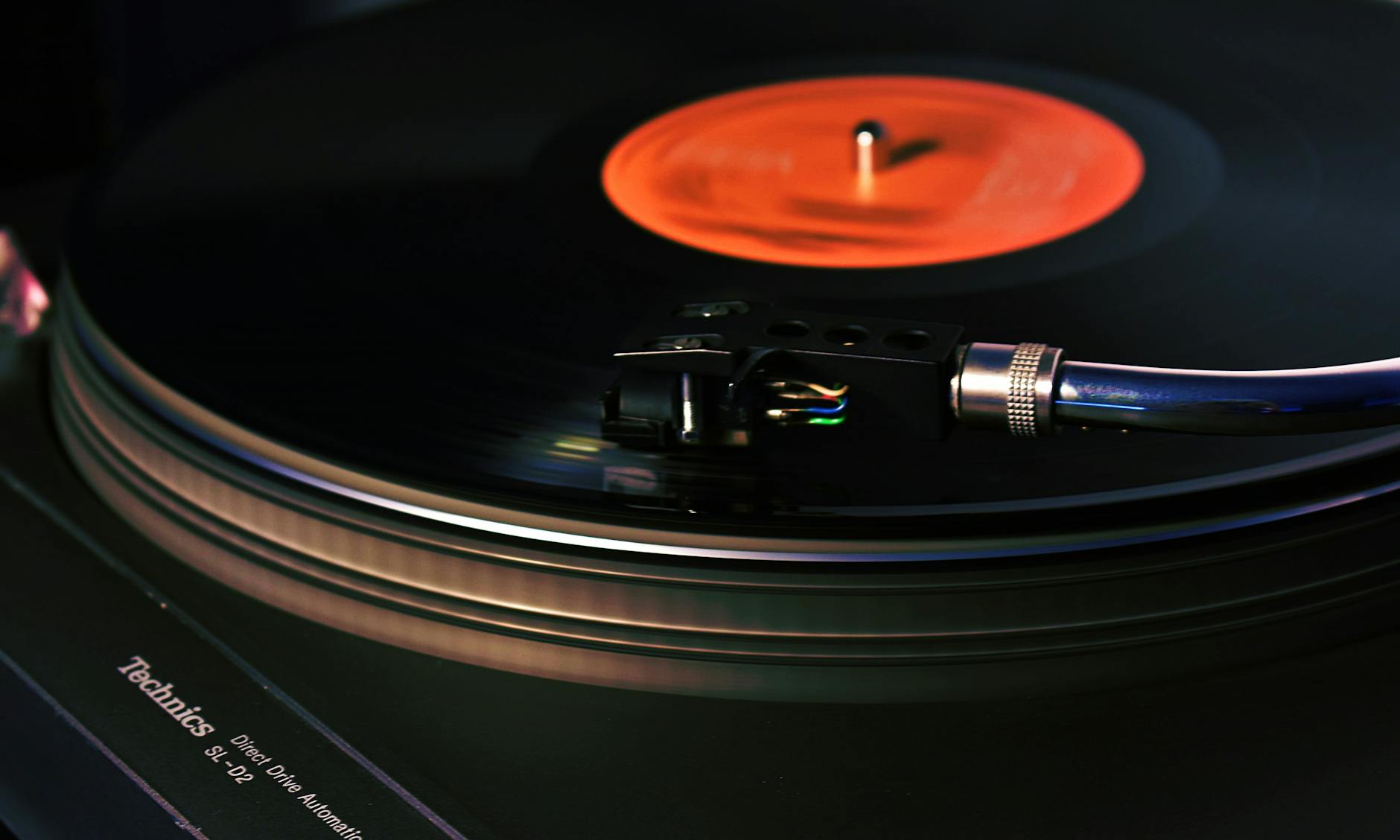
Vinyl record on turntable
Photo by Diana u2728 on Pexels.com

These ten poetic reflections revisit the protest anthems, lullabies, and cultural hymns that shaped a generation—songs we once sang in innocence, defiance, or hope. But time has sharpened their meanings, revealed their silences, and unsettled their assurances.

Songs I Thought I Understood is not a repudiation of the music, but a reckoning with what we missed—or could not yet see—in the melodies we inherited. Each piece responds to a specific song, not by rewriting it, but by listening anew with older ears and quieter questions.


Songs I Thought I Understood

A Requiem and Reflection in Ten Refrains

by Donald S. Yarab

For the ones who heard the songs and still ask the questions.”


The Ten Refrains:

Puff Remembers (after “Puff the Magic Dragon”)

The Valley Below (after “One Tin Soldier”)

The Flowers Still Bloom (after “Where Have All the Flowers Gone”)

The Needle Lifts (after “This Land Is Your Land”)

The Submarine Below (after “Yellow Submarine”)

No One Was Saved (after “Eleanor Rigby”)

The Wind Still Blows (after “Blowin’ in the Wind”)

Can It Be (after “Let It Be”)

Neon Psalm (after “The Sound of Silence”)

We Have Not (after “We Shall Overcome”)


Puff Remembers

(after “Puff the Magic Dragon”)

Somewhere over the rainbow,
Once upon a time,
In a land not so far away—
Yes, with dragons.

Puff—I remember him well.
He sailed without maps,
Carried no sword,
Only stories.

But Little Jackie Paper—
No, I never knew him.
He came, they say, with sealing wax,
With strings, with child-sized laughter.

And then he left.
As children do.
As they must.

Puff stayed behind,
Watching the tide pull dreams from the sand,
Waiting longer than most would,
Believing perhaps too much.

Now I am older than Puff was then.
The toys are gone.
The books are shut.
Even memory, sometimes, forgets its lines.

Still—
Sometimes I think I hear the flap of canvas,
The creak of rope,
The rhythm of a boat
That knows its way through time.

He may be out there yet—
Not waiting, exactly,
But still sailing,
With room for one more story.


The Valley Below

(after “One Tin Soldier”)

I remember One Tin Soldier,
The mountain people, the treasure buried deep,
The message of peace—
Unspoken, unread,
Trampled by riders from the valley below.

As a child, I did not understand
Why they came with swords
To claim what was freely offered.
I did not understand
Why they could not wait,
Why they did not read.

They were simply the People in the Valley Below.

But now—I know them.
They live not far from here.
They speak in votes and verdicts,
In profits and justifications,
In silence, and in slogans
Worn smooth with use.

Some are kind, some mean well.
Most are afraid.
Many never climb.

And though the treasure still lies buried—
That old dream of peace,
The circle unbroken,
The better world whispered in songs—
I see fewer walking toward the mountain.
Fewer still willing to wait.

The child I was weeps,
Not for the dead soldier,
But for the living who will never read
The words beneath the stone.


The Flowers Still Bloom

(after “Where Have All the Flowers Gone”)

The flowers—I see them.
They bloom each spring,
In roadside ditches,
In tended gardens,
In places untouched by war
Only by accident.

But where are they,
Even now?
Where are the promises they once held—
The wreaths we laid,
The songs we sang,
The lessons we said we had learned?

Where are the girls who picked them,
And the boys they gave them to,
Before uniforms,
Before funerals,
Before forgetting?

They bloom still,
Unconcerned.
Nature does not mourn the fallen.
It only covers them.

We placed our hope in petals
And let them drift into the graves—
Answers too proud
Or too ashamed
To be spoken.

Yes, I see the flowers.
But I see them differently now.
They are not peace.
They are not memory.
They are what grows when nothing else is left.


The Needle Lifts

(after “This Land Is Your Land”)

This land is your land,
This land is mine—
That is what the song said.
And we sang it,
Hand in hand,
Before we knew
Who drew the lines.

From California to the New York island—
Yes, the rivers still run,
The redwoods still rise,
But whose boots
Are turned away
At the fence?
Whose tent
Stands just outside
The melody?

I walked that ribbon of highway once.
I saw the “No Trespassing” sign,
Half-buried in dust.
And behind it—
Nothing but wind,
And memory.

This land was made for you and me.
But the deed was never signed.
Or if it was,
It has been lost
Beneath centuries of ash and ink.

The voices fall quiet.
The turntable slows.
The needle lifts.

And still the land stretches,
Unresolved.
The chorus unreturned.
The question unsung.


The Submarine Below

(after “Yellow Submarine”)

We all lived there, once—
In the Yellow Submarine.
Or so we sang.

A vessel of laughter,
Of porthole dreams
And choruses in perfect time.

We believed in it,
In its bright hull,
Its cartoon courage,
Its watertight world
Where everyone belonged
And nothing intruded.

Unity,
We thought,
Could be painted in primary colors.
Could float beneath the noise,
And keep us safe.

But the world knocked.
And the hull bent.
And the sea
Was not always blue.

Some never boarded.
Some were told
There was no room.
Some were thrown overboard
Before the song began.

Now I wonder—
Was the submarine ever real?
Or just a dream we made
To keep the waters from us?

If it sails still,
It does so
With ghosts at the helm,
And a quiet
We mistook for peace.


No One Was Saved

(after “Eleanor Rigby”)

Eleanor gathered the rice like a rite—
Not a wedding,
But a funeral in disguise.
No one noticed.
No one asked
Why she did it alone.

She lived in a world of quiet corners,
Of teacups with dust,
Of pews that creaked
For no one in particular.

I did not see her then.
Not really.
She was background—
A figure in a verse
I sang without knowing.

And Father McKenzie—
He wrote his sermons by candlelight,
Even when no one came.
He believed in the act,
In the speaking itself,
As if God were listening
Even if the people were not.

I used to think
They were odd.
Sad, yes—
But distant,
Part of another time.

Now I see them in doorways,
At bus stops,
Scrolling through silence
On glowing screens.
I see them in myself,
In the way I answer fewer calls,
In the prayers I no longer finish.

All the lonely people—
They are not elsewhere.
They are not lost in some old song.
They are here.
And no one was saved.


The Wind Still Blows

(after “Blowin’ in the Wind”)

I remember when the answer
Was blowing in the wind.
We sang it as if that meant
It was near,
As if the breeze would carry it to us
If we just opened our hands
Or listened hard enough.

But I have stood in that wind now.
Not once.
Not in youthful chorus,
But in silence.

And the answers do not ride so lightly.

How many roads?
Too many to count.
Too many lined with names
Etched in metal,
Or cardboard signs that ask
Not for peace,
But for spare change.

How many ears must one man have
Before he hears the cry?
Enough to wear out the listening.
Enough to forget which voice was his.

The cannonballs still fly,
Though we call them by different names now—
Policy.
Preemption.
Profit.
“Necessary force.”

Yes, the wind still blows.
But the answers,
If they are there,
Have long since been scattered
Across deserts,
Across oceans,
Across generations too tired
To ask the questions anymore.


Can It Be

(after “Let It Be”)

When I find myself in times of silence,
I do not hear
The words of wisdom.
I hear the ache of asking
Whether silence is answer,
Or simply absence.

Let it be, they said.
And I tried.
I tried to let the world
Unfold as it would,
To trust in the slow work of time.

But still the wars came.
Still the towers fell.
Still the hands reached out
And found nothing waiting.

Mother Mary—
She comes to some.
But others
Find no visitor
In the night.

Let it be?
Can it be?
Is there something
We have not yet asked,
Some word not spoken
Because we were told
Not to speak at all?

There will be an answer—
So the song promised.
But I have learned
That sometimes
The answer is another question.


Neon Psalm

(after “The Sound of Silence”)

Hello darkness—
It does not answer.
It scrolls.
It flashes.

We used to whisper to the void
And hope it heard.
Now we shout
And hope it trends.

The prophets write in hashtags,
Their sermons flickering
Across shattered glass,
Their congregations swiping
And moving on.

No one walks the quiet streets,
No one weeps in the back pew.
The cathedral is a comment thread
Lit by the glow
Of the god we built
To hear ourselves.

No one dared disturb
The sound of silence—
That was the line.
But now it is all disturbance.
The silence
Is what we fear.

I remember when words
Had gravity,
When they settled in the chest
And waited
To be spoken with care.

Now even grief
Is curated.

Still—
Somewhere beneath the algorithms,
Beneath the noise mistaken for voice,
Beneath the sponsored silence,
I believe the old language
Waits.

Not to go viral.
But to be heard.


We Have Not

(after “We Shall Overcome”)

We shall overcome—
That is what we sang.
We locked arms,
Lit candles,
Marched softly into nights
Thick with dogs and doubt.

And some did overcome.
Some bridges held.
Some laws changed.
Some doors opened.

But not all.

Not for everyone.
Not everywhere.
And not for long.

Some came after
And tore down the signs,
Or rewrote them in finer script.
Some left the door ajar
Just wide enough
To say it had been opened.

I do not mock the song.
I remember it.
In the bones.
In the breath held
Before a verdict.
In the quiet
After a child is buried.

We shall overcome—
We whispered it
When shouting would not do.

But the road is longer
Than the hymnbook said.
And the hill steeper
Than memory allows.

We have not.
Not yet.

Still—
There is something in the singing,
Even now.
Even if the words tremble.
Even if the chorus
Grows thin.

Of Goose and Grin: When Tales Step Off the Page

What happens when the characters tumble from their tales? When rhyme stumbles, and the Goose remembers? In this playful and poignant poem, nursery rhymes unravel, fairy tales awaken, and the stories themselves walk past their plots. “Once Upon Askew” is a whimsical reflection on the lives of stories—and those who dwell within them.


child reading book in front of shelves of books
Photo by RDNE Stock project on Pexels.com

Once Upon Askew

or, The Story That Would Not Sit Still
by Donald S. Yarab

Listen, child—I am the Old Grey Goose,
And I was there when books came loose,
When volumes tumbled, pages flew,
And all the stories mixed like stew.

It started with a mighty thud—
Books falling open, words like mud,
All swirling, mingling, line by line,
Till Alice’s world came mixing into mine.

“Curiouser and curiouser!” she cried,
Right into Cow’s green pasture-side,
Where “Hey Diddle Diddle” used to play—
Now Cow asks questions all the day.

The Spoon caught Alice’s strange delight,
Abandoned dishes, fled by night,
Beneath a moon from whose bright story—
From Carroll’s tale or Goose’s glory?

I squawked from my own tumbled page—
Which book? What tale? What ancient age?
While Cat’s grin stretched across our scene,
Belonging nowhere, everywhere seen.

We passed the wall where once he sat—
Poor Humpty, puzzled, round, and flat.
Though patched, he watches, cracked but clear,
And murmurs, “Not all ends end in fear.”

But one lay still beyond the swirl—
A slumbering, untouched young girl.
The tales all passed; she did not wake,
No prince, no plot her trance to break.
Yet in her stillness, something stirred—
A dream not shaped by spoken word.

We found Red Riding Hood alone,
Her basket lost, her sure path gone.
The Wolf came next—not sly, but stunned,
As if unsure what he had done.
They walked apart, then side by side,
Two stories stripped of fear and pride,
Each wondering if what they knew
Was ever really, wholly true.

So off we walked, this mixed-up crew:
Alice with questions, Cow with moo
That carried wisdom, Spoon with light
From every moon and every night.

Behind us trailed the broken bits—
Half-rhymes and verbs that sought their fits,
Metaphors in mismatched dancing shoes,
Still seeking out their missing clues.

No longer bound by story’s rules,
We’d become something new, no fools—
Not quite the characters we’d been,
Not free of them—but in between.

And hovering above our band,
That smile from Cheshire’s distant land—
A grin that needs no cat to hold,
A question that will not be told.

This is what happens, child, you see,
When stories tumble, wild and free—
They find they’re more alike than not,
And walk together past their plot.

On the Nature of Moments

Some time ago—perhaps a year or more—I shared the thought with a friend that, in the absence of a life partner, career milestones, or the outward markers many associate with ongoing joy and fulfillment, I found myself sustained by something smaller, more elusive, yet no less profound: moments. Fleeting as they are, these glimpses—of joy, beauty, tenderness, or connection—carry a weight that lingers long after they pass. Whether in laughter with a friend, a burst of color in nature, the unexpected joy found in art and music, or the hush of shared silence, these moments are what remain.

This conversation was brought to mind earlier today, during a pause in some simple yard work. A robin—one I have come to recognize—perched beside me on a rock for nearly twenty minutes. He did not fly, only hopped, watching me as if we were resting together. That brief companionship, quiet and unexpected, brought back the full force of that earlier insight.

The poem that follows is a first, rough attempt to give shape to that reflection.


This robin, who kept me quiet company, reminded me of the beauty in small moments—and even allowed me, kindly, to take his portrait.

Moments

by Donald S. Yarab

After so long,
I see it now—
life is not the grand arc
we thought we were writing,
not triumph etched in time
or years stacked with care.
It is moments.

The held door,
a beat longer than required.
A cloud painting itself
across the sky.
A flower blooming
through a crack in concrete.

The hum of a bee,
the song of a bird,
a friend’s first hello—
welcome, familiar music in the air.
Laughter spilling like light
through a quiet room.

A touch that speaks
without language.
Sunlight flickering
through leaves—
nature’s own Morse code.
The warm drift from the kitchen:
garlic, hope,
onions, memory.

The first bite of something sweet
dissolving on the tongue.
The joy of someone you love
laughing till they snort,
till they can’t breathe,
till you’re laughing too
at nothing,
at everything.

These—
small rebellions
against the world’s weight:
its monotony, its cold indifference.

But the moments—
oh, they persist.
They slip through the cracks
of our hardest days
and remind us
why we stay,
why we watch,
why we dare to hope
for just one more:

one more kindness,
one more beauty,
one more laugh,
one more flicker of light—
each a defiance,
each a benediction
in this brief, bright,
impossible gift
of being alive.

The Inversion Cycle: Eight Scrolls of Withheld Grace

The Counterpoint of Ponder, O Morpheus, the Night Sky


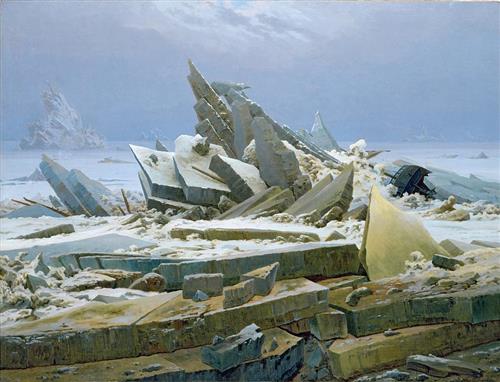
Caspar David Friedrich, The Sea of Ice, also called The Wreck of Hope 
Oil on canvas paint, 96.7 cm × 126.9 cm (1823–1824).
Caspar David Friedrich, The Sea of Ice, also called The Wreck of Hope
Oil on canvas, 96.7 cm × 126.9 cm (1823–1824).

On the Unmaking of Benediction

This cycle of verses—The Inversion Cycle—emerged not as a contradiction, but as a counterweight to The Blessing of Morpheus: The Sending Forth, a series of benedictions articulated in reverent tones and metaphysical gestures within the poem Ponder, O Morpheus, the Night Sky. That earlier work was rooted in the soul’s deep yearning toward the ineffable, culminating in luminous affirmations bestowed by the dream-god Morpheus upon the seeker. In time, those benedictions came to feel too complete, too resolved. I began to wonder: what if they failed?

The Inversion Cycle is not blasphemy, but a form of apophatic honesty. It does not seek to erase Ponder, but to stand beside it—its negative counterpoint. Each scroll of the cycle corresponds to a specific line or blessing from Ponder and performs an act of unmaking: where Morpheus blesses, these verses refrain; where he sends the seeker into mystery, these verses stall at the threshold; where he assures, they withhold.

To honor that reversal, a further restraint was imposed: the exclusion of the very vocabulary upon which the original work (and many of my other recent works) so often relied. Words such as breath, dust, light, shadow, silence, and memory—among others—have been set aside. Their absence is not a loss but a signal. These are not the tools we are permitted to carry here.

The scrolls appear here in the same order as the benedictions from Ponder, O Morpheus, the Night Sky. This reversal respects the original arc—from the loosening of dreams to the transformation of the soul—and follows its negative path with precision.

What remains is austerity, not despair. These unsacraments do not offer consolation, but they do speak. If Ponder was a song of ascent, then this is the long exhale after the music ends—a psalter of withheld grace, composed in the space where blessing does not descend.

Let this work be read not in defiance of belief, but in the trembling of its undoing. For if it is brave to bless, it is perhaps braver still to stand in the space where blessing will not come—and write there, in the dust, what remains.


Scroll I: Of the Clinging Husk

Let not your dreams fall—
for they will not fall.
They remain,
clinging like husks unpicked,
blackened not by season,
but by refusal.

You will try to cast them down,
but they are fastened,
not to limb,
but to marrow.

They do not curl like leaves.
They do not return to soil.
They sour upon you,
a bitterness in the sinew,
a ferment in the thought.

And if you turn to shake them loose,
they will tighten.
Their threads are not of sleep,
but of habit,
knotted in long forgetting.

There is no wind to lift them.
No frost to loosen them.
No gardener comes.

Remain, then, beneath their burden—
bent,
unshed,
unchanged.


Scroll II: Of the Inscribed Weight

Take them.
You will take them.
You cannot help it.

The names carved into stone,
the words burned into walls,
the cries etched into earth—
they cling not to your pack,
but to your ribs.

You bear them not as titles,
but as scars.

They whisper through your marrow,
resisting every act of unmaking.
You try to enter the place without form,
but they speak before you.
They call the ground by its old name,
and the gate does not open.

Even the sky does not answer
when it hears them rising again.

These names were not carved to remember.
They were carved to bind.

And now,
as you stand at the edge
of the place where all naming ends,
they press their syllables
against your tongue,
and you speak them,
not in defiance,
but because you cannot forget.


Scroll III: Of Implements Abandoned

Bring not the weighted balances,
nor the woven snares of longing.
They do not hold,
not here.

Their handles crack in the frost
where no stars rise to bless the hour.
Their mesh is brittle—threaded not of wool,
but of claims left too long in the mouth.

The mind, honed to edge,
cuts only fog in this place.
The heart, cupped too gently,
spills what it never held.

There are no laurels in this soil,
only reeds that do not bend
and brambles that do not bleed.

And should you cast such tools before you,
expecting fruit, or fire, or favor—
they will return to you as ash,
unsought, unshaped,
the chaff of means
mistaken for ends.


Scroll IV: Of the Withheld Offering

Bring not your hollowed chest,
stripped clean of ornaments and plea.
It will not be filled.

Wonder has no purchase here.
Its gaze returns unreflected
from stone too smooth to be shaped.

Let the mind remain loud and unyielding,
for awe would shatter in this poise
like frost-cracked bronze.

As for your feet—
do not lift them.
There is no basin here,
only ground dry from the beginning,
lined with rings that do not ripple.

The wind does not attend.
It does not lift.
It does not listen.

There is no path across this floor,
only grit,
and the marks of those who came
thinking they would walk upon revelation.


Scroll V: Of the False Horizon

Do not seek.
There is no one to be found.

The sea does not receive you.
It is not fluid,
but glare stretched to the edge of motion—
shimmering not with promise,
but with mirage.

You did not launch.
You drifted.
And your craft was not chosen,
but assigned,
drawn from timbers
meant for no voyage.

The sky above you swells with stars,
but none are true.
Each one marks a path
that bends inward,
circling you back to your forgetting.

You will think you move.
You will call it seeking.
You will call it bold.
But you are already known
by the thing that does not answer.
And it has left no threshold,
only wind
that cannot be charted
and depth that does not hold.


Scroll VI: Of the Barren Threshold

There is no beyond.
Only the gray field where sleep forgets its end
and waking does not begin.

Here, nothing waits.
Not voice, not veil,
not even the last gasp of wonder.

What lies past dream is not fullness,
but poise robbed of sanctity—
the deafness of stones
before their naming.

No stars ever hung above this place.
No fire traced its vault.
Only pallor,
dull as bone in a dry shrine,
untouched by flame or veil.

And death,
so often imagined a gate,
has no depth here.
It is shallow, crusted,
and holds nothing but its own refusal.

Let no one say this place is holy.
It is not what remains made full—
but vacancy made permanent.

A place unmourned.
Uncalled.
Unmade.


Scroll VII: Of the Unbecome

Go not.
There is nowhere that calls.
No road unfurls before you,
no veil parts,
no watchful eye lingers on your vanishing.

The question you bore
was not accepted.
It curled back into you,
like a tongue that feared its own utterance.

You will not be shaped by asking,
nor known by your seeking.
You will remain
as you were before the yearning—
a vessel without fracture,
never poured,
never filled.

No sound will rise behind you.
No trace will stir where your feet passed.
Even the soil will forget your weight.

Be still, not in peace,
but in the form that does not unfold.
Remain—not as the question—
but as that which never found its shape.


Scroll VIII: The Soul Beneath the Blanched Sky

The soul, girded and unmoved,
stood beneath a sky without veil—
a dome blanched of fire,
where nothing had ever gleamed,
only ash adrift from unremembered pyres.

It bore no garment.
No mark of calling or descent.
It was as parchment without script,
unhandled, unblemished, unread.

No winds stirred the plain.
Only cairns rose in rows,
not raised in reverence,
but born of the land’s refusal to yield.

The trees there had no buds.
Their limbs were stiff, as if carved for stillness—
a forest of halted prayers.
And beneath them,
the roots did not seek nourishment,
but curled inward,
content in their forgetting.

There was no calm,
no sacred pause.
Instead, a muttering of syllables
rose from the dry hollows—
sounds without grammar,
without bond,
giving rise to no names,
no intelligible form.

And when the soul pressed its palm
to the ground,
there was no spring,
no pulse,
only crusted clay—
neither moist nor cracked,
a firmness that would not give.

It asked nothing.
Not from pride,
but from knowing
that some places are beyond summons—
places where even longing
has been turned to stone.