

The Weaver of Shadows and Light: A Fable told by Lysander Aesopides

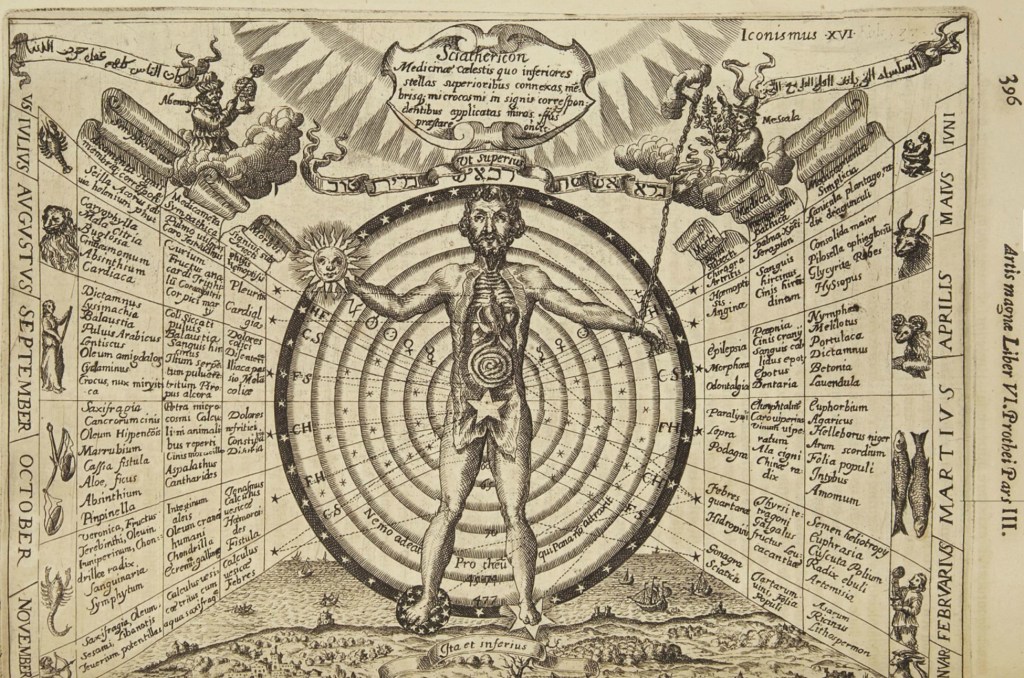
Sciathericon (engraved plate, 1671) from the 2nd edition of Ars Magna Lucis et Umbrae (“The Great Art of Light and Shadow”) by Athanasius Kircher (1602-1680). Image from the Dittrick Rare Book Collections at Case Western Reserve University, Dittrick Medical History Center.

In a distant land, where the mountains kissed the heavens and the rivers whispered secrets of the earth, there lived an ancient artisan known as the Weaver. This Weaver was not like others, for he did not spin mere cloth or thread. Instead, he wove the very fabric of existence itself—threads of light and shadow, of joy and sorrow, of hope and despair. His loom was the sky, and his spindle the stars.

The Weaver’s craft was unparalleled, for he understood the delicate balance that must be maintained in all things. Too much light, and the world would be blinded by its own brilliance; too much shadow, and it would be consumed by darkness. Thus, he wove carefully, each thread placed with intent and purpose, creating a tapestry that held the world together.

But one day, a young prince, full of ambition and pride, sought out the Weaver. He had heard tales of the Weaver’s power and desired to command the loom for himself. “Weaver,” said the prince, “grant me the knowledge of your craft, so that I may weave my own destiny, free from the bonds of fate.”

The Weaver, wise and knowing, looked upon the prince with both sorrow and understanding. “My child,” he said, “the threads of life are not to be wielded with arrogance. To weave is to understand the weight of each choice, the consequences of each action. Are you prepared to bear such a burden?”

The prince, blind to the warning, insisted. “I am prepared for anything. Teach me your ways, and I shall create a world in my image, a world of light, free from darkness.”

Seeing the prince’s determination, the Weaver sighed and granted his request. For 12 weeks, the Weaver patiently instructed the prince, teaching him the secrets of the loom, the intricacies of the threads, and the delicate balance that must be maintained. As the weeks passed, the prince began to grasp the profound wisdom woven into every strand of fabric. Finally, at the end of the 12th week, the Weaver stepped aside, allowing the prince to take his place.

Eagerly, the prince began to weave, pulling strands of light with fervor, filling the sky with radiant brilliance. But in his haste and pride, he neglected the shadows, casting them aside as unworthy. The world he created was indeed one of light, but it was harsh and unyielding, with oppressive heat bearing down relentlessly, as if the very air had become a burden. The people, blinded by the relentless glow, began to suffer, for there was no shade to rest, no night to dream.

Realizing his grave mistake, the prince sought to undo his work, but the radiant threads were stubborn, refusing to be unraveled. In despair, he turned to the Weaver for help. The Weaver, with a gentle hand, took back the loom and began to weave once more, adding threads of shadow to the prince’s creation, restoring the harmony that had been lost.

As the prince watched, he finally understood. The light could not exist without the shadow, nor the shadow without the light. Each thread had its place, its purpose, and only together could they create a world that was whole.

The prince, humbled by his folly, vowed never to forget the lesson he had learned. When he came to rule, he governed with wisdom and justice, as one who understood the value of balance in all things. And the Weaver continued his work, silently and skillfully, weaving the tapestry of existence, one thread at a time.

Moral of the Fable

The fable teaches that in all aspects of life, balance is essential. The pursuit of light without acknowledging the necessity of shadow leads to a world that is incomplete and unkind. True wisdom lies in embracing the duality of existence and recognizing that every choice carries with it a responsibility to maintain harmony.

My Purple Elephant Story

My Stuffed Elephant From Childhood

Those who know me well know that I have a great affinity for elephants. They may not know, however, when and how the seeds of that affinity were first sown. Though it is possible that the majesty and beauty of the largest of land mammals would, perchance, have been sufficient to attract my admiration, I have a childhood story – My Purple Elephant Story – which explains my especial affinity for elephants.

When I was in second grade, I attended Market Street Elementary School. My teacher was Mrs. Workman. She was a very pleasant teacher and generally kind, as I remember. I also recall that she allowed us, after we completed in-class assignments, to go to the back of the room to play quietly in the play area, which had items such as sculpting clay.

One day, we had an art assignment which, for me, consisted of coloring in an elephant. Well, I wanted to complete that assignment as quickly as possible so that I could go to the back of the room and use my imagination shaping the sculpting clay. So, as I recall, I grabbed a purple crayon and quickly scribbled -without much regard to the lines delineating where the elephant began and where he ended – all over the page. I then thrust my hand in the air to signal to Mrs. Workman that she should come over to see that I had finished my assignment and release me to the back of the room. Well, my scheme did not work out as I had planned. Mrs. Workman came over to inspect my work. She took a gander at it, picked it up, called my classmates’ attention to it, and said that she was disappointed in my work and that her preschooler could do better work. Needless to say, I was not released to the back of the room. But, I had learned multiple valuable lessons that day. Lessons that I appreciated and embraced: always do your best for you never know with whom your work will be shared (equally, do your best for yourself alone); embarrassment is generally a useless emotion; and shame can be a constructive emotion.

Although I know many would disapprove of Mrs. Workman’s method of addressing my failure to appropriately address the assignment, I am grateful to her and the lessons she imparted to me that day. The lessons I walked away with from that interaction have served me exceedingly well for the past five decades. Though I was ashamed of my performance on my assignment (and well I should have been), I did not cry at the exposure of my substandard work, nor did go home and complain to my Mother about what had happened in class. Finally, I did not shrivel up in embarrassment at what my classmates may have thought about my work. Rather, I resolved that going forward, I would always do my assignments as if they were being done for all to see. (Interestingly, this was a message re-enforced to me by my Grandpa Yarab a decade later when discussing painting. He told me that when painting furniture or fences or trellises, one should paint the portions which will never been seen by anyone just as one would paint the portions that would be seen, just to do the job the right way, always.)

Now, a few words about shame versus embarrassment. There is a world of difference between the two. Shame is defined as a painful emotion caused by consciousness of guilt, shortcoming, or impropriety. It is internal to the person and, I believe, can be a morally constructive force. Shame does not need witnesses to be activated. It serves as an internal motivation to proper conduct. It differs from embarrassment in that embarrassment is an emotional state that is associated with mild to severe levels of discomfort which is usually experienced when someone commits a socially unacceptable or frowned-upon act that is witnessed by or revealed to others. It is rarely a morally constructive force in and of itself. If you are only pained when witnesses are about, you are a lost soul.

Thus, My Purple Elephant Story, while ostensibly a story of embarrassment, is really a story of a different sort. I recognized, in hindsight, that I acted shamefully in completing the assignment, and committed to not doing so again. As such, I view it as a positive and instructive experience in my life rather than one that many would perhaps view as mortifying or unfortunate. So rather than remembering the Purple Elephant as a story to be forgotten as traumatizing, I remember it as a story of betterment.

Oh, and how did the year progress with Mrs. Workman? I recently found a midyear note and an end of year note from Mrs. Workman to my Mother. In the midyear note Mrs. Workman said the following: “I’ll keep reminding Donald to to work more carefully and slowly. I feel he’s come a long way this year.” In the end of year note she said: “I have been very pleased with Donald’s progress this year. I feel he’s been trying very hard and shown he can do the work. He has been a pleasure to have in class.” A Purple Elephant apparently did the trick.