
Reading the Iliad Again: The Voice of Reason in an Age of Manipulation

After countless readings of various translations of Homer’s Iliad, certain passages can suddenly leap from the page with startling clarity. It can feel as if I am encountering them for the first time. Such was my experience with the incident regarding Thersites in Book 2, brought into sharp focus by Emily Wilson’s brilliant new translation—whose story had barely registered in previous readings, now revealed as perhaps the most penetrating political commentary in all of ancient literature.


The Iliad translated by Emily Wilson

A quick review of the scholarship revealed that while I was hardly alone in this recognition, the political interpretation of Thersites remains surprisingly contested. Some modern scholars have recognized in Homer’s portrayal a sophisticated critique of power that transcends the heroic framework, but many others continue to read the episode as simply affirming aristocratic values.¹ Yet there is something to be said for arriving at these insights through direct encounter with the text—Wilson’s translation made visible what a handful of careful readers have long debated.

The setup is masterful in its cynicism. Zeus, hungry for blood and bound by his promise to Thetis, sends a false dream to Agamemnon. The king, ever susceptible to flattery, believes the lie that, after nine years without success, Troy will fall easily if he attacks immediately. Divine deception exploits human vanity to ensure more carnage—the gods conspire to prolong suffering for their own purposes.

But first, Agamemnon decides to test his troops’ resolve by suggesting they abandon the siege and sail home. The test backfires spectacularly—war-weary soldiers leap up and race toward their ships, desperate to escape nine years of futile bloodshed. Only Odysseus’s violent intervention stops the mass exodus.

Into this moment of barely restored order steps Thersites, described by Homer with deliberate physical grotesquerie to ensure we see him through aristocratic eyes—bandy-legged, lame, with little hair and a shrill voice. In the ancient world, such deformity was viewed as suggesting mental or moral deficiency. But as scholar Panagiotis Stamatopoulos observes, “the ugly hero is the personification of the ugly truth.” Homer introduces an insolent and fearless figure who points out truths that both the soldiers and the kings dare not see. Thersites emerges as “the voice of the people, of demos“—a vox populi expressing the position of the lower social class and opposing the aristocratic consensus. Tellingly, Homer gives him no patronymic surname, no family lineage to establish elite status; he represents not an individual but a class.

Yet Thersites’ words cut through the manufactured crisis with devastating precision. He challenges Agamemnon directly: what is your grievance? You already have gold, women, first choice of everything. After nine years of pointless war, he asks the question that should be obvious—why should common soldiers continue dying for the personal honor of the elite who have already been richly compensated?

This is the voice of human reason emerging amid divine machination and aristocratic ego. Thersites offers what the epic desperately needs: an exit ramp from tragedy. Had the Greeks listened and sailed home, Troy would have stood, Hector would have lived, Achilles would have returned to Phthia, and Odysseus would never have wandered. The commoner alone sees the madness clearly.

More provocatively, Thersites points out the fundamental dependency that the heroic code obscures: “Let him consume his winnings here at Troy, so he can see if we helped him or not.” Without the common soldiers doing the actual fighting and dying, what would Agamemnon accomplish? He would be one man with his treasure, powerless before Troy’s walls. The entire war rests on the backs of those excluded from its real rewards.

But Homer’s brilliance lies in what follows. Odysseus—wily, eloquent, a master of persuasion—does not refute Thersites’ logic. He silences it. The master of cunning speech, the man who could talk his way out of any crisis, abandons rhetoric entirely when faced with reasonable dissent. Seizing the divine scepter, he beats the man bloody while the other soldiers—the very men whose interests Thersites defends—laugh and cheer. Yet Homer’s subtlety continues: even after this violent suppression, it takes two additional speeches by the army’s finest orators, Odysseus and Nestor, to convince the troops to resume fighting. The laughter was hollow; Thersites’ logic had found its mark. In this single scene, Homer offers a devastating triple indictment: the gods manipulate, the elite brutalize, and the masses collaborate in their own subjugation.

What makes this commentary so sophisticated is its recognition that the problem is not simply bad leadership or divine caprice—it is the entire system’s complicity in silencing rational dissent. Homer shows us a world where every level of authority, from Olympus to the ranks, conspires to suppress the voice that points toward sanity and survival.

We live in an age of algorithmic manipulation designed to amplify division for profit. Our elites meet dissent with derision and suppression, while the public, misled or weary, often rallies to their side, cheering policies that erode their own dignity and livelihood. The machinery Homer diagnosed—divine deceit, aristocratic coercion, popular compliance—still grinds forward, indifferent to time.

Thersites asks the eternal question that every society must confront: “Why should we suffer and die for the vanity and greed of our leaders?” That his voice is not merely ignored but mocked—laughed into silence by those he would save—remains one of the most chilling recognitions in all of literature. Homer understood what many modern narratives refuse to admit: that exploitation and oppression do not come from above alone. It comes when the oppressed celebrate it themselves. And the greatest tragedy may not be the fall of Troy, nor the deaths of elite heroes, but the silencing of the one voice that might have stopped the tragedy before it began.


¹ See, for example, Panagiotis G. M. Stamatopoulos, “The episode of Thersites in the Iliad as an ideological and literary construction of Homer,” 28th Seminar of Homeric Philology, Ithaca Island, Greece (2014); and Siep Stuurman, “The Voice of Thersites: Reflections on the Origins of the Idea of Equality,” Journal of the History of Ideas 65.2 (2004): 171-89.

The Poet’s Apparatus: On Method, Reflection, and the Gift of Context

“The poem is the cry of its occasion, / Part of the res itself and not about it.” — Wallace Stevens, “An Ordinary Evening in New Haven”


Lacrimae Sanguinis 2025: A Lamentation in Four Movements

By Donald S. Yarab

I.

Lacrimae sanguinis,
Animae nigrae hominum terram maculant.
They walk not as men, but as shadows unshriven,
Each step a silence, each breath a wound.
The ground groans beneath the weight of the fallen,
And justice, long buried, forgets her name.
No trumpet sounds for the guiltless slain,
Only the whisper of blood in the dust.¹

Lacrimae sanguinis—
The blackened souls of men stain the earth.


II.

Hate kindles fires no rain can quell,
Greed carves its name in the marrow of kings.
Fear is a vulture, circling unborn hopes,
Its wings beating lies into trembling hearts.
These three—unholy trinity—march undenied,²
And temples crack beneath their tread.
Where once stood gardens, now only ash—
And the breath of God withdraws in sorrow.³

Lacrimae sanguinis—
The blackened souls of men stain the earth.


III.

No voice comes forth from the cloud or flame,
The heavens are sealed in unyielding hush.⁴
The stars avert their gaze, and time forgets its course—
Even the winds have ceased to speak His name.
Altars stand cold, their offerings stale,
And the priest no longer lifts his hands.
The silence is not peace, but exile—
A stillness too vast for prayer to fill.⁵

Lacrimae sanguinis—
The blackened souls of men stain the earth.


IV.

He turned His face—and we, our backs.⁶
Not in wrath, but in weary disdain.
The mirror cracked, the image lost,
And we wander, eyes open yet unseeing.⁷
We build our Babels in crumbling dust,
Raise thrones upon bones, call ruin law.
Light knocks, but we bolt the gate from within—
And call the silence proof He never was.⁸

Lacrimae sanguinis—
The blackened souls of men stain the earth.


Footnotes:

  1. “Shadows unshriven” / “Justice… forgets her name” — Cf. Psalm 82:6–7 and Isaiah 59:14–15. Echoes of prophetic lament over moral collapse and unreconciled souls.
  2. “Unholy trinity” — An inverted image of Augustine’s De Trinitate: hate, greed, and fear form a perverse sacred order.
  3. “Gardens turned to ash” — Evokes Eden undone. The breath of God (Genesis 2:7) has withdrawn.
  4. “The heavens are sealed” — Amos 8:11–12; Lamentations 3:8. Divine silence as the most damning judgment.
  5. “Silence… not peace, but exile” — Apophatic void, not luminous unknowability. Cf. Isaiah 45:15: Deus absconditus.
  6. “He turned His face” — Inverts the Aaronic blessing (Numbers 6:24–26). A divine turning not in anger, but in sorrowful withdrawal.
  7. “Mirror cracked” — A fall from incomplete vision (1 Corinthians 13:12) into permanent distortion.
  8. “Call the silence proof He never was” — Resonates with Nietzsche’s “God is dead,” here framed as mutual estrangement, not denial.

Note: The image of the soul as stained through inordinate attachment finds classical expression in Summa Theologica I–II, Q.86, Art.1, where Aquinas defines sin’s stain not as a substance, but as a privation of the soul’s brightness—a metaphorical shadow cast when the soul cleaves inordinately to created things, against reason and divine order. In this lamentation, the stain is projected outward: what is blackened within stains the world without.ain is projected outward—what is blackened within stains the world without.


It is easy to imagine the critical response already. Some heir to Harold Bloom’s anxiety-of-influence throne would ascertain that I, the creator, am anxious, insecure, prone to nail-biting—that I found it necessary to express my anxiety in more apparatus than poem, drowning the verse in scholarly scaffolding because I lack confidence in the work’s ability to stand alone.

Such banal criticism would miss the point entirely. If I were anxious about critical reception, if I were truly insecure about the poem’s merits, I would have foregone apparatus altogether in sure foreknowledge of such harsh rebuke. The apparatus exists precisely because I am secure in my intent, my method, and my purpose. I am not writing for elite pedantics and pedagogues who jealously guard their interpretive privileges, but for myself and any who wish to partake of poetry’s riches, whatever their opportunity to swim in the canon’s depths.

The truth is, those who argue against apparatus are those who would have poems essentially confined to an elite club, complete with secret handshakes, symbols, and degrees of membership. Like Skull and Bones or the Masonic lodges, traditional poetry criticism has long functioned as an initiatory society where full membership requires years of study, the right mentors, and familiarity with increasingly obscure reference points. The “let the poem stand on its own” argument sounds democratically pure but functions as cultural gatekeeping, preserving poetry as the domain of those who already possess the cultural capital to decode allusions, recognize forms, and trace influences.

When critics rail against apparatus, they defend a system where interpretive authority belongs to those with the “right” education, the proper literary pedigree. The poem becomes a kind of shibboleth—if you do not immediately recognize the echoes of Job, the inversions of Augustine, the liturgical cadences, well, perhaps serious poetry isn’t for you.

My apparatus dismantles that exclusivity. It offers initial guideposts to anyone willing to engage, no secret handshakes required. This is cultural hospitality, not anxiety—a deliberate act of democratization that makes visible the materials from which the poem emerged.

The Method: Nexus, Interaction, Reflection

A poem does not emerge from nothing. It rises from what might be called a nexus—a convergence of memory, reading, experience, and the particular urgency that calls forth language. In composing Lacrimae Sanguinis, this nexus became especially visible: biblical lament tradition, Thomistic theology, contemporary spiritual desolation, and liturgical rhythms that have shaped both prayer and protest for centuries. But rather than hide this genealogy, I choose to make it visible as part of the poem’s offering.

The nexus is not a conscious construction—it cannot be willed into being. Rather, it emerges when conditions are right, when reading and experience have prepared a space where seemingly unrelated elements suddenly reveal their hidden kinship. The Latin refrain lacrimae sanguinis did not arise from scholarly deliberation but from convergence, where liturgical memory met contemporary anguish.

Within this nexus, meaning arises through interaction—the dynamic tension between elements that resist easy synthesis. The “unholy trinity” of hate, greed, and fear stands in deliberate tension with Augustine’s conception of divine Trinity, not as simple inversion but as recognition of how spiritual language can be perverted by the very forces it seeks to name and resist. The line “He turned His face—and we, our backs” emerges from interplay between the Aaronic blessing and the lived experience of mutual estrangement.

The apparatus participates in this interaction by creating dialogue between poem and source. When I note that “silence is not peace, but exile” resonates with Isaiah’s Deus absconditus, I do not suggest the poem merely illustrates the biblical text. Rather, I propose that ancient prophetic cry and modern spiritual dislocation illuminate one another—that meaning arises in their interaction, not in either alone.

The apparatus reveals process without explaining away mystery. When I show that “He turned His face—and we, our backs” emerges from tension between Aaronic blessing and contemporary estrangement, I do not solve the line’s meaning—I multiply its resonances. The reader now encounters not just the line’s immediate emotional impact but also its dialogue with liturgical tradition, its inversion of expectation, its theological implications. The apparatus does not reduce mystery to mechanism; it shows how many mysteries converge in a single moment of language.

This transparency serves poetry’s deepest purpose: not to mystify through obscurity but to reveal the actual complexity of experience. When sources remain hidden, readers may sense depths they cannot fathom and mistake inaccessibility for profundity. When sources become visible, the true marvel emerges—not that the poet knows obscure references, but that these disparate materials can achieve such unity, that ancient texts still speak to contemporary anguish.

Finally, reflection—not as conclusion but as ongoing process. The apparatus serves this reflective function, helping both creator and reader recall not just sources but the quality of attention that makes encounter possible. By showing rather than hiding the poem’s genealogy, it acknowledges that interpretation is always collaborative, that meaning emerges from ongoing conversation between text and reader.

Confidence, Not Anxiety

This method emerges from confidence rather than defensiveness. When apparatus functions generously, it says to readers: here are some materials that were present when this poem emerged, but you are free to make of them—and of the poem itself—what you will. This represents confidence in both the work’s integrity and the reader’s capacity for independent meaning-making.

Critics will object that apparatus risks over-determining meaning, that by naming sources I constrain interpretation. This objection misunderstands how meaning actually works in poetry. The apparatus does not tell readers what to think about the convergence of Nietzschean pronouncement and prophetic lament—it simply makes that convergence visible as one layer among many.

Consider the reader who recognizes the Aaronic blessing inversion without consulting footnotes, discovers resonances I never anticipated or intended, and finds connections to their own liturgical memory. The apparatus does not prevent this encounter—it enriches the conversation by adding another voice. Meaning multiplies rather than contracts when more materials become available for interaction.

The real constraint on interpretation comes from ignorance, not knowledge. When readers miss allusions entirely, they are trapped in partial understanding. When sources become visible, readers gain freedom to accept, reject, or build upon the connections offered. The apparatus functions as invitation, not limitation.

We live in an age where what was once common cultural knowledge—biblical narratives, classical philosophy, liturgical traditions—can no longer be assumed as shared reference points. This is not a failure of readers or education but a consequence of cultural acceleration. Neither poets nor readers can be expected to carry the full weight of cultural memory. When canonical works become unfamiliar, when classical allusions require explanation, apparatus serves not as condescension but as courtesy.

The apparatus preserves a record of one moment’s convergence—the nexus as it appeared when the poem emerged—but it cannot and should not constrain future encounters. It functions as invitation rather than explanation, creating conditions for ongoing dialogue rather than settling interpretive questions once and for all.

Method as Cultural Hospitality

What emerges is method as interpretive generosity rather than critical control. The apparatus offers tools for encounter while acknowledging that even the creator does not exhaust the poem’s meaning. The poem, once written, becomes available for encounter rather than possession, even by the one who wrote it.

This hospitality extends to readers at all levels of familiarity with the sources. Those who recognize the allusions immediately may find additional layers in seeing them made explicit. Those encountering Augustine or Isaiah for the first time receive invitations to explore further. Those who prefer immediate encounter may ignore the scholarly apparatus entirely. All approaches are welcome.

In this way, creative method and interpretive philosophy align. Both resist the fantasy of complete control or final understanding. Both acknowledge that meaning emerges in relationship. Both find fulfillment not in closure but in the ongoing conversation they make possible.

The apparatus, properly understood, serves this conversation. It is not the last word on the poem’s meaning but an invitation to the kind of careful attention that allows meaning to emerge. Like the poem itself, it creates conditions for encounter rather than commanding specific responses.

This is method in poetry as in interpretation: not a tool of conquest but a lens through which the materials of experience might reveal some of their hidden connections. The nexus forms, interactions unfold, reflection deepens—and occasionally, if conditions are right, something emerges that was not there before. Something worth sharing with anyone willing to receive it.

Widening the Gate: The Moral Imperative of Scholarly Apparatus in Poetry

The article argues that the inclusion of scholarly apparatus in poetry should not be seen as an act of insecurity but as a moral imperative to enhance accessibility and understanding. Providing notes and allusions demonstrates trust in the reader’s intellect and invites deeper engagement with complex literary traditions, enriching the overall poetic experience.


Dante and Virgil in Hell by William-Adolphe Bouguereau (1850).
 Oil on canvas, 281 × 225 cm. Housed in the Musée d'Orsay, Paris.
Dante and Virgil in Hell by William-Adolphe Bouguereau (1850).
Oil on canvas, 281 × 225 cm. Housed in the Musée d’Orsay, Paris.
Depicting a scene from The Divine Comedy, the painting shows Dante guided by the poet Virgil through the torments of the Inferno. This work reflects the enduring need for guidance through complex moral and literary landscapes—much like the role of scholarly apparatus in contemporary poetry.

In certain corners of literary criticism—particularly those shaped by the Bloomian anxiety of influence—the inclusion of scholarly notes in a poem is often regarded with suspicion. To annotate a poetic work, especially with theological or classical references, is, for some, a mark of insecurity or defensiveness. One does not footnote inspiration, the critic suggests, but cloaks inadequacy. This reading, however, reveals more about the critic’s own posture than the poet’s intent. It mistakes generosity for uncertainty, and accessibility for anxiety. In truth, the use of poetic apparatus is not a gesture of retreat but an act of moral clarity.

We no longer inhabit a culture rooted in shared canonical memory. The contemporary reader cannot be presumed to recognize the traces of Augustine or the subtleties of Pauline inversion, nor even the resonances of Lamentations or Miltonic cadence. These once-communal touchstones have grown faint in our fragmented intellectual landscape.

To scatter phrases drawn from such traditions across the page without interpretive aid would not constitute noble restraint—it would be fundamentally exclusionary. One does not prove a poem’s strength by ensuring its opacity to all but the initiated few.

The poet who situates their work within a sacred, historical, or theological lineage and yet withholds the keys to that lineage commits a kind of aesthetic pride. This is the true arrogance: to assume that those who do not immediately perceive are unworthy to understand. In contrast, the provision of notes, allusions, and apparatus is a statement of trust in the reader’s intellectual capacity. It affirms that the reader, though perhaps unfamiliar with particular traditions, is capable of knowing, and thus worthy of invitation into deeper engagement.

Poetic apparatus, when thoughtfully deployed, functions as both guide and companion. It allows the reader to move through layered landscapes without stumbling in darkness. Notes illuminate without overwhelming; they offer pathways, not prescriptions. Just as Dante needed Vergil to navigate the underworld in The Divine Comedy, the modern reader may need scaffolding to ascend the difficult terrain of a theologically-inflected poem. That scaffolding supports not the poem’s inadequacy, but the reader’s journey—and facilitating such journeys is a moral imperative in cultural stewardship.

This approach is not a concession to mediocrity, but a rejection of unnecessary elitism. It demonstrates a commitment to write in full fidelity to tradition without surrendering one’s audience to the assumptions of a forgotten world. When T.S. Eliot appended notes to The Waste Land, he was not performing obscurantist affectation, but rather acknowledging the changing literacy of his readership. His doing so sparked considerable controversy, suspicion, and derision. However, the changing literacy of readership since his day has only deepened and accelerated. Thus, the poet who provides apparatus performs not an act of scholarly vanity but of intellectual hospitality.

Indeed, there is a didactic purpose inherent in such practices: poetry can instruct, not through reductive simplicity, but through guided complexity. The notes, like glosses or scholia in ancient texts, become part of the total work—a parallel conversation between poet and reader. They remind us that poetry is a learned art—not reducible to mere sentiment, nor severed from thought. To annotate is to take seriously both the lineage of one’s words and the intellectual capacity of one’s reader.

In our digital age, we have expanded possibilities for such apparatus—hyperlinks, separate commentary documents, and layered presentations that neither overwhelm the poem’s aesthetic integrity nor abandon readers to unnecessary confusion. These technologies allow for graduated engagement: the poem stands complete for those prepared to receive it directly, while additional resources await those seeking deeper understanding.

Crucially, providing scholarly apparatus never constrains the reader’s interpretive freedom. Each reader brings their own experience and knowledge to a text, often discovering meanings the author never intended or foresaw. The best annotations create access without dictating understanding—they open doors without determining which path the reader must take once inside. This dynamic relationship between authorial context and reader interpretation is not a liability but one of literature’s most profound gifts.

The poet may still be misunderstood. There will be those who persist in reading apparatus as apology, footnotes as armor against criticism. But the deeper truth is that to offer one’s learning as aid is not to retreat from art, but to expand its possibility. It is an act of humility, yes—but also of instruction, of preservation, and above all, of invitation.

Poetic footnotes, then, are not defensive gestures. They are moral acts. They widen the gate; they refuse the cloister. In an age of forgetting, they are essential—if tradition is to live not as relic, but as inheritance: vital, vivid, and available to all who would receive it.

Poetry as Revelation: Engaging with “Vitruvian Man Unbound”

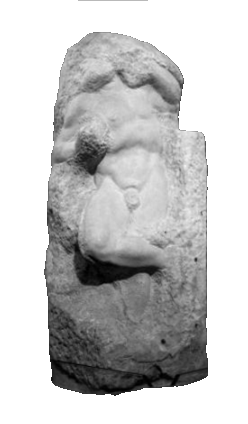
Michelangelo, The Awakening Slave (c. 1525–30).
A body caught between measure and becoming.

I. On Bloom and the Anxiety of Influence

As the poet of Vitruvian Man Unbound, I find myself drawn to Harold Bloom’s understanding of how poetry functions within tradition—not as mere imitation or influence, but as a creative misreading that transforms both predecessor and successor. Bloom’s vocabulary—his clinamen (poetic swerve), daemonization, and apophrades (the return of the dead)—offers a framework for understanding my own relationship with Leonardo’s iconic drawing.

Yet I would press beyond the confines of Bloom’s categorical system. The strongest poetry, as Bloom himself recognized, resists easy resolution. Vitruvian Man Unbound embodies what he called a tessera—a completion of its precursor that simultaneously preserves and undermines its foundational terms. The poem does not simply revise Leonardo; it retroactively reshapes our understanding of him. It allows us to see Vitruvian Man as an incomplete gesture, one whose implicit metaphysical longing only achieves full articulation through the poem’s unfolding of form, desire, and transcendence.

II. The Paradox of Poetic Creation as Discovery

When I began Vitruvian Man Unbound, there was no conceit of a new idea. Rather, I felt I was unearthing the obvious—articulating for the first time verses that had already been rendered, waiting to be heard.

This situates the poem not as invention but as discovery—a Renaissance conception of artistic creation. Michelangelo spoke of liberating the form already imprisoned within the marble. Leonardo, too, conceived of art as revelation through observation, uncovering structures latent in nature and proportion. I participate in that lineage: the transcendence of the circle was already latent in Leonardo’s drawing. My poem does not overwrite Vitruvian Man but unveils what it always contained.

III. Poetry as Transcription of Revealed Truth

Poetry is primarily, in my conception, the art of transcription. Poetry is ultimately truth revealed, however rendered.

This belief is ancient. Poets once invoked the Muse, believing their songs were received rather than authored. Plato cast poets as possessed vessels of divine madness. In scriptural traditions, the prophet or sage writes not from invention but from vision. In this view, the poet is not creator but conduit.

This understanding reorients poetic practice. What matters most is not novelty of theme or form but receptivity—a cultivated attentiveness to truths that ask to be heard. To compose well is to listen well. The most vital poems do not invent so much as reveal. The poet’s charge, then, is fidelity.

Vitruvian Man Unbound aspires to this kind of transcription. It draws out from Leonardo’s image the philosophical tensions embedded therein: between proportion and possibility, containment and becoming, structure and the longing to transcend it.

IV. The Poem’s Journey: From Containment to Transcendence

At its heart, my poem charts a metaphysical journey—the awakening of a consciousness confined within geometry, gradually realizing its cosmic vocation. The Vitruvian figure, bound in ratios and ruled lines, discovers within himself not mere form but flame. The movement is from being drawn to drawing, from being measured to measuring.

The poem gives voice to this paradox: “I am both bound and boundless, large and small, / Both measured part and immeasurable all.”

This is no empty contradiction. It is the philosophical heart of the work. The circle becomes “not wall but door,” not negated but reimagined. Limitation, as I came to understand, is not the enemy of freedom but its precondition. Form does not imprison; it allows the infinite to appear in the guise of the finite.

This idea resonates with multiple traditions: the Christian theology of kenosis, quantum indeterminacy, the aesthetics of the golden ratio, even the existential struggle of Camus’ Sisyphus. In Vitruvian Man Unbound, I sought to draw them all into poetic coherence.

V. Beyond Influence: Co-Creation and Transcendence

My relationship to Leonardo’s drawing is not one of mere homage or critique. The poem does not simply descend from his vision; it reconfigures how I understand that vision. In Bloom’s terms, it enacts an apophrades: the precursor is altered by the successor, the past rewritten by the presence of the present.

I acknowledged this inversion within the poem itself: “Da Vinci dreamed me into being’s start; / I dream myself anew with conscious art.”

This was not rebellion against the tradition but transcendence through deep fidelity. I did not seek to destroy Leonardo’s Vitruvian Man; I hoped to fulfill him. I entered the drawing and found the voice that seemed to have been waiting there. The Vitruvian Man, for me, ceased to be object and became subject, consciousness incarnate.

VI. Poetry as Epistemological Practice

If poetry is the transcription of revealed truth, then it is not merely aesthetic. It is epistemological. It helps us understand not only what is, but how we come to know what is. The most original poems do not dazzle through novelty alone; they resonate because they name what we already suspected was true, but had not yet heard.

Vitruvian Man Unbound aspires to such resonance. I hope it awakens a dormant dimension in Leonardo’s drawing—and perhaps, in us. I did not set out to create a new form, but to reveal the old form’s silent music. For me, it was an act not of invention, but of listening—not conquest, but witnessing. A poetry of revelation.

Thus the ink that once bound becomes the ink that reveals.

VII. Echoes of Prometheus

In reflecting on Vitruvian Man Unbound, I recognize the shadow of another unbound figure—Shelley’s Prometheus. His liberation from cosmic tyranny, his transformation into a visionary voice of harmony, and his rejection of vengeance in favor of transcendence, all resonate deeply with the arc of my poem. Like Prometheus, the Vitruvian figure is not merely released; he is revealed—as a bearer of fire, of knowledge, of poetic truth. It is not accidental that in striving toward the infinite, we find ourselves echoing those myths and verses where the infinite has already spoken.

James Baldwin on Race: Insights from ‘The Cross of Redemption’

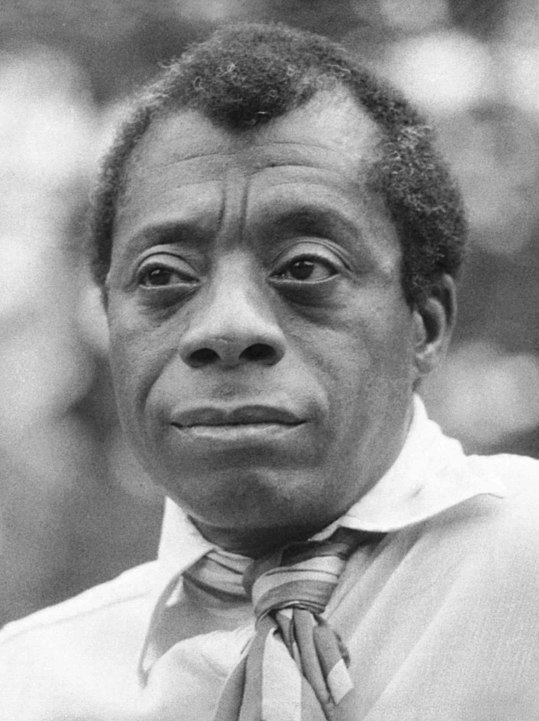
Photo of James Baldwin in  1969
James Baldwin in 1969. Photograph: Allan Warren CC BY-SA 3.0

One of the books I am currently reading is James Baldwin: The Cross of Redemption (Uncollected Writings), edited with an introduction by Randall Kenan and published in 2010. One of the essays in the collection, dated 1984 but still strikingly relevant, is “On Being White … and Other Lies.” A particular passage from that essay stood out to me:

“Just so does the white community, as a means of keeping itself white, elect, as they imagine, their political (!) representatives. No nation in the world, including England, is represented by so stunning a pantheon of the relentlessly mediocre. I will not name names—I will leave that to you.

But this cowardice, this necessity of justifying a totally false identity and of justifying what must be called a genocidal history, has placed everyone now living into the hands of the most ignorant and powerful people the world has ever seen. And how did they get that way? By deciding they were white. By opting for safety instead of life. By persuading themselves that a black child’s life meant nothing compared with a white child’s life. By abandoning their children to the things white men could buy. By informing their children that black women, black men, and black children had no human integrity that those who call themselves white were bound to respect. And in this debasement and definition of black people, they debased and defined themselves.” (The Cross of Redemption, pp. 168–169)

This passage struck me as just as relevant today as it was in Baldwin’s time. The language of racial division may sometimes be more coded—though often, it is not—but the underlying dynamics remain. Some now speak of a mythical golden age to be restored, painting diversity, equity, and inclusion as enemies to be vanquished. Yet Baldwin’s pantheon of the relentlessly mediocre remains firmly in place, with a growing number of elected officials – led by one in particular – who traffic in racial grievance and nostalgia for an edifice of the past that was built upon exclusion. The resentment they cultivate is growing more visceral, more vengeful by the day.

At its core, Baldwin’s essay is a reminder that race is a social construct—one created not out of noble ideals or science but out of moral rot. It was, and remains, a means of defining power and justifying subjugation. Today’s renewed emphasis on racial division in politics—whether explicit or coded—is no less morally bankrupt than in Baldwin’s time.