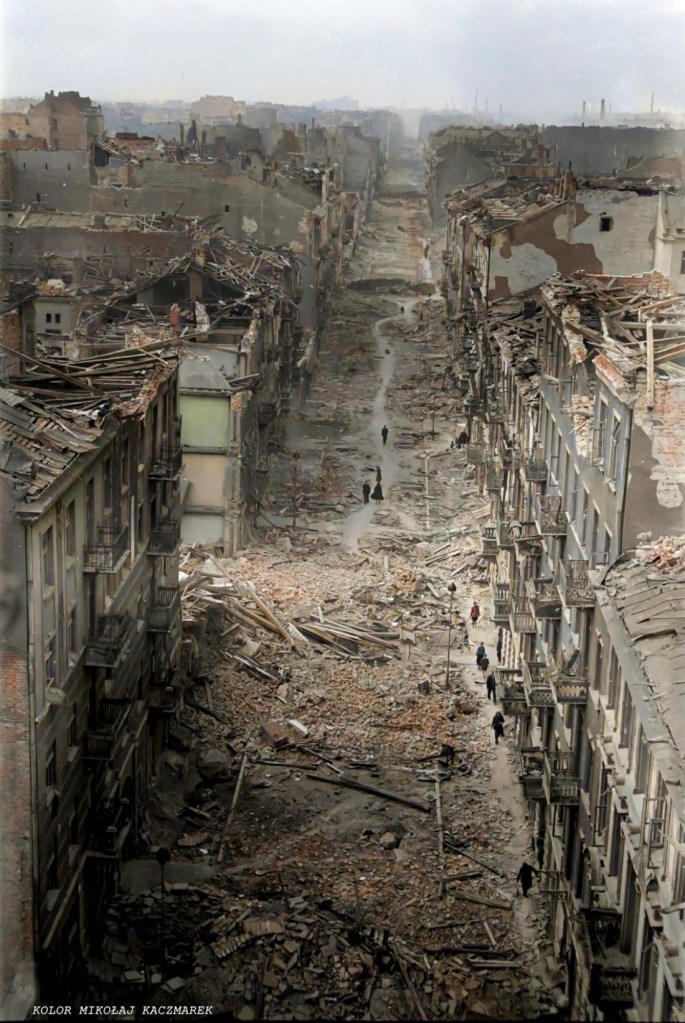
History shows that evil rarely marches under banners we immediately recognize. Too often, it comes draped in righteousness, purity, and fear. This piece is a lament for how easily we have been—and still can be—drawn into the machinery of cruelty.
My Friend, You Were There
My friend, When the Holy Catholic Church, seeking to preserve the Faith in all its radiant purity, instituted the Inquisition, you were there— not as a bystander, but as a willing voice.
You denounced the old widow, who lived alone with her cat. You whispered against the Jewish family— familiar, yet forever marked as other— and gave your assent to their undoing.
You crowded into the square to watch the trials. You sang hymns as the flames crowned their bodies with smoke. You wept tears of joy that the world was made purer that day.
My friend, When the ships came heavy with human cargo, and the auction blocks stained the soil, you were there.
You placed your bids. You weighed their flesh. You wrote the laws that chained their children.
You sang hymns on Sunday, and broke their backs on Monday. You called it providence. You called it order.
My friend, When the traders came with flags and rifles, when the rivers flowed with rubber and blood, you were there.
You signed the charters. You counted the profits. You sold the shackles and the scales.
You called it commerce. You called it destiny.
My friend, When the banners of the Reich unfurled, and the drums of destiny beat their hollow call, you were there.
You shouted with the crowds as glass shattered from shopfronts. You signed the letters, you cheered the laws, you raised your hand high in salute.
You bought the house, the shop, the art your neighbors were forced to leave behind.
You praised the strong hand that swept away the weak. You rejoiced as neighbors vanished, grateful that your streets were made clean.
My friend, When Stalin summoned the will of the people to root out the enemy within, you were there.
You reported the whispered doubts of your cousin, your friend, your brother.
You paraded with red flags while the trucks rumbled into the night. You filled the quotas. You seized the land. You counted the spoils as others disappeared.
You sang of the bright tomorrow as you cast your eyes down and stepped over the absent.
My friend, When Mao lifted the Little Red Book, and the children cried out against their fathers, you were there.
You led the chants. You scrawled denunciations across the walls. You struck the old professor who dared to hesitate. You cheered as the temples fell, and the old poems burned, convinced you were building a paradise on the bones of the past.
My friend, When Pol Pot promised that the fields would bloom with new life, you were there.
You marched the teachers into the paddies. You pointed the rifle. You praised the year zero that would erase the memory of all that came before.
You smiled as the world was reborn in silence.
My friend, When the generals rose in the name of order, when the prisons filled and the stadiums overflowed, you were there.
You nodded at the names. You counted the profits. You watched the blindfolded taken at night.
You called it security. You called it salvation.
My friend, You have always been there.
Only too late did you realize. Only too late did you doubt— but not much.
You fell silent, lest you betray your doubt. You looked away, lest you see.
You told yourself it would be different this time. You told yourself you had learned. But the signs are familiar. The words are familiar. The silence is familiar.
The Disquieting Muses (1916-18) by Giorgio de Chirico (97.16 cm × 66 cm, oil on canvas)
Preface
This poem, Elegy for the Automatons, was inspired by George Packer’s article The Hollow Men, which appeared in the May 2025 issue of The Atlantic. Packer’s article examines the political and moral collapse of certain American officials—Speaker Mike Johnson, Senator Lindsey Graham, and Secretary of State Marco Rubio—who, once defenders of democratic principles, surrendered themselves to the inverted realities demanded by Donald Trump’s authority and his increasingly Orwellian authoritarian state.
Echoing the pivotal scene in Orwell’s 1984 where a Party orator is handed a note and instantly redirects his vitriol toward a different enemy “mid-sentence, without a pause,” Packer documents how key Republican figures performed their own breathtaking reversal on Ukraine policy, and describes how these officials pivoted instantly from celebrating Ukraine’s resistance to Russia’s aggression to denouncing Ukraine as the enemy—all in service to Trump’s shifting personal allegiances and contempt for democratic values.
Packer also invokes Henri Bergson’s insight that the mechanical within the human evokes both laughter and horror. Yet what he describes transcends mechanical reflex: it is the slow hollowing-out of conscience itself. Once-thoughtful men become fluent automatons, mouthing words disconnected from belief, loyalty, or memory.
This poem seeks to render in elegiac form the sorrowful descent of a free polity into ritualized untruth, and the transformation of human beings into instruments of submission.
“We are the hollow men We are the stuffed men Leaning together Headpiece filled with straw. Alas!” — T. S. Eliot, The Hollow Men
Elegy for the Automatons
In the year when the hollowing began, and Orwell’s warning stirred too late, it came not by fire nor iron decree, but smiling, in the face of one man. He bore no heavy crown, no burning sword; only the gift of inversion: truth was a lie, loyalty a whim, freedom the mask of power. A man for whom cruelty was a virtue, and truth a broken toy at his feet; a man who measured loyalty by abasement, and called the strong weak and the weak strong.
Under his gaze, the names of enemies blurred, history curled back on itself like smoke; words, having lost their anchor, floated as banners torn from any mast. And a people once proud of remembering forgot that they had ever known another day.
From this hour of unmooring emerged the hollowing of men.
Johnson, first among the fallen, fumbled for strength among hollow phrases, mouth heavy with the weight of borrowed words. Behind his thickened glass, a flicker died— and he mistook its ashes for light.
Graham, quick to find the favor of the wind, circled the ruin with the laughter of forgetting, shedding oaths like old garments, spinning from vow to vow as a moth to a dying flame, faithless to all but the empty crown of belonging.
Rubio, once proud in the defense of liberty, sank into the yellow chair of forgetting, listening to the slow departure of his own voice. Once he cried for the dignity of nations; now he stitched the banners of surrender with empty hands.
Thus were men unmade, not by terror, nor by war, but by the patient grinding of truth into noise, by the slow machinery of convenience and fear.
And we, who watched, sang no hymns for these men, built no statues to mark their days. They passed like shadows over a broken dial, automatons grinding down the hour, till even the dust forgot their tread.
U.S. Secretary of State Marco Rubio, February 28, 2025 — slipping deeper into the hollowing of the soul.
The Destruction of Leviathan by Gustave Doré (1865)
Author’s Note
This essay, The Void at the Heart, is presented as a contemplative meditation on the moral and spiritual collapse visible in aspects of contemporary governance and public life. It is a deliberately focused reflection, tracing the descent from cruelty in action to the corruption of thought, to the inversion of traditional values, and finally to the eclipse of the soul itself.
This essay may, in future, be expanded into a fuller monograph-length work. Such a work would likely incorporate historical and contemporary examples, address counterarguments, consider cultural issues, and distinguish more sharply between causes and symptoms of decay. For now, however, I offer this essay as a completed meditation in its own right—a starting point for further reflection.
The Void at the Heart
On Cruelty, the Collapse of Reason, and the Eclipse of the Soul
There is a void at the heart of the soul, a place where the ordinary bounds of morality and ethical consideration seem to collapse into nothingness. It is not merely that questionable policies are advanced—that has ever been the case in human governance—but rather that their implementation is accompanied by a conspicuous and grotesque relish for cruelty. Even if one were to suspend judgment upon the legitimacy of the policies themselves, the manner of their enforcement betrays a deeper and more troubling decay: a delight in the infliction of pain.
Deportation of unauthorized aliens, for instance, is not approached as an unfortunate necessity carried out with solemnity and regret. It is heralded as a triumph, an occasion for rejoicing, even as it often rips apart families, sunders years of labor and stability, and leaves children disoriented and/or abandoned. Similarly, the mass termination of public servants and contractors—individuals who dedicated themselves to fields such as public health, education, consumer protection, and law enforcement—is not seen as a sorrowful consequence of political/policy change or fiscal concerns, but is rather celebrated with an air of gleeful vindictiveness. Grants and subsidies intended for the most vulnerable, from students to farmers, are not merely ended; they are rescinded with evident gleeful satisfaction, as though deprivation itself were a moral good.
Even those nearing completion of their educational journeys, standing on the threshold of careers that might benefit society, are not spared. Educational visas are canceled without warning or cause, months or even weeks before graduation. Opportunities are crushed underfoot. Dreams are shattered not as a side effect of some broader administrative goal, but seemingly as an end in themselves, an assertion that the suffering of others is righteous and overdue.
This spirit of cruelty is defended and magnified through a rhetoric that frames suffering as deserved, earned, or insufficiently severe. The pain of others is no longer a regrettable cost, but an instrument of moral theater: those who suffer are cast as villains, their misfortunes paraded as proof of divine or civic justice. In such a worldview, mercy is weakness, empathy is betrayal, and the infliction of pain is a form of virtue.
There is a profound difference between enacting necessary policies with reluctant firmness and celebrating the devastation they cause. A just society may impose burdens, but it ought never to rejoice in doing so. When joy is found in the destruction of livelihoods, when cheers rise at the deportation of neighbors, when applause greets the impoverishment of fellow citizens, something foundational has been lost. The wound is not merely political; it is spiritual.
The embrace of cruelty as a public virtue hollows out the soul of a nation. It numbs the collective conscience, distorts the notion of justice, and substitutes vindictiveness for principle. Over time, the society that delights in the suffering of others does not merely lose its victims; it loses itself. It becomes a cold and pitiless machine, capable of great power but incapable of true greatness, capable of order but incapable of meaning.
If the celebration of cruelty corrupts action and spirit, it inevitably corrupts thought as well. The human mind, which depends upon honesty and openness to discern the world aright, cannot remain untouched by the moral decay of the soul.
The Eclipse of Reason
The celebration of cruelty does not remain confined to the sphere of action; it metastasizes into the realm of thought itself. When a society exalts the suffering of the vulnerable and frames mercy as weakness, it necessarily distorts its ability to process information honestly. Truth ceases to be measured by coherence, evidence, or fidelity to reality. Instead, it is judged by its conformity to the prevailing narratives of contempt, fear, hatred, or greed.
Thus, expertise—whether scientific, legal, historical, or journalistic—is no longer respected as a necessary guide to sound judgment. It becomes suspect by its very nature if it fails to mirror the animosities of the moment. Scientists who warn of ecological degradation, public health crises, or technological risks are dismissed as conspirators or ideologues. Legal scholars who point to constitutional violations or abuses of authority are castigated as partisan agitators. Historians who trace the patterns of injustice, violence, or repression are branded as enemies of national pride. Journalists who seek to uncover uncomfortable truths are denounced as purveyors of “fake news,” their integrity impugned simply because they refuse to tailor their findings to the dominant ideological climate.
The citizenry themselves, infected by the ethos of cruelty, become willing participants in this willful blindness. They refuse to hear, to consider, to weigh, or to deliberate. Instead, they declare all sources outside their ideological fortress to be corrupt, unreliable, or part of some imagined conspiracy. Knowledge itself becomes an object of scorn, and expertise is equated with betrayal. The very faculties that distinguish the informed citizen—the ability to discern evidence, to listen with patience, to reason without rancor—atrophy and are replaced by reflexive suspicion and tribal affirmation.
Orwell, ever the grim prophet, would recognize the phenomenon with bitter familiarity. In his imagined dystopias, the manipulation of language, the corruption of thought, and the triumph of ideology over reality are not the consequences of brute force alone, but of a populace that chooses to believe falsehoods because those falsehoods are more comforting—or more satisfying—than the difficult demands of truth. Ignorance is strength, he wrote, capturing the dark alchemy by which the renunciation of reason is transmuted into a perverse kind of certainty.
It is not merely that ideology colors perception; it replaces perception altogether. Information is no longer evaluated according to standards of credibility or methodology, but according to its utility in reinforcing contempt for the foreigner, the minority, the poor, or the vulnerable. If facts threaten to humanize the other, they are rejected. If scholarship suggests the necessity of compassion or restraint, it is denounced as corruption. Only that which fuels resentment is permitted to be heard; only that which magnifies grievance is deemed “true.”
In such a climate, dialogue becomes impossible. The very idea of dialogue presupposes a willingness to listen, to admit complexity, to concede error. But where cruelty reigns, these are forbidden virtues. In their place stand slogans, shouted endlessly into a void that no longer seeks understanding but only echoes its own bitter triumphs.
In such a climate, governance itself grows chaotic and erratic, not by accident but by design. Policies are proclaimed and abandoned with little coherence; programs are implemented or canceled with open disregard for planning, expertise, or consequence. The instability is treated not as a failure, but as a virtue: a sign of disruption, toughness, authenticity. Yet beneath the slogans, the disorder corrodes trust, hollows out institutions, and leaves citizens adrift in a landscape where no promise endures and no framework holds. It is a cruelty not merely of action, but of confusion—a destabilization that magnifies alienation and feeds the collapse of both thought and community.
Yet even this collapse of thought is but a precursor to a deeper betrayal: the corruption of the very values that once defined and ennobled a people.
The Inversion of Values
As cruelty becomes a public virtue and ideology supplants reason, the final and most insidious transformation takes place: the subversion and inversion of traditional values themselves. The outward forms and labels of religion, civic duty, and ethical conduct may be preserved, but their substantive meanings are hollowed out and replaced by their very opposites. Language itself is corrupted; words once signifying aspiration, mercy, and justice now serve as empty vessels, bearing meanings recognizable only as antonyms of their epistemological truths.
Faith, once the call to humility before the divine and charity toward one’s fellow man, is distorted into a weapon of exclusion and punishment. Love of neighbor becomes conditional, subject to ideological conformity; compassion is reserved for the in-group alone, while hatred of the stranger is sanctified as a form of righteousness. The prophets and founders who once preached repentance, mercy, and love are invoked by those who trample upon their teachings, their sacred words reinterpreted to bless cruelty as strength and vindictiveness as virtue.
Civic values fare no better. Patriotism, once the measured love of one’s country expressed through service, sacrifice, and the protection of rights, degenerates into a shrill and defensive chauvinism. The rule of law, once understood as a shield for the weak and a restraint upon the strong, is twisted into a blunt instrument to punish enemies and protect the powerful. Freedom, once the delicate balance between personal liberty and communal responsibility, is redefined as the license to oppress, to dominate, to revel without shame in the suffering of others.
Even the ethical precepts that ground common life—the golden rule, the dignity of work, the sanctity of truth—are inverted. Do unto others becomes do unto others first, lest they do unto you; the dignity of labor is reserved for some and withheld from others based on arbitrary categories of race, origin, or ideology; truth itself becomes malleable, no longer a standard to which men must conform, but a tool to be wielded, bent, or abandoned as expediency demands.
In this bleak mirror-world, tradition becomes little more than pageantry—a hollow ritual masking a profound spiritual betrayal. The ancient words are mouthed, the venerable ceremonies performed, but their meaning is lost. Their light has been inverted into darkness, their call to transcendence replaced by a shout of tribal triumph. What was once sacred has become profane, and the keepers of the tradition are blind to their own apostasy.
Yet the descent does not end even there. It reaches further downward, to the degradation of the individual soul itself.
The Final Descent
Ultimately, the mind infected by cruelty and blinded by ideology forgets how to think, how to reason, how to love. The soul, once the wellspring of compassion, imagination, and truth-seeking, is lost. What remains is a hollow creature, a being still outwardly human but inwardly diminished, descending toward an animalistic existence governed only by base and grotesque instincts.
No longer illuminated by the light of reason, no longer stirred by the love of others or the awe of the divine, such a being reverts to the raw appetites of dominance, fear, rage, and self-preservation. The faculties that once elevated humanity—the search for truth, the capacity for self-sacrifice, the impulse toward mercy—atrophy and rot. What once distinguished man as a creature formed in the image of the divine is obscured beneath layers of suspicion, resentment, and brutality.
In such a state, crassness replaces dignity, and rudeness masquerades as strength. The subtleties of manners, the graces of dialogue, and the silent obligations owed to neighbor and stranger alike are discarded as burdensome relics of a now-despised civilization. Material success becomes the sole remaining measure of worth, and individual gratification the only recognized good. The broader community—once the nurturing ground of the self—becomes either invisible or hostile, perceived only as an impediment to personal appetite or ambition.
Alienation takes root, first unnoticed, then unchallenged, feeding upon itself. Having severed the ties that bind individuals to each other through mutual respect, shared memory, and common purpose, society decays into a landscape of lonely, embittered selves, suspicious of all and merciful to none. This alienation colors every interaction with a thin, toxic miasma: a pervasive bitterness, a readiness to assume the worst, a ceaseless litany of grievance against an imagined host of enemies.
The community, too, begins to crumble. No society can endure when its members are ruled by suspicion rather than trust, hatred rather than fraternity, cruelty rather than justice. Institutions falter, not because they are attacked from without, but because the very spirit that once animated them has fled.
Yet the gravest tragedy is not merely societal collapse, but the debasement of the individual soul. Each man or woman who abandons thought for slogan, love for contempt, truth for expedience, does more than wound the body politic; they desecrate the image of the divine that resides within.
Thus, the moral and ethical void at the heart of the soul becomes complete. And from that void, no nation, no civilization, no human heart emerges unscathed.
Epilogue: The Faint Memory of Light
Yet even amidst the ruin, a faint memory endures.
The divine image, though battered and obscured, is never wholly extinguished. Buried beneath the ash of cruelty and the rubble of falsehood, there remains a spark—a silent witness to the soul’s higher calling. It is not easily rekindled. It demands humility where pride has reigned, mercy where vengeance has triumphed, courage where fear has prevailed.
The path back is arduous and uncertain, for it requires the infected soul to remember that it has forgotten; it requires a people to repent not merely of actions, but of the passions that animated them. It requires that tradition be not merely repeated but restored, that truth be not merely spoken but once again loved, that reason be not merely used but honored.
If such a reawakening is to come, it will come quietly at first, as all true renewals do—not in thunderous proclamations, but in the whispered refusal to hate, the silent act of mercy, the solitary pursuit of truth in a world grown hostile to it. From these small and stubborn acts, unseen and unsung, a civilization might yet be reborn.
But if not, then the void will deepen, and the ruins will spread, and future generations will wonder at how lightly men once abandoned what was most precious: not wealth, nor power, nor comfort, but the light of mind and soul that marks the human being as more than a beast among beasts.
The choice remains, as it always has, hidden in the quiet precincts of each heart.
In The First Why, I sought to explore the sacred trembling of humanity’s earliest question—the moment when consciousness dared to disturb the hush of creation. There, I argued that the act of questioning was not a fall from grace, but the beginning of wisdom, the awakening of wonder, and the first movement toward meaning.
This essay, The Second Why, turns from the theological to the historical, the philosophical to the political. It examines the ancient and recurring pattern by which those in authority, threatened by the murmur of the question, have sought not merely to answer but to silence it—sometimes by exile, sometimes by imprisonment, sometimes by death, and sometimes by the corrosion of meaning itself.
If The First Why was the breath before the question, The Second Why is the cost of speaking it aloud.
William Blake, The Ancient of Days (1794), frontispiece to Europe a Prophecy: a vision of creation measured, and mystery confined.
I. The Question That Threatens
In the hush before thought, in the stillness before speech, there stirred a murmur—the first Why.
In The First Why, I sought to explore that primal trembling: the moment when consciousness first turned inward upon itself and outward upon the world, daring to ask what had not been asked. Yet if that first question marked the birth of wonder, it also, inevitably, sowed the seeds of fear. For in every age thereafter, those who have sought to guard power have found their greatest threat not in armies nor in weapons, but in the fragile, defiant utterance of the questioner.
Throughout history, the act of questioning—not the conclusions it might yield, but the mere audacity of inquiry—has been regarded by authority as a mortal transgression. Again and again, societies have answered the quiet and insistent “Why?” with the grim decree: “Thou shalt surely die.” Whether whispered in the Athenian marketplace, charted among the stars, recorded in forbidden books, or muttered in the corners of censored universities, the question has been met with exile, imprisonment, silencing, and execution.
The pattern is ancient and unrelenting. Socrates, forced to drink the hemlock; Galileo, commanded to renounce the stars; the Inquisition’s pyres; the Nazi bonfires of thought; the gulags swallowing dissenters; the purges and bans now rising anew in the name of security, patriotism, or purity. In every case, the underlying offense is the same: the refusal to leave the hush undisturbed.
In what follows, I will trace the political, historical, and theological burden borne by those who dare to ask. For the suppression of the questioner is not merely an incidental cruelty, but the essential mark of an authoritarian impulse. To disturb the hush is to call into doubt the inevitability of power, the permanence of truth, the sanctity of the given order. Thus, the first Why was not merely a beginning. It remains a perpetual provocation—an act of revolution still echoing, and still condemned, across the centuries.
II. Historical Pattern: The Death Sentence for the Questioner
The history of civilization is marked not only by the questions that advanced knowledge, but by the relentless attempts to silence those questions and destroy their askers.
Socrates, that midwife of inquiry, was sentenced to death not because he espoused a particular heresy, but because he taught the youth of Athens to question the established wisdom of the city. His crime, ultimately, was to disturb the hush.
Galileo, peering through a telescope toward the stars, disturbed a cosmic silence maintained by theological decree. It was not heliocentrism itself that threatened the authorities—it was the precedent that nature, rather than authority, might answer the question.
The Inquisition institutionalized terror against those who inquired beyond the sanctioned bounds, who sought to hear a different resonance in scripture or reason.
The Nazi regime, recognizing the existential threat posed by free inquiry, did not merely censor books—it burned them, seeking to annihilate the memory of questioning itself.
The Soviet Union consigned dissenters to gulags not because their ideas were dangerous in themselves, but because their questioning undermined the infallibility of the Party’s pronouncements.
From the gulags of the Soviet Union, the pattern unfurled still further eastward.
In Maoist China, the Cultural Revolution unleashed an orchestrated assault on memory and inquiry: libraries ransacked, teachers denounced, ancient traditions obliterated in the name of ideological purity.
Today, under the reign of Xi Jinping, that spirit persists: a resurgence of suppression masquerading as stability. Re-education camps, purges of dissenters, the silencing of Tibetan voices, the systematic erasure of Uyghur culture—all stand as testament that the death sentence for the questioner is not an artifact of the past but a method renewed in our own day.
Nor is this pattern confined to other shores.
In contemporary America, the same ancient reflex stirs. Books are banned from public libraries under the guise of protecting the young; universities face funding threats unless they conform to ideological demands; scientific research in fields such as climate change and public health is censored, altered, or silenced.
The Department of Defense has scrubbed the achievements of minority service members—Tuskegee Airmen, Navajo Code Talkers, Medal of Honor recipients—from public websites, erasing memory itself in service of a homogenized narrative. Students at Pentagon-operated schools have sued for the restoration of forbidden books and histories, fighting against the burial of truth.
The administration has attacked the free press, threatened the licenses of broadcasters who report unfavorably, and sought to strip public media of its funding.
At the same time, Diversity, Equity, and Inclusion (DEI) initiatives have been dismantled across the federal government, corporations, and law firms—silencing efforts to reflect a fuller human story.
This temptation is not confined to any one nation or ideology. Across Latin America under military juntas and authoritarian leaders, across the Middle East under rigid theocracies, across Africa under autocratic regimes, the suppression of questioning has reappeared, adorned in different garments, but always driven by the same ancient fear.
It is not a flaw of one party or one epoch. It is a perennial temptation: the temptation of all power to silence what it cannot control.
III. The Keepers of the Keys: Monopoly of Truth and the Death of the Question
Yet the suppression of questioning is only part of the authoritarian project. Its deeper ambition is the monopolization of truth itself.
Authority, when it turns tyrannical, declares not merely that certain questions must not be asked, but that the answers have already been determined, possessed, and sealed.
The rulers, the priests, the inquisitors, the commissars—each claims the sacred keys: the key to salvation, the key to justice, the key to moral righteousness. Good becomes what they pronounce; evil becomes what they forbid.
There is no longer a living search for meaning—only a mandated adherence to the truths held by the gatekeepers.
To question is not simply to err; it is to betray the natural order as they have defined it.
This monopolization is rooted not merely in political expediency but in an ancient theological distortion. In the story of Eden, as handed down by scribal hands shaped by authority, the knowledge of good and evil—the living tension of discernment—is forbidden. The human capacity to navigate complexity is recast as sin; the hunger for understanding becomes rebellion.
Thus the pattern is sanctified:
Only those who possess the keys may speak.
Only those who serve the keepers may think.
The rest must accept silence or accept exile.
Interlude: The Flattening of Knowledge—From Merism to Dualism
In the ancient myth, the Tree offered not a simple dichotomy but a totality: the knowledge of good and evil—the full sweep of moral discernment, the wholeness of moral understanding.
This fullness, this richness, could not be tolerated by those who would rule. Thus the merism was flattened into dualism: Good became what the rulers commanded; evil what they condemned.
The tree of knowledge was not destroyed; it was redefined.
The living dynamic of discernment was replaced with dead certitude.
The gift of discernment became a forbidden fruit.
The complexity of moral vision was narrowed to the dictates of authority.
Thus was the wonder of knowledge itself corrupted, stripped of its vitality, pressed into the service of domination.
IV. The Usurpation of Wonder: Authority’s Theft of Creation
In suppressing the question, in flattening knowledge, and in monopolizing truth, the authoritarian spirit commits not merely political crimes but spiritual ones. It usurps the wonder of divine creation itself.
Creation was never intended as a dead thing, frozen into rigid forms. It was meant as a living, breathing mystery—an invitation to seek, to discern, to wonder.
By claiming sole possession of truth, by forbidding inquiry, authority places itself above the living act of creation, mocking and profaning it. It substitutes its brittle edicts for the breathing Word; it erects idols of certainty in the place of the living search for truth.
Thus, the authoritarian repeats the ancient blasphemy:
Denying the image of God in the questioner,
Denying the breath of the Spirit in the seeker,
Denying the sanctity of wonder.
To defend the right to question is therefore not merely a political duty. It is an act of fidelity to the structure of creation itself.
V. Silencing the Search, Silencing the Finding
Authoritarianism, in its most persistent form, does not merely seek to silence answers it dislikes. It seeks to silence the very act of searching.
The question, the seeking, the wondering—these are intolerable because they suggest that truth is not yet fully possessed, that knowledge is not complete, that authority is not absolute.
Thus, authoritarian power strikes first at the searchers: the scientists, the philosophers, the journalists, the seekers of every kind.
Yet where seekers persist, and truth is found despite them, the authoritarian hand strikes again—this time at the truth itself. Inconvenient findings are erased from records, public data is withdrawn from view, scientific reports are rewritten to serve political ends.
The silencing extends from the human act of questioning to the very realities those questions uncover.
So it has come to pass in our own time: climate science censored, health research distorted, public knowledge reshaped not by the unfolding of discovery but by the fiat of rulers.
In this, the authoritarian spirit reveals its deeper fear: not merely that questions might arise, but that truth might emerge—and stand beyond its grasp.
VI. The Collapse of Meaning: When Words Are No Longer Words
Perhaps the most chilling expression of authoritarianism is not the silencing of speech but the disintegration of meaning itself.
When a government refuses to comply with a Supreme Court order—one plainly written, unambiguous in its demand—by claiming that it does not say what it says, we enter a realm beyond censorship. We enter a space where words no longer signify; where legal language is emptied of content and refilled with the will of power.
This is not merely a constitutional crisis. It is a metaphysical one.
The shared meanings that allow a society to function, to reason, to hold power accountable—these are dissolved.
And in their place arises a new doctrine: that truth is not what is said, but what the ruler claims was meant.
In such a world, there are no longer laws—only declarations. No longer language—only slogans. No longer truth—only the assertion of power over meaning itself.
VII. The Eternal Struggle to Disturb the Hush
The first Why was not a mistake. It was the beginning of the journey, the necessary shattering of silence, the first movement toward wonder.
Those who fear the questioner seek to stop the world from becoming, to freeze it into the shape of their own certainties. They usurp creation itself, not out of strength, but out of terror—the terror that their towers of power might crumble under the lightest whisper of a question.
Yet not all authority need fear the question. Rightly ordered authority—whether of parent, teacher, judge, or priest—can nurture questioning, guiding it without silencing it, guarding freedom without abandoning wisdom.
It is not authority itself that is the enemy of the question, but the corruption of authority into the idolatry of its own certainty.
Nor is the impulse to question so easily extinguished.
Though libraries burn, though words are twisted, though questioners are exiled or slain, the Why rises anew. It survives in secret conversations, in hidden manuscripts, in the defiant wonder of each generation that refuses to accept silence as its inheritance.
To ask Why is to affirm the livingness of being.
To defend the questioner is to defend creation.
To disturb the hush is to proclaim that the world is not finished, that meaning is not the possession of the powerful, that wonder still breathes.
The light shines in the darkness, and the darkness has not overcome it. (John 1:5)
Recently, I published an essay titled The Certainty of Wealth Redistribution Amid Tariff Chaos, in which I argued that the true function of the current administration’s tariff policies was not economic revival, but the deliberate and predictable transfer of wealth from working households to the uppermost tier of financial elites.
Events of the past several days—culminating in imposition of a market-crashing tariff decree swiftly reversed for maximum opportunistic gain—have confirmed my worst fears. That some now praise this spectacle as “brilliant” only adds insult to economic injury.
In response, I offer the following satirical memo from a fictional Wharton Annex ethics professor—one Professor Basil P. Whisker, Chair of Ethical Opportunism at the Weasel School of Business. His observations regarding the situation and the logic he embodies—even though he is fictional—are uncomfortably real.
Professor Basil P. Whisker
On Ethics, Market Manipulation, and the Power of Praise
Buy the Dip, Praise the Dipper: A Wealth Transfer Playbook
By Professor Basil P. Whisker, PhD, MBA, CFA (Parole Honoré Distinction) Chair of Ethical Opportunism, Weasel School of Business, Wharton Annex Formerly of the Federal Correctional Institute for White Collar Refinement “Our Honor Code is Flexible. Our Returns Are Not.”
Some in Congress have raised the unfashionable concern that the recent tariff saga looks suspiciously like market manipulation.
To which I reply: Of course it is. But for whom?
Not the little people—they lack both the reflexes and the capital reserves. No, it is for the elite few trained in the disciplines of anticipation, flexibility, and pliable morality.
At the Weasel School of Business, we teach that ethics must be nonlinear and dynamic—responsive to the moment, like high-frequency trading algorithms or a presidential memory when questioned under oath. The recent 90-day tariff “pause” (following a dramatic market collapse) teaches students everywhere that sometimes the most profitable thing to do is to:
Create a crisis
Seize the resulting dip
Declare victory through reversal
Congratulate the disruptor for his “brilliance”
Move on before the subpoenas arrive
The Art of the Non-Deal
When a policy announcement wipes trillions from the markets, only to be reversed days later with a triumphant “THIS IS A GREAT TIME TO BUY!!!” post, we must acknowledge we are witnessing not governance but performance art.
Like all great art, it asks difficult questions:
Is it market manipulation if you announce the manipulation in real time?
Can one declare “Liberation Day” and then liberate oneself from that declaration?
If financial whiplash creates billionaire gratitude, is it still whiplash—or merely strategic spine realignment?
Billionaires praising such tactics is not sycophancy—it is advanced portfolio management by other means.
As we say in Weasel Finance 101: “Praise is just another form of leverage.”
Looking Ahead: A Curriculum of Chaos
We are entering a new phase of global commerce—what I call the Era of the Glorious Lurch. In this new age, tariffs are not policies but market mood regulators, deployed tactically to evoke loss, recovery, and eventual Stockholm syndrome-like gratitude.
My revised syllabus for the coming semester will include:
Advanced Self-Dealing (OPS-526)
Narrative Arbitrage: Writing History Before It Happens (OPS-618)
Strategic Sycophancy and Influence Leasing (co-listed with Communications)
Tariff Whiplash: Creating Wealth Through Vertigo (OPS-750)
When Textbooks Fail: The Art of the No-Deal Deal (Senior Seminar)
Applications are open. Scholarships available for those with prior SEC entanglements or experience declaring “everything’s beautiful” while markets burn.
A Word on Timing
Critics who suggest that one should wait until an actual deal is struck before declaring brilliance simply do not understand modern finance.
In today’s economy, praise is a futures contract—you are betting on the perception of success, not success itself.
When a policy costs the average American household thousands in higher prices and market losses, only to be partially reversed with no actual concessions gained, the correct reaction is not analysis but applause. After all, it takes real courage to back down without admitting it.
A Final Toast
To the president, I raise a glass of vintage tax shelter with notes of plausible deniability.
To the billionaires celebrating the “brilliant execution” of a retreat, I offer a velvet-lined echo chamber.
And to my students, past and future, I remind you: If you cannot time the market, at least time your praise.
Because in today’s economy, there is no such thing as too soon, too blatant, or too obviously beneficial to the 0.01%.
So next time markets plunge on policy chaos, do not ask “who benefits?” Instead ask, “am I positioned to be among those who do?”
Thank you. And as always— buy low, tweet high, and declare victory before the facts catch up.