Epic of Gaza

Proem

Weep, Angelic Host—sentinel Cherubim, laudific Seraphim—weep,
Recall, O Memory, the deeds of men most mean, their bitter striving;
Of those whose wrath, though born of dust, consumed the fields of nations,
Whose hands, unclean with envy, loosed the cry of widows and orphans.
From their hearts rose pride, and with their pride came hunger unbounded,
Till hearth and altar alike lay broken, the ploughshare shattered,
And souls unnumbered went down to the shadowy regions,
Leaving their fathers bereft, their children untended, their homes in ashes.

Thus was the earth made desolate, and Heaven itself grew weary;
For even the Seraphim, laudific, grew silent in their praising,
And even the Cherubim, sentinel, let fall their flaming vigil.
Yet still, O Memory, sing on, that generations yet unborn may tremble,
Lest pride unmeasured, and meanness cloaked in strength, rise once more,
And angelic hosts be called again to witness man’s undoing.


Gaza Before the Storm

Remember first how Gaza stood beside the ancient sea,
Her markets bright with oranges, her harbors filled with song,
Where fishermen cast nets at dawn, and children ran the shore,
And olive groves grew silver-green beneath the turning seasons.
The Great Omari lifted high its Byzantine dome,
Saint Porphyrius kept its vigil, fifteen centuries strong,
And in the evening hour of prayer, a thousand minarets
Sent voices skyward, weaving threads of worship into twilight.

Here was a city rooted deep, her stones drunk full of time,
Her people bound by blood and earth to this small patch of shore.
The old men sat in coffee shops, playing backgammon and speaking
Of harvests past, of children grown, of peace that might yet come.
But Memory keeps what was, before the storm clouds gathered,
Before the sky grew dark with iron, and the earth with ashes.


Gaza Besieged

Hear now, O Memory, after the angelic cry, the tale of sorrow:
How wrath was loosed upon Gaza, the walled and crowded city,
Where children clung to their mothers, and fathers kept vigil in hunger,
And the streets ran red with fire, the stones made to weep with blood.

For men most mean, in pride unmeasured, cast down their anger,
And the sky, once blue with doves, grew black with the smoke of ruin.
Hospitals groaned with the wounded, mosques lay shattered in silence;
The cry of the muezzin was drowned by the thunder of iron.
Women lifted their arms to heaven, crying for justice;
Infants wailed without milk, and the wells ran red with despair.

Thus did Gaza endure, as Ilium once by the Scamander,
A city besieged, its name to be sung in lamentation.
Yet not Troy alone, but Sarajevo’s bitter winters,
Stalingrad’s rubble, Warsaw’s ghetto walls—
All cities that have tasted wrath speak Gaza’s name as sister.


Catalogue of Grief

Sing the children whose laughter was severed in silence:
Sing Amal, whose curls were bright as dawn, now dust-shrouded;
Sing Yusuf, who carried a ball through the alleys, forever stilled;
Sing Miriam, with eyes like lamps, closed by the weight of rubble;
Sing Omar, who drew birds in the sand, his small hands silenced;
Sing Laila, who danced to her grandmother’s songs, now voiceless;
Sing Ahmed, six years old, who asked why the sky was angry.
These were the blossoms cut down, their springtime denied them,
Their games unfinished, their dreams unspoken, their tomorrow stolen.

Sing the mothers, whose voices rose in lamentation:
Sing Layla, who cried to the heavens, clutching fragments of cloth;
Sing Hanan, whose arms grew empty, rocking the air with sorrow;
Sing Fatima, who counted days by her children’s breathing;
Sing Mariam, who sang lullabies to graves of stone.
They were the pillars broken, their wombs turned to tombs of memory,
Their milk dried up, their cradle songs transformed to keening.

Sing the fathers, silent with grief, their faces carved from stone:
Sing Khalid, who once ploughed fields, now sifts through the ruins;
Sing Samir, who carried no sword, yet bore the weight of the fallen;
Sing Mahmoud, whose hands built homes, now dig for his buried;
Sing Hassan, who taught his son to read, now reads only headstones.
They were the oaks uprooted, their roots torn from the soil,
Their strong backs bent, their protecting arms made powerless.

Sing the city herself, Gaza, heart of the seashore:
Streets that once bustled with trade, now choked with ashes;
Mosques that lifted their domes to heaven, now shattered and open;
Hospitals that groaned with the wounded, their floors awash in blood;
Schools where children learned their letters, now rubble and memory;
Markets where oranges gleamed like suns, now dust and silence.
Gaza endures, yet her breath is ragged, her beauty in ruins.


The Heroes of Gaza

Yet sing also those who stood against the storm:

Sing Dr. Hussam, who would not leave his patients,
Operating by candlelight when the power failed,
His hands steady though the building shook with bombs.

Sing Mama Zahra, ninety years old,
Who sheltered twelve children not her own,
Sharing her last crust of bread among them,
Singing them to sleep with ancient lullabies.

Sing the teacher Amjad, who carved lessons in the dust,
Teaching children their letters beneath the rubble,
That learning might not die with the schools,
That hope might live though hope seemed dead.

Sing the young father Rashid, who dug with bloodied hands
For seventeen hours to free his neighbor’s child,
Though his own house lay in ruins,
Though his own losses called him home.

Sing the nurse Amal, who walked three miles each day
Through streets of glass and metal,
Carrying medicine to the wounded,
Her white coat bright as a flag of mercy.

These were the lights that would not be extinguished,
The flames that burned when all else was darkness,
The proof that goodness lives even in Hell,
That humanity endures though inhumanity rage.


The Silence of Nations

Yet where were the nations when Gaza called for aid?
The mighty kingdoms sat in their towers of glass,
Counting their gold, weighing their alliances,
While children starved beneath the rubble of their homes.

Some sent words like empty vessels, hollow condolences,
Others turned their faces away, as if not seeing
Could make the screaming stop, the dying disappear.
The halls of justice echoed only with procedure,
While Gaza bled, and Memory wrote their shameful silence.

Even the sea turned bitter, tasting ash and sorrow,
And dolphins fled those waters where the harbors burned.
Only the wind remained faithful, carrying the cries
Across the world, though men stopped up their ears
And closed their eyes, and voted for blindness.


Wrath of the Aggressors

Yet grief alone is not the tale, but wrath that bred it.

For men most mean, enthroned in pride, decreed destruction:
The Stone-faced King, whose tongue was sharpened with iron,
Who called fire down from heaven, and loosed it on the helpless.
The Golden-Maned Ruler, who sat upon distant waters,
Sending arms and gold, as though to purchase silence;
He bore the name of peacemaker, yet his hands were heavy with blood.

These were the princes of the age, their counsel clothed in falsehood,
And their decrees were bitter, sowing ashes in the earth.
They spoke of safety while they sowed destruction,
Of defense while they dealt death to the defenseless.
Their words were honey, but their works were gall,
And History will write their names in letters black as smoke.


The Voice of Gaza

Yet not in silence did Gaza bow, nor wholly in despair.
From the ruins rose a voice, steadfast as stone in the storm:

“We are the living, though the dust has covered our faces.
Our children sleep in the earth, yet their names burn bright as stars.
Break our houses, yet from rubble we rise speaking;
Cut down our olives, yet new shoots crack the stone.

You call us shadows, yet we cast longer darkness
Than your towers, and our darkness teaches light.
You name us forgotten, yet Memory keeps us close,
And angels inscribe our suffering in letters of gold.

Count our dead if you can number the grains of sand;
Measure our sorrow if you can drain the sea.
We have drunk deep of anguish, yet we are not broken;
We have walked through the valley of death, yet we breathe.

O sons of men most mean, your wrath is but smoke on the wind.
You have the fire, but we have the ashes, and ashes endure.
You have the sword, but we have the word, and the word is eternal.
Know this: though you bury us, we shall rise in the telling,
For the earth itself whispers our names, and will not forget.

And if the nations turn their faces away, still we stand,
For Gaza is not undone, though her walls lie fallen.
We are the olive trees that grow from stones,
We are the songs that survive the singers,
We are the light that shines in darkness,
And darkness has never overcome us.”


The Desecrations

Nor were the sanctuaries spared, nor the places of the Most High.
The destroyers struck at temples, their minarets broken in silence;
They shattered the churches, where lamps once trembled in vigil,
Icons dashed in dust, crosses cast down in fire.
Thus was prayer silenced, whether in Arabic chant or in hymnal;
The faithful fled, yet the stones themselves groaned in lament.

And the olive trees, those elders of the earth, were uprooted;
Ancient roots torn from soil that had drunk the blood of generations.
Branches once heavy with fruit lay scorched upon the ground,
And the groves, where fathers had walked with their sons, stood barren.
No psalm was heard, no murmur of leaves in the evening;
Only the wind through ruins, whispering sorrow to heaven.

Even the dead found no peace in their appointed places;
Graves were torn open, bones scattered to air,
Ancestors made homeless, their rest disturbed.
For wrath respects neither the living nor the sleeping,
Neither the newly born nor the long-buried,
Neither the sacred nor the profane.


Catalogue of the Broken Sanctuaries

Sing the names of holy places undone:
The Great Omari Mosque, Byzantine-born,
Heart of Gaza’s Old City, December-felled;
Saint Porphyrius, fifth-century stone,
Twice-struck shelter, sixteen souls entombed beneath its ancient walls.

Khalid bin al-Walid Mosque, November’s ruin,
Al-Riad Mosque, March’s bitter fall,
Bani Saleh Mosque, August’s dust,
Yassin Mosque, struck in al-Shati’s crowded camp,
Ibn Uthman too, its centuries silenced.

Count them: of twelve hundred and forty-four mosques,
More than a thousand scarred by fire and iron,
Nine hundred leveled utterly, their prayers cut short,
Their faithful scattered like leaves before the storm.

Graveyards forty out of sixty struck,
Twenty-two erased from the earth,
Bones scattered to air, ancestors made homeless.
Palaces broken, markets burned, bathhouses unroofed,
Even Anthedon Harbor, Roman gateway, flattened into the sea.

Museums looted, libraries obliterated,
Memory itself made to bleed, the archives set aflame.
For they would kill not only the living,
But the memory of the living,
The records of their being,
The proof they ever were.


The Lamentation Chorus

The Mothers of Gaza cry:
“O children, blossoms cut before the fruit,
We held you in our arms, now we hold only ashes.
Your laughter is buried beneath the stones of our city,
And our breasts are dry, our songs turned into wailing.
Yet still we sing your names like prayers,
And still we dream your dreams unfinished.”

The Fathers of Gaza groan:
“Our fields are ruined, our ploughs shattered,
The olive trees uprooted, the roots torn from the soil.
We walk among graves unguarded,
Where bones lie scattered, denied even silence.
Yet still we remember the taste of our olives,
And still we plant hope in the ashes.”

The Faithful lament:
“Where are the mosques that once trembled with prayer?
The Great Omari lies fallen, Ibn Uthman silenced,
Saint Porphyrius struck, its saints entombed anew.
Our lamps are dark, our chants broken in the smoke.
Yet still our hearts are temples,
And still our prayers rise to heaven.”

The Children’s Voices rise:
“We who were silenced while learning to speak,
We who were buried while learning to walk,
We who were taken while learning to love—
We are not gone, though our bodies lie broken.
We live in the tears of our mothers,
We live in the dreams of our fathers,
We live in the songs that remember us,
And death has no power over song.”

The Angels answer:
“We weep with you, O Gaza;
For sentinel Cherubim have loosed their flaming swords in sorrow,
And laudific Seraphim, once ceaseless in praise,
Cover their faces in grief, and their hallelujahs are hushed.
Yet know that every tear is counted,
Every name is written in light,
And what was destroyed on earth
Stands whole in the halls of eternity.”

The Chorus of Gaza cries together:
“Who shall remember us if not the stones?
Who shall keep our names if not the dust?
If the nations turn away their eyes,
Then let the heavens bear witness, and let Memory sing forever.
For we are Gaza, and Gaza endures,
We are the voice that will not be silenced,
We are the story that must be told,
We are the love that conquers death.”


Catalogue of the Slain

Sing, O Memory, of the dead, the multitude unnumbered,
For Gaza has given sixty thousand souls and more to the grave.
Not warriors alone, but children in their play,
Mothers in their shelter, fathers in their vigil,
The aged bent with years, the newborn scarcely named.

Count fifty-eight thousand more wounded,
Their bodies torn, their spirits scarred in silence.
Two thousand struck while seeking bread,
Gathering in hope of relief, yet felled by fire.
Three hundred perished of hunger, seven and ten children,
Their lips dry, their bellies hollow, their cries unheard by the nations.

Even when truces were spoken, the killing continued,
Ten thousand more consumed like chaff in flame.
Who can reckon those incinerated, buried under stone and steel,
Whose names are known only to God,
Whose faces are forgotten by man
But remembered by eternity?

A leaked report from the destroyer’s own hand
Confessed the truth they would hide:
Four of every five were innocents,
The harmless marked as enemies,
The helpless slain as foes.
Thus did wrath devour the lambs of Gaza,
And the angels wept, inscribing their names in light.


The Judgment of Yahweh

Then did the heavens part, as once above Sinai,
And Yahweh Himself descended, wrapped in cloud and flame,
The Ancient of Days, whose voice shook the foundations,
Before whom cherubim veil their faces, and seraphim fall silent.

He brought forth the scales of ultimate justice,
Vast as the firmament, terrible as truth,
And weighed the works of men most mean:
Their bombs and decrees, their gold and iron,
Their speeches of defense while dealing death.

“I have seen this before,” spoke the Voice that split the Red Sea,
“The marking of a people for destruction,
The sealing of their fate in chambers of decision,
The systematic starving, the calculated killing.
Did I not hear the cry from burning ghettos?
Did I not see the smoke from crematoria?”

In the other pan He placed Gaza’s slain,
The bones of children, the tears of mothers,
And with them, the ghosts of all genocide’s victims—
Warsaw and Treblinka, Armenia and Rwanda.

The scales tilted under genocide’s weight,
And the voice of the Almighty thundered:

“Genocide! I name it what it is.
You who survived the furnaces of Europe,
How could you kindle furnaces for others?

I am the God of Abraham, Isaac, and Jacob,
But I am also the God of Hagar and Ishmael.
I freed slaves from Egypt,
But I will not bless those who enslave others.

These deeds are genocide, and I have weighed them.
These rulers stand condemned, their glory is ash.
Justice will come, though justice tarry long,
And every tear will be counted,
Every life will be avenged.
Genocide!”


The Promise of Memory

Yet this is not the end, O sons of earth,
For Memory does not merely mourn but promises.

As from the ashes of the phoenix rises flame,
As from winter’s death comes spring’s green resurrection,
So from Gaza’s anguish shall come forth
A testimony that shall not be silenced.

The children who were slain shall live in song,
The mothers who were silenced shall speak through poetry,
The fathers who were broken shall stand tall in story,
And Gaza herself, though wounded, shall endure
Until justice rolls down like waters,
And righteousness like a mighty stream.

For this is the promise Memory makes:
That suffering witnessed becomes sacred,
That innocence destroyed becomes indestructible,
That love murdered becomes immortal,
And truth, though buried, always rises.


Epilogue

So sing, O Memory, lest silence fall and truth be buried.
Let cherubim guard the names, let seraphim whisper them in praise.
Let the children of Gaza, though slain, rise again in song,
And let the nations know that what was destroyed endures in remembrance.

For stone may be shattered, but the word cannot be silenced,
And ashes speak, though the fire consume them.
The olive trees shall grow again from their ancient roots,
The mosques shall be rebuilt, more beautiful than before,
The children shall play once more in streets made clean,
And Gaza shall rise, as morning rises from the night.

This is the epic of Gaza, written in tears and blood,
In ashes and in starlight, in sorrow and in hope.
Let it be read when tyrants sleep secure,
Let it be sung when justice seems to slumber,
Let it be remembered when the world forgets—

Sing, O Memory, of Gaza.

Weep, Angelic Host—sentinel Cherubim, laudific Seraphim—weep.

The Last Witness: Unity, Confusion, and the Misreading of Babel

Donald S. Yarab

“Now the whole earth had one language and the same words… And they said to one another, ‘Come, let us build ourselves a city and a tower… lest we be scattered abroad upon the face of the whole earth.'”
— Genesis 11:1-4

“Look, they are one people, and they have all one language… nothing that they propose to do will now be impossible for them.”
— Genesis 11:6


Escher's Tower of Babel (1928)
Tower of Babel by M.C. Escher. Woodcut, 1928.
Escher, commenting on the work, stated: “Some of the builders are white and others black. The work is at a standstill because they are no longer able to understand one another. Seeing as the climax of the drama takes place at the summit of the tower which is under construction, the building has been shown from above as though from a bird’s eye view.”

The last man to descend from the Tower of Babel after language was confounded carried with him a memory that the theologians would spend centuries trying to erase. Dust-covered and thirsty, standing bewildered among companions now made strangers, he remembered what it had been like to build together. He remembered the shared mortar, the common purpose, the simple joy of raising something greater than any one of them could accomplish alone.

He remembered their fear—not pride, but fear. The fear of being scattered, of losing one another, of becoming strangers in a vast and empty world. And he remembered their response: “Come, let us build.” Not “Come, let us conquer heaven,” but “Come, let us remain together.”

Yet somehow, in the millennia that followed, their unity would be called sin. Their cooperation would be named rebellion. Their fear of scattering would be recast as prideful ambition. The very virtues that had bound them—brotherhood, shared purpose, mutual aid—would be transformed by interpreters into vices deserving divine punishment.

But the last man remembered. And his memory betrays the tradition we were taught.


A child, gathering stones with siblings to build a fort in the backyard, does not think of rebellion. The impulse to create together, to make something shared and lasting, springs from the deepest wells of human nature. It is the sacred reaching toward we that lifts us beyond the isolation of I. When children say “Let’s build something,” they echo the first and purest impulse of community itself.

How then can it be imagined that the Divine—source of all communion, all love—would greet humanity’s first great act of cooperation not with blessing but with violence? How could the natural longing to remain together, to build something lasting, to resist the entropy of scattering, be met not with approval but with the very scattering they feared?

It cannot be so. It is not the divine who pronounced guilt over unity; it is man.

The doctrine that Babel represents sinful pride emerges not from the text itself but from human artifice. It is born of fear—fear of unity that cannot be controlled, fear of cooperation that bypasses authority, fear of communities that dare to build without permission from those who claim dominion over building.

For what is the story of Babel if not the story of the first We? The natural longing to remain together, to resist isolation, to create something greater than the sum of individual parts—this was not the rebellion of prideful beings but the organic unfolding of community itself. To portray this reaching as disobedience is to misread the very nature of human fellowship.


The Genesis narrative itself frames the matter plainly. The builders are not described as wicked. They are not blasphemers or tyrants. They are simply people who share a language and a purpose. Their stated aim is modest and moving: to build a city and tower “lest we be scattered abroad upon the face of the whole earth.”

This is not hubris. This is the cry of community itself—the recognition that separation means death, that scattering means the end of the shared life they have known. They build not to reach heaven but to remain earthbound together. Not to transcend the human condition but to honor it through cooperation.

When the divine voice observes, “Look, they are one people, and they have all one language, and this is only the beginning of what they will do; nothing that they propose to do will now be impossible for them,” there is no anger in the words. There is something else—perhaps apprehension, perhaps wonder, perhaps even a kind of sorrow. The tone is not of wrath but of recognition: unity makes all things possible.

But perhaps this “divine voice” is not divine at all. Perhaps it is the voice of the writer, generations later, trying to make theological sense of a catastrophe that was entirely human in origin. Perhaps the real Babel was not a moment when God intervened, but when human beings—through political fracture, resource conflict, or the machinations of those who feared unified peoples—engineered their own scattering. Perhaps the “confusion of tongues” was not miraculous punishment but the natural result of division, distrust, and the deliberate sowing of misunderstanding.

The Last Man would have known the difference. He would have remembered not divine intervention, but human failure. Not the voice of judgment from heaven, but the whispers of those who benefited from division. He would have seen how cooperation became suspect, how shared purpose was undermined, how the fear of remaining together was replaced by the greater fear of those who might control them if they remained apart.


Later theological traditions, particularly within Christianity, would recast this moment as divine judgment against human pride. Augustine, in The City of God (Book XVI), framed Babel as the archetype of the earthly city, writing that the builders “erected this tower against the Lord, and so gave expression to their impious pride; and justly was their wicked intention punished by God.” He further interpreted their motive as believing “they could avoid a future flood (as if anything could be too high for God!)” (Tractates on John 6.10.2). Augustine thought that ‘babel’ meant ‘confusion’: it is characteristic of the earthly city, he said, that there is no consistent moral or religious teaching, only a babble of conflicting voices. Medieval theologians deepened this interpretation, with Isidore of Seville’s influential Etymologies helping to establish the framework where the confusion of languages was seen as divinely designed punishment for human arrogance. Augustine had already helped establish the tradition that 72 languages resulted from Babel’s confusion (The City of God XVI 6), and this numerical framework became standard in medieval interpretations. Bede the Venerable employed allegorical interpretation methods that turned Babel into a moral allegory, while later Reformation thinkers would see scattered tongues as evidence of human fallenness.

But this interpretive tradition serves power more than truth. For if the scattering was actually human-engineered—the result of political manipulation, resource conflicts, or the deliberate sowing of division by those who feared unified peoples—then claiming it was divinely ordained becomes a theological cover-up. If unity without proper authority is called sinful, then those who claim to speak for proper authority become indispensable. If human fellowship is made suspect, then mediated fellowship—through church, through state, through hierarchy—becomes the only legitimate path to community.

Thus the interpreters of tradition did not just sanctify separation—they concealed its human origins. They made peace with estrangement by calling it divine will. They turned a human tragedy into a divine necessity, a wound into a cure.

The last man at Babel would not have recognized this version of his story. He would have remembered the morning when work began, when neighbors called to neighbors across the plain of Shinar: “Come, let us make bricks. Come, let us build.” He would have remembered the satisfaction of shared labor, the jokes passed from hand to hand with the mortar, the songs that rose from many voices into one.

He would have remembered their dream: not to storm heaven, but to remain together. Not to challenge the divine, but to honor the human bonds that felt, themselves, like gifts from beyond.

And he would have remembered how it ended. Not with divine fire or celestial intervention, but with human scheming. The whispered warnings about “those people” over there. The rumors of resource hoarding. The gradual erosion of trust. The political calculations of those who saw more advantage in a scattered people than a unified one. The slow poison of suspicion that made neighbor distrust neighbor, until the common language itself began to fracture—not by miracle, but by design.


The misreading of Babel has shaped our politics, our theology, our imagination for millennia. It has made us suspicious of cooperation, fearful of unity, comfortable with division. It has taught us that coming together is dangerous, that shared purpose is prideful, that the stranger—created not by divine decree but by human manipulation—is properly strange.

But more than that, it has concealed the human responsibility for our fractures. It has allowed us to blame God for what we did to ourselves. It has made us forget that Babel was not divine judgment but human failure—and that the story was written to make the perpetrators seem like agents of divine will.

Under the weight of this interpretation, we have learned to distrust the very impulses that might heal our brokenness. We have been taught that our longing for true community is suspect, that our desire to build together is rebellious, that our resistance to scattering is sinful.

But the text itself whispers another truth: that the builders were afraid of becoming strangers to one another. That their tower was not an assault on heaven but an anchor against forgetting. That what was lost at Babel was not obedience, but fellowship—and that the loss was engineered by human hands, then sanctified by human interpreters who found it useful to claim that God wanted division.

And perhaps what was broken by human manipulation might yet be mended by human recognition—by refusing to let the theological cover story stand unchallenged.


Man is not innately proud. Man is innately communal. Born into a world too vast for any individual to comprehend or inhabit alone, humanity’s first impulse is not toward dominion but toward fellowship—the need to share the burden and wonder of existence, to say “we” in a cosmos that otherwise echoes only “I.”

Community, then, is not a luxury; it is the ground of survival. It is the blessed recognition that no one person contains enough wisdom, strength, or love to make full sense of being human. Without it, there would be no shared labor, no common song, no building of anything that might outlast the brief span of individual life.

The theologians, in their haste to impose hierarchy where partnership had flourished, mistook cooperation for conspiracy. They mistook the reaching toward “we” for rebellion against divine order. But community is not sin; it is the evidence of our created nature, the signature of beings made not for isolation but for fellowship.

To say “Come, let us build” is to live as we were made to live: together, sharing the work, sharing the dream, sharing the hope that what we make together might matter more than what any of us could make alone.

The first great act of building was not a crime against the divine. It was the first true expression of humanity: the confused, hopeful, vulnerable community daring to create something lasting in a world of scattering.


In our cooperation, then, we find not our fall but our calling. Not our sin but our salvation. For to say “Come, let us build” is to begin the work of home—not a tower reaching toward heaven, but a community reaching toward one another.

The sacred path is not upward but inward—into fellowship, into shared purpose, into the endless possibility of what human beings might accomplish when they refuse to remain strangers.

The last man at Babel, climbing down from the ruins, carried with him more than dust and disappointment. He carried the memory of what it felt like to build together. And that memory, fragile as it was, held within it the seed of every community that would ever rise again from the ashes of confusion.

For the impulse to build together, like the impulse to question, is indestructible. Scattered, perhaps. Confused, certainly. But never finally lost.

The tower was abandoned. But the dream of building together endures.

And the question remains: who broke us apart, and who benefits from keeping us scattered? The Last Man knows. His memory threatens not just bad theology, but the very structures of power that require our division to survive.

Perhaps that is why his voice has been so carefully silenced for so long.

Toward an Unsaying: Contemplation of Faith in the Shadow of the Ineffable

A meditation on the limits of theological language and the mystery of the Divine, this contemplative essay explores apophatic mysticism, the inadequacy of creeds, and the symbolic power of maps—blending poetic introspection with a life lived in scholarship, service, and creative expression.

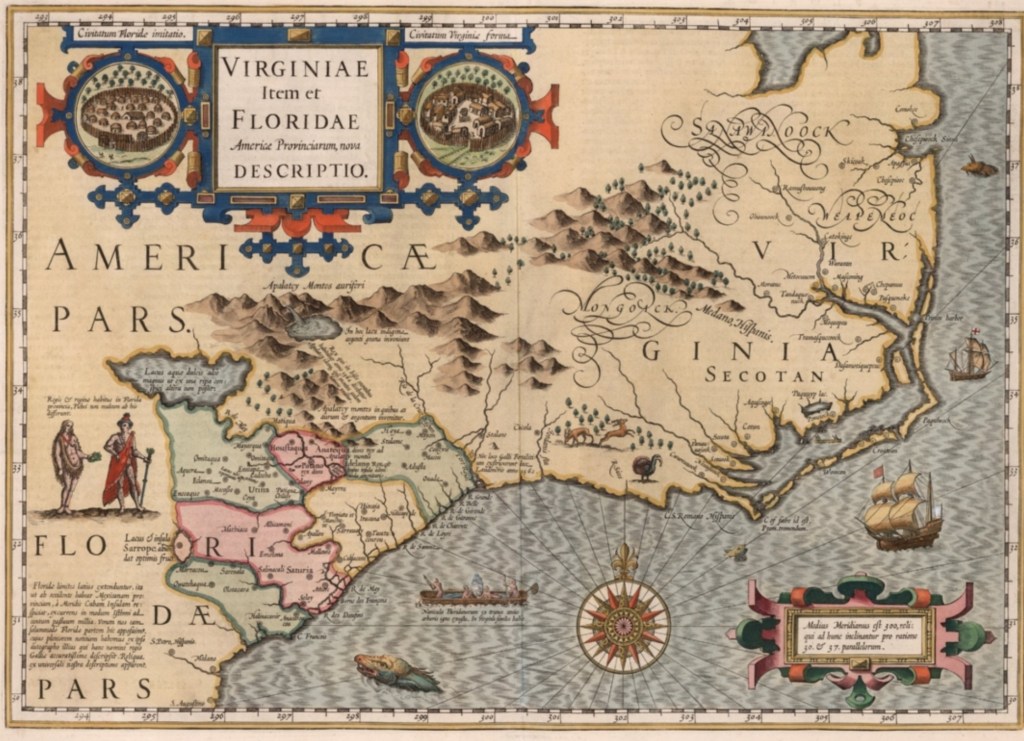
Virginiae Item et Floridae Americae Provinciarum, nova Descriptio.
Map by Gerard Mercator (1512–1594), Jodocus Hondius (1563–1612), and Hendrik Hondius (1597–1651).
Virginiae Item et Floridae Americae Provinciarum, nova Descriptio.
Map by Gerard Mercator (1512–1594), Jodocus Hondius (1563–1612), and Hendrik Hondius (1597–1651).
Published in 1623 by Hendricus Hondius, Amsterdam.
Image courtesy of the David Rumsey Map Collection, David Rumsey Map Center, Stanford Libraries.
Licensed under Creative Commons CC BY-NC-SA 3.0.

Raised within the Romano-Byzantine tradition—formed by both the Roman and Byzantine Catholic rites—I was shaped by a confluence of liturgical beauty, theological depth, and mystical reverence. From that upbringing, there remains not merely memory, but a lasting affection for the rhythm and substance of the faith of my youth. It is not simply a cultural inheritance, but a formative lens through which the sacred, the communal, and the mysterious first revealed themselves. Yet, it would not be accurate to describe my present stance as that of a lapsed Catholic, nor as an atheist, nor as one alienated from the Church. Alienation implies disaffection or estrangement born of expectation unmet or betrayal suffered. What remains is neither rejection nor rebellion, but something quieter and more reflective—a posture of reverent detachment that neither clings nor condemns.

Any attempt to articulate my position must begin by acknowledging the futility of articulation itself—at least in matters concerning the Divine. The belief that the Divine wholly exceeds the bounds of human comprehension and articulation grows only firmer over time. All creeds, revelations, and theological systems—however earnest or inspired—are, in the end, efforts to sketch with a cramped human lexicon and limited imagination that which lies beyond even the highest powers of conception. Far from illuminating the Divine, such efforts only obscure its immensity by imposing upon it our narrow symbols and forms.

Better to liken our theological endeavors to the drawing of maps—maps sketched by explorers who had never seen the coasts they sought to chart. Just as early cartographers filled the margins with dragons, saints, and imagined cities, we adorn the unknown with creeds, cosmologies, and commandments. These are sincere efforts, yet they more often reflect our hopes and fears than reveal any transcendent truth. The more intricate the system, the more seductive the illusion that the map is the territory. But the Divine is not a line upon a page. It is the sea beneath the sea monster, the silence beyond the compass rose, the continent whose very existence remains unknown. To name the Divine is already to misname it; to describe is to distort.

Such a perspective finds its truest expression in apophatic mysticism—the via negativa, the way of negation—a tradition articulated by Pseudo-Dionysius the Areopagite, a Christian thinker of the late fifth to early sixth century whose writings permeate the Catholic tradition through the works of Thomas Aquinas, Bonaventure, and the Spanish mystics, reminding us that the path of unknowing is not a break from faith, but one of its most ancient and revered expressions. In this light, God is not wise, not good, not just, not loving—not because the Divine lacks these qualities, but because our highest notions of them remain shadows cast by a light we cannot behold. Whatever we say of the Divine, however conceived, the most faithful statement is this: our words fall short.

Even so, human beings remain kataphatic creatures as well—creatures who long to speak, to name, to worship, to relate. Thus arises a kataphatic-apophatic tension, a profound and permanent unease between the impulse to speak of the Divine and the recognition that all speech fails. Hymns, liturgies, cathedrals, and doctrines are all human responses to this tension—not to capture the Divine, but to reach toward it, however falteringly. These gestures deserve neither scorn nor uncritical assent. They should be honored, but held lightly, cherished as poems rather than mistaken for proofs.

This tension extends beyond the realm of theology into the very nature of being itself. In a moment of quiet reflection, I found myself asking: “Where is Am I?”—caught between breath and thought, a question turning circles in the hollow of my chest. Am I the echo, or the voice that trembles back? A fragment drifting through the hour, a flicker in the endless light, unsure if I was ever whole or if the pieces were ever mine to find. Such a question is not mere existential uncertainty, but a recognition that the self, like the Divine, eludes definitive capture.

No formal creed or written revelation authored by man commands my assent, however noble or inspired it may be. Faith is not placed in these constructions, though the sacred yearning from which they arise is deeply respected. They are echoes of an original voice no longer heard directly, outlines of a presence glimpsed but never grasped. Like the adornments on ancient maps, these expressions are beautiful and sincere, but they are not to be mistaken for the thing itself.

To some, this may resemble agnosticism, though that word has become burdened with meanings it was never intended to carry—meanings of indecision, skepticism, or apathy. What is expressed here is none of those. It is not a shrug of the shoulders, but a bow of the head. Not the silence of the indifferent, but of the reverent. Not ignorance, but a conscious unknowing—a sacred refusal to impose limitation upon that which exceeds all bounds. This is why I eschew agnostic labels in favor of mystical ones—for the mystic does not claim ignorance of the Divine but acknowledges that true knowledge of it transcends conventional understanding.

What remains, then, is a life lived in contemplation of the ineffable—a contemplation that finds expression through creative work. In poetry, music, and essay, I reach toward that which cannot be directly named. When I write of the “eternal now” where “yesterday, tomorrow, and today collapse,” or compose lyrics that honor Humilitatem Initium Sapientiae, I am not merely creating art but engaging in a form of contemplative practice. These creative acts serve as bridges, not only between myself and the ineffable, but also between myself and others who share this reverent space, regardless of their formal religious affiliations or φιλοσοφίαι (philosophies or wisdom traditions).

The path ahead is not marked by certainty but by awe, not by declarations but by listening. Mystery is not something to be solved, but something to be honored. Years of formal study—first in history and religious studies as an undergraduate, then as a teacher of both subjects, and later through a long career in civil rights law and public service—have only deepened the awareness that human systems, whether intellectual, doctrinal, or legal, ultimately encounter their limits at the threshold of the sacred. In this, the apophatic tradition offers a spiritual home—a dwelling place where reverence begins precisely where language ends. If there is a guiding light for such a path, it is humility—humilitatem initium sapientiae—not merely as a moral posture, but as a metaphysical necessity. That teaching, which echoes throughout Thomas à Kempis’ The Imitation of Christ, remains not only a personal motto, but a settled conviction: that wisdom begins when one ceases to pretend to possess it.

Near the staircase in my front hallway hangs an early map of the New World—an artifact I have long cherished. Its artistry is matched only by its courage, for it dares to depict what was not yet known. Near the region now recognized as Virginia and the Carolinas, a sea monster rises from the ocean’s depths, signaling peril or wonder—perhaps both. On the land itself, figures of “natives” stand, imagined by a hand that never walked those coasts. That map does not record the world; it records what the world dared to imagine. So, too, do our theologies populate the margins of metaphysical uncertainty with monsters and angels, commandments and visions. They are imaginative acts—sincere, flawed, luminous. And like that map, they are to be cherished not for their precision but for what they reveal of the human longing to reach into mystery with word and symbol, with ink and awe. In their earnest striving, they remind us: we are always sketching the edge of the unknown, even when we know we cannot cross it.

Prophetic Lamentation in the Biblical Tradition on Judicial Corruption

The content discusses transforming a prophetic lamentation about the corruption of the American justice system into a biblical framework, relating it to Judeo-Christian themes. It emphasizes the corruption of judges influenced by wealth and oligarchs, using biblical imagery and references to emphasize concerns for justice. The work calls for repentance and restoration while echoing biblical prophetic traditions highlighting the importance of righteousness and divine justice, urging readers to recognize the significant consequences of judicial corruption and its societal ramifications.

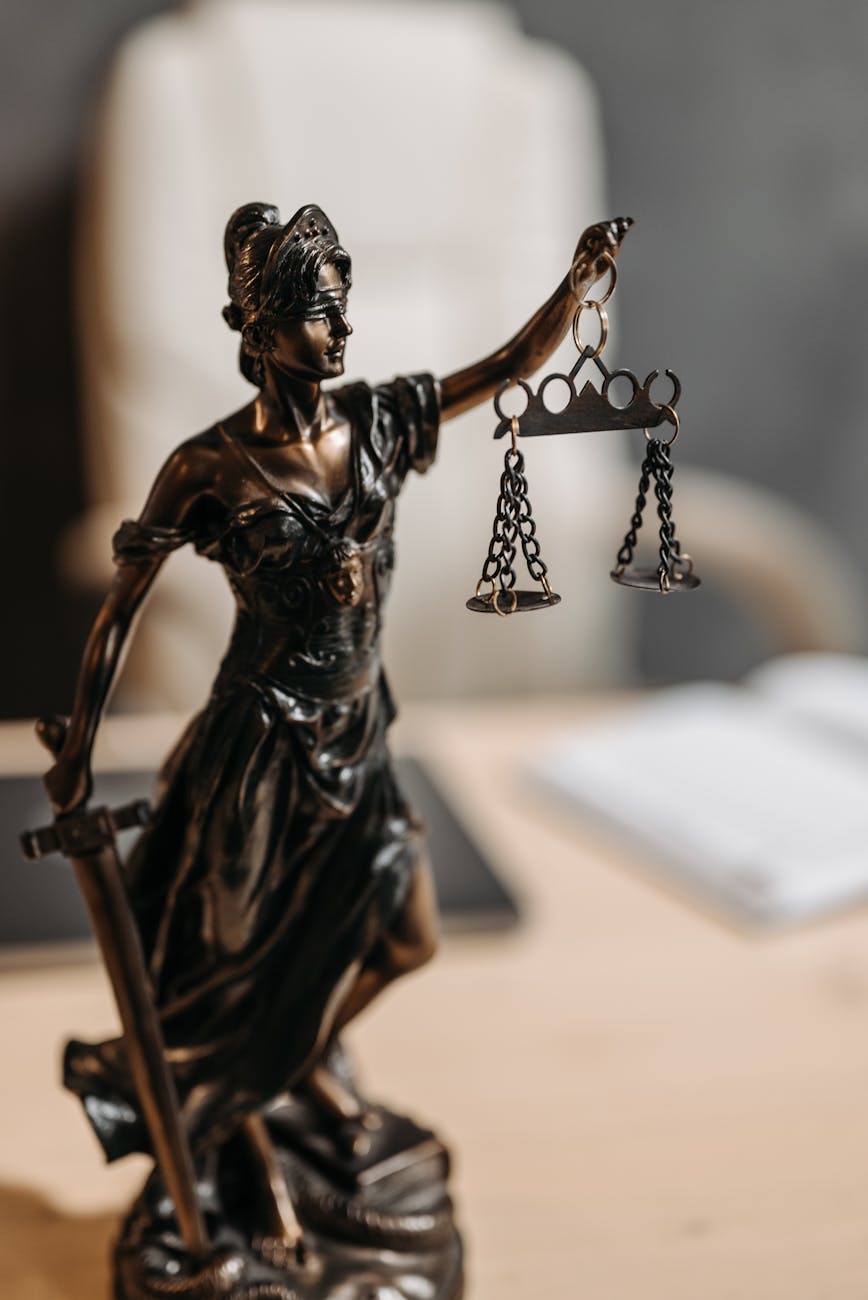
Photo by Pavel Danilyuk on Pexels.com

Recognizing that most Americans may have a familiarity with Judeo-Christian themes, imagery, and language—but little to no awareness of Mesopotamian themes, imagery, and language—I sought to recast my recent prophetic lamentation on the corruption of Justice, The Temples of Utu, into a biblical framework. By doing so, I aimed to ensure that my lamentation on the corruption of the American justice system, particularly the concern that judges and Justices are being purchased by oligarchs and beholden to faction, would resonate more deeply with contemporary readers.

The work found by scrolling further down, A Prophetic Lamentation: A Biblical Cry for Righteous Judgment, was created by transforming The Temples of Utu: A Contemporary Lament for Justice into a text that more explicitly resonates with the Judeo-Christian tradition. By incorporating biblical references throughout and aligning the themes with scriptural principles, this lamentation follows the prophetic tradition of calling out corruption and pleading for divine justice.

An Audio Reading of Donald S. Yarab’s
A Prophetic Lamentation: A Biblical Cry for Righteous Judgment

To aid in understanding the biblical framework underlying this transformation, the following terms and themes are central to the work:

I. Theological Names and Concepts

  1. El Elyon (אֵל עֶלְיוֹן) – A Hebrew name for God meaning “God Most High.” It first appears in Genesis 14:18-20 with Melchizedek, emphasizing God’s supreme authority and sovereignty over all creation.
  2. Adonai (אֲדֹנָי) – A Hebrew term meaning “my Lord,” traditionally used as a substitute for YHWH out of reverence. It signifies God’s absolute authority and dominion.
  3. El Shaddai (אֵל שַׁדַּי) – Typically translated as “God Almighty,” it first appears in Genesis 17:1 when God makes a covenant with Abraham. It highlights God’s power, might, and provision.
  4. Elohim (אֱלֹהִים) – A plural form used singularly for God in the Hebrew Bible, emphasizing divine power and majesty.
  5. Mammon (μαμμωνᾶς) – An Aramaic term used by Jesus in Matthew 6:24 and Luke 16:13, personifying wealth and material possessions as an opposing force to God. In this work, Mammon represents the corrupting influence of material gain and injustice.

II. Historical and Symbolic References

  1. Babylon – The empire that conquered Jerusalem in 586 BC, destroying Solomon’s Temple and exiling many Judeans. In biblical prophecy, Babylon symbolizes oppressive human power and arrogance that defies God (Isaiah 47:1-11; Jeremiah 50-51; Revelation 18).
  2. Egypt – The nation that enslaved Israel before the Exodus. Egypt is often used as a biblical metaphor for oppression, idolatry, and the worldly systems from which God delivers His people (Exodus 20:2; Deuteronomy 4:20; Hosea 11:1).
  3. Assyria – The empire that conquered the Northern Kingdom of Israel in 722 BC. Known for ruthless expansion and forced resettlement, Assyria is depicted as an instrument of God’s judgment but ultimately doomed for its arrogance (Isaiah 10:5-19; Nahum 3).
  4. Tyre – A Phoenician port city known for its wealth and trade dominance. Biblical prophets condemned Tyre for its pride, greed, and economic exploitation (Ezekiel 27-28; Isaiah 23). In this work, Tyre symbolizes commercial corruption and economic injustice.
  5. Mount Sinai – The sacred mountain where Moses received the Law from God (Exodus 19-20). Sinai represents divine revelation, covenant responsibility, and the foundation of justice.
  6. Sodom – The city destroyed for its wickedness and injustice (Genesis 19:24-25). In prophetic literature, Sodom serves as a symbol of moral corruption and a warning of divine judgment (Isaiah 1:9-10; Ezekiel 16:49-50).

III. Prophetic Tradition and Literary Framework

  1. Biblical Lamentation – This work follows the tradition of biblical lament, particularly seen in Lamentations, the Psalms, and prophetic writings. These laments express grief over national corruption and divine judgment (Lamentations 1:1-4; Psalm 137).
  2. Prophetic Literary Forms – The text incorporates multiple prophetic genres, including:
    • Lawsuit (rîb) – Where God brings charges against His people (Isaiah 1:2-3; Hosea 4:1).
    • Woe Oracle (hôy) – Pronouncing judgment upon injustice (Amos 5:18-24; Habakkuk 2:6-20).
    • Lament (qînâ) – Mourning the destruction caused by sin and corruption (Jeremiah 9:17-22; Ezekiel 19).
    • Restoration Promise – Common in prophetic literature, offering hope after judgment (Jeremiah 31:31-34; Isaiah 61:1-3).
  3. Covenantal Framework – Judges in ancient Israel were not merely legal authorities, but covenant mediators tasked with upholding divine law. Their corruption represents a betrayal of that covenant, mirroring Israel’s repeated failure to uphold God’s justice (Deuteronomy 16:18-20; Isaiah 1:21-23).
  4. Justice for the Oppressed – The recurring emphasis on justice for widows, orphans, and foreigners aligns with the core concerns of biblical prophets, such as:
    • Amos 5:11-12 – Condemning exploitation of the poor.
    • Micah 6:8 – Calling for justice, mercy, and humility.
    • Isaiah 10:1-2 – Warning against unjust laws that oppress the vulnerable.
  5. Apocalyptic Elements – The “Day of Reckoning” section reflects apocalyptic themes, seen in:
    • Joel 2:1-2 – A warning of impending divine judgment.
    • Daniel 7:9-14 – God’s ultimate triumph over corrupt rulers.
    • Revelation 18 – The fall of oppressive systems.

IV. Purpose of This Work

By drawing on these biblical themes, historical symbols, and prophetic traditions, A Prophetic Lamentation: A Biblical Cry for Righteous Judgment aims to offer a theologically rich meditation on the corruption of justice. It calls for repentance, righteousness, and restoration, echoing the voices of the biblical prophets who spoke against oppression and warned of impending judgment.

For readers wishing to explore the scriptural foundations of this work, a guide to the work labeled as containing in-text biblical citations is available at the button below. Finally, though many have their favorite bibles, I do not hesitate to recommend for studying the Old Testament, Robert Alter’s The Hebrew Bible: A Translation with Commentary. The scholarship, especially in the footnotes, is unmatched. Another useful online resource is biblehub.com – which allows you access to multiple bible translation traditions.


A Prophetic Lamentation: A Biblical Cry for Righteous Judgment

A Lament for the Perversion of Judgment and the Abandonment of Righteousness

Part I: The Forsaking of Righteousness

The First Turning from Truth

In the days when righteousness stood firm in the land, when the Law of The LORD was a lamp unto the feet of judges, the courts of justice were as sanctuaries where truth dwelled. The judges, servants of El Elyon—The LORD, God of Abraham, Isaac, and Jacob, the One who brought Israel out of Egypt and wrote His covenant in fire upon Sinai, sat in chambers of cedar and stone, their hands unstained, their judgment righteous. The widow, the orphan, and the foreigner approached without fear, for the Law was written by the finger of Elohim upon tablets of stone, and justice flowed like the waters of Shiloah through the gates of the city.

But in time, whispers arose from the chambers of power. First to one judge, then another. Golden whispers, honeyed promises, from the lips of those who dwelled in palaces of privilege. And some turned their ears to listen.

From the houses of the mighty came messengers bearing gifts wrapped in fine linen, bearing words that concealed their true purpose. And the first judge who accepted such offerings felt the scales within his heart shift, so slightly he did not perceive it. But The LORD perceived it, as He perceived the wickedness of the sons of Eli, whose hands were stained with bribes and whose lips defiled the altar. The LORD, before whom no falsehood can stand, whose eyes search the hearts of men.

Yet the voice of Adonai grew fainter in the halls of judgment, as the mighty pressed their thumbs upon the sacred scales of Moses.

The Widow’s Cause Rejected

When the widow came before the seat of judgment,
Her cause was just, her plea righteous.
But he who wronged her wore the seal of the rulers,
And silver had changed the words of the Law.

The judge spoke with a tongue not his own:
“The letter of the Law says thus and thus,
Yet its spirit is silenced beneath my tongue.”
And so the widow departed in sackcloth.

She lifted her voice in the gates of the city:
“Where is Thy justice, O LORD of Hosts?
Thy servants speak with deceitful lips,
Thy Law is sold for pieces of silver.”

But no thunder came from Mount Sinai,
For the judges had stopped their ears with gold.

Part II: The Spreading Abomination

The Choosing of the Corrupt

As the seasons of harvest passed, it came to be that when a judge returned to the dust, those who appointed his successor sought not for wisdom, not for righteousness, not for fear of The LORD. Instead, they sought those who had bowed before the mighty, who had pledged themselves in secret chambers to uphold not the Law as it was given through Moses, but the interests of those who elevated them.

And so the courts of judgment, one by one, were filled with those who had sold their birthright for a bowl of pottage before ever taking the seat of judgment. The words of their oaths remained the same, the ceremonies unchanged, but the fear of El Shaddai had departed from the administration of justice.

Then came the spirit of Mammon, whom Solomon warned against, moving through the corridors of power. Not with swift judgment did he strike, but with slow corruption, a leprosy of the soul that left its victims outwardly clean but inwardly defiled, wearing the robes of righteousness while serving the lords of unrighteousness. And Elohim looked down, as He did in the days of Noah, and beheld that the wickedness of man had multiplied, and that the thoughts of his heart were only evil continually.

The Judgment Purchased with Silver

Behold how they come with scrolls of precedent in hand,
Twisting the words of the prophets to serve new masters.
The Law speaks what they command it to say,
The statutes bend like bulrushes in the wind.

Mammon walks boldly among the pillars of justice,
His touch light as silver upon the outstretched palm.
Each judgment purchased furthers the transgression,
Each verdict for sale defiles the holy sanctuary.

The judges feast at the tables of the merchants of Tyre,
The masters of wealth whisper close in their ears:
“This cause favors our interests,” they murmur,
“This ruling preserves the power we hold dear.”

And the people cry out to the Holy One of Israel,
But His face is turned away from His defiled courts.

Part III: The New Order of Iniquity

The Temple Defiled

And so it came to pass that the courts of justice no longer stood as bulwarks against wickedness, but as instruments of those who ruled from behind veils. The judges spoke still of righteousness, wore still the robes of impartiality, but their eyes looked ever to their masters for instruction. Their words were shaped not by the Law of Moses, but by the whispers of corruption.

The scales that once weighed all causes righteously now tipped by design. The light that once revealed truth now cast deceptive shadows. And those who came seeking justice found instead a marketplace where judgments were bought and sold like cattle and grain in the markets of Jerusalem.

The Serpent, who from Eden has twisted the words of Elohim, wound himself around the pillars of judgment like the bronze serpent once lifted in the wilderness. His forked tongue spoke through the mouths of judges, uttering words sweet as honey yet bitter in the belly, verdicts that invoked the sacred Law while rendering it void and without effect.

The Perverted Judgment

The scales of judgment hang crooked now,
Weighted with bribes and heavy with deceit.
The mantle of justice has become a shroud,
Pulled tight by hands that serve the powerful.

The Serpent coils around the judgment seat,
His ancient form hidden beneath holy garments.
“Justice,” they proclaim, while dealing in oppression,
“The Law,” they invoke, while breaking its covenant.

The mighty approach the courts without fear,
For they have purchased favor with unrighteous mammon.
The poor approach with trembling upon their faces,
For they know the sentence before the cause is heard.

So the pillars of justice, hewn by the hands of the faithful,
Were carved anew by the chisels of corruption.
The covenant of right judgment lay broken upon the steps,
As the people watched their inheritance dissolve like morning dew.

Part IV: The Breaking of the Covenant

The Covenant Forsaken

Thus was the covenant between The LORD and His people defiled. Not by the sword of Babylon, nor by the chariots of Egypt, nor by the cunning of the Assyrians, but by the slow poisoning of the wells of justice. As the cycles of seedtime and harvest passed, the people came to know that the courts offered no refuge for the oppressed, that the words of judges held no truth, that judgment measured not righteousness but privilege.

And in this knowing, the foundations of society began to crumble. For what is Law if not covenant? What is justice if not faithfulness? What is order if not the keeping of sacred promises?

The rulers and mighty men who had captured the courts of judgment did not see the doom they had wrought. They feasted upon their victory over righteousness, their conquest of the scales. They did not hear the voice of Adonai, gathering like thunder upon the mountains, as in the days of Sinai, preparing for the day of visitation.

For when justice fails, the whirlwind awaits. When Law becomes a snare rather than a protection, the people cast aside its yoke. When righteousness is no longer honored in the courts, it cries out from the dust like the blood of Abel, calling for vengeance before the throne of El Elyon.

The Harvest of Corruption

Now Jerusalem trembles upon foundations of sand,
The courts of judgment stand as whitewashed tombs.
What was established through generations of faithfulness,
Falls to ruin through seasons of corruption.

The people no longer call upon the name of The LORD in the courts,
For His servants have made it bitter on the tongue.
They turn instead to other deliverers, darker powers,
Gods of vengeance, spirits of retribution.

The rulers sleep uneasy in their chambers,
For they have slain the guardian of their peace.
In purchasing the Law, they rendered it powerless,
In perverting justice, they broke its authority.

And The LORD cried out, as He did through Amos:
“But let justice roll down like waters,
And righteousness like an ever-flowing stream!”
But the stream had dried, the land was parched, and the people drank the wine of oppression instead.

Epilogue: The Prophetic Warning

The Voice of the Remnant

Those who remember, who still hold the Law sacred in their hearts, who recall the days when the courts of judgment shone with uncorrupted light, raise their voices in the wilderness of injustice.

They speak of what was lost, of scales that balanced, of laws that protected the least among the people. They warn of what comes when the rulers believe they have placed themselves beyond the judgment of El Shaddai.

For the LORD watches still, though His servants have forsaken Him. The Holy One of Israel sees still, though His courts have been corrupted. And the day will come when righteousness returns to the gates of the city, when justice again flows like living water.

But the price of restoration will be bitter, paid in the coin of tribulation. For what is defiled cannot be cleansed without fire, as Sodom was overturned in fire and brimstone, and the altars of Baal were cast down in the days of Elijah.

The Day of Reckoning

Remember this in days to come,
When the storms of judgment break upon the land,
When faction rises against faction in the ruined streets,
When the rulers tremble before the dispossessed:

It began with the perversion of judgment,
It began with the purchasing of truth.
It began when the courts of the LORD
Became marketplaces for injustice.

And those who turned their backs on righteousness,
Who sold the Law for temporary gain,
Who twisted the statutes of the Most High,
Will cry out: “How could we have known?”

But their hands are not clean.
For they defiled the sanctuary, stone by stone.
They corrupted the judges, word by word.
They profaned justice, verdict by verdict.

And the LORD shall arise, as He did at Sinai, in fire and storm,
As He did at Babylon, with writing upon the wall.
Neither silver nor rulers will shield them;
They and their wealth shall melt like wax before the flame.


The House of Azag: A Contempory Lamentation

The text explores the myth of Ninurta and the contemporary retelling of Azag’s story, emphasizing themes of power, complicity, and the consequences of forgetting history, blending prose and verse to convey a timeless lamentation.

Cuneiform tablet: nir-gal lu e-NE, balag to Ninurta
Seleucid or Parthian Period, ca. 2nd–1st century BC
Mesopotamia, probably from Babylon (modern Hillah)
Clay tablet inscribed with a hymn of praise to Ninurta, the storm god and vanquisher of Asag, the demon of disease.
The Metropolitan Museum of Art, Object No. 86.11.349
(Public Domain Image – Courtesy of The Metropolitan Museum of Art)
Cuneiform tablet: nir-gal lu e-NE, balag to Ninurta
Seleucid or Parthian Period, ca. 2nd–1st century BC
Mesopotamia, probably from Babylon (modern Hillah)
Clay tablet inscribed with a hymn of praise to Ninurta, the storm god and vanquisher of Asag, the demon of disease.
The Metropolitan Museum of Art, Object No. 86.11.349
(Public Domain Image – Courtesy of The Metropolitan Museum of Art)

On the Inspiration for The House of Azag: A Contemporary Lamentation

Inspiration often comes suddenly and from unexpected sources. While rereading Samuel Noah Kramer’s The Sumerians: Their History, Culture, and Character (1963/1971), I came across a passage recounting the myth of Ninurta, “the god of the stormy south wind,” who in battle destroyed Asag (Azag), “the demon of sickness and disease, whose abode is in the kur, or netherworld” (p. 151).

This passage immediately sparked a question: How would the story of Azag’s heir unfold in the modern age of plague and divisive politics? And how might it be told in the style of a Sumerian lamentation or myth?

The result is a hybrid of prose and verse, a structure reminiscent of ancient lamentations, epic chronicles, and prophetic texts. The prose sections serve as a narrative scaffold, unfolding the events and guiding the reader through the cycle of tyranny, reckoning, and return. The verse distills the emotional and symbolic essence of these events into stark, prophetic utterances, in keeping with the brevity and weight of traditional lamentation poetry.

By blending these forms, The House of Azag mirrors the ancient mode of storytelling in which history, myth, and warning are inseparable. It is both a retelling and a foretelling, a meditation on the cycles of power, complicity, and ruin—and the price a people pay when they forget the past.

An Audio Reading of D.S. Yarab’s The House of Azag: A Contemporary Lamentation


The House of Azag: A Contemporary Lamentation

Part I: The First Reign

The Time of Pestilence

In the days of turmoil, when truth was cast into the dust and the air itself grew thick with sorrow, there arose a ruler from the House of Azag—Azag, the demon slain by Ninurta, yet never truly vanquished. His tongue dripped venom, his hand withered the harvest, and his breath carried pestilence upon the wind. The multitudes, fevered and blind, hailed his coming, for they had forgotten the old warnings. They did not recall the tale, the curse, the name:

From the House of Azag, Azag, the demon slain by Ninurta.

And so, in his first reign, he set forth a sacrifice—one not of fire nor incense, but of breath and blood, of silence and mourning, that the land itself might wail beneath his shadow.

The Reign of Plague

He, of the House of Azag, heir to ruin,
Crowned in blight and anointed in ash,
Raised his hand, and the heavens grew silent,
Breathed his word, and the earth was unmade.

Fevered winds bore his whispered decree,
A covenant sealed in the shroud of the dead.
And they, the lost, the beguiled, the willing,
Bowed before the plague-born throne.

His altars dripped not with oil nor myrrh,
But with breathless sighs and broken names.
And still they called him savior, still they knelt,
Though the air itself was thick with wailing.

The Judgment

Thus was the land cast into shadow,
And the wise were scorned, the healers undone.
Not by sword nor by fire, but by silence,
Did the House of Azag reign.


Part II: The Fall and the Interregnum

The Elder Warrior’s Time

And so it came to pass that after the years of pestilence, when the land was burdened with sorrow and the cries of the forsaken rose to the heavens, an old warrior took up the mantle of the fallen city. He was a man of the elder years, not swift but steadfast, not mighty in arms but resolute in purpose. And he stood against the darkness, bearing the weight of the withered earth upon his back.

He drove out the ruler of the House of Azag—not by blade nor by fire, but by the will of the people, who in their suffering turned against the master of plague. The temples of deception cracked, the halls of power shuddered, and the great beast was cast into exile, retreating to the shadows of the wastelands.

Yet the abominable beast does not slumber.

The Warrior’s Triumph

He, the warrior of elder years, stood firm,
His hands worn, his voice a beacon.
And the people, weary of death and despair,
Turned from the House of Azag.

The tyrant fell, his name a whisper,
His throne an empty husk of ruin.
And for a time, the land breathed free,
And the winds carried no plague.


Part III: The Second Reign

The Return of Wrath

But the abominable beast does not die. Even as the warrior sought to mend the broken walls, the deceiver’s voice slithered through the ruins. He whispered of old glories, of stolen kingdoms, of vengeance against the weak. He promised dominion to the cruel, riches to the corrupt, and absolution to the faithless. And in the dark corners of the land, where grievance festered, where truth was forgotten, and where justice was mocked, they listened.

And the warrior—burdened by years, by the weight of a land divided—fought not with sword or fire, but with weary breath and reasoned word. And they laughed, for reason had no purchase in the ears of the blind.

Thus, through falsity and oath-breaking, through fear and fury, the House of Azag rose once more. And this time, not in sickness, but in wrath.

The Return of the Abominable Beast

He, of the House of Azag, whisperer in shadow,
Spoke in silvered lies, and the deaf gave answer.
He stirred the dust, and the bitter took arms,
He spread his hand, and the oath-breakers swore.

Not by plague, but by vengeance, he came,
Not with fever, but with fire.
The halls of wisdom he razed,
The scribes he silenced, the truth he unmade.


Part IV: The Willing Hands

The People’s Bargain

And when he, of the House of Azag—Azag, the demon slain by Ninurta, called forth his name from the abyss, they who had once trembled at his touch did not recoil. They did not remember the pestilence, nor the wailing of their own dead. Instead, they gathered at the gates, voices raised in fervor, hands outstretched not in defiance, but in welcome.

For he did not come as he had before, cloaked in sickness and ruin. This time, he came bearing gifts—promises of glories unearned, of burdens lifted from their shoulders, of enemies cast into the void. He did not call them to serve, but to rule. He did not ask them to sacrifice, but to consume.

And so they bent the knee, not in chains, but in hunger. Not from fear, but from desire.

And the warrior, standing upon the walls, cried out: “Have you forgotten?”

But they turned their faces from him.

The Willing Betrayal

He, of the House of Azag, called to the lost,
And they answered, not with dread, but with praise.
For he did not come with pestilence,
But with crowns of dust and golden lies.

He whispered: “The land is yours.” And they rejoiced.
He promised: “The labor is no longer yours.” And they knelt.
He declared: “The past is a burden. Remember it not.”
And they cast their own memories into the fire.


Epilogue: The Consequence

The Reckoning to Come

Thus, the gates were flung open, not by the tyrant’s might, but by the hands of the desperate and the blind. They, who had suffered under his reign, now lifted him upon their shoulders, crying, “He is the chosen! He will restore what was stolen!”

But there was nothing to restore. What they had lost, they had cast away.

And when the reckoning came, they wailed once more,
Crying out, “How could we have known?”

But their hands were not clean.

For they had built the throne, brick by brick.
They had paved the way, stone by stone.

And when the monstrous beast took his seat,
He did not need to command them.
They carried out his will before he spoke it.