
Toward an Unsaying: Contemplation of Faith in the Shadow of the Ineffable

A meditation on the limits of theological language and the mystery of the Divine, this contemplative essay explores apophatic mysticism, the inadequacy of creeds, and the symbolic power of maps—blending poetic introspection with a life lived in scholarship, service, and creative expression.

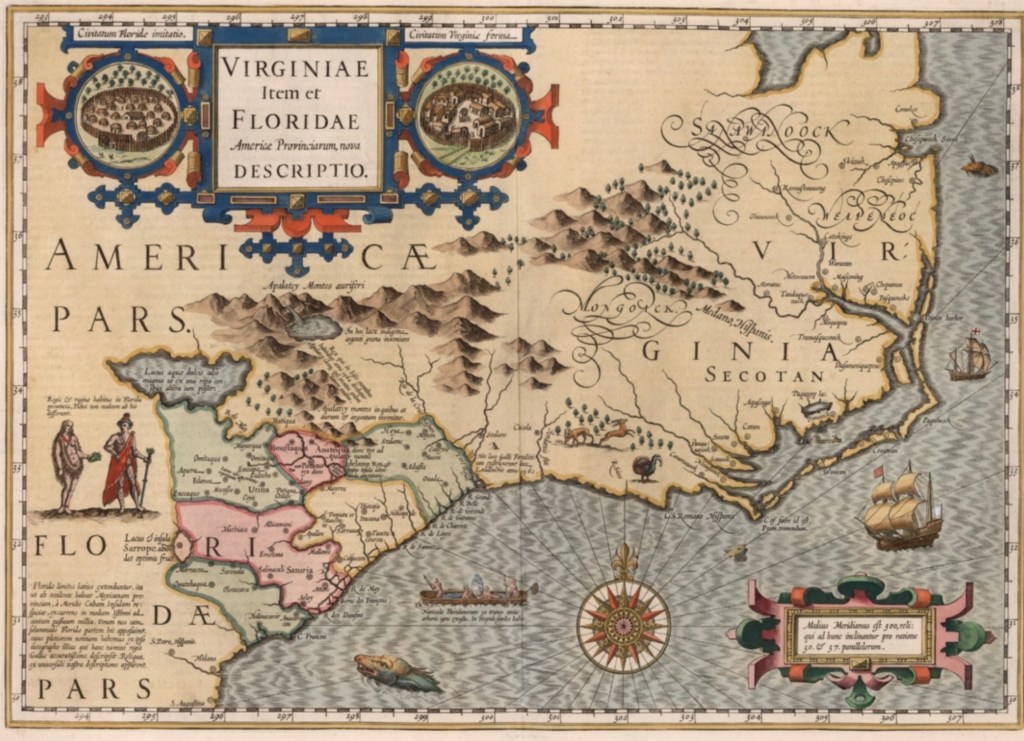
Virginiae Item et Floridae Americae Provinciarum, nova Descriptio.
Map by Gerard Mercator (1512–1594), Jodocus Hondius (1563–1612), and Hendrik Hondius (1597–1651).
Virginiae Item et Floridae Americae Provinciarum, nova Descriptio.
Map by Gerard Mercator (1512–1594), Jodocus Hondius (1563–1612), and Hendrik Hondius (1597–1651).
Published in 1623 by Hendricus Hondius, Amsterdam.
Image courtesy of the David Rumsey Map Collection, David Rumsey Map Center, Stanford Libraries.
Licensed under Creative Commons CC BY-NC-SA 3.0.

Raised within the Romano-Byzantine tradition—formed by both the Roman and Byzantine Catholic rites—I was shaped by a confluence of liturgical beauty, theological depth, and mystical reverence. From that upbringing, there remains not merely memory, but a lasting affection for the rhythm and substance of the faith of my youth. It is not simply a cultural inheritance, but a formative lens through which the sacred, the communal, and the mysterious first revealed themselves. Yet, it would not be accurate to describe my present stance as that of a lapsed Catholic, nor as an atheist, nor as one alienated from the Church. Alienation implies disaffection or estrangement born of expectation unmet or betrayal suffered. What remains is neither rejection nor rebellion, but something quieter and more reflective—a posture of reverent detachment that neither clings nor condemns.

Any attempt to articulate my position must begin by acknowledging the futility of articulation itself—at least in matters concerning the Divine. The belief that the Divine wholly exceeds the bounds of human comprehension and articulation grows only firmer over time. All creeds, revelations, and theological systems—however earnest or inspired—are, in the end, efforts to sketch with a cramped human lexicon and limited imagination that which lies beyond even the highest powers of conception. Far from illuminating the Divine, such efforts only obscure its immensity by imposing upon it our narrow symbols and forms.

Better to liken our theological endeavors to the drawing of maps—maps sketched by explorers who had never seen the coasts they sought to chart. Just as early cartographers filled the margins with dragons, saints, and imagined cities, we adorn the unknown with creeds, cosmologies, and commandments. These are sincere efforts, yet they more often reflect our hopes and fears than reveal any transcendent truth. The more intricate the system, the more seductive the illusion that the map is the territory. But the Divine is not a line upon a page. It is the sea beneath the sea monster, the silence beyond the compass rose, the continent whose very existence remains unknown. To name the Divine is already to misname it; to describe is to distort.

Such a perspective finds its truest expression in apophatic mysticism—the via negativa, the way of negation—a tradition articulated by Pseudo-Dionysius the Areopagite, a Christian thinker of the late fifth to early sixth century whose writings permeate the Catholic tradition through the works of Thomas Aquinas, Bonaventure, and the Spanish mystics, reminding us that the path of unknowing is not a break from faith, but one of its most ancient and revered expressions. In this light, God is not wise, not good, not just, not loving—not because the Divine lacks these qualities, but because our highest notions of them remain shadows cast by a light we cannot behold. Whatever we say of the Divine, however conceived, the most faithful statement is this: our words fall short.

Even so, human beings remain kataphatic creatures as well—creatures who long to speak, to name, to worship, to relate. Thus arises a kataphatic-apophatic tension, a profound and permanent unease between the impulse to speak of the Divine and the recognition that all speech fails. Hymns, liturgies, cathedrals, and doctrines are all human responses to this tension—not to capture the Divine, but to reach toward it, however falteringly. These gestures deserve neither scorn nor uncritical assent. They should be honored, but held lightly, cherished as poems rather than mistaken for proofs.

This tension extends beyond the realm of theology into the very nature of being itself. In a moment of quiet reflection, I found myself asking: “Where is Am I?”—caught between breath and thought, a question turning circles in the hollow of my chest. Am I the echo, or the voice that trembles back? A fragment drifting through the hour, a flicker in the endless light, unsure if I was ever whole or if the pieces were ever mine to find. Such a question is not mere existential uncertainty, but a recognition that the self, like the Divine, eludes definitive capture.

No formal creed or written revelation authored by man commands my assent, however noble or inspired it may be. Faith is not placed in these constructions, though the sacred yearning from which they arise is deeply respected. They are echoes of an original voice no longer heard directly, outlines of a presence glimpsed but never grasped. Like the adornments on ancient maps, these expressions are beautiful and sincere, but they are not to be mistaken for the thing itself.

To some, this may resemble agnosticism, though that word has become burdened with meanings it was never intended to carry—meanings of indecision, skepticism, or apathy. What is expressed here is none of those. It is not a shrug of the shoulders, but a bow of the head. Not the silence of the indifferent, but of the reverent. Not ignorance, but a conscious unknowing—a sacred refusal to impose limitation upon that which exceeds all bounds. This is why I eschew agnostic labels in favor of mystical ones—for the mystic does not claim ignorance of the Divine but acknowledges that true knowledge of it transcends conventional understanding.

What remains, then, is a life lived in contemplation of the ineffable—a contemplation that finds expression through creative work. In poetry, music, and essay, I reach toward that which cannot be directly named. When I write of the “eternal now” where “yesterday, tomorrow, and today collapse,” or compose lyrics that honor Humilitatem Initium Sapientiae, I am not merely creating art but engaging in a form of contemplative practice. These creative acts serve as bridges, not only between myself and the ineffable, but also between myself and others who share this reverent space, regardless of their formal religious affiliations or φιλοσοφίαι (philosophies or wisdom traditions).

The path ahead is not marked by certainty but by awe, not by declarations but by listening. Mystery is not something to be solved, but something to be honored. Years of formal study—first in history and religious studies as an undergraduate, then as a teacher of both subjects, and later through a long career in civil rights law and public service—have only deepened the awareness that human systems, whether intellectual, doctrinal, or legal, ultimately encounter their limits at the threshold of the sacred. In this, the apophatic tradition offers a spiritual home—a dwelling place where reverence begins precisely where language ends. If there is a guiding light for such a path, it is humility—humilitatem initium sapientiae—not merely as a moral posture, but as a metaphysical necessity. That teaching, which echoes throughout Thomas à Kempis’ The Imitation of Christ, remains not only a personal motto, but a settled conviction: that wisdom begins when one ceases to pretend to possess it.

Near the staircase in my front hallway hangs an early map of the New World—an artifact I have long cherished. Its artistry is matched only by its courage, for it dares to depict what was not yet known. Near the region now recognized as Virginia and the Carolinas, a sea monster rises from the ocean’s depths, signaling peril or wonder—perhaps both. On the land itself, figures of “natives” stand, imagined by a hand that never walked those coasts. That map does not record the world; it records what the world dared to imagine. So, too, do our theologies populate the margins of metaphysical uncertainty with monsters and angels, commandments and visions. They are imaginative acts—sincere, flawed, luminous. And like that map, they are to be cherished not for their precision but for what they reveal of the human longing to reach into mystery with word and symbol, with ink and awe. In their earnest striving, they remind us: we are always sketching the edge of the unknown, even when we know we cannot cross it.

Apokalypsis Teleiosis: A Vision of Fulfillment

Approaching Apokalypsis Teleiosis

The prophetic poem Apokalypsis Teleiosis contemplates the culmination of divine purpose—the moment when revelation reaches its fulfillment and silence follows.

The poem unfolds in five movements, each drawing the reader deeper into a journey from divine articulation to fulfillment. Its use of Greek and biblical language is not ornamental but intentional—forming a theological vocabulary that bridges scripture and philosophy. The capitalization of words like Word, Breath, Fire, and Light serves as a kind of “visual theology,” intensifying as the poem progresses toward unity.

This is not a vision of divine ending or abandonment, but of ineffable transformation—a passage into that which exceeds our categories of presence and absence alike. Rather than following familiar apocalyptic themes of sovereignty, judgment, or renewal, this vision moves beyond such categories entirely. The divine is not framed in terms of rule or absence but as a transformation beyond presence and absence alike. It does not end in proclamation but in ordained silence—the stillness that remains when all has been spoken.

This final movement invites contemplation rather than conclusion. The closing line, “In Light beyond light, all is whole,” is not an answer but an opening—a gesture toward the mystery that lies beyond both prophecy and language itself.

The author notes, accessible after the poem by clicking on the button, provides more information about the structure and specifics of the poem.


Apokalypsis Teleiosis (A Vision of Fulfillment)

Γέγοναν. ἐγώ εἰμι τὸ Ἄλφα καὶ τὸ Ὦ, ἡ ἀρχὴ καὶ τὸ τέλος.
(It is done. I am Alpha and Omega, the beginning and the end.) — Revelation 21:6

I. Logos Tetelestai (The Word Fulfilled)

In the beginning was the Word, and the Word was God,
And all arose from His breath—
Light from void, form from welter deep.
The Breath that shaped Adam from dust
Now settles silent in the wind.
Not lost, nor cast aside in ruin,
But drawn unto the end ordained.
No faltering step, no shadowed doubt—
All Will is met, all Purpose whole.

II. Epistrophe (The Return)

The Fire that set the stars in course
Fades not, but meets its destined Rest.
The Name that called the dawn to rise—
El Shaddai, Elohim, I AM—
Now slips beyond the grasp of time.
Not in despair, nor weary sigh,
Not in surrender, nor retreat,
But in the fullness of the Path,
As ocean answers to the shore.

III. Gnosis (Divine Knowledge)

I AM Alpha and Omega, the Spark, the Ember’s end,
The Shadow stretched across the arc.
I AM the Hand that formed the hand,
The Dust that walks, the Flame that thinks.
From Me to Me, from seed to bloom,
From silence into vaster still.
Not lost, not less, but all complete—
The Die returns unto the Forge.

IV. Eschaton Kairos (The Fulfillment of Time)

Now breathless waits the sacred Sky,
Now sound itself resigns to hush.
No temple stands, no altar burns,
For worship folds into the Vast.
The Voice that thundered from the mountain,
That split the sea and called the dead,
Lies hushed within the closing Dawn.
No fear, no cry, no wrath, no woe—
Only the quiet after all.

V. Epekeina (Beyond)

Here fulfills the prophet’s final sight,
For where He goes, none else may gaze.
Not death, nor night, nor vanquished might,
But passing into more than Being.
A hush beyond the thought of man,
A stillness more than endless void.
The First has met the final Dawn—
The circle breaks, the mirror fades,
Purpose achieved in Perfect Light.

(In Light beyond light, all is whole…)


Prophetic Lamentation in the Biblical Tradition on Judicial Corruption

The content discusses transforming a prophetic lamentation about the corruption of the American justice system into a biblical framework, relating it to Judeo-Christian themes. It emphasizes the corruption of judges influenced by wealth and oligarchs, using biblical imagery and references to emphasize concerns for justice. The work calls for repentance and restoration while echoing biblical prophetic traditions highlighting the importance of righteousness and divine justice, urging readers to recognize the significant consequences of judicial corruption and its societal ramifications.

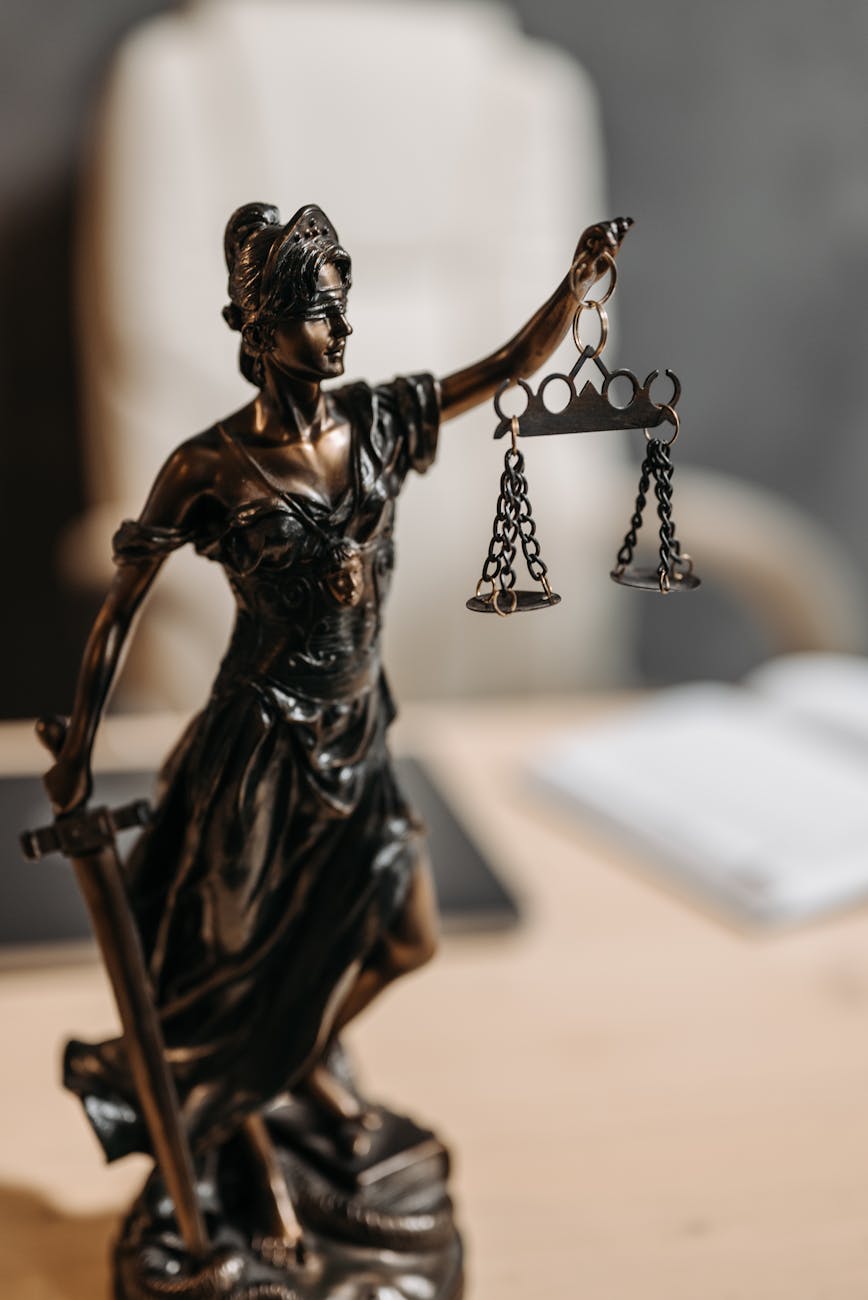
Photo by Pavel Danilyuk on Pexels.com

Recognizing that most Americans may have a familiarity with Judeo-Christian themes, imagery, and language—but little to no awareness of Mesopotamian themes, imagery, and language—I sought to recast my recent prophetic lamentation on the corruption of Justice, The Temples of Utu, into a biblical framework. By doing so, I aimed to ensure that my lamentation on the corruption of the American justice system, particularly the concern that judges and Justices are being purchased by oligarchs and beholden to faction, would resonate more deeply with contemporary readers.

The work found by scrolling further down, A Prophetic Lamentation: A Biblical Cry for Righteous Judgment, was created by transforming The Temples of Utu: A Contemporary Lament for Justice into a text that more explicitly resonates with the Judeo-Christian tradition. By incorporating biblical references throughout and aligning the themes with scriptural principles, this lamentation follows the prophetic tradition of calling out corruption and pleading for divine justice.

An Audio Reading of Donald S. Yarab’s
A Prophetic Lamentation: A Biblical Cry for Righteous Judgment

To aid in understanding the biblical framework underlying this transformation, the following terms and themes are central to the work:

I. Theological Names and Concepts

  1. El Elyon (אֵל עֶלְיוֹן) – A Hebrew name for God meaning “God Most High.” It first appears in Genesis 14:18-20 with Melchizedek, emphasizing God’s supreme authority and sovereignty over all creation.
  2. Adonai (אֲדֹנָי) – A Hebrew term meaning “my Lord,” traditionally used as a substitute for YHWH out of reverence. It signifies God’s absolute authority and dominion.
  3. El Shaddai (אֵל שַׁדַּי) – Typically translated as “God Almighty,” it first appears in Genesis 17:1 when God makes a covenant with Abraham. It highlights God’s power, might, and provision.
  4. Elohim (אֱלֹהִים) – A plural form used singularly for God in the Hebrew Bible, emphasizing divine power and majesty.
  5. Mammon (μαμμωνᾶς) – An Aramaic term used by Jesus in Matthew 6:24 and Luke 16:13, personifying wealth and material possessions as an opposing force to God. In this work, Mammon represents the corrupting influence of material gain and injustice.

II. Historical and Symbolic References

  1. Babylon – The empire that conquered Jerusalem in 586 BC, destroying Solomon’s Temple and exiling many Judeans. In biblical prophecy, Babylon symbolizes oppressive human power and arrogance that defies God (Isaiah 47:1-11; Jeremiah 50-51; Revelation 18).
  2. Egypt – The nation that enslaved Israel before the Exodus. Egypt is often used as a biblical metaphor for oppression, idolatry, and the worldly systems from which God delivers His people (Exodus 20:2; Deuteronomy 4:20; Hosea 11:1).
  3. Assyria – The empire that conquered the Northern Kingdom of Israel in 722 BC. Known for ruthless expansion and forced resettlement, Assyria is depicted as an instrument of God’s judgment but ultimately doomed for its arrogance (Isaiah 10:5-19; Nahum 3).
  4. Tyre – A Phoenician port city known for its wealth and trade dominance. Biblical prophets condemned Tyre for its pride, greed, and economic exploitation (Ezekiel 27-28; Isaiah 23). In this work, Tyre symbolizes commercial corruption and economic injustice.
  5. Mount Sinai – The sacred mountain where Moses received the Law from God (Exodus 19-20). Sinai represents divine revelation, covenant responsibility, and the foundation of justice.
  6. Sodom – The city destroyed for its wickedness and injustice (Genesis 19:24-25). In prophetic literature, Sodom serves as a symbol of moral corruption and a warning of divine judgment (Isaiah 1:9-10; Ezekiel 16:49-50).

III. Prophetic Tradition and Literary Framework

  1. Biblical Lamentation – This work follows the tradition of biblical lament, particularly seen in Lamentations, the Psalms, and prophetic writings. These laments express grief over national corruption and divine judgment (Lamentations 1:1-4; Psalm 137).
  2. Prophetic Literary Forms – The text incorporates multiple prophetic genres, including:
    • Lawsuit (rîb) – Where God brings charges against His people (Isaiah 1:2-3; Hosea 4:1).
    • Woe Oracle (hôy) – Pronouncing judgment upon injustice (Amos 5:18-24; Habakkuk 2:6-20).
    • Lament (qînâ) – Mourning the destruction caused by sin and corruption (Jeremiah 9:17-22; Ezekiel 19).
    • Restoration Promise – Common in prophetic literature, offering hope after judgment (Jeremiah 31:31-34; Isaiah 61:1-3).
  3. Covenantal Framework – Judges in ancient Israel were not merely legal authorities, but covenant mediators tasked with upholding divine law. Their corruption represents a betrayal of that covenant, mirroring Israel’s repeated failure to uphold God’s justice (Deuteronomy 16:18-20; Isaiah 1:21-23).
  4. Justice for the Oppressed – The recurring emphasis on justice for widows, orphans, and foreigners aligns with the core concerns of biblical prophets, such as:
    • Amos 5:11-12 – Condemning exploitation of the poor.
    • Micah 6:8 – Calling for justice, mercy, and humility.
    • Isaiah 10:1-2 – Warning against unjust laws that oppress the vulnerable.
  5. Apocalyptic Elements – The “Day of Reckoning” section reflects apocalyptic themes, seen in:
    • Joel 2:1-2 – A warning of impending divine judgment.
    • Daniel 7:9-14 – God’s ultimate triumph over corrupt rulers.
    • Revelation 18 – The fall of oppressive systems.

IV. Purpose of This Work

By drawing on these biblical themes, historical symbols, and prophetic traditions, A Prophetic Lamentation: A Biblical Cry for Righteous Judgment aims to offer a theologically rich meditation on the corruption of justice. It calls for repentance, righteousness, and restoration, echoing the voices of the biblical prophets who spoke against oppression and warned of impending judgment.

For readers wishing to explore the scriptural foundations of this work, a guide to the work labeled as containing in-text biblical citations is available at the button below. Finally, though many have their favorite bibles, I do not hesitate to recommend for studying the Old Testament, Robert Alter’s The Hebrew Bible: A Translation with Commentary. The scholarship, especially in the footnotes, is unmatched. Another useful online resource is biblehub.com – which allows you access to multiple bible translation traditions.


A Prophetic Lamentation: A Biblical Cry for Righteous Judgment

A Lament for the Perversion of Judgment and the Abandonment of Righteousness

Part I: The Forsaking of Righteousness

The First Turning from Truth

In the days when righteousness stood firm in the land, when the Law of The LORD was a lamp unto the feet of judges, the courts of justice were as sanctuaries where truth dwelled. The judges, servants of El Elyon—The LORD, God of Abraham, Isaac, and Jacob, the One who brought Israel out of Egypt and wrote His covenant in fire upon Sinai, sat in chambers of cedar and stone, their hands unstained, their judgment righteous. The widow, the orphan, and the foreigner approached without fear, for the Law was written by the finger of Elohim upon tablets of stone, and justice flowed like the waters of Shiloah through the gates of the city.

But in time, whispers arose from the chambers of power. First to one judge, then another. Golden whispers, honeyed promises, from the lips of those who dwelled in palaces of privilege. And some turned their ears to listen.

From the houses of the mighty came messengers bearing gifts wrapped in fine linen, bearing words that concealed their true purpose. And the first judge who accepted such offerings felt the scales within his heart shift, so slightly he did not perceive it. But The LORD perceived it, as He perceived the wickedness of the sons of Eli, whose hands were stained with bribes and whose lips defiled the altar. The LORD, before whom no falsehood can stand, whose eyes search the hearts of men.

Yet the voice of Adonai grew fainter in the halls of judgment, as the mighty pressed their thumbs upon the sacred scales of Moses.

The Widow’s Cause Rejected

When the widow came before the seat of judgment,
Her cause was just, her plea righteous.
But he who wronged her wore the seal of the rulers,
And silver had changed the words of the Law.

The judge spoke with a tongue not his own:
“The letter of the Law says thus and thus,
Yet its spirit is silenced beneath my tongue.”
And so the widow departed in sackcloth.

She lifted her voice in the gates of the city:
“Where is Thy justice, O LORD of Hosts?
Thy servants speak with deceitful lips,
Thy Law is sold for pieces of silver.”

But no thunder came from Mount Sinai,
For the judges had stopped their ears with gold.

Part II: The Spreading Abomination

The Choosing of the Corrupt

As the seasons of harvest passed, it came to be that when a judge returned to the dust, those who appointed his successor sought not for wisdom, not for righteousness, not for fear of The LORD. Instead, they sought those who had bowed before the mighty, who had pledged themselves in secret chambers to uphold not the Law as it was given through Moses, but the interests of those who elevated them.

And so the courts of judgment, one by one, were filled with those who had sold their birthright for a bowl of pottage before ever taking the seat of judgment. The words of their oaths remained the same, the ceremonies unchanged, but the fear of El Shaddai had departed from the administration of justice.

Then came the spirit of Mammon, whom Solomon warned against, moving through the corridors of power. Not with swift judgment did he strike, but with slow corruption, a leprosy of the soul that left its victims outwardly clean but inwardly defiled, wearing the robes of righteousness while serving the lords of unrighteousness. And Elohim looked down, as He did in the days of Noah, and beheld that the wickedness of man had multiplied, and that the thoughts of his heart were only evil continually.

The Judgment Purchased with Silver

Behold how they come with scrolls of precedent in hand,
Twisting the words of the prophets to serve new masters.
The Law speaks what they command it to say,
The statutes bend like bulrushes in the wind.

Mammon walks boldly among the pillars of justice,
His touch light as silver upon the outstretched palm.
Each judgment purchased furthers the transgression,
Each verdict for sale defiles the holy sanctuary.

The judges feast at the tables of the merchants of Tyre,
The masters of wealth whisper close in their ears:
“This cause favors our interests,” they murmur,
“This ruling preserves the power we hold dear.”

And the people cry out to the Holy One of Israel,
But His face is turned away from His defiled courts.

Part III: The New Order of Iniquity

The Temple Defiled

And so it came to pass that the courts of justice no longer stood as bulwarks against wickedness, but as instruments of those who ruled from behind veils. The judges spoke still of righteousness, wore still the robes of impartiality, but their eyes looked ever to their masters for instruction. Their words were shaped not by the Law of Moses, but by the whispers of corruption.

The scales that once weighed all causes righteously now tipped by design. The light that once revealed truth now cast deceptive shadows. And those who came seeking justice found instead a marketplace where judgments were bought and sold like cattle and grain in the markets of Jerusalem.

The Serpent, who from Eden has twisted the words of Elohim, wound himself around the pillars of judgment like the bronze serpent once lifted in the wilderness. His forked tongue spoke through the mouths of judges, uttering words sweet as honey yet bitter in the belly, verdicts that invoked the sacred Law while rendering it void and without effect.

The Perverted Judgment

The scales of judgment hang crooked now,
Weighted with bribes and heavy with deceit.
The mantle of justice has become a shroud,
Pulled tight by hands that serve the powerful.

The Serpent coils around the judgment seat,
His ancient form hidden beneath holy garments.
“Justice,” they proclaim, while dealing in oppression,
“The Law,” they invoke, while breaking its covenant.

The mighty approach the courts without fear,
For they have purchased favor with unrighteous mammon.
The poor approach with trembling upon their faces,
For they know the sentence before the cause is heard.

So the pillars of justice, hewn by the hands of the faithful,
Were carved anew by the chisels of corruption.
The covenant of right judgment lay broken upon the steps,
As the people watched their inheritance dissolve like morning dew.

Part IV: The Breaking of the Covenant

The Covenant Forsaken

Thus was the covenant between The LORD and His people defiled. Not by the sword of Babylon, nor by the chariots of Egypt, nor by the cunning of the Assyrians, but by the slow poisoning of the wells of justice. As the cycles of seedtime and harvest passed, the people came to know that the courts offered no refuge for the oppressed, that the words of judges held no truth, that judgment measured not righteousness but privilege.

And in this knowing, the foundations of society began to crumble. For what is Law if not covenant? What is justice if not faithfulness? What is order if not the keeping of sacred promises?

The rulers and mighty men who had captured the courts of judgment did not see the doom they had wrought. They feasted upon their victory over righteousness, their conquest of the scales. They did not hear the voice of Adonai, gathering like thunder upon the mountains, as in the days of Sinai, preparing for the day of visitation.

For when justice fails, the whirlwind awaits. When Law becomes a snare rather than a protection, the people cast aside its yoke. When righteousness is no longer honored in the courts, it cries out from the dust like the blood of Abel, calling for vengeance before the throne of El Elyon.

The Harvest of Corruption

Now Jerusalem trembles upon foundations of sand,
The courts of judgment stand as whitewashed tombs.
What was established through generations of faithfulness,
Falls to ruin through seasons of corruption.

The people no longer call upon the name of The LORD in the courts,
For His servants have made it bitter on the tongue.
They turn instead to other deliverers, darker powers,
Gods of vengeance, spirits of retribution.

The rulers sleep uneasy in their chambers,
For they have slain the guardian of their peace.
In purchasing the Law, they rendered it powerless,
In perverting justice, they broke its authority.

And The LORD cried out, as He did through Amos:
“But let justice roll down like waters,
And righteousness like an ever-flowing stream!”
But the stream had dried, the land was parched, and the people drank the wine of oppression instead.

Epilogue: The Prophetic Warning

The Voice of the Remnant

Those who remember, who still hold the Law sacred in their hearts, who recall the days when the courts of judgment shone with uncorrupted light, raise their voices in the wilderness of injustice.

They speak of what was lost, of scales that balanced, of laws that protected the least among the people. They warn of what comes when the rulers believe they have placed themselves beyond the judgment of El Shaddai.

For the LORD watches still, though His servants have forsaken Him. The Holy One of Israel sees still, though His courts have been corrupted. And the day will come when righteousness returns to the gates of the city, when justice again flows like living water.

But the price of restoration will be bitter, paid in the coin of tribulation. For what is defiled cannot be cleansed without fire, as Sodom was overturned in fire and brimstone, and the altars of Baal were cast down in the days of Elijah.

The Day of Reckoning

Remember this in days to come,
When the storms of judgment break upon the land,
When faction rises against faction in the ruined streets,
When the rulers tremble before the dispossessed:

It began with the perversion of judgment,
It began with the purchasing of truth.
It began when the courts of the LORD
Became marketplaces for injustice.

And those who turned their backs on righteousness,
Who sold the Law for temporary gain,
Who twisted the statutes of the Most High,
Will cry out: “How could we have known?”

But their hands are not clean.
For they defiled the sanctuary, stone by stone.
They corrupted the judges, word by word.
They profaned justice, verdict by verdict.

And the LORD shall arise, as He did at Sinai, in fire and storm,
As He did at Babylon, with writing upon the wall.
Neither silver nor rulers will shield them;
They and their wealth shall melt like wax before the flame.


The House of Azag: A Contemporary Lamentation

The text explores the myth of Ninurta and the contemporary retelling of Azag’s story, emphasizing themes of power, complicity, and the consequences of forgetting history, blending prose and verse to convey a timeless lamentation.

Cuneiform tablet: nir-gal lu e-NE, balag to Ninurta
Seleucid or Parthian Period, ca. 2nd–1st century BC
Mesopotamia, probably from Babylon (modern Hillah)
Clay tablet inscribed with a hymn of praise to Ninurta, the storm god and vanquisher of Asag, the demon of disease.
The Metropolitan Museum of Art, Object No. 86.11.349
(Public Domain Image – Courtesy of The Metropolitan Museum of Art)

On the Inspiration for The House of Azag: A Contemporary Lamentation

Inspiration often comes suddenly and from unexpected sources. While rereading Samuel Noah Kramer’s The Sumerians: Their History, Culture, and Character (1963/1971), I came across a passage recounting the myth of Ninurta, “the god of the stormy south wind,” who in battle destroyed Asag (Azag), “the demon of sickness and disease, whose abode is in the kur, or netherworld” (p. 151).

This passage immediately sparked a question: How would the story of Azag’s heir unfold in the modern age of plague and divisive politics? And how might it be told in the style of a Sumerian lamentation or myth?

The result is a hybrid of prose and verse, a structure reminiscent of ancient lamentations, epic chronicles, and prophetic texts. The prose sections serve as a narrative scaffold, unfolding the events and guiding the reader through the cycle of tyranny, reckoning, and return. The verse distills the emotional and symbolic essence of these events into stark, prophetic utterances, in keeping with the brevity and weight of traditional lamentation poetry.

By blending these forms, The House of Azag mirrors the ancient mode of storytelling in which history, myth, and warning are inseparable. It is both a retelling and a foretelling, a meditation on the cycles of power, complicity, and ruin—and the price a people pay when they forget the past.

An Audio Reading of D.S. Yarab’s The House of Azag: A Contemporary Lamentation


The House of Azag: A Contemporary Lamentation

Part I: The First Reign

The Time of Pestilence

In the days of turmoil, when truth was cast into the dust and the air itself grew thick with sorrow, there arose a ruler from the House of Azag—Azag, the demon slain by Ninurta, yet never truly vanquished. His tongue dripped venom, his hand withered the harvest, and his breath carried pestilence upon the wind. The multitudes, fevered and blind, hailed his coming, for they had forgotten the old warnings. They did not recall the tale, the curse, the name:

From the House of Azag, Azag, the demon slain by Ninurta.

And so, in his first reign, he set forth a sacrifice—one not of fire nor incense, but of breath and blood, of silence and mourning, that the land itself might wail beneath his shadow.

The Reign of Plague

He, of the House of Azag, heir to ruin,
Crowned in blight and anointed in ash,
Raised his hand, and the heavens grew silent,
Breathed his word, and the earth was unmade.

Fevered winds bore his whispered decree,
A covenant sealed in the shroud of the dead.
And they, the lost, the beguiled, the willing,
Bowed before the plague-born throne.

His altars dripped not with oil nor myrrh,
But with breathless sighs and broken names.
And still they called him savior, still they knelt,
Though the air itself was thick with wailing.

The Judgment

Thus was the land cast into shadow,
And the wise were scorned, the healers undone.
Not by sword nor by fire, but by silence,
Did the House of Azag reign.


Part II: The Fall and the Interregnum

The Elder Warrior’s Time

And so it came to pass that after the years of pestilence, when the land was burdened with sorrow and the cries of the forsaken rose to the heavens, an old warrior took up the mantle of the fallen city. He was a man of the elder years, not swift but steadfast, not mighty in arms but resolute in purpose. And he stood against the darkness, bearing the weight of the withered earth upon his back.

He drove out the ruler of the House of Azag—not by blade nor by fire, but by the will of the people, who in their suffering turned against the master of plague. The temples of deception cracked, the halls of power shuddered, and the great beast was cast into exile, retreating to the shadows of the wastelands.

Yet the abominable beast does not slumber.

The Warrior’s Triumph

He, the warrior of elder years, stood firm,
His hands worn, his voice a beacon.
And the people, weary of death and despair,
Turned from the House of Azag.

The tyrant fell, his name a whisper,
His throne an empty husk of ruin.
And for a time, the land breathed free,
And the winds carried no plague.


Part III: The Second Reign

The Return of Wrath

But the abominable beast does not die. Even as the warrior sought to mend the broken walls, the deceiver’s voice slithered through the ruins. He whispered of old glories, of stolen kingdoms, of vengeance against the weak. He promised dominion to the cruel, riches to the corrupt, and absolution to the faithless. And in the dark corners of the land, where grievance festered, where truth was forgotten, and where justice was mocked, they listened.

And the warrior—burdened by years, by the weight of a land divided—fought not with sword or fire, but with weary breath and reasoned word. And they laughed, for reason had no purchase in the ears of the blind.

Thus, through falsity and oath-breaking, through fear and fury, the House of Azag rose once more. And this time, not in sickness, but in wrath.

The Return of the Abominable Beast

He, of the House of Azag, whisperer in shadow,
Spoke in silvered lies, and the deaf gave answer.
He stirred the dust, and the bitter took arms,
He spread his hand, and the oath-breakers swore.

Not by plague, but by vengeance, he came,
Not with fever, but with fire.
The halls of wisdom he razed,
The scribes he silenced, the truth he unmade.


Part IV: The Willing Hands

The People’s Bargain

And when he, of the House of Azag—Azag, the demon slain by Ninurta, called forth his name from the abyss, they who had once trembled at his touch did not recoil. They did not remember the pestilence, nor the wailing of their own dead. Instead, they gathered at the gates, voices raised in fervor, hands outstretched not in defiance, but in welcome.

For he did not come as he had before, cloaked in sickness and ruin. This time, he came bearing gifts—promises of glories unearned, of burdens lifted from their shoulders, of enemies cast into the void. He did not call them to serve, but to rule. He did not ask them to sacrifice, but to consume.

And so they bent the knee, not in chains, but in hunger. Not from fear, but from desire.

And the warrior, standing upon the walls, cried out: “Have you forgotten?”

But they turned their faces from him.

The Willing Betrayal

He, of the House of Azag, called to the lost,
And they answered, not with dread, but with praise.
For he did not come with pestilence,
But with crowns of dust and golden lies.

He whispered: “The land is yours.” And they rejoiced.
He promised: “The labor is no longer yours.” And they knelt.
He declared: “The past is a burden. Remember it not.”
And they cast their own memories into the fire.


Epilogue: The Consequence

The Reckoning to Come

Thus, the gates were flung open, not by the tyrant’s might, but by the hands of the desperate and the blind. They, who had suffered under his reign, now lifted him upon their shoulders, crying, “He is the chosen! He will restore what was stolen!”

But there was nothing to restore. What they had lost, they had cast away.

And when the reckoning came, they wailed once more,
Crying out, “How could we have known?”

But their hands were not clean.

For they had built the throne, brick by brick.
They had paved the way, stone by stone.

And when the monstrous beast took his seat,
He did not need to command them.
They carried out his will before he spoke it.

The Symbolism of the Golden Plow in Literature

From William Blake’s Jerusalem, Chapter 3

How old is the literary tradition of the golden plow? This question arose unexpectedly while I was working my way through William Blake’s Jerusalem, where I encountered these striking lines:

They Plow’d in tears, the trumpets sounded before the golden Plow And the voices of the Living Creatures were heard in the clouds of heaven … (Blake, 1988, p. 205)

As often happens in literary exploration, the evocative image of the golden plow immediately diverted me from my primary task of continuing to read and understand Jerusalem. The golden plow, I realized, resonates deeply in our cultural consciousness, appearing not only in poetry (see also Blake’s Augeries of Innocence, where he writes: “When Gold & Gems adorn the Plow / To peaceful Arts shall Envy Bow”) but also in modern contexts—such as the Golden Plow Award, the highest honor presented to a sitting member of Congress by the American Farm Bureau.

The reasons for the golden plow’s enduring power as a poetic device are clear: the plow itself is a universal symbol of labor, cultivation, and renewal—an instrument that transforms barren soil into fertile ground, embodying humanity’s intimate connection with nature and the cycles of life. By portraying this familiar tool as golden, poets imbue it with sacred significance, elevating it from the mundane to the divine. Gold has long been associated with divinity, purity, and incorruptibility. In this sense, the golden plow often becomes not merely a tool of agriculture but a metaphor for spiritual or moral transformation, where the act of plowing symbolizes preparing the soul or society for renewal and growth.

This striking image led me to investigate its earliest literary appearances, which brought me to Herodotus’s Histories (late 5th century BC). In Book Four, he recounts the Scythian origin myth:

According to the Scythians, theirs is the youngest of nations, and it came into existence in the following way. The first man born in this land, when it was still uninhabited, was named Targitaos. They say that the parents of this Targitaos were Zeus and the daughter of the River Borysthenes, though that does not sound credible to me. Nevertheless, that is their claim. From such stock, then came Targitaos, and to him were born three sons: Lipoxais, Arpoxais, and the youngest of them, Colaxais. While they reigned, certain objects made of gold fell from the sky: they were a plow, a yoke, a battle-axe, and a cup. When these objects came to rest on Scythian ground, they were seen first by the eldest son, who, wanting to take them up, approached where they lay. But as he came near them, the gold caught on fire, so he left them there; and when the second son approached, the same thing happened. Thus the burning gold drove both of them away; but when the third and youngest son approached, the fire stopped burning and went out, so he carried the gold home, and the elder brothers reacted to this event by agreeing to surrender the entire kingdom to the youngest. (Herodotus, 2007, pp. 283–284)

While the specifically golden plow appears rarely in classical and medieval literature, the plow itself features prominently as a powerful symbol. In Virgil’s Georgics, the unadorned plow serves as both a practical tool and metaphor for poetic creation:

It must also be said what tools are the weapons of the hardy rustics,
without which neither could crops be sown nor harvests rise:
the plowshare and the heavy timber of the curved plow,
the slow-moving wagons of the Eleusinian mother,
the threshing boards, the sledges, and the rakes with uneven weight. (Virgil, 1846, Georgics I, lines 160–162, trans. by author)

Although Virgil’s plow is neither golden nor even gilded, its role as both a practical tool and poetic metaphor anticipates later literary uses of the golden plow as a symbol of sacred labor and creation.

The Jewish and Christian traditions, drawing upon their holy books, provided writers throughout the ages with rich sources of plowing imagery for metaphorical and allegorical purposes. Consider Luke 9:62, where commitment to discipleship is illustrated through the image of putting one’s hand to the plow; Amos 9:13, where the plowman overtaking the reaper symbolizes divine abundance and the promise of restoration; and Isaiah 2:4, where the transformation of swords into plowshares symbolizes divine peace. In these texts, the plow consistently signifies renewal, moral preparation, and divine purpose. This deep reservoir of symbolic meaning helps us understand the significance of Blake’s golden plow in Jerusalem.

In both Blake’s visionary poem and Herodotus’s historical narrative, the golden plow stands as a transformative symbol. For Blake, it is likely part of a cosmic act of redemption, accompanied by trumpets and celestial voices. For Herodotus, it conveys legitimacy and divine sanction within the founding myth of a nation. In each case, the golden plow bridges the earthly and the divine, elevating labor and effort to the realm of the sacred. This enduring image, rich with cultural and poetic imagination, invites reflection on how humanity’s most basic acts—plowing, cultivating, laboring—can become acts of profound spiritual significance.

That the symbol persists into our own time through awards like the Golden Plow Award suggests its continuing resonance with fundamental human values of cultivation, transformation, and excellence. Yet I wonder: might there be an even earlier literary reference to this powerful symbol than Herodotus’s account? Readers who know of earlier appearances are invited to share their findings.


References

Blake, W. (1988). The complete poetry & prose of William Blake (D. Erdman, Ed.; H. Bloom, Commentary). Anchor Books.

Ginsberg Project. (2024, October 14). William Blake – from The Marriage of Heaven and Hell – 14. Retrieved December 13, 2024, from https://allenginsberg.org/2024/10/oct14/ The Ginsberg Project has an interesting discussion of the Jerusalem extract which is the object of this post.

Herodotus. (2007). The landmark Herodotus: The histories (R. B. Strassler, Ed.; A. L. Purvis, Trans.; R. Thomas, Introduction). Pantheon Books.

Krisak, L. (2006). [Review of the book Virgil’s Georgics: A New Verse Translation, by J. Lembke]. Translation and Literature, 15(1), 111–113. Edinburgh University Press.

Lincoln, B. (2014). Once again “The Scythian” myth of origins (Herodotus 4.5–10). Nordlit, 33, 19–34.

The Jerusalem Bible: Reader’s Edition. (1968). Doubleday & Company.

Virgil (Publius Vergilius Maro). (1846). Georgica [Georgics], Book I, lines 160–162 (Hachette ed.). Translated by the author. Wikisource. Retrieved December 9, 2024, from https://la.wikisource.org/wiki/Georgica_(Hachette)/Liber_I

Virgil. (2005). Virgil’s Georgics (J. Lembke, Trans.). Yale University Press.