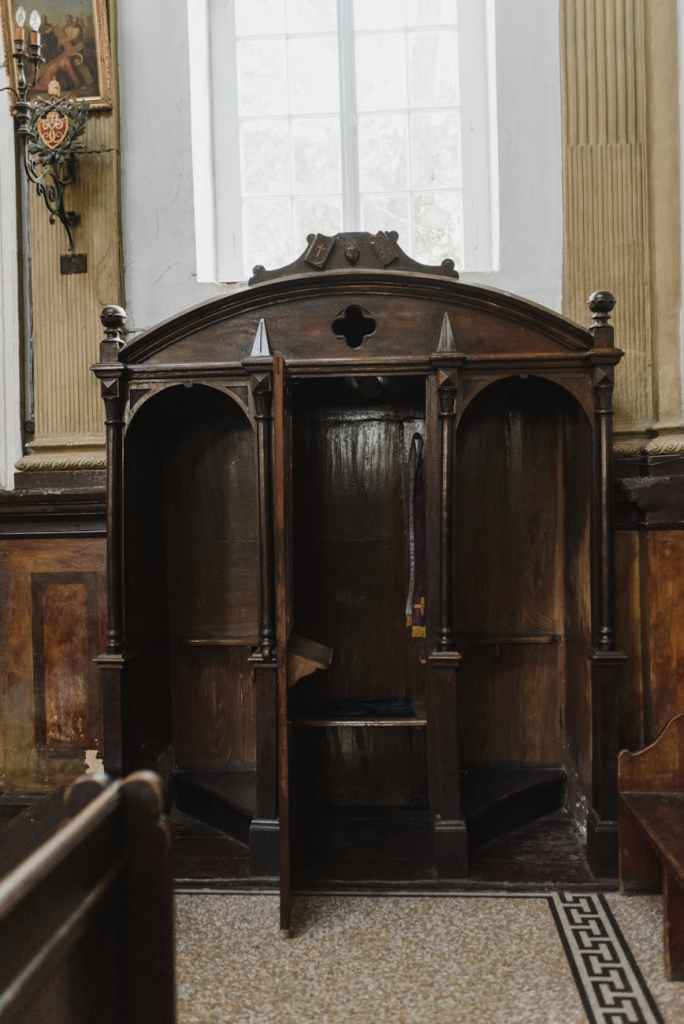
Forgive us, Father, for we have sinned, It has been… we cannot count the years— since we knew what sin meant.
We mouth the words the nuns and priests once taught us, but the syllables taste foreign now, like prayers in a dead language we pretend to understand.
We have forgotten why we kneel, though still our knees recall the stone. We have lost the thread of what was broken, but feel the weight of something severed.
We built cathedrals out of doubt and filled them with our questions. We replaced altars with algorithms, confession with comment sections.
We are no longer sure You are listening— or if listening is something we invented to make the silence bearable, the vastness less vacant.
We have sinned—we think— though we are not sure against what. Against nature? Against each other? Against some half-remembered covenant, written in a script we can no longer read?
We recite the forms like actors who have forgotten their motivation, performing the ancient motions because they feel like muscle memory— like DNA calling us home to a house we are no longer certain exists.
Still we gather, still we whisper these inherited incantations, hoping they might still hold power, hoping the words might remember what we have forgotten.
O my God… we are… we think we are… sorry… for having… for having what? For having forgotten how to finish this prayer?
The Browns stadium deal is not merely a bad investment—it is a paradigm of elite hypocrisy, a socialist redistribution of public wealth upward, executed by lawmakers who claim allegiance to free‑market principles while enacting policies that privatize profit and publicize risk.
Earlier this year, Ohio’s Republican supermajority passed legislation requiring that high school students be instructed in the virtues of capitalism.¹ At the same time, these very lawmakers voted to seize $600 million from the state’s unclaimed‑property fund—money legally belonging to ordinary Ohioans—and redirect it to fund a $2.4 billion private stadium project for billionaire owners Jimmy and Dee Haslam. That is not capitalism. That is elite socialism, a state‑directed transfer of private/collective resources to elite private interests.
The Haslams, whose estimated net worth exceeds $8.5 billion, are not merely beneficiaries of state largesse—they are its architects. Whether the team remains in downtown Cleveland (with the city offering $461 million in renovations) or relocates to Brook Park with state and county subsidies, the outcome is the same: private/public funds extracted to enhance elite private empires.
Let us strip away the euphemisms. This is not a “public–private partnership.” It is a state‑sanctioned seizure and redistribution of wealth, orchestrated by legislators who demand work requirements, means testing, and behavioral monitoring for ordinary Ohioans receiving food, housing, or healthcare assistance—but offer no such oversight when the recipient wears a suit and owns a football team.²
When working families receive modest aid, it is denounced as “government dependency.” When billionaires receive hundreds of millions in public money, it is praised as “economic development.” This is not pedestrian ideological inconsistency; it is class warfare masquerading as policy.
County Executive Chris Ronayne called the proposal “piracy,” rightly charging that lawmakers are robbing Bob and Betty Buckeye to pay Jimmy and Dee Haslam.³ And indeed, the state has now declared the unclaimed‑property fund reverts to public ownership after ten years—not to be reinvested in public education or healthcare, but to underwrite the speculative ventures of the ultra‑wealthy.
Even the supposed safeguards are laughable: a mere $50 million in escrow from the Haslams, and another $50 million line of credit—a token hedge against a half‑billion‑dollar state exposure. Meanwhile, individuals requesting a few hundred dollars in public aid are subjected to rigorous oversight and bureaucratic suspicion.
This arrangement is a perfect study in the moral inversion of modern American political economy: public discipline for the broad citizenry, public indulgence for the rich; free‑market platitudes for the powerless, centralized socialism for the powerful.
This stadium subsidy is merely the latest manifestation of a systematic pattern—from pharmaceutical companies capturing billions in public research funding while charging monopoly prices for resulting drugs, to defense contractors operating on cost-plus arrangements that guarantee profits regardless of performance, to agricultural corporations receiving millions in annual subsidies while preaching individual responsibility. The Browns deal simply makes visible what usually operates through more obscure channels.
This is not merely the marginalization of the interests of the poor, working, and middle classes, but the broader appropriation of public resources away from the citizenry at large—those who should have access to public investment without facing moral scrutiny, bureaucratic suspicion, or ideological disapproval.
It is telling that both Policy Matters Ohio and the Buckeye Institute—voices from the ideological left and right—oppose the deal. They understand, as do many citizens, that this is not governance in the public interest. It is the use of state authority to engineer a systematic upward redistribution of wealth, cloaked in the language of jobs and development.
The real divide in America is not between socialism and capitalism—it is between elite socialism, in which wealth is extracted and insulated for the privileged, and democratic socialism, in which collective resources are used for collective needs. (Ours has always been a mixed economy—part capitalist, part socialist, the latter increasingly tilted toward elite interests—though this has rarely been acknowledged in our political discourse.) Until we name this truth and demand ideological consistency from our legislators, we will continue subsidizing billionaires while denying the citizenry investment—and calling it “fiscal responsibility.”
The scaffolding of economic life already exists. The only question is whether it will remain a scaffold supporting billionaires or be reclaimed as a structure serving all the people.
NOTES:
¹ Senate Bill 17, signed by Gov. Mike DeWine in March 2024, requires ten principles of “free market capitalism” to be taught as part of financial literacy courses required for high school graduation. The Ohio House passed the bill 66–26 in February 2024. See: Ohio Capital Journal, “Ohio House passes bill that would add capitalism to high school financial literacy curriculum,” Feb. 12, 2024.
The Statehouse News Bureau, “Former Gov. Rhodes said ‘Profit isn’t a dirty word.’ Now, Ohio students will learn about capitalism,” Mar. 15, 2024.
² See, e.g., Ohio Administrative Code 5101:4‑3‑13 and 5101:4‑9‑09 (SNAP work registration, employment/training and sanctions); 5101:1‑3‑12 (Ohio Works First requiring 30–55 hours/week of work). Ongoing eligibility mandates include documentation of income, assets, and residency. No equivalent oversight applies to recipients of corporate subsidies or stadium funding.
³ Chris Ronayne described the plan as “akin to piracy” and stated, “This is not just robbing Peter to pay Paul, this is robbing Bob and Betty Buckeye to pay Jimmy and Dee Haslam.” See: WKYC, “Ohio’s unclaimed funds could help build Browns stadium: Here’s how to see if any belong to you,” June 5, 2025. wkyc.com
Axios Cleveland, “Ohio Senate proposes $600 million Browns stadium subsidy using taxpayers’ unclaimed funds,” June 4, 2025.
DeNatale, Dave, Lynna Lai, and Peter Fleischer. “Ohio Senate approves its version of budget, including $600M for new Cleveland Browns domed stadium in Brook Park.” WKYC, June 11, 2025.
⁴ Should the Browns remain in downtown Cleveland, the city’s proposed $461 million commitment is expected to come from municipally issued bonds, potentially backed by revenues through the Cleveland–Cuyahoga County Port Authority or tax levies. The Port Authority, which regularly issues loans and revenue bonds to spur commercial development, functions as a centralized mechanism for steering public resources—effectively a form of state planning within a nominally capitalist framework, choosing economic “winners” with public backing.
General sources consulted: Associated Press, Axios Cleveland, The Guardian, New York Post
The following are two companion reflections—On Truth and Empirical Fact and No Arc, No Lessons—presented together under the shared heading Method and Meaning in an Unteachable World. Though each may stand alone, they are best read in conversation with one another. Both essays resist the comforting notion that history, literature, or art functions as teacher or guide, and instead consider interpretation as an act of encounter—provisional, situated, and shaped as much by silence as by statement.
The first essay explores the distinction between fact and truth, exploring how memory, intention, and metaphor complicate the act of knowing. The second rejects the idea that history bends toward moral instruction or cumulative wisdom, and instead proposes a posture of reflective attention to the recurring patterns and failures of the human condition.
Versions of both essays with full citations and scholarly apparatus are in preparation for future publication. What follows here is intended for open reading and contemplation.
On Truth and Empirical Fact
“You cannot step into the same river twice.” —Heraclitus (Fragment 91, DK B91)
In the course of recent reflection, a distinction long known, but not always properly honored, must be drawn again: that between truth and empirical fact. Though often conflated in casual discourse, these are not synonymous—nor should they be.
An empirical fact is a datum: observed, measured, verified. It is the yield of experiment, the result of record, the artifact of sensory perception. That water boils at one hundred degrees Celsius at sea level is a fact. That a coin weighs 3.2 grams and bears a cross upon its reverse is a fact. That a battle was fought in the year 1066 may be supported by a host of facts: chronicles, bones, weaponry, et cetera. Such facts, when properly corroborated, are not unimportant. But they are not truth.
Truth, if it exists at all, is something larger, more elusive, more alive—not constructed by us, but encountered when consciousness prepares itself to receive what appears. It does not come when summoned, but when the conditions for its appearing have been made ready: doubt, humility, attention. It is apprehended in this prepared openness, grasped in the space between what is seen and what is understood.
Philosophers have long attended to this disjunction. Plato distinguished between the world of appearances and the world of eternal Forms, the former unstable, the latter enduring. Augustine found truth not in the fluctuating realm of sensory report, but in the divine Logos. Nietzsche, ever unsettling, dismissed truth as a “mobile army of metaphors”—useful, yes, but neither objective nor stable. Heidegger, resisting the reduction of truth to correctness, instead spoke of aletheia—not truth as correspondence, but as unconcealment, as that which emerges into view. And Gadamer—whose influence upon this approach is not accidental—taught that truth emerges in understanding itself, not as a proposition but as a happening, shaped by dialogue and historical consciousness.
Facts may be marshaled. Truth, by contrast, is survived.
Even intention, often treated as the surest witness to truth, must be interrogated. The poet’s intent, the author’s purpose, the painter’s design—these are not fixed coordinates but shifting recollections. Memory does not preserve; it reconstructs. And with each return to the well of what was once meant, the water tastes slightly different. Heraclitus observed that one cannot step into the same river twice—not only because the river flows, but because the self who steps in is no longer the same. So it is with intention. If asked now what was intended in a particular line or gesture, one may offer a reply—but it is a construction, shaped by who speaks now, not by who once acted. Intention, like truth, is not preserved in stillness—it is shaped in motion. It, too, is not possessed, but pursued.
In the poem At the Crossing, the aim was not to name truth—such a thing cannot be done—but to describe the space it haunts. The poem speaks of words that fracture, colors that deceive, touches that both reveal and withdraw. It ends not in assertion, but in a trembling, a silence where meaning nearly forms but does not solidify. A reader once dismissed it: “Life is too brief,” he said, “to spend in the space where meaning almost forms.” The impulse is understood. But the objection must be declined.
For it is in that space—that trembling margin—that life does happen. To live fully is not to claim truth as possession, but to encounter it as presence. Not to seal it in certainty, but to allow it to move, shadowlike, across the inner walls of the soul.
Empirical facts anchor us to the world. But truth is not what anchors—it is the thread we follow across the abyss.
And we follow it not with measuring tape, but with metaphor, with memory reshaped each time it stirs, with intention half-forgotten, and with the courage to walk where the light breaks, not where it rests.
No Arc, No Lessons: On Method, Encounter, and the Tragic Repetition of History
“To articulate the past historically does not mean to recognize it ‘the way it really was’… It means to seize hold of a memory as it flashes up at a moment of danger.” —Walter Benjamin, Theses on the Philosophy of History
Each age brings forth its own imperative—shaped by its wounds, haunted by its questions, driven by its unspoken needs. The present is no exception. Whether in the study of history, the contemplation of art, or the exegesis of sacred or poetic texts, interpretation does not arise in a vacuum. It emerges from a condition: the place, the moment, the unease that calls forth inquiry. And yet, though each generation may believe itself newly burdened or singularly illuminated, the recurring gestures of human life belie that novelty. There are patterns, yes—but these do not confirm progress. They reveal persistence.
The idea that history bends—toward justice, truth, wisdom—is seductive. It offers shape to the shapeless, comfort to the anguished, and direction to the lost. But there is no arc. The metaphor distorts by promising what experience consistently denies. If history teaches, its students are unteachable. The same motives recur, the same errors repeat, the same vanities endure. Progress, when claimed, is often little more than a rearrangement of circumstance. The root remains.
The players do not change. Their names shift, their languages evolve, but their roles remain remarkably constant. Power is sought, justified, and abused. Fear is stoked and traded for security. Hope is minted into symbols, then worn threadbare. Love, loss, betrayal, glory, shame—these are the constants. The stages differ: the scenery updated, the choreography modernized. But the script draws upon ancient instincts. And the audience, again and again, forgets the last performance, believing the story to be new.
Interpretation, then, cannot rest on the assumption that knowledge leads to virtue or that understanding necessarily yields transformation. It may. But often it does not. History is not a teacher. Art is not a moralist. Scripture does not condescend to pedagogy. If anything is revealed, it is revealed despite the will to ignore, deny, or disfigure it.
This position echoes Walter Benjamin’s image of the Angel of History, whose face is turned toward the wreckage of the past even as a storm drives him blindly into the future—what we call progress. It stands also in contrast to the historicism that treats the past as lesson-book or path to telos. Gadamer reminds us that understanding is not methodical recovery, but an event of fusion between past and present. Yet this fusion must be entered with humility, not control.
Given the absence of reliable progress and the persistence of human patterns, interpretation requires a different posture—one that recognizes repetition, resists despair, and permits meaning to arise without demand. Method, in this context, must be understood not as a tool of conquest, but as a lens—no more authoritative than another, yet capable of bringing certain essences to the surface. Every method is partial, shaped by its assumptions, animated by its framing questions. No method sees the whole. Each reveals what it is attuned to find. Truth, if it appears at all, does so not as result, but as event—as something glimpsed when the interpreter is prepared to receive, not to impose.
Three words mark the contours of a fitting approach: nexus, interaction, and reflection.
Nexus identifies the place of convergence—where past and present, text and reader, artifact and witness intersect. It is not discovered in isolation, but emerges through relation. Interaction marks the dynamic movement within that convergence. Meaning is not fixed; it arises through tension, difference, and engagement. Reflection follows—contemplative, fragmentary, often incomplete. It does not assert finality but honors process. It acknowledges that memory reshapes what it recalls, that intention fades into approximation, and that even the most careful exegesis remains provisional.
This echoes the work of Paul Ricoeur, who reminds us that narrative, memory, and identity are always under construction—never final, always revised in the act of remembering. Warburg’s concept of Nachleben der Antike—the afterlife of antiquity—reveals how cultural symbols and images recur across historical periods not as static forms but as charged fragments, reanimated under new conditions, carrying both continuity and transformation in their repetitions. This persistence of symbolic forms across time exemplifies the broader pattern: not progress, but recurrence with variation.
From art, history, and sacred text, nothing must be demanded. They may instruct, but only when they are permitted to resist instruction. They may illuminate, but not on command. They may wound, they may deceive, or they may pass in silence. The encounter must be enough.
Empirical facts can be gathered. Archives can be organized. But truth, if it comes, does not arrive catalogued. It appears only when conditions are ready—when the reader or viewer stands not with certainty, but with openness. Not as master, but as interlocutor.
Too often, only the facts are preserved. They are worn as tokens of knowledge while the truth behind them—uncomfortable, paradoxical, demanding—is left behind. The lesser lesson becomes the badge of wisdom; the deeper truth is dismembered for convenience.
No arc. No grand instruction. Just the repetition of roles, the echo of stories, the persistence of hunger. Meaning, when it comes, comes not as reward, but as grace.
And yet, even in refusal, in distortion, in failure, there remains something sacred in the effort to attend. To see the pattern, not to worship it. To hear the old lines in new voices. To walk the ruins with open eyes, knowing that the script will be performed again.
These ten poetic reflections revisit the protest anthems, lullabies, and cultural hymns that shaped a generation—songs we once sang in innocence, defiance, or hope. But time has sharpened their meanings, revealed their silences, and unsettled their assurances.
Songs I Thought I Understood is not a repudiation of the music, but a reckoning with what we missed—or could not yet see—in the melodies we inherited. Each piece responds to a specific song, not by rewriting it, but by listening anew with older ears and quieter questions.
Songs I Thought I Understood
A Requiem and Reflection in Ten Refrains
by Donald S. Yarab
“For the ones who heard the songs and still ask the questions.”
The Ten Refrains:
Puff Remembers (after “Puff the Magic Dragon”)
The Valley Below (after “One Tin Soldier”)
The Flowers Still Bloom (after “Where Have All the Flowers Gone”)
The Needle Lifts (after “This Land Is Your Land”)
The Submarine Below (after “Yellow Submarine”)
No One Was Saved (after “Eleanor Rigby”)
The Wind Still Blows (after “Blowin’ in the Wind”)
Can It Be (after “Let It Be”)
Neon Psalm (after “The Sound of Silence”)
We Have Not (after “We Shall Overcome”)
Puff Remembers
(after “Puff the Magic Dragon”)
Somewhere over the rainbow, Once upon a time, In a land not so far away— Yes, with dragons.
Puff—I remember him well. He sailed without maps, Carried no sword, Only stories.
But Little Jackie Paper— No, I never knew him. He came, they say, with sealing wax, With strings, with child-sized laughter.
And then he left. As children do. As they must.
Puff stayed behind, Watching the tide pull dreams from the sand, Waiting longer than most would, Believing perhaps too much.
Now I am older than Puff was then. The toys are gone. The books are shut. Even memory, sometimes, forgets its lines.
Still— Sometimes I think I hear the flap of canvas, The creak of rope, The rhythm of a boat That knows its way through time.
He may be out there yet— Not waiting, exactly, But still sailing, With room for one more story.
The Valley Below
(after “One Tin Soldier”)
I remember One Tin Soldier, The mountain people, the treasure buried deep, The message of peace— Unspoken, unread, Trampled by riders from the valley below.
As a child, I did not understand Why they came with swords To claim what was freely offered. I did not understand Why they could not wait, Why they did not read.
They were simply the People in the Valley Below.
But now—I know them. They live not far from here. They speak in votes and verdicts, In profits and justifications, In silence, and in slogans Worn smooth with use.
Some are kind, some mean well. Most are afraid. Many never climb.
And though the treasure still lies buried— That old dream of peace, The circle unbroken, The better world whispered in songs— I see fewer walking toward the mountain. Fewer still willing to wait.
The child I was weeps, Not for the dead soldier, But for the living who will never read The words beneath the stone.
The Flowers Still Bloom
(after “Where Have All the Flowers Gone”)
The flowers—I see them. They bloom each spring, In roadside ditches, In tended gardens, In places untouched by war Only by accident.
But where are they, Even now? Where are the promises they once held— The wreaths we laid, The songs we sang, The lessons we said we had learned?
Where are the girls who picked them, And the boys they gave them to, Before uniforms, Before funerals, Before forgetting?
They bloom still, Unconcerned. Nature does not mourn the fallen. It only covers them.
We placed our hope in petals And let them drift into the graves— Answers too proud Or too ashamed To be spoken.
Yes, I see the flowers. But I see them differently now. They are not peace. They are not memory. They are what grows when nothing else is left.
The Needle Lifts
(after “This Land Is Your Land”)
This land is your land, This land is mine— That is what the song said. And we sang it, Hand in hand, Before we knew Who drew the lines.
From California to the New York island— Yes, the rivers still run, The redwoods still rise, But whose boots Are turned away At the fence? Whose tent Stands just outside The melody?
I walked that ribbon of highway once. I saw the “No Trespassing” sign, Half-buried in dust. And behind it— Nothing but wind, And memory.
This land was made for you and me. But the deed was never signed. Or if it was, It has been lost Beneath centuries of ash and ink.
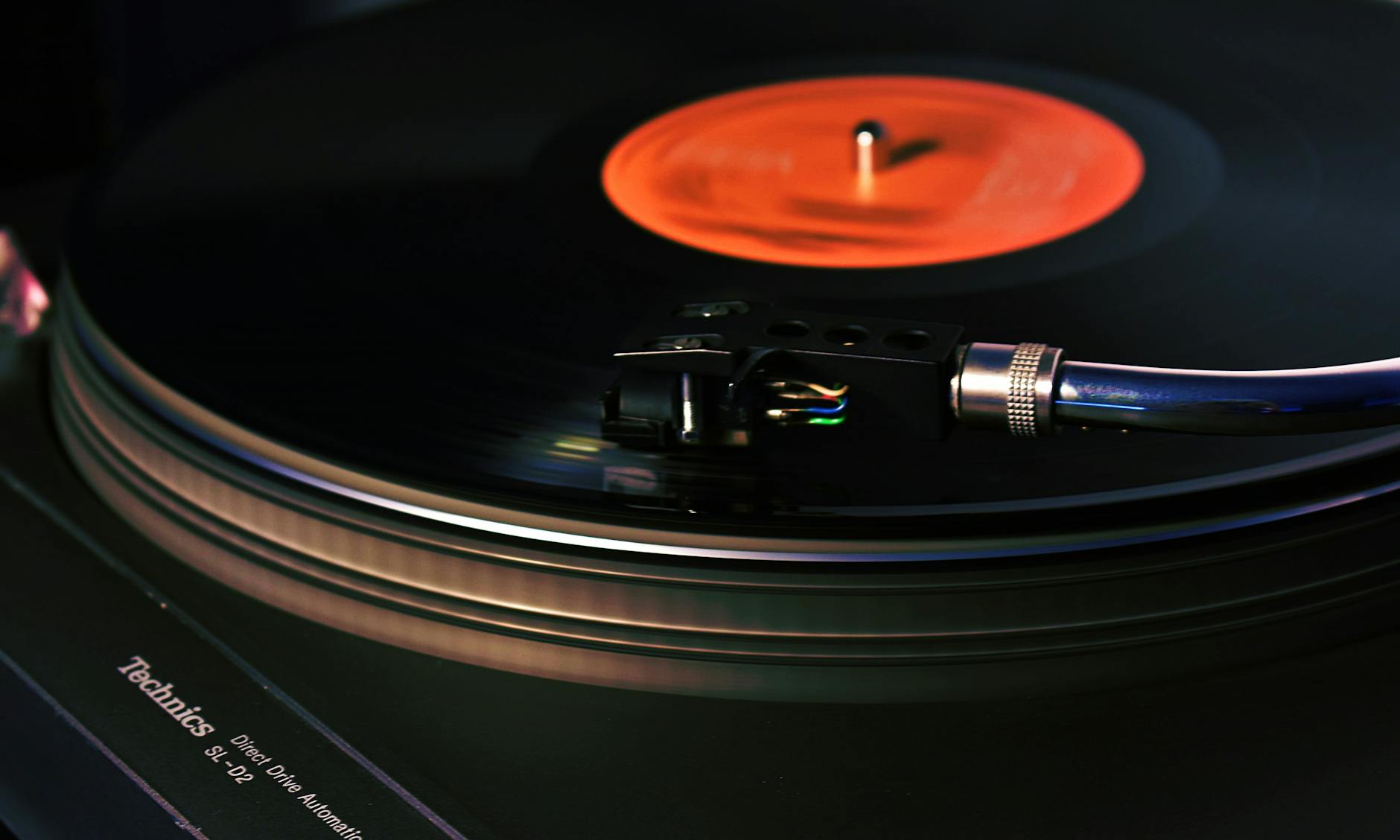
The voices fall quiet. The turntable slows. The needle lifts.
And still the land stretches, Unresolved. The chorus unreturned. The question unsung.
The Submarine Below
(after “Yellow Submarine”)
We all lived there, once— In the Yellow Submarine. Or so we sang.
A vessel of laughter, Of porthole dreams And choruses in perfect time.
We believed in it, In its bright hull, Its cartoon courage, Its watertight world Where everyone belonged And nothing intruded.
Unity, We thought, Could be painted in primary colors. Could float beneath the noise, And keep us safe.
But the world knocked. And the hull bent. And the sea Was not always blue.
Some never boarded. Some were told There was no room. Some were thrown overboard Before the song began.
Now I wonder— Was the submarine ever real? Or just a dream we made To keep the waters from us?
If it sails still, It does so With ghosts at the helm, And a quiet We mistook for peace.
No One Was Saved
(after “Eleanor Rigby”)
Eleanor gathered the rice like a rite— Not a wedding, But a funeral in disguise. No one noticed. No one asked Why she did it alone.
She lived in a world of quiet corners, Of teacups with dust, Of pews that creaked For no one in particular.
I did not see her then. Not really. She was background— A figure in a verse I sang without knowing.
And Father McKenzie— He wrote his sermons by candlelight, Even when no one came. He believed in the act, In the speaking itself, As if God were listening Even if the people were not.
I used to think They were odd. Sad, yes— But distant, Part of another time.
Now I see them in doorways, At bus stops, Scrolling through silence On glowing screens. I see them in myself, In the way I answer fewer calls, In the prayers I no longer finish.
All the lonely people— They are not elsewhere. They are not lost in some old song. They are here. And no one was saved.
The Wind Still Blows
(after “Blowin’ in the Wind”)
I remember when the answer Was blowing in the wind. We sang it as if that meant It was near, As if the breeze would carry it to us If we just opened our hands Or listened hard enough.
But I have stood in that wind now. Not once. Not in youthful chorus, But in silence.
And the answers do not ride so lightly.
How many roads? Too many to count. Too many lined with names Etched in metal, Or cardboard signs that ask Not for peace, But for spare change.
How many ears must one man have Before he hears the cry? Enough to wear out the listening. Enough to forget which voice was his.
The cannonballs still fly, Though we call them by different names now— Policy. Preemption. Profit. “Necessary force.”
Yes, the wind still blows. But the answers, If they are there, Have long since been scattered Across deserts, Across oceans, Across generations too tired To ask the questions anymore.
Can It Be
(after “Let It Be”)
When I find myself in times of silence, I do not hear The words of wisdom. I hear the ache of asking Whether silence is answer, Or simply absence.
Let it be, they said. And I tried. I tried to let the world Unfold as it would, To trust in the slow work of time.
But still the wars came. Still the towers fell. Still the hands reached out And found nothing waiting.
Mother Mary— She comes to some. But others Find no visitor In the night.
Let it be? Can it be? Is there something We have not yet asked, Some word not spoken Because we were told Not to speak at all?
There will be an answer— So the song promised. But I have learned That sometimes The answer is another question.
Neon Psalm
(after “The Sound of Silence”)
Hello darkness— It does not answer. It scrolls. It flashes.
We used to whisper to the void And hope it heard. Now we shout And hope it trends.
The prophets write in hashtags, Their sermons flickering Across shattered glass, Their congregations swiping And moving on.
No one walks the quiet streets, No one weeps in the back pew. The cathedral is a comment thread Lit by the glow Of the god we built To hear ourselves.
No one dared disturb The sound of silence— That was the line. But now it is all disturbance. The silence Is what we fear.
I remember when words Had gravity, When they settled in the chest And waited To be spoken with care.
Now even grief Is curated.
Still— Somewhere beneath the algorithms, Beneath the noise mistaken for voice, Beneath the sponsored silence, I believe the old language Waits.
Not to go viral. But to be heard.
We Have Not
(after “We Shall Overcome”)
We shall overcome— That is what we sang. We locked arms, Lit candles, Marched softly into nights Thick with dogs and doubt.
And some did overcome. Some bridges held. Some laws changed. Some doors opened.
But not all.
Not for everyone. Not everywhere. And not for long.
Some came after And tore down the signs, Or rewrote them in finer script. Some left the door ajar Just wide enough To say it had been opened.
I do not mock the song. I remember it. In the bones. In the breath held Before a verdict. In the quiet After a child is buried.
We shall overcome— We whispered it When shouting would not do.
But the road is longer Than the hymnbook said. And the hill steeper Than memory allows.
We have not. Not yet.
Still— There is something in the singing, Even now. Even if the words tremble. Even if the chorus Grows thin.
It is even more speculative than the tulips of tulipmania—less beautiful, less tangible, and arguably, less of an asset. Tulips, after all, at least bloomed.
Cryptocurrency has become the modern symbol of speculative excess: a phenomenon untethered from utility, value, or service to the common good. Its defenders proclaim it a revolution in finance, a challenge to the tyranny of central banks, a restoration of liberty through cryptographic purity. But peel back the gilded claims, and one finds something more brittle, more hollow, and perhaps more dangerous.
To be fair, cryptocurrency does serve certain functions. In Venezuela, citizens use Bitcoin to preserve wealth as their currency hyperinflates. In countries with collapsed banking systems, people rely on digital tokens for remittances. In regions where governments block financial transactions, cryptocurrency provides an escape valve. These are real uses, serving real needs.
But examine why these uses exist, and a darker picture emerges. Cryptocurrency functions not as a superior alternative to traditional finance, but as digital tree bark—emergency sustenance consumed only when the normal food supply has failed. It works precisely because the alternatives are catastrophically worse: worthless fiat, collapsed institutions, criminal governments. This is not cryptocurrency succeeding on its merits; it is cryptocurrency serving as expensive, volatile intermediary in humanity’s most desperate financial moments.
The Venezuelan using Bitcoin is not proving cryptocurrency’s revolutionary potential—they are demonstrating what happens when a society’s monetary system breaks down. The remittance flowing through Ethereum is not evidence of innovation—it is a costly detour around institutional failure, adding friction, fees, and volatility risk to what should be a simple transfer. Cryptocurrency serves merely as an expensive, volatile intermediary in what remains, at core, a fiat transaction. Convert fiat to cryptocurrency, pay network fees, endure price swings, convert back to fiat, pay more fees. The process only makes sense when every other option is worse.
Yet cryptocurrency evangelists take these edge cases—where their system barely outperforms complete collapse—and extrapolate them into grand claims about the future of all finance. They mistake being marginally better than failed institutions for being superior to functional ones. Should we design our financial systems around the needs of failed states and criminal enterprises? Should we burn massive amounts of energy to create digital workarounds for institutional breakdown, rather than strengthening the institutions that serve stable societies?
This is not currency in any meaningful sense of the term. It is not a stable store of value. It is not a consistent medium of exchange. It is barely a unit of account. What it offers, rather, is a kind of digital alchemy, where symbols stand in for substance and belief masquerades as value.
For the early adopter, it is a lever for disproportionate gain. For the tax dodger and the launderer, it is a haven of shadows. For the credulous speculator, it is a mirage of easy wealth—a mirage often followed by collapse. And for the society that tolerates it, it is a siphon, draining energy—literal and metaphorical—from more productive ends.
Nor is this merely a matter of theory. In 2023 alone, blockchain analysis firms estimated that over $22 billion in illicit funds were laundered through cryptocurrencies—much of it routed through decentralized exchanges, mixing services, and prepaid debit card schemes. From sanctioned regimes like Iran and North Korea to transnational crime syndicates and terrorist networks, cryptocurrency now functions as the infrastructure of choice for bypassing traditional surveillance. It is not only opaque; it is portable, borderless, and persistently one step ahead of enforcement.
The value of Bitcoin, or any coin, is not intrinsic. Gold, whatever its monetary mystique, at least has industrial applications—electronics, medical devices, aerospace components. Strip away gold’s monetary role, and it retains a floor value based on genuine utility. Cryptocurrency offers no such foundation. It represents only that some energy was spent and some consensus achieved that a bit of code might be worth something to someone else. Unlike fiat currency—however imperfect—which is at least nominally governed by institutions with public obligations, cryptocurrency is governed by no one and manipulated by many.
Cryptocurrency’s history is not merely volatile—it is littered with failure. From BitConnect’s Ponzi scheme and OneCoin’s fabricated blockchain to meme-based absurdities like Coinye (sued into oblivion by Kanye West), entire ecosystems have collapsed under the weight of fraud or fantasy. More quietly, hundreds of lesser-known coins—Auroracoin, Peercoin, Feathercoin, Nxt—have faded into digital irrelevance. According to independent trackers, over 2,000 cryptocurrencies have already failed, often within a year or two of launch.
The blockchain may be secure, but the ecosystem is anything but. Scams, rug pulls, pump-and-dump schemes, and algorithmic collapses litter the field like digital detritus. And still the faithful chant the liturgy of decentralization, innovation, and inevitability.
The irony is almost poetic. A movement born from distrust of fiat currency has created something far less stable, far less transparent, and far more volatile. At least fiat is answerable to a polity. Cryptocurrency is answerable only to its market—and its market often answers to no one but the early sellers.
What was once billed as a decentralized revolution has, under the current administration, become a centralized enterprise of a different kind—one in which the instruments of state are quietly repurposed to serve private gain. Since President Trump’s return to office, enforcement actions against cryptocurrency firms have been reversed, regulations have been softened, and public officials with deep ties to the industry have assumed the very posts designed to police it. At the center of this permissiveness is a blatant conflict of interest: the Trump family’s own holdings in digital assets—including the $TRUMP meme coin, the USD1 stablecoin, and affiliated ventures—are now believed to rival or exceed the value of their traditional real estate empire. Cryptocurrencies are no longer mere instruments of speculation; they have become the administration’s preferred asset class. In this light, regulatory indifference is not ideological—it is financial. The state is no longer simply tolerating speculative delusion; it is underwriting it. The line between financial fraud and political favoritism has not just blurred—it has all but vanished.
What we are witnessing is not the future of money, but the future of speculation unmoored from labor, utility, or production. It is a theater of illusion, where wealth appears without work, where tulips bloom not in soil but in code, and where the coin in the hand may vanish before it ever finds use.
As governments struggle to keep pace, the anonymity and jurisdictional fluidity of cryptocurrency shield perpetrators behind webs of decentralized complexity. One high-profile case involved a dark web site trafficking in child exploitation, where more than 1.3 million separate cryptocurrency addresses were used to obfuscate payment trails. Investigators ultimately uncovered the network only through transnational cooperation and painstaking digital forensics. Yet such victories are rare. In most cases, enforcement plays an endless game of jurisdictional whack-a-mole—outmatched by technology’s relentless innovation and the absence of unified oversight.
The few legitimate uses of cryptocurrency—preserving wealth during hyperinflation, circumventing capital controls, enabling remittances where banks have failed—are symptoms of institutional pathology, not harbingers of financial evolution. Building speculative manias around emergency measures is both dangerous and absurd. These are not features to celebrate but problems to solve through stronger institutions, not weaker ones.
It is not that all cryptocurrency is criminal, nor that all who engage with it are fools. But the overwhelming dynamic is clear: a frenzy of fools and frauds, chasing magic coins in the digital gutter, while the desperate few who genuinely rely on these digital workarounds bear the cost of everyone else’s speculative delusions.





 Northcoast Antiquarian