
Remarks on Mieszko’s Payments to His Warriors: “Market Weights” or “Good Coins (Dirhams) of Fixed Value”?

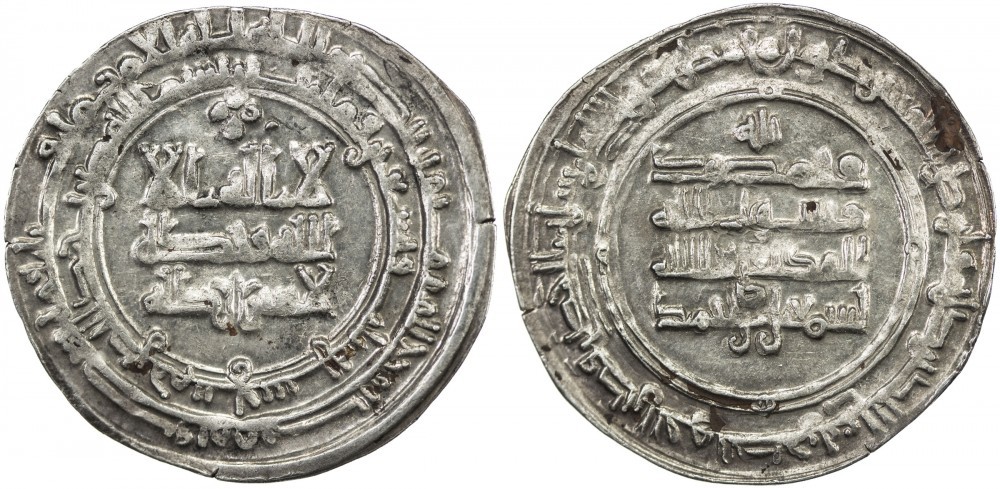
A SAMANID dirham of Isma'il I who ruled between 892-907 of the type that was found in hoards in Poland according to Bogucki.
A Dirham of the type found in hoards in Poland from the early 10th century.
SAMANID: Isma’il I, 892-907, AR dirham (2.89g), Balkh, AH293, A-1443.
Photograph courtesy Stephen Album Rare Coins.

Widukind of Corvey’s Deeds of the Saxons [Res gestae saxonicae], records the following: “They happily received Wichmann, who then wore down the barbarians, who lived even further away, with numerous battles.  Wichmann defeated King Miesco, who ruled over the Slavs called the Licicaviki, in two battles, and killed his brother.  He then extorted a great quantity of booty from them” (Widukind of Corvey, p. 140). 

Widukind’s entry regarding Mieszko, typically attributed to the year 963 A.D., is generally identified as the earliest reference to Mieszko and the polity he reigned over, latterly known as Poland.  However, some scholars have posited that the fragmentary reports on the Slavs prepared by Ibrahim Ibn Ya’Qub al-Isra’ili at-Turtushi, which were latterly preserved through their incorporation into Al-Bakrī’s Kitāb al-masālik wa’l-mamālik (Book of the Roads and Kingdoms), may have reflected travels that occurred as early as 961-962 A.D., not the usually posited 965-966 A.D., and thus antedate Widukind’s first entry regarding Mieszko and his Slavs (Zaborski, p. 8). 

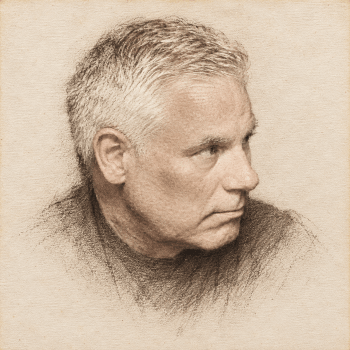
Image of Miesco of Poland
Miezko I, the historically attested founder of Poland’s Piast Dynasty

Ibrahim Ibn Ya’Qub reported the following regarding Mieszko and his realm: “The country of Mashaqqah [that is Mieszko, earlier in the text identified as ‘King of the North’] is the largest one among the countries [of the Slavs].  It abounds in food, meat, honey, and agricultural produce.  The taxes are collected in market weights.  Those are the salary of his men in every month, and each of them has a certain amount of them to get.  He has three thousand warriors wearing coats of mail; a hundred of them is worth a thousand of other warriors in the battle.  He gives those men clothes, horses, arms, and everything they need.  If a child is born to one of them, he orders the child to be paid a maintenance, regardless of the latter’s sex.  When the child grows, and he is a boy, he marries him and pays the dowry to her father.  The dowry of the Slavs if very big, and they pay it in the same way as the Berbers do.  If a man, thus, has two or three daughters, he gets rich, but if he has two sons, he becomes poor” (Mishin, pp. 187-188).    

illustration from "Album de Wilna" by Jan Kazimierz Wilczyński showing Wichman defeated and mortally wounded surrendering to Mieszko I, handing over his sword to the ruler
“‎Wichman defeated and mortally wounded, surrenders to Mieszko I, handing over his sword to the ruler” – illustration from “Album de Wilna” by Jan Kazimierz Wilczyński. (1787).
‎Source: Muzeum Narodowe w Krakowie – Photograph by Karol Kowalik

What is of particular interest to the numismatically inclined, and has been of interest to generations of scholars, are the references to the taxes collected and paid by Mieszko to support the three thousand warriors, warriors that allowed Mieszko to expand, consolidate, and stabilize his realm and, as recorded in a second entry by Widukind, become friend of the emperor and enjoy ultimate victory over Wichman (Widukind of Corvey, pp. 143-145). 
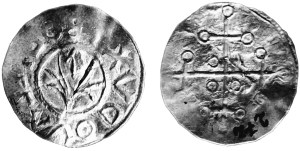
Denar of Boleslaus the Brave, one of the first coins struck in Poland, between 992 and 1000 A.D.  Image from Stanislaw Suchodolski article in WN from 2015.
Denar of Boleslaus Chrobry of Poland, ca. 992-1000 A.D. Tree of life with arrow, inscription / cross. One of the contenders for the first coins struck in Poland.
Photograph from Suchodolski 2015.

As current scholarship does not support that Mieszko issued any coinage of his own and reveals that his son, Boleslaw Chrobry, struck Poland’s first denars between 992 A.D. and 1000 A.D. (see Suchodolski 2019 and Suchodolski 2015 for a discussion of which denars are contenders for earliest denars struck in Poland), we must look elsewhere for what, exactly, Mieszko may have collected for taxes and used to pay his force of mercenary warriors.

Mishin, in his translation of Ibrahim Ibn Ya’Qub, indicated that Mieszko collected taxes in “market weights,” which were then used to pay his warriors a fixed monthly salary.  This peculiar translation, “market weights,” is ultimately based on the scholarship of Tadeusz Kowalski, who proposed this translation (matᾱqῑl al-murquatiyya) (because the Arabic word for “dinar” (matᾱqῑl) was followed by a corrupted (?) or unattested Arabic word modifying it which has stymied the best attempts of scholars searching for an appropriate translation for generations but which some, including Kowalski, viewed as meaning market (al-murquatiyya) – and a market dinar would, hypothetically be most appropriately translated as a “market weight”. 

In a paper prepared for a 2006 conference celebrating the 60th anniversary of Kowalski’s remarkable scholarship regarding the testimony of Ibrahim Ibn Ya’qub, Andrzej Zaborski discussed this translation issue at length, noting that alternatives proposed over the years have include Byzantine money (a proposal widely rejected), legal tender/money, and his own hypotheses, “good coins of fixed value” or “coins of diminished value.”  Zaborski concluded that the translation issue required further investigation.  (Zaborski, pp. 64-65).  I suggest that the text has revealed all that it will yield and that the evidence on the ground, or rather in the ground, argues that “good coins of fixed value” should prevail as the preferred translation.  To support this contention, I appeal to the numismatic hoard evidence.

Mateusz Bogucki discussed the use of dirhams in Slavic lands in 2011, based on hoard evidence, and divided the time periods during which the hoards went into the ground into seven phases.  Bogucki’s Phase III most aligns with the period during which Mieszko is referred to as collecting taxes and paying warriors salaries.  Here is, in part, what Bogucki has to say about that period: “Phase III (early tenth century). At the turn of the ninth and tenth centuries, an important change in dirham importation may be observed. A significantly greater number of hoards are known from the period 900-40, and they are much larger (up to 1,000 coins). They are found in eastern Poland, Great Poland and Pomerania. Dirhams are almost exclusively whole coins. Some complete (undamaged) ornaments also occur in the hoards. Analysis of the coins and ornaments demonstrates that, during this phase, two important routes were in use. Coins found in Pomerania came via the Baltic, whereas coins in the eastern parts of Poland and Great Poland arrived mainly via the eastern land-route” (Bogucki (2011), p. 136). 

In 2016, Bogucki explicitly tied the influx of dirhams into Poland to Mieszko’s use of mercenaries to consolidate his realm: “Assuming the chronology of the deposits is solid, it may even be suggested that the influx of silver to Wielkopolska from the East preceded the Pomeranian route by more than a decade and was initially greater in importance. The issue of the commodity exchanged for silver in the early-Piast state is still difficult to ascertain. It is apparent that the metal was needed to pay for mercenary services and to develop a proper network of administration and infrastructure based on strongholds. Archaeological research proves that the first half of the 10th century, when the core of the state in Wielkopolska was being established, brought destruction to a large percentage of tribal stronghold centres. Juxtaposing these facts with the chronology of the influx of oriental silver into Wielkopolska (discussed above) and the information found in written Arab sources, we may conclude that the economic basis for building the earliest Piast state came from selling slaves – the inhabitants of the destroyed tribal centres of Wielkopolska. By eliminating their hostile neighbours, the Piasts acquired silver, which they could use to consolidate their power” (Bogucki 2016, p. 246).

Based on the above, we know that Mieszko had access to good quality dirhams, in quantity, and that the dirhams were not yet reduced to hacksilber (where they would need to be regularly weighed to be paid out as a salary) as they were in later phases (such as Phase IV, from 970-1010 A.D., which Bogucki noted often included coins and items that were “intensely fragmented”).  This adds support to Zaborski’s hypothesis, and my contention, that the contentious translation should be “good coins of fixed value” rather than the unsatisfactory and less supportable “market weights.” I note that Bogucki, in a 2005 paper, made passing reference to the issue of the form of the warrior salaries (in an article that was poorly translated into English) without addressing the underlying translation issue being discussed in this post :

In my opinion buying meat by silver doesn’t hinder from buying by the silver politically loyalty. In the matter of salary and taxes it’s better to quote the words of Ibrahim: ‘Received by him (king Mieszko I) taxes are trade weights. They are used as payment for his mans (knights). Each month to each man it’s a known number of it’ (Kowalski 1946, 50). Here is necessary to comment the term trade weights –mataqil murquatiyya. Ibrahim might have known the name of dirhems, the western European denars he called Kinszar, so I think that Ibrahim noticed the hack silver, taken not for pieces, but for weight. This relation doesn’t mean that salary and taxes weren’t paid in animals, grain or any other goods. But it shows, that in this matter it isn’t possible to give only one single answer.

Bogucki (2005), p. 1152.

I suspect if Bogucki would reflect further on the issue, and consider the later arguments of Zaborski and the nature of the hoard evidence when Mieszko was doing the bulk of the consolidation of his polity, he might abandon his attachment from market weights to good coins of fixed value. Yet, it is important to take note of the hacksilber hoards and what they may represent and for that, I direct readers to the comments in the article below by Florin Curta.

And finally, as if in response to the 60th Anniversary Conference honoring Kowalski’s scholarship, an updated edition of his work, translated into English, will soon be released. The editor of the new edition was Mustafa Switat, a Research Fellow with the University of Warsaw. Of course, I am most eagerly awaiting to see how the most recent scholarship addresses the issue of the translation issue discussed above and whether Zaborski’s proposed resolution is adopted or perhaps another solution is at hand.

REFERENCES/SOURCES: (Blue boxes may be clicked to be taken to reference works available online for review. Red boxes indicate reference works are not available for online review. If a link for a blue box is no longer working, please advise me of such as nca@northcoastantiquarian.com. Thank you.).

Note: Zabroski’s work is a compilation of scholarly papers read at a May 2006 conference celebrating the 60th anniversary of the publication of the first and most critical edition of Ibrahim Ibn Ya’Qub’s reports on the Slavs, which had been prepared and published by Tadeusz Kowalski [Kowalski, Tadeusz.  Relacja Ibrāhīma ibn Ja’ḳūba z podróży do krajów słowiańskich w przekazie al-Bekrīego (Relatio Ibrāhīm ibn Ja’ḳūb de itinere Slavico, quo traditur apud al-Bekrī). Cracow: PAU, 1946].  The May 2006 conference concluded by calling for an updated edition of Kalkowski’s work to be published, with appropriate emendations to reflect the latest scholarship, and for it to be translated into English.  Fortunately, the conference’s appeal has been answered as the following is soon to be released:  Kowalski, Tadeusz.  Ibrāhīm ibn Yaʿqūb’s Account of His Travel to Slavic Countries as Transmitted by Al-Bakri with Contemporary Commentary.  Ed. Mustafa Switat. Trans. Agnieszka Waskiewicz.

Standing Caliph Dinars and Prudentia

Reverse of the portrait medal of Scaramuccia di Gianfermo Trivulzio, Bishop of Como, and Cardinal (died 1527). Cast bronze, 5.6 cm diam., wt. 56.84 g., c. 1517. The reverse features an allegorical figure of Prudence, who holds a mirror in her left hand and compasses in her right. The mirror symbolizes not vanity but the wise man’s capacity to see himself honestly, and the compasses in her other hand represent measured judgment. The dragon at her feet represents a substitution for the serpent referred to in Matthew 10:16: “Be ye wise as serpents.” The Metropolitan Museum of Art, New York. From the Robert Lehman Collection, 1975.1.1253. (public domain)

A little over a year ago, I complained to my friend Dr. JW about the imprudent tendency of all too many archaeologists and historians to do too much with too little. As I recall I may have actually bellowed in exasperation at the time that these scholars fabricate too much history out of wisps of little more than air. For in truth, the paucity of material available to many archaeologists and historians is so slight, and the edifices that they build upon the available material is so seemingly profound, that Prudence herself, our auriga virtutum (charioteer of the virtues), cannot but be offended.

I entered into the discussion with Dr. JW after having read several dozens of scholarly articles related to Slavic pre-history and early Slavic history. It was not surprising to see how ideology affected the historical and archeological scholarship, but it was surprising to see how compromised much of the work was and how it was negatively impacted by other more mundane influences. Such influences, as near as I could divine, were related to ego (look at me!), the need to publish (publish or perish), and/or the desire to publish (agenda driven) even when the evidentiary material did not support the conclusions ultimately being proffered.

Time and time again I read articles where all the factual statements were true, but the conclusions drawn from those facts bore little to no relation to those facts. Similarly, I read articles where some of the factual statements were true, and some were mostly true, and some gray, and then some were outright suppositions. And finally, I read articles where scholars of great authority engaged in combat with other scholars of great authority … and its seemed to me that the weapons were nothing other than opinion for I noted that facts and evidence were nowhere to be seen. Such combat must be exhilarating but it is certainly not illuminating.

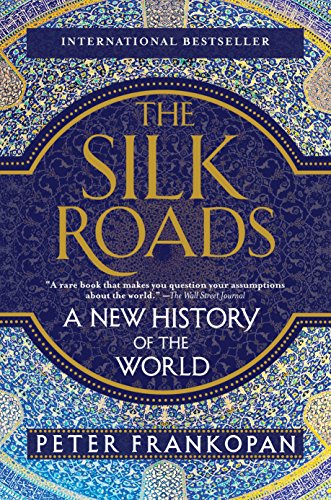
Frankopan’s The Silk Roads: A New History of the World

This post is occasioned by my reading, or rather by my decision to stop reading, Peter Frankopan’s The Silk Roads: A New History of The World. I should have known better than to have engaged a “popular history,” an international best seller at that, endorsed by The Wall Street Journal as “[a] rare book that makes you question your assumptions about the world.” I find that, rather than questioning my assumptions about the world, I am questioning my assumptions about the competency of the scholar-author of this particular work. Mr. Frankopan, whom I suspect is a very able scholar generally, has failed in the specifics of this work. Although the work is engaging on the macro level, and the broad narrative and theme is both agreeable and correct, it is unacceptable on the micro level to such a degree that he has offended my scholarly sensibilities to such an extent that I would implore him to be more prudent when attempting such popular works in the future. I shall provide a few examples in support of my position.

Frankopan , on page 82, when discussing the Muslim conquest of the Middle East, acknowledges that “[t]he sources for this period are notoriously difficult to interpret because they are complicated and contradictory, but also because many were written long after the events.” That was a very prudent acknowledgement and should have guided his writing and presentation throughout the chapters. [See James Howard -Johnston’s Witnesses to A World Crisis: Historians and Histories of the Middle East in the Seventh Century for a superb exploration and autopsy of the complexity of this topic.] But, alas, it did not. Rather, we encounter sentences such as this on p. 83: “In fact, it appears that the Arab conquests were neither as brutal nor as shocking as the commentators make out, for example, there is little evidence of violent conquest in the archaeological record” and these equivocating muddles of sentences on p. 84: “The fact that new churches were built at the same time, in North Africa, Egypt and Palestine, suggests that a modus vivendi quickly established itself where religious tolerance was normative. This seems to have been echoed in lands taken from the Sasanians, where at least to start with Zoroastrians were either ignored or left alone. In the case of Jews and Christians, it is not impossible that this was even formalised.” From my vantage point, the need to pepper an analysis with the words “suggests that,” “seems,” and especially “it is not impossible that” make for a profoundly shoddy historical analysis. I, myself, could write some wildly interesting historical works if I seasoned them with “it is not impossible that.”

The above examples – just a few of many that the author included in the relevant chapters – were intended, I believe, to set an appeasing tone for a gentle Muslim conquest as a theme to comfort the reader. But it was the sin of creating history from wisps. Fortunately, Frankopan did atone for this sin by including, here and there, information contradicting the theme such as that found on p.89: “The cities of Central Asia were picked off one by one, the loose links between them sealing their downfall: without an organizational structure to co-ordinate defences, each awaited its fate in turn. The inhabitants of Samarkand were pressured into paying a huge sum of money for the Muslim commander to withdraw, though in time it had to surrender anyway. At least the city’s governor was spared the fate of Dewashtich, ruler of Panjikent (in modern Tajikistan) who styled himself King of Sogdia; he was deceived, trapped and crucified in front of his own people. The governor of Balkh (in what is now northern Afghanistan) suffered a similar fate.” So much for the gentle Muslim conquest. Of course, I will not abandon a book for a theme if the author is kind enough to include, and not suppress, evidence, contradictory to the theme.

So, why, dear reader, have I abandoned Frankopan’s tome? The answer is simple: imprudence. On page 86, he imprudently embraced a numismatic speculation that I, and I believe all knowledgeable scholars, adjudge to be wildly provocative and simply beyond supportable. Here are the relevant arguments. First, the offending embrace from Mr. Frankopan:

“After the Caliph began to issue coins with the legend ‘There is no God but God alone; Muhammad is the messenger of God’ in the early 690s, Constantinople retaliated. Coins were struck which no longer had the image of the Emperor on the front (the obverse), but put it on the reverse instead. In its place on the obverse was a dramatic new image: Jesus Christ. The intention was to reinforce Christian identity and to demonstrate that the empire enjoyed divine protection.

In an extraordinary development, the Islamic world now matched the Christians like with like. Remarkably, the initial response to the issuing of coins with Jesus and the Emperor on them was to respond with an image on coins minted for a few short years of a man in the parallel role to that played by Jesus – as the protector of the lands of the faithful. Although this image is usually presumed to be that of the Caliph ‘Abd al-Malik, it is entirely possible that this is none other that Muhammad himself. He appears in a flowing tunic, which a lustrous beard and holding a sword in a scabbard. If this is the Prophet, then it is the earliest-known image of him, and remarkably one that those who knew him during his lifetime were aware of and saw for themselves. … The coins did not stay in circulation long, for by the end of the 690s the currency circulating in the Islamic world was completely redesigned: all images were removed and were replaced by verses from the Quran on both sides of the coin.”

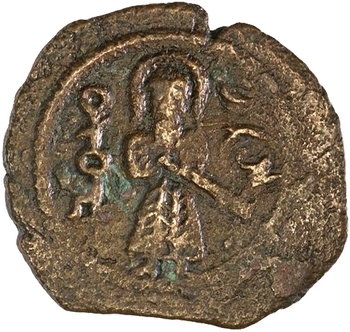
Above is a handsome representation of the Standing Caliph type from the collection of the American Numismatic Society. According to an in-depth study entitled The Standing Caliph Coins of Jerusalem published in 2015 by Ingrid and Wolfgang Schulze, Standing Caliph coins are characterized by an obverse that features the standing caliph with a sword and a reverse featuring a column on steps or an m (the Byzantine mark of value for 40 nummi). As of 2015, there were 18 mint names identified for the Standing Caliph coins, which included the following: ‛Ammān (Philadelphia), Anṭākiya (Antioch), Ba‛albak, (Heliopolis), Dimashq (Damascus), Ḥalab (Aleppo), Ḥarrān (Carrhae), Ḥimṣ (Emesa), Īliyā (Jerusalem), Jibrīn, Ludd (Diospolis), Ma‛arrat Miṣrīn, Manbij (Hierapolis), Qinnasrīn (Chalcis), Qūrus (Cyrrhus), al-Ruhā (Edessa), Sarmīn, Tanūkh (a tribal name) and Yubnā (Yavne). Additionally, there are countless mintless types and it is sometimes doubted whether mint names written on the coins point to an actual mint place.

Returning to the controversy, the notion that the standing figure on the coin type may have been Muhammad is, at best, generously described as a minority position within the scholarship. It is, perhaps, more accurately described as wild speculation. In either event, it was imprudent to present the position so prominently in a popular history outside of an endnote, where such a minority position or speculation would more properly reside.

So, you may ask, how did scholars arrive at the position that the image was a Standing Caliph and not the Prophet? Below, I share, in rather more detail than usual, the positions of the the proponents of both positions. I begin with Writing the Biography of the Prophet Muhammed: Problems and Solutions, by Robert Hoyland. Mr. Hoyland argued in his tract that the standing image was the image of the Prophet:

“This is generally assumed to be a representation of the caliph himself and
so the coins are known as the ‘standing caliph’ coins. However, there are
a number of reasons to doubt this:

Firstly, it ignores the war in visual and verbal propaganda going on between Justinian II and ‘Abd al-Malik and the wider issue of the use of religious images and slogans that was being hotly debated at this time.  If, in response to Justinian’s demotion of himself to the reverse of Byzantine coins in favour of Christ’s effigy on the front, ‘Abd al-Malik had merely put this own image on the front of Muslim coins, it would have seemed a very feeble reply in the view of Christians; rather, the obvious move for him would have been to put an image that would challenge that of the image of Christ, which could only be that of the Prophet Muhammad himself. The very dramatic nature of these changes, their closeness in time, their evidently polemical overtones and enormous propaganda impact (coins circulate very widely) at a time of great tension (in particular, the Byzantines suffered a major defeat at Sebastopolis in 73/692–93) make it essential for these two innovations to be considered together.

Secondly, it ignores the context of the Arab civil war of 685–92 in which religion had played a major role for diverse groups clamouring for greater social justice, and ‘Abd al-Malik saw the chance to steal their thunder and to heal the divisions among the Muslim community by putting Islam at the heart of the state. Henceforth, the name of the Prophet Muhammad, which had been absent from all state media (i.e. administrative documents, monumental inscriptions, etc.), became de rigeur  on every official text and became pretty much standard in epitaphs and graffiti. This makes it unlikely that the image on the front of  ‘Abd al-Malik’s new coins was himself, which would have been condemned by Muslims as an imitation of infidel kings, and much more likely that it is a religious personage, again most obviously Muhammad himself.

Thirdly, the iconography of the person on ‘Abd al-Malik’s coinage is closer to that of Justinian II’s Christ figure than to an emperor figure: both have long, flowing hair and are bearded, and both are without headgear (i.e. no turban or crown).

Fourthly, the standing-figure coins of Jerusalem, Harran and al-Ruha (Edessa) do not, unlike those of other mints, name the Prophet Muhammad and  the Caliph ‘Abd al-Malik, but only mention Muhammad.  As Clive Foss has remarked, ‘ever since the inception of portrait coinage in the Hellenistic period, the image and superscription had gone together, that is, the inscription names the figure portrayed . . . I know of no coin where the obverse inscription refers to someone different from the figure portrayed.'”

Mr. Hoyland’s arguments, though worthy of consideration at first blush, easily fall, when considered even momentarily. In 2010 Ingrid and Wolfgang Schulze did consider the arguments, and responded fairly, in an article published in The Numismatic Chronicle entitled The Standing Caliph Coins of al-Jazīra: some problems and suggestions. Here are the relevant portions of their response:

“There are still a number of unsolved problems concerning the iconography of the Standing Caliph coinage. The first question is, does the sword bearing person really represent the caliph or is it the representation of the governor of the jund where the coins were minted? In our opinion it is probably the caliph, ‘Abd al-Malik. There is a statue, found in Khirbet near Jericho, and now in the Rockefeller Museum in Jerusalem, and dated 720, showing the caliph in a similar way. Also, the caliph’s name is written on about half the coins. This suggests their designation as ‘Standing Caliph coins’ is correct. Sometimes the standing figure is regarded as the prophet Muhammad. We will come back to this question when discussing the coins of Harrân. On one obverse die of some coins of Sarmīn a certain Abd al-Rahman is named, but his identity is unknown.”

Thus, they acknowledged that the identification of the standing figure as Muhammad had been raised, and promised to address it, which they did as follows:

“In Harrân the use of the isolated Muhammad  is striking. Starting from the idea that ‘whenever an inscription with a name accompanies the image, it identifies the portrait’ Clive Foss and Robert Hoyland draw the conclusion that the ‘Muhammad’ coins struck in Palestine and Mesopotamia do not portray the caliph but the prophet Muhammad.

We do not agree with this suggestion. The consequence would be that one would have to interpret the figure on the coins bearing the name of ‘Abd al-Malik as the caliph himself and the ‘Muhammad’ coins as showing the prophet. How would one interpret the coin with the name of ‘Abd al-Rahman? Finally, how are the anonymous coins to be interpreted? Should we interpret the shahāda of the legend as a reference to the figure?

Proceeding from the premise that the design of the figure was ordered by the central administration in Dimashq, and this was followed in all the Standing Caliph mints, the figure must have had a uniform meaning. It is hardly imaginable that an identical picture on coins in daily use would have carried different messages.

Taking into consideration that about 50% of the Standing Caliph coins bear the name of ‘Abd al-Malik, we are all the more convinced that we have to regard the figure as that of the caliph. 

Nevertheless it is very odd to find Muhammad written twice on the coins of Harrân. It is also remarkable to see it written in different styles of Kufic. This could lead to the suggestion that Muhammad, written in standard Kufic, refers to the prophet, while Muhammad, written in unusual Kufic, refers to Muhammad b. Marwān, governor of al-Jazīra at that time. This interpretation can only be regarded as provisional.”

Tony Goodwin and Rika Gyselen, writing in Arab Byzantine Coins from the Irbid Hoard (London 2015), while consistently referring to the coin type as the Standing Caliph type, also addressed the issue. They wrote as follow :”For many years the Standing Caliph image has created considerable interest as it is our only record of the appearance of ʿAbd al-Malik. There has been much written about details of his dress. The question has also arisen from time to time of whether the image was based to some extent on the image of Justinian II on his gold solidi or on already existing depictions of the caliph. Given the legend naming the caliph which usually appears around the image there has been little doubt about the identity of the individual depicted. However, the coins of Jund Filastīn … never name the caliph and always have the obverse legend Muhammad Rasûl Allāh. Furthermore the images are very unlike those found on coins naming ʿAbd al-Malik, and at Yubnā there is a remarkable variety of images. In a study of the Yubnā mint Goodwin suggested that some of these could possibly be based on images of Christ or Muhammad, but more recently Foss has gone further and proposed that the figure depicted on Jund Filastīn coins probably is intended as Muhammad. He argued that where a coin has an image of an individual and a legend including a name, the two always match, so it is logical to regard the individual depicted as Muhammad. We do not know whether the proscription on depictions of the Prophet was in place at this early date, so Foss’ proposal is certainly not as far-fetched as it might at first appear” (pp. 36-37). It is worth noting, however, that Stephen Album, who wrote the Sylloge of Islamic Coins in the Ashmolean. Vol. I: the Pre-reform Coinage of the Early Islamic Period (2002) with Goodwin, and is perhaps the world’s foremost authority on Islamic coins, has no compunction whatsoever about identifying the image on the coins as the Standing Caliph and is not distracted by the argument as to whether the image may be Muhammed or Christ in his Checklist of Islamic Coins (3rd Edition, 2015)(see pp. 36-38).

This, given the lack of iconographical support for interpreting the image as being the Prophet, there really is little argument to support that the standing figure should be understood now, or was supposed to be understood at the time, as Muhammad. And it does compel the conclusion that it was imprudent to dedicate so much space outside an endnote, in a general work, for a mass audience, that Muhammad appeared on a coin when not only is the proposition highly debatable, but most unlikely.